

Note: This article contains affiliate links. If you click on these links and make a purchase, I may earn a small commission at no extra cost to you. This helps support my research and content. Read my full affiliate disclosure here.
A durable greenhouse changes what you can grow and when by protecting plants from wind, cold snaps, and heavy rain. If you want a structure that lasts and reduces seasonal risk, picking a high-quality, long-lasting greenhouse matters for plant health, energy use, and maintenance time. This guide shortlists the top durable greenhouse options for typical backyard and small-farm situations. We evaluated each pick for frame strength, covering materials, weather resistance, ventilation, and ease of maintenance to help you match a greenhouse to your climate and gardening goals.
Top Picks at a Glance
| Best Overall The best all-around choice for most situations | Vigo huseeo 8x10x7.8 ft Polycarbonate Aluminum Greenhouse with Roof Vents |  |
| Best Quality Built to a higher standard if you want something more solid | Palram Canopia Oasis Hex 7' x 8' Aluminum Frame Greenhouse |  |
| Best Value The sweet spot between price and what you get | KING BIRD Premium 20x10x6.6 ft Tunnel Greenhouse, Galvanized Steel Frame |  |
| Highest Rated A top-rated pick with lots of positive feedback | HAPPYGRILL 6 x 6 x 6.5 ft Outdoor Polycarbonate Greenhouse with Adjustable Roof Vent |  |
| Most Popular A crowd favorite that many people choose with confidence | Ohuhu 3-Tier Walk-In Greenhouse with 12 Shelves (PE Cover, Steel Frame) |  |
| Best Seller A high-volume bestseller chosen again and again | EAGLE PEAK 6×8 Easy-Setup Pop-Up Greenhouse with Roll-Up Door |  |
Vigo huseeo 8x10x7.8 ft Polycarbonate Aluminum Greenhouse with Roof Vents

| Size | 8x10x7.8FT |
|---|---|
| Cover Material | Polycarbonate (PC) |
| Frame Material | Aluminum |
| Number Of Vents | 2 |
| Weight Capacity | Maximum weight: 2645.5 pounds |
This 8x10x7.8 ft greenhouse is built around a painted aluminum frame and reinforced polycarbonate panels to provide a sturdy, weather-resistant shelter for hobby and serious gardeners alike. It is intended as a walk-in sunroom with a bi-fold door, two roof vents with four-position adjustment for ventilation, and a 3 inch high foundation that helps stabilize the structure. The manufacturer highlights windproof accessories such as ground nails and wind ropes and internal bracing for added resistance in gusty conditions. Practical benefits include high light transmission with UV-blocking polycarbonate, a roomy footprint for shelving and larger plants, and a claimed high weight capacity for shelving or hanging fixtures. Expect assembly across multiple boxes and moderate DIY effort; you will need tools and at least two people to lift and align the aluminum sections. The greenhouse does not include active heating or automated climate controls, so winter performance depends on supplemental heaters and nighttime management.
Best for: Gardeners who want a durable, roomy greenhouse for year-round hobby growing and value solid construction and manual ventilation over plug-and-play automation.
Less Ideal for: People who need a turnkey, climate-controlled greenhouse or who cannot manage multi-part assembly and on-site installation without professional help.
- Aluminum frame with protective paint finish resists corrosion and extends lifespan
- Thick 1200 g/㎡ polycarbonate panels offer high light transmission while blocking most UV
- Adjustable roof vents provide manual control of airflow to reduce overheating
- Windproof upgrades including ground nails and ropes plus internal support improve stability in windy sites
- Requires multi-box delivery and moderate DIY assembly with at least two people
- No built-in heating or automated climate control for winter or extreme temperature management
Verdict: A well-built, spacious greenhouse that balances durability and ventilation for gardeners seeking a reliable all-round shelter for year-round growing.
Palram Canopia Oasis Hex 7' x 8' Aluminum Frame Greenhouse

| Cover Material | Polycarbonate (PC) |
|---|---|
| Frame Material | Aluminum |
| Number of Doors | 2 |
| Number Of Vents | 1 |
| Included Components | Frame^Panels^Hardware |
The Palram Canopia Oasis Hex is a small walk-in greenhouse engineered for durability and steady plant growth. It uses twin-wall polycarbonate roof and side panels that deliver high light transmission while blocking UV, and an aluminum frame with a galvanized steel base for strengthened support. Typical use is backyard growing of seedlings, vegetables, and ornamentals where reliable light and weather protection matter. Notable features include a lockable double door, an adjustable side louvre for ventilation, built-in gutters for water drainage, and pre-drilled profiles that simplify assembly. Practically, the Oasis provides a low-maintenance, weather-resistant environment that reduces breakage and fading of panels and tolerates moderate wind and snow when installed correctly. Limitations are its modest footprint, which restricts large-scale production, and the DIY assembly requirement that involves handling heavy panels and many fasteners. Buyers seeking larger commercial capacity or a zero-assembly solution should consider bigger or preassembled models.
Best for: Gardeners who prioritize a durable, low-maintenance backyard greenhouse for year-round protection and steady performance in a compact footprint.
Less Ideal for: Commercial growers or hobbyists who need large production space or those wanting a fully preassembled structure for instant use.
- Twin-wall polycarbonate panels provide high light transmission with UV protection and impact resistance.
- Reinforced aluminum profiles and galvanized base improve structural stability and longevity.
- Adjustable louvre vent and lockable double doors give usable climate control and security.
- Integrated gutter system manages water runoff and enables collection.
- Pre-drilled profiles and included hardware streamline homeowner assembly.
- 7' x 8' interior space limits capacity for large or many plantings.
- Assembly can be time consuming and requires handling heavy components.
- Wind and snow resistance depends on careful installation and proper anchoring.
Verdict: Buy this if you want a compact, well-built backyard greenhouse that delivers durable, year-round protection and reliable performance.
KING BIRD Premium 20x10x6.6 ft Tunnel Greenhouse, Galvanized Steel Frame

| Cover Material | Polyethylene (PE) |
|---|---|
| Frame Material | Alloy Steel |
| Nominal Wall Thickness | 150 GSM |
| Number Of Vents | 8 |
| Number of Doors | 2 |
The KING BIRD 20x10x6.6 ft tunnel greenhouse is built to give a large, walk-in sheltered space for vegetables, seedlings, and potted plants while improving durability over basic pop-up tents. It uses a galvanized alloy steel frame with extra crossbars and two stiffeners to reduce sway, and a heavyweight 150 GSM PE cover with UV index 6 protection to resist sun damage and extend service life. Two roll-up zipper doors and eight roll-up mesh windows make ventilation and access easy, letting you manage temperature and humidity for early starts or winter overwintering. The cover fits closely to the frame and includes reinforced seams and upgraded zippers for longer-term use. Practical extras include ground stakes, ropes, and visible warnings about securing the cover in high winds. Expect a substantial assembly effort and a footprint that needs a level, well-anchored site; like many PE greenhouses it will still require extra anchoring or removal in severe storms. For gardeners who prioritize a durable, large-season-extension structure without moving to rigid polycarbonate, this model balances strength and usable interior space.
Best for: Buyers who want a roomy, season-extending greenhouse that emphasizes structural reinforcement and longer-lasting cover material to protect a large quantity of vegetables and plants.
Less Ideal for: Those who need a fully rigid, permanent greenhouse or who cannot dedicate time and effort to assemble and anchor a sizable tunnel structure.
- Reinforced galvanized alloy steel frame with extra crossbars and two stiffeners for improved stability
- 150 GSM PE cover with UV index 6 protection for longer cover life and better sun resistance
- Two zipper roll-up doors and eight roll-up mesh windows for flexible ventilation and pest control
- Includes stakes, ropes and upgraded zippers to help secure the cover and simplify maintenance
- Large size and substantial frame require significant assembly time and a level, anchored site
- PE cover still vulnerable to extreme wind or heavy snow without additional anchoring or removal
Verdict: A cost-effective, reinforced tunnel greenhouse that gives large usable space and a longer-lasting PE cover for gardeners who prioritize durability over rigid construction.
HAPPYGRILL 6 x 6 x 6.5 ft Outdoor Polycarbonate Greenhouse with Adjustable Roof Vent
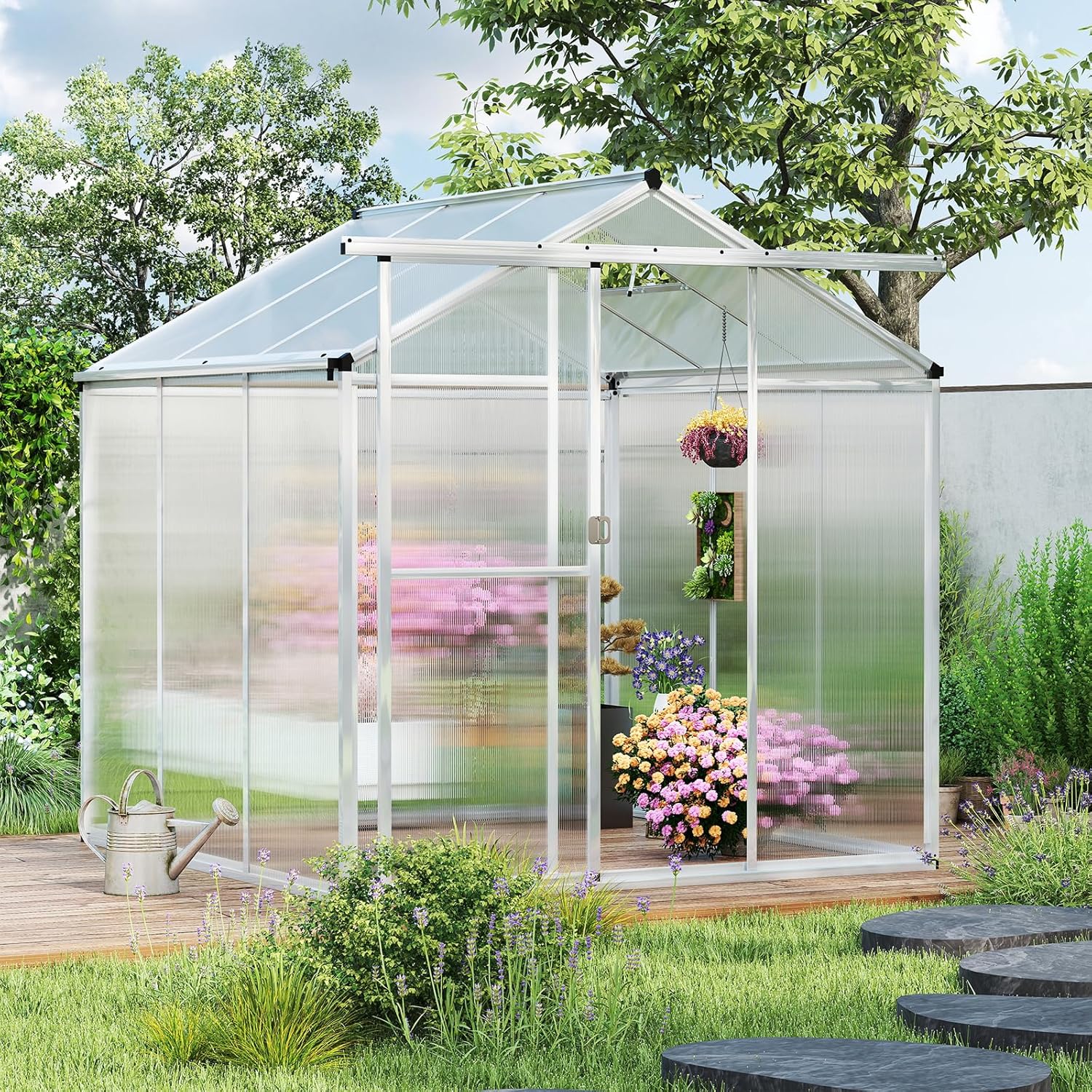
| Material | Polycarbonate panels and aluminum frame |
|---|---|
| Size | 6 x 6 x 6.5 ft |
| Snow Load Capacity | 110 lbs |
| Number Of Vents | 1 |
This HAPPYGRILL greenhouse is a compact walk-in shelter designed to keep plants safe across all seasons. It uses transparent polycarbonate panels for good light transmission and thermal insulation and a rust-resistant aluminum alloy frame for structural strength. Typical use is backyard vegetable starts, container plants, or overwintering tender perennials; the sliding door and roll-equipped track make access simple while the adjustable roof vent (three positions) lets you manage airflow and internal temperature. Practical features aimed at reliability include an integrated rain gutter/drainage system that can collect water and a claimed 110 lb snow load capacity. The kit also includes metal anchor plates and ground stakes to secure the frame against wind. Expect straightforward protection from sun, rain, and light snow, but assembly will require time and two people and the modest footprint limits larger planting setups. The materials resist rust and UV better than polyethylene covers, so it is a sensible choice when durability and season-round protection are priorities.
Best for: Buyers who prioritize a reliable, low-maintenance greenhouse for year-round plant protection and who need a compact walk-in unit for starts, containers, or overwintering specimens.
Less Ideal for: Gardeners who need a much larger growing area, want a portable pop-up cover, or who routinely face extreme heavy-snow conditions that exceed the stated snow load.
- Durable polycarbonate panels provide good light transmission and insulation
- Aluminum alloy frame resists rust and reinforces structure
- Integrated rain gutters and drainage enable rainwater collection
- Adjustable roof vent offers three positions for airflow control
- Includes anchor plates and ground stakes for secure anchoring
- 6×6 footprint is small for larger raised beds or extensive shelving
- Snow load rating (110 lbs) limits use in areas with heavy, wet snow accumulations
Verdict: Choose this greenhouse if you want a compact, all-season, sturdily built walk-in that prioritizes long-term protection and anchored stability.
Ohuhu 3-Tier Walk-In Greenhouse with 12 Shelves (PE Cover, Steel Frame)

| Size | 3 Tier 12 Shelves |
|---|---|
| Cover Material | Green PE |
| Frame Material | Alloy Steel |
| Number of Vents | 2 |
| Closure Type | Zipper |
This Ohuhu walk-in greenhouse is a straightforward solution for gardeners who want a durable, space-efficient shelter for seedlings and potted plants. It assembles with a push-fit frame and a zippered roll-up door, and the reinforced green PE cover has a UV-resistant grid and double stitching to resist tearing. Two screened windows let you ventilate without letting pests in, while the 12 metal mesh shelves (six per side) make it easy to store trays and heavier pots on multiple levels. The alloy steel frame and stakes add stability for routine outdoor use, and each shelf is rated to support heavier containers so you can maximize vertical space. Expect simple seasonal protection from frost, wind, and light snow rather than a permanent structure; the PE cover and frame are good for extended use but will need occasional retensioning and careful anchoring in strong winds. The greenhouse is practical for growers who prioritize organized, year-round gardening in a modest footprint and prefer a portable setup that can be moved or stored when not needed.
Best for: Gardeners who want an efficient, easy-to-assemble portable greenhouse to extend their season and organize many pots in a small backyard or patio.
Less Ideal for: People seeking a permanent, heavy-duty greenhouse for extreme climates or growers who need maximum light transmission for sun-loving crops.
- Reinforced PE cover with UV-resistant grid and double stitching for durable weather protection
- Alloy steel push-fit frame and included stakes provide solid stability and easy assembly
- Twelve metal mesh shelves (6 per side) maximize vertical storage for pots and trays
- Two screened windows and a zippered roll-up door allow ventilation control while keeping pests out
- Not intended as a permanent greenhouse for extreme weather conditions and may require re-anchoring after high winds
- PE cover admits less light than clear PVC options, so light-loving plants may receive slightly reduced direct sun
Verdict: Choose this greenhouse if you need a practical, easy-to-build walk-in shelter that maximizes vertical planting space and extends the growing season.
EAGLE PEAK 6×8 Easy-Setup Pop-Up Greenhouse with Roll-Up Door

| Size | 6×8 |
|---|---|
| Cover Material | Polyethylene (PE) |
| Frame Material | Alloy Steel |
| Number of Doors | 2 |
| Number Of Vents | 2 |
This EAGLE PEAK 6×8 pop-up greenhouse is built for gardeners who want a quick, sturdy shelter for winter protection and seed starting. The preassembled alloy steel frame uses a patented center-lock that lets one person raise the structure without tools, while the powder-coated finish, wind ropes, and stakes improve outdoor stability. The PE cover is water- and UV-resistant, which helps retain humidity and filter sunlight through cold months. Two roll-up zippered doors and mesh windows provide adjustable ventilation and keep small animals out. Practical benefits include fast setup, walk-in access for tending plants, and compatibility with optional shelving to increase growing capacity. Limitations to consider are that the PE cover is less durable than polycarbonate in heavy snow or prolonged abrasion, and pop-up frames generally need careful anchoring in high winds; long-term outdoor exposure may require occasional cover replacement. For a risk-averse buyer wanting simple winter protection and easy assembly, this greenhouse delivers predictable, straightforward performance.
Best for: Buyers who want a low-effort, dependable winter greenhouse for frost protection and seed starting and who prefer easy single-person setup and predictable performance.
Less Ideal for: Growers needing a permanent, heavy-duty greenhouse for heavy snow loads or long-term all-season use should consider rigid-frame polycarbonate or wood greenhouses instead.
- One-person pop-up setup with patented center-lock for fast assembly
- Alloy steel frame with powder coating and included wind ropes and stakes for improved outdoor stability
- Water-resistant and UV-resistant PE cover that helps retain humidity for winter protection
- Walk-in size with two zippered roll-up doors and mesh windows for ventilation and access
- PE cover is less impact- and snow-resistant than rigid panels and may need replacement over time
- Pop-up frames require good anchoring and may not perform as well in very high winds
Verdict: A fast, one-person pop-up greenhouse that reliably extends the growing season with simple setup and practical winter protection.
Choosing the Right Durable Greenhouse: Key Factors to Consider
Frame Material and Construction
The frame is the backbone of a durable greenhouse. Look for materials with high tensile strength and corrosion resistance so the skeleton maintains alignment over years. Steel or aluminum frames with proper galvanizing or powder coating reduce rust and metal fatigue in wet climates.
Connection points and bracing matter as much as the tubular gauge. Welded joints, gussets, and diagonal cross-bracing distribute wind and snow loads and reduce wobble. Avoid thin, flexing poles and simple push-fit connectors if you expect heavy weather. Heavier gauge frames increase initial weight but pay back in longevity and lower replacement risk.
Covering Type and UV Resistance
The covering affects light levels, insulation, and how often you replace material. Tempered glass and twin-wall polycarbonate panels offer long service life and steady light transmission; multi-wall panels also trap air for insulation. Single-layer polyethylene film can be economical but typically degrades faster under UV exposure.
Check UV stabilization ratings and tear resistance. Look at how panels join and seal at edges because many failures start at seams. Consider how easy it is to replace a single damaged panel versus having to re-cover large stretches, especially if you face occasional hail or abrasive wind-driven debris.
Anchoring, Wind Load, and Snow Load Capacity
A durable greenhouse must stay anchored through storms. Evaluate the anchoring system and whether the greenhouse has rated wind-load and snow-load numbers. Heavy-duty base rails, ground anchors, and concrete footings increase stability on exposed sites.
Roof pitch and bracing help shed snow. Low-slope designs may accumulate snow and require manual clearing, raising long-term maintenance needs. Confirm that connections between the base, walls, and roof are reinforced to avoid progressive collapse when snow or wind pushes on a single section.
Ventilation and Climate Management
Durability also means protecting plants from overheating and moisture problems that shorten material life. Adjustable roof vents, louvered side vents, and options for mechanical fans let you manage temperature and humidity. Good ventilation prevents condensation that can accelerate corrosion and panel fogging.
Think about how easy it is to add shade cloth, heaters, or vent automation. Integrated mounting points and available accessory channels make upgrades straightforward and reduce the chance of improvised fixes that damage the structure.
Maintenance, Repairability, and Replacement Parts
Even the most durable greenhouse requires upkeep. Choose designs that make inspections and repairs simple. Removable panels, modular frame sections, and standardized fasteners reduce labor and downtime when a component needs service.
Availability of replacement parts and straightforward instructions extend useful life. Consider how seals, gaskets, and hardware age in your climate and whether they are user-replaceable without specialized tools. Lower maintenance time and accessible parts are key to keeping a greenhouse durable in practice.
Matching Durability to Your Climate
Your local weather dictates which durability features matter most. In snowy regions prioritize steeper roof pitches, stronger roof bracing, and panels rated for snow load to avoid sag and collapse. Coastal and high-humidity areas need corrosion-resistant frames and stainless or coated hardware to slow salt and moisture damage.
Wind-prone sites benefit from secure base anchoring, fewer large glass panes, and reinforced corner connections. For temperate climates with mild winters, prioritize UV resistance and ventilation to reduce heat stress while still getting a long-lived covering.
- Snowy climates: reinforced roof, higher snow-load rating
- Coastal areas: corrosion resistance, sealed connections
- Wind-exposed sites: strong anchors and cross-bracing
- Mild climates: prioritize UV-stable coverings and vents
Foundations and Site Preparation
A level, well-draining foundation extends a greenhouse's life by preventing standing water around the base and reducing ground-driven corrosion. Concrete footings, treated timber sleepers, or compacted gravel pads provide stable support depending on the greenhouse weight and local frost depth.
Think about access for maintenance and equipment. A clean, weed-free perimeter and proper drainage keep doors and vents working and reduce the chance of pests and moisture compromising seals.
- Prepare a flat, well-draining pad
- Use frost-protected footings where freezing occurs
- Plan clearance for doors and service access
Insulation and Year-Round Use
If you plan to use the greenhouse across seasons, insulation choices affect both plant performance and component longevity. Multi-wall polycarbonate traps air and reduces heat loss, lowering the stress on frames and reducing condensation cycles that promote corrosion. Additional thermal mass or simple blackout curtains can smooth temperature swings.
Keep in mind that heavier insulation often means heavier panels and greater demands on the frame. Balance thermal needs against the frame's rated load to avoid long-term structural strain.
- Multi-wall panels for better insulation
- Thermal mass evens temperature swings
- Check frame rating before adding heavy panels
Ventilation Strategies for Plant Health and Material Life
Good ventilation preserves both plants and the structure. Passive vents and operable windows reduce humidity and condensation that can corrode fasteners and rot wooden elements. Automatic vent openers are helpful in remote or variable climates because they respond to temperature without intervention.
Design ventilation around prevailing winds to avoid creating turbulence that forces wind under the covering. Also plan for insect screens to keep beneficial airflow while blocking pests.
- Use roof vents and side vents together
- Consider automatic vent openers in hot climates
- Add insect screening to protect airflow
Maintenance Schedule and Seasonal Tasks
Establish a simple maintenance schedule: inspect fasteners and seals in spring and fall, clear gutters and drains, and check anchor points after major storms. Promptly replace cracked panels and worn gaskets to prevent small issues from becoming structural problems.
Seasonal tasks vary by region. Remove heavy snow quickly to avoid excessive load, repaint or touch up exposed metal finishes in coastal zones, and clean coverings annually to preserve light transmission and UV protection.
- Inspect hardware twice a year
- Clean panels annually to maintain light
- Clear snow and debris promptly
How We Chose the Best Durable Greenhouse
We shortlisted durable greenhouses that demonstrate long-term structural reliability and practical performance in common garden conditions. Our evaluation focused on concrete, garden-relevant dimensions: frame material durability and cross-bracing, covering material puncture and UV resistance, anchoring and wind-load capability, ventilation and microclimate control, and ease of routine maintenance and repair. We prioritized greenhouses with robust connection points and corrosion-resistant hardware because those elements fail first in exposed sites. Coverage materials were judged for light transmission as well as long-term UV degradation and tear resistance. Anchoring systems and wind/snow load ratings were considered to ensure the structure stays put during storms. We also assessed access for ventilation and how straightforward it is to replace panels or patch coverings. We excluded temporary or seasonal tunnel shelters and very lightweight hobby kits that lack attachment points or rated frame strength. We did not consider cosmetic features or accessories when weighing durability. The result is a list of long-lasting greenhouse choices suited to gardeners who need solid, low-maintenance protection across seasons.
FAQ
How much wind can a durable greenhouse usually withstand?
Wind tolerance varies by design and anchoring. Many sturdy greenhouses list wind-load ratings or advise specific anchoring methods. Properly anchored frames with cross-bracing resist higher winds, while unanchored or loosely anchored kits will struggle even in moderate breezes.
Are polycarbonate panels worth the extra weight over glass?
Polycarbonate is lighter and often more impact resistant than glass, making it easier to install and less likely to shatter in hail. Multi-wall polycarbonate also adds insulation. Glass offers very stable light transmission but can be heavier and more vulnerable to breakage unless tempered.
Do I need a foundation for a durable greenhouse?
A foundation improves stability, drainage, and longevity. Light-duty greenhouses may work on compacted gravel, but permanent structures perform best on concrete or treated timber bases, especially in windy or frost-prone areas.
How often should greenhouse coverings be replaced?
Replacement frequency depends on material and exposure. High-quality polycarbonate or tempered glass can last many years, while single-layer films and untreated plastics may need replacement every few seasons. Inspect coverings annually for UV damage and tears.
Can I reinforce an existing greenhouse for heavier snow loads?
Often you can add cross-bracing, stronger anchors, or supplemental roof supports to increase capacity, but modifications should match the original structural design. Consult load ratings and, where needed, use engineered supports rather than ad-hoc fixes to avoid creating new failure points.
Final Verdict
Choose the most durable greenhouse by matching frame strength, covering type, and anchoring to your local weather and intended use. Prioritize robust connections, UV-stable coverings, and accessible maintenance features if you plan to keep the structure for many seasons. Balance insulation needs against frame load and pick designs with replaceable parts and clear access for repairs. When durability is the primary goal, invest in proven structural features and proper site preparation to minimize ongoing maintenance and maximize service life.
