

Note: This article contains affiliate links. If you click on these links and make a purchase, I may earn a small commission at no extra cost to you. This helps support my research and content. Read my full affiliate disclosure here.
Slopes and hills present special challenges in the garden because loose soil and water flow accelerate erosion. Picking the right ground cover for hill erosion matters more than aesthetics – the right plants reduce runoff, bind soil with roots, and cut maintenance over time. This guide covers seven shortlisted ground covers suited to slope stabilization and practical hillside use. We evaluate each option on root strength, coverage speed, drought tolerance, maintenance needs, and suitability for different sun and soil conditions to help you choose a long-term solution. Read on for practical considerations before the product list.
Top Picks at a Glance
| Best Overall The best all-around choice for most situations | A.M. Leonard Curlex II Erosion Control Fabric, Double Netting, 4 ft x 112.5 ft |  |
| Best Quality Built to a higher standard if you want something more solid | Sandbaggy Coir Erosion Control Mat (4 ft x 80 ft) |  |
| Best Value The sweet spot between price and what you get | GROWTRAX Biodegradable Grass Seed Mat — 50 sq ft Roll |  |
| Best Budget The cheapest option that still gets the job done reliably | Farm Plastic Supply Straw Erosion Control Blanket (2' x 112.5') |  |
| Highest Rated A top-rated pick with lots of positive feedback | DeWitt Curlex I Excelsior Erosion Control Blanket, 4 x 112.5 ft (10-Pack) |  |
| Most Popular A crowd favorite that many people choose with confidence | Outsidepride White Dutch Clover Seed, 2 lb |  |
| Best Seller A high-volume bestseller chosen again and again | AK TRADING CO. Soil Saver Jute Erosion Control Mesh Blanket, 48" x 20 yd |  |
A.M. Leonard Curlex II Erosion Control Fabric, Double Netting, 4 ft x 112.5 ft
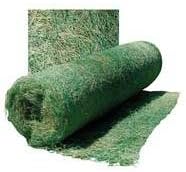
| Included Components | Fabric with netting |
|---|---|
| Material Type | Plastic |
| Fabric Type | Net |
| Additional Features | Biodegradable, Durability |
Curlex II Erosion Control Fabric is designed to stabilize soil on slopes and in channels for a single growing season. The product pairs a biodegradable fiber mat with extruded plastic netting on both faces, which provides strength and holds seed and mulch in place while allowing water to pass through. Typical uses include lining ditches, protecting newly seeded hillsides, and controlling erosion on slopes up to 1.5:1 or channels flowing up to 9 feet per second. The fabric is lightweight and comes dyed green for immediate visual blending into the landscape, which makes handling and placement easier during installation. It meets common specifications for ditch lining, so it is suitable for many municipal and contractor projects as well as homeowner erosion control. The main limitations are that it is intended for one-season performance and uses plastic netting, so long-term permanent stabilization will require additional measures or replacement with longer-lasting products.
Best for: Gardeners, landscapers, and homeowners who need a reliable, contractor-grade fabric for short-term slope and ditch stabilization and want a product that supports seed establishment during the first season.
Less Ideal for: People seeking a permanent or multi-year erosion control system for steep or highly erosive sites should consider heavier duty or permanent solutions instead.
- Extruded plastic netting on both sides increases durability and helps hold seed and mulch in place
- Rated for slopes up to 1.5:1 and channels up to 9 fps, matching common erosion-control specs
- Biodegradable fiber core provides seasonal stabilization while allowing vegetation to establish
- Lightweight material is easier to handle and install compared with heavier alternatives
- Designed for single-season use so it is not a permanent erosion-control solution
- Contains plastic netting which may require removal or replacement for long-term projects
Verdict: Use Curlex II when you need an easy-to-install, biodegradable fabric that provides effective one-season stabilization for seeded slopes and ditches.
Sandbaggy Coir Erosion Control Mat (4 ft x 80 ft)

| Material Type | Coir, Jute |
|---|---|
| Number of Pieces | 1 |
| Item Thickness | 0.5 inches |
| Other Special Features of the Product | Biodegradable |
| Water Resistance Level | Waterproof |
This Sandbaggy coir mat is a dense coconut-fiber erosion control blanket intended for medium-term slope stabilization and seed protection. It is laid over bare soil on hillsides, banks, or shorelines, pinned in place to reduce runoff, hold seed and soil, and encourage vegetation to take root. Notable features include biodegradable coir and jute construction, a half-inch thickness, and a footprint covering 4 by 80 feet per roll, which makes it practical for multi-roll restoration of longer runs. The mat resists water while still allowing moisture and light to reach seeds, and the natural fibers gradually decompose over two to five years as plant roots assume soil-holding duties. Limitations are that installation requires staking and some site prep on steeper or rocky ground, and the product is single-layer natural fiber so it will not provide permanent structural stabilization where engineered hardscape is required. For performance-focused users this product offers a durable, longer-lasting natural option compared with straw blankets but still relies on proper installation and vegetation establishment to succeed.
Best for: Gardeners, landscapers, and restoration contractors who prioritize durable, natural erosion control to protect slopes while establishing vegetation.
Less Ideal for: Property owners seeking a permanent engineered retaining solution or an instant hard barrier for high-energy coastal or severe wash zones should consider structural alternatives.
- Biodegradable coir and jute fibers provide 2–5 years of effective erosion control while supporting plant establishment
- Waterproof yet permeable construction lets moisture and light reach seeds to promote germination
- Large roll coverage (4 ft x 80 ft) reduces seams and speeds installation on long slopes
- Higher durability than straw blankets for longer service life on exposed sites
- Requires staking and site preparation on steep or rocky slopes
- Not a permanent structural solution for severe erosion where hard engineering is needed
Verdict: Choose this coir mat when you need a higher-performance, biodegradable blanket that stabilizes slopes and supports vegetation for several years while natural fibers break down.
GROWTRAX Biodegradable Grass Seed Mat — 50 sq ft Roll

| Indoor Outdoor Usage | Outdoor |
|---|---|
| Other Special Features | Biodegradable, All-in-One Grass Seed and Mulch, Fast-Growing, Lawn Repair, Drought-Resistant |
| Sunlight Exposure | Shade |
| Moisture Needs | Moderate Watering |
| Unit Count | 1 Count |
The GROWTRAX grass seed mat is a ready-to-use roll designed to simplify seeding and lawn repairs on slopes and flat areas alike. You unroll the mat over prepared soil, water it, and the integrated seed, micro-pellet fertilizer, and natural mulch hold seeds in place while the biodegradable fabric protects against erosion and washing. Because each roll contains seed at a high planting rate and a fast-germinating fertilizer, it produces quicker, more uniform coverage than loose seed in vulnerable spots. The mat is lightweight, easy to cut to size for patching dog spots or narrow swales, and rated for sun to semi-shade conditions with moderate drought resistance. Expect the fabric to degrade as grass establishes, leaving a thicker, durable turf. Limitations are that it is sized for about 50 square feet per roll so larger erosion projects will need multiple rolls, and it requires consistent watering until seedlings take hold and temperatures above roughly 50°F for best results.
Best for: Gardeners who want a low-effort, practical solution to stabilize small slopes or repair bare patches without installing sod or complex erosion controls.
Less Ideal for: Those tackling large-scale hillside stabilization or severe erosion where engineered erosion-control products or hydroseeding would be more appropriate.
- All-in-one system with seed, fertilizer, and mulch pre-applied for faster, more uniform germination
- Biodegradable fabric holds seed in place to reduce washout on slopes and during rain
- Lightweight roll is easy to cut and install for patching or covering irregular areas
- Designed to perform in sun and semi-shade with moderate drought resistance
- Covers only about 50 sq ft per roll so multiple rolls are needed for larger erosion-prone areas
- Needs regular watering and temperatures above about 50°F for reliable establishment
Verdict: Use this roll-out biodegradable seed mat to quickly establish grass and reduce washout on small slopes and patches with minimal effort.
Farm Plastic Supply Straw Erosion Control Blanket (2' x 112.5')

| Item Form | Mat |
|---|---|
| Specific Uses For Product | Riverbeds, hills, culvert inlets and outfalls, channel and ditch linings |
| Coverage | 2' x 112.5' |
| Target Species | straw |
This straw erosion control blanket is a basic, no-frills solution for stabilizing hills, riverbanks, and ditches while new vegetation establishes. Made from mechanically stitch-bonded agricultural straw, the mat is unrolled over the seeded area and secured with staples or anchors to hold soil in place and reduce runoff. Its main benefits are moisture retention to improve seed germination and physical protection of seed and topsoil from rainfall impact. Typical use is on slopes or channels where you want a temporary cover until plants take root; the manufacturer recommends anchoring every 3 to 5 feet and positioning the blanket perpendicular to the slope. It is lightweight to handle for one person and sized to cover narrow runs. Limitations are that a straw blanket is a temporary, biodegradable option that will need replacement if it becomes displaced or heavily degraded, and it offers less long-term durability and structural reinforcement than heavier synthetic or coir blankets.
Best for: Buyers who need an affordable, temporary erosion control cover to protect seeded hills and channels while vegetation establishes and who prioritize simple, biodegradable materials over permanent stabilization.
Less Ideal for: Those needing a durable, long-term slope reinforcement or heavy-duty erosion mat for high-flow channels should consider synthetic or coir alternatives.
- Mechanically stitch-bonded straw holds together better than loose straw for easier installation
- Designed to retain soil moisture and improve seed germination on newly seeded slopes
- Intended uses include riverbeds, hills, culvert inlets and outfalls, and channel linings
- Biodegradable straw will break down and is not a long-term structural solution
- Coverage is limited to the listed roll size which may require multiple rolls for larger slopes
Verdict: A budget-friendly biodegradable straw blanket that helps protect seeded hills and retain moisture while vegetation establishes.
DeWitt Curlex I Excelsior Erosion Control Blanket, 4 x 112.5 ft (10-Pack)

| Material | Aspen wood excelsior |
|---|---|
| Construction | Single net, photodegradable top net |
| Color | Green dyed surface |
| Intended use | Soil stabilization on slopes, banks, channels |
The DeWitt Curlex I Excelsior Erosion Control Blanket is a rolled aspen wood-fiber mat intended to hold seeded or disturbed soil in place on slopes, banks, roadside edges, and drainage channels. It is typically unrolled over a prepared seedbed and anchored in place; a photodegradable top net keeps the long wood fibers in position during installation. The blanket gives immediate surface protection to reduce rill formation and sheet erosion while grasses or groundcover germinate and establish root structure. Its green-dyed face helps the installation blend into the landscape. Because the fibers are natural excelsior, the blanket provides temporary stabilization rather than a permanent barrier and will biodegrade as vegetation takes over. The single-net construction makes handling and anchoring straightforward for contractors and experienced DIYers, though projects that need longer-term structural reinforcement may require heavier engineered mats or woven products.
Best for: Gardeners, landscapers, and contractors who prioritize reliable, natural temporary stabilization while seeded vegetation establishes on hillsides and drainage channels.
Less Ideal for: People needing permanent heavy-duty reinforcement on steep or highly erosive sites should consider stronger synthetic or double-net erosion mats and engineered solutions.
- Made from natural aspen excelsior fibers that promote soil retention and natural breakdown
- Photodegradable top net holds fibers in place for easier installation on slopes and channels
- Roll length provides long continuous coverage suitable for extended slopes and drainage runs
- Green-dyed surface blends with the landscape for a neater appearance during establishment
- Biodegradable design is temporary and not suited for long-term structural erosion control
- Single-net construction offers less mechanical strength than double-net or heavier engineered blankets
Verdict: Choose this natural excelsior blanket when you want a reliable, biodegradable solution to protect seeded slopes and reduce surface erosion while vegetation establishes.
Outsidepride White Dutch Clover Seed, 2 lb

| Indoor Outdoor Usage | Outdoor |
|---|---|
| Other Special Features of the Product | Attracts Pollinators |
| Sunlight Exposure | Full Sun |
| Moisture Needs | Little To No Watering |
| Material Features | Heirloom |
Outsidepride White Dutch Clover is a perennial clover seed sold in a 2 pound bag and treated (nitrocoated and inoculated) to support reliable germination and soil nitrogen fixation. It is typically broadcast or mixed with grass/cover-crop seed, lightly raked in, and kept moist until established; germination is expected within about two weeks under warm soil conditions. Notable features include drought tolerance from a deep root system, attractiveness to pollinators when it blooms in summer, and an ability to form dense ground cover that suppresses weeds and reduces erosion. Practical benefits for full-sun sites include low watering needs once established, weed suppression, improved soil fertility from nitrogen fixation, and a visually pleasing carpet of small white flowers. Important limitations are that it grows low to the ground (a few inches up to a foot) so it is not a turf substitute where heavy foot traffic or formal mowing height is required, and establishing a uniform stand requires correct seeding rate and initial moisture management. This seed is best used for informal lawns, slopes, pollinator strips, and pasture mixes rather than high-traffic ornamental lawns.
Best for: Gardeners and homeowners who want a low-maintenance, pollinator-friendly ground cover or lawn alternative for sunny areas and slopes and who prioritize ecological benefits and ease of establishment.
Less Ideal for: Property owners who need a formal, high-traffic turf or a grass lawn with traditional mowing and wear resistance should consider conventional grass seed blends instead.
- Treated (nitrocoated and inoculated) seed for improved germination and soil health
- Attracts pollinators with fragrant white summer blooms
- Forms dense ground cover that helps suppress weeds and control erosion
- Drought tolerant once established, suitable for low-water sites
- Not suited for heavy foot traffic or formal turf uses
- Requires initial moisture and correct seeding rate for an even stand
Verdict: A quick-establishing, pollinator-friendly ground cover seed that improves soil nitrogen and holds sunny slopes and informal lawns with minimal ongoing watering.
AK TRADING CO. Soil Saver Jute Erosion Control Mesh Blanket, 48" x 20 yd

| Material Type | Alloy Steel, Jute |
|---|---|
| Unit Count | 1 Count |
| Number of Packs | 1 |
| Item Type Name | Jute Erosion Control, Soil Saver Mesh Blanket – 48" Wide x 20 Yards |
This jute erosion-control mesh is a roll of 48-inch-wide, 20-yard-long natural fabric meant to stabilize soil on slopes, embankments, and freshly seeded areas. It is used by unrolling and laying the blanket over bare soil, securing it with staples or pins, and trimming to fit around contours; the open jute weave holds seed and soil in place while allowing water to pass through. Notable features include biodegradable jute construction and a manageable width that makes positioning and cutting straightforward for one or two people. The practical benefits are reduced surface erosion, improved seed germination by protecting seed from washout, and eventual decomposition that removes the need for retrieval. Limitations are that the material is temporary—expected to last months rather than years—so it is not a permanent hardpoint against severe erosion, and heavy or prolonged water flow can displace untreated edges if not well anchored. It also requires site-appropriate anchoring and occasional inspection after storms to remain effective.
Best for: Gardeners and property owners who want a low-risk, natural solution to stabilize newly seeded slopes and reduce surface runoff while avoiding synthetic materials.
Less Ideal for: Those needing a permanent erosion control structure or protection against fast-moving concentrated runoff should consider engineered solutions or heavier erosion-control products.
- Made from natural biodegradable jute that integrates into soil and leaves no synthetic residue
- 48-inch roll width is easy to handle and can be cut to fit contours
- Permeable open weave allows water infiltration while retaining seed and topsoil
- Simple to install for small crews or DIYers using staples or pins
- Designed as a temporary measure and will degrade in roughly several months so not suitable as a long-term erosion wall
- May require frequent anchoring and inspection on steep slopes or after heavy rainfall
Verdict: Choose this biodegradable jute blanket when you want a simple, natural temporary ground cover that protects seeded slopes while it breaks down into the soil.
Choosing the Right Ground Cover for Hill Erosion: Key Factors to Consider
Root Structure and Soil Binding
Root architecture determines how well a ground cover holds slope soil in place. Deep, fibrous roots and dense rhizome or stolon networks create a living mesh that resists slumping and surface wash during heavy rain.
When evaluating plant choices, favor species that develop extensive belowground systems within the first one to three seasons. Shallow taproots alone are less effective at binding topsoil on steep slopes. Also consider whether a plant spreads by runners or forms tight mats; runner-forming species can quickly knit disturbed areas together while mat-formers limit surface erosion.
Establishment Speed and Seasonal Timing
How quickly a ground cover fills bare ground affects short-term erosion risk. Fast-establishing plants are valuable for newly disturbed slopes or areas with recent grading because they reduce soil exposure during the vulnerable establishment period.
Plan planting in a season that maximizes establishment success for your climate, typically spring or early fall. Slower-establishing perennials may still be excellent long-term stabilizers but might need temporary mulch, erosion fabric, or temporary seeding while they become established.
Water Tolerance and Drought Resilience
Hillsides often experience variable moisture: rapid runoff zones that dry quickly and low points that hold more water. Choose ground covers that match your slope's moisture pattern. Species tolerant of periodic saturation will survive drainages and swales, while drought-tolerant choices thrive on exposed, well-drained banks.
Avoid water-loving plants on exposed ridges and avoid strictly xeric species in shallow-ponding hollows. A mix of moisture-adapted plants can handle microclimate variation across a single slope.
Maintenance Needs and Practical Upkeep
Maintenance affects long-term success. Low-maintenance ground covers that require little mowing, trimming, or replanting reduce ongoing labor and cost. However, some higher-maintenance species establish faster or provide superior soil binding and may be worth occasional care early on.
Consider access for weeding and whether the cover tolerates periodic trimming or foot traffic. Also evaluate how easily volunteer seedlings or runners can be managed to prevent unwanted spread into adjacent beds.
Sun Exposure and Soil Conditions
Aspect and soil type shape which ground covers will thrive. South- and west-facing slopes usually receive more sun and dry out faster, favoring drought-tolerant and heat-adapted species. North- and east-facing slopes may be shadier and retain moisture, favoring plants that tolerate lower light and higher humus content.
Test soil texture and pH when possible. Soil that is compacted, very sandy, or heavy clay will favor different species; some ground covers tolerate clay and poor fertility while others need well-drained, loamy soil to establish.
Erosion Mechanics and Slope Angle
The severity of erosion risk depends on slope angle, length, and the intensity of runoff. Gentle slopes can often be stabilized with shallow-rooted mats, while steep banks may need plants with deeper, stronger root systems and structural measures like terraces or erosion control blankets.
For long or steep slopes plan for staged plantings and physical erosion control during establishment. Also consider combining plantings with contour terraces, mulching, or biodegradable fabrics to reduce initial runoff velocity and sediment loss.
Site Preparation for Slopes
Proper site prep reduces initial erosion and gives ground covers a better chance to establish. Remove any large debris and grade the slope to eliminate gullies or abrupt channels that concentrate runoff. Dividing long slopes into shorter runs with low terraces or contour barriers slows water flow and reduces shear stress on new plants.
- Loosen compacted soil to encourage root penetration without creating loose, erodible layers.
- Add organic matter to poor soils to improve moisture retention and root growth.
- Install temporary erosion measures such as straw mulch or biodegradable erosion control fabric on highly exposed banks.
Planting Strategies and Spacing
Spacing determines how quickly a planted area will knit together. Closer spacing speeds canopy closure but costs more initially. For long-term erosion control, prioritize denser plantings on critical zones like the base of the slope, channels, and areas with concentrated runoff.
Bullets are useful for quick reference but spacing depends on species growth habit. Use staggered rows and mixed plantings where appropriate to create overlapping root networks and reduce open soil gaps.
- Use staggered or triangular spacing rather than strict rows to minimize bare ground.
- Plant faster-establishing species with slower-growing stabilizers to get immediate cover and lasting root structure.
- Place hardy plugs or cuttings at erosion hotspots such as rills and drainage outlets.
Combining Plants With Structural Controls
Plants work best when combined with physical measures during establishment. Terracing, check dams, coir logs, and biodegradable matting reduce flow speed and allow roots to take hold without being washed away. These measures are often temporary but can be critical on freshly graded or very steep banks.
On long-term projects, integrate plantings into structural earthworks. Deep-rooted shrubs or native grasses can be placed along contour lines to form living barriers that reduce sheet flow and trap sediment.
- Install coir or jute matting on very steep slopes until vegetation establishes.
- Use contour logs or rock check dams to interrupt concentrated channels.
- Pair plants with mulch to conserve moisture and reduce surface scouring.
Managing Invasive Potential and Native Alternatives
Avoid species known to be invasive in your region because a ground cover intended to stabilize slopes can become a management headache if it spreads into natural areas. Prioritize native or well-behaved non-native species with predictable growth habits.
When using non-native ground covers, check local invasive plant lists and choose cultivars or sterile varieties when available. Native plants often provide better ecological benefits and are adapted to local soils and climate, improving long-term survival on slopes.
- Consult local extension services or plant conservation lists before selecting species.
- Consider mixing natives and non-invasive ornamentals for diversity and resilience.
- Remove aggressive volunteers early to prevent them from overtopping desired plantings.
Maintenance Through Establishment and Beyond
Early maintenance focuses on watering plans, weed control, and monitoring for erosion. Water newly planted plugs or cuttings according to establishment needs; deep, infrequent watering encourages deeper roots. Mulch helps retain moisture and protects soil while plants are small.
Long-term maintenance is usually minimal for well-chosen covers but may include occasional thinning, trimming, or spot replanting after extreme weather. Plan for periodic checks after heavy storms to repair any washed sections quickly and re-establish plants before larger failures occur.
- Set a seasonal inspection schedule, especially after heavy rains.
- Use targeted hand-weeding rather than broad herbicide applications on slopes to avoid damage to desired plants.
- Be prepared to replace small sections in the first two years while root systems develop.
How We Chose the Best Ground Cover for Hill Erosion
We focused on plants and ground-covering solutions that are proven to stabilize sloped terrain and withstand the environmental stresses common on hills. Selection criteria emphasized root architecture and soil-binding ability because deep, fibrous, or mat-forming roots directly reduce erosion risk. Establishment speed was a second priority since faster canopy closure cuts exposure and limits washouts during the first seasons. Drought and precipitation tolerance were included to match varied hillside microclimates, along with ground coverage habit and ability to tolerate foot traffic or occasional mowing where needed. Maintenance demands were evaluated so options that require frequent replanting, heavy pruning, or intensive irrigation scored lower for typical gardeners. We excluded plants that are highly invasive in many regions or that require specialized greenhouse propagation. The final list balances erosion-control effectiveness, adaptability to common slope soils and aspects, and manageable maintenance for home gardeners.
FAQ
What is the fastest way to stop erosion on a newly exposed slope?
Temporary erosion measures combined with fast-establishing ground cover work best. Apply straw mulch or biodegradable fabric to protect soil, then plant quick-cover species to reduce runoff until slower perennials mature.
Can I use turf grass on a slope to prevent erosion?
Turf grass can stabilize gentle slopes if the grass species forms a dense sod and is properly maintained. On steeper banks, turf may not provide enough root depth; consider deeper-rooted native grasses or mat-forming plants instead.
How soon will ground cover reduce visible erosion?
Some fast-establishing species will noticeably reduce surface erosion in a single season once they cover most bare soil. Deep root effects and long-term stabilization usually take one to three growing seasons as root systems develop.
Do I need to water the plants regularly on a slope?
Watering needs depend on plant choice and slope exposure. New plantings typically need supplemental watering until roots establish. After establishment, choose drought-tolerant species for dry slopes to minimize long-term irrigation.
Will ground cover prevent landslides on very steep slopes?
Ground cover helps reduce surface erosion and shallow soil slippage but does not prevent major landslides caused by deep-seated failures. Very steep or unstable slopes may require engineered stabilization in addition to planting.
Is it better to plant plugs, seed, or cuttings on a hillside?
Plugs or cuttings generally establish faster and are more reliable on slopes compared with seed, which may wash away. Seed can work where soil is stable and protected with mulch or fabric, but plugs give quicker root development for erosion control.
Final Verdict
Prioritize root stability, establishment speed, and moisture tolerance when selecting ground cover for hill erosion. Balance quick-cover species for immediate protection with deeper-rooted or mat-forming plants for long-term soil binding. Expect to use temporary erosion controls on steeper or newly disturbed slopes, and plan for modest early maintenance to ensure plants establish. With the right combination of site prep, species selection, and early care you can substantially reduce erosion and create a low-maintenance, stable hillside planting.
