

Note: This article contains affiliate links. If you click on these links and make a purchase, I may earn a small commission at no extra cost to you. This helps support my research and content. Read my full affiliate disclosure here.
Choosing the right ground cover to control weeds makes a big difference in how much time you spend pulling, spraying, or mulching. The right species or matting fills bare soil, shades out weed seedlings, and tolerates your site conditions so it survives the first season and beyond. This guide covers seven top ground cover options shortlisted for their weed-suppressing ability, establishment speed, and maintenance requirements. We evaluated each option for spread habit, sun and moisture tolerance, and long-term care needs so you can pick a solution that fits your beds, slopes, or large lawn alternatives. Read on for practical notes that clarify where each type works best.
Top Picks at a Glance
| Best Overall The best all-around choice for most situations | EXTRAEASY 3 ft x 300 ft Heavy-Duty Woven Weed Barrier Fabric (3.2 oz) |  |
| Best Quality Built to a higher standard if you want something more solid | DeWitt Pro-5 5 oz Weed Barrier Fabric, 3 ft x 250 ft |  |
| Best Value The sweet spot between price and what you get | Amazon Basics Weed Barrier Landscape Fabric, 3 x 50 Feet |  |
| Best Budget The cheapest option that still gets the job done reliably | HANWRAPS 3.3 ft x 13 ft Heavy-Duty Weed Barrier Fabric (3.2 oz) |  |
| Highest Rated A top-rated pick with lots of positive feedback | Heavy-Duty PP Weed Barrier Fabric for Garden and Landscape |  |
| Most Popular A crowd favorite that many people choose with confidence | GardenMate 6 x 33 ft Weed Control Fabric, 100 g/m² UV-Stabilized Polypropylene |  |
| Best Seller A high-volume bestseller chosen again and again | Liaycco 40" x 5 ft Natural Jute Burlap Fabric Roll |  |
EXTRAEASY 3 ft x 300 ft Heavy-Duty Woven Weed Barrier Fabric (3.2 oz)

| Material | Woven PP |
|---|---|
| Weight | 3.2oz |
| Coverage | 3 ft x 300 ft (900 sq. ft.) |
This EXTRAEASY woven weed barrier is a no-nonsense option for covering large flower beds and landscape areas. The 3.2 oz woven polypropylene construction resists tearing and stands up to mulch, foot traffic, and typical outdoor exposure, so it can serve as a multi-year underlayer when covered. It blocks most sunlight to inhibit weed germination while still permitting water, air, and nutrients to reach the soil, which helps planted beds stay healthy. Installation is straightforward: roll it out, cut to shape, overlap seams, and secure with staples; it works well around trees, raised beds, and irrigation lines. Because it is heavy duty, it requires basic tools to position and may be overkill for very small or decorative beds where a thinner fabric would be easier to handle. Also note that woven fabrics can eventually allow fine weed seeds to settle on top of the material if not covered with mulch or gravel. For gardeners who want a durable, low-maintenance base layer for flower beds, this fabric reduces ongoing weeding and extends the time between maintenance sessions.
Best for: Gardeners who prioritize efficient, long-lasting weed suppression across multiple or large flower beds and want to reduce routine maintenance with a durable underlayer.
Less Ideal for: Those planting many small, densely planted or ornamental beds where frequent soil access or delicate planting is required; also not the best choice for gardeners who prefer biodegradable options.
- Heavy-duty 3.2 oz woven polypropylene resists tearing and holds up under mulch and foot traffic
- Allows water, air, and nutrients to pass through while blocking most sunlight to suppress weeds
- Large 3 ft x 300 ft roll covers extensive area, reducing installation time for big beds
- Straightforward lay-and-pin installation that integrates around trees, raised beds, and irrigation
- Thicker material can be cumbersome to cut and position for small or intricate planting areas
- Woven fabric can allow fine seeds and debris to accumulate on top if not covered with mulch or gravel
Verdict: Choose this heavy-duty woven fabric when you need a durable, water-permeable weed barrier to cut maintenance across large flower beds.
DeWitt Pro-5 5 oz Weed Barrier Fabric, 3 ft x 250 ft

| Item Form | Ground Cover Mat |
|---|---|
| Special Features | Safe Around Vegetation |
| Surface Recommendation | Outdoors |
| Scent | Unscented |
DeWitt Pro-5 is a commercial-grade woven weed barrier intended for large garden beds, pathways, and landscape runs where durable, long-term weed control is needed. The fabric is heavy-duty and tear-resistant, so it holds up during installation and under light foot traffic. It is water-permeable and breathable, which lets rainfall and nutrients pass into the soil while suppressing weed growth, and gold alignment stripes every foot make laying out straight rows and spacing plants simpler. In practice it works well under mulch, gravel, or around raised beds to reduce maintenance and help planted areas stay tidy. The main compromises are that woven landscape fabric does not eliminate persistent weeds that grow from seed on top of the fabric and that it requires careful cutting and placement around plants to avoid interfering with root zones. For balanced, all-purpose landscape use this fabric offers a durable, low-maintenance ground-cover solution for medium to large projects.
Best for: Gardeners and landscapers who want a durable, low-maintenance ground cover for medium to large beds, pathways, and commercial planting runs and value longevity over short-term convenience.
Less Ideal for: People with very small container gardens or those who prefer to eliminate weeds without using physical barriers should consider other options.
- Heavy-duty woven construction resists tears and punctures during installation
- Allows air, water, and nutrients to pass through to the soil
- Gold alignment stripes every 12 inches simplify row layout and plant spacing
- Suitable for large runs and high-traffic landscaping uses
- Will not stop weeds that germinate in mulch placed on top of the fabric
- Requires careful cutting and placement around existing plants to avoid root restriction
Verdict: A tough, water-permeable woven fabric that gives reliable, long-lasting weed suppression for medium to large landscape and garden projects.
Amazon Basics Weed Barrier Landscape Fabric, 3 x 50 Feet

| Material | Polypropylene |
|---|---|
| Weight | 90 GSM (3.2 oz) |
| Purpose | Weed control, erosion prevention |
This Amazon Basics landscape fabric is a straightforward heavy-duty weed barrier intended for garden beds, paths, and under gravel or pavers. Made from 90 GSM (3.2 oz) polypropylene, the material is tear-resistant and laid flat to suppress weed growth while remaining permeable so water and fertilizer reach plant roots. The 3 x 50 foot roll covers a typical raised bed or several smaller beds and is easy to cut to shape; factory guide lines simplify alignment and trimming tips help reduce edge fraying. It is commonly used under mulch, river rock, or around perennials where long-term weed suppression is desired without impeding drainage. Limitations are that heavier soils or high-traffic areas will eventually wear the fabric and that it does not stop weeds that grow from seed on top of mulch or from root intrusion without proper installation and overlap. For gardeners focused on straightforward, durable weed control this fabric delivers a low-effort solution, especially when paired with correct installation and surface mulch.
Best for: Gardeners who prioritize practical, low-maintenance weed suppression for beds and borders and want an affordable, easy-to-install fabric to pair with mulch or decorative rock.
Less Ideal for: Growers who prefer no-barrier methods like sheet mulching or those needing an impermeable membrane for heavy paving or structural erosion control.
- 90 GSM polypropylene offers tear resistance suitable for garden-bed and under-gravel use
- Breathable fabric allows water and nutrients to penetrate to the soil
- Guide lines on the fabric make alignment and cutting easier
- Large 3 x 50 ft roll covers multiple beds or a long border without frequent joins
- Will eventually degrade or wear in high-traffic or heavily amended soil areas
- Does not prevent weeds that sprout above the fabric without proper mulch and maintenance
Verdict: A durable, breathable landscape fabric that gives practical, low-effort weed suppression for garden beds and borders.
HANWRAPS 3.3 ft x 13 ft Heavy-Duty Weed Barrier Fabric (3.2 oz)

| Material | Polypropylene |
|---|---|
| Fabric weight | 3.2 oz |
| Size | 3.3 ft x 13 ft |
| Manufacturer | HANWRAPS |
HANWRAPS weed barrier fabric is a budget-friendly woven polypropylene cloth sold in a 3.3 ft by 13 ft roll intended for garden beds, pathways, and light landscaping. It is a 3.2 oz heavy-duty fabric with a high-density weave that resists tearing and holds up to sun and cold exposure, yet remains permeable so water and air reach the soil. Typical use is to lay the fabric over prepared soil, cut to shape, secure with pins, and cover with mulch or gravel to suppress weeds while retaining soil moisture. The material is easy to cut for custom beds and can be butted or overlapped to cover larger areas. Practical benefits include simple installation, decent durability for seasonal projects, and versatility for small home gardens or underlayment tasks. Limitations are the single-roll size that may require several pieces for larger beds and that woven polypropylene will eventually degrade under prolonged UV exposure, so it is better for medium-term rather than permanent installations.
Best for: A gardener on a budget who needs an affordable, easy-to-install weed barrier for small to medium beds, pathways, or under mulch and gravel.
Less Ideal for: People planning permanent, heavy-traffic installations or covering large areas who prefer industrial-grade geotextiles designed for long-term civil projects.
- High-density woven polypropylene offers good tear resistance for routine garden use
- Permeable weave lets water and air reach roots while reducing weed growth
- Easy to cut and splice for custom bed shapes and modular coverage
- Single 3.3 ft x 13 ft roll is small for larger landscapes so multiple rolls may be needed
- Woven polypropylene will slowly break down with long-term UV exposure and heavy wear
Verdict: A cost-conscious, easy-to-cut woven fabric that reliably suppresses weeds and retains soil moisture for small to medium garden projects.
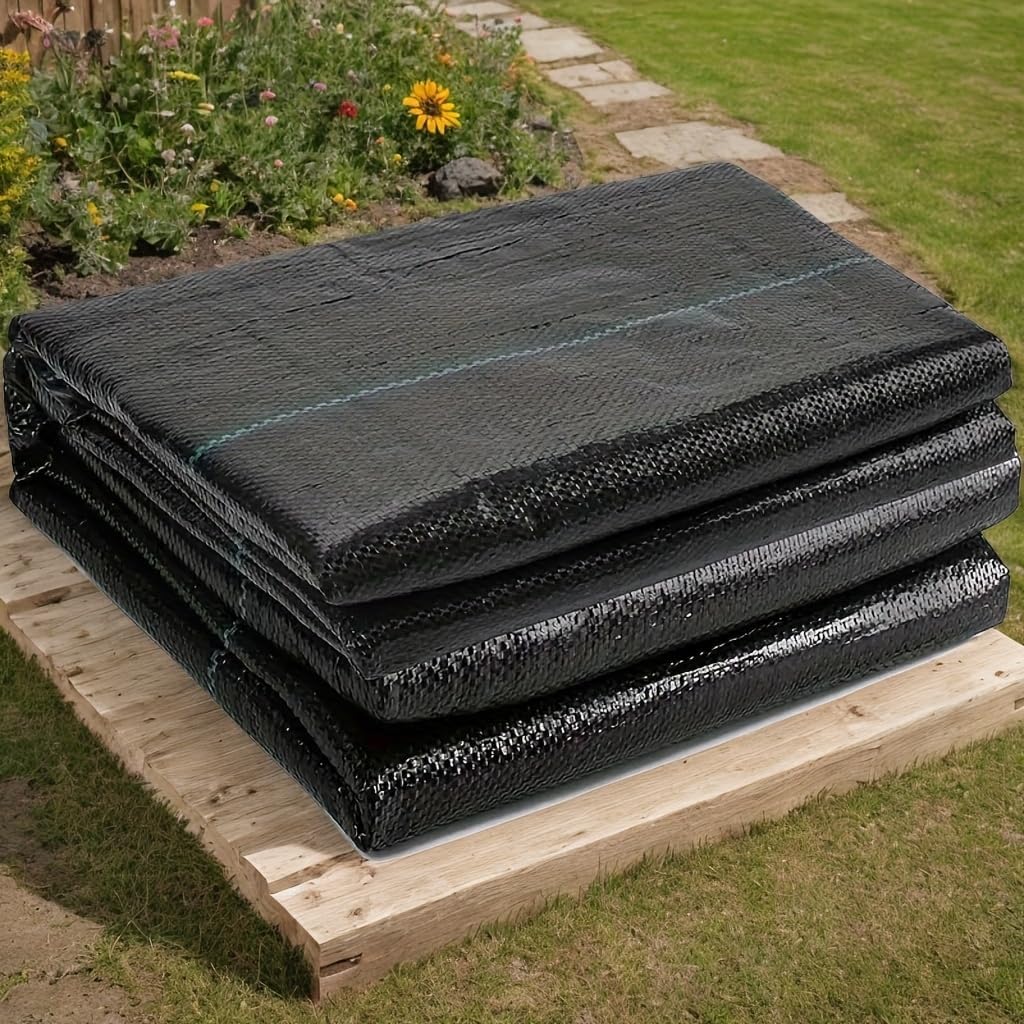
Heavy-Duty PP Weed Barrier Fabric for Garden and Landscape
| Material | Polypropylene |
|---|---|
| Intended use | Weed control for flower and vegetable beds |
This heavy-duty polypropylene weed barrier is built for long-lasting suppression of weeds in gardens and landscaping. It is laid over soil and secured at edges or with landscape pins, then cut where plants are needed; the fabric allows water and air through while blocking light to reduce weed growth. The material shown and described is robust compared with lightweight landscape fabrics, so it is suitable for high-traffic beds and areas where mechanical weeding is difficult. Practical benefits include reduced time spent hand-weeding and clearer beds during the growing season. Important limitations are that permanent installation may make adding new plants harder without cutting and replacing sections, and it does not replace the need to remove existing weeds and roots before installation. Expect to pair it with proper edging and pinning to prevent shifting and to monitor for soil and organic buildup that can eventually support weeds on top of the fabric.
Best for: Gardeners who prioritize a reliable, low-maintenance solution for established beds and want to cut down on regular weeding time while keeping irrigation effective.
Less Ideal for: People who frequently replant, rotate crops, or prefer annual full-till bed turnover should consider removable mulches or no-cover methods instead.
- Heavy-duty polypropylene material for longer durability than lightweight fabrics
- Permeable to water and air so irrigation and soil respiration are maintained
- Suitable for flower beds and vegetable gardens to reduce routine weeding
- Multiple image references suggest different sizes/configurations are available
- May require cutting and replacement to add or move plants after installation
- Not a complete solution for weeds if existing roots or runners are not removed first
Verdict: Choose this heavy-duty PP landscape fabric when you want a durable, water-permeable barrier that reliably reduces weed growth in established garden beds.
GardenMate 6 x 33 ft Weed Control Fabric, 100 g/m² UV-Stabilized Polypropylene

| Material Type | Polypropylene (PP) |
|---|---|
| Fabric Weight | 100 grams_per_square_meter |
| Item Thickness | 100 mils |
| Unit Count | 215.28 Square Feet |
This GardenMate woven landscape fabric is a straightforward heavy-duty weed barrier for garden beds, paths, and under mulch. Made from UV-stabilized polypropylene at about 100 g/m², it is tear resistant and intended for long-term outdoor use; the weave is breathable so water, air and nutrients reach the soil while light is blocked to suppress weed growth. Typical use is laying the fabric over prepared soil, overlapping edges by at least 10 cm and securing with pins or anchors before covering with mulch, gravel or soil. Notable features are the advertised UV protection and a weight that balances durability with easy cutting using household scissors. Because it is not fully waterproof, it will still allow drainage and is suitable under paving or in raised beds. Limitations are that visible seams must be properly overlapped to prevent weeds at joins and it will not stop deep-rooted perennial weeds without additional mechanical control. For buyers concerned about longevity and proven results, this product presents a practical, low-maintenance weed suppression option when installed correctly.
Best for: Gardeners who prioritize proven, low-maintenance weed suppression and want a durable, UV-stabilized fabric they can install under mulch, gravel, or paving.
Less Ideal for: People seeking a completely impermeable membrane for pond liners or projects that require a waterproof barrier should consider a different product.
- UV-stabilized polypropylene resists sunlight degradation for longer outdoor life
- Breathable weave allows water and air to reach soil while blocking light to suppress weeds
- Heavy woven construction (100 g/m²) offers good tear resistance and durability
- Easy to cut and shape with household scissors for custom beds and paths
- Not water resistant when a fully impermeable barrier is required
- Seams need careful overlap and securing to prevent weeds emerging at joins
Verdict: Choose this UV-stabilized, heavy woven polypropylene fabric if you want a durable, breathable weed barrier for long-term garden beds and paths.
Liaycco 40" x 5 ft Natural Jute Burlap Fabric Roll

| Material | 100% natural jute |
|---|---|
| Weave density | 26 × 26 weave per inch |
| Width | 40 inches |
| Length | 5 feet |
This Liaycco burlap roll is a short-length, 40-inch-wide strip of natural jute woven with a relatively tight 26×26 weave and reinforced selvage edges. In the garden it is most often used as a ground cover to suppress weeds, a drape or wrap for shrubs and small trees for frost protection, or cut-to-size pieces for mulching and landscaping tasks. The fabric is breathable so it lets air and moisture pass to roots while offering shade and physical protection from wind and light frost. Practical benefits include easy cutting to fit beds or around trunks and a natural look that blends into planted areas and rustic decor projects. Because this listing is a 5-foot length, it is best for small jobs or trial use rather than large beds and you will need multiple rolls for wider coverage. The material is naturally degradable so it will break down over time outdoors and it does not provide the same long-term weed-blocking performance as heavier, synthetic landscape fabric.
Best for: Buyers who want a natural, biodegradable option for small-area ground covering, tree wrapping, or seasonal frost protection and prefer low-risk, easy-to-use materials.
Less Ideal for: Large-scale landscaping where continuous, long-lasting weed suppression is required or for buyers who need a single-roll solution to cover wide beds.
- Made from 100% natural jute so it is breathable and biodegradable
- Tight 26×26 weave with reinforced selvage for added durability
- Easy to cut and shape for custom ground cover, tree wrap, or craft uses
- Suitable for light frost protection and wind shielding for small plants
- Short 5-foot length limits coverage area per roll requiring multiple rolls for larger landscaping projects
- Not a long-term impermeable weed barrier compared with woven polypropylene landscape fabric
Verdict: A natural, easy-to-cut burlap roll that provides breathable, short-term ground cover and plant protection for small landscaping jobs.
Choosing the Right Ground Cover to Control Weeds: Key Factors to Consider
Establishment Speed and Method
How quickly a ground cover establishes affects how much weed pressure it can prevent in the first season. Fast-spreading liners, plugs, or mats can close gaps and shade seedlings sooner than slow, patch-forming species.
Consider the planting method you prefer. Pre-grown mats and plugs often cover ground quickly but require good soil contact. Seeded mixes may be cheaper but need careful weed control until they fill in. The establishment method also affects erosion control on slopes and whether supplemental watering is needed during the first months.
Light and Moisture Requirements
Different ground covers have specific sun and moisture tolerances that determine where they will form a dense, weed-suppressing mat. Some species thrive in full sun and dry soils; others need part shade and consistent moisture.
Match the ground cover to your garden microclimate. Planting a shade-adapted cover in a sunny bed will leave thinning gaps where weeds can get started. Likewise, a sun-loving cover in a wet, poorly drained area can rot out and fail to suppress weeds.
Growth Habit and Aggressiveness
Growth habit determines both weed suppression and the potential for a ground cover to encroach into other planting areas. Creeping, stoloniferous, or rhizomatous covers close gaps quickly but may require edging or periodic thinning.
Less aggressive, clumping types are easier to contain but might not suppress weeds as effectively on larger bare areas. Think about borders, nearby ornamentals, and how much time you want to spend keeping the cover contained.
Maintenance Needs and Longevity
Some ground covers are essentially low-maintenance after establishment, requiring only occasional trimming or division. Others need yearly thinning, deadheading, or replacement of worn patches.
Factor in the expected lifespan, how easy it is to propagate or rejuvenate the cover, and whether winter dieback will leave bare soil that invites weeds. Low-maintenance covers reduce long-term labor but may have tradeoffs in other areas like cold tolerance.
Soil Preparation and Erosion Control
Ground covers are only as effective as the soil they grow in. Proper soil preparation-removing major weeds, improving drainage, and adding organic matter-helps new plantings root quickly and establish dense cover.
On slopes, choose covers and installation techniques that resist washout and hold soil with fibrous roots. In compacted or poor soils, initial amendments or using heavier planting stock can improve establishment and weed suppression.
Compatibility with Garden Use and Aesthetics
Ground cover should fit the intended use of the area. A pathway alternative needs to tolerate foot traffic; a decorative bed calls for attractive foliage and flowering without becoming messy.
Consider seasonal appearance, flowering that may attract pollinators but also require cleanup, and how the cover pairs with adjacent shrubs and perennials. Compatibility reduces conflicts and makes containment easier.
Where Ground Cover Works Best
Ground cover excels on slopes, between shrubs, and in wide beds where continuous soil coverage is needed to block weed establishment. It is also useful as a low-growing lawn alternative in low-traffic areas or as an underplanting beneath taller ornamentals where grass struggles.
When using ground cover in shrub borders, leave room for future growth and plan for periodic thinning to keep the canopy uniform. For erosion control, choose species with strong fibrous roots that anchor topsoil and tolerate occasional surface runoff.
- Slopes and erosion-prone areas benefit from dense, quickly rooting covers
- Underplanting in shade or thin-soil beds where turf will not thrive
- Pathway edges and wide, low-traffic lawn substitutes where mowing is not required
Preparing the Site for Success
Clear perennial weeds and roots, and rake the soil to a fine, even surface before planting. Small persistent weeds left in place will compete strongly with young ground cover and undermine establishment.
Amend heavy clay or very sandy soils with organic matter to improve moisture retention and root penetration. On slopes, consider terracing or using erosion-control fabric temporarily until plants have formed a stable mat.
- Remove aggressive perennial weeds before planting
- Incorporate compost to improve structure and nutrient retention
- Use temporary mulch or erosion fabric on steep sites during establishment
Containment and Edge Management
Plan how you will keep aggressive ground covers from spreading into beds and lawns. Physical edging, root barriers, or regular trimming along the boundary will prevent unwanted migration.
For covers that spread by stolons or rhizomes, install barrier edging to at least a few inches deep or use regular mechanical separation each season. Less aggressive types may only require occasional hand-pulling where they creep beyond intended limits.
- Install edging for stoloniferous or rhizomatous species
- Trim or thin borders annually to maintain tidy edges
- Use root barriers where covers border fragile plantings
Watering and Fertilizer During Establishment
New plantings usually need more frequent watering until the root systems are established. Keep soil consistently moist but not waterlogged for the first several weeks to encourage rooting and quick canopy closure.
Fertilizer needs vary by species, but light feeding at planting and after the first flush of growth supports vigorous establishment. Avoid overfertilizing, which can produce weak, leggy growth that is less effective at shading weeds.
- Water deeply and regularly during the first two months
- Apply light balanced fertilizer at planting if soils are poor
- Reduce supplemental watering after the cover is established to encourage deeper roots
Seasonal Care and Rejuvenation
Most ground covers benefit from annual maintenance such as trimming, dividing, or selective thinning to maintain density and appearance. Removing dead material in spring helps new shoots fill in quickly and prevents winter-damaged pockets where weeds can invade.
If areas thin or die back, plug in fresh plants or overseed small patches to restore continuous coverage. Plan occasional rotational maintenance every few years to prevent thatch buildup or woody invasion that reduces weed suppression.
- Trim back dead growth in early spring for faster fill-in
- Divide overcrowded patches to rejuvenate vigor
- Plant new plugs into thin spots to restore continuous cover
How We Chose the Best Ground Cover to Control Weeds
To assemble this list we favored ground cover options that reliably reduce weed pressure through dense growth habit and rapid establishment. Primary filters included rate of horizontal spread, canopy density, and adaptability to common garden light and moisture ranges. We prioritized plants and coverings that create continuous soil cover within the first growing season under typical temperate conditions. Evaluation criteria also included maintenance burden, meaning how often a gardener must thin, divide, or edge the planting to keep it from invading adjacent areas. Durability through seasonal stress was considered, focusing on drought and cold tolerance relevant to many home gardens. Establishment methods and success rate from common planting approaches were reviewed, favoring materials and species with straightforward installation. Exclusions: we excluded options that require frequent replanting, heavy chemical inputs to remain viable, or those that are known to become highly invasive in most home landscapes. The final choices reflect a balance between weed suppression, site adaptability, and manageable long-term care.
FAQ
How long does it take a ground cover to suppress weeds?
It often depends on the species and planting method. Fast-spreading plugs or mats can begin to shade weeds within a single growing season, while seeded mixes or slower clump-formers may take a year or more to fully fill in.
Can ground cover replace mulch or landscape fabric for weed control?
In many situations a dense living ground cover provides longer-lasting suppression than mulch. However, landscape fabric or mulch may still be useful during establishment or on very steep slopes where erosion risk is high.
Will ground cover harm nearby shrubs or perennials?
It depends on the growth habit. Aggressive spreaders can compete for moisture and light if planted too close. Leave adequate space and plan for annual edging or trimming to protect nearby plants.
What maintenance should I expect after planting ground cover?
Expect some initial watering and light feeding, then seasonal tasks like trimming, dividing, and plugging thin spots. Aggressive covers may need more frequent containment to prevent unwanted spread.
Are there ground covers that tolerate foot traffic?
Yes. Some low-growing, tough species handle occasional foot traffic and make good pathway alternatives in low-use areas. For heavy use, however, hardscaping or turf alternatives designed for traffic are a better choice.
How do I handle a patch that thins or dies out?
Prepare the soil, remove dead material and weeds, then plant plugs or seed into the bare area. Improving soil drainage or adding organic matter often helps new plants establish more reliably.
Final Verdict
Focus on matching the ground cover to the light, moisture, and use pattern of the area you want to protect. Prioritize options that establish quickly and form a dense canopy for the strongest weed suppression, while planning reasonable containment for more aggressive types. Balance establishment speed against long-term maintenance: faster spreaders suppress weeds sooner but may need edging, while slower options are easier to contain but require patience. Choose the approach that fits your site and how much time you want to spend on upkeep.
