

Note: This article contains affiliate links. If you click on these links and make a purchase, I may earn a small commission at no extra cost to you. This helps support my research and content. Read my full affiliate disclosure here.
If you garden in a small yard or urban patio, the right compost bin turns kitchen scraps into garden-ready compost without taking over limited outdoor space. You need a unit that compacts organic material efficiently, manages moisture and odors, and fits the footprint you have available. This guide covers the top shortlisted compost bins for small yards, focusing on real-world performance in confined gardens. We evaluated compact capacity, airflow and moisture control, and ease of use so you can pick a setup that suits your maintenance style and planting needs. Read on for practical guidance before the product list.
Top Picks at a Glance
| Best Overall The best all-around choice for most situations | Nazhura Dual-Chamber 43 Gallon Compost Tumbler Bin |  |
| Best Value The sweet spot between price and what you get | Nouva 18.5 Gallon Tumbling Compost Bin with Steel Frame |  |
| Best Budget The cheapest option that still gets the job done reliably | AXCLCDBN 34‑Gallon Outdoor Compost Bin with Observation Window |  |
| Highest Rated A top-rated pick with lots of positive feedback | DIAMONDFORGE 37-Gallon Dual-Chamber Tumbling Compost Bin |  |
| Most Popular A crowd favorite that many people choose with confidence | VIVOSUN Outdoor Tumbling Composter, Dual-Chamber 43 Gallon |  |
| Best Seller A high-volume bestseller chosen again and again | FCMP Outdoor IM2000 Tumbling Composter (22.5 gal) |  |
Nazhura Dual-Chamber 43 Gallon Compost Tumbler Bin

| Capacity | 43 gallons |
|---|---|
| Material Type | Plastic and Galvanized Steel |
| Manufacturer Warranty Description | 1 Year |
The Nazhura dual-chamber compost tumbler is a practical outdoor bin that speeds up backyard composting by combining insulated rotating chambers with internal mixing when turned. You load kitchen scraps and yard waste into either chamber, let material heat and break down, then rotate the tumbler occasionally to aerate and mix the pile; one chamber can be active while the other finishes so you can compost continuously. Notable features include the side-by-side dual chambers for staggered batches, a slide-open access door for easy removal of finished compost, and construction using plastic with galvanized steel supports for weather resistance. In practice the unit makes managing smaller household volumes straightforward and keeps material off the ground to reduce pests and mess. Limitations are its 43 gallon capacity, which suits small to medium households but may require more frequent emptying for heavy gardeners, and the plastic body means very hot internal temperatures are harder to maintain than in larger insulated systems. Assembly and periodic turning are required to get the fastest results.
Best for: Gardeners who want a tidy, space-efficient way to turn household scraps into usable compost on an ongoing schedule and who value ease of use and continuous batches.
Less Ideal for: People with very large yards, frequent high-volume green waste, or those who need professional-scale hot composting results should consider larger or purpose-built insulated systems instead.
- Dual-chamber design allows continuous composting by loading one side while the other finishes
- Rotating tumbler and internal mixing accelerate decomposition compared with static bins
- Slide-open access door makes removing finished compost quick and tidy
- Plastic body with galvanized steel support resists outdoor weathering and reduces direct contact with pests
- 43 gallon capacity may be small for large yards or heavy kitchen waste producers
- Plastic construction limits maximum internal heat compared with larger insulated or insulated-metal systems
Verdict: A compact, easy-to-use dual-chamber tumbler that lets practical gardeners run continuous small-batch composting with minimal mess and effort.
Nouva 18.5 Gallon Tumbling Compost Bin with Steel Frame

| Capacity | 18.5 gallons |
|---|---|
| Material Type | Polypropylene (PP) |
| Shape | Hexagonal |
The Nouva 18.5 gallon tumbling compost bin is built for small yards and balconies that need a compact, low-effort way to turn kitchen and garden waste into usable compost. Its hexagonal PP barrel mounts to a powder-coated steel frame and rotates 360 degrees so you can aerate material simply by tumbling rather than digging or manual mixing. Multiple vent holes and a front access door make loading and removing finished compost straightforward, while the included gloves and easy assembly mean you can set it up in about 15 to 20 minutes. The small footprint fits tight outdoor spaces and the steel frame raises the drum to deter animals. Expect faster decomposition than a static bin thanks to the tumbling action, but plan to add appropriate browns and maintain regular tumbles for best results. This is a practical, affordable option if you need a compact, user-friendly tumbler rather than a high-capacity or insulated system for cold climates.
Best for: Homeowners or apartment gardeners who want a low-maintenance, space-efficient tumbler to convert kitchen scraps and small yard waste into compost without heavy lifting or a large footprint.
Less Ideal for: People who need to compost large volumes or want a system optimized for very cold climates should consider larger or insulated alternatives.
- Tumbling drum provides easy aeration for faster decomposition
- Compact 18.5 gallon capacity fits small yards, balconies, and patios
- Durable PP barrel combined with powder-coated steel frame resists weather and animal access
- Simple assembly with included tools and gloves so it is usable quickly
- Limited 18.5 gallon capacity may require frequent emptying for households with lots of waste
- No insulation or heating features, so performance can slow in cold weather
Verdict: A compact, easy-to-use tumbling composter that delivers faster, low-effort composting for small yards and balconies.
AXCLCDBN 34‑Gallon Outdoor Compost Bin with Observation Window

| Capacity | 34 gallons |
|---|---|
| Material Type | non-woven fabric |
| Material Features | weather-resistant |
| Item Form | Bag |
| Included Components | Reusable Bags |
This compact compost bin provides an inexpensive way to turn kitchen scraps and yard waste into usable compost. The 34‑gallon non‑woven fabric body is weather‑resistant and lightweight, so it is easy to relocate around a small yard or patio. Two features stand out for practical use: a clear observation window that lets you check decomposition and moisture without opening the lid, and a bottom harvest door that lets you collect finished compost while continuing to add new material at the top. Assembly is tool‑free and quick thanks to interlocking panels, making setup simple for first‑time composters. Ventilation holes support airflow needed for decomposition, and the snap‑lock lid helps keep critters out. Limitations include the fabric construction, which will not insulate heat as well as rigid bins and may be less durable long term, and the 34‑gallon capacity may require more frequent emptying for larger households or heavy yard waste seasons.
Best for: Budget‑minded gardeners in small yards or patios who want an affordable, easy‑to‑use bin for kitchen scraps and moderate yard waste and who value simple setup and observation.
Less Ideal for: Large properties or gardeners who need a heavy‑duty, highly insulated tumbler for rapid hot composting should consider larger rigid bins or dedicated hot composters.
- Transparent observation window allows visual checks of moisture and decomposition without disturbing the pile
- Bottom harvest door enables continuous harvesting of finished compost while adding new material
- Tool‑free, quick assembly with interlocking panels for easy setup
- Weather‑resistant non‑woven fabric makes the bin lightweight and easy to move
- Fabric construction offers less insulation and long‑term durability than rigid plastic or metal bins
- 34‑gallon capacity is modest and may need frequent emptying for larger gardens
Verdict: An affordable, easy‑to‑assemble backyard compost bin that makes monitoring and harvesting compost simple for small‑space gardeners.
DIAMONDFORGE 37-Gallon Dual-Chamber Tumbling Compost Bin

| Capacity | 37 gallons |
|---|---|
| Material Type | Metal, Polypropylene (PP) |
This DIAMONDFORGE tumbler uses two 18.5-gallon chambers so you can load fresh scraps on one side while the other side finishes composting, which supports continuous use in a small yard. Its hexagonal polypropylene drum sits in a powder-coated steel frame and rotates 360 degrees for easy mixing without digging. Aeration holes and deep fins on each panel improve airflow to speed decomposition and reduce odors, and the black exterior helps retain heat to accelerate the process. Assembly is straightforward with a few screws and clear instructions. For reliability-focused gardeners the robust steel supports and UV-resistant plastic mean the unit stands up to weather and repeated turning, giving predictable performance season after season. Limitations are the modest total capacity—best for small households or gardeners—and the drum and frame are plastic/metal rather than heavy-duty commercial materials, so extreme climates or very large volumes may call for a sturdier or larger system.
Best for: Good for homeowners with small yards who want a low-maintenance, weather-resistant compost system that reliably produces finished compost on a predictable schedule.
Less Ideal for: Not the best choice for users who need high-capacity or industrial-grade durability for large quantities of yard waste or for commercial use.
- Dual-chamber design enables continuous composting without manual mixing
- 360° rotating drum makes turning compost quick and low-effort
- UV-resistant polypropylene and powder-coated steel provide outdoor durability
- Aeration holes and internal fins improve airflow to speed decomposition and limit odors
- 37-gallon total capacity is modest for large families or heavy yard waste
- Construction uses plastic panels which may not match longevity of heavy-gauge commercial units
Verdict: A compact, weather-resistant dual-chamber tumbler that reliably delivers continuous, low-effort composting for small yards.
VIVOSUN Outdoor Tumbling Composter, Dual-Chamber 43 Gallon
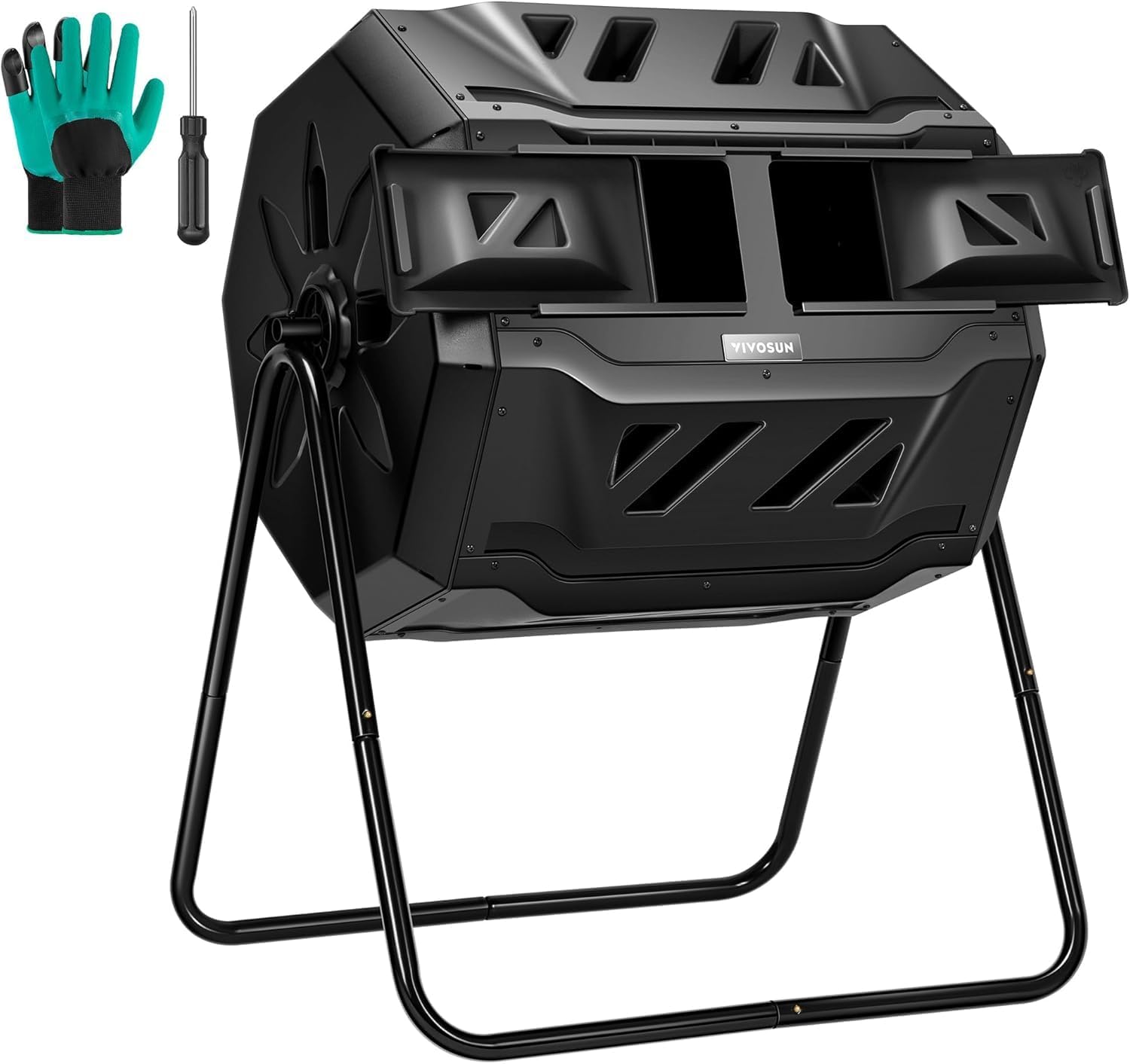
| Material Type | galvanized steel |
|---|---|
| Capacity | 43 gallons |
This VIVOSUN tumbling composter is a practical backyard unit built around two rotating chambers so you can add fresh waste to one side while the other finishes breaking down. The 360 degree tumbling design with deep internal fins makes turning the pile simple and helps break up clumps without digging. Ventilation slots around the drum promote airflow for aerobic decomposition, and the metal frame with a PP plastic barrel is designed to resist corrosion and outdoor weathering. It comes with waterproof garden gloves and small digging claws to make loading and aerating easier. At 43 gallons it is sized for a family garden or vegetable patch but is compact enough for a patio or small yard. Limitations to note are that it requires occasional manual turning to maintain activity and that the plastic drum means it will warm less in cold climates than insulated models, so composting speed will vary by season. Assembly and placement on a level spot are also important for smooth rotation.
Best for: Gardeners who want a hands-on, efficient system to produce regular batches of compost without digging a pile and who prioritize continuous output and easy turning.
Less Ideal for: People who need a completely hands-off hot composter or who compost only very large volumes; those in very cold climates seeking year-round rapid breakdown should consider insulated or electric options.
- Dual chambers let you load new material while another batch finishes, ensuring continuous compost production
- 360 degree tumbling with deep fins makes mixing and aeration easy without manual digging
- Galvanized steel frame and PP plastic barrel designed for outdoor durability and corrosion resistance
- Ventilation slots support aerobic breakdown for faster, less smelly composting
- Plastic drum offers less insulation than insulated or fully metal units, slowing composting in cold weather
- Requires manual turning and regular management to maintain heat and moisture for fast results
Verdict: If you want steady, manageable batches of compost with easy tumbling and continuous use, this dual-chamber VIVOSUN tumbler delivers practical, durable performance.
FCMP Outdoor IM2000 Tumbling Composter (22.5 gal)

| Capacity | 22.5 gallons |
|---|---|
| Material Type | Polypropylene (PP) |
| Model Number | IM2000 |
The FCMP Outdoor IM2000 is a compact tumbling composter that lets you mix kitchen scraps and yard trimmings without turning a pitchfork. Its single rotating chamber and deep fins give good aeration and make manual tumbling straightforward—turn the drum several times every few days to speed decomposition. The large door and removable access make loading and harvesting finished compost easy for beginners, and the body is made from UV-inhibited, post-consumer recycled polypropylene so it resists weathering and avoids rust. A galvanized steel frame adds structural support but the unit is light enough to move if needed. Because capacity is about 22.5 gallons, it is best for small households or gardeners who compost in batches rather than large-volume producers. Expect faster results in warm, active piles; cold or very wet climates will slow breakdown. Assembly and regular turning are required to get the two-week turnaround quoted under ideal conditions.
Best for: Best for pragmatic gardeners who want a low-fuss way to produce small, frequent batches of compost without manual digging and who value recycled materials and straightforward operation.
Less Ideal for: Not a good fit for gardeners who need to process large volumes of yard waste or want a passive, no-turn composting system.
- Easy tumbling design speeds mixing and improves aeration
- Large opening and removable door simplify loading and harvesting
- Made from 100% post-consumer recycled, UV-inhibited polypropylene for durability outdoors
- Galvanized steel frame provides sturdy support while keeping overall weight low
- Relatively small 22.5 gallon capacity not suited for large families or heavy yard waste producers
- Performance depends on consistent turning and warm conditions to achieve fastest compost times
Verdict: A compact, easy-to-use tumbling composter that delivers faster, well-aerated compost for small-scale gardeners who want efficient, repeatable results.
Choosing the Right Compost Bin for Small Yards: Key Factors to Consider
Footprint and Capacity
Small yards demand a careful balance between usable capacity and the bin's footprint. Too small a container fills quickly and requires frequent turning or moving, while too large a unit can dominate a balcony, courtyard, or tiny backyard. Consider the amount of kitchen and yard waste you produce each week and match a bin that can handle peak volumes without overflowing.
Also think about where the bin will sit. A narrow, taller design may fit behind a shed or against a fence, while a squat, wide model could be better on a patio. Remember that finished compost takes up less space than raw material, but you still need room for occasional turning and access.
Aeration and Ventilation
Airflow is one of the most important factors in small-volume systems. Limited mass means compost can become anaerobic quickly if air cannot circulate, leading to slow decomposition and unpleasant smells. Look for bins with built-in vents, perforations, or designs that facilitate passive aeration so the compost stays active without frequent manual turning.
If you prefer minimal maintenance, choose a design that encourages natural airflow by geometry or internal channels. For very tight spaces, a bin that allows easy occasional stirring with a hand tool is a practical compromise between passive and active aeration.
Moisture Control and Drainage
Moisture balance affects decomposition speed and odor. In small bins, a single wet batch of food scraps can saturate the whole mass and create anaerobic pockets. Effective drainage holes, raised bases, or removable trays help excess liquid escape and keep conditions aerobic.
Materials that resist waterlogging and designs that separate wetter kitchen waste from dry browns will reduce maintenance. Plan for how you will manage rainy periods, because an exposed bin in a compact space can quickly become too wet without a lid or cover that still allows venting.
Access for Turning and Harvesting
Ease of access matters more in confined gardens because you may have limited room to maneuver a pitchfork or large compost fork. Look for bins with doors or removable panels at the base for straightforward harvesting of finished compost and for adding garden amendments.
Top-loading designs can work well when height is manageable, but front-access doors or slide-out trays reduce bending and allow you to scoop finished compost without emptying the entire bin. Consider how often you plan to turn material and choose a layout that fits your physical comfort and space constraints.
Material, Durability, and Weather Resistance
Bins in outdoor micro-gardens face seasons and occasional storms. Materials that resist rot, rust, and UV degradation will last longer and maintain ventilation features. Plastic can be lightweight and compact but may crack in cold climates, while metal or wood offer different tradeoffs in weight and longevity.
Also think about how the bin ages in a compact setting. A cheap unit that warps or leaks will create more work and potential pest issues. Durable construction keeps composting consistent and reduces the need to replace the unit in the near term.
Pest Control and Odor Management
Small yards are often close to living spaces, so preventing pests and controlling odors is essential. Look for designs with secure lids, fine-mesh ventilation, or internal barriers that keep rodents and insects out while still allowing airflow. Tight seals at feed ports and access panels reduce the chance of escape routes for pests.
Odor management is linked to aeration and moisture control. Keeping a higher ratio of dry browns to wet greens, ensuring airflow, and using a lid that limits rain entry will all help keep smells minimal in a confined outdoor area.
Composting Methods Suited to Small Outdoor Spaces
Several composting approaches work well when space is limited. Static bins with passive aeration require little room and minimal turning, making them a good fit for balconies and small yards. Tumbler systems can speed composting in a compact footprint, but check that you have enough room to spin and access the unit.
Cold composting takes longer but needs less frequent attention and is easy to adapt to small bins. Hot or accelerated methods require better aeration and more regular turning, which can be practical if you produce more kitchen waste and are willing to manage the process actively.
- Static bins: simple, low-maintenance, best for gardeners who add material intermittently
- Tumblers: faster breakdown with regular tumbling, need clearance to rotate
- Vermicomposting: excellent for indoor or balcony setups with minimal footprint, requires worm care and stable temperatures
Siting and Placement Tips
Placement affects how well a bin performs. Aim for a level, well-drained spot that is convenient for dropping kitchen scraps but not so close to doors or windows that odors or insect activity become a nuisance. Partial shade helps maintain stable temperatures and prevents the bin from drying out too quickly in hot sun.
Consider airflow around the unit. Leaving a small gap between the bin and any wall or fence improves ventilation and access. On balconies, use a tray or raised platform to protect decking surfaces from drainage and stains.
- Avoid placing directly under eaves where rain can saturate contents
- Leave space to access doors or lids for adding and harvesting
- Protect finished compost from pets and children with a secure location
How to Maintain a Small Compost Bin
Regular, simple maintenance keeps a small bin productive. Turn or stir material periodically to restore oxygen, especially after adding wet kitchen scraps. Layer dry carbon-rich materials like shredded paper or dry leaves with greens to absorb moisture and keep a balanced mix.
Monitor moisture by squeezing a handful of material; it should be damp but not dripping. If it is too wet, add dry browns and increase ventilation. If it is too dry, add water in small amounts or include moister greens. Empty or harvest finished compost through the access point rather than overturning the whole bin to maintain structure and save space.
- Aim for a 3:1 ratio of browns to greens by volume as a starting point
- Turn every 1 to 3 weeks depending on activity and smell
- Use a small bin thermometer or trust simple touch tests to monitor progress
Composting Solutions for Balconies and Patios
Balconies and patios pose unique constraints like weight limits, neighbor proximity, and limited ground contact. Consider lightweight plastic or dedicated worm bins and prioritize odor control. A compact system with secure lids and minimal drainage odor is ideal for these settings.
If smell and pests are concerns, vermicomposting indoors or in a sheltered balcony box can be very efficient and yields high-quality compost without large outdoor equipment. Always follow local regulations regarding organic waste and consider neighbors when placing and maintaining a bin.
- Check structural weight limits on balconies before choosing heavy, filled containers
- Use an under-tray to catch leachate and prevent staining
- Rotate location seasonally if possible to balance sunlight and shelter
Using Finished Compost in Small Gardens
Finished compost from a small bin is highly valuable in limited-space gardens. Use it to enrich container mixes, top-dress vegetables and annuals, or blend into shallow beds. A little goes a long way when space is tight; aim for a thin layer or mix at low ratios to avoid overwhelming small root zones.
Store finished compost in a covered bin or sealed container to keep it usable and pest-free until you are ready to apply it. Because small-yard gardeners often produce limited quantities, consider batching applications across containers and beds for the best results.
- Mix 10 to 20 percent finished compost into potting mixes for long-term benefit
- Top-dress established containers in spring and midseason
- Use compost as a slow-release nutrient source rather than a complete potting mix replacement
How We Chose the Best Compost Bin for Small Yards
We prioritized features and performance that matter specifically for small outdoor spaces. Capacity and footprint were primary filters to ensure each bin fits typical yard, balcony, or patio footprints without requiring extra storage. Aeration and airflow design were evaluated because restricted spaces make passive ventilation harder, and good airflow speeds breakdown while limiting odors. Moisture management and drainage were used to judge how well a bin prevents soggy conditions that can stall composting in small volumes. Access and user ergonomics were included so mixing, adding scraps, and removing finished compost are practical for gardeners who cannot maneuver large containers. Construction durability and weather resistance were assessed for long-term outdoor exposure in compact settings. We excluded large, industrial, or garden-scale systems that require extensive space, active turning machinery, or complex installations. We also filtered out bins with poor user feedback on common small-yard issues such as persistent odors, leakage, or awkward access. The final shortlist reflects units that balance compact size with effective decomposition, reliable ventilation, and straightforward maintenance.
FAQ
How much composting space do I need for a small household?
It often depends on how much kitchen and yard waste you generate. For one to two people, a compact 20 to 60 liter capacity bin can work with regular harvesting. Larger households may need a slightly bigger unit or more frequent management.
Will a compact bin smell in a tight outdoor area?
Smells usually indicate poor aeration or excess moisture. With adequate ventilation, a balanced mix of browns and greens, and a secure lid, odors are typically minimal even in close quarters.
Can I use a compost bin on a balcony without attracting pests?
Yes. Choose a bin with secure lids and fine ventilation, keep meat and dairy out of the bin, and maintain a good layer of dry browns to discourage pests. Regular inspection and prompt removal of finished compost help reduce attraction.
Is vermicomposting a good option for small yards?
Vermicomposting is excellent for limited spaces because worm bins are compact and efficient. They do require attention to temperature, moisture, and feeding rates, so they are best if you are willing to manage the worm environment.
How often should I turn a small compost bin?
It depends on the method and activity. Static bins may only need turning every few weeks, while tumblers or hotter systems benefit from more frequent turning, often weekly, to sustain higher temperatures and faster decomposition.
What can I do in rainy seasons to prevent my bin from becoming waterlogged?
Use a sheltered spot or a lid that keeps heavy rain out while allowing vents to operate. Add extra dry browns after rain events and ensure the bin has drainage or a raised base to let excess moisture escape.
Final Verdict
Pick a compost bin that matches the scale of your household and the footprint you can spare. Prioritize sufficient aeration, straightforward access for turning and harvesting, and robust moisture control so the system stays productive without frequent emergency fixes. In small yards the best choice balances compact capacity with practical features that minimize odor, pests, and maintenance demands. Decide which tradeoffs matter most to you: lowest hands-on time, fastest composting, or easiest access. With those priorities clear, you can select a compact system that reliably produces usable compost for your small garden or containers.
