

Note: This article contains affiliate links. If you click on these links and make a purchase, I may earn a small commission at no extra cost to you. This helps support my research and content. Read my full affiliate disclosure here.
Removing unwanted grass from garden beds, pathways, or a developing planting area needs a product that kills grass reliably without harming nearby plants. The right herbicide for killing grass reduces re-sprouting, limits soil carryover, and fits how you plan to apply it in a yard, patio, or container garden. This guide presents six top-rated herbicides shortlisted for typical garden scenarios and evaluates them on application method, selectivity, and residual behavior. Read on for practical notes that help you choose the most appropriate product for your situation.
Top Picks at a Glance
| Best Overall The best all-around choice for most situations | Roundup Pro Concentrate Herbicide (2.5 gal) |  |
| Best Quality Built to a higher standard if you want something more solid | Ranger Pro Glyphosate Herbicide Concentrate, 2.5 gal |  |
| Best Value The sweet spot between price and what you get | Spectracide Weed & Grass Killer Concentrate, 32 fl oz |  |
| Best Budget The cheapest option that still gets the job done reliably | Ortho GroundClear Super Weed & Grass Killer with Comfort Wand, 0.5 gal | 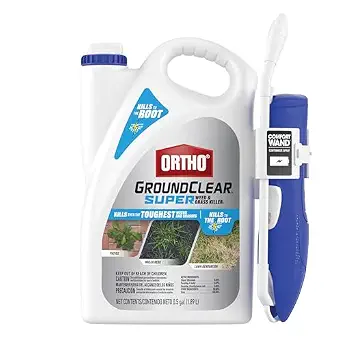 |
| Most Popular A crowd favorite that many people choose with confidence | Compare-N-Save 75324 Herbicide, 1-gallon (glyphosate concentrate) |  |
| Best Seller A high-volume bestseller chosen again and again | Roundup Weed & Grass Killer4 with Pump 'N Go 2 Sprayer, 1.33 gal |  |
Roundup Pro Concentrate Herbicide (2.5 gal)

| Unit Count | 300 Fluid Ounces |
|---|---|
| Liquid Volume | 2.5 gallons |
| Coverage | Up to 435,600 sq. ft |
| Item Form | Liquid |
Roundup Pro Concentrate is a liquid herbicide intended for mixing in sprayers to treat large lawns, fields, and commercial areas. The 2.5 gallon jug is a concentrate that dilutes at rates from about 1 to 10.5 ounces per gallon of water, letting you cover up to the manufacturer-stated area without frequent refills. It is formulated to be rainfast in roughly an hour and is best applied when weeds are actively growing and temperatures are above 60°F. Practical benefits include high coverage per container and compatibility with stainless steel or plastic sprayers for standard application workflows. Important limitations are the need for careful dilution and protective handling, strict restrictions around water and runoff, and regulatory or local sale limitations in some states. Users should follow label directions for safety, keep people and pets away until spray dries, and expect that effective use requires proper equipment and basic pesticide handling practices.
Best for: Buyers who need a high‑coverage, performance-oriented herbicide for treating large yards, fields, or commercial properties and who are comfortable following pesticide mixing and safety instructions.
Less Ideal for: Casual gardeners with small beds or people unwilling to handle concentrated pesticides should choose ready-to-use alternatives or nonchemical methods.
- Concentrated formula covers very large areas from a single container
- Rainfast within about one hour which reduces loss from light rain
- Compatible with standard stainless steel or plastic sprayers for easy mixing and application
- Requires precise dilution and proper protective equipment during mixing and application
- Not for use near water or where runoff may occur and restricted in some jurisdictions
Verdict: Choose this concentrate when you need a professional-strength herbicide that treats very large areas with fewer refills.
Ranger Pro Glyphosate Herbicide Concentrate, 2.5 gal

| Unit Count | 320 Fluid Ounces |
|---|---|
| Liquid Volume | 2.5 gallons |
| Item Form | Liquid |
| Active Ingredients | Glyphosate |
| Coverage | Annual |
Ranger Pro is a professional-strength glyphosate concentrate formulated for large-area weed control. You dilute 2 to 3 ounces per gallon of water and apply with standard sprayers to target foliage; the product is non-selective so it kills most exposed plants, including persistent vines like morning glory when sprayed thoroughly. The 41% glyphosate formulation delivers reliable systemic control, which means treated plants typically brown and die back over several days as the active ingredient translocates to roots. Practical benefits include a high-concentration formula that reduces the frequency of trips to refill and a large 2.5 gallon container suited to yards, parks, or contractor use. Important limitations are that it is non-selective and will damage desirable plants on contact, and it requires careful handling and protective gear due to skin and eye irritation warnings. Do not apply on windy days and follow label directions to avoid runoff and off-target damage.
Best for: Gardeners or property managers who prioritize a dependable, professional-strength chemical solution for eradicating persistent weeds and vines across larger areas.
Less Ideal for: Casual gardeners wanting selective control around ornamentals or people unwilling to use protective equipment should choose a more targeted or non-chemical option instead.
- High glyphosate concentration (41%) for effective systemic control
- Large 2.5 gallon volume reduces refill frequency for big jobs
- Dilutable concentrate compatible with standard sprayers for flexible coverage
- Non-selective formula will damage any plant it contacts
- Requires personal protective equipment and careful handling due to irritation risks
Verdict: Choose Ranger Pro when you need a concentrated, professional-strength glyphosate product that reliably kills persistent weeds like morning glory over large areas.
Spectracide Weed & Grass Killer Concentrate, 32 fl oz

| Unit Count | 32 Fluid Ounces |
|---|---|
| Item Form | Liquid |
| Coverage | Driveways, walkways, fences, trees, flower beds, shrubs, and other areas in your yard |
Spectracide Weed & Grass Killer Concentrate is a tank-sprayer mix designed for spot treatment of unwanted grass and broadleaf weeds on driveways, walkways, and around beds and foundations. You mix the concentrate with water and apply it to fully coat foliage; the active ingredients move into the plant and deliver visible browning in as fast as three hours and root kill thereafter. It becomes rainproof in about 15 minutes, so light rain shortly after application is less likely to wash it away, and treated areas can be replanted after a day. Practical features include concentrated packaging for multiple treatments and compatibility with common sprayers. Important limitations are that it is nonselective so any desirable plants contacted will be damaged, and users must take basic safety precautions to avoid drift and skin or eye exposure. For best results apply when temperatures are above 60°F and avoid mowing treated vegetation for at least seven days.
Best for: Buyers who want a fast, effective herbicide to remove patches of grass and weeds around hard surfaces and plantings and who are comfortable mixing and applying concentrated products with a sprayer.
Less Ideal for: People looking to selectively remove grass from a lawn without harming surrounding plants or those who prefer ready-to-use, no-mix solutions.
- Concentrate formula mixes with water so one bottle treats multiple spot areas
- Fast visible effect with browning in about three hours and rainproof in 15 minutes
- Kills down to the root for longer control versus contact-only products
- Suitable for use on driveways, walkways, around fences and foundations for targeted clearing
- Nonselective formula will damage any desirable plants it contacts
- Requires careful mixing and sprayer application to avoid drift and accidental exposure
Verdict: Choose this concentrated nonselective herbicide when you need fast, root-killing control of grass and weeds on driveways, walkways, and around plantings.
Ortho GroundClear Super Weed & Grass Killer with Comfort Wand, 0.5 gal

| Unit Count | 64 Fluid Ounces |
|---|---|
| Item Form | Spray |
| Coverage | Broad spectrum coverage |
| Liquid Volume | 0.5 gallons |
Ortho GroundClear Super Weed & Grass Killer is a ready-to-use spray intended for spot treatment of weeds and grasses in landscape beds, along walkways, driveways, and around structures. The bottle’s attached Comfort Wand delivers a continuous spray for targeted application, which helps avoid overspray on nearby plants. The formula combines a contact ingredient for rapid burn-down with systemic actives that penetrate to the root, so you can see visible effects within hours and full control in days to a couple of weeks. It is rainfast in about 15 minutes, so treatments hold up quickly after application. Practical benefits include ease of use without mixing, broad-spectrum control of common tough weeds, and suitability for prepping areas for renovation. Important limitations are that it is nonselective so care is required near desirable plants, it should not be used on edible crops, and protective gear is recommended during application because of the herbicidal strength.
Best for: Homeowners who want an easy, no-mix solution to remove persistent weeds from landscape beds, hardscapes, and around structures and who prioritize quick, visible results with precise application.
Less Ideal for: Gardners maintaining vegetable beds, pollinator or mixed planting areas where nonselective chemistry risks desirable plants, or users seeking an organic or granular spot-treatment method.
- Ready-to-use spray needs no mixing and the attached Comfort Wand enables targeted continuous application
- Dual-action formula gives quick visible burn-down and systemic root kill for longer control
- Rainfast in 15 minutes so treatments are less likely to wash off in light showers
- Nonselective herbicide that can damage desirable plants if not applied carefully
- Not labeled for use on edible crops so unsuitable for vegetable gardens
Verdict: Choose this ready-to-use spray when you need fast, targeted knockdown and root-level control of tough weeds in landscape beds without mixing or special equipment.
Compare-N-Save 75324 Herbicide, 1-gallon (glyphosate concentrate)

| Active Ingredients | glyphosate |
|---|---|
| Liquid Volume | 1 gallons |
| Item Form | Spray |
| Coverage | 25000 square_feet |
This one-gallon Compare-N-Save concentrate uses glyphosate to kill a wide range of annual and perennial weeds and grasses by foliar uptake down to the roots. It is mixed with water to create ready-to-use spray: the label recommends about 1.5 ounces per gallon for general use and up to 2.5 ounces per gallon for tougher perennials, with the full gallon making multiple gallons of spray for larger areas. Typical uses include clearing driveways, walkways, fence lines, garden preparation, lawn renovation, and stump or brush treatment. Notable features are fast visible results in 2 to 4 days, rainproofing within about two hours, and broad area coverage when diluted (manufacturer states it can cover thousands of square feet at recommended rates). Important limitations are that glyphosate will kill any green plant it contacts so careful targeting and protective gear are required, it has no residual pre-emergent activity, and label directions must be followed for safe use around edible gardens. For commercial lawn work, its concentration and economy make it effective but it demands disciplined application to avoid off-target damage.
Best for: Commercial landscapers or property managers who need an economical, fast-acting nonselective herbicide for clearing large areas and preparing sites for renovation while following safety protocols.
Less Ideal for: Home gardeners seeking a selective lawn-safe product or people who need a long-lasting pre-emergent should consider alternatives.
- Concentrated formula stretches to many gallons of ready-to-use spray for large-area work.
- Fast visible control with results often in 2 to 4 days and rainproofing in about two hours.
- Broad-spectrum activity against annual and perennial weeds and grasses, including root kill.
- Simple dilution instructions let crews mix strength for general or tougher targets.
- Nonselective glyphosate will damage or kill desirable plants if drift occurs.
- No residual activity so repeat treatments or follow-up prevention are required for long-term control.
Verdict: A cost-effective, concentrated glyphosate concentrate that delivers fast, large-area weed and grass control when used with proper precautions.
Roundup Weed & Grass Killer4 with Pump 'N Go 2 Sprayer, 1.33 gal

| Unit Count | 170 Fluid Ounces |
|---|---|
| Item Form | Spray |
| Coverage | 300 Square_Feet |
| Active Ingredients | Triclopyr, Triethylamine Salt, Fluazifop-P-Butyl, Diquat Dibromide |
This Roundup Weed & Grass Killer4 comes in a 1.33 gallon container with an integrated Pump 'N Go 2 sprayer that lets you apply a continuous stream for up to 10 minutes without mixing. It is formulated to kill a wide range of broadleaf weeds and grasses down to the root and advertises visible browning in hours and rainproof protection in about 30 minutes, so treated areas can be replanted in 1 to 30 days depending on instructions. The extendable wand improves accuracy for edging around flower beds, foundations, and hard surfaces so you can target unwanted plants without bending over. Practical benefits include straightforward one-hand spraying, coverage suitable for small- to medium-scale cleanup, and a clear safety section that emphasizes protective clothing and keeping people and pets away until the spray dries. Important limitations are that it is a chemical herbicide with active ingredients buyers should review for toxicity and environmental impact, and it requires careful application to avoid drift onto desirable plants. The sprayer is convenient but adds weight as you carry and handle the full container.
Best for: Gardeners who want a ready-to-use, targeted herbicide to quickly clear weeds around beds and hardscapes and who prioritize easy application and fast visible results guided by other buyers' experience.
Less Ideal for: Organic gardeners or those who prefer nonchemical methods should look for mechanical or organic alternatives, and users who need very large-area broadcast control may prefer concentrate products or professional services.
- Built-in Pump 'N Go 2 sprayer with extendable wand for up to 10 minutes of continuous spray
- Produces visible results in hours and becomes rainproof in about 30 minutes
- Designed for use around flower beds, hardscapes, mulch and foundations for targeted spot treatment
- Covers a useful area from a single bottle suitable for small to medium beds
- Contains synthetic active ingredients that require careful handling and distancing of people and pets until dry
- Risk of harming nearby desirable plants if not applied precisely
Verdict: If you want a convenient, ready-to-use sprayer that gives fast, targeted weed control around garden beds and hardscapes, this package is a practical pick.
Choosing the Right Herbicide for Killing Grass: Key Factors to Consider
Mode of Action and Selectivity
Understanding how an herbicide works determines whether it will target only grasses or harm broadleaf plants as well. Some products are grass-specific and disrupt grass physiology while leaving many ornamentals and vegetables largely unharmed when used as directed. Others are nonselective and will desiccate any green tissue they contact. Matching mode of action to the planting around the treatment area reduces collateral damage and limits the need for protective measures such as root barriers or temporary removal of nearby seedlings.
Mode of action also affects follow-up options. A grass-selective product may allow replanting of broadleaf transplants sooner than a nonselective chemical with long soil activity. Read and plan according to label guidance to avoid unexpected plant losses.
Application Method and Coverage
How you apply the herbicide changes both effectiveness and risk. Ready-to-use sprays, hose-end applicators, and concentrated mixes for a handheld sprayer each have different pros and cons. Spot-spraying gives precision for isolated clumps; a broadcast application covers larger patches but increases the chance of drift onto desirable plants.
Consider nozzle type, droplet size, and whether a dye or marker will help you see where you applied product. For small gardens, a pump sprayer and a narrow spray pattern reduce waste and unwanted contact. Always mix and apply according to label directions to achieve proper coverage without over-application.
Residual Activity and Replanting Intervals
Residual activity describes how long a herbicide persists in soil and continues to affect new seedlings. Short-residual products allow you to replant sooner, which matters when converting a grassy patch into a vegetable bed or flower border. Longer-residual chemistries control grass regrowth for months but can prevent desirable plants from establishing or harm shallow-rooted ornamentals.
Check label instructions for specific waiting periods before planting various crop types. Also consider soil texture and organic matter; heavier or organic-rich soils can hold residues longer, potentially extending the effective window.
Visible Kill Time and Follow-Up Control
Some herbicides brown and desiccate grass within days, giving a quick visual confirmation that treatment worked, while others act more slowly and may require patience and repeat applications. Faster acting products can reduce labor when you want to clear an area quickly, but rapid brownout does not always mean roots are fully dead.
Plan follow-up: physically removing dead thatch, monitoring for resprouts from sod-forming species, or retreating regrowing patches. For deep-rooted or rhizomatous grasses, combine chemical control with mechanical removal to reduce regrowth risk.
Safety, Drift Risk, and Protective Measures
Gardeners must think about personal protection and the risk of herbicide moving off-target. Windy conditions increase drift, and small droplets are more likely to travel. Use low-drift nozzles when available, avoid spraying on windy days, and consider buffer zones near sensitive beds and water features.
Wear appropriate personal protective equipment and follow label safety intervals for re-entry. For applications near desirable plants, physical shields, temporary removal of potted plants, or treating at times when adjacent plants are less vulnerable can reduce accidental injury.
Compatibility with Soil and Landscaping Goals
The broader landscape plan affects which herbicide is appropriate. If you want a long-term sterile stripe for a path, a product with longer soil activity may be suitable. If you plan to convert the area to a mixed perennial border, choose low-residual options and plan for careful site preparation after kill is complete.
Also consider how mulch, irrigation, and soil amendments might interact with herbicide persistence. Heavy mulches can reduce volatilization but may also trap residues near planting holes; irrigation timing after application can influence how much moves into the root zone.
When to Use Spot Treatment Vs Full Patch Treatment
Small clumps and isolated runners are often best handled with a targeted spot treatment. That minimizes herbicide use and protects adjacent plants, and it works well where grass invasion is limited to a few hotspots. Spot treatment also allows you to use stronger mixes in a controlled area without affecting the whole bed.
For larger patches, broadcast or directed band applications are more efficient, but you must plan for increased risk of off-target contact. Use shields or short burst sprays along borders and reduce nozzle pressure to limit drift.
- Spot treatment for individual clumps and edging
- Band or broadcast for contiguous patches
- Use shields and reduced pressure to limit drift
Combining Chemical and Mechanical Control
Herbicide is rarely a complete solution for persistent, sod-forming grasses. Cutting, grubbing, or removing turf crowns after chemical brownout speeds conversion and reduces the pool of viable rootstock left in the soil. For deeply rhizomatous species, repeat treatment plus physical removal of rhizomes often delivers the best long-term result.
- Cut and remove dead material after herbicide brownout
- Dig out crowns and thick rhizome networks for stubborn patches
- Repeat spot treatments where regrowth is observed
Timing Treatments for Best Results
Apply most grass-targeting herbicides when the plants are actively growing and not drought-stressed. Warm, sunny days with low wind promote uptake into foliage and translocation to roots. Avoid applications immediately before heavy rain unless the label permits post-application irrigation timing.
Treating in late spring through early summer is often effective because grasses are in active growth, but some winter annuals may be better controlled in the fall when they are young and vulnerable.
- Apply during active growth and calm weather
- Avoid imminent heavy rain
- Consider seasonality for target grass species
Protecting Garden Beds and Water Features
Establish clear buffer zones between treatment areas and flower beds, vegetable rows, ponds, and rain gardens. Use physical barriers or temporary removal of containers to prevent accidental contact. When treating near water, select products labeled safe for use near aquatic areas and follow required setbacks.
Rinse and clean equipment away from sensitive beds and do not dispose of leftover spray near storm drains or water bodies.
- Set buffer zones and use physical shields
- Choose low-drift equipment and safe setbacks near water
- Clean equipment away from sensitive areas
Post-Treatment Soil Prep and Planting
After grass has died and you have removed dead material, prepare the soil by raking out root masses and loosening compacted areas. Test soil and amend as needed before planting to ensure good seed-to-soil contact. For areas treated with residual herbicides, follow label timelines before transplanting to avoid new plant injury.
Consider a staged planting approach: start with tolerant ornamental species if label guidance is unclear, and wait recommended intervals before planting sensitive vegetables.
- Remove dead roots and thatch before planting
- Amend and test soil for nutrient balance
- Stagger planting according to label wait times
How We Chose the Best Herbicide for Killing Grass
Our shortlist focuses on herbicides that are realistic choices for gardeners needing to eliminate grass while managing risk to desirable plants. We prioritized products with documented grass control efficacy, clear application instructions for small-scale and spot treatments, and understandable re-entry and planting intervals for common garden species. Practical criteria included whether the product is selective or nonselective, the delivery method gardeners use for spot or broadcast work, visible speed of control, and the chemical's residual activity in soil. We excluded products intended only for large-scale agricultural or industrial use and any formulations that require commercial applicator certification. We also filtered out products with unclear labeling for residential garden use or those lacking guidance on safe use around ornamentals, vegetables, and mulched beds. The final selection favors options that balance effective grass kill with predictable recovery times and manageable application methods.
FAQ
Can I use a nonselective herbicide to kill grass without harming nearby flowers?
Using a nonselective herbicide near flowers risks damage because it will kill any green tissue it contacts. Spot applications with shields or temporary removal of nearby plants reduce risk, but for planted borders a grass-selective product is often a safer choice.
How long should I wait to plant vegetables after killing grass?
Wait times vary by herbicide and formulation. Some low-residual products allow planting within weeks, while others require several months. Always consult the product label for specific crop replant intervals and follow those timelines.
Will mowing before application improve control?
Mowing or cutting back dense turf can improve herbicide coverage and uptake because sprays reach more green tissue and reduce thatch barriers. However, very short turf can be stressed, so apply when grass is actively growing for best translocation to roots.
Is spot-treating runners enough to stop aggressive grass species?
Spot treating visible runners often reduces spread but may not eliminate deep or widely spaced rhizomes. Persistent species may require follow-up treatments and mechanical removal of underground parts for reliable control.
Can rainfall wash herbicide into other parts of the garden?
Heavy rain shortly after application can move some products and increase off-target risk. Some labels allow brief irrigation after application, but generally avoid treating when heavy rain is expected and follow label guidance on rainfastness.
Final Verdict
Choosing the right herbicide for killing grass means balancing how aggressively you need to remove turf with the sensitivity of nearby plants and your replanting timeline. Prioritize mode of action and selectivity when working near ornamentals or edibles, and pick an application method that matches the size of the infestation to limit drift. Plan for follow-up mechanical control when dealing with persistent, rhizomatous grasses, and always follow label guidance on safety and replanting. With those tradeoffs in mind you can select a product that matches your landscape goals and work methodically to convert grassy areas into beds, paths, or other planted features.
