

Note: This article contains affiliate links. If you click on these links and make a purchase, I may earn a small commission at no extra cost to you. This helps support my research and content. Read my full affiliate disclosure here.
Picking the right liquid herbicide for lawns matters because your product choice affects both how quickly weeds disappear and how healthy the grass looks afterward. In a home lawn setting, you want something that kills common broadleaf weeds without burning desirable turf or upsetting soil organisms. This guide covers six shortlisted liquid herbicides for lawns that are suited to typical home turf situations. We evaluated these options for real-world use: how well they control common weeds, how turf-safe they are, and how easy they are to apply and manage. Read on for the factors that should guide your selection and the practical pros and cons that matter in everyday lawn care.
Top Picks at a Glance
| Best Overall The best all-around choice for most situations | BASF Drive XLR8 Crabgrass Killer Concentrate, 64 oz |  |
| Best Quality Built to a higher standard if you want something more solid | Syngenta Tenacity Turf Herbicide, 8 oz |  |
| Best Budget The cheapest option that still gets the job done reliably | Spectracide Weed Stop for Lawns Concentrate, 32 oz Ready-to-Spray |  |
| Highest Rated A top-rated pick with lots of positive feedback | Target 6 Plus MSMA 48.3% Post-Emergent Turf Herbicide, 2.5 Gallon |  |
| Most Popular A crowd favorite that many people choose with confidence | Scotts Liquid Turf Builder Plus 2 Weed Control, Ready‑to‑Spray, 32 fl. oz. |  |
| Best Seller A high-volume bestseller chosen again and again | Roundup Weed & Grass Killer4 with Pump 'N Go 2 Sprayer, 1.33 gal |  |
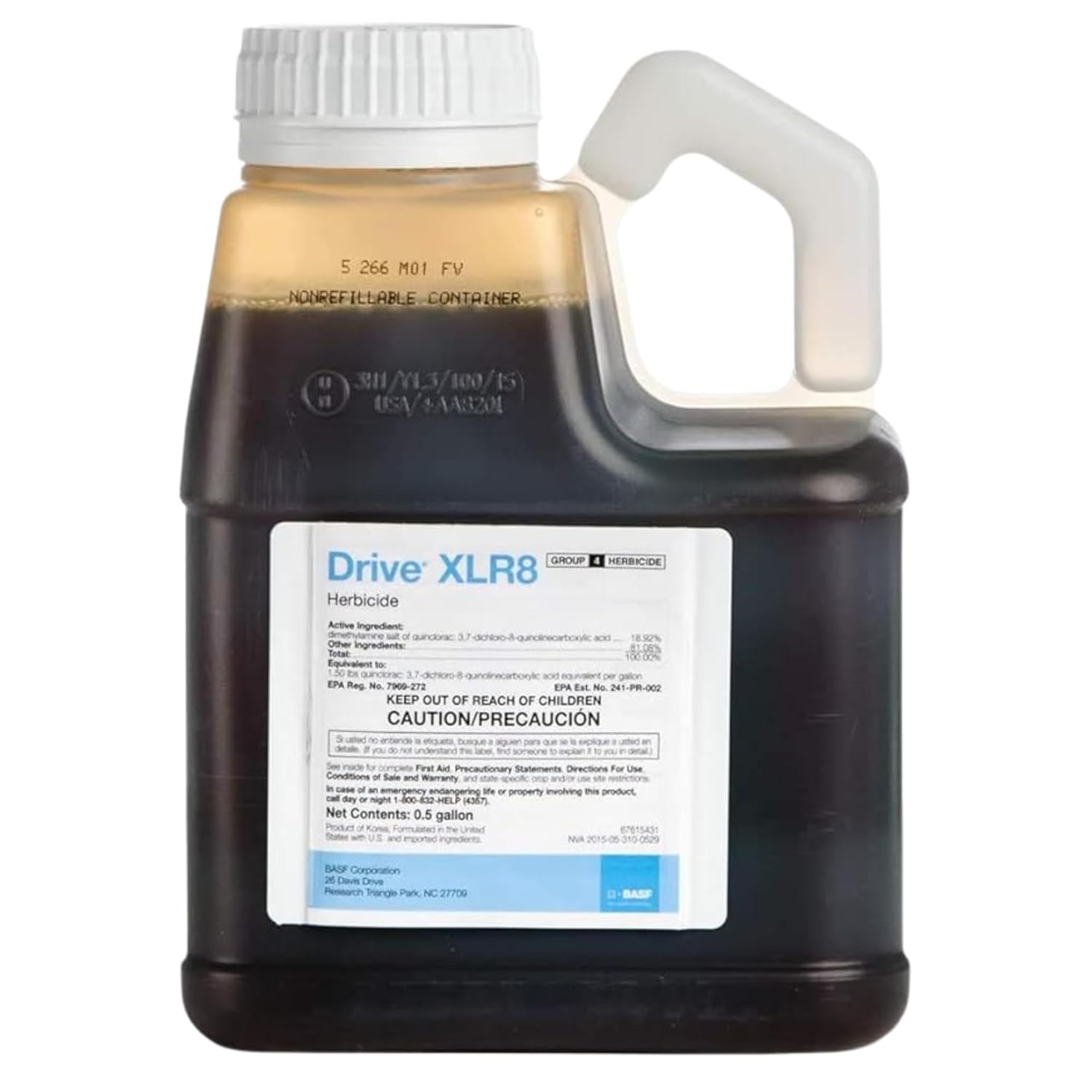
BASF Drive XLR8 Crabgrass Killer Concentrate, 64 oz
| Unit Count | 64 Ounce |
|---|---|
| Item Form | Liquid |
| Active Ingredients | Quinclorac 18.92% |
| Coverage | Full |
Drive XLR8 is a concentrated liquid herbicide built mainly to knock down crabgrass and other grassy and broadleaf weeds in turf. You mix a small measured amount with water and a methylated seed oil adjuvant and spray over the turf for spot or broadcast treatment. Its water-based formulation and quinclorac active ingredient deliver relatively fast uptake and labeled rainfast protection within about an hour, and the product advertises up to 30 days of residual control, which reduces how often you need to reapply. It is labeled for both warm- and cool-season turf and can be tank-mixed with other turf herbicides when label directions allow, giving flexibility for complicated weed problems. Important limitations are that it is a chemical herbicide that requires careful PPE and strict adherence to label directions, and some local restrictions apply, including reduced use patterns in certain states and spot-application limits. For gardeners who follow the label, it offers reliable, professional-strength control of crabgrass and many common lawn weeds.
Best for: Homeowners and groundskeepers who want a strong, professional-style postemergent solution to quickly reduce crabgrass and mixed weed populations and who are comfortable following label safety and application steps.
Less Ideal for: People seeking an organic or nonchemical approach to crabgrass control or users who prefer no-handling of concentrated herbicides should consider alternative cultural or nonchemical options.
- Concentrated 64 oz formula covers large areas when mixed per label directions
- Water-based formulation for faster plant uptake and rainfast protection in under an hour
- Provides up to 30 days of residual control against crabgrass and several grassy weeds
- Labeled for use on both warm-season and cool-season turf and compatible with some tank mixes
- Requires careful handling and PPE because it is a chemical herbicide
- Some state-specific use restrictions and label limitations apply
Verdict: Choose Drive XLR8 when you want a concentrated, fast-acting postemergent herbicide that delivers reliable crabgrass control and multi-week residual protection.
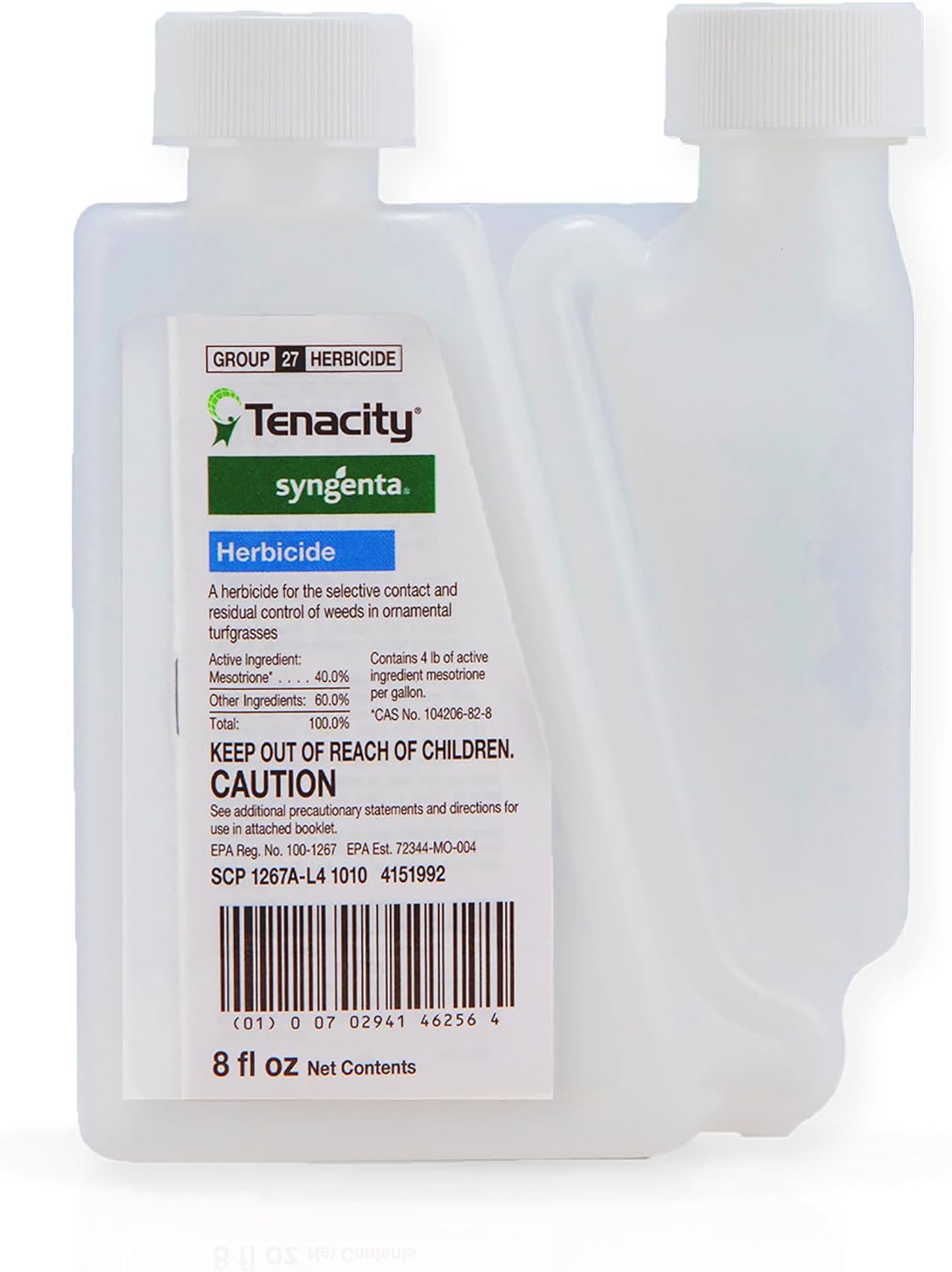
Syngenta Tenacity Turf Herbicide, 8 oz
| Unit Count | 8 Fluid Ounces |
|---|---|
| Item Form | Liquid |
| Coverage | 2000 ft^2 per 1sp of product |
| Active Ingredients | Mesotrione |
Tenacity Turf Herbicide is a concentrated mesotrione-based liquid designed for both pre-emergent and post-emergent control of common lawn weeds including crabgrass, clover, chickweed and dandelions. You apply it diluted according to label rates with a handheld or hose-end sprayer to target problem areas or broadcast across the lawn; when used as a pre-emergent it is taken up as weeds emerge and when applied post-emergent it acts systemically for selective control. The product covers a large area per bottle and the active ingredient provides residual control so you can expect longer suppression than a contact-only herbicide. Important practical points are that it is turf-selective so follow the label for grass species and mixing instructions to avoid turf injury, and results can take several days to appear. Also this is a concentrated chemical intended for careful, measured application rather than spot-use by people who prefer non-chemical methods.
Best for: Gardeners focused on strong, reliable crabgrass and broadleaf weed control who are comfortable using concentrated herbicides and following label directions for turf safety.
Less Ideal for: People seeking organic, mechanical, or spot-only solutions or those unwilling to follow detailed mixing and application instructions should consider other options.
- Systemic mesotrione active ingredient controls both pre- and post-emergent weeds
- Selective to turf when used per label, allowing treatment without killing desirable grass species
- Concentrated 8 oz liquid provides wide coverage per bottle
- Provides residual suppression, reducing frequency of repeat applications
- Requires careful mixing and adherence to label for turf safety
- Not a non-chemical or organic option for weed control
Verdict: Choose Tenacity when you want a concentrated, turf-selective herbicide that delivers pre- and post-emergent control of crabgrass and other common lawn weeds.
Spectracide Weed Stop for Lawns Concentrate, 32 oz Ready-to-Spray

| Coverage | 8,000 square feet |
|---|---|
| Liquid Volume | 32 fluid ounces |
| Item Form | Liquid |
| Active Ingredients | 2,4-D, Mecoprop-P, Dicamba, Sulfentrazone |
Spectracide Weed Stop for Lawns is a hose-attach ready-to-spray concentrate designed to control broadleaf weeds across common turf types. It kills by contact and down to the root, listing over 460 weeds such as clover, dandelion and chickweed, and promises visible browning in around three hours. The QuickFlip sprayer makes treatment fast for larger yards and the formula is labeled for use on bluegrass, fescue, Bermuda and perennial rye, though you should avoid zoysiagrass coming out of dormancy and not spray above 90°F. Practical benefits include quick application without mixing and one-hour rainproofing so treatments are less weather-dependent. Important limitations are temperature restrictions for safe use, the need to keep people and pets off the lawn until dry, and the usual reseeding wait time of three to four weeks. For homeowners focused on routine clover control, this product offers a straightforward, time-saving option, but follow label directions closely to protect desirable turf and nearby plants.
Best for: Homeowners who want an inexpensive, no-mix solution to knock back clover and other broadleaf weeds quickly across a typical lawn and value fast application.
Less Ideal for: Gardens that need constant reseeding, very young lawns or yards with delicate ornamentals close to treatment areas should consider more targeted options.
- Ready-to-spray QuickFlip hose attachment speeds up application for medium to large lawns
- Kills broadleaf weeds including clover, dandelion and chickweed with visible results in about three hours
- Rainproof in one hour which reduces the chance of losing treatment to light rain
- Works on a variety of common turf types when used as directed
- Should not be applied when daytime temperatures exceed 90°F which limits use in hot weather
- Requires waiting 3–4 weeks before reseeding treated areas
Verdict: A convenient ready-to-spray concentrate that quickly controls clover and other broadleaf weeds for budget-minded homeowners who want fast, low-effort treatments.
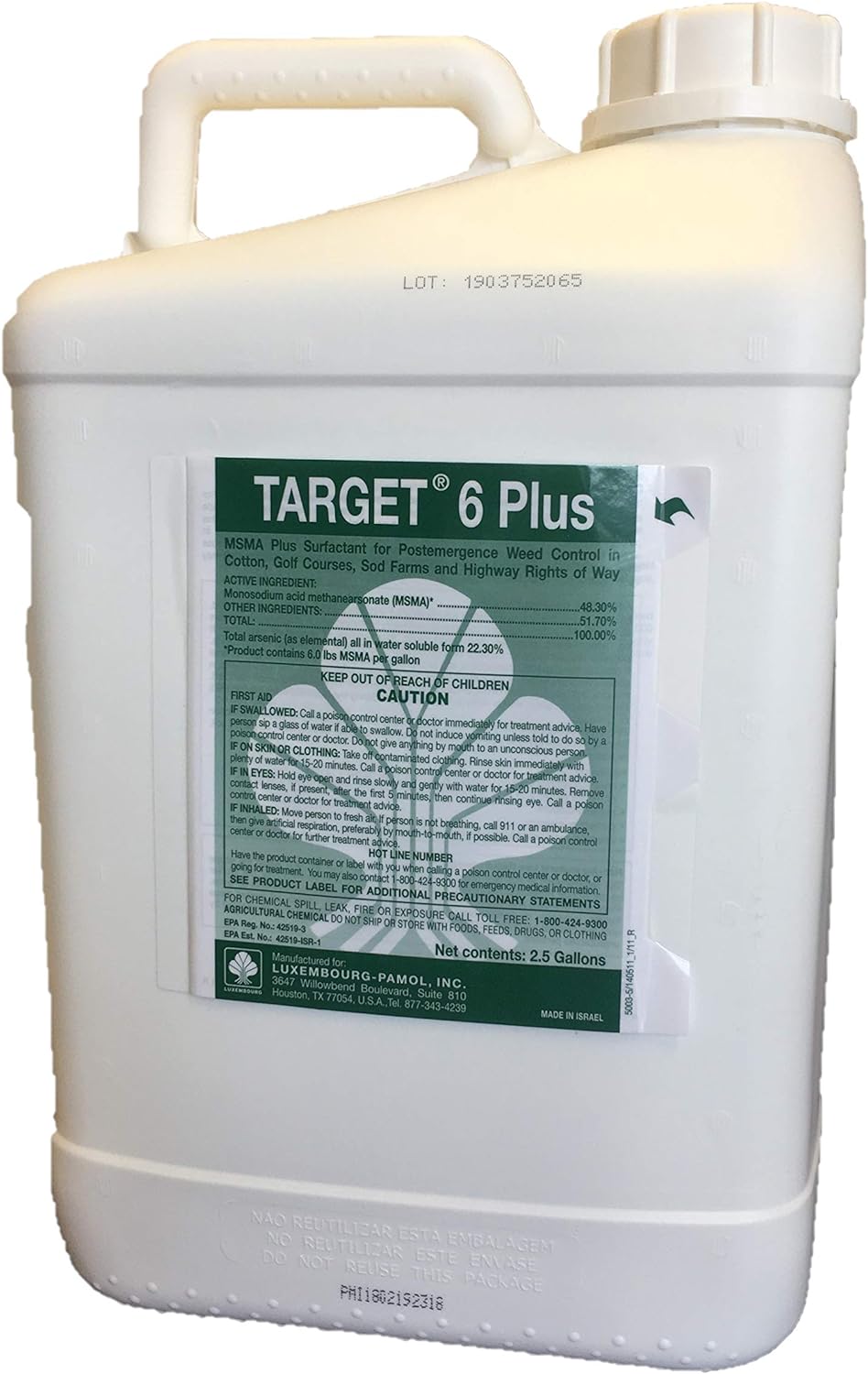
Target 6 Plus MSMA 48.3% Post-Emergent Turf Herbicide, 2.5 Gallon
| Active Ingredients | Monosodium acid Methanearsonate MSMA |
|---|---|
| Unit Count | 320 Fluid Ounces |
| Item Form | Liquid |
| Coverage | Selective: Crabgrass, Dallisgrass, Johnsongrass, Nutsedge, Pigweed, Chickweed |
Target 6 Plus MSMA is a concentrated post-emergent herbicide intended for selective control of crabgrass, dallisgrass, johnsongrass, nutsedge, pigweed, and chickweed in turf. It is mixed at about 2 ounces per gallon and applied as a coarse spray, so most users will use it with a pump sprayer to spot-treat or cover larger areas such as golf course turf, sod farms, or established lawns. The primary strength is its active ingredient, monosodium acid methanearsonate (MSMA), which is effective on weeds that many general lawn products struggle to suppress. The product comes in a 2.5 gallon jug, which provides a substantial supply for repeated treatments across medium to large lawns. Important practical considerations are safety and label directions: the product can be harmful if absorbed or swallowed and must not be applied where food is grown, and protective equipment and careful handling are required. This makes it suitable for experienced users or contractors who follow label instructions, while casual gardeners should exercise caution or seek professional application.
Best for: Buyers who prioritize reliable, contractor-grade control of stubborn post-emergent turf weeds and who are comfortable following strict label safety and application procedures.
Less Ideal for: Casual gardeners, small-plot vegetable or edible growers, or anyone unwilling to use personal protective equipment or follow restricted-use safety guidance.
- High concentration of MSMA effective on hard-to-control grassy weeds
- Large 2.5 gallon volume supports multiple treatments for medium to large turf areas
- Selective post-emergent activity targets both grassy and some broadleaf weeds listed on the label
- Simple mix rate (2 oz per gallon) makes dilution and repeat applications straightforward
- Contains an arsenical active ingredient that requires strict safety precautions and may have regulatory restrictions
- Not intended for use where food is grown and requires protective equipment during handling and application
Verdict: Choose this concentrated MSMA formulation when you need proven, contractor-grade post-emergent control of tough turf weeds and will follow label safety and application requirements.
Scotts Liquid Turf Builder Plus 2 Weed Control, Ready‑to‑Spray, 32 fl. oz.

| Liquid Volume | 32 fluid ounces |
|---|---|
| Coverage | 6000 square_feet (warm-season); 4000 square_feet (cool-season) |
| Item Form | Spray |
| Active Ingredients | Nitrogen |
This ready-to-spray bottle combines a quick nitrogen boost with broadleaf weed control for an easy lawn maintenance step. You attach the hose, spray evenly across the lawn when weeds are actively growing, then avoid watering for 48 hours so the product can work. The formula lists a 25-0-2 NPK balance and targets common weeds such as dandelions, clover, chickweed, and ground ivy, making it useful for both warm- and cool-season grasses. Coverage is generous for a single 32 fl. oz. bottle: up to 6,000 sq ft on warm-season lawns and 4,000 sq ft on cool-season lawns. Practical benefits include fast visible weed curl within days and no need for separate fertilizer and weed-killer steps, which simplifies care for homeowners who want predictable results. Limitations to note are the restricted list of safe grass types and the need to avoid application above 85°F or watering for two days, plus some stubborn weeds may require a repeat treatment in 3 to 4 weeks.
Best for: Homeowners who want a simple, low‑effort way to feed their lawn and control common broadleaf weeds without separate products and who prefer predictable, do‑it‑yourself lawn care steps.
Less Ideal for: Gardens with mixed planting beds or users who need a product safe around vegetables and ornamentals should choose a different targeted solution.
- Hose-end ready-to-spray design requires no measuring or mixing
- Combines fertilizer and weed control in one application
- Covers large areas per bottle for typical home lawns
- Works on a wide range of warm- and cool-season turf grasses
- Visible weed decline within a few days for many common broadleaf weeds
- Not safe for use on garden beds or non-listed plants
- May cause temporary injury on some bermudagrass varieties and is restricted to listed grasses
- Stubborn weeds may require a second application within a month
Verdict: A single ready-to-spray bottle that simplifies feeding and broadleaf weed control for risk-averse homeowners who want dependable, low-effort lawn results.
Roundup Weed & Grass Killer4 with Pump 'N Go 2 Sprayer, 1.33 gal

| Unit Count | 170 Fluid Ounces |
|---|---|
| Item Form | Spray |
| Coverage | 300 Square_Feet |
| Active Ingredients | Triclopyr, Triethylamine Salt, Fluazifop-P-Butyl, Diquat Dibromide |
This Roundup Weed & Grass Killer4 comes in a 1.33 gallon container with an integrated Pump 'N Go 2 sprayer that lets you apply a continuous stream for up to 10 minutes without mixing. It is formulated to kill a wide range of broadleaf weeds and grasses down to the root and advertises visible browning in hours and rainproof protection in about 30 minutes, so treated areas can be replanted in 1 to 30 days depending on instructions. The extendable wand improves accuracy for edging around flower beds, foundations, and hard surfaces so you can target unwanted plants without bending over. Practical benefits include straightforward one-hand spraying, coverage suitable for small- to medium-scale cleanup, and a clear safety section that emphasizes protective clothing and keeping people and pets away until the spray dries. Important limitations are that it is a chemical herbicide with active ingredients buyers should review for toxicity and environmental impact, and it requires careful application to avoid drift onto desirable plants. The sprayer is convenient but adds weight as you carry and handle the full container.
Best for: Gardeners who want a ready-to-use, targeted herbicide to quickly clear weeds around beds and hardscapes and who prioritize easy application and fast visible results guided by other buyers' experience.
Less Ideal for: Organic gardeners or those who prefer nonchemical methods should look for mechanical or organic alternatives, and users who need very large-area broadcast control may prefer concentrate products or professional services.
- Built-in Pump 'N Go 2 sprayer with extendable wand for up to 10 minutes of continuous spray
- Produces visible results in hours and becomes rainproof in about 30 minutes
- Designed for use around flower beds, hardscapes, mulch and foundations for targeted spot treatment
- Covers a useful area from a single bottle suitable for small to medium beds
- Contains synthetic active ingredients that require careful handling and distancing of people and pets until dry
- Risk of harming nearby desirable plants if not applied precisely
Verdict: If you want a convenient, ready-to-use sprayer that gives fast, targeted weed control around garden beds and hardscapes, this package is a practical pick.
Choosing the Right Liquid Herbicide for Lawns: Key Factors to Consider
Weed Control Spectrum
Different herbicides target different groups of plants. Some liquids are formulated mainly for broadleaf weeds like dandelion, clover, and plantain, while others also affect certain grassy weeds. Knowing the weeds you most commonly see in your lawn helps you choose a product with the right active ingredients. A product that matches your weed spectrum reduces wasted applications and speeds recovery of the turf.
Consider seasonal patterns too. Spring and fall weeds respond differently than summer invaders, and timing applications for peak growth can increase effectiveness while reducing the need for repeat treatments.
Turf Safety and Grass Type
Herbicide impact varies by grass species and stress level. Cool-season grasses and warm-season grasses can react differently to the same active ingredient. Choose a product labeled safe for your turf type and avoid application during drought, heat stress, or immediately after overseeding unless the label permits it. Turf safety also relates to formulation strength and contact versus systemic action. Systemic products move through plant tissues and can be more selective when used as directed.
Read label tolerances for newly sown seed, edging areas, and ornamental beds adjacent to the lawn to prevent accidental injury to desirable plants.
Application Method and Ease of Use
Liquid herbicides differ in how they are mixed, applied, and rinsed. Some are ready-to-use in spray bottles, while others require dilution in a pump sprayer. Ease of measuring and mixing matters when treating large areas because inaccurate dilutions reduce effectiveness or harm turf. Look for clear label instructions, rainbow calibration guidance for sprayers, and flexible dilution rates that let you treat small patches or whole lawns without fuss.
Consider also whether the product works better with spot-spraying, broadcast application, or both. Pouring, pre-mixing, and rinsing routines affect how frequently you will use it and how likely application errors are.
Residual Activity and Re-treatment Interval
Some liquid herbicides act quickly but offer little residual control, leaving the lawn vulnerable to new weeds soon after treatment. Others provide a longer period of suppression but may impose longer waiting periods before re-seeding or planting. Evaluate how long the active ingredient remains effective in the soil and how often you will need follow-up treatments to maintain a weed-free lawn.
If you plan regular overseeding or have newly emerged desirable grass, choose a product with short residual activity or specific label instructions that allow safe replanting.
Safety, Environmental Impact, and Restrictions
Consider human and pet safety, runoff risk, and label-mandated buffer zones near water. Some active ingredients require you to keep people and pets off treated areas until dry; others carry additional precautions about mixing and disposal. Environmental considerations include leaching potential and toxicity to non-target plants and aquatic life. Always match product labels to your lawn's proximity to water features and garden beds to reduce unintended damage.
Proper storage, spill response, and personal protective equipment recommendations on the label are practical factors that affect whether a product fits your household routines.
Cost Per Treatable Area and Container Size
Liquid herbicides are sold in a range of container sizes and concentrations, so calculate cost per treatable area rather than judging by bottle price alone. Concentrated formulas often require more careful measuring but can be more economical for larger lawns. Small ready-to-use bottles are convenient for spot treatments but can be expensive if used across a whole yard.
Also consider how much of a given product you will realistically use in a season. Buying in a size that suits your yard reduces waste and improper long-term storage concerns.
When to Apply Liquid Herbicide in the Lawn Calendar
Timing makes a big difference. Apply many broadleaf-targeting liquid herbicides when weeds are actively growing, typically in cool, moist conditions of spring and fall. For warm-season turf, late spring through summer can be appropriate for certain formulations. Avoid treatment during drought or heat spells when turf is stressed.
Pre- and post-application care matters. Mow a few days before spraying to ensure active leaf area and avoid immediate irrigation unless the label allows it.
- Spring: early growth of cool-season weeds
- Summer: treat persistent warm-season weeds with care
- Fall: good window for systemic control before dormancy
Spot Treatment Versus Whole-Lawn Applications
Spot treatments reduce chemical use and are often the best choice for isolated weed patches. They limit turf exposure and save product. Whole-lawn applications are more efficient when weeds are widespread and uniform across the yard.
Match spray technique to the job. Use lower-volume targeted spraying for spots and even broadcast application for larger areas to ensure consistent coverage.
- Spot spray for isolated dandelions, clover, and chickweed
- Broadcast spray for lawn-wide crabgrass or pervasive mixes
Mixing, Sprayer Choices, and Calibration
A consistent diluted mix and a calibrated sprayer are key to predictable results. Use measuring tools and follow label rates per 1,000 square feet. Pump sprayers with adjustable nozzles allow you to switch between coarse and fine sprays depending on weed type.
Rinse sprayers thoroughly after use and avoid cross-contamination with other garden chemicals. Keep a simple log of mix ratios and treated areas to track re-treatment intervals.
- Measure by volume and area to avoid over-application
- Use coarse droplets for trailing weeds to reduce drift
- Label-specified nozzle types improve accuracy
Post-Application Care and Lawn Recovery
After treatment, limit traffic on the lawn until sprays have dried if the label advises. Avoid heavy watering or mowing for the period specified on the label to let systemic products move into weeds. Monitor treated areas over the next two to four weeks and spot-treat any survivors rather than broadcasting another full application.
Repairing thin spots after control often requires follow-up seeding at the right time of year; choose a product with compatible re-seeding windows if overseeding is part of your routine.
- Observe drying and reentry times on the label
- Delay mowing if label recommends for best translocation
- Plan overseeding according to residual activity
Managing Resistant or Persistent Weeds
Some weeds develop resistance to certain active ingredients if the same chemistry is used repeatedly. Rotate active ingredients or use mechanical removal for persistent patches. Combining cultural practices like improved mowing height, fertilization, and irrigation scheduling reduces weed pressure and the need for repeated herbicide use.
Integrated approaches that mix manual control, cultural improvements, and selective spot herbicide use keep lawns healthier and slow resistance buildup.
- Alternate modes of action seasonally
- Improve turf density to outcompete weeds
- Use hand removal for small resistant colonies
How We Chose the Best Liquid Herbicide for Lawns
We focused on attributes that matter for effective, repeatable lawn weed control. First, we prioritized proven weed control spectrum for common broadleaf weeds and key grassy invaders seen in home lawns. Second, turf compatibility was essential; products that minimize stress to cool-season and warm-season grasses scored higher. Third, we evaluated application flexibility including dilution options, treatable area per container, and compatibility with common sprayers. Fourth, safety for people, pets, and the environment during and after application was considered, including reentry and watering restrictions. Finally, we looked at label clarity and ease of following directions, because accurate mixing and timing determine outcomes in a real garden. We excluded granular-only formulations and products labeled only for industrial or agricultural turf where homeowner directions differ. We also excluded herbicides requiring specialized licensing. The result is a list of homeowner-appropriate liquid herbicides for lawns that balance control, safety, and usability.
FAQ
Can I use liquid herbicide on newly seeded lawns?
It depends on the product and the label. Many liquid herbicides restrict application to established turf and advise waiting several weeks or months after seeding. Choose a product that explicitly permits application to newly seeded areas if you plan to treat soon after overseeding.
Will a liquid herbicide damage nearby ornamental beds?
Drift and runoff can harm non-target plants. Use coarse spray settings, avoid windy days, and maintain buffer zones near garden beds and shrubs. Read label statements about volatility and sensitive plants to prevent accidental damage.
How soon will I see results after applying a liquid herbicide?
Contact herbicides can show browning within days, while systemic products may take one to three weeks to fully kill the root. Results depend on weed species, weather, and correct application. Patience and following label directions usually yield the best outcomes.
Is it safe for pets to return to the lawn after spraying?
Safety depends on the active ingredient and label instructions. Many products require pets to stay off treated areas until spray has dried, while others have longer reentry times. Always follow the product label for reentry intervals to protect pets.
Can I mix liquid herbicide with fertilizer or other lawn chemicals?
Mixing decisions should follow label guidance. Some herbicides are compatible with certain fertilizers or surfactants, but others are not. Incompatible mixes can reduce effectiveness or harm turf. When in doubt, conduct a small jar test or consult the label for compatibility.
How often do I need to retreat weeds after a liquid herbicide application?
Retreatment intervals vary by product and weed. Some situations need follow-up in two to four weeks for survivors, while persistent or deep-rooted weeds may require multiple treatments across a season. Check the label for recommended re-treatment timing.
Final Verdict
Choosing the right liquid herbicide for lawns is a balance between the weeds you need to control, the type and condition of your turf, and how you plan to apply the product. Prioritize a product with the correct weed spectrum and clear turf safety language for your grass type. Match application method and timing to the job and plan follow-up care to support lawn recovery. A practical approach mixes targeted spot treatments, cultural improvements, and occasional broadcast applications when necessary. Focus on label directions, safety precautions, and seasonal timing to get consistent, low-risk results in your yard.
