

Note: This article contains affiliate links. If you click on these links and make a purchase, I may earn a small commission at no extra cost to you. This helps support my research and content. Read my full affiliate disclosure here.
Sloped beds and embankments need mulch that stays put, protects soil structure, and helps plants establish roots without constant touch-ups. Choosing the right mulch for slopes matters because steep grades amplify erosion and runoff, which can wash away young plants and topsoil. This guide covers seven shortlisted mulches that perform well on inclines and explains the practical tradeoffs you will face in the garden. We evaluated each option on how well it resists washout, allows water to drain, and supports plant health so you can pick a slope-appropriate cover with confidence. Read on for the key strengths gardeners should weigh before picking a product.
Top Picks at a Glance
| Best Overall The best all-around choice for most situations | Farm Plastic Supply Biodegradable Straw and Coconut Erosion Control Blanket (3' x 112.5') |  |
| Best Quality Built to a higher standard if you want something more solid | DeWitt Curlex I Single Net Excelsior Erosion Control Blanket, 4 x 112.5 ft |  |
| Best Value The sweet spot between price and what you get | AK TRADING CO. Soil Saver Jute Erosion Control Blanket, 48 in x 20 yd |  |
| Best Budget The cheapest option that still gets the job done reliably | Kela Tipi Natural Wheat Straw Bale Mulch |  |
| Highest Rated A top-rated pick with lots of positive feedback | Farm Plastic Supply Coconut Erosion Control Blanket (7' x 112.5') |  |
| Most Popular A crowd favorite that many people choose with confidence | HealthiStraw GardenStraw Premium Garden Mulch, 3 cu ft |  |
| Best Seller A high-volume bestseller chosen again and again | Farm Plastic Supply Straw Erosion Control Blanket (8' x 112.5') |  |
Farm Plastic Supply Biodegradable Straw and Coconut Erosion Control Blanket (3' x 112.5')

| Material composition | 70% wheat straw, 30% coconut fiber |
|---|---|
| Netting | Biodegradable brown poly net, degrades ~90 days |
| Use case | Erosion control for slopes, ditches, channel linings |
| Form | Rolled erosion control blanket |
This biodegradable erosion control blanket is designed to stabilize soil on slopes, ditches, and other erosion-prone sites while seedlings establish. It arrives as a long roll that you lay over bare soil, secure with staples or pins, and anchor along edges; the straw and coconut fiber mix cushions seeds, reduces surface runoff, and traps moisture to promote germination. Notable features include fully biodegradable materials and a netting that breaks down after roughly 90 days, so the blanket does not require removal once vegetation takes hold. For contractors and homeowners tackling slope repairs or new seeding on banks, the product provides a quick, low-impact way to limit sediment loss and protect nascent turf or wildflower projects. Expect practical limits typical of organic blankets: reduced longevity compared with synthetic mats in high-flow channels, and performance that depends on proper installation and contact with soil. This product is best where temporary protection and natural decomposition are priorities rather than long-term, heavy-duty erosion armoring.
Best for: Buyers who want an environmentally friendly, temporary erosion solution for seeded slopes and landscape repairs and who prioritize natural decomposition over long-term synthetic durability.
Less Ideal for: Those needing permanent reinforcement on very steep, high-velocity channels or sites that require long-lasting synthetic armoring should consider heavier duty alternatives.
- 100% biodegradable materials reduce plastic waste and do not require removal after vegetation establishes
- Straw and coconut fiber mix holds moisture and shields seeds to improve germination rates
- Suitable for slopes, ditches, and channel linings common in landscaping and construction projects
- Sold as a long roll that covers large areas quickly, saving installation time
- Biodegradable construction offers shorter service life than synthetic erosion mats in high-flow or very steep sites
Verdict: Choose this blanket if you want a natural, fully biodegradable way to protect seeded slopes and promote germination while the vegetation establishes.
DeWitt Curlex I Single Net Excelsior Erosion Control Blanket, 4 x 112.5 ft

| Material | Aspen wood excelsior |
|---|---|
| Construction | Single photodegradable top net |
| Color | Green dyed surface |
| Coverage | 4 x 112.5 ft roll |
This DeWitt Curlex I excelsior blanket is a long roll of curled aspen fiber held by a photodegradable top net to control surface erosion on slopes, banks and drainage channels. Install by laying the blanket over seeded or disturbed soil and anchoring with staples or pins; the long fibers and single netting help trap seed and slow runoff while plants establish. The green dye gives a neater appearance during project work and the 4 by 112.5 foot coverage makes it practical for long runs along roadsides or extended slopes. Because the top net is photodegradable it will break down as vegetation takes over, avoiding long-term synthetic material left in the site. Expect straightforward installation on moderate slopes; very steep or highly eroding sites may need heavier double-net or turf reinforcement products plus professional anchoring. This product is best used where temporary, natural-material stabilization is preferred and where you plan to seed and revegetate rather than install permanent armor.
Best for: Buyers who need temporary, natural-material erosion control for seeded slopes and drainage channels and prioritize soil stabilization while vegetation establishes.
Less Ideal for: Not the best choice for very steep, high-flow, or long-term reinforcement projects where a heavier double-net or synthetic turf reinforcement is required.
- Made from natural curled aspen excelsior that holds seed and soil particles to aid vegetation establishment
- Photodegradable single top net secures fibers during installation then breaks down as plants grow
- Long 112.5 ft roll covers extended runs without many seams
- Green dye provides a visually blended appearance on slopes during establishment
- Single net provides less mechanical strength than double-net or heavier synthetic blankets for very steep, high-flow sites
Verdict: Choose this excelsior single-net blanket when you want a natural, photodegradable solution to stabilize seeded slopes and long runs while vegetation establishes.
AK TRADING CO. Soil Saver Jute Erosion Control Blanket, 48 in x 20 yd

| Unit Count | 1 Count |
|---|---|
| Material Type | Alloy Steel, Jute |
| Item Type Name | Jute Erosion Control, Soil Saver Mesh Blanket – 48" Wide x 20 Yards |
This jute erosion-control blanket is a practical, natural option for stabilizing slopes and preventing surface erosion while vegetation establishes. It is supplied as a 48-inch-wide roll about 20 yards long that you cut and anchor over bare soil, embankments, or newly seeded areas. The jute fiber holds soil and seed in place, reduces sediment runoff from rain and wind, and gradually degrades into the soil over roughly 6 to 12 months so you do not need to remove it. Notable features include its natural, biodegradable material and a width that minimizes seams on narrow to medium slopes. The blanket is lightweight and pliable for straightforward unrolling and pegging, but the roll size means installation on large or steep slopes may require a helper and sufficient anchor stakes. It is not a permanent hard barrier, so for very steep, erosion-prone banks or long-term structural stabilization you will still need heavier erosion control measures or engineered solutions.
Best for: Gardeners and landscapers who want an eco-friendly, temporary erosion control to protect seeded slopes and give plants time to establish without later removal.
Less Ideal for: People needing long-term structural stabilization for steep, high-flow channels or who require a nondegradable, permanent barrier.
- Biodegradable jute helps seed germination and integrates into soil as it breaks down
- Wide 48-inch roll reduces the number of seams on typical garden slopes
- Easy to cut, unroll, and anchor for quick installation on seeded or bare areas
- Provides temporary protection for 6 to 12 months while vegetation establishes
- Not suitable as a permanent structural solution on very steep or highly eroding banks
- Large roll can be awkward to handle alone on uneven or steep terrain
Verdict: Choose this biodegradable jute blanket when you need a straightforward, temporary way to stabilize seeded slopes and prevent runoff while vegetation establishes.
Kela Tipi Natural Wheat Straw Bale Mulch

| Manufacturer | Natural Wheat Straw |
|---|---|
| Item Weight | 15.8 ounces |
| Product Dimensions | 14 x 10 x 1.2 inches |
This wheat straw bale is a straightforward, no-frills mulch aimed at suppressing weeds, conserving moisture, and adding organic matter to planting beds. It is marketed as 100% natural and dried to reduce weed seed risk, so gardeners typically lay it around vegetables, strawberries, roses, or on newly seeded slopes to protect soil and reduce erosion. The straw is lightweight and fibrous, which helps it interlock on inclines better than loose shredded mulch and supplies slow-to-decompose biomass that improves soil structure over time. It is also usable as pet bedding or for decorative landscaping. Important limitations are that straw can blow on very steep or windy slopes unless anchored with pins or light netting, and it does not provide the visual uniformity of wood mulches. Because it is a plant residue it will break down and require replenishing more often than inert rock or heavier bark products. For budget-conscious gardeners needing an eco-friendly, easily applied cover for erosion control on moderate slopes, this is a practical option.
Best for: Gardeners on a tight budget who need an affordable, biodegradable mulch for vegetable beds, strawberries, or moderate slopes and who prefer an eco-friendly, multiuse material.
Less Ideal for: Landscapes on very steep, high-wind sites where heavier, erosion-resistant mulches or netting systems are required; those seeking a long-lasting decorative bark finish.
- 100% natural dried wheat straw reduces chance of introducing weed seeds when properly processed
- Lightweight and fibrous material that is easy to spread by hand on beds and slopes
- Adds organic matter to soil as it decomposes to improve structure and moisture retention
- Versatile for use as mulch, animal bedding, or decorative ground cover
- Lightweight straw can be prone to blowing on steep or exposed slopes unless secured
- Will decompose relatively quickly and needs periodic replenishment
Verdict: A low-cost, natural straw mulch that supplies quick, easy erosion protection and organic matter for moderate slopes.
Farm Plastic Supply Coconut Erosion Control Blanket (7' x 112.5')
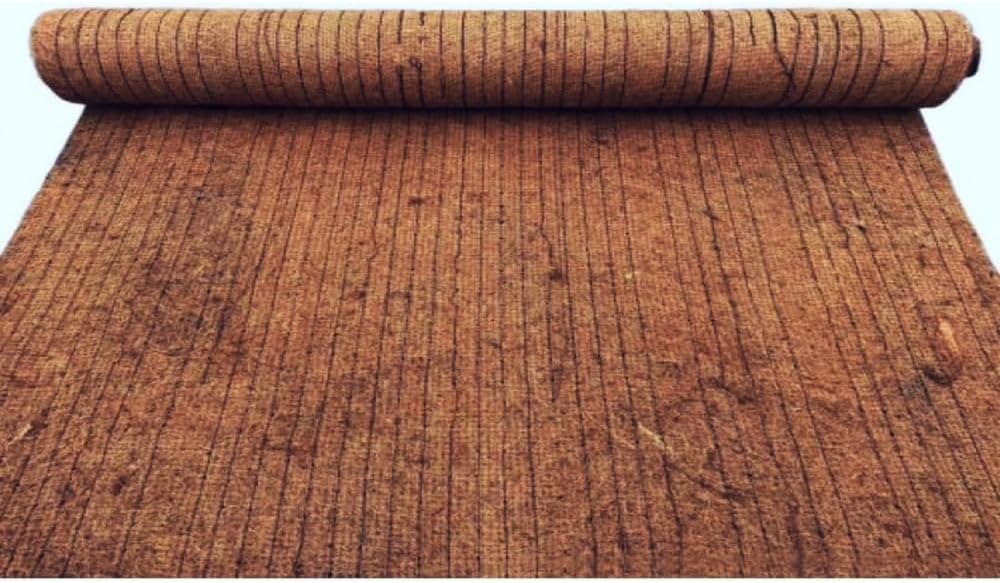
| Material | 100% Coconut Fibers |
|---|---|
| Manufacturer | Farm Plastic Supply |
| Item model number | CECBSPK1 |
| Customer Reviews | 5.0 out of 5 stars |
This coconut erosion control blanket is a heavy-duty, natural-fiber mat intended to stabilize slopes, ditches, and other erosion-prone areas while seedings establish. Made from 100% mechanically stitched coconut fibers, the blanket lays over seeded or bare soil to shield against rainfall impact and sheet flow, reduce weed competition, and retain moisture to improve germination. Its robust construction makes it suitable for long runs on hills and channels where durability matters. Typical installation involves unrolling the blanket, anchoring it with staples or pins, and overlapping edges to ensure continuous coverage. Because it is organic, the mat gradually degrades as vegetation takes hold, which is desirable for permanent stabilization projects but means it is not a permanent synthetic lining. It comes in a long roll that reduces the number of seams on large slopes, but handling and anchoring large rolls requires at least two people. For reliability-focused buyers who want a proven, biodegradable solution for slope mulch and stabilization, this blanket delivers consistent protection and moisture retention with minimal maintenance.
Best for: Gardeners and contractors who prioritize reliable, biodegradable slope protection and want a product that promotes seed establishment and long-term vegetation stabilization.
Less Ideal for: Anyone seeking a permanent, nondegrading soil lining or a lightweight, easy-to-handle product for very small jobs should consider synthetic or smaller-format alternatives.
- 100% mechanically stitched coconut fibers for strong, natural erosion control
- Retains soil moisture to improve seed germination and early plant establishment
- Long roll reduces seams and provides continuous coverage on extended slopes
- Biodegradable material breaks down as vegetation establishes, eliminating removal
- Organic material eventually decomposes so it is not a permanent erosion lining
- Large roll size and weight make handling and installation more difficult for one person
Verdict: Choose this sturdy coconut fiber blanket when you need dependable, biodegradable slope protection that improves seed germination and holds soil in place.
HealthiStraw GardenStraw Premium Garden Mulch, 3 cu ft

| Net volume | 3 cu ft |
|---|---|
| Intended use | Garden mulch, lawn seeding, compost-friendly |
| Material | 100% wheat straw |
| Source | Sustainably sourced, non-GMO |
HealthiStraw GardenStraw is a 3 cubic foot compressed bale of cleaned wheat straw formulated for use as garden mulch and seed protection. It is designed for vegetable, herb, flower and shrub beds where you want a lightweight, compostable mulch that retains soil moisture and suppresses weeds. The straw is processed to reduce dust and stray seeds and the short, specially cut fibers interlock when watered so the mulch stays in place without chemical tackifiers. For bushes you can apply a 2 to 3 inch layer around the drip line to cut evaporation, reduce compaction and gradually add organic matter as it breaks down. Practical benefits include easy spreading from a compressed bale, fast composting into the soil, and reduced watering needs. Limitations are that straw is less decorative than bark or wood chips and will decompose faster, so it requires periodic replenishing; it also provides less long-term weed barrier than heavier mulches. For gardeners focused on soil health and moisture conservation, it is a straightforward, low-risk choice.
Best for: Gardeners who prioritize soil health and want an easy-to-apply, compostable mulch for shrubs and mixed beds that reduces watering and improves organic matter over time.
Less Ideal for: People seeking a long-lasting, decorative mulch or a heavy-duty weed barrier for high-traffic beds should consider wood chips or stone instead.
- Cleaned, non-GMO wheat straw with reduced dust and seeds
- Fibers interlock when wetted so the mulch stays in place without binders
- Helps retain soil moisture and can reduce watering needs substantially
- Composts quickly and adds organic carbon to improve soil structure
- Decomposes faster than wood mulches so it needs topping up more often
- Less decorative and provides a lighter-duty weed barrier compared with heavier bark or rock mulches
Verdict: A clean, fast-composting straw mulch that conserves moisture and improves soil health, making it a safe, practical choice for mulching bushes.
Farm Plastic Supply Straw Erosion Control Blanket (8' x 112.5')

| Manufacturer | Farm Plastic Supply |
|---|---|
| Item model number | ECB75 |
| Material | Mechanically stitched straw |
| Use case | Slopes, ditches, channel and culvert linings |
This straw erosion control blanket is made from mechanically stitch-bonded agricultural wheat designed for stabilizing slopes, ditches, and other erosion-prone areas. You unroll the blanket over newly seeded or exposed soil, stake or pin it in place, and it holds soil and seed in place while retaining moisture to improve germination. Notable features include UV treatment and heavy-duty stitching that help the blanket withstand weather exposure and last through a growing season. The material is breathable so water can infiltrate while the straw layer dissipates rainfall energy and reduces surface runoff. Because it is made from natural straw, the blanket gradually decomposes and contributes organic matter as vegetation establishes. Limitations to expect are its bulky roll and weight for handling on steep slopes and the need for proper anchoring and overlap to avoid undercutting by concentrated flow. For risk-averse buyers wanting a proven, low-tech way to protect seeded slopes, it provides solid, practical erosion control when installed correctly.
Best for: Homeowners and landscapers who prioritize reliable, low-maintenance erosion protection for seeded slopes and want a natural, soil-friendly solution that supports germination.
Less Ideal for: People who need a lightweight, reusable synthetic blanket for repeated installations or who require immediate, hard-surface stabilization for heavy concentrated flows.
- Mechanically stitch-bonded straw construction resists displacement and holds seed in place
- Helps retain soil moisture to improve seed germination and early vegetation establishment
- Breathable natural material reduces rainfall impact while allowing water infiltration
- Designed for typical slope and channel uses such as hills, ditches, and culvert inlets
- Large, heavy roll can be awkward to handle on steep terrain without extra help
- Requires secure staking and proper overlapping to prevent washout in concentrated flow
Verdict: A durable, natural straw blanket that reliably protects seeded slopes and improves germination for gardeners who want conservative, proven erosion control.
Choosing the Right Mulch for Slopes: Key Factors to Consider
Erosion Resistance and Particle Interlock
How well mulch resists being displaced by surface runoff is the single most important factor on slopes. Larger, angular particles or fibrous materials that bind together form a rough surface that breaks up flow and reduces sheet erosion. Materials that interlock or mat down will stay on steeper grades longer and protect soil while plants establish.
Consider how rainfall intensity in your area affects mulch transport. Mulches that look tidy on flat ground can quickly migrate downhill under storm events. Choosing a material with good resistance to washout reduces the need for frequent reapplication and protects root systems from exposure.
Drainage and Water Infiltration
Mulch should slow runoff without creating perched water that drowns roots. Open-structured mulches allow water to penetrate to the soil while slowing flow, which helps moisture reach plant roots and reduces erosion. Materials that compact or form an impermeable mat can divert water around plants and increase runoff at the slope toe.
Think about soil type beneath the mulch. Clay-rich soils drain slowly and benefit from coarser, more permeable coverings, while sandy soils may tolerate finer textures but still need stability against washout.
Decomposition Rate and Soil Benefits
How quickly a mulch breaks down matters for both maintenance and soil health. Fast-decomposing organic mulches feed the soil and improve structure but require more frequent topping up on slopes. Slow-decomposing materials offer longer-lasting coverage and steadier erosion control but contribute less immediate organic matter.
Balance the desire for soil building with the need for a persistent protective layer. In many cases a slower-decomposing mulch, possibly combined with targeted soil amendments, is the best compromise on a steep site.
Plant Compatibility and Root Protection
Mulch affects root temperature, moisture, and the microhabitat needed for plant establishment. Some materials can harbor pests or retain too much moisture next to crowns, while others create a drier, airier environment preferred by many slope plants. Choose a mulch that complements the species you are planting and that will not smother shallow-rooted perennials during establishment.
Also consider how mulch depth and particle size interact with seed germination or transplanting. Fine-textured mulch can inhibit small seeds, while larger pieces are friendlier to established transplants.
Stability Aids and Installation Practicality
How easy a mulch is to install on a gradient affects whether you can achieve proper coverage and anchoring. Some mulches require netting, pins, or biodegradable geotextiles to stay in place; others can be brushed into place and will hold without extra hardware. Consider the labor involved and whether you can safely work on the slope.
Think about how often you are willing to reapply or retouch the mulch. Materials that need regular maintenance may be impractical for steep, hard-to-reach areas.
Aesthetic and Long-Term Maintenance
Appearance matters in landscaped slopes but should not override functional needs. Darker, finer mulches can look neat but may wash away faster. Coarser, textured mulches often provide a more natural look and better long-term coverage, but they change color and volume as they weather.
Plan for periodic topping and redistribution. On slopes, maintenance tasks often require extra care to avoid disturbing plantings, so choose a mulch whose longevity matches your maintenance schedule.
Preparing a Slope Before Applying Mulch
Proper surface prep sets the stage for effective mulch performance. Begin by removing loose debris and addressing concentrated flow paths with small swales, rock checks, or planting terraces so water does not channel across the new mulch layer.
Lightly roughen the soil surface to give the mulch something to grip. Where practical, incorporate low plantings or groundcovers that will root quickly and anchor the soil beneath the mulch.
- Clear away loose topsoil and litter that can fuel erosion.
- Install simple erosion control features at drainage outlets.
- Avoid creating smooth hardpan surfaces that encourage runoff.
Anchoring Mulch on Steep Grades
Even the most erosion-resistant mulch benefits from anchoring on steep slopes. Biodegradable stakes, landscape pins, or netting can hold material in place until plant roots take over. Use anchoring methods that will break down over time or that are hidden beneath the mulch layer.
For temporary stabilization after planting, consider a loose layer of coir or straw matting pegged down, then topped with the chosen mulch to improve both hold and appearance.
- Match anchor spacing to slope steepness and expected runoff intensity.
- Check anchors after major storms and reset any displaced sections.
Mulch Depth and Application Tips for Slopes
Depth matters: too little and the mulch will not protect soil; too much and it can smother shallow roots or inhibit water infiltration. Aim for an even covering that follows recommended depths for the material type, typically lighter on steepest sections to prevent slippage.
Apply mulch in a way that minimizes movement during installation. Spread thin, then build up in stages while tamping lightly where appropriate. Avoid constructing a thick ridge at the top of the slope that will wash away and create problems downhill.
- Use a toothed rake or gloved hands to work mulch into depressions and around plant crowns.
- Avoid piling mulch against stems or trunks to reduce rot risk.
Combining Mulch With Plantings for Long-Term Stability
Mulch works best as one element of a slope stabilization strategy that includes vegetation. Use a mix of deep-rooting perennials, groundcovers, and shrubs to create a layered root network that holds soil once established.
Stagger plant spacing and select species with varying rooting habits to maximize soil binding. Mulch protects seedlings and conserves moisture during the critical establishment window.
- Start with erosion-tolerant starter plants in high-risk zones.
- Complement woody or fibrous mulches with living anchors such as grasses or groundcovers.
Seasonal Care and When to Reapply
Inspect mulched slopes after heavy rains and seasonal freezes. Look for signs of displacement, exposed roots, or channels forming in the cover. Plan maintenance in the growing season when repairs will coincide with plant establishment.
Reapplication frequency depends on material decomposition and local weather. Keep a modest supply on hand for spot repairs so small issues do not widen into larger erosion problems.
- Touch up edges and drainage zones first to prevent progressive loss.
- Topdress thinly rather than re-mulching in deep layers to preserve soil microbes.
How We Chose the Best Mulch for Slopes
We focused on attributes that determine long-term slope stability and plant success rather than cosmetic traits. Primary evaluation criteria included erosion resistance under heavy rain, drainage and water infiltration, durability and decomposition rate, root and plant compatibility, and ease of installation on a grade. We prioritized materials that form an interlocking cover or that can be anchored effectively on slopes and that decompose at a rate compatible with the planting plan. We excluded materials that require frequent reapplication in steep situations or those that compact into impermeable layers that trap water against root crowns. We also filtered out options that are impractical for typical homeowner installation on slopes, such as materials requiring heavy machinery. The final list reflects products that balance holding power, soil health, and manageable upkeep for gardeners working on inclines.
FAQ
What mulch types hold best on steep slopes?
Materials with coarse textures or fibrous structure typically perform best because they interlock and resist being carried off by runoff. In many cases combining a fibrous layer with a coarser top layer improves both hold and appearance.
Can I use landscape fabric under mulch on a slope?
Landscape fabric can help reduce weed pressure but may impede water infiltration if it is not breathable. If used, choose biodegradable or highly permeable options and install them in a way that does not channel water across the slope.
How deep should mulch be applied on a hillside?
Recommended depths vary by material, but a general approach is to use a moderate, even layer that protects soil without creating a thick, unstable mass. Lighter coverage on the steepest sections and closer attention around plant crowns is prudent.
Is it better to use organic or inorganic mulch on slopes?
Both have pros and cons. Organic mulches build soil over time but decompose and require topping up. Inorganic options can last longer and offer consistent erosion control but do not improve soil structure. The best choice depends on whether immediate soil improvement or long-term low maintenance is the priority.
How soon will plants stabilize a mulched slope?
Establishment time varies with species, climate, and soil. Fast-rooting groundcovers can provide meaningful stabilization in a single growing season, while shrubs and deeper-rooted plants may take multiple seasons to fully anchor the slope.
How do I repair mulch after a heavy storm?
Assess damage and start by repairing high-risk areas like drainage outlets and exposed roots. Re-anchor displaced sections, redistribute remaining material, and spot-apply fresh mulch to thin areas rather than stripping and replacing entire sections.
Final Verdict
Pick a mulch that balances holding power with water permeability and the maintenance effort you are willing to commit. On steep ground, prioritize erosion resistance and ease of anchoring, then factor in decomposition rate based on whether you want ongoing soil improvement or long-lasting coverage. Combine mulch with the right plantings and occasional upkeep to achieve stable, low-maintenance slopes.
