

Note: This article contains affiliate links. If you click on these links and make a purchase, I may earn a small commission at no extra cost to you. This helps support my research and content. Read my full affiliate disclosure here.
If you wrestle with thick, waist- to chest-high weeds, a standard grass trimmer often stalls or forces multiple passes. Choosing a string trimmer built for tall weeds matters because longer, tougher growth demands more torque, a longer cutting reach, and line durability so you spend less time re-trimming and more time done. This guide covers five shortlisted string trimmers designed for heavy vegetation and overgrown patches. We assess each option for cutting reach, motor or engine strength, line capacity, and handling in real yard conditions so you can match a tool to your garden's size and persistence of unwanted growth. Read on for the features and tradeoffs that matter most for tall weed control.
Top Picks at a Glance
| Best Overall The best all-around choice for most situations | DEWALT FLEXVOLT 60V MAX String Trimmer, Brushless, Two-Speed, 15-Inch (3Ah Battery) |  |
| Best Quality Built to a higher standard if you want something more solid | EGO Power+ 16" POWERLOAD String Trimmer with Telescopic Carbon Fiber Shaft (includes 56V 2.5Ah Battery & Charger) |  |
| Best Value The sweet spot between price and what you get | BLACK+DECKER 40V MAX 13 in Cordless String Trimmer and Edger (LST136) with Battery and Charger |  |
| Highest Rated A top-rated pick with lots of positive feedback | DOWILIN 46cc 2-Cycle Gas 3-in-1 String Trimmer (Straight Shaft) |  |
| Most Popular A crowd favorite that many people choose with confidence | BLACK+DECKER 6.5-Amp 14-inch AFS Electric String Trimmer/Edger (BESTA510) |  |
DEWALT FLEXVOLT 60V MAX String Trimmer, Brushless, Two-Speed, 15-Inch (3Ah Battery)

| Battery platform | FLEXVOLT 60V MAX |
|---|---|
| Motor type | Brushless |
| Speed settings | Two-speed |
| Cutting swath | 15-Inch |
| Battery included | 3-Ah |
This DEWALT FLEXVOLT 60V MAX string trimmer is built for heavy-duty trimming where power and runtime matter. Its brushless motor and FLEXVOLT battery deliver strong, consistent torque for cutting thick grass and light brush, while the two-speed control lets you choose between maximum run time or maximum cutting power. The 15-inch cutting path is suitable for faster coverage along edges, lawns, and around obstacles, and the battery integration avoids cords and fuel mixing. In practice it performs more like a small commercial trimmer than a casual homeowner unit, making it useful for professionals or serious property owners who need repeatable performance on larger jobs. Expect the advantages of lower maintenance compared with gas engines, but be aware runtime depends on battery capacity and heavier work will need spare batteries for a full day. The unit trades the unlimited runtime of gas for cleaner operation, reduced noise at moderate speeds, and simpler starting and upkeep.
Best for: Professional landscapers and performance-minded homeowners who need a cordless trimmer that delivers near-commercial cutting power and predictable operation across multiple properties or larger yards.
Less Ideal for: Casual users with small yards who prioritize lowest cost or who prefer infrequent use and minimal battery management.
- Brushless motor for higher efficiency and longer motor life
- FLEXVOLT 60V system delivers strong cutting power suitable for thick grass and light brush
- Two-speed control to balance runtime and performance
- 15-inch cutting swath for faster coverage on larger areas
- Cordless battery operation reduces maintenance and eliminates fuel mixing
- Runtime on a single 3Ah battery can be limited during heavy cutting and may require spare batteries
- Heavier jobs may still be better suited to gas-powered commercial trimmers
Verdict: Choose this DEWALT FLEXVOLT trimmer when you need cordless, near-commercial cutting power with the convenience of a brushless motor and two-speed control.
EGO Power+ 16" POWERLOAD String Trimmer with Telescopic Carbon Fiber Shaft (includes 56V 2.5Ah Battery & Charger)

| Power Source | Battery Powered |
|---|---|
| Cutting width | 16 inches |
| Number of Batteries | 1 Lithium Ion (included) |
| Battery Average Life | 45 minutes |
This EGO Power+ 16" POWERLOAD string trimmer is built for high-performance trimming without the hassle of gas. It uses a brushless motor and a 16-inch cutting swath to deliver consistent cutting power and lower vibration, while the included 56V 2.5Ah ARC Lithium battery provides up to about 45 minutes of runtime per charge for typical yard work. The POWERLOAD system makes replacing and winding line as simple as feeding the line and pressing a button so you spend less time stopped and more time trimming. The telescopic carbon fiber shaft adjusts quickly for operator height and keeps the tool lightweight while still feeling durable, and the quick-adjust auxiliary handle helps dial in control when working around beds and fences. The unit is weather resistant and comes with professional-style 0.095-inch dual-line. Important limitations are battery runtime under heavy thick-weed conditions and the need to buy higher-capacity batteries for extended use, but for single-pass edging and clearing overgrown borders it performs like a pro-level cordless trimmer.
Best for: Buyers who prioritize cutting performance and rapid line changes and want a cordless trimmer that feels like a professional tool for lawns, borders, and overgrown edges.
Less Ideal for: People with very large acreage or commercial crews who need uninterrupted multi-hour runtime without swapping batteries should consider gas or higher-capacity battery systems.
- POWERLOAD automatic line winding for fast, no-fuss line replacement
- Brushless motor provides strong cutting power with lower vibration
- Telescopic carbon fiber shaft for lighter weight and adjustable reach
- Includes 56V 2.5Ah battery and charger for immediate use
- IPX4 weather-resistant construction for use in damp conditions
- Runtime (around 45 minutes) can be limiting for very large or dense properties
- May require higher-capacity batteries for prolonged heavy-duty trimming
Verdict: Choose this trimmer if you want near-professional cordless performance with fast, tool-free line loading and an adjustable lightweight shaft for comfortable, efficient yard work.
BLACK+DECKER 40V MAX 13 in Cordless String Trimmer and Edger (LST136) with Battery and Charger

| Power Source | Battery Powered |
|---|---|
| Cutting width | 13 inches |
| Speed | 8500 rpm |
| Number of Batteries | 1 Lithium Ion (included) |
The BLACK+DECKER LST136 is a battery-powered 13-inch string trimmer that doubles as an edger for common yard maintenance around a typical home. It is powered by a 40V Max lithium-ion battery with a state-of-charge indicator and a fast charger so you can gauge runtime and restore power in roughly two hours. The POWERDRIVE transmission and 8500 rpm top speed give it enough punch to cut through thicker weeds, while the PowerCommand dial lets you prioritize torque or runtime depending on the job. The Automatic Feed Spool reduces interruptions by advancing line as needed without bumping. Practical touches like an adjustable telescoping shaft, soft-grip handle, and included auxiliary handle improve comfort for longer sessions. Converting to an edger is quick, making boundary cleanup easier after trimming. Limitations are typical of battery trimmers: runtime depends on battery capacity and heavy, continuous use will need recharge or a spare battery, and it is best for homeowner yards rather than commercial heavy-duty jobs.
Best for: Homeowners who want a versatile, cordless trimmer that handles routine lawn edging and light-to-medium weed cutting with user-friendly controls and easy conversion between trimmer and edger.
Less Ideal for: People who need a high-hour commercial tool or who regularly tackle very large properties where long continuous runtime and industrial power are required.
- Includes 40V Max lithium-ion battery with state-of-charge indicator and fast charger for quick turnaround
- PowerCommand dial to choose higher power or longer runtime for different yard tasks
- Automatic Feed Spool supplies line as needed without bumping
- Converts quickly from trimmer to edger for versatile edge cleanup
- Adjustable telescoping shaft and soft-grip handle improve comfort during use
- Battery runtime is limited for extended heavy-duty work and may require a spare battery
- Not intended for commercial or continuous professional use
Verdict: A comfortable, easy-to-use cordless trimmer/edger kit that balances power and convenience for typical homeowner yard maintenance.
DOWILIN 46cc 2-Cycle Gas 3-in-1 String Trimmer (Straight Shaft)

| Power Source | Gas Powered |
|---|---|
| Cutting width | 10 inches |
| Speed | 3000 rpm |
| Style Name | Straight Shaft |
This DOWILIN 46cc 2-cycle gas string trimmer is built for heavy yard work where power and versatility matter. It ships as a 3-in-1 tool with a dual-line trimmer head plus a 9-inch 3-tooth metal blade and a 10-inch circular saw blade, so you can switch from edging and regular trimming to cutting through thicker weeds and light brush without buying separate machines. The straight 71-inch shaft and ergonomic handles make it easier to reach fence lines and under shrubs, and the included blade guard, basic tool kit, and fuel-mixing bottle help with setup and routine maintenance. Because it is gas powered, it delivers stronger, continuous cutting performance than most battery trimmers, but you should expect regular fuel mixing, basic engine tune-ups, and louder operation. The unit’s learning curve for blade changes and mixing fuel is offset by its flexibility and the ability to handle larger properties or tougher growth that electric options struggle with.
Best for: Buyers who prioritize dependable, gas-powered cutting performance for larger yards or frequent heavy trimming and who are willing to perform routine engine upkeep.
Less Ideal for: Casual gardeners with small yards who prefer low-maintenance, quiet electric or battery trimmers and do not want to mix fuel or do engine maintenance.
- Powerful 46cc 2-cycle engine suited to heavy trimming and light brush cutting
- Three cutting options (dual-line head, 9-inch 3-tooth blade, 10-inch saw blade) for versatile tasks
- Long straight shaft improves reach for fence lines and under shrubs
- Includes blade guard, basic tool kit, and fuel mixing bottle for immediate use
- Requires fuel mixing and regular engine maintenance typical of 2-cycle gas tools
- Louder operation and higher vibration compared with electric trimmers
Verdict: Choose this DOWILIN if you need a robust, versatile gas trimmer that tackles everything from edging to light brush with one machine.
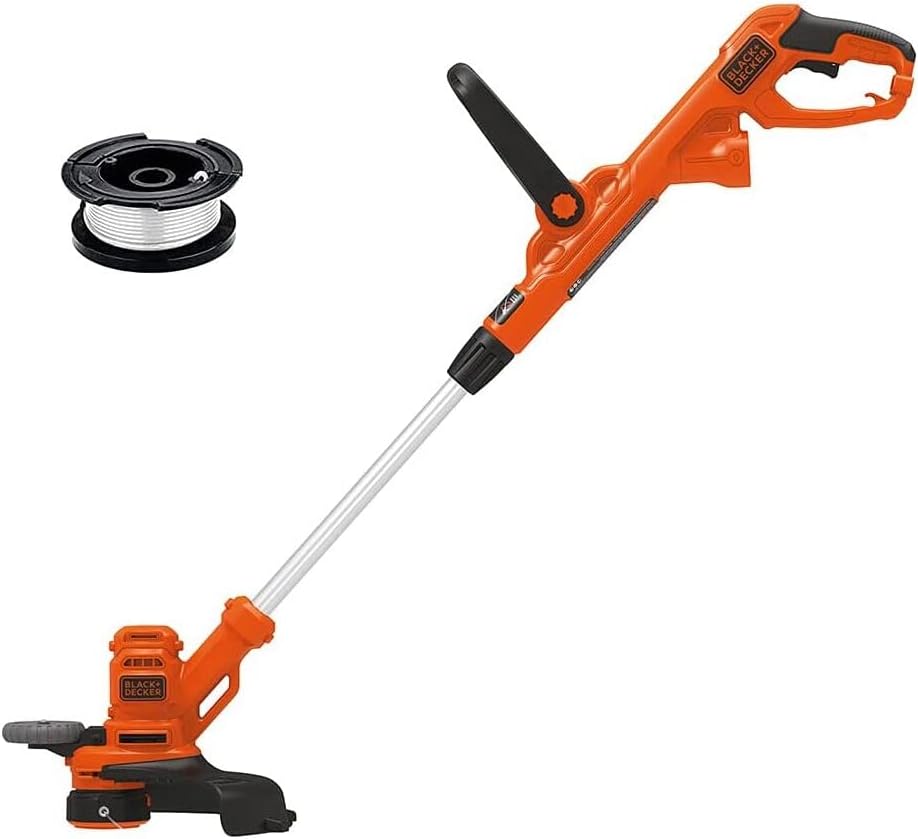
BLACK+DECKER 6.5-Amp 14-inch AFS Electric String Trimmer/Edger (BESTA510)
| Power Source | Corded Electric |
|---|---|
| Cutting width | 14 inches |
| Speed | 8000 rpm |
| Included Components | AF-100 Spool, Auxiliary Handle, Guard |
| Manufacturer Warranty Description | 2 Year Limited Warranty, 30 Day Money Back Guarantee |
This BLACK+DECKER model is a straightforward corded electric trimmer that converts to a wheeled edger, letting you trim tight spots and define borders without buying two tools. The 6.5‑amp motor with POWERDRIVE transmission supplies steady torque for grass and light overgrowth, while the 14‑inch cutting swath gets jobs done quickly. AFS automatic feed spool removes the need to bump the head and keeps line feeding consistent, and the integrated cord retention reduces accidental unplugging during use. The tool is relatively lightweight and includes an auxiliary handle and adjustable positions for more comfortable handling. Because it is corded, runtime is effectively unlimited but you are limited by reach from an outlet and need to manage an extension cord for larger yards. The edging wheel converts easily but is basic compared with dedicated gas or battery pro edgers. For homeowners on a budget who need reliable, low-maintenance edging and trimming around sidewalks, driveways, and flower beds, this is a practical choice.
Best for: Homeowners who want an affordable, no-frills electric trimmer that also converts to an edger for routine lawn edge and small-yard trimming tasks.
Less Ideal for: People with large properties who need cordless mobility or professionals who require heavy-duty gas-powered edging and cutting performance.
- 2‑in‑1 trimmer and wheeled edger covers both tasks without extra tools
- AFS automatic feed spool eliminates bump feeding for uninterrupted work
- 6.5‑amp motor with POWERDRIVE transmission delivers steady torque for common yard weeds and grass
- Integrated cord retention prevents accidental unplugging during use
- Lightweight with adjustable handle for easier control and comfort
- Corded design limits reach and requires managing an extension cord
Verdict: A budget-friendly corded trimmer that doubles as a simple wheeled edger and reliably handles routine edging and trimming around the yard.
Choosing the Right String Trimmer for Tall Weeds: Key Factors to Consider
Cutting Reach and Head Design
Cutting reach determines how quickly you can clear dense stands of tall weeds. A wider head or a trimmer that accepts heavier gauge line reduces the number of passes needed and keeps you from repeatedly stepping into already-cut areas. Heads that support bump feed and easy line replacement save time when working through fibrous stalks that chew through line.
Head geometry also affects how the line moves through thick growth. A head that keeps line tension and resists wrapping preserves cutting efficiency. Consider whether the head accepts thicker, twisted, or braided line types; those hold up better against coarse stems and roots.
Power Delivery and Torque
Tall weeds demand sustained torque more than peak RPMs. Engines or motors with higher low-end torque will pull through heavy stems instead of bogging down. For battery trimmers, look at continuous power ratings and how performance holds under load; some batteries drop voltage quickly under heavy strain. Gas engines deliver consistently higher torque for prolonged heavy-duty clearing, while corded electric models can offer steady power if an extension setup suits your space.
Consider how the trimmer responds when it contacts a dense patch. Models that maintain line speed under load reduce the need to repeatedly re-trim areas and shorten overall job time.
Line Type and Capacity
Line selection is crucial for tall, tough weeds. Thicker line or lines with reinforced cores resist breakage against woody stems, and twisted or star-shaped profiles cut more aggressively than round mono filament. A trimmer that accepts larger diameter line gives you the flexibility to switch to tougher line when needed.
Capacity matters because larger spools and easy-loading heads reduce downtime. Systems that let you quickly reload line without disassembling the head are especially useful for extensive clearing jobs.
Shaft Type and Reach
Shaft length and type influence reach and user fatigue. Straight shafts give longer reach, making it easier to cut taller patches without bending or stepping into the weeds. They also provide more leverage when the trimmer encounters resistance. Curved shafts are lighter and often easier to maneuver in tight spaces, but they shorten effective reach and can require more passes in tall growth.
Think about transport and storage too. If you need to carry the tool across uneven ground, a slightly heavier straight-shaft model with better balance might still be preferable to a lightweight curved shaft that sacrifices reach.
Durability and Weather Resistance
Tools used on tall weeds face abrasive stems, grit, and moisture. Durable gearbox housing, sealed electrical components on battery models, and corrosion-resistant finishes extend service life. Metal drive shafts are stronger than thin plastic cores and resist bending or breakage when a line snags on hidden debris.
Weather resistance matters if you clear weeds through damp seasons. Components that resist water intrusion and bearings that tolerate grit reduce repair frequency and keep the trimmer running through a full season of heavy work.
Comfort, Balance, and Safety Features
Extended clearing of tall weeds is physically demanding. Shoulder straps or harness compatibility spread weight and reduce arm fatigue for long shifts. Anti-vibration designs and rubberized grips make the tool easier to control and lower the chance of accidental slips when you need to apply pressure through thick growth.
Safety features such as robust debris shields, clear cutting height guards, and easy shutoff switches protect you from thrown debris and allow quick stops if the line snags on hidden obstacles.
When to Choose Battery, Gas, or Corded Power
Power source affects performance, runtime, and convenience when tackling tall weeds. Gas models typically deliver the highest torque and longest continuous runtime, which helps when clearing large overgrown areas, but they require fuel handling and more maintenance. Battery trimmers have improved and can handle moderate tall-weed work, especially when paired with high-capacity, high-discharge packs. They are quieter and lower-maintenance, making them a good fit for smaller properties or where noise is a concern. Corded electric units deliver steady power without refueling but are limited by reach from an outlet and extension cord logistics.
- Choose gas for long, continuous work and the toughest growth.
- Pick battery if you want lower noise and simpler maintenance for moderate heavy work.
- Use corded electric when you have easy access to power and a smaller working area.
Line Choices That Cut Tough Stalks Better
Not all trimmer line performs the same in tall, fibrous weeds. Round mono filament line cuts well on softer grass but wears quickly on woody stems. Braided or twisted lines, and multi-sided profiles, provide a sharper edge and resist shredding. Many heavy-duty users step up to 0.095 inch or 0.105 inch diameter lines for improved durability.
- Round line: easier to spool, best for light trimming.
- Star or twisted line: better for fibrous or woody weeds.
- Heavier diameter line: longer life but may need more powerful motors.
Maintenance Tips for Heavy Use
Regular maintenance keeps a trimmer ready when you need to tackle overgrown patches. Clean debris from the head and gearbox after each job to prevent line wrapping and grit buildup. Check shafts and fasteners for looseness and inspect the cutting head for worn components. For gas engines, follow the recommended spark plug and air filter replacement intervals and use fresh fuel. Battery users should store packs in a cool, dry place and avoid fully depleting them before charging if the manufacturer advises against it.
- Clean and inspect after every heavy session.
- Keep spare line and basic tools in a tote for on-the-job repairs.
- Schedule motor and drive inspections seasonally for gas models.
Techniques for Cutting Tall Weeds Safely and Efficiently
Start at the top edge of the patch and work methodically in overlapping passes to avoid missing stems and to prevent tripping on hidden holes. Keep the head at a slight angle so the line slices the stalks rather than punching straight down into the base. If stems are exceptionally tall or woody, a two-stage approach helps: first knock stems down with a sweeping pass, then finish with a lower cut closer to the ground for cleaner removal. Wear eye protection, long pants, and sturdy shoes. Clear the area of rocks, wire, and other hazards before starting to reduce the chance of line breakage and flying debris.
- Work in overlapping swaths from the perimeter inward.
- Use angled cutting to shear stems rather than push into the ground.
- Consider a two-pass approach for very tall, dense growth.
How We Chose the Best String Trimmer for Tall Weeds
We prioritized features that matter when clearing tall, woody, or fibrous weeds rather than light lawn edging. Primary evaluation criteria included cutting reach and head design to ensure the trimmer can cut wide swaths and reach into dense stands. Power delivery and torque were assessed because tall weeds need steady force to avoid bogging down or stalling. Line capacity and feed reliability were considered since frequent line changes interrupt work and thin line wears out faster on coarse vegetation. Durability of drive components and shaft construction was weighed for seasonal heavy use, along with vibration and balance for user comfort during extended clearing sessions. Ease of starting and maintenance were included because a tool that is difficult to service reduces long-term usefulness. We excluded lightweight hobby trimmers and devices intended only for lawn-edge detail. We also screened out heads with tiny line capacity or underpowered motors that are unlikely to handle continuous tall-weed cutting. The remaining picks meet the criteria above and represent practical choices across power delivery styles and shaft configurations.
FAQ
Is a heavier gauge line always better for tall weeds?
Heavier gauge line lasts longer against fibrous stems, but it requires a trimmer with enough torque to maintain line speed. On underpowered models, thicker line can slow cutting and increase strain, so match line thickness to the tool's power.
Can I use a straight-shaft trimmer for small yards?
You can, and a straight shaft gives better reach and leverage for tall weeds. However, it is usually heavier and less maneuverable in tight spaces, so consider the tradeoff between reach and handling for your yard layout.
How often should I replace trimmer line when working tall weeds?
Replacement frequency depends on line type, thickness, and how abrasive the stems are. Expect to reload more often than with light lawn trimming; check the head periodically and carry spare line to minimize downtime.
Are battery trimmers powerful enough for long patches of tall weeds?
Many modern battery trimmers can handle moderate tall-weed work, especially with high-capacity batteries. For very large or dense areas, gas models still offer longer continuous runtime and greater torque. Runtime under heavy load tends to be the limiting factor for batteries.
What safety gear should I wear when trimming tall weeds?
Wear eye protection, long pants, closed-toe sturdy footwear, and gloves. A face shield and ear protection are advisable for gas models. Also remove obstacles and check for hidden hazards before starting.
Final Verdict
For tall weeds, prioritize cutting reach, sustained torque, and a head that accepts heavier, more durable line. Expect tradeoffs between weight and reach when deciding on shaft type, and match line diameter to the tool's power so you do not slow performance. Consider power source based on the area you need to clear: gas for long heavy sessions, battery for moderate work and lower noise, and corded electric for smaller, powered areas. Focus on durability, comfortable handling, and easy maintenance to keep the trimmer working through repeated seasonal clearing.
