

Note: This article contains affiliate links. If you click on these links and make a purchase, I may earn a small commission at no extra cost to you. This helps support my research and content. Read my full affiliate disclosure here.
Picking the right ground cover for a sunny Zone 5 bed changes how well a landscape holds soil, resists weeds, and looks through the season. In full sun situations you need plants that survive late-spring freezes, tolerate heat and drought, and establish a steady, manageable spread. This guide shortlists seven top ground cover options suited to full sun in Zone 5 and explains the traits that matter in real garden conditions. We evaluate establishment speed, sun and drought tolerance, maintenance needs, and how each choice behaves in slopes, pathways, and mixed borders. Read on to understand the tradeoffs and find a practical option for your site.
Top Picks at a Glance
| Best Overall The best all-around choice for most situations | Votaniki Sedum Munstead Dark Red (Stonecrop) Bare Root — 1 Pack |  |
| Best Quality Built to a higher standard if you want something more solid | Outsidepride Ladino (White) Clover Seed, 5 lb Nitrocoated Inoculated |  |
| Best Value The sweet spot between price and what you get | PLANTMEW Lemon Thyme Seeds (10,000+) |  |
| Best Budget The cheapest option that still gets the job done reliably | Carpet Creeping Creeping Thyme Seeds (Ground Cover, 145,000 count) |  |
| Highest Rated A top-rated pick with lots of positive feedback | Wivolibe Sweet Alyssum Seeds (Carpet of Snow) — 10,000 Non‑GMO Heirloom Seeds |  |
| Most Popular A crowd favorite that many people choose with confidence | HOME GROWN Purple Rock Cress (Aubrieta deltoidea) Seeds — 300 Heirloom Non-GMO Seeds |  |
| Best Seller A high-volume bestseller chosen again and again | Outsidepride White Dutch Clover Seed, 5 lb |  |
Votaniki Sedum Munstead Dark Red (Stonecrop) Bare Root — 1 Pack

| Sunlight Exposure | Full Sun |
|---|---|
| USDA Hardiness Zone | 3 to 9 |
| Expected Blooming Period | Late summer and fall |
| Soil Type | Well-drained |
| Moisture Needs | Moderate Watering |
This bare-root Sedum Munstead Dark Red is a compact, drought-tolerant perennial that supplies late-summer to fall color with clusters of purplish-pink star-shaped flowers. You plant the bare root in well-drained soil in a sunny spot, spacing plants 18 to 24 inches apart; once established it tolerates dry, poor soils and needs only moderate watering. The fleshy, gray-green leaves with red highlights provide season-long interest and the seed heads and foliage remain attractive into winter. It works well in rock gardens, between stepping stones, small borders, or containers where a tough, low-maintenance groundcover is needed. Limitations are that it prefers full sun for best flowering and may be less vigorous in heavy shade, and as a bare-root plant it requires correct planting depth and initial care to establish. It can spread over time, so plan spacing if you want a tidy planting bed rather than rapid naturalizing.
Best for: Gardeners in temperate climates who want an easy-care, sun-loving groundcover that provides late-season color and requires little ongoing care.
Less Ideal for: Those needing a shade-tolerant groundcover or an instant dense carpet without time for plants to establish and spread.
- Hardy in USDA zones 3 to 9 so suitable for cooler Zone 5 climates
- Drought tolerant and thrives in well-drained, poor soils requiring minimal maintenance
- Long-lasting late summer to fall blooms that attract pollinators
- Compact habit ideal for rock gardens, borders, containers, and small spaces
- Performs best in full sun and produces fewer flowers in shady sites
Verdict: A resilient, low-maintenance stonecrop that delivers reliable full-sun groundcover color in Zone 5 with minimal care.
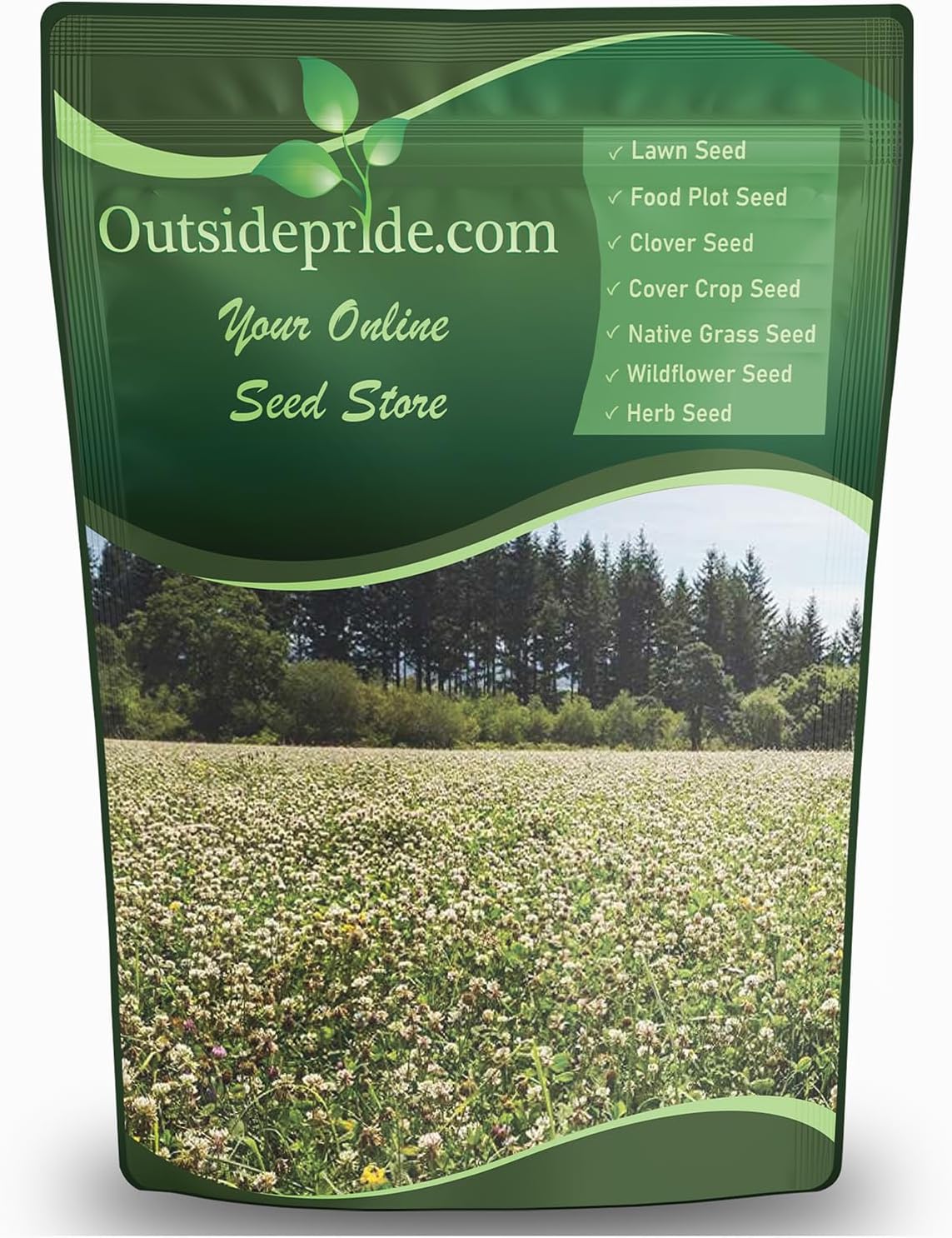
Outsidepride Ladino (White) Clover Seed, 5 lb Nitrocoated Inoculated
| Indoor Outdoor Usage | Outdoor |
|---|---|
| Other Special Features of the Product | Drought Tolerant |
| Sunlight Exposure | Full Sun |
| USDA Hardiness Zone | 3 |
| Moisture Needs | Little To No Watering |
This Outsidepride Ladino clover is a large white clover variety intended as a durable, nitrogen-fixing ground cover for full-sun sites. Sold bulk and nitrocoated with inoculant, the seed is designed to establish quickly, retain moisture during germination, and form a dense perennial stand across USDA zones down to zone 3. Typical uses include pasture and forage mixtures, erosion control, food plots and low-maintenance ground cover that attracts bees and wildlife. Practical benefits are improved soil fertility through nitrogen fixation, reduced need for fertilizer, good drought tolerance once established, and reseeding that helps maintain cover year to year. Expect germination in about two weeks with light soil contact and initial moisture; heavier traffic or frequent mowing will limit persistence. This clover performs best where full sun to partial shade is available and where a mixed pasture or meadow aesthetic is acceptable rather than a manicured turf. Because it spreads and reseeds, it can be aggressive in small ornamental beds and may not replace a fine lawn surface.
Best for: Gardeners or land managers who need a low-input, performance-focused ground cover for full-sun zone 5 sites and value soil improvement and forage value over a turf lawn.
Less Ideal for: Homeowners seeking a formal, closely mown lawn or people wanting a non-spreading ornamental groundcover in small beds should look for alternatives.
- Nitrocoated and inoculated seed for improved establishment and nitrogen fixation
- Perennial variety adapted to USDA zones including zone 5, suited for full sun
- Drought tolerant once established, reducing irrigation needs
- Attracts pollinators and provides nutritious forage for wildlife and livestock
- Not suitable where a fine, mowable lawn is required
- Can self-reseed and spread beyond intended areas if not managed
Verdict: Choose this nitrocoated Ladino clover when you want a hardy, low-input full-sun ground cover that builds soil fertility and supports pollinators in zone 5.
PLANTMEW Lemon Thyme Seeds (10,000+)

| Unit Count | 1.05 Ounce |
|---|---|
| Sunlight Exposure | Full Sun |
| USDA Hardiness Zone | 4-11 |
| Expected Blooming Period | Summer to Fall |
| Moisture Needs | Moderate Watering |
These PLANTMEW lemon thyme seeds provide a large quantity of creeping thyme suitable for creating fragrant, pollinator-friendly ground cover in sunny, well-drained spots. Typically sown in summer into sandy or well-draining soil, the seedlings form low mats about 3 inches tall that tolerate drought once established and release a lemony aroma when crushed. The listing highlights high germination, perennial habit in USDA zones 4 to 11, and summer to fall bloom that attracts bees and butterflies, which makes it useful for pathways, rock gardens, borders, and containers. Practical benefits include low ongoing maintenance, resistance to hot dry conditions, and multiuse landscaping value as both an herb and a groundcover. Limitations to plan for are the slow, creeping spread compared with aggressive groundcovers and the need for full sun and good drainage to avoid rot in heavy soils. If you want quick instant cover you will need to combine seeding with plugs or mats, but for a budget-friendly, long-term full-sun groundcover this seed packet is a sensible choice.
Best for: Gardeners who want an economical, low-maintenance perennial ground cover for sunny, well-drained beds or paths and who are prepared to seed and wait for plants to establish.
Less Ideal for: People needing immediate, dense coverage or working with heavy, poorly drained soils should consider plugs, mats, or different species better suited to shade or wet conditions.
- Large seed quantity (over 10,000) suitable for seeding sizable areas
- Tolerates full sun and drought once established, reducing watering needs
- Attracts pollinators with summer to fall flowers, supporting garden ecology
- Heirloom seed variety with reportedly high germination rate
- Requires well-drained, sandy soil and full sun to perform well
- Spreads slowly compared with faster-establishing groundcovers
Verdict: A cost-effective seed option for establishing fragrant, drought-tolerant ground cover in full-sun, well-drained areas.
Carpet Creeping Creeping Thyme Seeds (Ground Cover, 145,000 count)

| Indoor Outdoor Usage | Outdoor |
|---|---|
| Other Special Features of the Product | Attracts Pollinators, Fragrant, High Germination Rate |
| Expected Blooming Period | Spring to Fall |
| Sunlight Exposure | Full Sun |
| Moisture Needs | Moderate Watering |
These creeping thyme seeds are intended for establishing a fragrant, pollinator-friendly ground cover that blooms from spring through fall. They are typically sown in sandy, well-drained soil in full sun during the recommended planting period and will germinate in about two to four weeks. The listing emphasizes high germination, organic non-GMO seed stock, and suitability for dry, low-water sites, which makes it practical for rock gardens, between pavers, and large areas where a low mat of flowers is desired. Because the packet is a very large unit count, it suits budget-conscious gardeners covering wide areas or restoring erosion-prone slopes. Expect to maintain moderate watering while plants establish and occasional trimming to keep a neat carpet. Limitations are that thyme prefers full sun and sandy soils so it will perform poorly in heavy clay or dense shade, and establishing a uniform stand requires patience through the germination window and proper site prep.
Best for: Buyers who need an affordable way to establish a wide swath of flowering ground cover and prefer low-water, pollinator-friendly plantings in sunny sites.
Less Ideal for: Gardeners who want a ground cover for shady, moisture-retentive soils or those seeking a small packet for container-only planting.
- Very large seed count suitable for covering large areas on a single purchase
- Non-GMO, heirloom, organic seed sourcing
- Adapted to dry, sandy soils and full sun for low-water landscaping
- Attracts pollinators and produces fragrant blossoms across spring to fall
- Not well suited to heavy clay soils or shaded locations
Verdict: A budget-friendly, high-count seed option for quickly establishing a drought-tolerant, pollinator-attracting flowering carpet in sunny, sandy sites.
Wivolibe Sweet Alyssum Seeds (Carpet of Snow) — 10,000 Non‑GMO Heirloom Seeds

| Expected Blooming Period | Summer to Fall |
|---|---|
| Sunlight Exposure | Full Sun |
| Indoor Outdoor Usage | Indoor, Outdoor |
| Other Special Features of the Product | High Germination Rate, Non-GMO |
| Number of Pieces | 10000 |
These Sweet Alyssum seeds are a straightforward choice for establishing a reliable, low-growing flowering groundcover. Sow the tiny, light-dependent seeds on the soil surface in spring and keep them moist; germination typically occurs in 5 to 15 days and plants bloom from summer into fall. The cultivar produces masses of small, honey-scented white flowers that form a carpet just a few inches high and spread to fill gaps between shrubs, along paths, or in containers and hanging baskets. Notable features are the very large seed count (10,000+), non-GMO heirloom seed stock, and stated tolerance for heat, drought once established, wind and salt exposure, which make it useful in exposed or coastal sites. Practical benefits include quick coverage, pollinator attraction, and the ability to naturalize without much fuss. Limitations are that seeds need light to germinate so they must not be buried, and plants are short-lived in frost so they perform as an annual in cooler climates or need reseeding for continuous coverage.
Best for: Buyers who want an easy-to-establish, fragrant flowering carpet that reliably fills borders, rock gardens, and containers with minimal ongoing care and can be reseeded as needed.
Less Ideal for: Gardeners seeking a permanent perennial groundcover or those who prefer plants that tolerate deep burial at sowing should consider different species.
- Very large seed count for covering broad areas or repeated sowings
- Non-GMO heirloom seed with a high germination rate as stated
- Sweet, honey-like fragrance that attracts beneficial pollinators
- Tolerant of heat, drought, wind and salt once established, suitable for coastal or exposed sites
- Requires light at sowing so seeds must be surface-sown and kept moist until germination
- Short-lived in frost-prone areas and will need reseeding or succession sowing for season-long cover
Verdict: A dependable, high-count packet of fragrant Sweet Alyssum ideal for quickly establishing a low, pollinator-friendly flowering carpet.
HOME GROWN Purple Rock Cress (Aubrieta deltoidea) Seeds — 300 Heirloom Non-GMO Seeds

| Indoor Outdoor Usage | Indoor, Outdoor |
|---|---|
| USDA Hardiness Zone | 2-11 |
| Sunlight Exposure | Full Sun to Partial Shade (best in full sun) |
| Other Special Features | Attracts Pollinators, Drought Tolerant, Semi-Evergreen Groundcover |
| Material Features | GMO Free, Heirloom |
These HOME GROWN Purple Rock Cress seeds are intended to establish a low-growing perennial groundcover that works well in sharply drained, rocky soils and around pavers. You surface-sow the tiny heirloom, non-GMO seeds in early spring or fall, keep the soil surface moist for 14–21 days until seedlings emerge, and expect a mat-forming plant that fills in the following season and blooms in spring to early summer. Notable features include drought tolerance once established, attractiveness to early-season pollinators, and the ability to cascade over stone edges or settle between pavers without becoming tall. Practical benefits for paved areas are a tidy, low habit that resists foot traffic in many situations and good tolerance for poor, alkaline, or rocky substrates. Important limitations are that Aubrieta needs sharp drainage and will not tolerate wet feet, germination requires light so seeds must not be buried, and full groundcover and reliable flowering often take a season to develop. Light shearing after bloom keeps the mat dense.
Best for: Homeowners who want a low-maintenance, ornamental groundcover for rock gardens, paver joints, or retaining wall edges and prefer a predictable perennial that becomes more resilient after establishment.
Less Ideal for: People with poorly drained sites or areas that stay wet after rain should avoid this plant and choose moisture-tolerant groundcovers instead.
- Low, mat-forming habit that fills gaps and cascades over stone edges
- Tolerates poor, rocky, and alkaline soils suited to paver edges
- Drought tolerant once established, reducing watering needs
- Attracts early-season pollinators with spring purple blooms
- Requires sharply drained soil and will not tolerate persistently wet conditions
- Seeds need surface sowing and light for germination which adds care at planting
Verdict: Aubrieta is an attractive, low-growing perennial groundcover that reliably fills rocky paver edges and dry, well-drained sites while providing spring color and pollinator value.
Outsidepride White Dutch Clover Seed, 5 lb

| USDA Hardiness Zone | 3 |
|---|---|
| Sunlight Exposure | Full Sun |
| Moisture Needs | Little To No Watering |
| Material Features | Heirloom |
| Expected Blooming Period | Early spring/Late summer |
Outsidepride White Dutch clover is a hardy perennial cover crop sold in a 5 lb bulk bag and treated (nitrocoated and inoculated) to support germination and soil health. It is used for quick-establishing ground cover, erosion control, lawn alternatives, pasture mixes, and deer or food plots. Typical use is broadcasting seed at the recommended rate, lightly raking it in, and keeping the soil moist until germination, which often appears within two weeks under favorable temperatures. Notable features include drought tolerance, the ability to fix atmospheric nitrogen to improve soil fertility, and fragrant white blooms that attract pollinators. Practical benefits are reduced need for watering and herbicides, faster soil stabilization on slopes, and improved soil structure when used in rotations. Limitations are that it establishes best with some site preparation and regular moisture during germination, it can be slow to outcompete aggressive weeds in very poor seedbeds, and its low stature means it is not a replacement for tall ornamental plantings. Overall it is a straightforward, low-maintenance option for durable, pollinator-friendly ground cover in dry landscapes.
Best for: Buyers who prioritize proven performance and want a low-water, pollinator-friendly ground cover with strong customer feedback to back its reliability for erosion control and lawn alternatives.
Less Ideal for: Gardeners seeking a tall, ornamental flowering display or immediate weed-free lawns should consider other perennial or turf options that provide instant height or faster weed suppression.
- Treated (nitrocoated and inoculated) seed for improved germination and soil inoculation benefits
- Drought tolerant once established, suitable for low-water landscapes
- Attracts pollinators with white flowers, supporting garden biodiversity
- Effective at crowding out weeds and stabilizing soil for erosion control
- Needs consistent moisture during germination window or establishment may be patchy
- Won't rapidly suppress very aggressive weeds without prior site prep or repeat sowing
Verdict: A drought-tolerant, treated white clover seed that delivers reliable, pollinator-friendly ground cover and soil improvement for low-water landscapes.
Choosing the Right Ground Cover for Full Sun Zone 5: Key Factors to Consider
Cold Hardiness and Seasonal Behavior
Cold hardiness dictates whether a ground cover will reliably return after Zone 5 winters. Look for plants rated for at least USDA Zone 5 so crowns survive typical midwinter lows and thaw cycles.
Beyond hardiness zones, consider seasonal dieback and spring green-up. Some ground covers go dormant in late winter and leaf out quickly in spring, while others maintain evergreen leaves or semi-evergreen foliage that helps control erosion and suppress weeds earlier in the season. Understanding seasonal behavior helps you plan winter interest and spring cleanup.
Sun Exposure and Drought Tolerance
Full sun in Zone 5 can mean hot, drying afternoons in summer. Choose ground covers that tolerate extended sun and moderate drought without frequent irrigation. Drought-tolerant species conserve water and reduce maintenance needs once established.
Also consider reflected heat from hardscape or south-facing slopes that intensify exposure. Plants that handle periodic dryness and heat stress will maintain foliage and blooms instead of scorched or patchy growth.
Establishment Rate and Planting Method
How quickly a ground cover fills in affects weed competition and how long you must nurse the bed. Faster-establishing options suppress weeds sooner but may need more frequent thinning. Slower spreaders require careful weed control early but can be easier to limit to beds and borders.
Think about planting method too. Some ground covers establish reliably from plugs or small plants, while others are best started from cuttings or rooted divisions. Your timeline, budget, and nursery availability should influence the choice.
Spread Pattern and Containment
Ground covers vary from tight clumping mats to runners that travel aggressively. Understand whether a plant spreads by stolons, rhizomes, or by clumping crowns. Aggressive runners are useful for erosion control on slopes but need edging to prevent unwanted invasion into lawns or beds.
Containment strategies matter: simple edging, periodic pruning, or root barriers can keep an enthusiastic spreader in check. If you prefer low-maintenance borders, pick a species with tidy, predictable habit.
Maintenance and Seasonal Tasks
Maintenance ranges from nearly zero to seasonal cutting back, division, or selective pruning. Consider leaf drop, flowering debris, and how much cleanup you can manage in spring. Some ground covers need annual thinning to prevent crown rot; others require cutting after bloom to encourage fresh foliage.
Also account for mowing or trimming edges where ground cover meets lawn or pathways. Choose a maintenance level that fits your schedule so the bed stays healthy and attractive.
Soil Preference and Drainage
Soil texture and drainage strongly influence plant performance. Many sun-loving ground covers prefer well-drained soils and will struggle in heavy clay or poorly drained depressions. Others tolerate a wider range of pH and fertility.
Amendment needs at planting time can improve establishment: adding organic matter helps water retention in sandy soils and improves structure in clay. Match plant choice to your existing soil conditions or plan for the minimal amendments needed for successful establishment.
Using Ground Cover on Slopes and Erosion-Prone Sites
On slopes the right ground cover reduces runoff and stabilizes soil by forming dense mats or deep-rooted networks. Prioritize species that root at multiple nodes or form a thick canopy close to the soil to intercept rain and slow water movement.
Plant in staggered rows to maximize coverage and staggered establishment. Mulch lightly at planting to conserve moisture until roots take hold, but remove any heavy mulch once the plants are established so crowns are not smothered.
- Stagger plugs or runners for quicker blanket coverage
- Use erosion control techniques like coir matting on very steep sites
- Avoid overmulching after establishment to prevent rot
Combining Ground Cover With Taller Perennials
Layering ground cover beneath taller perennials improves weed suppression and creates a finished look. Choose lower-growing covers that will not compete aggressively for light with the taller plants you want to showcase.
Keep root competition in mind. Some ground covers spread shallowly and coexist well with deep-rooted perennials, while others may overshadow small seedlings and slow their establishment.
- Plant small plugs of ground cover at the same time as perennials to synchronize establishment
- Leave space for perennial expansion and avoid planting vigorous runners directly under small shrubs
Pathways, Steps, and Between Pavers
Ground cover used between stepping stones or pavers adds texture and softens hardscape. Choose low-growing, foot-tolerant species that recover quickly from light trampling and that will not create a slippery surface when wet.
Install with adequate soil prep and consider a shallow gravel base under pavers to improve drainage. Frequent foot traffic benefits from tighter, denser mats that compress rather than break apart.
- Allow a narrow gap for watering and avoid compacting the soil too tightly
- Trim edges to keep growth off pavers for a tidy appearance
Seasonal Care and Watering in Full Sun
Newly planted ground cover needs regular watering until roots are established, typically the first season. After establishment, many sun-tolerant species require little supplemental irrigation except during extended drought.
Use targeted, infrequent deep watering rather than shallow daily sprinkling to encourage deeper rooting. Monitor plants for signs of heat stress during heat waves and provide temporary shade if necessary for recently installed plugs.
- Water deeply at planting and taper frequency over the first season
- Mulch lightly to retain moisture but avoid burying crowns
Design Tips for Year-Round Interest
Combine ground covers with differing bloom seasons, foliage textures, and colors to maintain visual interest through spring, summer, and fall. Evergreen or semi-evergreen ground covers can provide winter structure while seasonal bloomers add seasonal highlights.
Think in drifts and swaths rather than single plants. Grouping ground cover in masses makes maintenance easier and creates stronger visual impact than scattering individual plugs.
- Mix foliage color and texture for contrast
- Use repetition to unify beds and simplify maintenance
How We Chose the Best Ground Cover for Full Sun Zone 5
We prioritized traits gardeners told us matter most for sunny Zone 5 sites and filtered out options that need shade or tropical climates. Selection focused on cold hardiness through Zone 5 winters, proven tolerance of full sun and periodic drought, and predictable spread without invasive habits. We favored plants that establish reliably from common nursery stock or plugs and that show resilience in varied soil textures. Practical maintenance was another key filter: candidates must require only routine pruning or thinning rather than frequent division or intensive care. Excluded from consideration were plants that need summer shade, require greenhouse overwintering, or are federally or regionally invasive. Our evaluation emphasized measurable, garden-relevant dimensions: winter hardiness, sun and drought tolerance, rate and pattern of spread, maintenance and pruning needs, and aesthetic traits such as bloom season and foliage interest. Those criteria guided the shortlist and the scoring used for each product block.
FAQ
How long does it take for ground cover to fill in a sunny bed?
Fill-in time depends on species and planting density. Fast spreaders can cover a bed within a single growing season, while slower mat-forming plants may take two or more seasons. Proper planting technique and weed control speed establishment.
Will ground cover survive Zone 5 winters in full sun?
Many sun-tolerant ground covers are rated for Zone 5 and survive typical winter conditions. Look for plants with proven cold hardiness and expect some seasonal dieback in late winter for deciduous varieties.
Can ground cover handle summer drought in full sun?
Some ground covers are drought-tolerant once established, but others need regular moisture during hot, dry periods. Choosing species known for dry-soil tolerance or amending soil to improve water retention helps performance.
How do I prevent aggressive spread into lawns or adjacent beds?
Containment options include physical edging, periodic trimming, and planting less-aggressive species at the margin. Understanding the plant's spread habit helps you plan barriers and maintenance intervals.
Is it okay to plant ground cover under newly planted shrubs or trees?
Often yes, but consider root competition and light needs. Choose low-growing covers that will not compete strongly with young plants, and avoid planting too close to trunks where future maintenance will be needed.
What maintenance is required in spring and fall?
Typical tasks include light thinning, cutting back spent bloom stalks, and removing debris. Evergreen varieties may need less cleanup, while deciduous covers benefit from a spring tidy to encourage fresh growth.
Final Verdict
For full sun sites in Zone 5, prioritize ground covers that combine proven cold hardiness with sun and drought tolerance. Balance how quickly you want a bed to fill versus how much maintenance you are willing to do; fast spreaders aid erosion control but often require containment, while slower mat-formers are easier to manage. Match plant habit to the specific use-slopes, between pavers, or under perennials-and plan for soil prep and establishment watering. With those tradeoffs in mind, you can choose a ground cover that stabilizes soil, suppresses weeds, and provides season-long interest with manageable upkeep.
