

Note: This article contains affiliate links. If you click on these links and make a purchase, I may earn a small commission at no extra cost to you. This helps support my research and content. Read my full affiliate disclosure here.
Installing the right in ground water sprinkler system makes a big difference in how evenly your lawn and planting beds grow and how much time you spend hand-watering. You need a setup that matches your yard size, soil type, and watering regulations while staying easy to maintain. This guide presents seven shortlisted in ground water sprinkler systems that fit common residential needs, from small urban yards to larger suburban landscapes. We evaluated irrigation coverage, component durability, control options, and serviceability to help you pick the best fit for your site. Read on for the factors we used and practical guidance for installation and upkeep.
Top Picks at a Glance
| Best Overall The best all-around choice for most situations | Orbit 2-Zone All-in-One Automatic Watering System (50021) |  |
| Best Quality Built to a higher standard if you want something more solid | Rain Bird 5004PC 5000 Series 4 in. Part-Circle Pop-Up Rotor Sprinkler — 20 Pack |  |
| Best Value The sweet spot between price and what you get | Orbit All-in-One Automatic In-Ground Sprinkler System Kit (1-Zone) with Blu-Lock Tubing and Digital Timer | 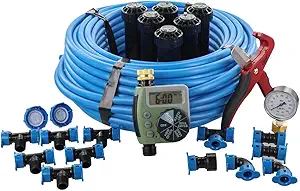 |
| Best Budget The cheapest option that still gets the job done reliably | Hunter Pro 4" Pop-Up Lawn Sprinkler Head (8–15 ft adjustable, 0°–360°) |  |
| Highest Rated A top-rated pick with lots of positive feedback | Rain Bird 52SA Gear-Driven Rotor Sprinkler Head (4-pack) |  |
| Most Popular A crowd favorite that many people choose with confidence | Rachio 3 Smart Sprinkler Controller, 8-Zone |  |
| Best Seller A high-volume bestseller chosen again and again | Rain Bird 1804VAN 1800 Series 4-inch Pop-Up Sprinkler Head (4 pack) |  |
Orbit 2-Zone All-in-One Automatic Watering System (50021)

| Power Source | Battery Powered |
|---|---|
| Fit Type | Blu-Lock |
| Maximum Pressure | 50 psi |
| Included Components | timer, tubing, sprinklers, fittings, pipe cutter, pressure gauge |
The Orbit 2-Zone All-in-One Automatic Watering System is a do-it-yourself underground sprinkler kit that gives homeowners timed, head-to-head coverage for two separate lawn zones. It includes a dual-outlet digital timer, Blu-Lock push-fit tubing and fittings, six gear-drive pop-up sprinkler heads, and installation accessories such as a pipe cutter and pressure gauge so you can convert a hose faucet into a functioning two-zone system without glue or special tools. The Blu-Lock connectors aim to speed installation and reduce leaks compared with traditional barb fittings, while the adjustable sprinkler heads let you set radius and arc to avoid dry spots. Programmable runtimes and intervals let you schedule watering for different parts of the yard. Important limitations are the stated water requirements and pressure needs and that the kit is plastic-based and designed for DIY rather than heavy commercial use. You will also need to confirm your faucet can supply the recommended pressure and flow for reliable performance.
Best for: Homeowners who want a reliable DIY in-ground sprinkler solution that delivers even coverage across multiple lawn areas and values easier installation and scheduled watering.
Less Ideal for: Large estates, commercial properties, or sites with low water pressure where a professional-grade system or booster pump would be a better fit.
- All-in-one kit includes timer, tubing, sprinklers and common installation tools for a complete DIY install
- Blu-Lock push-fit fittings speed assembly and reduce the need for glue or solvents
- Gear-drive pop-up heads offer adjustable radius and arc for targeted, even coverage
- Dual-zone configuration lets you water two separate lawn areas independently
- Requires fairly high water pressure and flow to meet the kit's recommended performance
- Primary components are plastic which may be less durable than commercial-grade materials
Verdict: This kit is the fastest practical way for a homeowner to install a two-zone underground sprinkler system without special tools or glue.
Rain Bird 5004PC 5000 Series 4 in. Part-Circle Pop-Up Rotor Sprinkler — 20 Pack

| Maximum Pressure | 65 psi |
|---|---|
| Maximum Flow Rate | 1.5 gpm |
| Inlet Connection Size | 0.75 inches |
| Unit Count | 20 Count |
The Rain Bird 5004PC 5000 Series rotor heads are designed for in-ground lawn irrigation where reliable, adjustable part-circle coverage is needed. Each 4-inch pop-up rotor adjusts from 40 to 360 degrees so you can dial in arcs for beds, borders, or turf without buying multiple head types. The rotors are rated for 25 to 65 psi and deliver a spray distance roughly in the 25 to 50 foot range, making them suited to medium-sized zones supplied by typical residential irrigation lines. The 3/4-inch female inlet and included nozzle racks let an installer swap nozzle sizes to tune precipitation rates and match adjacent heads. Because this listing is a 20-pack it is convenient for full-zone replacement or new installs. Expect durable, proven Rain Bird performance but plan for professional-style installation and head alignment to get optimal coverage and efficiency. These heads are not pre-loaded with 3.0 nozzles so you will need to choose and install nozzles to achieve the desired precipitation and radius.
Best for: Homeowners or installers who prioritize dependable, tuneable irrigation performance for medium-sized lawn zones and want a full-zone kit for replacement or new installs.
Less Ideal for: Gardeners with very small container or compact courtyard gardens that need low-flow misting solutions or those who want out-of-the-box spray settings without installing nozzles.
- Adjustable arc from 40 to 360 degrees for flexible placement around borders and corners
- Compatible with standard 3/4-inch NPT inlet for easy integration into residential irrigation lines
- Pressure range 25 to 65 psi supports common residential system pressures and predictable radius
- Sold as a 20-pack which simplifies replacing an entire zone or outfitting a new system
- Not pre-loaded with 3.0 nozzles so nozzles must be purchased and installed separately
Verdict: Choose this 20-pack if you need reliable, adjustable rotor heads to outfit or replace an entire medium-distance irrigation zone with professional-grade components.
Orbit All-in-One Automatic In-Ground Sprinkler System Kit (1-Zone) with Blu-Lock Tubing and Digital Timer

| Power Source | Battery Powered |
|---|---|
| Hose Length | 125 feet |
| Maximum Pressure | 100 psi |
| Included Components | Poly Cutter, Gauge, 15 Blu-Lock Fittings, 6 Saturn III, Timer, Instructions |
| Material | Stainless Steel |
The Orbit All-in-One Automatic Sprinkler System kit turns a standard hose faucet into a simple one-zone underground-style irrigation system without tapping into household plumbing. It uses the Blu-Lock tubing and stainless steel retaining ring to speed installation and reduce leaks, and the kit includes six adjustable pop-up gear-drive sprinkler heads intended to give head-to-head coverage for small to medium lawns. A battery-powered digital timer with oversized controls handles scheduling and rain delay so you can set and forget routine watering. Practical benefits include substantially faster assembly than barb fittings, adjustable heads that can be fine-tuned in place, and a weatherproof timer that adds programmability without needing Wi-Fi. Limits to expect are single-zone coverage only, so larger or multi-zone properties will need additional kits or a different controller, and some buyers may prefer a hard-plumbed valve for a permanent installation. Overall the kit is a tidy, durable option for homeowners who want reliable automated watering with an easier install process.
Best for: Homeowners who want an efficient, easy-to-install automatic watering solution for a single lawn zone and prefer to optimize time and water use with programmable scheduling.
Less Ideal for: Large properties, multi-zone irrigation needs, or users who want a fully integrated Wi-Fi smart controller or a permanent hard-plumbed system should consider other options.
- Blu-Lock tubing with stainless steel retaining ring for quicker, stronger fittings and fewer leaks
- Six adjustable pop-up gear-drive sprinkler heads for uniform head-to-head coverage
- Includes battery-powered digital timer with programmable runtime and rain delay
- Kit ships with common installation tools and fittings so no extra parts are usually required
- Designed for a single zone only, so it does not cover larger multi-zone lawns by itself
- Not intended as a permanent hard-plumbed system to in-ground water mains
Verdict: A practical, faster-to-install one-zone automatic sprinkler kit that gives reliable, programmable watering without plumbing changes.
Hunter Pro 4" Pop-Up Lawn Sprinkler Head (8–15 ft adjustable, 0°–360°)

| Maximum Pressure | 80 psi |
|---|---|
| Inlet Connection Size | 0.5 inches |
| Material Type | Plastic |
The Hunter Pro 4" Pop-Up is a professional-grade spray head designed for standard in-ground irrigation zones. It installs on a 1/2" NPT inlet and is typically used for lawn, garden, and flower-bed zones where a fixed or adjustable spray pattern is required. Key features include a fully adjustable arc from 0° to 360°, a user-adjustable radius from about 8 to 15 feet, a pull-ring flush cap to help clear debris, and a heavy-duty ribbed body and spring for reliable pop-up and retraction. In real use this translates to straightforward hand adjustments without tools, easy servicing of clogged nozzles, and a stable fit in softer soils. The head is compatible with most Hunter nozzles so you can swap in MP Rotators or specialty patterns to improve water distribution or efficiency. Limitations are that it is not pressure-regulated and maximum pressure is 80 psi, so you may need pressure regulation elsewhere for optimal performance, and plastic construction means extreme-impact resistance is lower than for metal-bodied rotors.
Best for: Homeowners and DIYers looking for a reliable, low-cost replacement or upgrade for standard in-ground spray zones who value easy installation and straightforward manual adjustment.
Less Ideal for: Those who need built-in pressure regulation or heavy-duty metal bodies for commercial applications should consider pressure-regulated or rotor-style alternatives.
- Adjustable arc and radius let you target irregular areas and reduce overspray
- Flush-cap pull ring simplifies clearing debris and routine maintenance
- Ribbed body and strong spring give stable installation and reliable pop-up/retraction
- Compatible with all Hunter nozzles for easy performance tuning and upgrades
- Not pressure-regulated so may need a separate pressure regulator for high-pressure systems
Verdict: A dependable, easy-to-adjust pop-up spray head that delivers professional performance for typical lawn and garden zones at a budget-friendly level.
Rain Bird 52SA Gear-Driven Rotor Sprinkler Head (4-pack)

| Maximum Pressure | 70 psi |
|---|---|
| Inlet Connection Size | 0.75 inches |
| Spray Radius | 25-50 ft |
| Adjustable Arc | 40-360 degrees |
The Rain Bird 52SA is a professional-grade gear-driven rotor pop-up designed to deliver even, reliable coverage across medium to large lawn zones. It installs with a 3/4-inch female inlet and provides an adjustable 40 to 360 degree arc plus a 25 to 50 ft radius so you can tune each head to water grass while avoiding sidewalks and driveways. Rain Curtain nozzles produce larger, wind-resistant droplets and micro-ramps help reduce dry spots near the head, which improves uniformity and cuts wasted cycles. Top-side adjustments let you change arc and distance with a flat screwdriver without disassembling the unit, and the closed-case design with a stainless steel shaft and reinforced seals protects internal gears from sand and debris for long service life. The unit is rated to operate up to 70 psi and uses water-lubricated gears and a stainless retract spring for durability. This head prioritizes dependability and consistent performance, though its 3/4-inch inlet and professional features mean it is best suited to established irrigation systems rather than temporary or lightweight garden setups.
Best for: Homeowners and landscapers who need a dependable, long-lived pop-up rotor for permanent lawn irrigation zones and prioritize consistent coverage and low maintenance.
Less Ideal for: Gardeners who want a portable or budget lawn sprinkler for occasional use or who cannot accommodate a 3/4-inch inlet without additional fittings.
- Gear-driven design with water-lubricated gears for smooth, consistent rotation
- Stainless steel shaft and reinforced seals protect internals from debris
- Top-side arc and distance adjustment without disassembly
- Rain Curtain nozzles produce wind-resistant droplets and reduce dry spots
- Built for in-ground, permanent irrigation systems so not ideal for temporary setups
- Requires a 3/4-inch inlet which may need adapters for some existing systems
Verdict: Choose this Rain Bird rotor when you want a durable, low-maintenance pop-up sprinkler that delivers consistent, professional-grade coverage for permanent lawn irrigation.
Rachio 3 Smart Sprinkler Controller, 8-Zone

| Item Highlight | 8 Zones, App Control, Rain Skips, Local Weather Scheduling |
|---|---|
| Voltage | 120 volts |
| Display Type | LED |
| Operating Temperature | 4 °F |
The Rachio 3 Smart Sprinkler Controller gives you app-first control of an existing 8-zone irrigation system and uses local weather data to adjust watering automatically. You set schedules in the Rachio app for iOS or Android, then let the controller skip runs for rain, freeze, wind or saturated soil and make seasonal adjustments so you do not overwater. Typical use is straightforward: mount the indoor unit, wire it to zone valves, connect Wi-Fi and configure zones in the app; Quick Run buttons let you manually water a zone from the controller when needed. Notable features include dual-band Wi-Fi, compatibility with Alexa, Google Home and IFTTT, LED status display and grow-in scheduling for new lawns. Practical benefits are reduced water use, simpler remote management, and easier setup compared with legacy dial timers. Limitations: the unit is indoor rated so outdoor installs require a weatherproof enclosure and some advanced setups such as well systems may need a pump for proper pressure. The controller also relies on the app for detailed schedule edits rather than full on-device programming.
Best for: Homeowners who want to reduce water use and move away from manual dial timers, and who prefer a proven smart-home controller with easy app-based setup and integrations.
Less Ideal for: People who need a fully outdoor-rated controller without adding an enclosure or who want complete on-device programming without using a smartphone app.
- Weather Intelligence automatically skips watering for rain, freeze, wind and saturation
- App-based scheduling with Quick Run and grow-in options simplifies remote control
- Works with voice assistants and IFTTT for smart-home integration
- Fast DIY install that fits most existing 8-zone systems
- Indoor-rated unit requires a separate weatherproof enclosure for outdoor mounting
- Relies on the mobile app for most scheduling tasks rather than full on-device controls
Verdict: Choose the Rachio 3 if you want a reliable, app-driven 8-zone controller that cuts wasted watering with automatic weather-aware schedules.
Rain Bird 1804VAN 1800 Series 4-inch Pop-Up Sprinkler Head (4 pack)

| Material Type | Stainless Steel |
|---|---|
| Item Highlight | Adjustable 0-360 Degree Arc Nozzle; Up to 15 Ft Spray Distance; 1/2in NPT Threaded Inlet |
| Maximum Flow Rate | 176.71 cfm |
| Inlet Connection Size | 4 inches |
The Rain Bird 1804VAN is a compact 4-inch pop-up sprinkler head intended for lawns, garden beds, and landscaped zones where precise, matched precipitation is needed. Install it on a 1/2-inch female inlet and use the textured adjustment collar to set any arc from 0 to 360 degrees without tools, which simplifies corner and strip watering and reduces overspray. The head is built with UV- and weather-resistant components, a stainless-steel spring for reliable retraction, and a pressure-activated wiper seal to minimize leakage and prolong life. It delivers spray distances up to about 15 feet, making it suitable for small to medium turf areas and perimeter runs. Limitations are that it is a fixed spray pop-up rather than a pressure-regulated or multi-stream rotor, so it best serves zones designed for fixed-pattern spray heads and may require careful pressure and spacing planning to avoid misting or runoff. For gardeners focused on dependable, widely used components, these Rain Bird heads offer straightforward performance and long-term durability.
Best for: Buyers who prioritize proven, widely used irrigation parts and want reliable, easy-to-adjust spray heads for conventional lawn or landscape zones.
Less Ideal for: Those planning high-efficiency pressure-regulated or rotor-based zones for large turf areas should consider heads designed for pressure regulation or multi-stream rotors instead.
- Adjustable 0–360 degree nozzle for precise arc control without tools
- Durable construction with stainless-steel spring and UV-resistant materials for long service life
- Pressure-activated wiper seal to reduce leakage and conserve water
- Compatible 1/2-inch female inlet common to residential irrigation systems
- Not pressure-regulated so performance depends on system pressure and proper spacing
Verdict: A dependable, easy-to-adjust pop-up spray head that delivers proven durability and precise arc control for typical lawn and landscape irrigation needs.
Choosing the Right In Ground Water Sprinkler System: Key Factors to Consider
Coverage and Zone Design
How a system lays out heads and zones directly determines watering uniformity across lawn and beds. Proper spacing and nozzle selection ensure spray arcs or rotor patterns overlap correctly to avoid dry patches and puddling. Zone design should match plant types and sun exposure so turf, shrubs, and foundation planting can receive different run times.
Large properties benefit from multiple zones with separate valves to let you tailor run times and avoid excessive pressure drop. Smaller yards may run well on fewer zones but still need correct head types-fixed sprays for tight areas and rotors for larger, open turf.
Pipe Material and Fittings
Pipe and fitting quality controls leak resistance and long-term reliability. Schedule 40 PVC is common for buried mains because it resists crushing and UV when exposed during installation; flexible polyethylene piping can simplify trenching and reduce joints but may need compatible barbed fittings. Threaded and glued joints have trade-offs: solvent-weld PVC joints are robust but harder to modify, while compression fittings ease repairs but can be failure points if not installed correctly.
Consider the local soil type and expected digging. Rocky or shifting soils can stress joints, so choose systems with proven fittings and adequate burial depth. Also check that replacement parts are standard sizes to avoid custom components during repairs.
Controller Options and Automation
The controller is the interface for scheduling and conserving water. Basic electromechanical timers can be reliable for minimalistic setups, while digital controllers let you program multiple start times, station run lengths, and seasonal adjustments. Smart controllers that use local weather data or soil moisture sensors provide active water savings by skipping cycles during rain or low evapotranspiration periods.
Think about expansion needs: choose a controller with a few extra zones beyond current requirements if you plan to add beds or new turf later. Also check compatibility with common sensors and the ease of wiring multiple valves from a single controller location.
Head Types and Nozzle Performance
Different head types suit different microclimates and planting arrangements. Pop-up spray heads deliver fixed arcs and are ideal for smaller turf and tight beds, while rotor heads deliver larger radius coverage with fewer heads. Drip or micro-spray options are better for foundation shrubs and beds to avoid overwatering foliage.
Nozzle interchangeability matters for fine-tuning precipitation rates and uniformity. Systems that accept matched-precipitation nozzles make it easier to balance zones so each area receives the same depth of water.
Pressure Management and Water Efficiency
Operating pressure influences head performance and can cause misting or poor throw if too high. Pressure-regulating valves, regulators at the controller or zone level, and pressure-compensating nozzles improve efficiency by keeping output consistent across diverse elevations. Matched-precipitation nozzles, as mentioned earlier, also help reduce runoff by aligning application rates with soil infiltration.
Look for systems designed to integrate sensors such as rain switches or soil moisture probes. These devices prevent unnecessary cycles and help you comply with local watering restrictions while protecting plant health.
Maintenance Access and Serviceability
Even the best-installed in-ground systems will need occasional attention. Choose layouts that allow valve boxes and manifolds to remain accessible, with enough clearance to work comfortably. Simple features like standardized valve sizes, common-capacity solenoids, and easy-to-remove filter screens reduce service time.
Consider how easy it is to winterize or drain the system in your climate. Systems that require professional blowouts can add recurring maintenance complexity, while those designed for simple drain-back or manual winter valves reduce annual service needs.
Sizing a System for Your Yard
Start by mapping lawn and planting areas and measuring square footage. Break the space into irrigation zones by grouping areas with similar sun exposure, plant type, and slope. Each zone should be sized to match the flow and pressure the water source can reliably supply.
Estimate sprinkler head flow rates and how many heads a single valve can handle without dropping pressure below the recommended range. This prevents running too many heads on one zone and causing uneven coverage.
- Sketch property and mark existing water source and meter
- Group plants by water needs and exposure
- Calculate available flow and pressure before final zone layout
Installation Practicalities and Trenching Tips
Plan trenches along edges and avoid cutting across major landscape features where possible. Mark underground utilities before digging and keep consistent burial depth to protect piping from freezing or mechanical damage.
Use conduit for electrical wiring where local code requires it and route controller wires to avoid sharp bends. When backfilling, hand-tamp soil around pipes near fittings to avoid creating voids that can shift components.
- Call utility locators before any digging
- Keep a small inventory of spare fittings and nozzles on hand
- Label valve wires to simplify future troubleshooting
Winterizing and Seasonal Care
In climates with freezing temperatures, remove or drain water from exposed valves and lines each fall to prevent cracking. If you hire a service for a compressed-air blowout, ensure they follow safe pressure practices for your piping material. In milder climates, simple drain valves and occasional manual checks may suffice.
During the growing season, inspect for uneven wet spots, which often signal a clogged nozzle or a misaligned head. Regularly clean filters and check the controller schedule after major weather events to keep irrigation matched to plant needs.
- Drain or blow out lines before sustained freeze
- Check filters and nozzles at season start
- Visually inspect head alignment monthly
Integrating Smart Controls and Sensors
Smart controllers that use local weather data or link to soil moisture sensors can reduce run times while maintaining plant health. They are especially useful in regions with variable weather or where watering restrictions change through the season.
Sensors require proper placement and calibration. A soil moisture probe in the active root zone gives better guidance than a single rain sensor mounted on the roof.
- Choose controllers that support easy sensor integration
- Place moisture sensors in representative plant beds
- Use seasonal adjustment features to simplify summertime schedules
Retrofitting Existing Lawns
Converting an established lawn from hose-based watering to an in-ground system often requires careful root-zone consideration. Trenches should avoid major root balls when possible, and you may need to replace a few heads to match existing irrigation patterns. Consider phased installation if you want to limit disruption to the whole yard at once.
Check existing water supply capacity and meter constraints. Older properties may need minor plumbing upgrades to support multiple zones operating simultaneously.
- Plan phased installs to limit turf disturbance
- Confirm municipal water pressure and flow allowances
- Use micro-spray or drip for beds to avoid overwatering nearby turf
How We Chose the Best In Ground Water Sprinkler System
We focused on features that matter for long-term, low-hassle performance in residential and small-acreage landscapes. Primary evaluation criteria included head coverage and adjustability, which determine how evenly the system waters turf and beds; pipe and fitting durability, because leaks and brittle components cause the most service calls; control and scheduling options, including compatibility with timers and smart controllers; and ease of installation and maintenance, covering trenching needs, wiring, and common replacement parts. We also considered water-efficiency features such as pressure regulation, matched-precipitation nozzles, and zoning flexibility to limit runoff and waste. Products were excluded if they lacked basic residential compatibility, such as systems designed only for agricultural pivots or purely temporary aboveground kits. We filtered out options with unclear replacement-part availability or systems that require highly specialized tools for routine servicing. The final list includes systems that represent practical, garden-ready approaches to in-ground irrigation and that score well across coverage, durability, efficiency, and serviceability.
FAQ
How much water pressure do I need for an in-ground sprinkler system?
Most residential heads work well in the 30 to 50 psi range, though rotor heads often prefer higher pressure than spray heads. Check nozzle and head specifications and account for pressure loss across long runs. Pressure regulators can help match head needs.
Can I install an in-ground system myself or should I hire a pro?
DIY installation is feasible for homeowners with basic plumbing and electrical skills, especially on small properties. Professional installation is worth considering for complex layouts, large yards, or when trenching near utilities to ensure correct zoning and reliable wiring.
How often should I inspect and maintain sprinkler heads?
A quick visual check monthly during the season helps catch misalignment or clogged nozzles early. Clean filters and strainers at least once per season and adjust nozzles after winter or heavy storms to restore uniform coverage.
What is the best way to save water with an in-ground system?
Use matched-precipitation nozzles, pressure regulation, and smart controllers or soil moisture sensors. Also zone by plant type and schedule watering for early morning to reduce evaporation losses.
How do I winterize an in-ground system in freezing climates?
Common methods include a professional compressed-air blowout or manually draining low points and opening drain valves. Follow material-specific pressure limits and local best practices to avoid damaging pipes and valves.
Final Verdict
Choosing the right in-ground water sprinkler system means balancing uniform coverage, durable components, and the automation features that match your watering goals. Prioritize accurate zone design and reliable pipe and fitting materials to reduce leaks and uneven watering. If water conservation is important, select systems that support pressure regulation, matched nozzles, and sensor-driven controllers. With those tradeoffs in mind, you can pick a system that fits your yard size, climate, and maintenance comfort level for years of consistent performance.
