

Note: This article contains affiliate links. If you click on these links and make a purchase, I may earn a small commission at no extra cost to you. This helps support my research and content. Read my full affiliate disclosure here.
If your balcony, porch, or north-facing window gets little direct sun, the right shade plants can still deliver sustained color and tidy growth in a flower box. You want varieties that tolerate low light, stay compact in shallow soil, and bloom or provide attractive foliage without constantly needing division or aggressive pruning. This guide shortlists the most practical shade-tolerant plants for flower boxes, focusing on manageable root habits, attractive seasonal interest, and reliable performance in confined containers. Below you will find our top picks and the criteria we used to evaluate them, plus practical advice to keep flower boxes flourishing in shade.
Top Picks at a Glance
| Best Overall The best all-around choice for most situations | The Three Company Hosta Live Perennial Assorted Varieties (2-Pack) |  |
| Best Quality Built to a higher standard if you want something more solid | Touch Of ECO Hosta Bare Roots 6-Pack (Mixed Heart-Shaped) |  |
| Best Value The sweet spot between price and what you get | Groundio Coleus Rainbow Mix Seeds (Heirloom, Non-GMO) |  |
| Best Budget The cheapest option that still gets the job done reliably | BuggyBeds 321 Mixed Hosta Seeds for Shade |  |
| Highest Rated A top-rated pick with lots of positive feedback | CZ Grain Canada Blue Hosta plant (1 perennial) |  |
| Most Popular A crowd favorite that many people choose with confidence | KVITER Rainbow Coleus Seeds — 1,600 Heirloom Coleus (Plectranthus scutellarioides) |  |
| Best Seller A high-volume bestseller chosen again and again | HOME GROWN Rainbow Mix Coleus Seeds (approx. 400) |  |
The Three Company Hosta Live Perennial Assorted Varieties (2-Pack)

| Indoor Outdoor Usage | Outdoor |
|---|---|
| Sunlight Exposure | Partial Shade |
| USDA Hardiness Zone | 3-9 |
| Moisture Needs | Regular Watering |
| Expected Blooming Period | Spring, Summer |
These hostas arrive as live, potted perennials intended for shady outdoor beds or containers. They are typically used to add broad, textured foliage to shaded flower boxes, borders, or pathway edges and will return each spring when planted in suitable zones. Notable features include hardy performance across USDA zones 3 to 9, a preference for partial shade, and a projected mature height and spread around three feet, which makes them a substantial visual presence. They need well-draining soil and regular watering to establish, and they develop more slowly in the first few years before reaching full size. Because they are sold as a 2-pack in one-quart pots, expect some initial transplanting and acclimation time for growth to fill a box; also plan placements where their larger mature size will not overcrowd smaller companions. Overall they are low-maintenance once established and effective at bringing year-to-year structure and shade tolerance to floral arrangements.
Best for: Gardeners who want dependable, low-maintenance shade plants that provide bold foliage and year-to-year presence in flower boxes or shaded beds.
Less Ideal for: People needing immediate compact plants for very small or shallow boxes or those who want instant blooms rather than foliage-focused perennials.
- Hardy across USDA zones 3 to 9, suitable for many climates
- Designed for partial shade, ideal for shaded flower boxes and beds
- Sold as live plants ready for transplanting from 1 qt pots
- Large foliage provides strong visual structure in plantings
- Mature size up to about 36 inches may overcrowd small containers
- Comes in 1 qt pots so plants require time and space to reach full size
Verdict: A reliable pair of shade-loving perennials that give year-after-year foliage impact in shaded flower boxes.
Touch Of ECO Hosta Bare Roots 6-Pack (Mixed Heart-Shaped)

| Unit Count | 6 Count |
|---|---|
| Indoor Outdoor Usage | Outdoor |
| USDA Hardiness Zone | 3-9 |
| Moisture Needs | Regular Watering |
These Touch Of ECO hosta bare roots arrive dormant and are intended to be planted in fall or early spring for reliable, low-maintenance shade interest. Each pack contains six mixed heart-shaped hosta crowns that produce rich green foliage and fragrant white or purple flowers on tall stems from spring through fall. Hostas are typically used in shady borders, under trees, or in large planters where regular watering and indirect light suit them best. The listing notes hardiness to zones 3 through 9, so they will return year after year in a wide range of climates, and the plants attract pollinators while being resistant to deer. Practical gardeners will appreciate that the plants ship as bare roots for easy planting and faster establishment when placed with the crown at soil level and watered in. Limitations are that these are not container-ready potted plants and need initial attention to planting depth and moisture; smaller or shallow planters may not give the crowns enough room to spread.
Best for: Gardeners who want reliable, low-maintenance shade plants to establish in planters or beds and prefer economical bare-root stock they can plant themselves.
Less Ideal for: Buyers who want instant, display-ready potted plants or who need specimens sized for very small decorative containers.
- Six bare-root crowns per pack provide quick value for filling multiple planters or a shady border
- Hardy across USDA zones 3–9 so they are suitable for most climates
- Attractive heart-shaped foliage with seasonal fragrant blooms adds texture and pollinator value
- Ships dormant for easy handling and planting in fall or early spring
- Arrives as bare roots rather than established potted plants, so initial planting care is required
- Not suitable for very small or shallow containers where crowns cannot spread
Verdict: A cost-effective way to fill shady planters or beds with hardy, low-maintenance hostas if you are comfortable planting bare-root stock.
Groundio Coleus Rainbow Mix Seeds (Heirloom, Non-GMO)

| Indoor Outdoor Usage | Indoor, Outdoor |
|---|---|
| Expected Blooming Period | Spring to Summer |
| Sunlight Exposure | Full Sun |
| USDA Hardiness Zone | 4-10 |
| Moisture Needs | Moderate Watering |
These Groundio Coleus Rainbow Mix seeds supply a high number of non-GMO heirloom seeds for gardeners who want bold foliage in small or shaded containers. The mix is focused on leaf color rather than flowers, producing yellow, green, pink, red and maroon tones that deepen as plants mature. Seeds are described as easy to grow with a high germination rate and come with basic growing guidance, so they work well for first-time planters sowing indoors for transplanting or direct sowing in shaded pots and borders. Coleus performs best in part sun to part shade, making this packet a practical choice for balconies, patios and indoor spots with scattered light. Limitations include that coleus is grown for foliage not blooms and the packet warns the seeds and plants are not edible and may be harmful to pets, so placement matters in homes with animals. Also the listing emphasizes quantity over cultivar detail, so exact leaf patterns and sizes will vary across seedlings.
Best for: Budget-conscious gardeners who need an affordable way to add dramatic foliage to shaded pots, small balconies and container borders and who prefer easy-to-grow plants that establish from seed.
Less Ideal for: People seeking specific named coleus cultivars, detailed leaf patterns, or edible/child-and-pet-safe plantings should look at alternatives or nursery-grown plants.
- Large seed count suitable for filling multiple pots or repeating plantings
- Heirloom non-GMO seeds with a stated high germination rate
- Designed for shade or part-sun locations common for container gardening
- Vivid mixed foliage colors that add instant interest without relying on flowers
- Packet lists mixed varieties with limited detail on specific cultivars or mature plant size
- Not edible and may be harmful to pets, requiring cautious placement indoors or around animals
Verdict: An economical choice to fill shaded pots and small containers with vibrant, easy-to-grow coleus foliage from seed.
BuggyBeds 321 Mixed Hosta Seeds for Shade

| Indoor Outdoor Usage | Outdoor |
|---|---|
| Sunlight Exposure | Full Shade |
| Moisture Needs | Moderate Watering |
| Material Features | Heirloom |
These BuggyBeds mixed hosta seeds are a budget-friendly way to establish shade-loving foliage in flower boxes and other shady spots. The packet contains a large assortment of heirloom hosta seed meant to produce varied leaf textures and forms that layer well with other shade plants. Typical use is sowing in prepared potting mix or seed trays, keeping soil evenly moist until germination, then transplanting seedlings into boxes or containers that stay mostly shaded. Notable features from the listing are cold tolerance and moderate water needs, which make them suitable for temperate climates and regular watering schedules. Practical benefits include creating quick visual variety and a cohesive foliage look without buying multiple mature plants. Limitations are inherent to seed-grown hostas: germination and resulting plant size and color are variable, and seedlings take time to reach the fuller look of mature hostas, so patience and some thinning are required. For tight urban boxes expect slower size gain compared with established transplants.
Best for: Buyers who want an inexpensive way to add varied shade foliage to flower boxes and are willing to start plants from seed and wait for maturity.
Less Ideal for: Gardeners who need immediate, uniform mature plants for a finished look or those unwilling to care for seedlings during establishment.
- Large seed count gives value for money when filling multiple boxes or starting many plants
- Heirloom seeds offer diverse leaf textures and forms for layered shade plantings
- Designed for full-shade conditions and moderate watering, matching typical flower box microclimates
- Seed-grown hostas show variable results in color and size compared with named cultivars
- Plants grown from seed require seasons to reach mature ornamental presence
Verdict: If you want an economical way to populate shade boxes with varied hosta foliage, this large packet of heirloom seeds gives the best value for starting many plants.
CZ Grain Canada Blue Hosta plant (1 perennial)

| Indoor Outdoor Usage | Outdoor |
|---|---|
| Other Special Features of the Product | Shade Resistant |
| Expected Blooming Period | Spring to Summer |
| Material Features | Heirloom |
| Unit Count | 1 Count |
The CZ Grain Canada Blue Hosta is a hardy, shade-loving perennial prized for its blue leaves and suitability for containers or border plantings. It is typically used as a foundation shade plant in pots, shaded patios, or under trees where its large decorative foliage provides season-long interest from spring into summer. The listing notes it is fast-growing and returns in USDA zones 3–9, which makes it a reliable choice for cold climates as well as milder regions. Practical benefits include attractive, low-maintenance foliage that tolerates shade and fills containers quickly, plus straightforward care: plant after frost, keep soil moist, and control weeds. Limitations are that hostas generally prefer partial shade rather than full sun despite a ‘‘Full Sun’’ note in the specs, so placement matters to avoid leaf scorch, and this listing is for a single plant so gardeners should order multiple plants for fuller container displays or massing in beds.
Best for: Buyers who need a dependable, low-maintenance shade container plant that provides attractive foliage year after year and performs across a wide range of climates.
Less Ideal for: Gardeners seeking immediate full-size specimens or instant container combinations without buying multiple plants should consider larger established specimens or mixed plantings instead.
- Shade-tolerant foliage ideal for shaded containers and patios
- Hardy perennial that returns in zones 3–9 for multi-year reliability
- Fast grower that fills pots and borders to provide quick visual impact
- Sold as a single plant so multiple purchases are needed for larger containers or group plantings
Verdict: A reliable, hardy blue-leaf hosta that’s especially well suited to shaded containers and low-maintenance shade gardens.
KVITER Rainbow Coleus Seeds — 1,600 Heirloom Coleus (Plectranthus scutellarioides)

| Unit Count | 1600 Count |
|---|---|
| USDA Hardiness Zone | 4-10 |
| Sunlight Exposure | Partial Shade |
| Material Features | GMO Free, Heirloom |
| Moisture Needs | Regular Watering |
These KVITER Rainbow Coleus seed packets deliver a high-count mix of heirloom, non-GMO coleus seeds designed for easy container and border planting. The seeds are billed for part-shade locations and come with a step-by-step growing guide on every packet, which helps take the guesswork out of starting indoors 6–8 weeks before the last frost or sowing directly into pots and trays. Coleus produces colorful foliage rather than showy flowers and reaches about a foot tall, making it well suited to outside pots, hanging baskets, and shaded patio corners. The seeds are labeled low-maintenance and shade resistant, so once established they respond well to regular watering and occasional pinching to encourage bushier growth. Because this is a bulk 1,600-count pack, it is best for gardeners who want to fill several containers or create repeated plantings through the season. Expect germination within 7–14 days under good light; results can vary with local soil and care. The package focuses on starter guidance rather than advanced cultivation details, so experienced growers may want more specific spacing or fertilization notes.
Best for: Gardeners who prefer low-risk, easy-to-follow planting and want colorful, shade-tolerant foliage for multiple outside pots or shaded patio containers.
Less Ideal for: Buyers who only need a few plants for a single small pot or who want edible or flowering plants rather than foliage-focused coleus.
- Very large 1600-seed count is suitable for filling many pots or repeating plantings
- Heirloom, non-GMO seeds with a step-by-step growing guide on each packet
- Shade-tolerant foliage plant that performs well in part-sun/part-shade container locations
- Low-maintenance habit and responds to pinching for bushier growth
- Bulk quantity may be more than needed for casual single-pot gardeners
- Limited cultivation details on fertilizing and advanced care provided
Verdict: A risk-averse choice for filling multiple shaded pots with colorful, low-maintenance coleus foliage thanks to a large heirloom seed pack and clear growing instructions.
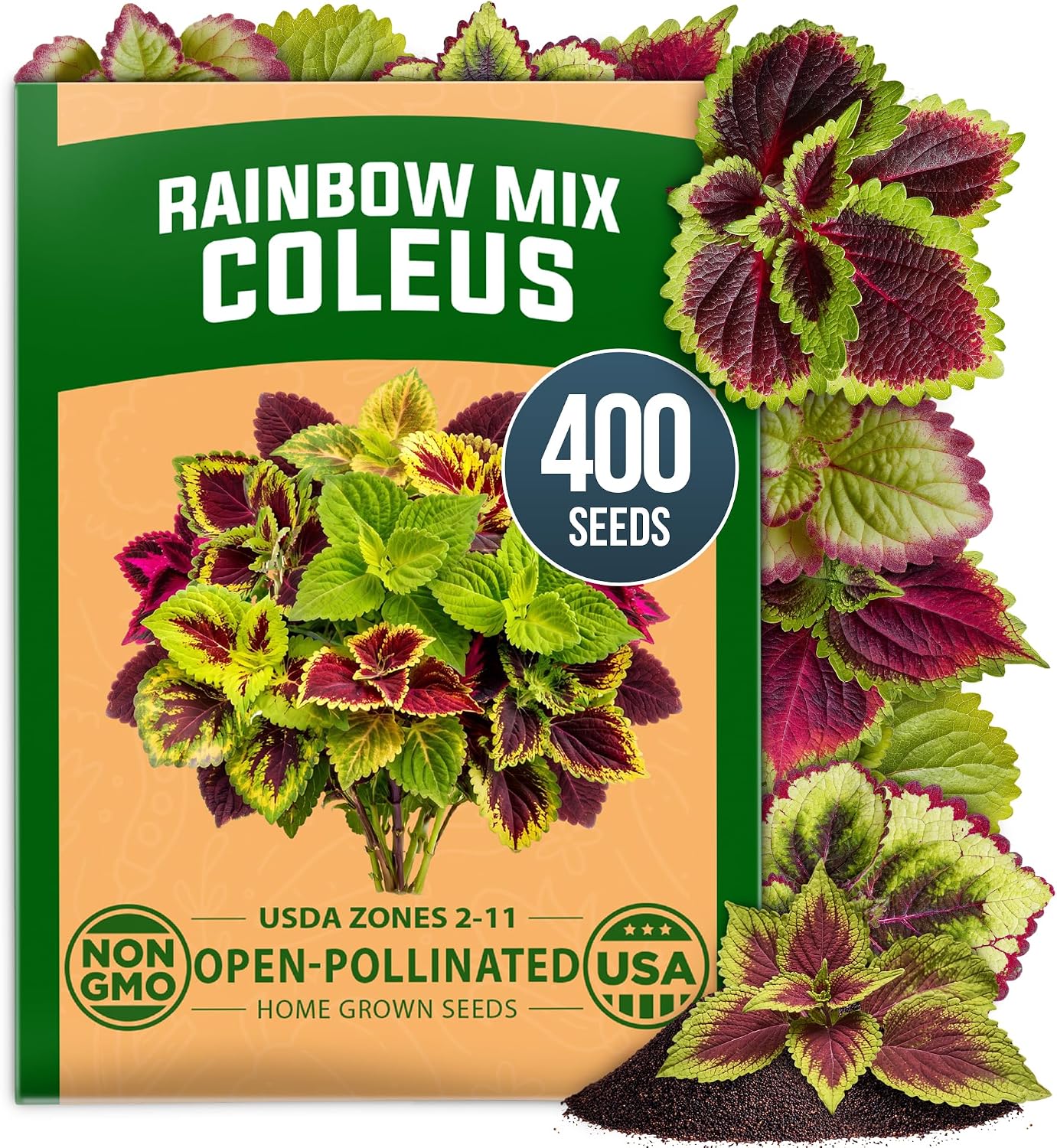
HOME GROWN Rainbow Mix Coleus Seeds (approx. 400)
| Sunlight Exposure | Part Shade to Shade |
|---|---|
| USDA Hardiness Zone | 2-11 |
| Expected Blooming Period | Spring through Frost |
| Material Features | GMO Free, Heirloom |
| Unit Count | 1 Count |
These Rainbow Mix coleus seeds produce compact, colorful foliage plants that are well suited to containers and shaded patio spots. Surface-sow the tiny seeds (do not cover), keep the medium warm and consistently moist, and seedlings typically appear in 10–14 days; pinch growing tips to encourage bushy, mounded plants. The mix is valued for season-long leaf color in shades of rose, green, bronze, cream, and scarlet, so you get visual impact without relying on flowers. Coleus grows indoors near bright north or east windows and outdoors in part shade to shade, making it a flexible choice for window boxes, mixed planters, and small pots. Important limitations are that coleus is a tender annual in most regions and needs protection from frost and prolonged drought, and it prefers warm temperatures for best germination and growth. For container gardeners who want low-maintenance, high-impact foliage, this seed mix is an easy way to produce many plants from one packet.
Best for: Gardeners who want easy-to-grow, high-impact foliage for containers and shaded patios and prefer predictable, low-fuss plants they can start from seed.
Less Ideal for: People seeking long-lived perennial landscaping or plants that tolerate full sun and drought without extra care.
- High seed count (about 400) gives many starts for containers or massing
- Open-pollinated non-GMO seeds from a mix that yields varied, colorful foliage
- Specifically suited to part shade and shade where many flowering plants struggle
- Compact, mounded habit that performs well in pots, window boxes, and mixed planters
- Tender annual in most zones and requires frost protection or indoor overwintering
- Requires consistent moisture and will suffer if soil dries out or remains waterlogged
Verdict: A high-count, non-GMO coleus seed mix that reliably produces compact, colorful foliage perfect for containers and shaded patios.
Choosing the Right Shade Plants for Flower Boxes: Key Factors to Consider
Light Range and Placement
Understanding the specific light conditions where the flower box sits is the first step. "Shade" covers a spectrum from deep shade with little direct sun to bright indirect light or morning sun. Some shade-tolerant plants will take a few hours of morning sun and produce more blooms, while others perform best in persistent low light and rely on foliage texture for interest.
Match plant choice to the actual light level rather than the label "shade." A plant that tolerates deep shade will survive in a north-facing box, but a species that needs bright shade might become leggy and sparse there. Consider how nearby buildings, trees, or awnings change light through the season and pick varieties that can adapt to those conditions.
Container Depth and Root Behavior
Flower boxes often have limited soil depth, which restricts root expansion and moisture storage. Choose plants with relatively shallow root systems or ones that can be kept compact with periodic root pruning. Deep-rooted perennials and aggressive spreaders are usually poor fits unless the box is unusually deep.
Think about how quickly the soil in the box will dry out. Shallow-rooted plants can suffer fast moisture loss, so select species that either tolerate short dry periods or plan to use moisture-retentive potting mixes and more frequent watering.
Soil and Water Management
A lightweight, well-draining container mix keeps roots healthy while matching a plant's moisture preference. In shade, soil temperatures are often cooler and evaporation lower, but boxes can still dry quickly during warm spells. Plants that prefer evenly moist soils will need more frequent attention in shallow boxes than drought-tolerant types.
Incorporate organic matter and a moisture-retaining component if you want longer intervals between watering. Also plan for adequate drainage holes and avoid saucers that hold stagnant water unless the plant tolerates consistently wet feet.
Size at Maturity and Seasonal Shape
Know the mature height and spread of any plant you put in a flower box. A specimen that reaches two feet may overwhelm a narrow balcony box and obscure windows. Choose compact cultivars or varieties noted for tight habits. For perennials, consider whether they will need division or trimming after a season of growth to stay balanced in the container.
Also plan the plant combinations to maintain an attractive silhouette through the season. Pairing a modest upright with a trailing element and a textural foliage plant helps keep the arrangement visually full without overcrowding a small container.
Bloom Timing and Visual Interest
Because shade reduces flowering for many species, prioritize plants that reliably produce blooms under low light or that offer striking foliage instead. Look at bloom windows and whether blooms repeat during the season. Combining plants with staggered bloom times or mixing foliage contrasts will give continuous interest in a box where full-sun bloomers would falter.
Consider scent, color intensity, and whether blooms need deadheading to prolong display. Plants that set extended flushes of flowers or maintain attractive leaves through summer are particularly useful for low-light containers.
Maintenance and Overwintering
Maintenance matters more in confined soil because nutrient depletion and root crowding occur faster. Choose plants that fit your willingness to deadhead, trim, fertilize, or divide. Some shade-tolerant plants are low-maintenance and content with light feeding, while others demand regular deadheading to keep flowering.
If you live in a cold climate and intend to keep boxes in place over winter, consider whether plants are hardy in containers or whether they should be treated as annuals and replaced each year. Also plan for winter protection of the boxes themselves to prevent frost heaving or root damage.
Best Practices for Planting in Shallow Flower Boxes
Start with a quality container mix designed for pots and boxes rather than garden soil. Potting mixes are lighter, drain better, and contain ingredients that hold moisture while still allowing air to reach roots. Fill boxes to allow a 1 to 2 inch gap from the rim so watering is easier and soil does not spill when irrigated.
When adding plants, loosen roots gently and orient them so crowns sit slightly above the soil line to avoid rot in consistently damp boxes. Use slow-release fertilizer at planting to support early growth, and plan a light feeding schedule through the growing season tailored to container plants.
- Place moisture-retentive but well-draining mix in the box.
- Avoid overpotting; choose plants sized for the box depth.
- Position taller elements toward the back or center depending on sightlines.
Watering Strategies for Shaded Containers
Even in shade, flower boxes dry out differently than beds. Check soil moisture by touch and water thoroughly until it escapes drainage holes. Shade reduces evaporation but cooler damp soils can harbor root rot if waterlogged, so balance thorough watering with good drainage.
Use a consistent schedule adjusted for weather and microclimate. During heat waves, shaded boxes may still need more frequent watering, while cool, overcast stretches require less. Mulching the surface with fine bark or leaf mulch can reduce evaporation and moderate soil temperature.
- Water deeply and less frequently rather than light surface watering.
- Monitor soil several inches down to determine actual moisture levels.
Design Tips for Attractive Shade Flower Boxes
In low light, prioritize foliage texture and contrast as much as color. Variegated leaves, silver tones, and glossy dark greens read well in dim conditions. Combine a taller structural plant, a mid-layer of flowering or textured foliage, and a trailing plant to soften the box edge.
Keep scale and sightlines in mind. On a balcony, taller plants will be viewed at eye level, so choose shapes that complement the space. Balance repeated colors or leaf shapes across multiple boxes for a cohesive look.
- Use a combination of upright, mounding, and trailing forms.
- Favor leaf contrast and subtle blooms over high-sun color splashes.
Seasonal Care and Refreshing Containers
Deadhead spent flowers to encourage repeat blooms where applicable and trim back leggy growth to maintain width limits of the box. Replace or divide perennials that become root-bound in spring or fall and refresh soil every couple of years to restore nutrients and structure.
For long-season containers, consider swapping out temporary annuals midseason if they decline in low light. Top-dress with compost or replace the top few inches of soil to replenish organic matter without disturbing roots excessively.
- Deadhead and trim to retain neat shape and encourage flowering.
- Refresh potting mix or top-dress annually to maintain fertility.
Protecting Boxes From Pests and Disease in Shade
Shaded, damp conditions can favor fungal problems or certain pests. Improve air circulation by spacing boxes apart when possible and avoid splashing water on foliage when irrigating. Inspect plants regularly for slugs, snails, and fungal spots, and remove affected material promptly.
Use cultural controls first, such as improving drainage, removing debris, and keeping foliage dry. If necessary, apply targeted biological or low-toxicity controls appropriate for container-grown ornamentals.
- Ensure good drainage and airflow around boxes.
- Check regularly for slugs and remove debris that shelters pests.
How We Chose the Best Shade Plants for Flower Boxes
We focused on attributes that matter most for planting in flower boxes placed in shaded situations. Size control and root habit were primary filters because shallow containers limit how large plants can grow without becoming root-bound or top-heavy. We prioritized bloom reliability and season length to ensure containers provide visible interest for weeks to months rather than a brief show. Shade tolerance and light-range adaptability were assessed so selections handle deep shade, dappled light, or bright indirect light typical of balconies and understory windows. Soil and moisture behavior was evaluated to favor plants that perform in the frequent drying cycles and limited soil volume of boxes. Lastly, maintenance demands such as pruning, deadheading, and overwintering needs were considered so that the picks work for gardeners who want attractive containers without intensive care. We excluded plants that require large, deeply rooted beds, invasive spreaders unsuited to confined containers, or species that need full sun to bloom consistently. The resulting shortlist reflects robust, compact shade-tolerant plants that thrive in flower boxes when paired with suitable potting mix and routine care.
FAQ
Can shade-loving plants bloom well in a narrow flower box?
Often they can, but bloom intensity usually depends on light levels and variety. Choose plants known to flower in low light and keep soil consistently fertile and evenly moist to encourage blooms in a narrow container.
How deep should a flower box be for most shade plants?
Many shade-tolerant varieties do fine in 6 to 8 inches of soil, but some perennials prefer deeper boxes. Opt for compact cultivars for very shallow boxes and prioritize moisture-retentive mixes if depth is limited.
What is the best watering routine for shaded flower boxes?
Water thoroughly when the top inch or two of soil feels dry, then allow slight drying between waterings. Shaded boxes need less frequent watering than sunny ones but still require monitoring, especially during warm, dry spells.
Should I fertilize shade containers differently than sunny ones?
Usually a balanced, slow-release fertilizer at planting followed by light, periodic feeding supports steady growth without encouraging overly lush foliage at the expense of blooms. Adjust frequency based on plant vigor and potting mix fertility.
Can I overwinter shade plants in flower boxes outdoors?
It depends on hardiness and container protection. Many plants suffer root damage in shallow boxes during freeze-thaw cycles. Either move boxes to a sheltered spot, insulate them, or treat tender species as annuals and replace them the following season.
Final Verdict
Choose shade plants for flower boxes by matching the species to the actual light level, container depth, and how much maintenance you will do. Prioritize compact habits, moisture behavior, and seasonal interest so the box remains attractive without frequent replanting. By balancing foliage contrast with reliable bloomers and planning simple maintenance like deadheading and occasional soil refreshes, you can create low-light containers that perform dependably and look intentional.
