

Note: This article contains affiliate links. If you click on these links and make a purchase, I may earn a small commission at no extra cost to you. This helps support my research and content. Read my full affiliate disclosure here.
Pruning roses correctly starts with the right pair of shears. The wrong tool crushes stems, tires your hands, and slows garden work, while a sharp, ergonomic shear makes fast, clean cuts that help roses recover and bloom. This guide covers seven shortlisted pruning shears for pruning roses chosen for real garden use, from frequent maintenance on floribunda beds to heavier work on old shrub roses. We evaluated each option for blade sharpness and durability, ergonomic comfort and hand fatigue, cut capacity, and corrosion resistance. Below are the key picks followed by practical buying guidance so you can match a tool to the type of rose and how often you prune.
Top Picks at a Glance
| Best Overall The best all-around choice for most situations | Corona BP 3180D Forged Classic Bypass Pruner |  |
| Best Quality Built to a higher standard if you want something more solid | FELCO F5 Large All-Steel Pruning Shears |  |
| Best Value The sweet spot between price and what you get | Haus & Garten ClassicPRO 8.5" Titanium-Coated Bypass Pruning Shears |  |
| Best Budget The cheapest option that still gets the job done reliably | Hungsual 7.5-inch Pruning Shears with Stainless Steel Blades |  |
| Highest Rated A top-rated pick with lots of positive feedback | Kimura 8" Pro Bypass Pruning Shears (Japanese SK5 Steel blades) |  |
| Most Popular A crowd favorite that many people choose with confidence | Fiskars Bypass Pruning Shears with Nonstick Coating |  |
| Best Seller A high-volume bestseller chosen again and again | Decerk 8.5" Bypass Pruning Shears with Titanium-Coated SK5 Blade |  |
Corona BP 3180D Forged Classic Bypass Pruner

| Cutting capacity | 1 inch |
|---|---|
| Blade type | Bypass |
| Blade material | Alloy Steel, Carbon Steel |
| Hand orientation | Ambidextrous |
The Corona BP 3180D is a classic forged bypass pruner built for regular garden use and light professional work. Its precision-honed forged steel blade slices live stems and small branches up to 1 inch thick, producing clean scissor-like cuts that help plants heal. The ambidextrous, contoured non-slip handles improve grip and reduce hand fatigue during longer sessions, while the sap groove keeps the blade from gumming up. A spring-loaded action and secure safety lock make it easy to operate and safe to store in a tool bag. Notable practical benefits are durability from the forged construction and consistent cutting performance for roses, shrubs, and small fruit tree pruning. The main limitations are that it is a hand pruner only, so it is not intended for thicker limbs or heavy-duty arborist work, and the metal handle construction may feel heavier than composite models for users who prefer ultralight tools.
Best for: Gardeners who want a durable, reliable hand pruner that delivers clean cuts for routine pruning of roses, shrubs, and small fruit trees and who value long-term build quality over ultralight weight.
Less Ideal for: If you regularly need to cut large limbs or want an ultra-light pruner for repetitive high-volume clipping, a larger lopper or a composite-handled model would be a better fit.
- Forged steel bypass blade cuts cleanly up to 1 inch, promoting healthier regrowth
- Ergonomic non-slip handles provide grip and reduce hand fatigue during extended use
- Sap groove reduces blade sticking for smoother repeated cuts
- Spring-loaded action and safety lock improve ease of use and safe storage
- Not suitable for cutting branches thicker than 1 inch or heavy-duty arborist work
- All-metal handle makes the tool heavier than some lightweight composite pruners
Verdict: A tough, dependable forged bypass pruner that delivers clean 1-inch cuts for gardeners who want durable, professional-level performance.
FELCO F5 Large All-Steel Pruning Shears

| Blade Material | Alloy Steel |
|---|---|
| Blade Edge | Serrated |
| Blade Type | anvil,bypass |
| Hand Orientation | Ambidextrous |
The FELCO F5 is built for heavy garden and landscape pruning where power and clean cuts matter. Its forged steel handles and hardened alloy-steel blades deliver the leverage to tackle thicker woody stems, while the tapered head and narrow point help access crowded branches. The tool combines an anvil-style cutting geometry with a serrated edge and screw-mounted components so you get reliable, close cuts and straightforward maintenance. A rubberized grip and revolving handle reduce strain on long sessions, and nearly every part is replaceable so the shear can be serviced rather than discarded. Trade-offs are its weight compared with lightweight aluminum models and the anvil/bypass mix may require a bit more sharpening attention than premium bypass-only designs for the cleanest cuts on live wood. For gardeners who need a durable, serviceable tool that holds an edge and delivers consistent cutting force, the FELCO F5 performs exceptionally well.
Best for: Serious gardeners and landscapers who prioritize cutting performance and longevity and want a repairable tool for regular heavy pruning tasks.
Less Ideal for: Casual gardeners who prefer very lightweight pruners for light floral trimming or those who want the absolute cleanest cuts on delicate live stems.
- Forged steel handles provide strong leverage for cutting thicker stems
- Hardened alloy-steel blade and screw-mounted anvil produce precise, close cuts
- Replaceable components extend service life and simplify maintenance
- Ergonomic features including a revolving handle and rubberized grip reduce hand fatigue
- Heavier than aluminum-bodied pruners which may tire users during long sessions
- Anvil-style cutting can crush fibrous stems if not used correctly
Verdict: Buy this if you need a heavy-duty, serviceable pruning shear that delivers strong, reliable cuts and long-term value.
Haus & Garten ClassicPRO 8.5" Titanium-Coated Bypass Pruning Shears

| Blade Material | High Carbon Steel + Titanium Coating |
|---|---|
| Blade Type | Bypass |
| Hand Orientation | Ambidextrous |
| Cutting width | 1 inches |
| Handle Material | Aluminum |
The Haus & Garten ClassicPRO shears are built for frequent, performance-driven pruning. They use high-carbon steel blades with a titanium coating to stay sharp longer and resist corrosion, while the anodized forged-aluminum handles keep the tool lightweight for extended use. These bypass pruners are ambidextrous and cut up to about 1 inch, making them suitable for pruning woody stems, roses, and small branches. The ergonomic shape, non-slip grips, and shock-absorbing pads reduce hand fatigue during long sessions, and features like a replaceable blade and spring simplify maintenance. Expect clean, scissor-like cuts that help plants heal well when used correctly. Limitations: they are medium-large sized so users with very small hands may find the grip bulky, and the cutting capacity tops out at about 1 inch so larger limbs require loppers. Overall the ClassicPRO focuses on durability and precise cutting for gardeners who prioritize reliable, repeatable performance over ultra-compact or heavy-duty branch cutting.
Best for: Gardeners and landscape-minded users who want a durable, precise hand pruner for frequent pruning of shrubs, roses, and small branches and who prioritize clean cuts and long-term tool life.
Less Ideal for: People who need a compact pruner for very small hands or those who primarily cut thick limbs above 1 inch should choose a smaller snip or lopper instead.
- Titanium-coated high-carbon steel blade for longer edge retention and rust resistance
- Ergonomic anodized aluminum handle with non-slip grips and shock pads to reduce hand fatigue
- Ambidextrous bypass design produces clean cuts that promote plant health
- Replaceable blade and spring extend the tool’s service life
- Lightweight construction suited for extended pruning sessions
- Cutting capacity limited to about 1 inch so not suitable for larger branches
- Handle size is medium-large and may feel bulky for very small hands
Verdict: A durable, professional-grade bypass pruner that delivers sharp, rust-resistant cuts and built-in comfort for gardeners who prune often.
Hungsual 7.5-inch Pruning Shears with Stainless Steel Blades

| Blade Material | Stainless Steel |
|---|---|
| Blade Edge | Asymmetrical, Single Bevel |
| Blade Type | Parrot Beak |
| Hand Orientation | Ambidextrous |
These Hungsual pruning shears are a straightforward garden tool for everyday cutting tasks like deadheading roses, trimming shrubs, and light fruit tree work. The parrot-beak stainless steel blade with an asymmetrical single-bevel edge delivers clean, precise cuts up to about 0.6 inch, which helps reduce tearing on stems. Soft thermoplastic rubber handles give a comfortable, non-slip grip for extended use and the ambidextrous layout suits left- or right-handed users. A one-handed safety lock keeps the blades closed for safer storage. The tool is compact and easy to maneuver in tight spots, making it handy for container gardens and flower beds. Limitations are its intended cutting capacity and basic construction: it is not meant for large-diameter branches or heavy-duty professional pruning, and the simple design lacks replaceable blade hardware for long-term refurbishment. For gardeners on a budget this pruner balances comfort, decent cutting performance, and useful safety features in a compact package.
Best for: Gardeners looking for an affordable, comfortable pruner for routine trimming, deadheading, and light pruning who prioritize value and ease of use.
Less Ideal for: Professional arborists or anyone who needs to cut thick, woody limbs frequently should choose a heavy-duty bypass pruner or lopper instead.
- Sharp stainless steel parrot-beak blade provides clean cuts for stems and small branches
- Soft TPR handles offer a comfortable, non-slip grip for longer tasks
- Ambidextrous design works for both left- and right-handed users
- One-handed safety lock secures blades for safe storage
- Not suitable for cutting large or very woody branches
- No mention of replaceable blades or advanced sharpening features
Verdict: A budget-friendly, comfortable pruning shear that delivers precise cuts for routine garden maintenance.
Kimura 8" Pro Bypass Pruning Shears (Japanese SK5 Steel blades)

| Blade Material | Japanese SK5 Steel |
|---|---|
| Cutting width | 25 millimeters |
| Blade Type | Bypass |
| Hand Orientation | Ambidextrous |
| Size | 8" |
These Kimura 8" Pro bypass pruners are built for performance-focused gardeners who need a durable, precise tool for regular pruning. The SK5 Japanese steel blades are heat treated to a high hardness and PTFE coated to resist sap and reduce friction, so cuts stay clean and require less frequent sharpening. With a stated 1" cutting capacity the shears handle rose canes, woody stems and general deadheading without bogging down. The aluminum handles are lightweight, non-slip PVC coated and shaped for ergonomic control, which helps during longer sessions and for users with grip issues. Ambidextrous orientation and a simple safety lock make them easy to use and safe to carry. The construction uses riveted joints and anti-rust components aimed at longevity, though very heavy-duty or professional vineyard use may push the limits over time. Overall these pruners trade the extra features of specialty rose snips for a robust, all-purpose cutter that prioritizes sharpness and lasting edge retention.
Best for: Gardeners who prioritize clean, durable cuts for roses and mixed borders and want a dependable, ergonomic tool for frequent pruning sessions.
Less Ideal for: Those needing to cut very large woody branches or who want specialized floral snips for delicate deadheading should consider different tools.
- High-hardness Japanese SK5 steel blades for sharp, long-lasting cuts
- PTFE coating reduces sap buildup and makes slicing smoother
- Ergonomic, lightweight aluminum handles with non-slip PVC for comfortable extended use
- Ambidextrous design and simple safety lock for ease of use and transport
- Cut capacity limited to about 1 inch, so very large branches require a saw or lopper
Verdict: If you want sharp, long-lasting bypass pruners that make clean cuts on rose canes and everyday garden stems, these Kimura professional shears deliver reliable performance.
Fiskars Bypass Pruning Shears with Nonstick Coating
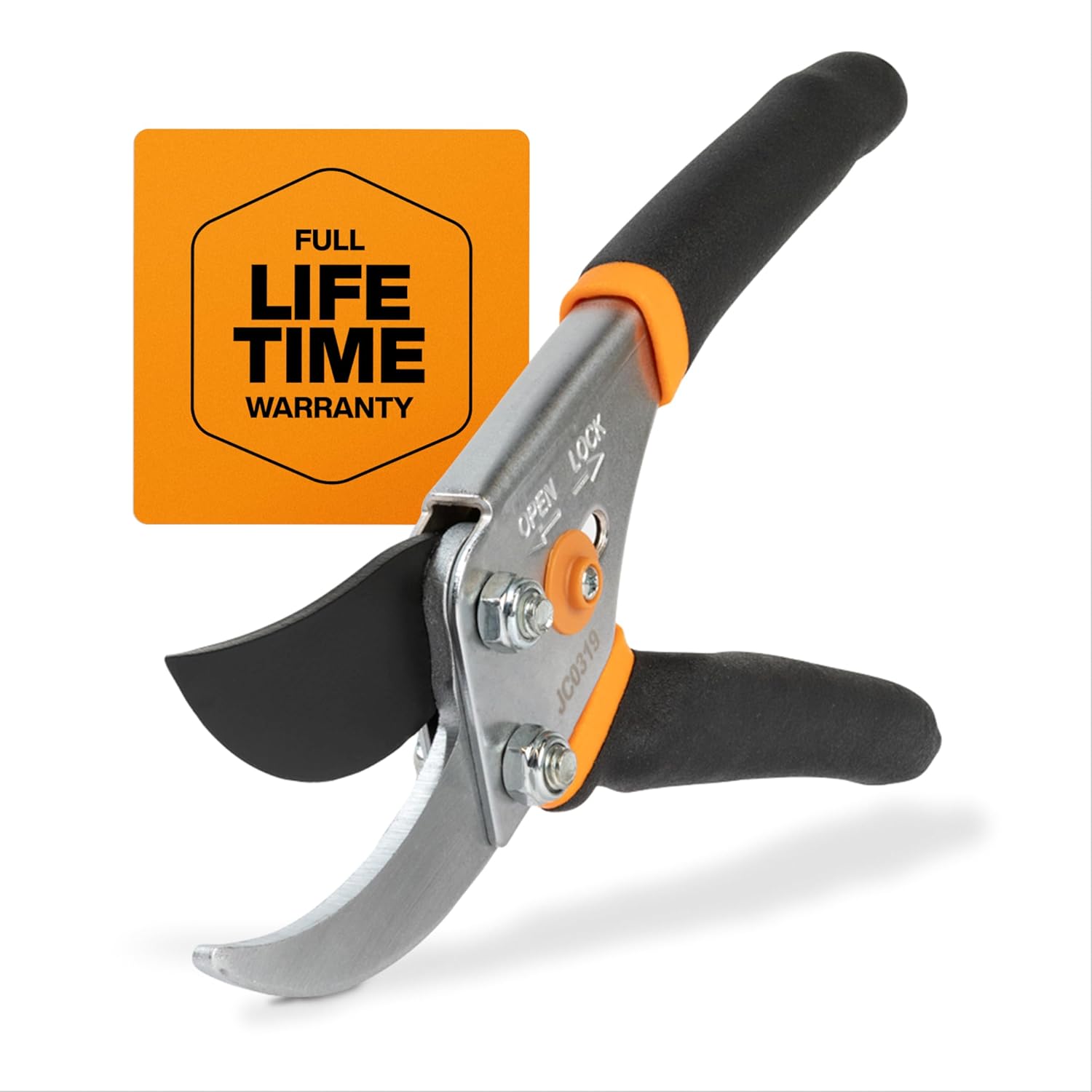
| Cutting width | 0.63 inches |
|---|---|
| Blade Edge | Serrated |
| Blade Material | Alloy Steel |
| Hand Orientation | Ambidextrous |
These Fiskars bypass pruning shears are a straightforward, reliable tool for everyday garden pruning. They use a bypass cutting action with precision-ground alloy steel blades and a low-friction coating so stems and green growth are sheared cleanly without crushing, which is helpful for flowers, shrubs, and small woody shoots up to about 5/8 inch. The pruners include a sap groove and nonstick finish to reduce sticking and rust, and an ergonomic non-slip handle that makes repeated trimming more comfortable. Because they are all-steel construction they feel solid and hold an edge through routine use, and the safety lock keeps the blades closed for storage. The main limitations are the modest cutting capacity, which is not suited for thick branches, and the simpler design lacks compound leverage for heavy cutting, so they work best for regular maintenance rather than heavy-duty pruning. For gardeners who want a durable, easy-to-maintain daily pruner, these are a dependable choice.
Best for: Home gardeners who want a dependable, low-maintenance pruner for routine trimming, deadheading, and shaping of flowers and small shrubs and who value proven, widely used tools.
Less Ideal for: People who need a pruner for larger woody branches or frequent heavy-duty cutting should choose a lopper or powered/pruning tool instead.
- Bypass blades and precision-ground steel deliver clean cuts on live stems
- Low-friction blade coating and sap groove reduce sticking and resist rust
- Ergonomic non-slip handle improves control and reduces hand fatigue
- All-steel construction offers durable, long-lasting performance
- Cut capacity limited to about 5/8 inch so not suitable for thicker branches
- No compound leverage mechanism, making heavy or woody cuts harder
Verdict: A tough, no-nonsense pruner that provides clean cuts and low-maintenance blades for everyday garden grooming.
Decerk 8.5" Bypass Pruning Shears with Titanium-Coated SK5 Blade

| Cutting width | 20 millimeters |
|---|---|
| Blade Type | Bypass |
| Blade Material | Titanium |
| Hand Orientation | Ambidextrous |
| Included Components | Replacement Spring |
These Decerk pruning shears are built for regular garden tasks like deadheading, stem trimming, and cutting small branches up to about 3/4 inch. The SK5 high-carbon steel blade is nano-polished and titanium-coated to resist rust and hold an edge longer, while the lever-action design multiplies cutting force so thicker stems go through with less hand strain. Aluminum handles with a rubberized grip make the tool comfortable to hold and the ambidextrous layout and one-hand safety lock simplify use and storage. The pruner ships with a spare spring and the straight bypass blade produces clean cuts that help plant health. Expect a compact, durable tool that suits routine pruning and light shrub work; it is not intended for heavy woody pruning beyond its stated cut capacity. As with any bypass pruner, keeping the blade clean and occasionally oiling the pivot will preserve performance over time.
Best for: Gardeners who prefer reliable, low-effort tools for routine pruning and want a durable, easy-to-use shear that reduces hand fatigue.
Less Ideal for: People who need a tool for heavy woody pruning or for frequent commercial-scale cutting should choose larger pruning tools or loppers instead.
- Titanium-coated SK5 bypass blade for longer edge life and corrosion resistance
- Lever-action design increases cutting force and reduces hand effort
- Ergonomic rubberized handles for a secure, comfortable grip
- Includes spare spring and one-hand safety lock for convenience and safer storage
- Cut capacity limited to about 20 mm (3/4 inch), not suitable for larger woody branches
- Blade care required to prevent sap buildup and maintain sharpness
Verdict: A comfortable, rust‑resistant bypass pruner with lever-action power that makes everyday garden cuts easier and gentler on the hands.
Choosing the Right Pruning Shears for Pruning Roses: Key Factors to Consider
Blade Type and Cutting Action
The blade type-bypass versus anvil-directly affects how roses are cut. Bypass blades slice past each other and produce the cleanest cuts on live wood, which is critical for rose stems because crushing can increase disease risk. Anvil-style blades compress stems against a flat surface and can be useful for dead wood but are more likely to bruise living tissue.
Also consider whether the blade is single-beveled or double-beveled and how easy it is to resharpen. Harder steels hold an edge longer but may be harder to resharpen by hand. A well-maintained bypass shear generally gives the healthiest pruning result for most rose tasks.
Handle Comfort and Hand Size
Pruning roses often involves many cuts in a session, so handle ergonomics determine how long you can work without pain. Look for contoured grips that match your hand size, soft-touch coatings that reduce vibration, and a handle profile that keeps the wrist in a neutral position. Larger hands need wider handles and more clearance around the pivot.
Handedness matters too. Some shears are slightly angled or shaped to fit right or left hands more naturally. For gardeners with arthritis, options that spread force over a larger area or include locking mechanisms to reduce strain when carrying are worth considering.
Cut Capacity and Typical Rose Sizes
Different roses present different stem thicknesses. Hybrid teas and floribundas usually have thinner canes, while old shrub roses or climbers can develop cane diameters that require higher cut capacity. Check the tool's recommended cut diameter and choose a shear that handles the thickest canes you expect to encounter.
Also note that some shears have compound lever systems that make cutting thick stems easier with less hand force. Those systems add mechanical advantage but can add weight and require periodic pivot maintenance.
Material, Coating, and Corrosion Protection
Rose sap and outdoor use accelerate corrosion, so blade steel and protective finishes matter. Stainless and high-carbon steels each have tradeoffs: stainless resists rust but may not hold an edge as long as some hardened carbon steels. Look for quality coatings, rust-resistant pivots, and sealed mechanisms if you store tools outdoors or in a damp shed.
Handles with nonabsorptive grips or metal cores reduce the chance of rot or degradation. Consider how easy it is to dry and oil the shear after use to prolong life.
Maintenance and Sharpening
Routine maintenance keeps shears cutting cleanly. Choose designs with accessible pivots for lubrication, replaceable parts such as springs or screws, and blades that can be honed or ground without specialized equipment. A shear that requires factory service for basic maintenance will be less practical for gardeners who prefer to do their own upkeep.
Also consider whether the tool disassembles easily for deep cleaning after cutting diseased canes. Simple, well-documented maintenance extends tool life and keeps cuts healthy.
Matching Shear Style to Rose Type
Different rose classes respond better to different shear styles. For regular maintenance on hybrid teas and floribundas, a lightweight bypass shear with a slim head lets you make precision cuts near buds. If you care for climbing roses or old shrubs with thicker canes, choose a shear with higher cut capacity or use a pruning saw for very thick wood.
Consider how often you prune and how much reach you need. A compact shear is easier to carry and maneuver in tight beds, while a heavier-duty shear handles occasional heavy cuts without needing a separate tool.
- Lightweight bypass shears for frequent, precise pruning
- Higher cut capacity shears or compound-action models for thicker canes
- Use a pruning saw for canes beyond the shear's stated capacity
Reducing Disease Transmission Between Plants
Rose diseases can spread on contaminated blades, so adopting a hygiene routine is important. Wipe blades between plants when moving from one rose to another, especially if you have a history of black spot or canker. Carry a small bottle of disinfectant or alcohol in your pruning kit for quick cleaning.
Blades that open fully or disassemble make deep cleaning easier after cutting back diseased growth. Regular sharpening also reduces jagged cuts that invite infection.
- Wipe blades often during a session
- Disinfect after pruning diseased canes
- Sharpen regularly to prevent ragged cuts
Protecting Your Tools and Extending Lifespan
After pruning, remove sap and debris from blades and apply a thin coat of lubricating oil to the pivot. Store shears in a dry place away from frost and direct soil contact. A simple sheath or wall hook keeps blades from dulling and prevents accidental damage.
Inspect springs, pivots, and handles seasonally. Tighten loose screws and replace worn springs to maintain cutting performance. A small investment in maintenance tools-file, sharpening stone, pivot oil-keeps shears working like new for years.
- Wipe and oil blades after each use
- Store dry and hang or sheath to avoid damage
- Replace worn hardware before it causes misalignment
Ergonomic Tips for Long Pruning Sessions
Rotate tasks to avoid persistent strain on the same hand and wrist. Take short breaks during long pruning days and switch hands if the shear allows ambidextrous use. Use proper body position: keep the wrist neutral and use forearm strength rather than bending at the wrist for repeated cuts.
Gloves with thin palms can improve grip without sacrificing dexterity. If you have arthritis, look for long-handled secateurs with ergonomic leverage or add a padded overgrip to reduce pressure points.
- Switch hands and take short breaks
- Keep the wrist neutral and use forearm strength
- Consider padded grips or leverage-assist tools for reduced strain
Seasonal Pruning Strategy for Roses
Plan pruning tasks by season to match tool needs. Light deadheading and shaping during the growing season calls for quick, nimble shears. Major structural pruning in late winter or early spring may require heavier-duty shears or additional tools to remove large canes safely.
Adjust blade care to the season: sharpen and oil before the heavy pruning season, and do a deep clean after cutting back winter-damaged wood to prevent winter rot in stored tools.
- Use lightweight shears for frequent deadheading
- Save heavier cuts for seasonal pruning with sturdier tools
- Prep and service tools before major pruning sessions
How We Chose the Best Pruning Shears for Pruning Roses
We focused on criteria that matter in everyday rose pruning and that gardeners can verify before buying. Blade sharpness and edge retention were primary because a clean, sharp cut reduces wound size and speeds healing. Ergonomic comfort and hand strain evaluation considered handle shape, grip material, and how the shear feels during repeated cuts in a single session. Cut capacity and cutting mechanism were assessed to ensure options can handle typical rose cane thicknesses without crushing. Corrosion resistance and finish were included because rose sap and outdoor storage lead to rust without adequate protection. Durability and serviceability covered pivot quality and ease of resharpening or replacing parts. We excluded tools intended only for heavy arborist work or single-use bypass snips that cannot handle common rose cane sizes. We did not include models lacking information on blade material or handle ergonomics. The final list balances sharpness, comfort, and longevity so each shear is practical for routine rose care.
FAQ
What blade type is best for live rose stems?
Bypass blades are usually best for live rose stems because they slice cleanly and reduce tissue crushing. That helps stems heal faster and lowers disease risk compared with anvil-style cutters on living wood.
How wide a cane can typical pruning shears handle?
Most handheld pruning shears cut stems up to about 3/4 inch to 1 inch in diameter. If you regularly face thicker canes, look for tools with a higher stated cut capacity or use a pruning saw for very large material.
How often should I sharpen my pruning shears?
Sharpen blades whenever cuts start to tear or require extra force, which for active gardeners can be once or twice per season. Light hone-ups after heavy use and a more thorough sharpening before the pruning season help maintain clean cuts.
Can I disinfect shears between plants to prevent disease?
Yes. Wiping blades with isopropyl alcohol or a diluted bleach solution between plants is a common practice when disease is present. Rinse and dry blades after disinfecting to prevent corrosion.
Are compound-action shears worth it for rose pruning?
Compound-action shears reduce the hand force needed for thicker canes and can be helpful if you prune large roses regularly or have limited hand strength. They are slightly heavier and have more moving parts, so weigh convenience against added maintenance.
How should I store shears to keep them in good condition?
Clean sap from blades, apply a light oil coat, and store shears in a dry place away from soil contact. Hanging them or keeping them in a small sheath prevents dulling and accidental damage.
Final Verdict
Prioritize a pair of shears that matches the roses you grow and how often you prune. For most routine pruning of floribundas and hybrid teas, a sharp, lightweight bypass shear with good ergonomics is the best compromise between precision and comfort. If your garden includes older shrubs or climbers, choose a model with higher cut capacity or plan to supplement shears with a saw. Keep in mind the tradeoffs between edge retention and corrosion resistance, and factor in maintainability. A well-maintained shear that fits your hand will make pruning faster, protect plant health, and last for many seasons.
