

Note: This article contains affiliate links. If you click on these links and make a purchase, I may earn a small commission at no extra cost to you. This helps support my research and content. Read my full affiliate disclosure here.
Choosing the right organic weed barrier matters because it changes how weeds, water, and soil life interact in your beds and borders. The wrong barrier can smother beneficial organisms or let persistent weeds through, while the right one reduces hand-weeding and supports plant health. This guide covers seven shortlisted organic weed barriers selected for typical home gardens, raised beds, containers, and pathways. We evaluate each option on durability, permeability, and how it affects soil life so you can pick the approach that fits your planting style and maintenance habits. Read on for practical guidance and the top picks.
Top Picks at a Glance
| Best Overall The best all-around choice for most situations | AGEGOMIC Biodegradable Heavy-Duty Kraft Paper Weed Barrier (4 x 300 ft) |  |
| Best Quality Built to a higher standard if you want something more solid | Sandbaggy Biodegradable Garden Paper Roll (3 ft x 475 ft) |  |
| Best Value The sweet spot between price and what you get | AGEGOMIC Biodegradable Kraft Paper Weed Barrier Roll, 3 x 100 ft |  |
| Best Budget The cheapest option that still gets the job done reliably | Jtuxcke Biodegradable Paper Weed Barrier, 2 x 50 ft |  |
| Highest Rated A top-rated pick with lots of positive feedback | Topfurn Biodegradable Garden Paper Weed Barrier, 4 x 100 ft |  |
| Most Popular A crowd favorite that many people choose with confidence | AGEGOMIC Biodegradable Heavy‑Duty Kraft Garden Paper, 4 x 100 ft |  |
| Best Seller A high-volume bestseller chosen again and again | Liaycco 40" x 5 ft Natural Jute Burlap Fabric Roll |  |
AGEGOMIC Biodegradable Heavy-Duty Kraft Paper Weed Barrier (4 x 300 ft)
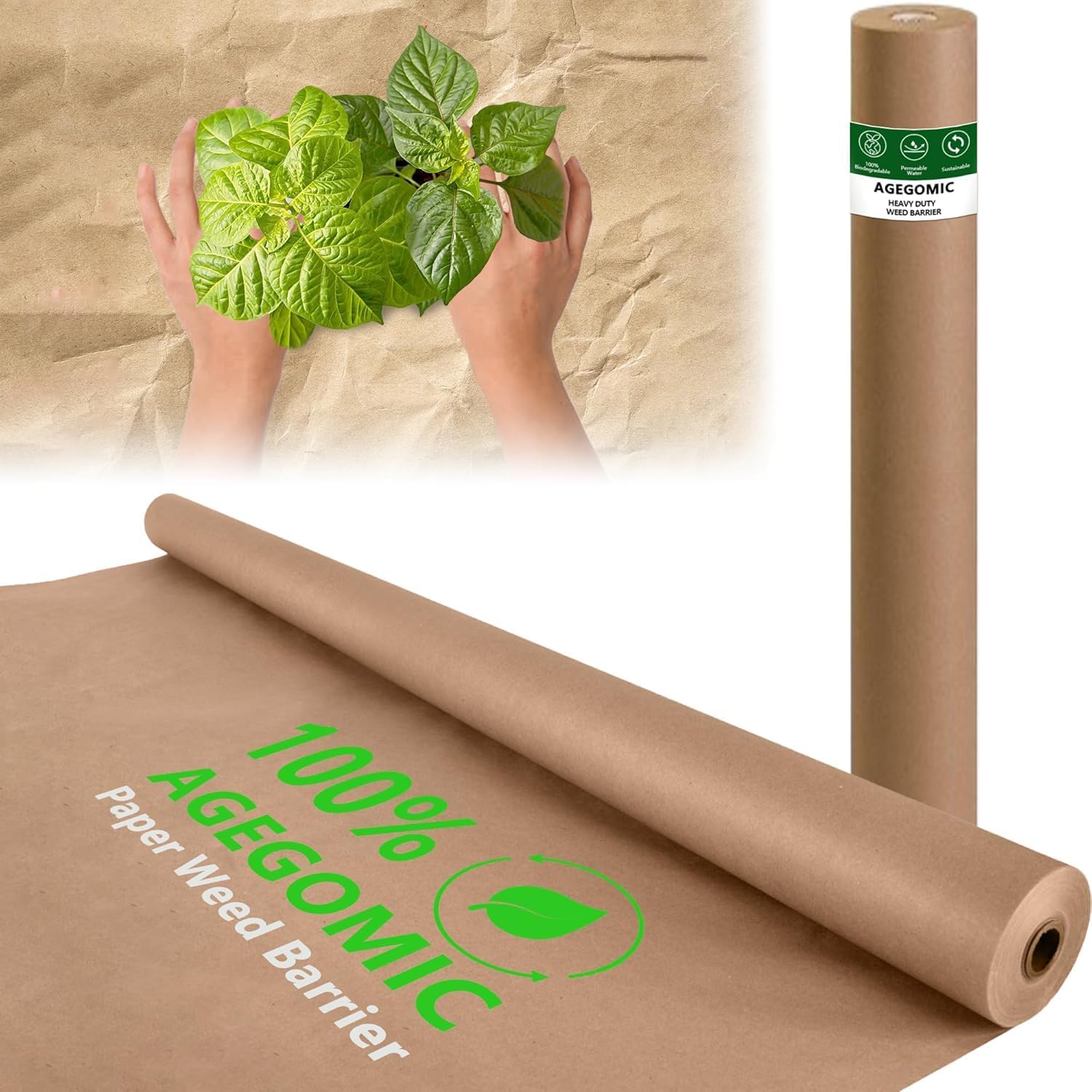
| Material | 100% unbleached kraft paper |
|---|---|
| Package length | 4 x 300 ft |
| Intended use | Biodegradable weed barrier for garden beds |
| Manufacturer | AGEGOMIC |
This AGEGOMIC kraft paper weed barrier functions as a heavy-duty, natural alternative to plastic landscape fabric for seasonal weed control. You unroll the pre-printed roll over beds, trim to fit, and secure edges with soil or biodegradable stakes, then top it with mulch if desired to hold it in place. The open-fiber, reinforced cellulose construction lets water and air pass through while providing gentle shading to suppress weeds and preserve soil moisture. Over a growing season it decomposes and contributes organic matter, so it both protects and gradually improves soil structure. Notable features include tear-resistant yet pliable paper, weather resistance to moderate rain and wind, and printed guidelines for cutting curved beds. Limitations are that it is temporary compared with synthetic fabrics so it needs replacement each season or after heavy disturbance, and it must be anchored or mulched to avoid lifting in windy sites. Expect simple, low-tech installation but plan for periodic replenishment in high-traffic or long-term weed-control settings.
Best for: Gardeners who prioritize eco-friendly, soil-improving weed control and want a straightforward seasonal barrier that breaks down into the bed.
Less Ideal for: People needing a permanent, long-term barrier for heavy weed pressure or for paved/traffic areas where a nondegradable fabric is required.
- 100% natural unbleached kraft paper that biodegrades and adds organic matter to soil
- Open-fiber structure allows air and water to pass, preserving soil respiration and moisture
- Thickened, tear-resistant construction adapts to contours and resists moderate rain and wind
- Pre-printed cutting guidelines make trimming to curved beds easier
- Works with mulch and biodegradable stakes for secure, low-impact installation
- Designed to be temporary so it will need replacement as it decomposes
- Can be lifted by wind if edges are not properly secured
Verdict: Buy this if you want a heavy-duty, biodegradable paper barrier that suppresses weeds for a season while enriching the soil as it breaks down.
Sandbaggy Biodegradable Garden Paper Roll (3 ft x 475 ft)

| Material | Recycled Cardboard |
|---|---|
| Unit Count | 475 Feet |
| Item Thickness | 0.01 inches |
| Grade Rating | Residential |
This Sandbaggy garden paper is a biodegradable landscape fabric made from recycled cardboard that lays flat as a paper mulch to block sunlight and prevent weed germination. It is typically unrolled over garden beds or under mulch, cut easily with a utility knife, and secured with landscape pins; because it is breathable it still allows air and water to reach plant roots while gradually decomposing and adding organic matter back into the soil. Notable features include full biodegradability with zero plastics, residential grade construction, and a very long 475-foot unit count that covers large areas without many seams. Practical benefits are improved soil moisture retention, reduced weed growth without synthetic materials, and easier disposal compared with plastic sheeting. Important limitations are that paper will break down over time so it is not a permanent barrier and it may need replacement in high-traffic or very wet locations; it is also thinner than heavy geotextiles so it offers less physical durability against digging pests or heavy foot traffic.
Best for: Gardeners who prioritize organic, chemical-free weed control and want a breathable, soil-improving barrier for annual beds or mulched areas.
Less Ideal for: People needing a heavy-duty, long-term barrier for driveways, paths, or areas with digging animals should choose a stronger geotextile or plastic option.
- 100% biodegradable recycled cardboard so it adds organic matter as it decomposes
- Breathable paper construction that allows air and water to reach plant roots
- Large 475-foot roll minimizes seams and speeds coverage of multiple beds
- Easy to cut and install with standard landscape pins or staples
- Not as long-lasting or tear-resistant as synthetic woven or nonwoven geotextiles
Verdict: Choose this paper landscape fabric when you want an effective, fully biodegradable weed barrier that improves soil health while covering large garden areas quickly.
AGEGOMIC Biodegradable Kraft Paper Weed Barrier Roll, 3 x 100 ft

| Material | Unbleached kraft paper |
|---|---|
| Length | 100 ft roll |
| Width | 3 ft |
This kraft paper weed barrier is a practical organic option for suppressing weeds in garden beds while improving soil over time. Rolled out beneath mulch or wood chips, the thickened unbleached paper creates a breathable layer that reduces light to germinating weeds, holds moisture, and resists moderate rain and wind. Preprinted cutting guides make fitting curved beds straightforward, and the material is tear‑resistant enough to conform to contours without specialized tools. Unlike plastic fabric, the paper breaks down seasonally and adds organic matter to the soil, which benefits long‑term bed health and soil texture. Important limitations are that it will eventually decompose so it is not a permanent barrier and exposed edges must be covered or pegged to prevent wind lift. It also requires a top mulch layer for best weed suppression and longevity. For gardeners who want a sustainable, easy to install weed control layer that feeds the soil as it breaks down, this product is a sensible choice.
Best for: Gardeners who prioritize sustainable, soil‑building weed control and want an easy to lay, season‑long solution for vegetable beds, flower borders, or small farms.
Less Ideal for: People seeking a long‑term, maintenance‑free synthetic barrier or those who need an impermeable surface for permanent pathways should consider other materials.
- Made from 100% natural unbleached kraft paper so it is biodegradable and compostable
- Open‑fiber construction permits air and water movement to protect soil biology
- Thickened, tear‑resistant paper stands up to moderate rain and wind during a season
- Preprinted guidelines simplify cutting to fit irregular or curved beds
- Improves soil as it decomposes by adding organic matter and enhancing texture
- Not a permanent weed barrier since the paper decomposes over time
- Requires covering (mulch or soil) or pegging to keep edges from lifting in wind
Verdict: Choose this kraft paper roll if you want an effective, biodegradable weed barrier that suppresses weeds now and returns organic matter to your soil as it breaks down.
Jtuxcke Biodegradable Paper Weed Barrier, 2 x 50 ft

| Material | 100% degradable organic wood pulp |
|---|---|
| Coverage | 2 x 50 ft roll |
| Decomposition time | 6–12 months |
This biodegradable weed barrier is a plastic-free paper mulch intended to block weed growth under flower beds, vegetable rows, and landscaped areas. It installs like standard landscape fabric: cut to fit, lay over prepared soil, and cover with mulch or soil to hold it in place. The product emphasizes reinforced cellulose fibers so it resists tearing better than plain paper and remains porous enough for water, air, and nutrients to pass through. Because it naturally decomposes over about 6 to 12 months, you do not need to remove it at season end and it gradually adds organic matter to the soil. Practical benefits include easier bed preparation, reduced hand-weeding, and a lower environmental footprint compared with plastic films. Limitations are that it will eventually break down and so is not a permanent barrier, it may shift if left uncovered in very windy spots, and heavy foot traffic or frequent disturbance can shorten its effective life span.
Best for: A gardener who wants an inexpensive, eco-friendly weed control option for seasonal beds and vegetable plots and prefers low-maintenance solutions that improve soil as they break down.
Less Ideal for: Those needing a long-lasting, permanent weed barrier for paths, walkways, or perennial beds where disturbances are frequent should consider more durable synthetic fabrics or hard landscaping instead.
- 100% biodegradable wood pulp construction reduces plastic waste and composts into soil
- Porous, reinforced cellulose lets water and air reach roots while suppressing sunlight to weeds
- Reinforced fibers improve tear resistance compared with plain paper barriers
- Easy to cut and conform to uneven beds and can be covered with mulch or soil
- Designed to decompose in 6–12 months so it is not a long-term permanent barrier
- May require securing or coverage to prevent shifting in very windy sites
Verdict: Buy this if you want an affordable, plastic-free weed barrier that suppresses weeds for a growing season and then composts back into the soil.
Topfurn Biodegradable Garden Paper Weed Barrier, 4 x 100 ft

| Item Form | Sheet |
|---|---|
| Coverage | non-selective broad spectrum coverage |
| Number of Packs | 1 |
| Brand | Topfurn |
This Topfurn biodegradable weed barrier is a 4 x 100 foot roll of heavy-duty natural pulp paper intended for use under vegetables, in garden beds, greenhouses, and around established plants. Lay it over prepared soil, cut holes for seedlings, and anchor with staples or mulch; the sheet blocks light to suppress weeds while remaining breathable so water and air pass through to roots. Its natural pulp construction means the fabric will gradually decompose and integrate with soil, removing the need to remove plastic landscape fabric later. Practical benefits include reduced hand-weeding, lower soil evaporation for more consistent moisture, and a simple installation that can be tailored by cutting the roll to fit beds. Limitations are that it is less durable than synthetic woven fabrics if used in high-traffic areas and it will not provide a permanent barrier since it is designed to biodegrade over time, so it may need replacement for long-term weed control.
Best for: Gardeners who prioritize reliable, low-impact weed control and want an easy-to-install barrier that improves moisture retention and later biodegrades back into the bed.
Less Ideal for: People who need a permanent, heavy-duty landscape fabric for pathways, driveways, or areas with frequent foot traffic should choose a more durable synthetic product.
- Made from 100% natural pulp paper that biodegrades and safely integrates into soil
- Large 4 x 100 ft roll covers extensive garden beds without many seams
- Breathable and moisture resistant to reduce soil evaporation while allowing water through
- Easy to cut and shape on site for planting rows, raised beds, or greenhouse use
- Will degrade over time so it is not a permanent long-term barrier
- Less tear-resistant than synthetic woven fabrics in high-traffic or heavily worked beds
Verdict: Choose this biodegradable garden paper when you want effective, eco-friendly weed suppression and moisture retention that naturally returns to the soil.
AGEGOMIC Biodegradable Heavy‑Duty Kraft Garden Paper, 4 x 100 ft

| Material | 100% unbleached kraft paper |
|---|---|
| Length | 100 ft |
| Width | 4 ft |
This biodegradable garden paper is a heavy‑duty kraft roll intended as a temporary weed barrier that breaks down and feeds the soil. Made from reinforced cellulose fibers, it lays flat, resists moderate rain and wind, and still lets air and water through so soil respiration and moisture balance are preserved. Preprinted cutting guides make fitting curved beds straightforward and the material is pliable enough to conform to slopes and contours; edges can be pinned with biodegradable stakes for extra hold. Its main benefit is that it suppresses weeds while eventually decomposing into organic matter, which can improve soil texture and nutrient cycling in subsequent seasons. Expect it to last just long enough to protect seedlings and reduce hand weeding rather than act as a permanent barrier, and in very wet or very windy sites heavier anchoring or a different synthetic fabric may be needed. For gardeners looking to reduce plastic use, it offers a practical, low‑impact option for bed prep and seasonal weed control.
Best for: Gardeners who prioritize sustainable, low‑plastic solutions and want a temporary weed suppressant that improves soil health as it decomposes.
Less Ideal for: People who need a permanent, long‑lasting weed barrier or who garden in exposed sites that require heavy-duty synthetic fabrics.
- Fully biodegradable unbleached kraft paper that decomposes to add organic matter to soil
- Reinforced cellulose construction resists moderate rain and wind while remaining breathable
- Preprinted cutting guides simplify fitting around curves and irregular beds
- Pliable and tear‑resistant enough to conform to contours and slopes
- Intended as a temporary barrier so it will not provide long‑term weed-proofing
- May need additional anchoring or replacement in very wet or windy conditions
Verdict: Choose this roll if you want a breathable, biodegradable weed barrier that suppresses weeds now and returns organic matter to your beds as it breaks down.
Liaycco 40" x 5 ft Natural Jute Burlap Fabric Roll

| Material | 100% natural jute |
|---|---|
| Weave density | 26 × 26 weave per inch |
| Edge | Reinforced selvage edges |
This 40" x 5 ft Liaycco burlap roll is a simple, no-frills garden fabric made from 100% natural jute with a tight weave and reinforced selvage edges. In the garden you can unroll and cut it to size for use as a temporary ground cover, erosion control layer, tree wrap or weed barrier. The breathable, loosely woven jute allows moisture and air to pass while shading soil and slowing surface runoff, which helps reduce light erosion on slopes and bare patches. It is easy to handle and secure with twine or stakes and also works for rustic craft projects when not in use outside. Because it is a natural fiber it will biodegrade over time, so expect it to be a seasonal or short-term solution rather than a permanent geotextile. The narrow 5 ft length makes it best for spot applications or short runs rather than wide continuous coverage, so plan overlaps for full slope protection.
Best for: Gardeners who prefer natural, biodegradable materials and need an easy-to-use short-run fabric for seasonal erosion control, tree protection, or small landscaping projects.
Less Ideal for: Landscapes that require permanent, heavy-duty erosion control or large continuous coverage where synthetic geotextiles and longer rolls are a better fit.
- Made from 100% natural jute that is breathable and biodegradable
- Tight 26×26 weave with reinforced selvage for added durability during use
- Easy to cut and secure for custom fits around trees, beds and slopes
- Works as a combined weed barrier and temporary erosion-control layer
- Short 5 ft roll length limits coverage and requires seams or overlaps for larger areas
- Natural jute will break down over months and is not a long-term erosion control fabric
Verdict: Choose this natural burlap roll if you want a biodegradable, easy-to-cut fabric for seasonal erosion control and small-area ground protection.
Choosing the Right Organic Weed Barrier: Key Factors to Consider
Material Composition
Material composition determines whether a barrier is truly organic and how it behaves in the garden. Natural fiber options like jute, coir, burlap, and cardboard break down over time and feed soil organisms as they decompose. Denser mats suppress weeds more effectively at first but may compact and reduce gas exchange if left too long.
Synthetic blends or plastic-backed materials are excluded from organic classifications and can persist in soil for decades. When choosing material, consider whether you want a temporary suppression layer that becomes mulch and soil amendment, or a longer-lasting sheet that will need removal to avoid soil smothering.
Permeability to Water and Air
An effective organic weed barrier must let water and air reach plant roots. Materials that block moisture lead to dry pockets and poor root development, while those that let water through reduce runoff and keep irrigation effective. Check how quickly the material absorbs water and whether it allows rainfall and irrigation to reach the root zone.
Permeability also affects soil life. Good permeability preserves beneficial fungi and microbes by maintaining oxygen and moisture balance. In hot, dry climates choose barriers with higher moisture retention beneath, while in wetter sites prioritize quick drainage and breathability.
Decomposition Rate and Soil Benefits
Organic barriers eventually break down, and their decomposition rate matters for maintenance and soil improvement. Fast-decomposing materials add organic matter quickly and reduce the need for removal, but they require more frequent replacement to keep weeds suppressed. Slower-decomposing fibers give longer weed control but still contribute to soil organic content over months to years.
Consider your planting cycle. If you rotate beds or intensively cultivate, choose faster-degrading options that can be worked into the soil. For permanent shrub beds, a longer-lasting mat may be preferable until you plan to rework the bed.
Installation and Maintenance
Practical installation affects how likely you are to use the barrier correctly. Look for materials that are easy to cut, position, and secure around established plants and irregular beds. Some organic mats can be laid and pinned quickly; others require stapling or tucking.
Maintenance includes monitoring for tears, reapplying mulch on top, and replacing the barrier as it decomposes. Consider how often you are willing to lift and refresh the layer; easier-to-handle products reduce labor and make seasonal bed work simpler.
Compatibility With Planting Methods
Different gardens have different planting methods, and the right barrier should fit your approach. Raised beds and container gardens often need finer-grained, well-draining materials to avoid waterlogging. Around shrubs and perennials you may want thicker mats to suppress weeds for multiple seasons without disturbing roots.
If you frequently plant seedlings or use shallow-rooted vegetables, choose a barrier that is easy to pierce or cut for transplanting. For no-dig gardens, select mats that can be left in place and mulched over without interfering with new plant establishment.
Environmental Impact and End-of-Life
Assess the full life cycle of an organic weed barrier. Biodegradable materials reduce long-term waste but their production and processing also matter. Choose barriers made of responsibly sourced fibers and avoid options treated with synthetic preservatives or binders that hinder composting.
Plan for disposal: some materials can be composted in a home compost pile, while denser items may need to be shredded or added to municipal green waste. Consider how long you want the material to persist and whether its end-of-life aligns with sustainable garden practices.
When Organic Barriers Work Best
Organic weed barriers are particularly effective in established beds, perennial borders, and under mulch where you want slow suppression without introducing plastics. They excel at reducing light and choking out annual seedlings while gradually adding organic matter to the soil.
These barriers are less useful where invasive perennial roots already run through the soil, such as mature lawn-rooted bindweed or creeping grasses. In those cases a combination of hand removal and targeted cultural control is often necessary before laying an organic layer.
- Best for suppressing annual weeds and seedlings
- Good for no-dig and low-disturbance gardening
- Not a cure for deep-rooted perennial invasions
How to Lay an Organic Weed Barrier
Prepare the bed by removing tall weeds and roughly leveling the surface. Lay the barrier material smoothly, overlapping edges by a few inches to prevent light gaps, and cut holes where plants will be placed. Secure edges with landscape pins, rocks, or soil to prevent shifting in wind or under foot traffic.
Top the barrier with a layer of mulch to protect the material from direct sun and to improve aesthetics. Mulch also slows decomposition a bit, extending the barrier's useful life. Check the layer each season for tears and replace or patch areas where weeds have begun to exploit gaps.
- Clear and level bed before laying
- Overlap seams and secure edges
- Cover with mulch to protect and extend life
Combining Organic Barriers With Other Weed Controls
An organic barrier is one tool in an integrated approach. For persistent weeds, combine a barrier with spot removal, deep hand-pulling, solarization in small areas, or smothering with repeated layers of cardboard. Organic barriers work best after the most vigorous root systems are removed or suppressed.
Use barrier layers along pathways and around shrubs while keeping vegetable rows accessible for planting and harvesting. Rotate barrier placement annually in vegetable beds to allow soil incorporation of decomposed fibers and to break pest or disease cycles.
- Use alongside targeted hand-weeding for best results
- Rotate or incorporate decomposed material into beds seasonally
- Avoid permanent coverage over actively planted vegetable rows
Climate Considerations and Drainage
Climate affects material choice. In wet climates prioritize quick-draining, breathable organic mats to avoid creating saturated pockets. In dry climates, materials that retain some moisture beneath mulch can help reduce irrigation frequency and protect shallow roots.
Regardless of climate, ensure the barrier does not block natural surface runoff paths that protect foundations and pathways. Good drainage extends the life of the barrier and keeps root zones healthy.
- Choose breathable materials for wet sites
- Select moisture-retentive options for dry gardens
- Maintain natural drainage pathways
Top Mistakes to Avoid
Do not lay an organic barrier over dense perennial weed growth without first removing roots; the barrier will slow new seedlings but not stop established runners. Avoid stacking very thick layers that prevent gas exchange and lead to anaerobic soil conditions.
Do not assume all "natural" labeled materials are untreated. Check for coatings or binders that may hinder breakdown or contaminate compost. Finally, do not forget to secure edges and seams, as wind and foot traffic are common failure points.
- Remove deep-rooted weeds before laying
- Avoid overly thick, impermeable stacks
- Inspect labels for treatments or binders
How We Chose the Best Organic Weed Barrier
We focused on materials and approaches that use natural or minimally processed fibers rather than synthetic plastic fabrics. Essential evaluation criteria included how well the product suppresses common annual and perennial weeds, its permeability to water and air, and its effect on soil biology over seasons. Durability under foot traffic and sun exposure was measured by material life and maintenance needs. Installation ease and compatibility with common garden uses such as raised beds, around shrubs, and in containers were also considered. Finally, we assessed decomposition rate and compostability to determine long-term soil impact. Items were excluded if they relied on non-biodegradable plastic as the primary barrier, required heavy chemical treatments, or were designed solely for industrial landscapes rather than home gardens. The selected products strike a balance between effective weed suppression and preserving soil structure and microbial activity.
FAQ
How long does an organic weed barrier last in a garden bed?
Lifespan varies by material and conditions. Coir and denser fiber mats often last several seasons, while thin cardboard and burlap may break down within a single season. Sun, moisture, and microbial activity speed decomposition.
Will an organic barrier harm soil life or microbes?
Most organic barriers support soil life as they decompose because they allow air and moisture through. Problems arise when layers are too thick or impermeable, which can reduce oxygen and negatively affect beneficial organisms.
Can I plant through an organic weed barrier?
Yes. Cut or remove small sections where plants will go, or create slits for transplants. For seedlings, use thin barriers that permit root growth or plan to remove the layer at transplant time to avoid restricting young roots.
Is it safe to compost used organic barrier material?
Often yes if the material is untreated natural fiber. Shred thicker pieces to speed breakdown and avoid adding treated or glued items to a home compost. Check labels for additives that could interfere with composting.
How do I deal with weeds that grow through or around the barrier edges?
Inspect seams and edges regularly and pull seedlings before they root deeply. Patch gaps with additional material or mulch. For stubborn weeds, lift the barrier locally to remove roots and then replace or reinforce the area.
Final Verdict
Organic weed barriers are a practical choice when you want to reduce hand-weeding while improving soil organic matter over time. Prioritize permeability, appropriate decomposition rate, and ease of handling based on whether you manage annual vegetable rotation or permanent beds. Expect tradeoffs: faster-degrading materials need replacement sooner but feed the soil, while longer-lasting mats suppress weeds longer at the cost of eventual removal or incorporation. Choose the option that fits your maintenance schedule and planting style, and plan to combine barriers with targeted weed removal and proper mulching for the best results.
