

Note: This article contains affiliate links. If you click on these links and make a purchase, I may earn a small commission at no extra cost to you. This helps support my research and content. Read my full affiliate disclosure here.
Picking the right planter for Philodendron matters because these tropical vines need stable moisture, space for a developing root ball, and enough airflow to avoid rot. The wrong container can stress stems, stunt growth, and increase pest and disease problems even when care is otherwise correct. This guide covers seven shortlisted planters suitable for Philodendron use cases and growing situations, each chosen for traits that matter in real indoor gardens. We evaluate drainage performance, material behavior, and how each option affects repotting and root development. Read on to find the planter features that match your light, watering habits, and potting style.
Top Picks at a Glance
| Best Overall The best all-around choice for most situations | Vego Garden 15-inch Self-Watering Indoor Planter with Reservoir and Wheels |  |
| Best Quality Built to a higher standard if you want something more solid | D'vine Dev 10" Fiberclay Planter with Wood Stand (Medium) |  |
| Best Value The sweet spot between price and what you get | KUGAZ Self-Watering Planter Set (12/10/8 inch, 3-Pack) |  |
| Best Budget The cheapest option that still gets the job done reliably | The HC Companies Prima 10" Round Plastic Plant Pot (with Saucer) |  |
| Highest Rated A top-rated pick with lots of positive feedback | WIWAOA 10-inch Corrugated Indoor/Outdoor Plant Pot with Drainage Tray |  |
| Most Popular A crowd favorite that many people choose with confidence | Utopia Home Indoor Plant Pots with Drainage, 5‑Pack |  |
| Best Seller A high-volume bestseller chosen again and again | Fielda 8/10/12 Inch Self-Watering Planter Set (3‑Pack) |  |
Vego Garden 15-inch Self-Watering Indoor Planter with Reservoir and Wheels
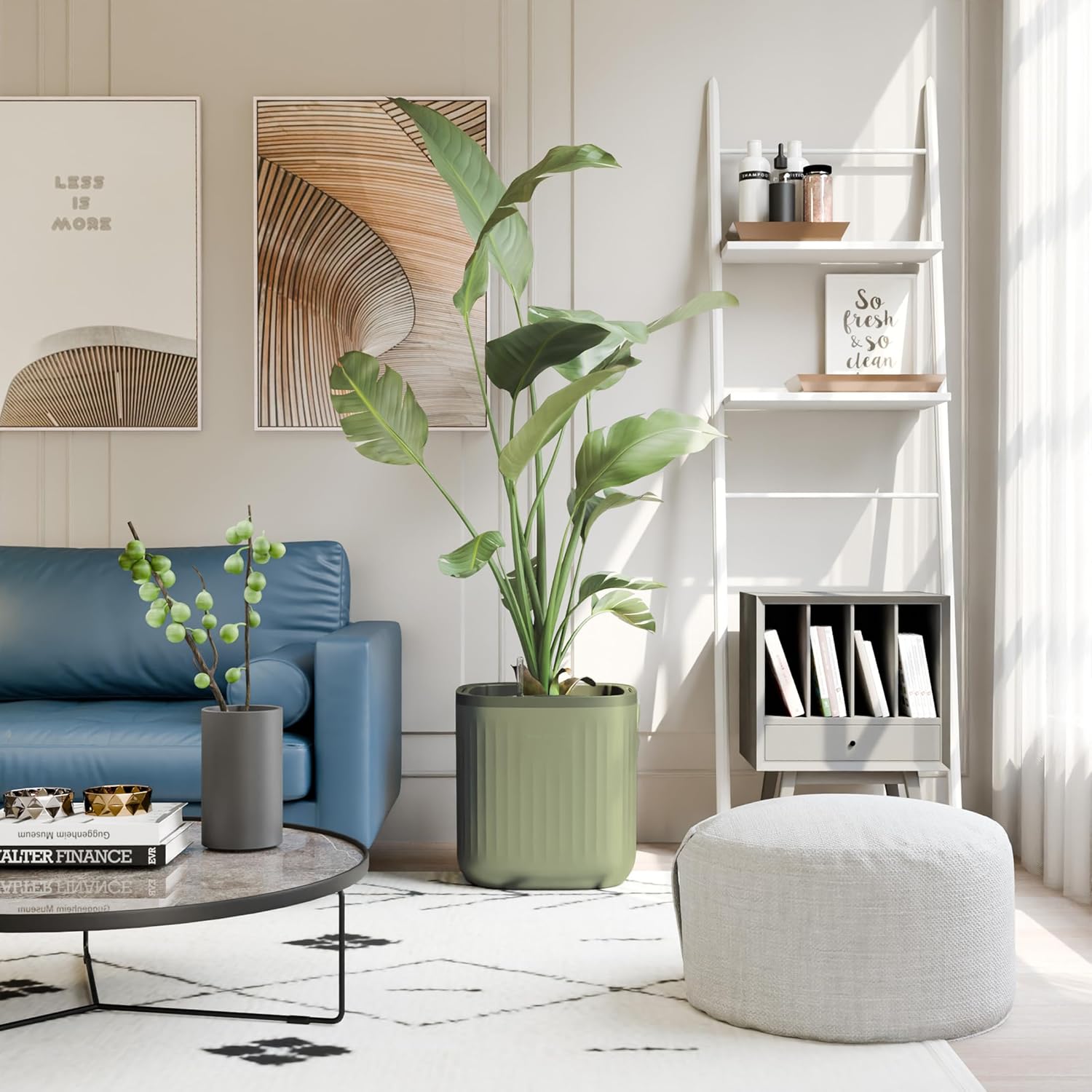
| Capacity | 1 cubic feet |
|---|---|
| Water Capacity | 2.4 Gallons |
| Mounting Type | Floor Standing |
| Indoor Outdoor Usage | Indoor |
This 15-inch Vego Garden planter is built for houseplants that need steady moisture, like Monstera or fiddle leaf figs. It uses a bottom reservoir and wicking system so soil can draw moisture as needed, plus a visible water gauge and an adjustable regulating lever to change stored water volume for different plant needs. The inner pot lifts out for cleaning or repotting and the included wheels make it easy to move the planter to brighter light or away from drafts. For indoor living spaces the planter’s modern, round design is unobtrusive and provides roughly 1 cubic foot of soil capacity, enough for plants around 4 to 7 feet tall. Expect less frequent watering and lower risk of overwatering, though the reservoir adds bulk and requires periodic monitoring of the gauge and occasional emptying to refresh water. If you prefer a completely decorative, shallow pot or need an outdoor-rated container, this indoor-focused self-watering system may not match those specific needs.
Best for: Buyers who want a low-maintenance, reliable planter for larger indoor foliage plants and who prioritize consistent moisture and easy mobility.
Less Ideal for: People seeking a shallow decorative pot, outdoor planters, or those who prefer hands-off, soil-only pots without a reservoir system.
- Self-watering reservoir with wicking system reduces watering frequency
- Water level gauge and regulating lever let you monitor and adjust stored water
- Removable inner pot simplifies cleaning and repotting
- Wheels make it easy to reposition heavy plants indoors
- Designed for indoor use only so not suited to outdoor exposure
- Reservoir increases overall bulk and requires occasional maintenance
Verdict: If you want a dependable, low-maintenance planter that keeps Monsteras and other large houseplants evenly watered and easy to move, this self-watering 15-inch pot is a strong choice.
D'vine Dev 10" Fiberclay Planter with Wood Stand (Medium)

| Capacity | 2.5 gallons |
|---|---|
| Material Type | Wood, Firberclay Resin |
| Mounting Type | Floor Standing |
| Other Special Features of the Product | Drainage Hole |
| Indoor Outdoor Usage | Indoor |
This D'vine Dev medium planter pairs a durable fiberclay pot with a simple wooden stand to lift and showcase indoor plants while protecting floors. It ships with a drainage hole plus a removable plug, a stainless mesh to keep soil in place, a water catch cup and a small bag of ceramic fillers so you can manage watering without extra parts. The fiberclay construction looks like ceramic but is lighter and less fragile, and the three-leg stand is quick to assemble using the included screws. In practice the raised height improves airflow and light around larger houseplants and reduces risk of water damage to surfaces. Limitations to note are the medium pot's 2.5 gallon capacity, which suits medium foliage but not large trees, and the product is intended for indoor use only. If you want a decorative, ready-to-use planter that minimizes watering mess and gives plants a modern mid-century look, this set covers those basics well.
Best for: Buyers who prioritize a neat, functional indoor planter that reduces watering mess and presents plants with a mid-century modern look.
Less Ideal for: People needing very large capacity pots or an outdoor-rated planter for exposed patios or gardens.
- Includes drainage hole plus removable plug and water catch cup for controlled indoor watering
- Sturdy three-leg wooden stand elevates plants for better airflow and floor protection
- Fiberclay material offers a ceramic-like look with greater impact resistance and lighter weight
- Comes with stainless mesh and ceramic fillers to prevent soil loss and help with moisture control
- Medium size (2.5 gallons) is too small for large indoor trees or very deep-rooted plants
- Labeled for indoor use only so it is not suited to outdoor exposure
Verdict: Choose this planter if you want a stylish, ready-to-use indoor pot that manages drainage and protects floors while elevating medium houseplants.
KUGAZ Self-Watering Planter Set (12/10/8 inch, 3-Pack)

| Capacity | 22.6 liters |
|---|---|
| Number of Pieces | 3 |
| Material Type | Plastic |
| Other Special Features of the Product | Breathable, Lightweight, Self Watering |
| Indoor Outdoor Usage | Indoor, Outdoor |
These KUGAZ planters are designed to simplify routine care for larger houseplants like monstera. Each pot includes a deep reservoir and an absorbent wick plus a visible water level window so you can top up the reservoir without disturbing the root ball. The set contains three sizes suited to young plants through more established specimens, and the plastic construction keeps each pot light and easy to move for repotting or repositioning. Built-in drainage holes and a breathable design help prevent overwatering and encourage healthier roots compared with sealed pots. Practical extras include a saucer and watering lip for cleaner filling. Expect the pots to perform well for routine watering and to save time between hand-watering sessions, though the plastic finish is not decorative like ceramic and large heavy plants will still need a stable stand or saucer. If you need a long-term decorative pot or heavier, premium materials, look elsewhere, but for straightforward, low-maintenance container growing these planters are a solid, efficient choice.
Best for: Buyers who prioritize low-maintenance, reliable watering for houseplants and want a practical set that covers small to medium monstera stages without fuss.
Less Ideal for: Gardeners seeking decorative, high-end materials or very large, mature plants that require heavy, long-term stable pots should consider sturdier ceramic or resin alternatives.
- Self-watering reservoir with wick and visible water level makes watering predictable and hands-off
- Includes three practical sizes suitable for progressive repotting
- Drainage holes and breathable design reduce risk of root rot
- Lightweight plastic construction is easy to move and reposition
- Includes saucer and watering lip for cleaner filling
- Plastic construction is utilitarian and less decorative than ceramic or terracotta
- Not a heavy-duty planter for very large, top-heavy specimens
Verdict: If you want a practical, low-maintenance planter set that keeps monsteras consistently hydrated with minimal effort, this self-watering trio delivers.
The HC Companies Prima 10" Round Plastic Plant Pot (with Saucer)

| Material Type | Plastic |
|---|---|
| Capacity | 8 gallons |
| Other Special Features of the Product | Drainage Hole, Lightweight, UV Resistant |
| Indoor Outdoor Usage | Indoor, Outdoor |
| Mounting Type | Tabletop |
This HC Companies Prima 10" round pot is a straightforward, no-frills planter suited to everyday gardening. Made from UV-resistant polypropylene it is light enough to move easily and durable enough to resist fading or cracking when used outdoors. The pot has multiple drainage holes in the base and a rolled rim that makes lifting and refilling soil simpler; a matching saucer is included with this listing which helps catch runoff when the pot is used indoors. Typical uses include growing herbs, small vegetables, succulents, and houseplants such as young philodendrons where root space and drainage matter. The plastic construction keeps cost and weight down but means it warms more in direct sun and is less decorative than ceramic or terracotta. Capacity is generous for a 10" pot, but larger or fast-growing philodendron varieties will eventually need repotting to a bigger container. Overall it is a practical, affordable container for someone starting plants or stocking multiple pots for a window sill or patio.
Best for: Buyers who want an inexpensive, low-maintenance pot to grow houseplants or small philodendron starters on a budget and who prioritize easy handling and durability over decorative finish.
Less Ideal for: Gardeners seeking decorative, breathable materials like terracotta or those growing large, fast-rooting philodendron varieties that need bigger long-term containers.
- UV-resistant polypropylene resists fading and cracking for outdoor use
- Multiple drainage holes to reduce risk of overwatering
- Lightweight and easy to move thanks to low-weight plastic construction
- Includes a saucer to catch drainage when used indoors
- Plastic absorbs and radiates heat more than clay which can stress roots in hot, direct sun
Verdict: A durable, budget-friendly 10" planter that gives reliable drainage and outdoor durability for starter philodendrons and everyday container gardening.
WIWAOA 10-inch Corrugated Indoor/Outdoor Plant Pot with Drainage Tray

| Material Type | Plastic |
|---|---|
| Other Special Features of the Product | Drainage Hole, Fade Resistant |
| Mounting Type | Floor Standing |
| Indoor Outdoor Usage | Indoor, Outdoor |
This 10-inch WIWAOA planter is a sturdy, low-maintenance pot intended for common houseplants such as philodendrons, succulents, and herbs. Made from thickened polypropylene with a matte finish, it resists cracking and stays flexible in sunlight, which makes it suitable for long-term indoor or sheltered outdoor placement. The pot has an optimized drainage system with multiple holes and a matching tray that collects excess water, so you can avoid waterlogged soil and reduce the risk of root rot when repotting or routine watering. Its oval, corrugated design is lightweight and easy to move when you need to adjust light or clean beneath the plant. Limitations include the basic plastic construction that lacks insulating properties of heavier materials and the single-piece size offering no integrated reservoir for extended absence; larger or moisture-sensitive specimens may need a different potting approach or liners for stability.
Best for: Buyers who prioritize a dependable, low-maintenance pot for common houseplants and want reliable drainage and weather-resistant material for indoor or protected outdoor placement.
Less Ideal for: Collectors of large or mature philodendrons that need heavyweight, insulating pots or growers who require built-in water reservoirs for extended absences.
- Durable thickened polypropylene resists cracking and UV-related brittleness.
- Multiple drainage holes plus a tray help prevent overwatering and root rot.
- Lightweight design makes it easy to move for light adjustments or cleaning.
- Matte finish and corrugated styling offer a clean, modern look that fits many interiors.
- Plastic construction provides limited thermal insulation compared with ceramic or terracotta.
- Only a single standard size is provided so you may need a different size for larger philodendron varieties.
Verdict: A dependable, UV-resistant 10-inch plastic planter with strong drainage that makes repotting and daily watering safer for philodendrons.
Utopia Home Indoor Plant Pots with Drainage, 5‑Pack

| Material Type | Plastic |
|---|---|
| Included Components | Saucers Tray |
| Unit Count | 5 Count |
| Other Special Features of the Product | Frost Resistant, Lightweight, Portable, Rot Resistant |
| Mounting Type | Tabletop |
These Utopia Home planters are a practical starter set for indoor potted trees and other houseplants. The pack includes five nested sizes and matching saucers so you can pot seedlings, small citrus or ficus cuttings and move them around a sunny windowsill or tabletop. Made from reinforced PP plastic, the pots are frost and rot resistant and feel light enough to reposition without strain. Each pot features drainage provisions and removable plugs that help prevent overwatering while the saucers protect furniture from runoff. The minimalist polished finish is unobtrusive with most décor, and the multiple sizes make it easy to repot a sapling as it grows. Limitations are that these are basic plastic planters so they offer less insulation and long-term durability than ceramic or thick fiberstone, and the listed specs emphasize indoor use rather than outdoor longevity in harsh weather. For buyers who prioritize fuss-free, lightweight containers with simple drainage, this set covers common needs for small potted trees and starter transplants.
Best for: Buyers who want a low-risk, practical set of indoor planters for starting or styling small potted trees and other houseplants and who value ease of use and social proof from a popular, well-reviewed product.
Less Ideal for: Gardners seeking heavyweight, display-grade planters for mature large trees or outdoor year-round exposure should consider ceramic, concrete, or fiberstone alternatives.
- Multiple pot sizes in one set for potting and repotting as a tree seedling grows
- Included saucers protect surfaces from drainage and allow indoor placement
- Drainage plugs and design to reduce risk of overwatering
- Lightweight, frost and rot resistant plastic that is easy to move
- Plastic construction provides less thermal insulation and premium appearance than heavier ceramic or stone pots
Verdict: A convenient, well-reviewed five-piece indoor planter set that makes starting and repotting small potted trees simple and low effort.
Fielda 8/10/12 Inch Self-Watering Planter Set (3‑Pack)

| Included Components | Tray, Saucer |
|---|---|
| Unit Count | 3 Count |
| Material Type | Plastic |
| Other Special Features of the Product | Breathable, Drainage Hole, Lightweight, Self Watering |
| Indoor Outdoor Usage | Indoor, Outdoor |
These Fielda planters are a practical, no-fuss solution for everyday houseplants. The set includes 8, 10 and 12 inch pots that use a bottom reservoir and cotton wick to feed roots evenly, while a clear water-level window shows when to refill. Each pot has drainage holes plus a removable saucer so you can manage excess water and protect surfaces. Made from thick, high-temperature-resistant plastic, the pots are lightweight yet sturdy for balconies, living rooms, or covered patios and resist fading or cracking in normal outdoor conditions. The design reduces how often you need to water—useful for busy people or short trips—though the self-watering reservoir reduces usable planting depth compared with a plain pot, so you should check nursery-pot fit if you plan to transplant larger root balls. Overall the planters simplify routine care, promote healthy roots with improved aeration, and come with the practical extras you expect from a versatile houseplant set.
Best for: Buyers who want low-maintenance, reliable planters that cut down on frequent watering and work across living rooms, balconies, and patios while still looking neat.
Less Ideal for: Growers who need maximum soil depth for large, deep-rooted specimens or those who prefer traditional single-compartment pots for custom soil mixes.
- Integrated self-watering reservoir with cotton wick and visible water-level window for easy monitoring
- Drainage holes and removable saucer protect surfaces and promote healthy root drainage
- Thick, heat-resistant plastic construction designed to resist cracking and fading outdoors
- Lightweight set of three sizes that works across indoor and covered outdoor locations
- Reservoir reduces usable planting depth compared with standard pots so larger root balls may not fit
Verdict: Choose this set if you want an easy-care trio of durable self-watering planters that keep houseplants hydrated with minimal fuss.
Choosing the Right Planter for Philodendron: Key Factors to Consider
Drainage and Water Control
Philodendrons prefer evenly moist but not waterlogged soil. Good drainage prevents root rot by letting excess water escape after a thorough watering. Look for planters with one or more drainage holes or a removable inner liner that allows water to collect in a saucer and be emptied. The planter's shape also affects how quickly potting mix dries; narrow deep pots hold moisture differently than wide shallow bowls.
Consider how you water and whether you use a peat-heavy mix that retains water. A planter with the right drainage reduces the need to rely on wick systems or constant monitoring. For environments with high humidity, extra drainage becomes even more important because the mix will dry more slowly.
Material and Breathability
The material determines how much air and moisture move through the pot walls. Terracotta and unglazed ceramic breathe and allow some evaporation through the sides, helping the root zone dry between waterings. Plastic and glazed ceramics hold moisture longer but are lighter and less likely to crack.
Think about indoor humidity and how often you water. Breathable materials can reduce overwatering risk, but they may also dry out too quickly in low-humidity, bright spots. Durable plastics are forgiving for accidental bumps and for hanging or shelf placements, while heavier materials add stability for larger vines.
Root Volume and Pot Shape
Philodendron roots like some lateral room to spread and often prefer shallower, wider space for their fibrous root systems. The pot shape you choose affects root patterning and how often you must repot. A planter that is too deep relative to the plant's root ball can hold excessive moisture at the bottom, while a pot that is too shallow will restrict root growth and require frequent repotting.
Match pot volume to the plant's current size with a modest step up when repotting. Consider whether you anticipate rapid growth; active growers will need a container that accommodates at least one season of root expansion without sitting in overly wet substrate.
Ease of Repotting and Inspection
Routine root inspection and occasional repotting are part of good philodendron care. Planters that allow easy removal of the inner pot or that have a thin lip to grip make repotting less risky for stems and aerial roots. Some designs include a removable liner or an inner pot that snaps out for inspection and root pruning.
Also consider how heavy the planter becomes when filled with soil and a wet root ball. A lighter, easily handled pot reduces the risk of dropping the plant while you work. If you use a shelf or hanging position, ensure the planter design gives enough access for maintenance.
Stability and Weight Considerations
Active philodendron vines can become top-heavy as they grow or produce long trailing stems. A planter must offer a low center of gravity or sufficient weight to prevent tipping, especially for tall-stemmed varieties. Heavier materials or broader bases increase stability without needing additional staking.
If you prefer hanging or wall-mounted displays, prioritize lighter materials and secure hardware, but accept that very light pots are more likely to move in drafts. For floor or table placements, a heavier pot reduces accidental tipping and protects stems, particularly when pets or children are present.
Aesthetics and Placement Flexibility
While health and function come first, how a planter fits into your decor and placement matters. The finish, color, and profile should complement the light conditions where the plant will live. Matte and textured finishes tend to show less wear in humid conditions than glossy surfaces.
Consider whether the planter will be moved frequently or displayed in a high-visibility area. Some finishes can stain from water runoff or mineral deposits, so choose a material and glaze that match your cleaning habits and the local water quality.
Potting Mix Tips for Philodendron Containers
The right potting mix works with the planter to control moisture and aeration. Aim for a loose, well-draining mix with components such as orchid bark, perlite, and a peat or coir base to retain some moisture while allowing air pockets for roots.
Topdress with a thin layer of bark or coarse material to help surface drying and reduce crusting. If you use a non-breathable planter, add extra inorganic material to the mix so water drains more freely and the root zone gets oxygen.
- Include chunky material for airflow in denser mixes
- Use a mix with fast drainage if your planter holds water
- Refresh the top 1-2 inches of mix annually for indoor plants
Indoor Placement and Microclimate Effects
Where you place the planter influences watering cadence and material choice. Bright windows dry soil faster and favor pots that retain a little moisture. Shadier rooms keep soil damp longer and benefit from breathable containers or extra drainage.
Consider drafts from vents and doors that can stress foliage. Position planters away from direct heat sources and ensure air circulation around the pot to prevent localized humidity pockets that favor fungal issues.
- East or north windows suit moisture-loving setups
- Avoid placing planters on unprotected wooden furniture without a saucer
- Elevate pots slightly to improve bottom airflow
Using Liners, Saucers, and Self-Watering Features
Removable liners are useful for indoor philodendrons because they let you lift out the plant to inspect roots and adjust the mix. Saucers protect furniture from drips but should be emptied after watering to avoid standing water.
Self-watering planters can help maintain consistent moisture but require careful use for philodendrons; they can hold the mix too wet if not paired with a fast-draining substrate. Use them where you need extended intervals between waterings and adjust the media accordingly.
- Empty saucers shortly after watering to avoid root saturation
- Choose self-watering systems that allow substrate exchange or inspection
- Liners should be breathable or have drainage holes
Supporting Growth: Stakes, Moss Poles, and Mounting Options
Many philodendrons benefit from a support to climb. The planter needs a stable anchor point or room to add a pole without destabilizing the pot. Taller supports concentrate weight and require a wider or heavier planter base.
For trailing varieties, consider decorative wall or shelf placements that pair with lighter pots and secure hardware. Mounting to a wall or hanging works well for limited floor space but demands careful attention to weight limits and drainage.
- Match pot width to the anticipated support height
- Use heavier pots for tall stakes or moss poles
- Check hanging hardware for both static and dynamic loads
Seasonal Care and Repotting Schedule
Repot philodendrons in spring or early summer when growth resumes. Choose the next size up only when roots fill the current container rather than moving up multiple sizes at once; that helps prevent soggy substrate and overstretched roots.
Monitor for root-bound symptoms such as slowed growth or roots protruding from drainage holes. Smaller increases in pot volume are generally healthier for indoor philodendrons and simplify watering management.
- Inspect roots annually for signs of crowding
- Repot to one pot size larger when necessary
- Refresh potting mix at repotting to restore nutrients
How We Chose the Best Planter for Philodendron
We focused on traits that tangibly affect philodendron health and everyday care. Selection began with reviewing common planter materials and their real-world moisture retention, then filtering out containers that lack basic drainage or are impractical for typical indoor repotting. We prioritized containers that support healthy root architecture, allow predictable watering, and resist degradation in humid indoor environments. Concrete evaluation points included drainage effectiveness, pot material and durability, root volume relative to plant size, ease of repotting and handling, and whether the design allows adequate airflow around the root zone. We excluded planters without at least one drainage option or those built from materials that wick or trap excessive moisture with no mitigation. We also filtered out designs that make routine care difficult, such as permanently fixed liners that prevent inspection of roots. The final shortlist balances practical maintenance, longevity, and how each planter behaves in typical philodendron setups.
FAQ
Do philodendrons need drainage holes in their planters?
Most philodendrons do best in planters with drainage holes because excess water needs to escape to prevent root rot. If you use a non-draining decorative outer pot, keep the plant in an inner pot with holes and remove any standing water from the outer container.
What pot size is best when repotting a philodendron?
Choose a pot only one size larger than the current container so the root ball fills the new mix without leaving too much excess substrate. A modest increase supports steady root development and reduces the chance of prolonged wet soil.
Are hanging planters suitable for philodendrons?
Hanging planters work well for trailing philodendron varieties, provided the planter supports the plant's weight when watered. Ensure secure hanging hardware and choose a pot with enough root volume for the plant's size.
Can I use self-watering pots for philodendrons?
You can, but use a fast-draining mix with self-watering systems to avoid prolonged saturation. Check the reservoir frequently and adjust watering and media so the root zone gets some aeration between refill cycles.
How often should I repot a philodendron?
Repotting frequency depends on growth rate but typically occurs every 12 to 24 months for active growers. Slow-growing plants may only need repotting every few years. Inspect roots annually to decide.
What materials are easiest to care for indoors?
Plastic and glazed ceramic are easiest to wipe clean and are less prone to breakage, while terracotta breathes and helps regulate moisture. Your watering routine and the plant's placement determine which material suits you best.
Final Verdict
Choose a planter that balances drainage, adequate root volume, and stability to suit your philodendron's growth habit and your watering routine. Prioritize planters that allow inspection or removal of the inner pot and match the material to your indoor humidity and light conditions. By focusing on drainage, pot shape, and ease of repotting, you will limit common issues like rot and frequent transplant stress and keep vines healthy and vigorous.
