

Note: This article contains affiliate links. If you click on these links and make a purchase, I may earn a small commission at no extra cost to you. This helps support my research and content. Read my full affiliate disclosure here.
Choosing the right steppable ground cover matters if you want attractive surfaces that take foot traffic without turning into mud or bare soil. Whether you are filling narrow pathways, softening a patio edge, or covering compacted soil between pavers, the wrong ground cover quickly wears thin or demands constant repair. This guide presents six carefully shortlisted steppable ground cover options suited to small yards, patios, and walkways. We evaluated candidates for durability under foot traffic, recovery after crush, maintenance needs, and seasonal performance. Read on to understand how each option behaves in real garden conditions and which traits to prioritize for your site.
Top Picks at a Glance
| Best Overall The best all-around choice for most situations | Marde Ross Creeping Thyme Seeds (8,000 seeds) |  |
| Best Quality Built to a higher standard if you want something more solid | Greenwood Nursery Mazus reptans 'Walk On' Groundcover — 10 potted plants |  |
| Best Budget The cheapest option that still gets the job done reliably | 22000‑count Creeping Thyme (Thymus serpyllum) Seeds |  |
| Highest Rated A top-rated pick with lots of positive feedback | Isotoma fluviatilis (Blue Star Creeper) Groundcover, 1 Quart |  |
| Most Popular A crowd favorite that many people choose with confidence | Outsidepride Irish Moss (Sagina subulata) Ground Cover Seeds, 10,000 Pack |  |
| Best Seller A high-volume bestseller chosen again and again | Outsidepride Dichondra Repens Ground Cover Seeds (32 oz) |  |
Marde Ross Creeping Thyme Seeds (8,000 seeds)
| Expected Blooming Period | Summer |
|---|---|
| Sunlight Exposure | Partial Shade |
| Expected Planting Period | Spring to Fall |
| USDA Hardiness Zone | 5 |
| Number of Pieces | 8000 |
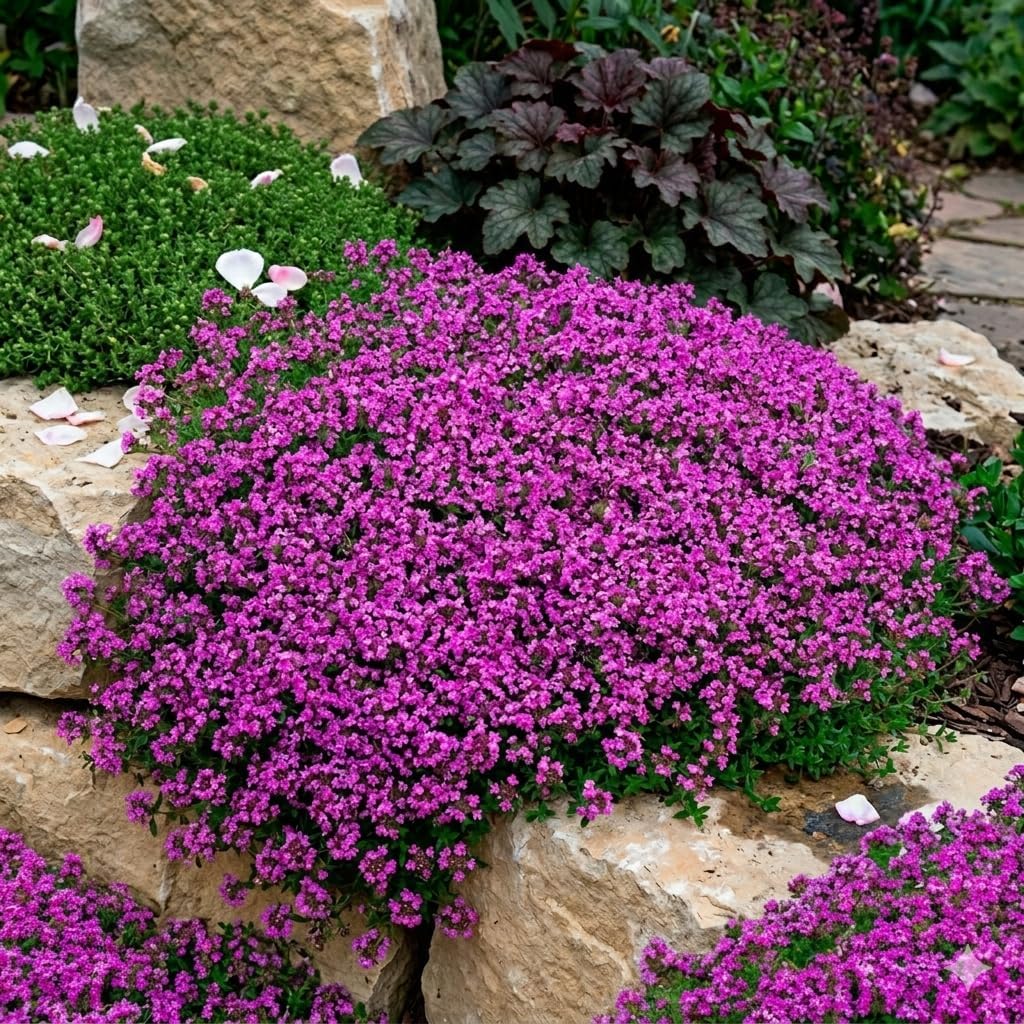
These creeping thyme seeds are meant for direct sowing to create a low, fragrant groundcover that tolerates moderate foot traffic. The packet (~8,000 seeds) is intended for outdoor use in USDA zones 4–9 and produces plants that flower in summer and reach about 6 inches tall. For best results sow in late spring to mid summer when soil temperatures are consistently in the high 60s, press the tiny seeds into well-draining soil without covering them, and keep the area regularly watered until established. This thyme attracts pollinators and works well between pavers or as a border where occasional stepping occurs. Expect a slow start and some patience while seedlings establish; sites with heavy clay or very sandy soils will underperform and the seed packet requires careful surface sowing which can be fiddly. If you follow the planting window and watering guidance you can get a dense, low mat of aromatic thyme that reduces weeds and softens walking surfaces in small to medium hardscape areas.
Best for: Gardeners who want an attractive, low-maintenance steppable groundcover for paths, between pavers, or as a border and who are willing to follow surface-sowing and watering steps for establishment.
Less Ideal for: People who need instant coverage or who have very heavy clay or very sandy beds that cannot be improved; not suited to gardeners who cannot water regularly during the first season.
- Large seed count suitable for covering a significant area
- Hardy across zones 4–9 for winter survival in many climates
- Attracts pollinators and produces summer blooms to add color
- Low-growing habit tolerates moderate foot traffic between pavers
- Requires surface sowing and frequent watering during establishment which can be time-consuming
- Performs poorly in excessively clay or sandy soils
Verdict: A practical seed option for creating a low, steppable thyme groundcover that flowers in summer and holds up to moderate foot traffic when sown and watered properly.
Greenwood Nursery Mazus reptans 'Walk On' Groundcover — 10 potted plants

| Indoor Outdoor Usage | Outdoor |
|---|---|
| Expected Blooming Period | Spring to Summer |
| Sunlight Exposure | Full Sun, Partial Sun |
| USDA Hardiness Zone | 5, 6, 7, 8 |
| Moisture Needs | Moderate Watering |
Mazus reptans 'Walk On' is a low, spreading perennial groundcover sold here as a 10-pack of potted plants intended for outdoor planting. It forms a dense mat of small leaves and produces tubular blue flowers in late spring to early summer, making it useful for adding color to rock gardens, borders, or the gaps between stepping stones. The listing highlights tolerance to light foot traffic, moderate moisture needs, and adaptability to full or partial sun in USDA zones 5–8, so it performs well in temperate gardens and in spots that receive occasional trampling. Plants arrive potted with basic planting and care instructions and the seller offers a short guarantee if transit stress occurs. Limitations to note are its deciduous habit, so winter appearance may be reduced, and it prefers well drained to moist soils that may not suit very dry or heavy clay sites. Also, as a medium-growing groundcover, it will need time to fully fill a large area and occasional maintenance to keep pathways clear.
Best for: Gardeners who need a steppable, flowering groundcover for temperate gardens and who prioritize reliable seasonal blooms and tolerance to occasional foot traffic.
Less Ideal for: Those looking for an evergreen ground-hugger for year-round cover or gardeners with very dry, compacted clay soils where drainage is poor.
- Tolerates light foot traffic so it is suitable for planting between stepping stones
- Produces blue tubular blooms in spring and early summer for seasonal color
- Adaptable to full sun or partial shade and USDA zones 5–8
- Ships as potted plants with planting and care instructions to simplify establishment
- Deciduous habit means reduced winter interest in cold climates
- Slower to fully carpet large areas so it may require patience or supplemental planting
Verdict: A practical, steppable flowering groundcover for temperate gardens that fills gaps between stones while delivering spring-to-summer blue blooms.
22000‑count Creeping Thyme (Thymus serpyllum) Seeds

| Indoor Outdoor Usage | Outdoor |
|---|---|
| Other Special Features of the Product | Attracts Pollinators |
| Expected Blooming Period | Year Round |
| Sunlight Exposure | Full Sun |
| Material Features | GMO Free |
This seed packet supplies a very large quantity of Thymus serpyllum seeds for establishing creeping thyme as a groundcover. It is typically broadcast over prepared soil in spring or fall, lightly covered, and kept moist until germination; plants prefer full sun and will tolerate some light shade. Notable product points are the non‑GMO seed source, a stated attraction for pollinators, and year‑round blooming potential in favorable climates. In practice the variety works well between bulbs or in rock garden edges where a low, fragrant mat is desired and it suppresses weeds once established. Because the packet is extremely large it is cost‑efficient for covering bigger areas or for multiple beds, but buyers should allow time for seedlings to fill in and plan for initial watering during establishment. Seed quality and germination can vary with cheap bulk lots, so expect uneven patches and be ready to reseed thin areas or overseed in subsequent seasons.
Best for: Gardeners working on a budget who want an inexpensive way to cover a tulip bed or larger sunny area with a low, pollinator‑friendly groundcover and who are willing to oversee initial establishment.
Less Ideal for: Those who need an instant, fully filled planting right away or who prefer guaranteed high germination rates from premium, tested seed lots.
- Very high seed count makes it economical for large areas or multiple beds
- Non‑GMO seeds and plants that attract pollinators
- Suitable for dry, sunny sites and useful between bulbs or in rock gardens
- Can form a low, weed‑suppressing mat once established
- Germination and seedling uniformity can be inconsistent in bulk packets
- Requires patience and extra watering during establishment before it fully fills in
Verdict: If you need a very affordable way to establish a low, sun‑loving groundcover across a tulip bed or larger area, this bulk packet delivers the seed quantity to do it.
Isotoma fluviatilis (Blue Star Creeper) Groundcover, 1 Quart
| Manufacturer | Perennial Farm Marketplace |
|---|---|
| Pot size | 1 Quart |
| Flower color | Sky-blue |
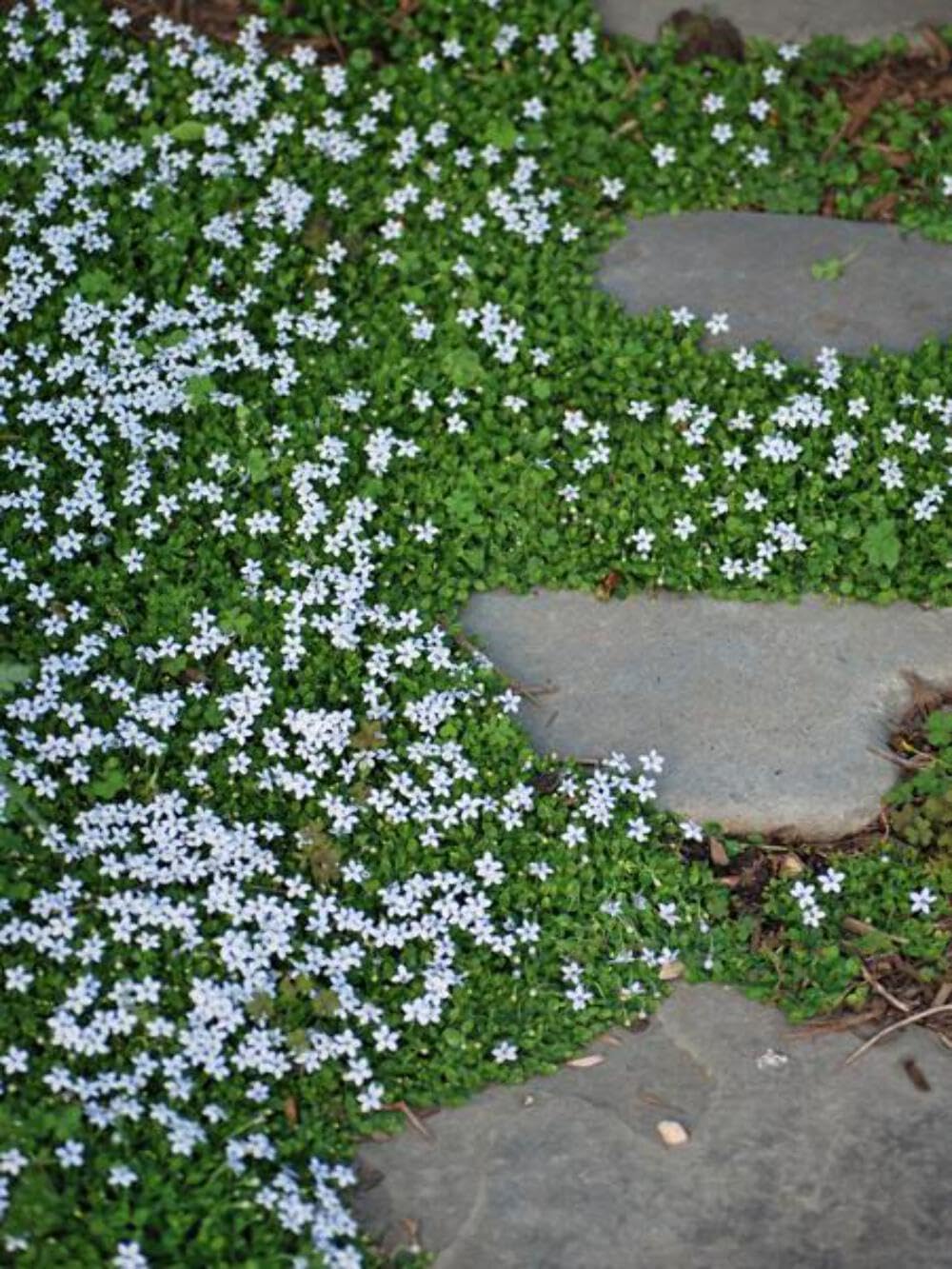
Isotoma fluviatilis (Blue Star Creeper) is a hardy, low-growing groundcover that forms a 2–3 inch dense mat dotted with sky-blue, star-shaped flowers from late spring through summer. It is typically planted in 1-quart pots around stepping stones, in small sunny patches, or as a replacement for small lawn areas where a fine-textured groundcover is desired. Key features are its tolerance of varied moisture levels and heavy foot traffic, plus its ability to creep into tight joints which helps suppress weeds and soften pathways. The immediate benefit is quick visual fill-in and seasonal color without frequent mowing. Limitations are that this is a shallow, mat-forming plant so it is best for small areas rather than large lawns, and it requires establishment time before it can handle regular traffic at full density. Expect to give it a season to spread and occasional trimming at edges to keep it neat.
Best for: Gardeners who need a tough, low-growing groundcover for sunny spots and want quick seasonal blooms and a durable mat for pathways or small lawn replacements.
Less Ideal for: People looking to cover large lawn areas quickly or those who need a tall, plush turf substitute for heavy continuous use.
- Produces sky-blue star-shaped flowers from late spring through summer for seasonal interest
- Forms a dense 2–3 inch mat that creeps between stepping stones to reduce weed growth
- Tolerant of heavy foot traffic once established, suitable for pathways and small lawn replacements
- Adapts to a range of moisture levels and soil types, easing site selection
- Slow to fully establish across larger areas so not ideal for instant full coverage
- Best suited to small patches rather than large lawns due to low mat height
Verdict: Choose this Blue Star Creeper when you want a durable, flowering low mat that fills gaps between stepping stones and handles occasional foot traffic in sunny small areas.
Outsidepride Irish Moss (Sagina subulata) Ground Cover Seeds, 10,000 Pack

| Unit Count | 10000 Count |
|---|---|
| USDA Hardiness Zone | 4 |
| Sunlight Exposure | Partial Sun |
| Expected Blooming Period | Spring to Fall |
| Moisture Needs | Moderate Watering |
Outsidepride Irish Moss seeds (Sagina subulata) are sold as a bulk packet intended to establish a dense, carpet-like ground cover that stays 1 to 2 inches tall. Typical use is surface-sowing in well-drained soil in spring, then keeping the seedbed consistently moist until seedlings are established; the packet claims coverage up to about 100 square feet when sown at recommended rates. Notable features include shade tolerance, small white spring-to-summer flowers, and suitability for light foot traffic between pavers or on pathways. Practically, it is a low-maintenance option that suppresses bare soil, helps retain moisture, and creates a soft, barefoot-friendly surface where a low-profile look is desired. Limitations are that it prefers consistent moisture and cooler conditions in warm regions, can be slow to fill in compared with faster-spreading lawn alternatives, and is intended only for light traffic situations rather than play areas or heavy use.
Best for: Gardeners and landscapers who need a tidy, low-profile ground cover for shaded paths, rock gardens, or between stepping stones and prioritize a neat, long-term carpet effect over rapid coverage.
Less Ideal for: Those needing an immediate, dense turf for heavy foot traffic areas or for locations with prolonged drought and high heat where moisture is difficult to maintain.
- Very low growth habit creates a neat, 1–2 inch living carpet ideal for filling gaps between stones
- Tolerates partial shade so it works in shaded borders and under trees
- Produces delicate white blooms that add seasonal interest without increasing height
- Bulk pack (10,000 seeds) can cover a substantial area when sown at recommended rates
- Requires consistent moisture and well-drained soil for reliable establishment
- Slower to establish and fill in than some aggressive ground covers
Verdict: Choose these Irish Moss seeds when you want a low-growing, shade-tolerant living carpet between pavers or in rock gardens that creates a soft, long-term ground cover.
Outsidepride Dichondra Repens Ground Cover Seeds (32 oz)

| Sunlight Exposure | Partial Sun |
|---|---|
| Expected Planting Period | Spring |
| USDA Hardiness Zone | 7 |
| Material Features | Heirloom |
| Unit Count | 32 Ounce |
Outsidepride Dichondra Repens is a bulk packet of ground cover seeds intended to establish a dense, low-maintenance carpet of green in warm, low-traffic areas. Gardeners sow these heirloom seeds in spring on prepared loam soil where they germinate and spread into a mat of rounded leaves that stays low to the ground and is soft underfoot. Notable features from the listing include suitability for partial sun, moderate moisture needs, and hardiness geared toward warmer zones where heat and drought tolerance matter. Practical benefits are reduced mowing and erosion control on slopes or bare spots, plus quick fill-in when overseeding or planting containers and hanging baskets. Limitations to consider are the climatic range: this variety is aimed at USDA zones listed for warm climates and may brown back in colder winters, and it is best for light to moderate foot traffic rather than high-traffic lawns. Expect a spring planting schedule and some time for seed-to-mat establishment rather than instant coverage.
Best for: Buyers who want an attractive, low-maintenance lawn alternative for warm gardens, containers, or erosion-prone slopes and prioritize quick establishment and reduced upkeep.
Less Ideal for: Homeowners in cold-climate regions seeking a durable, year-round turf substitute or anyone needing a high-traffic lawn replacement.
- Produces a dense, low-growing carpet that suppresses weeds and reduces mowing
- Heirloom seed in a large 32 ounce unit suitable for covering sizable areas or multiple projects
- Good heat and drought tolerance for warm-climate landscaping and erosion control
- Works well in containers, hanging baskets, slopes, and shaded to partially sunny spots
- Targeted to warmer USDA zones so performance and winter color may decline in cold climates
- Not suited for heavy foot traffic or athletic lawns
Verdict: Choose this Dichondra seed if you want a fast-establishing, low-maintenance green ground cover that creates a soft, attractive lawn alternative in warm, low-traffic landscapes.
Choosing the Right Steppable Ground Cover: Key Factors to Consider
Durability Under Foot Traffic
A steppable ground cover must tolerate repeated compressive loads from walking without instantly collapsing into bare soil. Durable species have low, dense growth habits or strong runners that protect crown tissue and spread into gaps created by footsteps.
Consider expected traffic levels. A path used daily needs a tougher, more mat-forming cover than a garden edge that only sees occasional stepping. Durability affects how often you will need to patch or replace sections and influences whether edging or hard pavers are still necessary to protect the planting.
Recovery After Crushing
Some ground covers bend and flatten when stepped on but spring back quickly, while others take weeks to recover or fail to regrow from damaged crowns. Recovery depends on the plant's growth habit, vigor, and season. Creeping stems that root at nodes usually refill gaps faster than single-crown plants.
Faster recovery reduces patching work and keeps paths looking consistent. Pay attention to how a candidate spreads horizontally and whether it produces new shoots near damaged areas. Plants that recover well often tolerate occasional heavier traffic as well.
Maintenance and Grooming
Maintenance demands range from nearly zero to frequent trimming and weeding. Low-maintenance ground covers require little more than occasional trimming to stay within path edges and periodic removal of invasive weeds.
Consider irrigation needs, winter cleanup, and whether the cover sheds debris that needs sweeping. A low-maintenance choice will save time, but may require more thoughtful initial site preparation to reduce long-term weeding.
Light, Soil and Moisture Tolerance
How a ground cover handles sun exposure, soil type, and moisture determines where it will thrive. Some covers need well-drained soil and full sun to form a dense mat, while others tolerate shade and compacted clay.
Match the plant to your site conditions to avoid thin patchiness. Also factor in moisture levels: covers that dislike wet feet will rot in poorly drained paths, while drought-tolerant covers can survive sandy, dry infill between pavers.
Textural and Visual Fit
Ground cover affects the look and feel of a path as much as function. Tighter, smaller-leaved species provide a smoother surface that is more comfortable underfoot, while coarser, taller covers create a rustic appearance but may be less comfortable to step on.
Think about seasonal color, flowering, and whether the texture complements adjacent plantings or hardscape. Aesthetics influence placement and how you will use the covered surface in the garden.
Establishment Time and Durability Investment
Some covers form a dense mat within a single season, while others take several seasons to fully establish. Faster-establishing species reduce the window of vulnerability when foot traffic can kill out new plants, but quick spreaders may require edge control.
Factor in how quickly you need a usable surface and whether you can protect newly planted areas until they root in. Long-term durability often correlates with adequate establishment time and initial site preparation.
Best Uses Around the Yard
Steppable ground cover has distinct roles: soft paths between lawn and garden beds, infill between flagstones or pavers, and transition strips where turf meets planting. For defined walkways, pair a durable mat-forming cover with stepping stones to concentrate traffic and protect surrounding planting. In patio edges, choose covers that tolerate brief, casual stepping and shed debris easily.
Consider how the cover will age in place. Near trees expect drier, more compacted soil and root competition. In shady borders, select options that stay low and dense without relying on high light. Use edging to prevent aggressive spread onto lawns or formal beds.
- Between pavers: low, fine-textured covers that root at nodes
- Narrow paths: toughest, quickest-recovering mats
- Patio edges: softer, attractive covers that tolerate occasional stepping
Preparing the Site for Success
Good establishment starts with basic soil preparation. Remove perennial weeds and loosen the top few inches of compacted soil so roots can penetrate. Work in a small amount of organic matter if the soil is poor but avoid creating a deep, loose layer if the site will be walked on frequently.
Consider a thin gravel or sand bedding between pavers for better drainage and to stabilize root zones. If foot traffic will be heavy during establishment, use temporary stepping stones or boards to distribute weight until plants take hold.
- Clear perennial weeds before planting
- Loosen top 2 to 4 inches of soil for better rooting
- Protect new plantings from immediate heavy traffic
Seasonal Care and Longevity
Seasonal trends determine when you should plant and how you will care for ground cover. Spring or early fall plantings give the best window for root development before heat or deep freeze. In winter, some covers go semi-dormant but still provide a protective surface; others may thin and require overseeding or patching in spring.
Regular light maintenance keeps surfaces functional. Remove fallen leaves that can smother thin mats, and trim runners that creep into unwanted areas. During drought, targeted watering helps recovery after heavy use, but avoid overwatering in poorly drained sites.
- Plant in mild seasons for faster establishment
- Rake leaves off low mats to prevent rot
- Water sparingly during drought to aid recovery
Integrating Steppable Covers with Hardscape
A steppable ground cover paired with hardscape softens edges and reduces heat while creating a natural walking surface. Use narrow bands of cover between larger pavers to create a green seam, or run the cover alongside a gravel path for a softer border. Edge the planting with stone or metal if you want a crisp separation from lawn.
Placement affects wear patterns. Concentrate traffic on the most robust sections and protect delicate edges with low-profile edging or pavers set flush. This approach balances aesthetics with durability and reduces repair frequency.
- Use covers as paver joint infill for a softer, natural look
- Edge robust areas to prevent invasive spread onto lawn
When to Avoid Living Steppable Covers
Living steppable covers are not ideal where heavy, frequent foot traffic is concentrated, such as driveways, main walkways, or areas used by heavy equipment. In those situations, consider hard surfacing instead. Also avoid using tender, high-maintenance species in areas where leaf litter or pet traffic will quickly degrade the mat.
If you need a perfectly even, slip-resistant surface for wheelbarrows, strollers, or mobility devices, choose paving or compacted gravel. Living covers are best for light to moderate use where a forgiving, green surface is desired.
- Not for heavy vehicle traffic or main access routes
- Avoid in areas needing perfectly even surfaces for equipment
How We Chose the Best Steppable Ground Cover
We selected candidates that are commonly used where light to moderate foot traffic is expected and that have documented real-world performance in garden pathways and patio infill. Editorial filters prioritized durability when trod, quick recovery or tolerance to crushing, low routine maintenance, and adaptability to shading and soil types commonly found in residential yards. We also considered seasonal behavior so plants that go dormant aggressively in winter were downgraded unless they maintain a usable surface. Practical installation factors were weighed, including typical spread rate, rooting habit, and whether a thin soil layer or amended substrate is required for success. We excluded annuals and purely decorative bedding plants that cannot survive repeated stepping, plus species that need constant shearing or intensive watering to remain intact. The final list favors ground covers that create a stable, living surface, yet recover from occasional trampling. Scoring emphasized durability underfoot, recovery rate, maintenance requirements, soil and light adaptability, and establishment speed.
FAQ
How long does it take a steppable ground cover to establish?
Establishment usually takes a single growing season for fast spreaders, but slower species can take two seasons. Time to form a durable mat depends on planting density, site conditions, and protection from heavy traffic during the first months.
Can steppable ground covers handle pets and occasional heavy use?
Many tolerate occasional pet traffic and light heavy use, but frequent rough activity can create bare patches. Choose tougher, faster-recovering species and protect newly planted areas until they root well.
Do I need to edge a living pathway when using ground cover?
Edging helps keep aggressive spreaders from invading lawn or beds and preserves a tidy walking line. Low stone, metal, or buried timber edging usually suffices without interrupting the plant mat.
What maintenance does a steppable ground cover require?
Maintenance is generally low and includes occasional trimming of runners, removing debris and weeds, and spot-replanting thin areas. Some species may need seasonal cleanup to remove thatch or dead growth.
Will ground cover survive under pavers or between flagstones?
Yes, many low-growing covers root between pavers and in thin soil seams, creating a stable joint. Ensure the planting medium drains well and choose species that tolerate the light and moisture conditions present between stones.
Can I sow steppable ground cover from seed or should I use plugs?
Both are possible but plugs or established mats give much faster usable surfaces. Seeds can work for some species but usually need more time and careful early protection from foot traffic.
Final Verdict
Prioritize durability and recovery when choosing a steppable ground cover. Match the plant's light, soil, and moisture tolerance to your site, and plan for a proper establishment period to reduce failure from early trampling. Tradeoffs exist between speed of establishment, maintenance needs, and texture underfoot. For most paths and patio edges, selecting a tough, quick-recovering cover and using minimal edging yields the most reliable, low-maintenance living surface.
