

Note: This article contains affiliate links. If you click on these links and make a purchase, I may earn a small commission at no extra cost to you. This helps support my research and content. Read my full affiliate disclosure here.
Choosing the right trellis for climbing roses matters because these plants need rigid, long-lasting support to train canes, open up blooms, and avoid breakage in wind. The wrong structure can hamper growth or damage stems during training and pruning. This guide covers seven top trellis options shortlisted for strength, weather resistance, and installation simplicity, so you can pick a solution that matches your garden style and maintenance habits. Below we explain what we evaluated and what to expect from different trellis styles before you look at the individual product summaries.
Top Picks at a Glance
| Best Overall The best all-around choice for most situations | LZRS 71 x 40 in Rustic Iron Garden Trellis (2-Pack) |  |
| Best Quality Built to a higher standard if you want something more solid | ArdeFentium Metal Garden Trellis 60" x 33.3" |  |
| Best Value The sweet spot between price and what you get | MQHUAYU 2-Pack 6 ft Garden Obelisk Trellis for Climbing Plants (4-Tier) |  |
| Best Budget The cheapest option that still gets the job done reliably | Bounmer Expandable Cedar Wood Garden Trellis, 13 x 68 in |  |
| Highest Rated A top-rated pick with lots of positive feedback | Gardener's Supply Company 7-Foot Powder-Coated Steel Garden Obelisk |  |
| Most Popular A crowd favorite that many people choose with confidence | Adorox 7.3 ft Metal Garden Arch Trellis |  |
| Best Seller A high-volume bestseller chosen again and again | LANDGARDEN Expandable Willow Garden Trellis Panel |  |
LZRS 71 x 40 in Rustic Iron Garden Trellis (2-Pack)

| Material Type | Iron |
|---|---|
| Finish Type | Powder Coated |
| Shape | Arch |
| Number of Items | 2 |
This LZRS trellis set provides two 71 x 40 inch arched iron panels that act as a sturdy support for climbing roses and other heavy vines. Each panel is made from thickened metal wire with a black powder coating intended to resist rust and weather, so it can stay in place through rain and snow. The panels connect with an adjustable hook system so you can angle them to form a straight screen, a corner wrap, or a freestanding accent; stakes insert into soil or large planters for anchoring. The lattice offers plenty of vertical surface area and good airflow and sun exposure, which helps roses develop stronger canes and flowers rather than sprawling on the ground. Assembly is straightforward with the included screws and takes only minutes for one panel. Limitations to note are that the product is a lightweight set for decorative and midweight loads—very heavy mature vines or extremely windy sites may need extra anchoring or multiple sets installed side‑by‑side for reinforcement.
Best for: Gardeners who want a reliable, attractive support for climbing roses that balances weather resistance, easy setup, and flexible placement in beds or planters.
Less Ideal for: People needing a permanent, industrial-strength trellis for very large mature vines or for exposed coastal sites where custom anchoring and heavier structures are required.
- Powder-coated iron construction designed to resist rust for outdoor use.
- Adjustable hook connections let you customize angle and layout including straight screens or corner wraps.
- Generous 71 x 40 inch vertical surface maximizes climbing space while improving sun exposure and airflow.
- Includes ground stakes and hardware for quick assembly and stable installation in soil or large planters.
- Not engineered as a permanent heavy-duty structure for very large mature vines without additional reinforcement.
- Two-panel set may require multiple sets or side-by-side installation in high-wind sites for full stability.
Verdict: A flexible, weatherproof two-panel iron trellis that gives climbing roses reliable vertical support and easy layout options for most garden settings.
ArdeFentium Metal Garden Trellis 60" x 33.3"

| Material Type | Metal |
|---|---|
| Finish Type | Powder Coated |
| Shape | Rectangular |
This ArdeFentium metal garden trellis is designed for serious plant support rather than purely decorative use. The fully welded 8mm frame and 4mm metal mesh give it strong load-bearing capacity so it holds up well for climbing roses, clematis, and vigorous vines. Assembly uses screw-locked joints and included hardware, producing a stiffer connection than clip systems and making the structure reliable in wind and when plants become heavy. The powder-coated finish resists rust and leaves a smooth surface that is kinder to canes and hands. Because the trellis is modular you can use it as a single panel, multiple panels for a living wall, or curve and fold it to suit borders and patios. Expect practical benefits like true structural support for heavy blooms and fruiting vines and a neater display for trained roses. Trade-offs are that the unit is a fixed metal panel so it is less subtle than wooden or wire options and requires a secure mounting or anchoring point for long-term outdoor use.
Best for: Gardeners who prioritize durable, structural support for climbing roses and vigorous vines and who want a long-lasting trellis they can rely on for trained displays or living screens.
Less Ideal for: Buyers seeking a lightweight, decorative trellis or a temporary solution for small pots and balconies should consider other, less heavy-duty options.
- Welded 8mm frame and 4mm metal mesh provide strong, reliable support for heavy climbers
- Powder-coated finish resists rust and offers a smooth surface that protects plant stems
- Screw-locked modular assembly creates a stable connection that holds up better than clip systems
- Can be used as single or multiple panels to build a living wall or privacy screen
- Rigid metal panel is more visually industrial than natural wood options
- Requires secure mounting or anchoring for long-term stability in exposed sites
Verdict: Choose this trellis if you need a sturdy, rust-resistant metal support that will reliably carry trained climbing roses and heavy vines.
MQHUAYU 2-Pack 6 ft Garden Obelisk Trellis for Climbing Plants (4-Tier)

| Number of Packs | 2 |
|---|---|
| Material Type | Metal, Plastic |
| Finish Type | Powder Coated |
| Size | 6 FT |
This 2-pack of MQHUAYU obelisk trellises is designed to give climbing roses and other vining ornamentals vertical structure without taking much ground space. Each tower assembles without tools from PVC-coated iron poles and 4-way connectors, and the removable tiers let you raise the height as plants grow up to about 6 feet. The powder-coated finish and plastic-coated metal resist rust and are gentle on stems, so the frames can stay in place through a season and look tidy on a patio or in a small bed. They are lightweight enough for one person to set up and disassemble for winter storage, and the four-legged base can be pushed into soil for added anchoring. The trade-offs are that the slender poles are not as rigid as heavy-gauge steel, so very large or heavily laden climbing roses may need extra tying or a sturdier support nearby, and the product relies on correct assembly and deep insertion of the lower poles for stability in wind.
Best for: Gardeners who want a space-efficient, easy-to-install support for climbing roses on small patios, balconies, or compact beds and prefer adaptable supports they can adjust as plants grow.
Less Ideal for: Growers with large, heavy-flowering rose varieties or exposed, windy sites where a beefier, permanently anchored support is required.
- Adjustable four-tier design lets you increase height as roses grow up to 6 feet
- PVC-coated iron with powder-coated finish offers rust resistance and plant-friendly contact
- Tool-free assembly and lightweight panels make setup and seasonal storage simple
- Two-trellis pack covers multiple plants or creates matched supports for a pair of roses
- Slim poles are less rigid than heavy-gauge supports and may need extra tying for very heavy blooms or wind
- Stability depends on inserting lower poles deep into soil which may be difficult in rocky or compacted beds
Verdict: Buy this if you need an affordable, rust-resistant, adjustable trellis pair that saves ground space and is quick to set up for training climbing roses.
Bounmer Expandable Cedar Wood Garden Trellis, 13 x 68 in

| Material Type | Cedar Wood |
|---|---|
| Item Highlight | 0.35" Thickened Wooden Lattice |
| Size | 13" x 68" 1 Pack |
This expandable cedar trellis is a simple, budget-friendly option for supporting light-climbing plants such as clematis, ivy, and climbing roses with finer canes. The lattice comes slightly thicker than many economy panels at 0.35" which helps resist warping and adds modest durability for outdoor use. Its expandable design lets you adjust width to fit narrow walls, fences, or balcony corners and makes installation straightforward for renters or DIYers. Cedar provides natural rot resistance and an attractive grain that works as a decorative backdrop or wall-mounted accent. The trellis is best for guiding new shoots and tying thinner rose canes; it is not intended for very heavy, woody stems or large mature climbers without additional bracing. Painting or sealing both sides is recommended in harsh sun to minimize fading. For the price you get a visually pleasing, easy-to-fit support that performs well for lighter rose varieties and regular seasonal training, but expect to add reinforcement if you plan to train heavier, established climbers.
Best for: Buyers seeking an inexpensive, easy-to-install decorative support for training lighter climbing roses and other soft-stemmed vines in small gardens or patios.
Less Ideal for: Gardeners planning to support large, heavy or woody rose varieties or permanent heavy loads should choose a sturdier, reinforced trellis or metal support instead.
- Thicker 0.35" lattice for improved stiffness compared with thin economy panels
- Natural cedar wood offers rot resistance and an attractive finish
- Expandable design adapts to different wall or fence widths for flexible placement
- Lightweight construction means it needs extra bracing for heavy or mature climbers
Verdict: A low-cost, attractive cedar trellis that works well for training lighter climbing roses and small-scale vertical displays.
Gardener's Supply Company 7-Foot Powder-Coated Steel Garden Obelisk

| Material Type | powder-coated steel |
|---|---|
| Finish Type | Powder Coated |
| Size | 7 Foot |
| Item Weight | 16 ounces |
This 7-foot obelisk from Gardener's Supply Company is a simple, sturdy freestanding trellis built for climbing vines and roses. It slips together without tools and stacks for easy seasonal storage, so you can place it over young plants or next to established roses to train canes upward. The powder-coated steel frame resists weathering and provides a rigid support that keeps canes and heavy blooms off the ground, improving airflow and display. Its classic slender profile works as a focal point in small beds or next to a patio, and it doubles as a decorative frame for string lights or seasonal ornaments. Because it is freestanding rather than anchored, very heavy or fast-growing vines may need additional tying or ground anchors for wind-prone sites. The single-piece, open design gives lots of space for weaving stems but does not include built-in planting rings or adjustable brackets, so some plants will require manual training as they grow.
Best for: Gardeners who prioritize a dependable, low-maintenance support for climbing roses and ornamental vines and who want a durable, easy-to-install structure that lasts season after season.
Less Ideal for: People looking for a heavy-duty, permanently anchored trellis for very large rambling roses or aggressive climbers that need lots of horizontal tying and bracing.
- Powder-coated steel frame resists rust and stands up to outdoor conditions.
- Seven-foot height provides vertical space for climbing roses and tall vines.
- Tool-free, stackable assembly for quick setup and compact off-season storage.
- Slim, classic design serves as both plant support and garden focal point.
- Freestanding design may need additional anchoring in windy locations or with very heavy plants.
- No built-in adjustable supports or planting rings for directing stems as they grow.
Verdict: A durable, easy-to-assemble steel obelisk that reliably gives climbing roses vertical structure and season-long support.
Adorox 7.3 ft Metal Garden Arch Trellis
| Material Type | Metal |
|---|---|
| Finish Type | Powder Coated |
| Shape | Single Arch |
| Size | Standard |
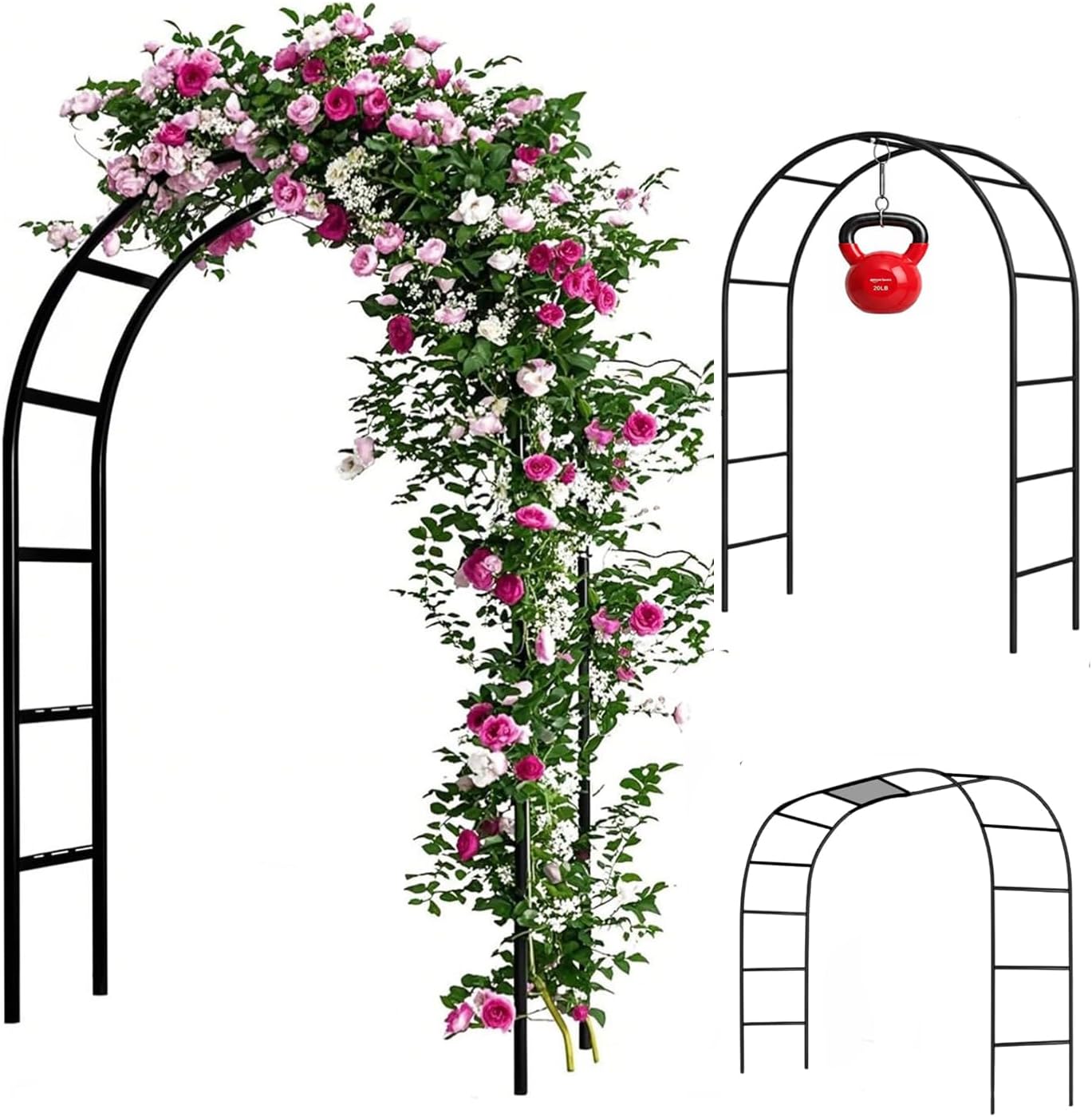
This Adorox garden arch is a freestanding metal trellis built to provide vertical support and a focal point for climbing roses, clematis, and other vining ornamentals. It assembles from sectional metal pieces into a classic arched silhouette that frames paths or garden beds and lets plants weave through the open framework. The powder-coated finish helps resist weathering and gives a clean black look that suits many garden styles. At roughly 7 feet tall it adds immediate height for training roses without needing elaborate anchoring, and the lightweight panels make positioning and seasonal removal straightforward. Expect basic hand tools and two people for easiest assembly and tightening of connections. The arch is decorative rather than heavy structural support, so very large mature roses or heavily loaded blooms may require supplemental stakes or ties. For planted installations, secure the base properly into soil or with ground anchors before loading with full-grown climbers.
Best for: Gardeners who want an affordable, attractive arch to train climbing roses and create a garden entrance and who prefer something easy to move and assemble.
Less Ideal for: Growers who need a heavy-duty load-bearing trellis for very large mature roses or those who want a permanent, grounded arbor solution.
- Powder-coated metal resists weather and gives a classic black finish
- Open arched framework that lets vines and roses weave naturally
- Sectional design that ships and assembles easily for placement or seasonal removal
- Adds usable vertical height for training climbing roses and creating an entry focal point
- Lightweight construction is more decorative than heavy-load structural support
- Requires proper anchoring in soil to remain stable when loaded with plants
Verdict: A simple, weather-resistant metal arch that gives climbing roses instant height and a decorative entrance without complex installation.
LANDGARDEN Expandable Willow Garden Trellis Panel

| Material Type | Willow Wood |
|---|---|
| Finish Type | Fumigation |
| Size | 1PC |
This willow trellis is a thin, expandable lattice panel made from real willow sticks tied at pivot points so it contracts and expands to fit different spaces. You use it as a climbing-plant support, short trellis, or decorative privacy screen by tying it to a fence, wall, or freestanding frame; the riveted connection points let the panel flex without coming apart. Practical benefits include a natural look that blends with roses and other flowering climbers, easy customization of width, and very low maintenance since it is untreated wood with a simple fumigation finish. Important limitations are its light weight and thin willow slats, so it is best for training lighter roses or providing early-season support rather than holding very heavy, mature canes; it will need regular checking for rot or splintering in wet climates and does not offer the rigidity of metal or thicker wooden trellises. Installation is straightforward but may require additional ties or framing for long-term, heavy-duty use.
Best for: Gardeners who prefer a natural, low-profile support for climbing or rambling roses and want an easy-to-fit trellis for patios, balconies, or mixed-border beds.
Less Ideal for: Do not choose this if you need a permanent, heavy-duty support for large, mature roses or if you prefer a maintenance-free metal trellis for long-term durability.
- Made from real willow for a natural appearance that complements flowering climbers
- Expandable design adapts to different widths for flexible placement
- Riveted connection points allow smooth folding and simple installation
- Low-maintenance, untreated wood look that does not require painting
- Lightweight willow slats are not as sturdy as metal or heavy timber for supporting very heavy rose canes
- Willow is susceptible to weathering and may need replacement sooner in wet or humid conditions
Verdict: Buy this if you want an affordable, natural-looking, expandable trellis for training lighter climbing roses and creating quick privacy or decorative screening.
Choosing the Right Trellis for Climbing Roses: Key Factors to Consider
Material and Corrosion Resistance
The material determines how well a trellis survives rain, sun, and winter freeze-thaw cycles. Metal options vary from painted steel to powder-coated or stainless finishes; untreated metal will rust and weaken over a few seasons if exposed to moisture. Wood trellises need rot-resistant species or preservative treatment to avoid warping and decay where stems contact the surface.
UV exposure and direct contact with soil are common failure points, so details like a protective finish, galvanization, or naturally rot-resistant timber matter. Consider local climate when choosing material because high-humidity or coastal gardens accelerate corrosion and wood rot.
Structural Strength and Load Capacity
Climbing roses can become heavy with leaves, long canes, and abundant blooms, especially after rain. A trellis must resist sagging and bending under that load. Look for construction with solid joints, adequate post thickness, and cross-bracing or rigid frames rather than flimsy lattice that flexes easily.
Anchoring details are part of structural strength. Posts set deeply in the ground, concrete footings, or heavy base plates increase the load capacity and reduce the chance of the trellis leaning or uprooting in wind. Strength is also important if you plan to train multiple canes or larger, repeat-flowering varieties.
Height, Span, and Modularity
Roses vary in vigor and cane length, so trellis dimensions should match the plant's eventual size. Taller trellises let you create higher arching canes and long horizontal ties, while wider spans let multiple plants share a support. Modular or sectional trellises adapt to future growth and are easier to install in confined spaces.
If you expect the rose to be a long-term focal point, choose a trellis that can be extended or combined with adjoining panels. Smaller, single-panel designs work for young plants or tight spots but may need replacement as the rose matures.
Ease of Installation and Anchoring
Many gardeners install trellises themselves, so simpler hardware and clear anchoring options reduce headaches. Consider how the trellis mounts: ground-set posts that slide into sleeves, panels with predrilled holes for lag bolts, or freestanding frames with heavy bases. Installation complexity affects whether you need extra help or tools.
Soil type changes anchoring strategy. Rocky ground might require surface-mounted anchors or concrete footings, while soft soils benefit from deeper posts or ground anchors. Check whether the trellis arrives as one piece or in panels that bolt together; modular pieces are easier to move but add assembly steps.
Training Surface and Attachments
The surface determines how easily you can tie and direct canes. Wide slats, open grids, or strong horizontal wires each support different training methods. Rough or textured surfaces hold soft ties better without sliding, while smooth metal may need additional clips or ties to keep stems in place.
Look for trellises that accept standard ties or come with attachment points for horizontal support wires. Built-in ledges or spacing that allows canes to be woven encourage effective two-dimensional training and better light penetration through the canopy.
Maintenance and Longevity
Maintenance expectations affect long-term satisfaction. Some finishes need annual touch-ups of paint or sealant to prevent rust or rot, while galvanized or powder-coated metal is largely low-maintenance. Wood may require periodic sealing and inspection for splinters that can abrade stems.
Also consider how easy it is to replace a single damaged section rather than the whole trellis. Designs with replaceable panels or standard-size components simplify repairs and extend the service life of the support.
Trellis Styles and Best Uses in the Rose Garden
Different trellis styles suit distinct training goals. Flat panel trellises excel for espalier or fan-trained roses against walls, while arch and obelisk shapes encourage canes to sweep and create vertical interest. Freestanding frames work well for specimens in lawn beds or as pathway features.
Choose the style that matches how you want the rose to grow and how much pruning you will do. For heavy, repeat-flowering climbers, a rigid frame or arch reduces stress on canes. For a tidy, wall-hugging look, a close-spaced lattice supports many small canes and keeps growth two-dimensional.
- Flat panel: Good for wall-trained or espaliered roses
- Arch: Creates dramatic entryways and lets canes form overhead blooms
- Obelisk/pyramid: Space-saving, good for single-stem training
- Wire systems: Adjustable and low-profile for flexible training
Anchoring Options That Work in Different Soils
Soil conditions determine how you secure a trellis. Sandy or loose soils need deeper posts or concrete footings to resist uplift, while compact clay can hold shorter posts if set correctly. Rocky sites may require surface-mounted anchors bolted to a hard base.
- Concrete footings: Best for permanent, high-wind locations
- In-ground posts: Simpler for most garden soils, dig deep for stability
- Surface anchors: Useful for patios, raised beds, or shallow soils
- Ground screws or helical anchors: Work well where digging is difficult
Training Techniques for Long-Term Health
How you train affects flowering and cane health. Start training young canes to the support with gentle ties and build a framework of main canes in the first few years. Avoid tying canes too tightly; allow slight movement so stems thicken naturally. Horizontal placement of canes often encourages more flowering by promoting lateral bud development.
Regular pruning to remove dead wood and to open the center lightens the load on the trellis and improves air circulation. Plan annual pruning so the trellis continues to match the plant's shape rather than becoming overloaded.
- Use soft ties and adjust them seasonally as stems grow
- Train primary canes first, then add laterals along the support
- Position canes horizontally when possible to increase bloom sites
Aesthetics and Garden Integration
Trellises are part structure, part garden ornament. Decide whether the trellis should blend in or act as a focal point. Natural wood complements cottage and mixed borders, while painted or powder-coated metal suits formal beds and modern designs. Consider how the trellis will look in winter without leaves; solid shapes read differently across seasons.
Also think about scale relative to surrounding hardscape, fences, and other plants. A too-small trellis can make a vigorous climber look cramped, while an oversized support can overwhelm smaller companion plants.
- Match material and color to existing garden features
- Consider seasonal appearance when roses are bare
- Scale trellis height and width to the mature plant size
Seasonal Care and Winter Protection
Prepare trellises for winter by checking fasteners, tightening anchors, and removing any dead or diseased canes. In cold climates, a sturdy trellis reduces cane breakage from snow and ice weight. For lightweight decorative supports, consider temporary bracing during storms.
If you use wood in cold, wet climates, plan for annual inspections and touch-up sealant to prevent moisture intrusion where canes contact the wood. For metal trellises, inspect for chipped coatings and address exposed metal promptly to prevent corrosion.
- Inspect and tighten anchors before winter storms
- Remove heavy snow from canes carefully to avoid breaking stems
- Touch up protective coatings as part of annual maintenance
How We Chose the Best Trellis for Climbing Roses
We focused on attributes that affect how climbing roses perform and how easy the trellis is to live with over seasons. Evaluation criteria included material durability against rot and rust, structural strength to hold mature canes and heavy blooms, ease of installation and anchoring in typical garden soils, design versatility for different training techniques, and maintenance needs such as painting or tightening fasteners. We also considered height and modularity so a trellis can accommodate both young climbers and established plants. We excluded lightweight decorative screens intended only for annual climbers, temporary plastic netting, and items that cannot be anchored securely in soil. Products that required complex, specialist tools to install were deprioritized because most gardeners need straightforward options. The result is a list of trellis choices that balance real-world durability, practical installation, and training flexibility for climbing roses.
FAQ
How tall should a trellis be for climbing roses?
Height depends on the rose variety and your training plan. Many climbers do well on 6 to 8 foot supports, but vigorous varieties may need 10 feet or more. Choose a height that allows you to create the cane framework you want without extreme bending.
Can I attach a trellis directly to a wall?
Yes, wall-mounted trellises are common and effective for fan training or espaliers. Ensure you use appropriate anchors for the wall material and leave a small gap for air circulation to reduce moisture contact with the wall and root crown.
Is metal or wood better for rose trellises?
Both materials work but have tradeoffs. Metal is often lower maintenance and thinner, taking up less visual space, while wood can be more attractive but needs sealing and may rot where in contact with soil. Local climate and aesthetic preference usually decide which is better.
How should I tie climbing rose canes to the trellis?
Use soft, flexible ties and secure canes loosely to allow growth. Tie at intervals along the cane to distribute weight, and avoid wire or materials that cut into the stem. Check ties seasonally and re-tie as the stem thickens.
Can a trellis support multiple rose plants?
Yes, a wide or modular trellis can carry several plants, but you must space them to avoid overcrowding. Ensure the structure has enough strength and anchoring to handle the combined weight of multiple mature climbers.
What maintenance do trellises need each year?
Annual checks should include tightening fasteners, inspecting coatings or sealant, and replacing any damaged panels. Remove deadwood from the rose and clear debris that traps moisture to prolong the trellis life.
Final Verdict
When choosing a trellis for climbing roses, prioritize material durability and structural strength first, then match height and style to how you plan to train the plant. Consider installation and anchoring relative to your soil and site exposure so the support stays upright through seasons. Balance aesthetics with practicality: choose a trellis you will maintain and that provides the right surface for tying and training. With the right support and regular training, your climbing roses will set more blooms and remain healthier for years.
