

Note: This article contains affiliate links. If you click on these links and make a purchase, I may earn a small commission at no extra cost to you. This helps support my research and content. Read my full affiliate disclosure here.
When you spend time camping, building shelters, or processing wood in backcountry conditions, a purpose-built axe makes many tasks quicker and safer. The right axe for bushcraft handles chopping, batoning, feathering, and light splitting without breaking your rhythm or your wrist. This guide covers seven carefully shortlisted axes that suit bushcraft use, focusing on real-world factors like edge geometry, balance, and handle resilience. Read on to see how we evaluated cutting performance, durability, and ease of maintenance so you can pick the tool that fits your outdoor style.
Top Picks at a Glance
| Best Overall The best all-around choice for most situations | Council Tool Wood-Craft Camp Carver Axe, 1.7 lb Head, 16" Hickory Handle |  |
| Best Quality Built to a higher standard if you want something more solid | Gränsfors Bruks Small Forest Axe, 19-inch |  |
| Best Value The sweet spot between price and what you get | Estwing Sportsman’s Axe 14" Leather Grip Hatchet (E24A) |  |
| Best Budget The cheapest option that still gets the job done reliably | KSEIBI 274150 Camping Hatchet Axe | 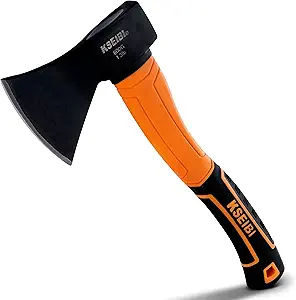 |
| Highest Rated A top-rated pick with lots of positive feedback | Fiskars X14 Universal Axe 14" Hatchet |  |
| Most Popular A crowd favorite that many people choose with confidence | Fiskars X7 Hatchet, 14-inch |  |
| Best Seller A high-volume bestseller chosen again and again | DESHIL 10-Inch Mini Camping Hatchet with Sheath |  |
Council Tool Wood-Craft Camp Carver Axe, 1.7 lb Head, 16" Hickory Handle

| Blade Material | Alloy Steel (5160) |
|---|---|
| Handle Material | Hickory Wood |
| Head Type | Hatchet |
| Blade Edge | Flat |
The Council Tool Wood-Craft Camp Carver is a compact, versatile bushcraft axe built for both detailed carving and basic camp tasks. Its bearded, flat-ground blade with a 25–28° bevel gives good bite and control for spoon carving, handle work, and fine shaping while the 1.7 lb head still has enough mass for light chopping and batonning. Forged from 5160 alloy steel and fitted to an A-grade American hickory handle, the head is durable and the hung-proud fit with wedges feels secure. The hardened poll doubles as a hammer and the 90-degree spine is useful for scraping tinder or striking ferro rods, which is handy in survival or fire-starting situations. A premium welted leather sheath is included for safe carry. Expect a tool built for precision and longevity rather than heavy felling or repeated large-log splitting; its weight and head profile favor control over raw power. For a balanced bushcraft kit this axe delivers precise carving performance and dependable everyday utility.
Best for: Bushcrafters and campers who want a single compact axe for detailed carving plus everyday camp chores and firecraft, preferring control and workmanship over brute force.
Less Ideal for: Users who need an axe primarily for large-scale chopping, frequent heavy splitting, or commercial forestry work should choose a heavier felling or splitting axe instead.
- Bearded flat-ground blade with 25–28° bevels for precise carving and control
- Forged 5160 alloy steel head with hardened poll for durability and hammering
- A-grade American hickory handle hung proud and wedged for a secure fit
- Includes a premium welted leather sheath for safe carry and storage
- Head weight and profile are light for heavy felling or large-log splitting
Verdict: Choose this axe if you want a made-in‑USA bushcraft tool that balances precise carving ability with everyday camp utility.
Gränsfors Bruks Small Forest Axe, 19-inch

| Handle Material | Hickory Wood |
|---|---|
| Blade Material | Stainless Steel |
| Blade Edge | Convex |
| Head Type | Forest |
The Gränsfors Bruks Small Forest Axe is a high-quality, performance-focused tool aimed at demanding outdoor work. With a 19-inch hickory handle and a convex stainless steel head shaped for forest tasks, it excels at felling small trees, limbing branches, and splitting kindling. Its compact length gives good control for precise chopping while still delivering solid bite and splitting force from the convex edge. The factory fit and finish, including a vegetable-tanned leather sheath, reflect traditional forge workmanship and make it durable in camp use. Because it is relatively light and short, it is easy to carry on bushcraft outings and comfortable for extended use, but it will not replace a full-sized felling axe for large-diameter trees. Expect a premium feel and long service life if regularly maintained and kept sharp. For users who value a finely made, versatile forest axe for bushcraft and trail work, this model is hard to beat; those needing heavy-duty chopping for big timber should choose a larger head and longer handle instead.
Best for: A skilled outdoorsperson who prioritizes a well-made, controllable axe for bushcraft tasks like felling small trees, limbing, and making kindling on the trail.
Less Ideal for: Not the best choice for users who frequently need to fell large timber or do heavy commercial cutting where a larger, longer-handled felling axe is required.
- Compact 19-inch design balances control and power for close-quarters chopping
- Convex stainless steel blade provides reliable bite and effective splitting
- Hickory handle offers traditional shock absorption and a secure grip
- Comes with vegetable-tanned leather sheath for safe carry and storage
- Shorter reach and lighter head limit efficiency on large-diameter trees
Verdict: Buy this axe if you want a premium, compact forest axe that delivers precise, durable performance for bushcraft and trail work.
Estwing Sportsman’s Axe 14" Leather Grip Hatchet (E24A)

| Blade Material | Alloy Steel |
|---|---|
| Handle Material | Leather |
| Head Type | Hatchet |
| Blade Length | 3.25 inches |
The Estwing Sportsman’s Axe is a compact, one-piece forged hatchet built for rugged outdoor use. Its solid alloy-steel head and handle are forged as a single piece, which removes weak joints and gives the tool excellent balance and long-term durability. Typical uses include chopping small limbs, splitting kindling, driving tent stakes and light camp clearing; the 3.25-inch cutting edge handles those chores efficiently while the leather-sanded grip helps control swings and limits hand fatigue. The included ballistic nylon sheath with belt loop keeps the edge covered for transport and gives quick access at camp. Because the axe is relatively short and light, it is easy to carry in a pack or on a belt but will not replace a full-size felling axe for large logs or prolonged heavy splitting. Also the leather handle requires some care to avoid weather degradation compared with synthetic grips. For bushcraft tasks that need a durable, easy-to-carry hatchet that stays sharp and balanced, this model is a practical choice.
Best for: A practical bushcrafter or camper who values a durable, easy-to-carry hatchet for campsite tasks, firewood prep, and trail use and prefers tools built to last rather than lightweight novelty gear.
Less Ideal for: Not the best choice for users who need a dedicated felling axe or who will be splitting large quantities of thick firewood as their primary task.
- One-piece forged alloy-steel construction for strength and consistent balance
- Compact 14-inch length makes it easy to carry and maneuver in tight workspaces
- Hand-sanded leather grip improves comfort and control during extended use
- Ballistic nylon sheath with belt loop provides safe, convenient carry
- Short handle and small blade limit effectiveness on large-diameter logs or heavy-duty splitting
- Leather grip needs occasional maintenance to preserve durability in wet conditions
Verdict: Buy this if you want a stout, one-piece forged hatchet that balances durability and portability for bushcraft and campsite chores.
KSEIBI 274150 Camping Hatchet Axe

| Blade Material | Forged Steel |
|---|---|
| Handle Material | Fiberglass |
| Head Weight | 600 g |
| Blade Length | 4.13 inches |
| Recommended Uses For Product | Camping, Chopping, Gardening, Outdoor, Splitting, Survival Tools, Throwing, Yard work |
The KSEIBI 274150 is a lightweight camping hatchet built around a 600 g forged steel head and an anti-slip fiberglass handle. It is intended for splitting kindling, chopping small- to medium-sized logs, and routine camp chores where portability matters. The head has an anticorrosive coating and arrives moderately sharp, so it will handle quick kindling work right away and can be sharpened for cleaner cuts. The fiberglass handle with rubber inserts and an ergonomic curve reduces shock and improves grip during repeated swings. Balance and a secure head-to-haft joint make it suitable for controlled strikes and even for throwing if desired. Trade-offs for bushcraft use are its shorter reach and lighter weight compared with full-size axes, which limits leverage on large billets and heavy felling. Also some users prefer additional sharpening out of the box for the best performance. For campers and weekend bushcrafters who need a portable, budget-friendly tool this hatchet covers core tasks reliably.
Best for: Buyers wanting an affordable, portable hatchet for camp chores, firewood prep, and light bushcraft where ease of carry and usability matter more than heavy-duty splitting power.
Less Ideal for: Not the best choice for users who need a full-size felling or heavy-splitting axe for large trees or prolonged heavy-duty work.
- Forged steel 600 g head offers solid chopping power for kindling and small logs
- Fiberglass handle with anti-slip inserts reduces shock and improves grip during extended use
- Well-balanced design and secure head-to-haft joint for controlled, reliable swings
- Arrives moderately sharp and can be tuned further for cleaner cuts
- Shorter length and lighter weight limit leverage on large logs compared with full-size axes
- Some users report the blade benefits from additional sharpening out of the box
Verdict: A compact, budget-friendly hatchet that delivers dependable chopping and camp utility for lightweight bushcraft and firewood prep.
Fiskars X14 Universal Axe 14" Hatchet

| Head Type | Hatchet |
|---|---|
| Handle Material | Alloy Steel |
| Blade Material | Forged Steel |
| Included Components | Sheath |
The Fiskars X14 is a compact 14" hatchet built for controlled chopping, limbing, and producing kindling in a bushcraft or camping setting. Its double-hardened forged-steel blade is ground to a sharp angle and finished with a low-friction coating so cuts stay clean and the blade resists sticking and surface corrosion. The FiberComp handle is lightweight, absorbs shock, and is insert-molded to reduce head loosening, giving the tool a noticeably solid, dependable feel during repeated swings. The ergonomically curved handle with a textured SoftGrip helps maintain a comfortable wrist position and a secure hold for single-handed use. It ships with a protective sheath for safe transport and storage. Limitations are its short length and hatchet head design, which make it best for chopping, limbing, and kindling rather than splitting large rounds or heavy felling tasks that require more reach and mass.
Best for: A buyer who prioritizes a dependable, low-maintenance tool for bushcraft tasks like limbing, carving, and kindling prep will appreciate this hatchet's durable blade and solid construction.
Less Ideal for: Not ideal for campers or woodcutters who need a heavy maul or full-size felling axe for splitting large rounds or sustained two-handed chopping.
- Sharp, double-hardened forged-steel blade with low-friction coating for cleaner cuts and rust resistance
- Balanced 14" design for controlled single-handed chopping and limbing
- FiberComp handle that absorbs shock and reduces overstrike impact
- Insert-molded head construction minimizes head loosening and separation
- Includes protective sheath for safe transport and storage
- Short hatchet length limits leverage for splitting large logs or heavy felling
Verdict: Buy this if you want a reliably built, single-handed hatchet that delivers sharp, low-sticking cuts and a rugged, low-maintenance design for bushcraft tasks.
Fiskars X7 Hatchet, 14-inch

| Blade Material | Forged Steel |
|---|---|
| Handle Material | Wood |
| Head Type | Hatchet |
| Included Components | Fiskars X7 Hatchet (14") |
| Manufacturer Warranty Description | Lifetime Manufacturer Limited |
The Fiskars X7 14-inch hatchet is a lightweight, purpose-built tool for splitting kindling, trimming small branches, and general campsite wood prep. It pairs a forged steel, low-friction blade with a well‑balanced head and a shock‑absorbing FiberComp handle to deliver faster, cleaner swings with less user fatigue. The insert-molded head and proprietary grinding create a sharp edge that holds up through repeated use and resists sticking in wood. Typical use is single‑handed chopping at a campsite or for quick backyard tasks where portability and control matter more than large‑log splitting. Notable features include the low‑friction blade coating, ergonomic non‑slip grip, and included sheath for safe transport. Limitations are its small head weight and 14-inch length, which make it unsuitable for felling trees or heavy splitting of large logs; users needing larger splitting power should choose a full‑sized axe. For buyers who value a durable, easy‑to‑carry hatchet that performs reliably for campfire and bushcraft chores, the X7 is a practical choice.
Best for: Buyers seeking a reliable, easy‑to‑carry hatchet for campfire prep, bushcraft tasks, and light wood processing who prioritize proven performance and durability.
Less Ideal for: Users who need an axe for heavy splitting, felling trees, or extended two-handed chopping sessions should choose a larger, heavier splitting axe instead.
- Well‑balanced head and weight distribution for efficient, powerful swings
- Forged steel blade with proprietary grinding and low‑friction coating stays sharp and resists sticking
- Shock‑absorbing FiberComp handle reduces hand fatigue during extended use
- Compact 14-inch size and included sheath make it highly portable for camping and bushcraft
- Head weight and length limit effectiveness on large logs or heavy splitting jobs
Verdict: A durable, lightweight hatchet that delivers sharp, efficient chopping and dependable portability for bushcraft and campsite wood prep.
DESHIL 10-Inch Mini Camping Hatchet with Sheath

| Handle Material | Fiberglass |
|---|---|
| Blade Material | Carbon Steel |
| Included Components | Sheath |
| Head Type | Hatchet |
The DESHIL 10-inch mini hatchet is a portable camping hatchet built for everyday outdoor tasks like splitting kindling, light batoning, clearing small branches, and driving tent stakes with its flat poll. It ships sharpened and uses a heat-treated forged carbon steel head that holds an edge for repeated use, while the wood handle offers a natural, ergonomic grip that helps absorb shock during swings. At 10 inches overall it fits easily in a pack and the included protective sheath makes transport safer and more convenient. Practical features include a striking face for hammering and a design focused on utility rather than novelty. Limitations are its small size and intended purpose: it will struggle with large logs or heavy-duty splitting compared with full-size axes, and the wood handle may require extra care in wet environments compared with synthetic alternatives. For cautious buyers who want a dependable, easy-to-carry tool for routine bushcraft and campsite chores, this hatchet covers the essentials without unnecessary complexity.
Best for: Buyers who prioritize a reliable, easy-to-carry tool for campsite tasks and light bushcraft work and who prefer tools that feel conventional and proven rather than experimental.
Less Ideal for: Users who need a full-size splitting axe for processing large firewood or those who want a low-maintenance synthetic-handle axe for wet or highly abrasive conditions.
- Forged carbon steel blade with heat treatment for a durable, edge-retaining cutting surface
- Compact 10-inch length that packs easily into a daypack or camping kit
- Included sheath provides safe storage and transport
- Flat poll on the back of the head doubles as a hammer for tent stakes and small pounding tasks
- Small hatchet size limits effectiveness on large logs or heavy-duty splitting
- Wood handle needs more maintenance and can be more vulnerable to moisture than synthetic handles
Verdict: A dependable, packable hatchet that gives risk-averse bushcrafters a straightforward, sharpened tool for campsite chores and light woodwork.
Choosing the Right Axe for Bushcraft: Key Factors to Consider
Edge Geometry and Sharpening
Edge geometry determines how an axe bites into wood and how easy it is to resharpen in the field. A slightly convex or Scandinavian grind gives a durable cutting edge that resists chipping when batoning into small logs, while a very thin edge can slice well but will dull faster under heavy use. Consider how you will sharpen the axe away from home: simple bevels that respond predictably to a sharpening stone or file are best for bushcraft situations.
Also think about secondary bevels and factory finishing. A modest secondary bevel speeds up field sharpening and reduces the chance of rolling the edge. An axe that accepts a basic file or stone without special jigs increases your ability to keep it functional on long trips.
Steel Type and Heat Treatment
Steel composition and heat treatment control hardness, toughness, and how the blade reacts to nicks. For bushcraft, you need steel that balances edge retention with resistance to chipping; too hard and the edge is brittle, too soft and it will deform quickly. Look for clear specifications on hardness and treatment processes so you can predict how the blade will perform when striking bone, frozen wood, or embedded grit.
Heat treatment also affects how easy the blade is to reprofile in the field. A well-treated steel that takes and holds a fresh bevel while still allowing regrinding with common stones is ideal for users who expect extended time between resharpening sessions.
Handle Material and Construction
The handle transmits energy, cushions shock, and influences longevity in wet outdoor conditions. Traditional hardwoods like hickory offer proven shock absorption and are easy to replace, but they require care to prevent swelling and cracking. Modern composite or fiberglass-reinforced handles resist moisture and impact, and some designs isolate vibration better, but they can be harder to repair in the field.
Joint construction matters as well. A tightly fitted head with secure wedges reduces the chance of loosening after repeated strikes. Consider whether you want a replaceable handle option and how easily you could source a repair in remote settings.
Weight, Balance, and Swing Dynamics
Weight affects chopping power and user fatigue. Heavier heads deliver more momentum but tire you faster, while lighter heads are easier to control for carving and fine work. Balance between head and handle determines how the axe feels in the swing; a forward-weighted head aids chopping, whereas a neutral balance helps in carving and detailed tasks.
Think about the primary tasks you will do. If shelter and batoning are your main uses, a mid-weight, forward-balanced tool is often best. For carving and tinder work, a lighter, more controllable feel is preferable.
Size and Portability
Blade length, overall packed size, and total weight all affect how you carry the axe on trail and how comfortable it is to use at camp. Compact hatchets and short-handled axes are easier to pack and maneuver in tight quarters, but they reduce leverage for splitting larger pieces of wood. Conversely, longer-handled axes increase reach and leverage but add bulk.
Consider how you will transport the tool and whether it needs to double as a backpack tool. Some bushcrafters prefer a compact option supplemented by a folding saw to handle larger cutting tasks while keeping the load light.
Sheath, Safety, and Maintainability
A good sheath protects the edge and prevents accidents when the axe is carried or stored. Look for retention that holds the head securely but allows quick access. Materials such as leather or molded synthetic sheaths have different care requirements and durability profiles.
Maintenance features like replaceable wedges, accessible handle geometry for gripping sanding or oiling, and a straightforward bevel for field sharpening all improve long-term usability. Consider whether you want a simple sheath and maintenance routine you can manage on multi-day trips.
Common Bushcraft Uses and Which Axe Traits Matter
Bushcraft encompasses a range of tasks from feathering tinder and carving to batoning logs and building shelters. Each task favors different axe characteristics. Feathering and carving call for a controllable edge and a well-balanced, shorter tool. Batoning demands a tough edge and an ability to withstand repeated impact against wood and a baton stick.
When planning which axe to carry, match the tool to the expected work. If you expect to process large pieces of firewood, prioritize head weight and a longer handle. If your trip emphasizes campsite construction, a mid-sized axe that balances power and control is often the best compromise.
- Feathering and carving: prioritize control and a thin, maintainable edge
- Batoning and light splitting: choose a tough edge geometry and solid heat treatment
- Shelter building and limb removal: balance head weight with handle reach
Field Sharpening and Edge Maintenance
Carry sharpening tools that match the axe's bevel and steel hardness. A compact combination stone, diamond rod, or a pocket file can restore a working edge. Practice basic reprofile techniques before you rely on them in a remote setting.
Protect the edge when not in use. A quality sheath reduces the chance of nicks from rocks in your pack and minimizes accidental cuts when reaching for other gear.
- Test sharpening tools at home to learn how long resharpening takes
- Keep a small flattening stone or coarse file for reprofiling if the edge is damaged
Transporting and Storing an Axe Safely
Safe transport starts with a secure sheath and a consistent carry position on your pack or belt. Ensure the head is fully covered and that the axe is restrained from shifting during hikes. For longer trips, consider suspending the axe in a dedicated loop or inside an accessible external pocket.
At camp, set the axe down blade-side away from foot traffic and keep it dry when not in use. Routine drying and light oiling of the head and handle help prevent corrosion and wood swelling during multi-day outings.
- Always cover the edge before packing
- Store the axe off damp ground when possible to protect the handle
Legal and Environmental Considerations
Different regions have rules about carrying edged tools and about removing wood from public lands. Before taking an axe into a park or trail system, check local regulations on cutting, collecting deadwood, and permitted tools. Respect firewood restrictions and plan to use deadfall or park-provided wood where rules require it.
Environmentally, avoid live-tree damage when harvesting shelter timbers or kindling. Use minimal-impact techniques such as focusing on dead branches and small-diameter material, and fill holes or tidy work sites when you leave.
- Confirm local rules for cutting or collecting wood
- Prefer deadfall and small-diameter limbs to avoid unnecessary tree damage
Basic Techniques for Safe, Effective Use
Adopt safe stances and clear work areas before swinging. Keep bystanders at a wide berth and ensure you have an escape path if a limb snaps or a log shifts. For batoning, secure the workpiece and use a dedicated baton rather than striking the back of the axe with a hammer when possible.
Practice controlled strikes and use the axe for appropriate tasks. Reserve heavy splitting to tools designed for that purpose and use carving knives or hatchets for detailed work to reduce risk of tool damage and injury.
- Clear debris and maintain a stable footing before cutting
- Use a baton for splitting rather than striking the poll with metal
How We Chose the Best Axe for Bushcraft
We shortlisted axes based on practical bushcraft demands that matter in the field. Our evaluation emphasized edge geometry and steel grade since a blade that sharpens easily and holds a working edge reduces time spent on maintenance around camp. We also judged handle material and construction for shock absorption and long-term resistance to moisture, impact, and abrasion. Balance and swing dynamics were assessed to determine how well each axe transfers user energy into a cut while minimizing fatigue. Portability and packed length were considered because lightweight, compact tools are easier to carry on multi-day trips. Finally, maintainability and replacement parts were included so a user can service the tool away from a full workshop. We excluded heavy splitting mauls, decorative axes, and overly large felling axes that are not suitable for close-quarters bushcraft tasks. Products with unclear material specs or unsupported claims about heat treatment were not considered. The criteria above guided selection and align with the scoring metrics used in each product card.
FAQ
What length axe is best for bushcraft?
Length depends on intended tasks. Shorter axes or hatchets around 12 to 18 inches are easier to pack and excel at carving and small batoning. Longer axes provide more leverage for splitting and heavier chopping but add bulk. Many bushcrafters opt for a mid-length compromise around 16 to 22 inches.
How hard should the axe steel be for bushcraft use?
Bushcraft steels typically balance hardness and toughness. A moderate hardness lets the blade hold an edge while resisting chips. Extremely hard steels can be brittle in impact situations, while very soft steels dull quickly. Look for clear heat-treatment info and a steel that is known to take field sharpening.
Can I use a hatchet instead of a full axe for bushcraft?
Yes, hatchets are a common bushcraft choice because they are compact and versatile for carving, batoning small pieces, and general campsite tasks. However, they provide less leverage for larger splitting tasks. Consider your trip length and expected wood sizes when deciding between a hatchet and a longer-handled axe.
How do I prevent the axe head from loosening on the handle?
Proper initial fit and secure wedges are key. Keep the handle dry and avoid repeated soaking and drying cycles that can shrink or swell wood handles. If the head does loosen in the field, a small wedge or cord wrap can provide temporary security until a permanent repair is possible.
What is the safest way to carry an axe on a backpacking trip?
Use a full-coverage sheath and position the axe so the head is protected and cannot swing. Some pack setups allow the axe to be stowed horizontally in an external pocket or secured with straps. Ensure the blade faces away from body and other gear, and check retention before starting down trail.
How often should I oil a wooden handle?
Oiling frequency depends on use and environment. For regular field use, a light oiling every few trips or when the handle looks dry helps prevent cracking and moisture absorption. After extended exposure to rain, dry the handle fully and apply oil to restore protective conditioning.
Final Verdict
Choosing the right axe for bushcraft comes down to matching tool traits to the tasks you expect to do. Prioritize edge geometry and steel treatment for durability during batoning and chopping, and select a handle material that balances shock absorption with field-serviceability. Accept tradeoffs between portability and power: a compact axe is easy to carry and control, while a larger tool increases splitting capability. Decide which compromises you can live with, then pick a tool that offers clear material specs, a maintainable edge, and a secure head-to-handle joint. That approach will leave you with a dependable bushcraft axe that performs well in real outdoor conditions.
