

Note: This article contains affiliate links. If you click on these links and make a purchase, I may earn a small commission at no extra cost to you. This helps support my research and content. Read my full affiliate disclosure here.
Raised beds grown at waist height change how you garden. An elevated vegetable planter reduces bending, improves soil warmth and drainage, and can make pest control and watering simpler. Choosing the right elevated planter matters because materials, depth, and drainage determine which vegetables will thrive and how much maintenance you will face. This guide covers our seven shortlisted elevated vegetable planters for gardeners focused on accessibility and productive vegetable beds. We evaluated each option for build durability, planting depth, drainage, and ease of use to help you pick the right elevated bed for your space and crops.
Top Picks at a Glance
| Best Overall The best all-around choice for most situations | FOYUEE 31.5" Elevated Mobile Raised Garden Bed with Wheels and Shelf |  |
| Best Quality Built to a higher standard if you want something more solid | Vego Garden Elevated Raised Bed 2' x 4' with Legs and Storage Rack |  |
| Best Value The sweet spot between price and what you get | KETOYARK HDPE Elevated Raised Garden Bed with Legs |  |
| Best Budget The cheapest option that still gets the job done reliably | Kendane 32" Elevated Raised Garden Bed |  |
| Highest Rated A top-rated pick with lots of positive feedback | BIVODA Small HDPE Elevated Raised Garden Bed |  |
| Most Popular A crowd favorite that many people choose with confidence | Best Choice Products 48 x 24 x 30 in Raised Garden Bed with Bed Liner |  |
| Best Seller A high-volume bestseller chosen again and again | LEETOLLA 31.6" Elevated Raised Garden Bed with Wheels and Storage Shelf |  |
FOYUEE 31.5" Elevated Mobile Raised Garden Bed with Wheels and Shelf

| Capacity | 2.5 cubic feet |
|---|---|
| Material Type | Metal |
| Finish Types | Powder Coated |
| Mounting Type | Floor Standing |
| Included Components | Wheels, Plant Stand |
This FOYUEE elevated raised bed is a mobile, waist-height planter designed for easy, ergonomic vegetable and herb growing on patios and balconies. The galvanized steel box with a powder-coated finish resists rust and supports heavy fill so you can add ample soil for productive vegetable crops. Built-in drainage channels and a central drain help prevent waterlogging while the raised profile improves air circulation around roots. A lower storage shelf keeps tools and pots handy and the integrated handle plus 6-inch all-terrain wheels make it straightforward to reposition the planter for sun or shelter. Typical uses are growing salad greens, herbs, compact vegetables, or creating a movable culinary garden outside a kitchen door. Assembly and moving when fully loaded will require some effort despite wheels, and the metal surface can warm in strong sun so seedling protection may be needed. The unit favors growers who want less bending and an organized, movable planting station rather than a large in-ground plot.
Best for: Gardeners who want an ergonomic, moveable vegetable planter for patios or balconies and value easy access, organization, and rust-resistant construction.
Less Ideal for: People who need very large planting volumes, deep-rooted crops, or a permanent in-ground bed for large-scale vegetable production.
- Powder-coated galvanized steel construction resists rust for outdoor use
- Raised waist-height design reduces bending and back strain
- Integrated drainage channels and central drain prevent water buildup
- Built-in wheels and handle allow the planter to be moved for light or weather
- Lower shelf provides convenient storage for tools and supplies
- May be heavy and awkward to assemble or move when filled with soil
- Metal walls can heat up in direct sun and may require shading for sensitive plants
Verdict: Buy this if you want a durable, waist-height mobile planter that makes growing herbs and compact vegetables easier without stooping.
Vego Garden Elevated Raised Bed 2' x 4' with Legs and Storage Rack

| Capacity | 700 pounds |
|---|---|
| Item Dimensions | 24 x 48 x 32 inches |
| Material Type | Metal |
| Finish Types | Powder Coated |
| Indoor Outdoor Usage | Indoor, Outdoor |
The Vego Garden elevated raised bed is a heavy-duty 2' x 4' metal planter built for intensive vegetable growing on patios or porches. It assembles without construction experience and sits on legs to bring the planting surface to a comfortable 32 inch working height, reducing bending while providing a 12 inch planting depth for root development. The VZ 2.0 coated steel and powder-coated finish are designed to resist rot and rust, and the one-piece welded corners and center support give the frame notable rigidity. Rated to carry 700 pounds, the bed handles heavy soil mixes, multiple containers, or even small trellises without sagging. Practical extras include rubber edge trim for safer handling and a built-in lower storage rack for tools or pots. Limitations are that it is a fixed rectangular footprint and requires assembly with fasteners, and metal beds can warm more quickly in strong sun so planting schedules may need adjustment. For gardeners focused on performance, it delivers durable support and a stable elevated platform for productive vegetable growing.
Best for: Gardeners who prioritize a long-lasting, high-strength elevated bed for intensive vegetable production and want a comfortable, ergonomic planting height.
Less Ideal for: People needing a modular or irregular-shaped growing area or those who prefer lightweight, collapsible planters for seasonal storage.
- High load capacity (700 lb) suitable for dense soil mixes and heavy planting
- VZ 2.0 coated steel with powder-coating for long-term rot and rust resistance
- Elevated 32 inch height reduces bending and improves ergonomic access
- One-piece welded corners and center support add structural rigidity
- Integrated lower storage rack keeps tools and small supplies handy
- Fixed rectangular 2' x 4' footprint limits planting layout flexibility
- Requires assembly and tightening of fasteners during setup
Verdict: Choose this elevated bed when you need a rugged, high-capacity metal planter that supports heavy soil and productive vegetable growing with ergonomic access.
KETOYARK HDPE Elevated Raised Garden Bed with Legs

| Capacity | 6.7 gallons |
|---|---|
| Material Type | High Density Polyethylene (HDPE) |
| Mounting Type | Floor Standing |
| Indoor Outdoor Usage | Indoor, Outdoor |
This KETOYARK raised garden bed is a compact elevated planter made from UV-resistant HDPE that stands on legs for waist-friendly planting. It is intended for small-space vegetable and herb growing on patios, balconies, or indoors where bending is a concern. Notable features include integrated drainage holes to prevent waterlogging, monolithic side panels designed to resist soil corrosion, and weather- and fade-resistant material that is easy to clean. The unit ships with basic installation tools and stainless fasteners and assembles to provide a stable, elevated planting surface. Practical benefits are obvious for everyday growers: it keeps soil off decks, improves ergonomics for planting and harvesting, and should last longer than wood in wet or sunny locations. Limitations are the planter's modest capacity and footprint, which suit herbs and a few compact vegetables but will not replace larger beds for heavy feeders or deep-rooted crops. Also assembly is required and plantable volume is constrained by the unit's compact dimensions.
Best for: Gardeners who want a low-maintenance, space-efficient elevated planter for herbs and small vegetables and who prioritize durability and convenience over large planting volume.
Less Ideal for: Growers who need deep or high-volume beds for tomatoes, large root vegetables, or full-season vegetable production should choose a larger raised bed or in-ground option.
- Durable HDPE construction resists UV, weathering, rot and is easy to clean
- Built-in drainage holes and ventilation to reduce waterlogging and root rot
- Elevated design reduces bending and makes planting/harvesting easier
- Monolithic side panels and rounded connections improve structural stability and resist soil corrosion
- Small internal capacity limits planting to herbs and compact vegetables rather than large, heavy-feeding crops
Verdict: A durable, low-maintenance elevated planter built for small-space vegetable and herb growing where ergonomics and weather resistance matter most.
Kendane 32" Elevated Raised Garden Bed

| Capacity | 2.1 cubic feet |
|---|---|
| Material Type | Cast Iron |
| Finish Types | Powder Coated |
| Other Special Features of the Product | Drainage Hole |
| Mounting Type | Floor Standing |
This Kendane 32" elevated raised garden bed is a small, metal planter designed to lift vegetables and herbs to a comfortable working height. It is intended for patios, balconies, or small yards where bending is a concern. The powder-coated cast iron construction gives the bed a sturdy feel and helps resist weathering while the predrilled drainage hole prevents waterlogging for healthier roots. Assembly is straightforward with the included instructions and basic hardware, so you can set it up quickly without special tools. The planter holds a modest volume of soil suitable for a few tomato seedlings, lettuces, herbs, or companion flowers, and the elevated frame helps keep plants away from ground pests. Trade-offs are its limited planting capacity compared with larger raised beds and the heavier metal construction which reduces portability. Also, cast iron can get hot in full sun which may stress roots unless shaded or watered more frequently.
Best for: Buyers who want an inexpensive, low-maintenance elevated planter for a small-space vegetable or herb garden and prioritize ease of use over maximum growing area.
Less Ideal for: Gardeners who need large continuous planting beds, want lightweight portable planters, or plan to grow many large, deep-rooted vegetables.
- Sturdy powder-coated cast iron construction for long-term outdoor durability
- Elevated 32" height reduces bending and protects back and knees
- Built-in drainage hole helps prevent overwatering
- Compact footprint works well on balconies, patios, and small outdoor spaces
- Limited soil capacity restricts number and size of plants you can grow
- Heavier metal design makes it less convenient to move once filled
Verdict: A sturdy, no-frills elevated metal planter that lets budget-minded small-space gardeners grow vegetables and herbs without bending.
BIVODA Small HDPE Elevated Raised Garden Bed
| Capacity | 10 gallons |
|---|---|
| Material Type | High Density Polyethylene (HDPE) |
| Other Special Features of the Product | Drainage Hole, Fade Resistant, Rot Resistant, Rust Resistant, Weather Resistant |
| Mounting Type | Floor Standing |
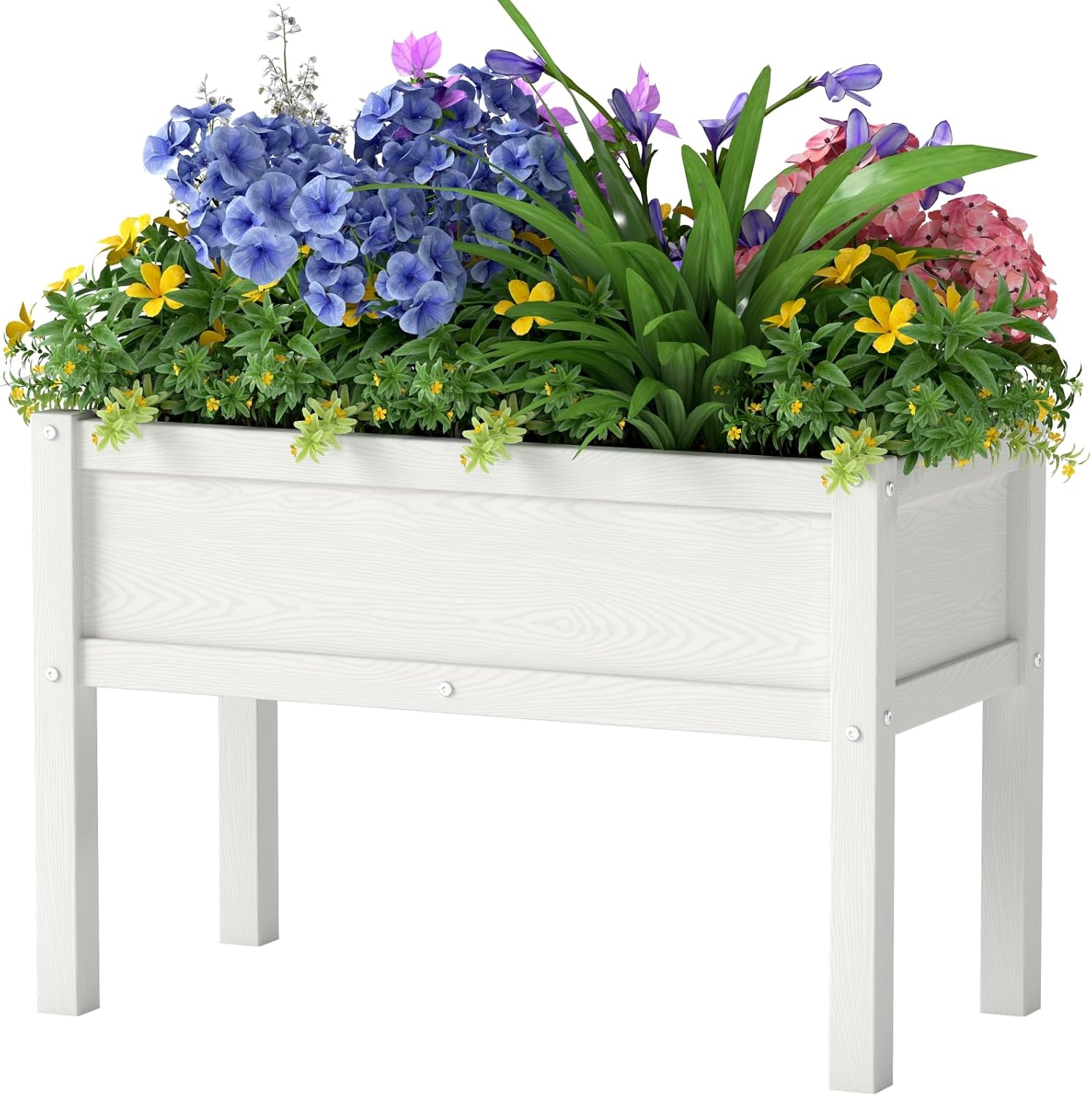
This elevated planter is a compact, low-maintenance raised bed built from high-density polyethylene (HDPE) that resists rot, rust, fading, and harsh weather. It stands on legs to lift plants off the ground, includes drainage holes and a reinforced bottom for better soil support, and uses stainless steel screws and pre-inserted nuts to simplify assembly. Typical use is for herbs, seedlings, or a small row of vegetables on a balcony, patio, or small yard where protecting plants from ground pests and improving access are priorities. The HDPE construction means you will not need to paint or treat the wood and it cleans easily with soap and water, though it is relatively small in planting volume so you will refill or fertilize more often than with deeper beds. The elevated height helps reduce bending and keeps soil warmer in cool spells, but the single-level, compact footprint limits how many larger vegetables you can grow at once. For someone who wants a durable, weatherproof planter that is quick to set up, this does the job well.
Best for: Gardeners who prioritize a durable, low-maintenance elevated planter for herbs, seedlings, and small vegetable patches and who value reliability over maximum planting area.
Less Ideal for: Growers who need large, deep beds for multiple big vegetables or those wanting a multi-tiered or high-capacity planting system.
- HDPE construction resists rot, rust, fading, and weather for long outdoor life
- Elevated design protects plants from ground pests and reduces bending during gardening
- Pre-inserted nuts and 304-grade stainless steel screws speed assembly and resist corrosion
- Drainage holes and reinforced bottom help prevent waterlogging and support soil load
- 10-gallon capacity and compact footprint limit the number and size of vegetables you can grow
- Item is single-level so it does not provide extensive planting depth for larger root crops
Verdict: Choose this elevated HDPE planter if you want a reliable, weatherproof, low-maintenance raised bed for small-scale vegetable and herb growing.
Best Choice Products 48 x 24 x 30 in Raised Garden Bed with Bed Liner

| Capacity | 5 cubic feet |
|---|---|
| Material Type | Fir Wood |
| Mounting Type | Floor Standing |
| Other Special Features of the Product | Drainage Hole |
| Indoor Outdoor Usage | Outdoor |
This elevated raised bed is a straightforward solution for small-scale vegetable gardening on patios, balconies, and backyards. Built from unfinished fir wood and fitted with a removable bed liner, it creates about 5 cubic feet of planting space that keeps soil separated from the wood and discourages pests and weeds. The 30-inch height reduces bending and makes planting and maintenance easier for gardeners with back or knee concerns. A pre-cut drainage hole helps prevent waterlogging, and the floor-standing design supports up to 200 pounds of planted soil. Expect a basic, natural finish that will weather unless sealed or stained, and plan for assembly from multiple pieces. The fir construction is durable for outdoor use but will need occasional upkeep to prolong life. This unit is best where a compact, elevated vegetable bed is needed rather than for very large or heavy-duty raised beds.
Best for: Practical gardeners who want an elevated, easy-care vegetable planter that reduces bending and offers visible social proof from many buyers; ideal for patio or balcony growing where space is limited.
Less Ideal for: Not the best choice for those needing very large or commercial-scale beds or for gardeners who want a fully finished, maintenance-free material like composite or metal.
- Ergonomic 30-inch height reduces bending for planting and harvesting
- Bed liner separates soil from wood to slow rot and limit pests
- Built-in drainage hole prevents waterlogging of root zones
- Fir wood construction offers natural strength for outdoor use
- Unfinished wood will weather and benefits from sealing or staining to extend lifespan
- 200 lb weight limit may restrict very deep fills or heavy potting mixes
Verdict: A practical elevated vegetable bed that makes planting and maintenance easier while protecting the wood with a liner, ideal for small-space patio and balcony gardeners who value reduced bending.
LEETOLLA 31.6" Elevated Raised Garden Bed with Wheels and Storage Shelf

| Capacity | 2.5 cubic feet |
|---|---|
| Number of Levels | 2 |
| Material Type | Iron |
| Indoor Outdoor Usage | Indoor, Outdoor |
| Other Special Features of the Product | 2 universal wheels + 2 stabilizing feet, 5 drainage holes + 2 cross-lines, Handle Bar, Storage Shelf |
This LEETOLLA elevated raised bed lifts container gardening to waist height so you can plant, water, and harvest without kneeling. It is built from painted iron with a powder-coat finish, includes two all-terrain wheels and an ergonomic handle for moving the filled bed, and has a lower shelf for tools or extra pots. The planting area holds about 2.5 cubic feet of soil and features five drainage holes plus cross-channels to help prevent waterlogging. Assembly is straightforward with the included hardware and takes roughly 30 to 45 minutes with two people. Practical benefits include reduced back strain, mobility to follow sun patterns or shelter plants from storms, and tidy storage on the attached shelf. Limitations are the metal construction, which will require touch-up care over time to avoid surface rust in very wet or coastal conditions, and the relatively narrow planting depth compared with deep beds, so very large root crops may be less suitable. The unit fits small balconies and patios but is best for mixed vegetables, herbs, and compact varieties rather than large, heavy crops.
Best for: Buyers who want comfortable, low-effort vegetable or herb gardening on a balcony, patio, or small yard and prioritize mobility and ease of use over maximal soil depth.
Less Ideal for: Gardeners seeking very deep beds for large root vegetables or those who prefer untreated wood or plastic planters that do not require metal maintenance.
- Elevated height reduces bending and kneeling for easier planting and harvesting
- Two large wheels and a handle let you reposition the bed to follow sun or avoid bad weather
- Built-in drainage holes and cross-channels reduce risk of overwatering
- Lower storage shelf keeps small tools and supplies handy
- Powder-coated iron construction for sturdier, decorative outdoor use
- Metal finish can require periodic touch-up to prevent corrosion in very wet or salty environments
- Planting depth is modest so very deep-rooted crops may be limited
Verdict: A mobile, waist-height metal raised bed that makes growing herbs and compact vegetables easier by cutting bending and letting you move plants to the best light.
Choosing the Right Elevated Vegetable Planter: Key Factors to Consider
Material and Rot Resistance
The material determines how the planter weathers sun, moisture, and soil contact. Wood can be attractive and insulating but needs rot-resistant species or a protective finish to last. Metal frames resist insects and provide long life but can heat up in direct sun and may corrode without proper coatings. Recycled plastic or composite boards resist rot and require less maintenance but vary in rigidity and load capacity.
Think about how much exposure the bed will see. A planter next to a sprinkler or under drip lines faces different wear than one under an awning. Also consider whether you will line the planter with a fabric or poly liner; liners protect some materials but change drainage behavior and may trap moisture against wood.
Planting Depth and Root Volume
Vegetables have different root needs, and the effective soil depth in an elevated planter decides which crops will perform. Shallow-rooted greens and herbs do well in 6 to 8 inches of soil, while tomatoes, peppers, and many root crops need 12 inches or more of loose, nutrient-rich soil to develop properly. Deeper beds also hold moisture longer and reduce the frequency of watering compared with shallow boxes.
When assessing depth, factor in any liner or false bottom that reduces usable soil volume. Also allow for soil settling over the first season and plan for adding organic matter to maintain fertility and structure.
Drainage Design
Good drainage prevents waterlogged roots and reduces disease risk. Elevated planters often drain faster because air circulates beneath them, but they still need well-designed outlets. Look for bottom slats, predrilled holes, or removable plugs that let excess water escape. Some planters include integrated trays that capture runoff and require periodic emptying.
Consider how you will water: overhead watering, soaker hoses, and drip systems interact differently with drainage features. A planter with adjustable drainage makes it easier to fine-tune moisture levels for different crop types.
Weight Capacity and Soil Load
Filled with moist soil, an elevated planter becomes heavy quickly. The frame and legs must support the total load without sagging or collapsing. Strong cross-bracing, thicker materials, and robust fasteners increase long-term stability. If you plan to move the planter occasionally, check whether the structure is light enough to lift or whether it requires disassembly for relocation.
Also consider the surface underneath. A soft lawn may compress over time under concentrated leg loads, while a patio or compacted gravel offers firmer support. Adjustable feet or wide leg bases help distribute weight and prevent sinking.
Accessibility and Working Height
One of the main reasons gardeners choose elevated planters is to reduce bending and kneeling. The right bed height keeps the soil within comfortable reach for planting, weeding, and harvesting. Consider the primary user's height and any mobility limits when selecting height and edge shape. Taller beds benefit gardeners who prefer to sit while tending plants; lower elevated beds may suit standing gardeners who still want reduced bending.
Edge design matters too. Wide top rails provide a place to rest tools or sit briefly while working, and rounded edges are gentler on hands. Think about how you will access all areas of the bed without stepping onto the planting surface.
Pest Control and Access
Elevated planters can deter some ground pests but do not eliminate all threats. The gap between soil and ground reduces access for voles and slugs that crawl at soil level, but birds, insects, and larger mammals still reach above the rim. Choose a planter that allows easy attachment of covers, row covers, or mesh to protect tender crops. Removable slats or hinged lids make installation of barriers simpler.
Also consider whether you need access beneath the planter for cleaning or for storing small gardening tools. Some designs create usable space under the bed that helps keep patios tidy.
Best Bed Depths by Vegetable Type
Match bed depth to crop needs to avoid common problems. Leafy greens, chives, and most herbs thrive in shallow beds that drain quickly, while carrots, beets, and potatoes need deeper, loose soil to develop properly. Tomatoes and peppers usually benefit from deep, well-drained soil with room for root spread and fertilizer reservoirs.
When planning which vegetables to grow together, place deeper-rooted crops in the sections of the planter with the most soil depth and reserve shallow areas for quick-turn salad greens. If your elevated planter is modular, you can use different fill strategies in separate modules.
- 6-8 inches: greens, lettuce, small herbs
- 10-12 inches: bush beans, onions, beets
- 12+ inches: tomatoes, peppers, larger root crops
Soil Mix and Filling Strategy
A light, well-structured soil mix helps drainage and root penetration in elevated beds. Use a blend of compost, aged topsoil, and aerating components like coconut coir or coarse sand depending on your local soil. Avoid heavy clay fills that compact and restrict roots.
Consider filling the bottom with lightweight bulk material if you need to reduce the weight burden. Bulky organic matter such as chopped branches or horticultural pumice can create a lighter core, topped with richer planting mix to provide nutrients where roots grow.
- Top layer: nutrient-rich planting mix
- Middle layer: looser, lighter aggregate if needed
- Bottom: drainage layer or gap for airflow
Placement and Microclimate Considerations
Where you place an elevated planter affects sun exposure, wind, and temperature. Most vegetables do best in full sun, but containers near reflective walls or under afternoon shade may heat differently than ground beds. Elevated planters warm faster in spring and cool more quickly at night, so microclimate effects can change planting dates.
Place planters where you can easily water and access them without carrying heavy loads across the yard. If the space is windy, provide windbreaks or choose a sturdier design to prevent tipping when plants mature.
- Prefer full sun sites for most vegetables
- Avoid spots with constant strong wind
- Ensure water source access for regular irrigation
Irrigation Options for Elevated Beds
Elevated planters dry out faster than ground beds, so consistent irrigation is important. Drip irrigation and soaker hoses provide slow, even moisture that reduces foliage wetting and fungal risk. For smaller beds, a simple watering can or overhead hose may be sufficient, but monitor soil moisture closely during hot spells.
Consider installing a simple timer or moisture sensor for beds used to grow long-season crops. That helps maintain consistent moisture without daily manual checks and prevents under- or over-watering.
- Drip lines for consistent, water-efficient delivery
- Soaker hoses for even saturation
- Manual watering for small or seasonal beds
Season Extension and Winter Care
Elevated planters are excellent for season extension because they warm earlier in spring and allow easier installation of covers and cold frames. Use row covers, cloches, or temporary lids to protect tender seedlings and start crops earlier.
In winter, drain and store any removable trays, and if the planter is movable, consider relocating it to a sheltered spot. Protect wooden components with breathable covers and inspect fasteners each spring for signs of loosening or corrosion.
- Use covers for early spring starts
- Remove trapped water and clean trays before winter
- Inspect and tighten fasteners seasonally
How We Chose the Best Elevated Vegetable Planter
We focused on features that affect performance in a working vegetable garden. Primary evaluation points were structural durability and material longevity, because a sturdy frame and rot-resistant materials define how long an elevated planter will last under sunlight and moisture. Planting depth and root volume were assessed to ensure common vegetables have room to develop. Drainage and water management were measured since elevated planters can dry faster and need reliable outlets to avoid waterlogging. Assembly and ongoing maintenance were considered to account for tools, fasteners, and surface finishes that influence time spent setting up and caring for the bed. Accessibility factors such as bed height and edge design were evaluated because comfort and reach matter for gardeners with limited mobility. We excluded shallow decorative boxes and purely ornamental displays that lack adequate depth for vegetables. We also filtered out products lacking clear material specifications or robust drainage solutions. The result is a list of durable, garden-ready elevated vegetable planters that meet practical growing and ergonomic needs.
FAQ
How deep should an elevated vegetable planter be for tomatoes?
Tomatoes usually do best with at least 12 inches of loose, fertile soil to support root spread. If the planter has a liner or false bottom reduce the recommended depth accordingly.
Can I put an elevated planter on a deck or balcony?
Yes, but check the weight capacity of the deck or balcony because moist soil and full containers can be heavy. Use lightweight fill strategies and distribute weight across a wider base to avoid localized loading.
How often will I need to water elevated vegetable planters?
Frequency depends on sun, wind, and soil mix, but elevated beds generally need more frequent watering than ground beds. During hot weather you may water daily or use drip irrigation to maintain consistent moisture.
Will raised planters keep pests away?
They can reduce access for some ground-dwelling pests but will not stop flying insects, birds, or climbing pests. Elevated planters make it easier to attach barriers and covers, which improves pest management options.
What maintenance should I do each season?
Top up soil with compost, check and tighten fasteners, clean drainage holes and trays, and inspect for rot or corrosion. Remove spent plants and refresh the planting mix annually to maintain fertility.
Final Verdict
Prioritize planting depth, drainage, and durable materials when choosing an elevated vegetable planter. Decide whether accessibility or maximum soil volume is more important for your gardening style and pick a design that balances those needs. With the right bed depth, reliable drainage, and a robust frame, an elevated planter makes growing vegetables easier, less strenuous, and more productive.
