

Note: This article contains affiliate links. If you click on these links and make a purchase, I may earn a small commission at no extra cost to you. This helps support my research and content. Read my full affiliate disclosure here.
Rhododendrons and azaleas need fertilizer that supports acidic soil chemistry and encourages abundant flowering without forcing leafy growth. Picking the right plant food for rhododendrons affects bloom set, seasonal vigor, and how the shrub responds to pruning and weather. This guide shortlists seven top plant foods suited for rhododendrons and explains the practical differences between granular, slow-release, and liquid options. We evaluated each product on nutrient balance, soil pH impact, and application convenience so you can match feeding style to your planting situation. The next sections summarize what to look for and how each feeding approach behaves in the garden.
Top Picks at a Glance
| Best Overall The best all-around choice for most situations | Espoma Organic Holly-tone 4-3-4 Plant Food (18 lb) |  |
| Best Quality Built to a higher standard if you want something more solid | FoxFarm Happy Frog Acid-Loving Plant Fertilizer, Slow-Release, 4 lb |  |
| Best Value The sweet spot between price and what you get | Miracle-Gro Water Soluble Azalea, Camellia & Rhododendron Plant Food, 5 lb |  |
| Best Budget The cheapest option that still gets the job done reliably | Gardenera 8-4-8 Acid-Loving Plant Fertilizer (8 oz) |  |
| Highest Rated A top-rated pick with lots of positive feedback | Miracle-Gro Miracid Water-Soluble Acid-Loving Plant Food (2 pack) |  |
| Most Popular A crowd favorite that many people choose with confidence | Espoma Organic Holly-Tone 4-3-4 Fertilizer for Acid-Loving Plants, 4 lb. Bag (Pack of 2) |  |
| Best Seller A high-volume bestseller chosen again and again | Jobe's Organics Azalea, Camellia & Rhododendron Fertilizer Spikes (10 Count) |  |
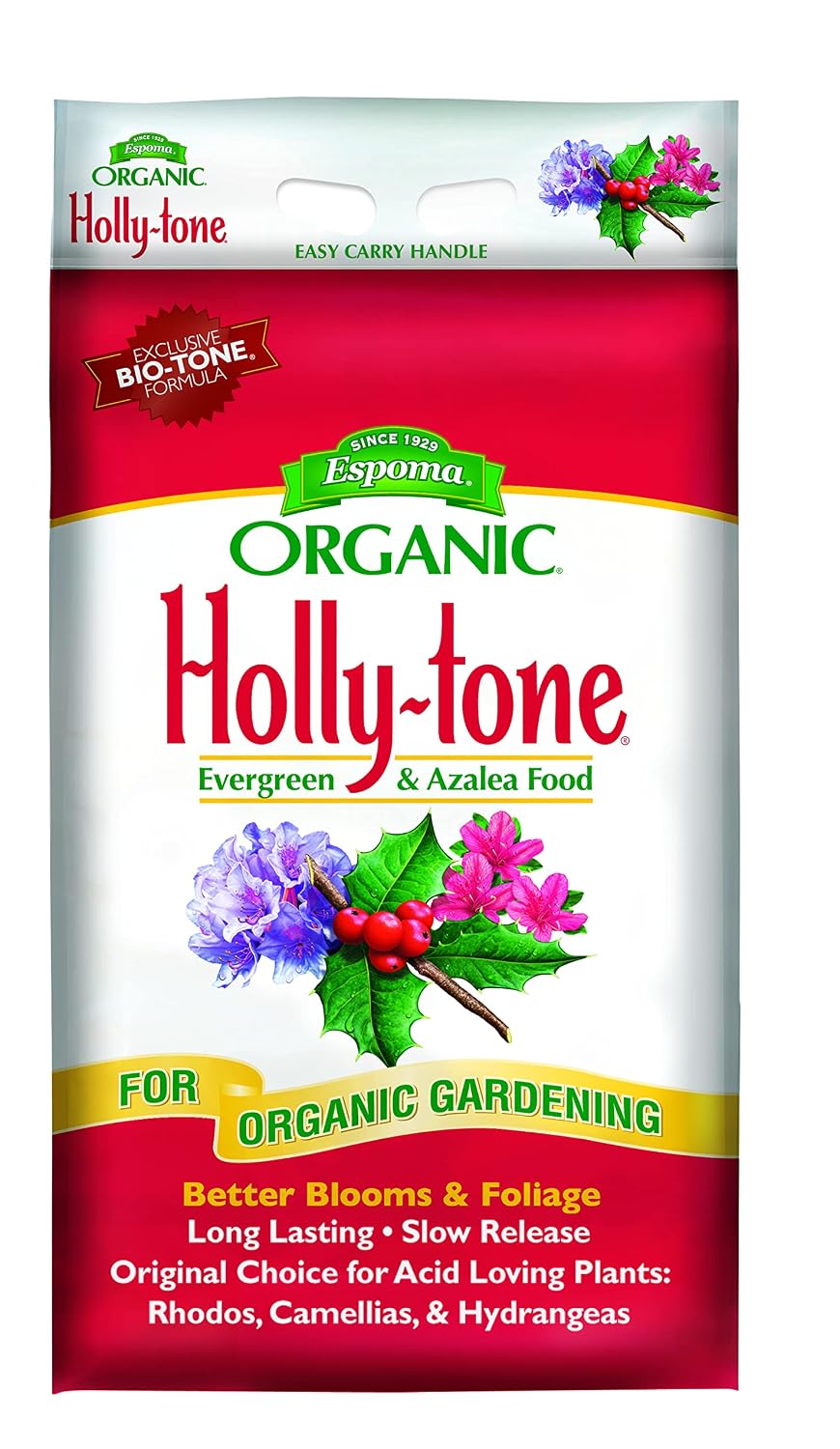
Espoma Organic Holly-tone 4-3-4 Plant Food (18 lb)
| Item Form | Granules |
|---|---|
| Specific Uses For Product | Organic,Plant Food |
| Coverage | 2,500 sq. ft. |
| Target Species | Acid loving plants, trees and shrubs |
| Mixing Ratio | 4:3:4 |
Espoma Organic Holly-tone is a ready-to-use granular fertilizer designed specifically for acid-loving plants including rhododendrons. It supplies a balanced 4-3-4 N-P-K analysis and releases nutrients slowly, so you get steady feeding without frequent applications. The formula is enhanced with Bio-tone microbes to support root growth and is approved for organic gardening, which is convenient if you maintain organic beds. Use it in spring and fall around the plant drip line and water in; one 18 lb bag covers about 2,500 sq. ft. Practical benefits include predictable slow-release nutrition, organic certification, and ease of application since no mixing is required. Limits to consider are that it targets acid-loving species so it is not a universal garden fertilizer and it provides modest nutrient numbers compared with high-analysis synthetic feeds, so it is better for maintenance and steady growth than for rapid, heavy feeding. For gardeners seeking an organic, low-maintenance feed tailored to rhododendrons, Holly-tone is a sensible choice.
Best for: Gardeners who want an organic, low-maintenance fertilizer tailored to rhododendrons and other acid-loving shrubs and prefer steady, long-term feeding over quick results.
Less Ideal for: Growers seeking fast, high-nitrogen green-up or a single fertilizer to use across mixed beds with different soil pH needs should look elsewhere.
- Formulated specifically for acid-loving plants like rhododendrons and azaleas
- Organic, slow-release granules with Bio-tone microbes to support root health
- Ready to use with straightforward application around the drip line
- Covers approximately 2,500 sq. ft. from an 18 lb bag
- Lower nutrient analysis than synthetic fertilizers, so slower visible results for heavy feeders
- Not suitable as a general-purpose fertilizer for neutral or alkaline soil plants
Verdict: Choose Holly-tone if you want an organic, slow-release fertilizer formulated specifically to maintain healthy rhododendrons and other acid-loving shrubs.
FoxFarm Happy Frog Acid-Loving Plant Fertilizer, Slow-Release, 4 lb

| Item Form | Powder |
|---|---|
| Application Method | Granular |
| Coverage | Medium |
| Target Species | Acid-loving plants |
| Mixing Ratio | 1/16 cup per gallon |
FoxFarm Happy Frog Acid-Loving Plant Fertilizer is a granular, slow-release powder made for plants that prefer low-pH soils such as rhododendrons and azaleas. It is typically mixed into potting mixes or worked into planting holes at the recommended rate and can also be applied around established plants to provide gentle, consistent feedings. Notable features include a formula tailored to acid-loving species and the addition of soil microbes and mycorrhizal fungi intended to improve nutrient uptake and water absorption. In practice this means healthier leaf color and steadier growth without the risk of a strong nutrient burn from fast-release feeds. The packaging and mixing instructions give clear application guidance for new transplants and maintenance use. Limitations are that it is a medium-coverage granular product so frequent large-area top-dressing is less efficient than a soluble feed, and gardeners who need an exact NPK breakdown or fast corrective feed will want a supplemental quick-release fertilizer for short-term deficiencies.
Best for: Gardeners focused on steady, reliable performance for rhododendrons and other low-pH shrubs who prefer an easy-to-apply, maintenance fertilizer that supports root health.
Less Ideal for: People who need fast-acting correction for visible nutrient deficiencies or who prefer concentrated liquid feeds for foliar feeding.
- Formulated specifically for acid-loving plants like rhododendrons and azaleas
- Slow-release granular form provides steady, low-risk feeding over weeks
- Contains mycorrhizal fungi and soil microbes to support nutrient uptake
- Clear mixing and application instructions for both new and established plants
- Does not provide a quick corrective boost for acute nutrient deficiencies
Verdict: Choose this fertilizer if you want an easy-to-use, slow-release feed formulated to support healthy root function and steady growth in rhododendrons and other acid-loving plants.
Miracle-Gro Water Soluble Azalea, Camellia & Rhododendron Plant Food, 5 lb

| Item Form | Powder |
|---|---|
| Application Method | watering can or Miracle-Gro Garden Feeder |
| Target Species | Azaleas, Camellias, Rhododendrons, Gardenias, Hibiscus, Hollies, Hydrangeas, Orchids |
| Mixing Ratio | 1:144 (indoor), 1:18 (outdoor) |
This water-soluble Miracle-Gro formula is designed specifically for acid-loving shrubs and flowering plants like rhododendrons, azaleas and camellias and is used by mixing the powder into a watering can or a Garden Feeder. It feeds plants quickly through the roots so you can apply nutrition every 7 to 14 days during active growth; the package gives simple indoor and outdoor mixing ratios and the product covers a broad list of targets including hydrangeas and gardenias. As a powder it stores easily and the 5 lb unit covers a large area, so it is convenient for gardeners who want a single, repeatable feeding routine across beds and containers. The main limitation is that feeding frequency and correct mixing matter; overconcentration or applying outside active growth will reduce benefits. It also requires measuring and mixing rather than a ready-to-use spray, so expect a small time investment each feed.
Best for: Gardeners who want a single, reliable fertilizer for rhododendrons and other acid-loving shrubs and who value straightforward dosing and large coverage for beds and containers.
Less Ideal for: People who prefer premixed sprays or automated feeders that eliminate measuring and mixing should consider ready-to-use or spike-style alternatives.
- Formulated specifically for acid-loving plants such as rhododendrons, azaleas and camellias
- Water-soluble powder feeds quickly when mixed and applied through a watering can or Garden Feeder
- Clear mixing ratios for indoor and outdoor use make dosing straightforward
- 5 lb package provides broad coverage, suitable for multiple feedings and larger beds
- Requires measuring and mixing each use rather than a ready-to-use product
- Needs regular 7–14 day applications during active growth to maintain results
Verdict: A focused, water-soluble fertilizer that makes regular feeding of rhododendrons and other acid-loving plants simple and efficient for practical gardeners.
Gardenera 8-4-8 Acid-Loving Plant Fertilizer (8 oz)

| Unit Count | 8 Ounce |
|---|---|
| Item Form | Granules |
| Application Method | Sprinkle, mix into soil, and water |
| Mixing Ratio | 8:4:8 |
| Coverage | acid-loving plants |
Gardenera 8-4-8 is a slow-release granular fertilizer aimed at acid-loving shrubs and berry plants. You apply it by sprinkling or mixing into soil around the root zone and watering; the granules feed plants over time so you only need a few applications per season. The formula lists micronutrients such as iron, magnesium and manganese to help prevent yellowing in rhododendrons and improve flower and leaf color, and the product description notes added bio-solids with beneficial microbes to support soil health. Practical benefits include targeted nutrition for plants that prefer acidic soil and a convenient three-times-a-year feeding schedule for low-maintenance care. Important limitations are the small 8 oz unit size, which means it is best for a few containers or shrubs rather than larger beds, and specifics about exact application rates for different plant sizes are not detailed on the package, so gardeners should follow general fertilizer guidelines or consult local extension advice.
Best for: Home gardeners with a few rhododendrons, azaleas or container acid-loving plants who want an easy, low-maintenance feeding schedule and targeted nutrient support.
Less Ideal for: Those managing large landscapes, commercial plantings, or many shrubs at once who need bulk quantities and precise per-plant dosing.
- Slow-release granules provide long-lasting nutrition and reduce reapplication frequency
- Formulated specifically for acid-loving plants so it supports rhododendron nutrient needs
- Includes micronutrients like iron, magnesium and manganese to help prevent chlorosis
- Contains bio-solid derived microbes intended to improve soil health and root vigor
- Small 8 oz unit limits coverage for larger gardens
- Label lacks detailed application rates for different shrub sizes
Verdict: A convenient slow-release 8-4-8 granular fertilizer that delivers targeted nutrition for a few rhododendrons or other acid-loving shrubs with minimal reapplication.
Miracle-Gro Miracid Water-Soluble Acid-Loving Plant Food (2 pack)

| Item Form | Powder |
|---|---|
| Specific Uses For Product | Root Development |
| Application Method | Water Soluble |
| Target Species | azaleas, hydrangeas, rhododendrons |
| Mixing Ratio | 30-10-10 |
This water-soluble Miracle-Gro Miracid formula is designed specifically for acid-loving shrubs such as rhododendrons, azaleas, and hydrangeas. It mixes into water (mixing ratio listed as 30-10-10) and can be applied to soil or sprayed on foliage, giving a dual-action feed that starts working quickly to encourage blooms and stronger root growth. The powder form dissolves easily for measured applications and the product targets the nutritional needs of acid-loving plants rather than general garden use. Practical benefits include fast uptake, convenience for spot-feeding or seasonal bloom boosts, and a straightforward mixing ratio for repeatable results. Important limitations are that it is formulated for acid-loving species only so it is not a universal fertilizer, and users should follow the labeled dilution to avoid overfeeding; it also does not list organic certification. For gardeners who value dependable, plant-specific feeding, this delivers predictable, quick results when used as directed.
Best for: Gardeners who want a reliable, plant-specific fertilizer to maintain and boost bloom performance on rhododendrons and other acid-loving shrubs.
Less Ideal for: Vegetable gardeners or those who need a general-purpose or certified organic fertilizer for mixed-plant beds.
- Formulated specifically for acid-loving plants like rhododendrons and azaleas
- Water-soluble powder mixes for quick uptake by roots and leaves
- Dual-action feeding via soil and foliage for faster visible results
- Clear mixing ratio (30-10-10) for consistent application
- Intended only for acid-loving species so not suitable as an all-purpose fertilizer
- No organic or natural certification listed
Verdict: A dependable, fast-acting water-soluble feed tailored to rhododendrons and other acid-loving shrubs for stronger roots and bigger blooms.
Espoma Organic Holly-Tone 4-3-4 Fertilizer for Acid-Loving Plants, 4 lb. Bag (Pack of 2)

| Item Form | Powder |
|---|---|
| Specific Uses For Product | Organic,Plant Food |
| Application Method | Sprinkle over the root zone and water in |
| Target Species | Acid-loving Plants |
Espoma Holly-Tone is a ready-to-use organic plant food designed specifically for acid-loving species like rhododendrons, azaleas, camellias, and blueberries. You apply it by sprinkling around the plant drip line and watering in, typically in spring and fall; the formula breaks down slowly to provide a steady supply of nutrients rather than a quick flush. Notable features include its 4-3-4 NPK analysis, 5% sulfur to help maintain soil acidity, and a Bio-tone blend of natural organics that supports microbial activity. In practice this means healthier foliage, better flowering, and improved long-term soil structure when used as directed. Because it is approved for organic gardening and contains no synthetic fillers, it suits gardeners who prioritize natural inputs. Limitations are that it is not a quick corrective for severe nutrient deficiencies and coverage is described as medium, so larger plantings will require multiple bags or repeated applications.
Best for: Gardeners who want an organic, low-maintenance fertilizer to support healthy growth and flowering of rhododendrons and other acid-loving shrubs, and who value proven, widely used products.
Less Ideal for: People needing a rapid correction for yellowing from severe nutrient deficiency or those managing large commercial plantings where broader coverage and concentrated products are required.
- Formulated specifically for acid-loving plants with a 4-3-4 NPK and 5% sulfur to support soil acidity
- Organic, slow-release ingredients that feed plants over time and support soil microbes
- Ready-to-use granular form requires no mixing and is easy to apply around the drip line
- Certified for organic gardening, so it fits organic maintenance plans
- Medium coverage means you may need multiple bags for larger shrubs or groups
- Not intended as a fast corrective for acute nutrient deficiencies
Verdict: Choose Espoma Holly-Tone for a trusted organic, slow-release fertilizer that supports healthy rhododendron growth and maintains soil acidity.
Jobe's Organics Azalea, Camellia & Rhododendron Fertilizer Spikes (10 Count)

| Unit Count | 10 Count |
|---|---|
| Item Form | Sticks |
| Application Method | Spikes |
| Specific Uses For Product | Plant Growth, Root Development, Soil Conditioning |
| Mixing Ratio | 9-8-7 |
Jobe's Organics fertilizer spikes are premeasured sticks you push into the soil around acid-loving shrubs to supply a steady dose of nutrients where roots can take them up. Each 9-8-7 NPK spike is formulated for flowering shrubs and is applied every 4 to 6 weeks during the growing season, which makes routine feeding quick and low-effort. Because the spikes release nutrients underground they reduce surface runoff and mess compared with granular or liquid feedings, and the resealable pouch keeps unused spikes dry. The product is labeled safe for use around children and pets when used as directed, and it is available in small packs so you can try it on a few plants before committing to a larger supply. Limitations are that a 10-count pack covers only a few shrubs and you will need multiple applications each season, so this is best for spot feeding rather than large beds or whole-garden feeding.
Best for: Gardeners who prefer a low-fuss, reliable feeding routine for a few rhododendrons or similar acid-loving shrubs and who value safety and neat application over bulk coverage.
Less Ideal for: Gardeners with large beds or many shrubs who need to feed many plants regularly should choose a bulk granular or soluble fertilizer for better coverage and lower cost per plant.
- Premeasured spikes for easy, mess-free application at the root zone
- Slow-release formula reduces runoff and targets nutrients to roots
- Organic formulation suitable for acid-loving flowering shrubs
- Resealable pouch helps keep unused spikes dry and ready to use
- Small 10-count pack is limited for multiple shrubs or repeated seasonal use
Verdict: Use these premeasured organic spikes when you want a safe, tidy, root-targeted feeding solution for a few rhododendrons or other acid-loving shrubs.
Choosing the Right Plant Food for Rhododendrons: Key Factors to Consider
Nutrient Ratio and Timing
Rhododendrons benefit from a fertilizer that favors flowering phosphorus and moderate nitrogen rather than a high-nitrogen turf formula. Look for N-P-K balance that supports bud development in spring and bloom retention through the flowering season.
Timing matters because feeds applied too late in the season can stimulate tender new growth that is vulnerable to winter damage. Plan applications for early spring and, if needed, a light maintenance feed after flowering to replenish reserves without pushing a late flush of growth.
Soil Acidity and How the Feed Affects pH
Rhododendrons need an acidic root zone to access iron, manganese, and other micronutrients. Some plant foods include acidifying components or sulfur-based additives to help maintain the correct pH, while others are neutral and require separate soil amendments.
Consider whether your soil test shows borderline or alkaline conditions. In alkaline soils, choose a feed that either helps lower pH or plan to use complementary soil acidifiers such as sulfur or acidifying mulches.
Formulation: Granular Versus Liquid
Granular slow-release formulations are convenient for beds and established shrubs because they feed over weeks to months and reduce the need for frequent applications. Water-soluble and liquid feeds deliver nutrients quickly and are useful for correcting deficiencies or giving a quick bloom boost, but they require more regular reapplication.
Also think about how you water. If you have drip irrigation, granular products with an even release profile work well. For containers or deeply shaded sites where moisture is variable, dilute liquid feeds let you control dose precisely.
Release Profile and Frequency
How long a feed lasts determines how often you need to tend your shrubs. Slow-release granules can provide steady nutrition for several months, which is helpful for low-maintenance beds. Fast-release formulas act quickly but usually need reapplication every few weeks during the growing season.
Consider your maintenance rhythm. If you prefer fewer visits to the garden, prioritize products with a proven release schedule. If you like to micro-manage bloom timing, fast-acting liquids give more immediate control.
Root Safety and Salt Sensitivity
Rhododendron feeder roots are fine and close to the soil surface, making them sensitive to high soluble salt levels. Low-salt or buffered formulations reduce the risk of root burn, especially in newly planted shrubs or in containers.
When transplanting or tending young plants, use milder feeds at reduced strength until roots are established. For mature shrubs, follow label directions to avoid applying concentrated doses directly against the root crown.
Application Practicalities and Garden Context
Think about how you actually care for the planting area. A large shrub border may favor broadcastable granular feeds, while individual specimen plants in the landscape or containers may be better served by targeted liquid or spike options.
Also account for site moisture, mulch type, and access. Mulch can slow nutrient movement into the soil, so choose an application method that places nutrients where roots can reach them. If deer or pets frequent the area, select a formulation and application approach that suits those constraints.
Preparing Soil Before Feeding
Test soil pH and basic nutrients before choosing a long-term feeding plan. A simple soil test reveals whether the bed needs sulfur or organic matter to improve acidity as well as what nutrients are already present.
Incorporate compost and acidic mulches like pine needles to improve structure and support a stable acid root zone. For newly planted rhododendrons, avoid heavy feeding at planting time; instead, focus on building a favorable root environment and defer stronger feeds until the root system starts to expand.
- Take a soil test in fall or early spring
- Add organic matter to improve drainage and nutrient-holding capacity
- Avoid high-nitrogen fertilizers at planting
Feeding Schedules for Different Growth Stages
Young transplants need gentler, lower-dose feeds more frequently to avoid burning delicate roots. Use diluted liquid feeds or low-rate granular formulations during the first year.
Established rhododendrons respond well to an early spring application to support bud set, followed by a light maintenance feed after flowering. Avoid late-season highnitrogen feeding that can delay hardening off.
- First year: low-strength, frequent feeding
- Established shrubs: feed in early spring and post-bloom as needed
- Skip heavy late-summer nitrogen applications
Adjusting Feeding for Containers and Small Spaces
Container-grown rhododendrons dry faster and have limited nutrient reserves, so they usually need more frequent, lower-dose feeding. Use water-soluble or liquid formulations at reduced strength every few weeks during the growing season.
Choose mixes with good drainage and incorporate acidic peat or ericaceous compost to keep the root zone acidic. Regularly flush containers to prevent salt buildup from concentrated feeds.
- Use lower-strength liquid feeds every 2 to 4 weeks
- Repot with fresh acidic potting mix every 2 to 3 years
- Leach containers occasionally to remove accumulated salts
Managing Iron Chlorosis and Micronutrient Needs
Yellowing between leaf veins often indicates iron deficiency, which is common in alkaline soils even when overall nitrogen is adequate. Address chlorosis by improving soil acidity and using feeds that supply chelated iron or other available micronutrients.
Foliar sprays can give a quick temporary fix, but long-term correction usually requires improving root zone pH and using a fertilizer that maintains micronutrient availability.
- Look for feeds that include chelated iron if chlorosis is present
- Combine short-term foliar treatment with longer-term soil amendments
- Avoid overapplying phosphorus in soils that already test high
Environmental and Cultural Considerations
Placement, mulch depth, and watering practices all influence how effectively plant food reaches feeder roots. Mulch should be shallow near the trunk and thicker toward the drip line to protect fine roots and hold moisture.
Avoid compacted soils and ensure good water infiltration. In heavy clay soils, choose feeds and composts that improve structure and reduce waterlogging, which can stress rhododendron roots and reduce nutrient uptake.
- Mulch to conserve moisture but keep it away from the trunk
- Improve drainage in clay soils before applying regular feeds
- Water deeply and infrequently to encourage deeper root growth
How We Chose the Best Plant Food for Rhododendrons
We selected these plant foods for rhododendrons using practical garden-focused filters that reflect what matters in acid-loving shrub care. Key evaluation criteria included nutrient ratio and bioavailability to ensure an emphasis on phosphorus and controlled nitrogen that supports flowering without excessive vegetative growth. We assessed soil pH impact and acidifying ability because rhododendrons need an acid root zone to take up iron and other micronutrients. Application method and timing were reviewed to weigh convenience against control, comparing granular slow-release, water-soluble, and liquid feeds for established shrubs and newly planted specimens. Longevity and release profile were considered so gardeners know how often to reapply and whether a feed will tie up bed prep work. Finally, soluble salt levels and root sensitivity were checked to avoid formulations that can stress fine feeder roots. We excluded general-purpose turf fertilizers and products designed primarily for trees with very high nitrogen. We did not include blends aimed at potted indoor plants unless their formulation matched rhododendron needs. The result is a focused list of plant foods that balance bloom support, acidifying action, and gardener-friendly application.
FAQ
How often should I feed rhododendrons during the growing season?
Often depends on the product. Slow-release granular feeds typically need one application in early spring, while liquid or water-soluble feeds are usually applied every 2 to 6 weeks at reduced strength.
Can I use general-purpose garden fertilizer on rhododendrons?
General-purpose fertilizers often have high nitrogen levels and neutral pH that can encourage leafy growth and fail to support acid-loving nutrient uptake. They may be usable in a pinch but are not ideal for long-term rhododendron health.
What is the best way to correct iron deficiency in rhododendrons?
Improving soil acidity is the most reliable long-term fix. In the short term, use chelated iron products or foliar sprays to correct visible chlorosis while you work on lowering root zone pH.
Should I change my feeding approach after pruning?
Usually no immediate change is needed. Pruning reduces top growth demand, so avoid applying high-nitrogen feeds right after heavy pruning. A moderate feed timed with the next growth cycle supports recovery.
Are organic plant foods effective for rhododendrons?
Organic feeds can be effective because they improve soil structure and release nutrients slowly, which suits rhododendron root systems. They may act more slowly than synthetic options, so pair them with soil amendments if faster correction is required.
Will mulches affect how plant food works for rhododendrons?
Yes. Thick or impermeable mulches can slow nutrient movement into the root zone. Use acidic mulches like pine needles or bark and keep mulch depth moderate to ensure nutrients reach feeder roots.
Final Verdict
Focus on nutrient balance, soil acidity, and release profile when choosing plant food for rhododendrons. Prioritize formulations that support flowering with appropriate phosphorus, maintain an acidic root zone, and match the release duration to your maintenance rhythm. For containers and new transplants, favor gentler, lower-strength feeds and monitor for salt buildup. Decide whether you want low-maintenance, slow-release nutrition or more frequent, controllable liquid feeding. Either approach can produce healthy shrubs and abundant blooms when paired with proper soil preparation and watering practices.
