

Note: This article contains affiliate links. If you click on these links and make a purchase, I may earn a small commission at no extra cost to you. This helps support my research and content. Read my full affiliate disclosure here.
Choosing the right garden weed barrier changes how much time you spend pulling weeds and how well plants establish. The wrong fabric can trap moisture, restrict roots, or fall apart after a season. This guide focuses on practical, garden-tested characteristics and shortlists six top-rated options suited to typical beds, borders, and container edges. You will find concise notes on durability, permeability, and installation, plus clear evaluation criteria used across the shortlist. Use these insights to match a barrier to your soil, planting style, and maintenance preferences.
Top Picks at a Glance
| Best Quality Built to a higher standard if you want something more solid | VEVOR 4 ft x 300 ft Heavy-Duty Weed Barrier Fabric (5.8 oz) |  |
| Best Value The sweet spot between price and what you get | Vanver 4 ft x 300 ft Heavy-Duty Weed Barrier Landscape Fabric |  |
| Best Budget The cheapest option that still gets the job done reliably | HANWRAPS 3.3 ft x 13 ft Heavy-Duty Weed Barrier Fabric (3.2 oz) |  |
| Highest Rated A top-rated pick with lots of positive feedback | DeWitt Sunbelt Woven Weed Barrier Fabric, 6 x 300 ft (6-Pack) |  |
| Most Popular A crowd favorite that many people choose with confidence | Happybuy 6 ft x 300 ft Heavy-Duty Garden Weed Barrier Fabric |  |
| Best Seller A high-volume bestseller chosen again and again | LAVEVE Heavy Duty Woven Weed Barrier Landscape Fabric, 4 ft x 100 ft |  |
VEVOR 4 ft x 300 ft Heavy-Duty Weed Barrier Fabric (5.8 oz)

| Material | Polypropylene fabric |
|---|---|
| Construction | Woven and needle-punched dual layer |
| Area | 4 x 300 ft (1.2 x 91.4 m) |
| Weight | 5.8 oz/sq. yd |
This VEVOR weed barrier is built for large, performance-focused jobs where durability and long-term weed suppression matter. The fabric combines a woven and needle-punched dual-layer polypropylene construction at 5.8 oz per sq yd, which resists tearing and holds up under foot traffic or gravel covering. It is used by unrolling, cutting along the printed guide lines, and securing with staples or pins to create weed-free beds, paths, or under gravel and artificial turf. The material is permeable so rain and irrigation drain through rather than puddle, and the black top layer provides strong light blockage to inhibit weed growth. Because it is heavy duty, it can also help reduce soil erosion and improve soil moisture retention. The main compromises are the large roll size and weight that make handling and positioning a two-person job, and the need to source appropriate staples and tools separately since none are included. For anyone installing fabric over a broad area, this product delivers the durability and permeability required for long-lasting weed control.
Best for: People tackling large beds, long pathways, or driveway underlayment who prioritize durable, long-lasting weed control and are prepared to handle a heavy roll during installation.
Less Ideal for: Casual gardeners with only small raised beds or container gardens who want a lightweight, easy-to-handle product or ready-to-install kits.
- Dual-layer woven and needle-punched polypropylene for higher tear resistance
- High permeability lets water and air pass to prevent puddling and support soil health
- Printed guide lines make cutting and layout faster and more accurate
- Heavy 5.8 oz/sq yd density offers stronger light blockage and longer service life
- Large 4 x 300 ft roll is heavy and awkward to position alone
- No installation staples or fasteners included
Verdict: Choose this heavy-duty, dual-layer fabric when you need durable, long-lasting weed control over large areas.
Vanver 4 ft x 300 ft Heavy-Duty Weed Barrier Landscape Fabric

| Material | Woven polypropylene |
|---|---|
| Weight | 3.2 oz |
| Pack options | 4ft × 300ft (long roll) |
This Vanver weed barrier fabric is a heavy-duty woven polypropylene roll aimed at long runs of garden beds, borders, or small drive stabilization. It is typically unrolled over prepared soil, cut to fit, anchored with staples, and covered with mulch or gravel. The 3.2 oz material is described as tear-resistant and suitable for occasional foot or light vehicle traffic, so it holds up better than lightweight fabrics for paths and high-use beds. Its weave lets water and nutrients through while blocking sunlight and most weed growth, reducing hand-weeding and herbicide use. Installation is straightforward and custom-cutting makes it flexible for irregular beds, though overlapping and securing edges is necessary to avoid gaps where weeds can penetrate. The fabric will eventually degrade under constant UV exposure, so expect several years of service rather than permanent suppression, and it does not stop established perennial roots without additional edging or root barriers.
Best for: Gardeners who want a durable, low-maintenance barrier to reduce recurring weeding across large beds and pathways and who prioritize straightforward, time-saving landscaping improvements.
Less Ideal for: Those seeking a permanent, maintenance-free weed solution or gardeners relying on raised beds and frequent deep soil cultivation where fabric would interfere with planting methods.
- Heavy woven polypropylene construction that resists tearing in high-traffic areas.
- Permeable weave allows water and nutrients to reach soil while blocking light to weeds.
- Long 300 ft roll covers large beds or multiple projects without joins.
- Easy to cut and lay, so installation and customization are straightforward.
- Not a permanent solution; prolonged UV exposure and time will degrade fabric.
- Requires proper overlapping, anchoring, and mulching to prevent weed intrusion at edges.
Verdict: Choose this heavy-duty woven fabric when you need a long, durable roll to cut and cover large garden areas for effective, low-effort weed suppression.
HANWRAPS 3.3 ft x 13 ft Heavy-Duty Weed Barrier Fabric (3.2 oz)

| Material | Polypropylene |
|---|---|
| Weight | 3.2 oz |
| Manufacturer | HANWRAPS |
This HANWRAPS weed barrier is a straightforward solution for keeping garden beds and small landscape areas free of weeds. Made from 3.2 oz woven polypropylene, the fabric is cuttable to fit irregular beds and can be overlapped for larger areas; it balances density to block sunlight and weed growth while still letting water and air reach the soil. Typical use is laying the fabric over prepared soil, cutting holes for plants, and securing edges with staples or pins. Practical benefits include durable tear resistance for seasonal use, easy handling because of the manageable roll size, and versatility for garden beds, underlayment, or erosion control in small projects. Limitations are that the 3.3 ft by 13 ft size means multiple pieces are needed for larger yards and seams must be managed to prevent weed intrusion. Expect effective short- to medium-term weed suppression in vegetable or ornamental beds, but plan for replacement or reinforcement in high-traffic or long-term installations.
Best for: Buyers looking for an affordable, no-frills weed barrier to protect vegetable patches or flower beds and who value easy handling and simple seasonal weed control.
Less Ideal for: Large properties or permanent landscaping projects where a wider, heavier-duty geotextile or professional installation is preferred.
- Heavy-duty 3.2 oz woven polypropylene offers good tear resistance and durability
- Permeable weave lets water and air reach the soil while reducing sunlight to weeds
- Freely cuttable roll adapts to irregular beds and can be overlapped for larger coverage
- Manageable 3.3 ft × 13 ft roll is easy to handle and install in small to medium beds
- Single roll size covers a limited area so larger gardens require multiple rolls and seam management
- Not a permanent surface solution and may need replacement after extended outdoor exposure
Verdict: A cost-conscious, easy-to-install weed fabric that provides effective seasonal weed suppression for small to medium garden beds.
DeWitt Sunbelt Woven Weed Barrier Fabric, 6 x 300 ft (6-Pack)

| Material | Woven polypropylene |
|---|---|
| UV Stabilized | Yes |
| Alignment stripes | Every 12 inches |
| Intended use | Greenhouse floors, garden rows, raised beds, landscape protection |
This DeWitt Sunbelt woven weed barrier is built for large-scale and long-term weed suppression. The polypropylene weave blocks weed growth while staying permeable so water, air, and nutrients reach the soil and plant roots. It is UV-stabilized and constructed to resist tears and punctures from foot traffic, tools, and repositioning, which makes it suitable for greenhouse floors, garden rows, raised beds, and long planting runs. The fabric includes golden alignment stripes every 12 inches to speed layout and keep rows straight during planting. Because it is sold in very large rolls, it suits commercial or extensive residential projects where continuous coverage matters. The main limitations are its scale and stiffness when new: handling wide 300-foot runs takes two people and trimming or fitting irregular beds requires more cutting and edge securing than small mats. Also it is a ground-cover solution only and must be paired with proper edging and mulching for neat borders and added weed control.
Best for: Buyers needing a dependable, long-lasting ground cover for extensive garden areas, greenhouses, or commercial planting runs who prioritize durability and consistent weed suppression.
Less Ideal for: If you only need small-area coverage, decorative mulch alternatives, or a quick temporary solution, a smaller pre-cut mat or lightweight fabric will be easier to handle and install.
- Woven polypropylene construction allows water and air through while blocking weeds
- UV-stabilized for long outdoor exposure
- Durable against tears and punctures from foot traffic and tools
- Alignment stripes every 12 inches speed planting and keep rows straight
- Large roll size makes single-person handling and installation more difficult
- Requires trimming and secure edging to fit irregular beds and prevent movement
Verdict: Choose this DeWitt woven fabric when you need a durable, UV-stable weed barrier that delivers reliable long-term coverage for large or commercial planting areas.
Happybuy 6 ft x 300 ft Heavy-Duty Garden Weed Barrier Fabric
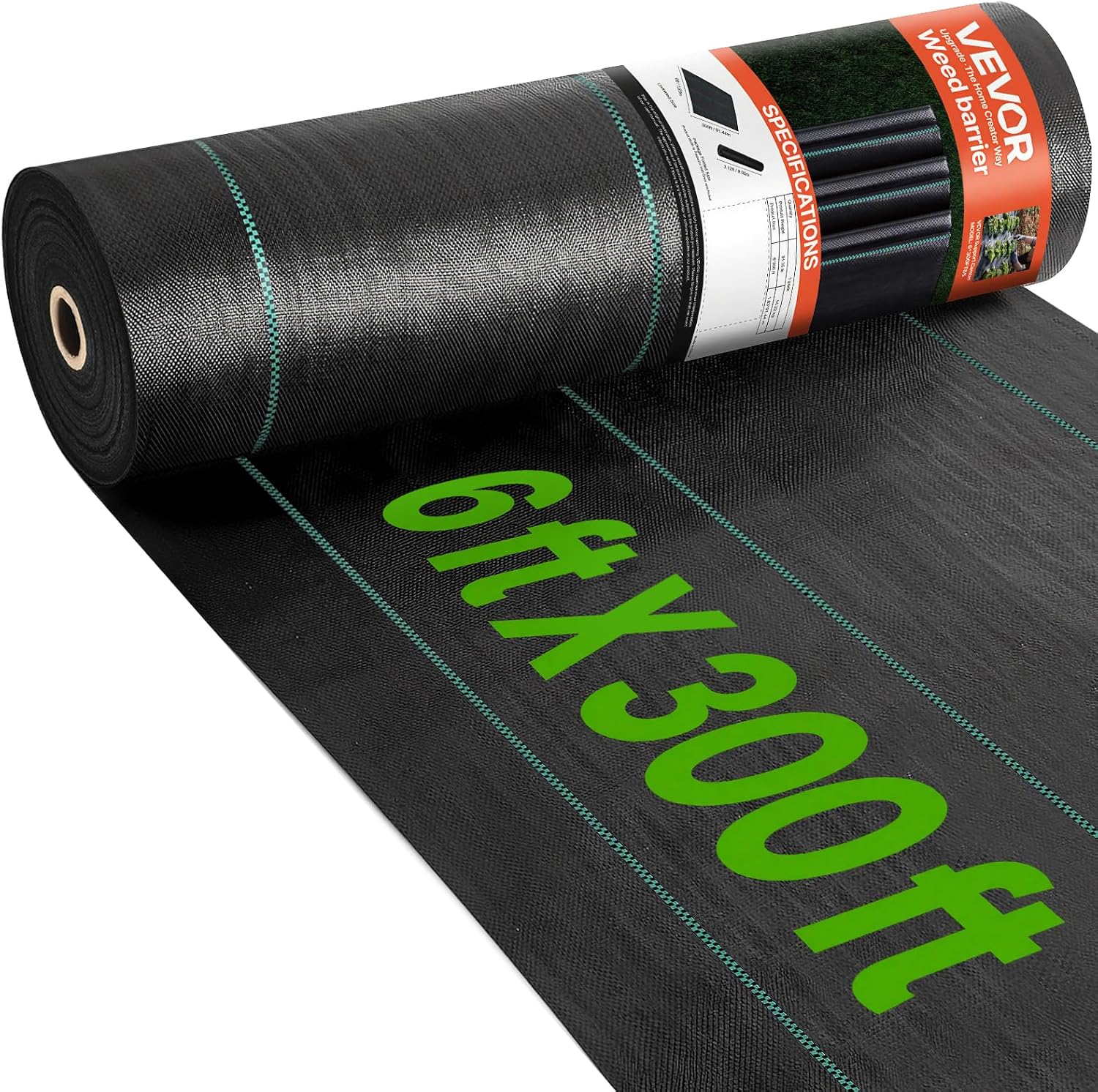
| Material | Polypropylene fabric |
|---|---|
| Size(LxW) | 300 x 6 ft |
| Density | 12 |
| Weight | 2.4 ounce |
This Happybuy weed barrier is a straightforward, no-frills option for covering large areas without frequent seams. The roll measures 6 by 300 feet and uses woven polypropylene with a stated density of 2.4 oz, which gives it tear resistance while remaining easy to cut and position. The fabric is permeable so water and air pass through, helping soil retain moisture without puddling, and printed guide lines make aligning rows and cutting to shape simpler. Typical uses are under mulch, gravel, or pavers and as an underlayer for vegetable plots, pathways, and around shrubs. Because it comes in a large roll, it reduces the time spent joining multiple shorter pieces. Limitations are that it is a synthetic polypropylene fabric that will eventually degrade in sunlight unless covered, and staples or pins are needed to keep edges from lifting. Expect to pair it with a top layer of mulch or gravel for longest life and best appearance.
Best for: Buyers who want proven, widely used weed control for medium to large garden beds or pathways and prefer a large single roll to minimize seams and installation time.
Less Ideal for: People looking for a decorative finished surface or a fully biodegradable fabric should consider other options or plan to cover this product with mulch or stone.
- Very large coverage (6 x 300 ft) reduces seams and installation time
- Woven polypropylene construction resists tearing while remaining easy to cut
- Designed to allow water and air through so soil stays aerated and drains
- Printed guide lines simplify cutting and aligning planting rows
- Synthetic fabric requires coverage (mulch or gravel) for UV protection and longest life
- Roll is heavy and bulky to handle alone when laying large areas
Verdict: If you need wide, effective weed blocking for beds or paths and want to cut installation time with a single large roll, this heavy-duty polypropylene fabric is a practical choice.
LAVEVE Heavy Duty Woven Weed Barrier Landscape Fabric, 4 ft x 100 ft

| Material | Polypropylene |
|---|---|
| Permeability | Breathable, allows water and air |
| UV resistance | Resists sun exposure |
| Available size option | 4FT x 100FT (pack configuration listed) |
This LAVEVE woven weed barrier is a heavy duty polypropylene fabric intended for garden beds, paths, and around shrubs to reduce weed growth while allowing water and air to reach the soil. It arrives in roll form and is easy to cut to shape with scissors or a knife, and comes with printed guide lines to help alignment during installation. The fabric’s woven, permeable construction resists UV exposure and permits drainage, so it reduces erosion and helps maintain soil health under mulches, gravel, or pavers. In practice it speeds maintenance by cutting down on hand weeding and keeping planting areas neater. It is not a permanent chemical solution so you should still remove seedlings that sprout on top of mulch, and burying edges or securing with landscape staples is recommended to prevent wind lift. For mainstream gardeners who want a straightforward, reusable physical barrier, this offers a durable, breathable option that balances effectiveness with easy installation.
Best for: Gardeners who prioritize a low-risk, physical solution to cut ongoing weeding and keep planting areas tidy without chemicals.
Less Ideal for: People seeking a permanent, maintenance-free weed eradication method or those who prefer herbicide-based control.
- Woven polypropylene construction blocks weeds while allowing water and air to pass
- UV-resistant design intended for outdoor exposure and long-term use
- Printed guide lines make cutting and aligning simple during installation
- Suitable for multiple applications including garden beds, paths, and under gravel
- Does not stop seeds that land on top of mulch or soil from germinating
- Requires mechanical fastening or burying at edges to prevent wind lift
Verdict: A durable, breathable woven fabric that gives risk-averse gardeners a straightforward physical barrier to noticeably reduce weeds and simplify maintenance.
Choosing the Right Garden Weed Barrier: Key Factors to Consider
Material Durability and UV Resistance
Durability determines how long a barrier lasts in an exposed bed. A fabric with good UV resistance will avoid brittle breakdown and tearing after months of sun exposure. For beds that see seasonal maintenance, stronger woven fabrics and thicker films will hold up to foot traffic and tool use.
Consider lifespan against maintenance needs. A short-lived sheet may save money initially but require frequent replacement, which increases labor and waste. Also examine edge finishing and stitch quality, because frayed edges invite weeds and reduce effective life.
Permeability and Drainage
Permeability affects how water and air move through the soil. Highly impermeable sheets can block rainfall and irrigation, causing pooling or encouraging root rot in heavy soils. Breathable, woven fabrics that permit water flow and gaseous exchange help roots stay oxygenated and soils drain properly.
When you have clay or poorly drained soil, choose a barrier with high permeability to avoid waterlogged roots. In sandy or fast-draining beds you can afford lower permeability without as much risk, but ensure the fabric still allows fertilizer and rain to reach the root zone.
Weed Suppression Performance
A successful barrier prevents light from reaching weed seeds and young shoots while staying intact under mulch and foot traffic. The weave density or opacity of a film determines how much light passes; denser options suppress more seeds but may compromise permeability.
Think about the weed pressure in your garden. Beds with lots of persistent perennial weeds benefit from stronger suppression and regular inspection at seams and edges, while low-weed beds may be fine with lighter fabrics combined with a thicker mulch layer.
Root Friendliness and Planting Integration
Some barriers prevent roots from spreading or block transplanting if you need to establish plants through the fabric. Options that can be slit or folded easily for planting, or that degrade gradually where roots grow, let you combine weed control with healthy plant establishment.
If you plan on direct-seeding or frequent rearranging of plants, choose a fabric that supports cutting planting holes without excessive fraying and that does not channel roots laterally in a harmful way.
Installation, Fastening, and Maintenance
Proper installation determines how effective a barrier will be over time. Good fastening at edges and seams prevents weeds from sneaking in. Look for fabrics compatible with landscape staples, adhesive edges, or simple overlap techniques for a tight fit.
Maintenance includes inspecting seams after frost heaves, removing accumulated debris that can create a seed bed, and repairing tears. Consider how easy it is to lift or move the fabric during seasonal soil work or when adding compost or mulch.
Compatibility with Mulch and Soil Amendments
Barriers are often used under mulch, gravel, or decorative cover. The interaction between mulch and fabric affects moisture retention and soil temperature. Porous fabrics allow mulch to perform its job while preventing weeds, whereas impermeable layers can trap moisture and limit the mulch's effectiveness.
Also consider how the barrier affects adding compost or topdressing. If you plan frequent soil amendments, choose a solution that is easy to remove or cut without creating waste or long-term disruption to bed structure.
When to Use a Garden Weed Barrier
Weed barriers work best in established beds where you want to reduce regular hand-weeding, under pathways, and below decorative mulch. They are particularly useful around shrubs and in perennial borders where plants do not need to be moved often. In newly forming beds, barriers can help suppress weeds while perennials establish a few seasons of growth.
- Best for established, low-disturbance beds
- Helpful under mulch and gravel in paths
- Not ideal for beds needing frequent replanting
Installing Fabric for Long-Term Performance
Start by preparing the bed. Remove existing weeds and loosen the topsoil so the fabric sits flat. Lay the fabric with overlaps at seams and secure edges with appropriate staples or pins, sinking them deeply enough to resist lifting from wind or frost heave. Cut planting holes only after the fabric is firmly placed and use minimal openings to limit weed ingress.
- Overlap seams by several inches to block light entry
- Use corrosion-resistant staples for wet climates
- Trim edges cleanly to reduce fraying and snagging
Using Barriers with Mulch and Organic Covers
Mulch extends the life of a weed barrier by protecting it from UV light and mechanical wear. Organic mulches also moderate soil temperature, add moisture retention, and break down over time to improve soil. Place several inches of mulch over the fabric but avoid piling too deep near plant crowns to prevent rot. Periodically top up organic mulch to maintain coverage over exposed fabric areas.
- Apply 2 to 4 inches of mulch over fabric
- Avoid direct contact between thick mulch and plant crowns
- Inspect and replenish mulch annually
Alternatives and When Not to Use a Barrier
In vegetable beds where you are frequently rotating crops, a barrier may be more hindrance than help because it complicates planting and soil amendment. For heavily weed-infested sites, initial weed eradication and solarization may be necessary before installing any barrier. Mechanical cultivation or cover cropping might be better long-term strategies when building soil health is the priority.
- Skip barriers for frequent-rotation vegetable beds
- Consider cover crops to suppress weeds and improve soil
- Use initial weed removal measures before installation
How We Chose the Best Garden Weed Barrier
We focused on attributes that directly affect garden performance and longevity. Primary evaluation criteria included material durability to assess tear and UV resistance, permeability to measure water and air flow, and root interaction to determine whether the fabric restricts or allows root growth. We also examined ease of installation and maintenance, and garden compatibility such as whether the barrier can be used around perennials, vegetables, or under mulch. Our process filtered out materials that degrade rapidly under sunlight, fabrics that block water leading to poor drainage, and products inappropriate for planting beds because they prevent root establishment. We prioritized contenders that balance weed suppression with necessary soil respiration and moisture movement. Entries were excluded if they were strictly decorative, designed only for walkways, or not intended for long-term garden use. The final selection reflects real-garden considerations: how a material behaves installed in soil, how it interacts with mulch and plants, and how often it will need repair or replacement. These dimensions align with the scoring metrics used in our product summaries.
FAQ
Can I plant directly through a weed barrier?
Yes, you can plant through many garden fabrics by cutting X-shaped slits or making planting holes. Do this after the barrier is installed to preserve overlap integrity. For seedlings, choose a fabric that allows easy cutting without excessive fraying.
Will a weed barrier stop all weeds forever?
No. Most barriers dramatically reduce annual and shallow-rooted weeds but do not eliminate deep-rooted perennials or weeds that germinate in mulch or soil on top of the fabric. Regular inspection and targeted removal at seams and exposed patches are still necessary.
How long do garden weed barriers typically last?
Lifespan varies with material and exposure. UV-resistant woven fabrics can last several years under mulch, while thinner films degrade faster. Regular sunlight exposure, physical wear, and soil movement all shorten life expectancy.
Do weed barriers affect soil moisture and temperature?
They can. Impermeable options reduce evaporation and may keep soil cooler or wetter, which can be good in hot, dry climates but risky in poorly draining soils. Permeable fabrics allow more natural moisture and air exchange, supporting healthier roots in most garden soils.
Can I compost over a fabric-covered bed?
You can add compost over a fabric if the fabric is removed or if you add compost on top of the fabric and then cut planting spots later. For large-scale soil-building, removing short sections of fabric or using removable fabric panels makes amendment easier.
Final Verdict
A garden weed barrier can cut routine maintenance and keep beds looking tidy, but the right choice depends on how you use your beds. Prioritize permeability if drainage and root health matter, and choose higher durability for paths or heavy-traffic beds. Balance weed suppression against the need for planting and soil amendments. When in doubt, select a breathable, durable fabric that is easy to install and repair; that approach gives the most flexible solution for most home garden situations.
