

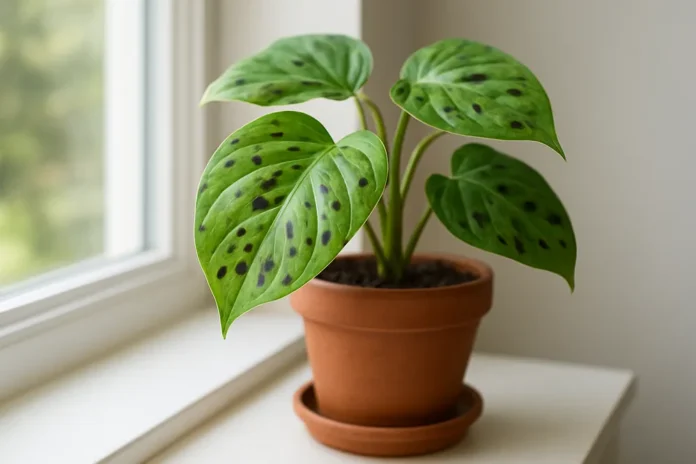
Philodendron leaves usually develop black spots from excess moisture, leaf spot disease, cold injury, physical damage, or pest-related stress. The size, texture, and spread of the spots often reveal which problem is behind them.
Seeing philodendron leaves with black spots can be alarming, especially when the rest of the plant seemed fine a week ago. In my experience, these spots are rarely random. They usually show up because the plant has been staying too wet, the leaves have been stressed by temperature or injury, or a disease has taken advantage of damp conditions.
The good news is that black spotting does not always mean the whole plant is in serious trouble. Sometimes it is limited to a few older leaves after overwatering or a cold draft. Other times, spreading spots with yellow halos signal a fungal or bacterial issue that needs faster attention. The trick is to look closely at black spots on philodendron leaves instead of treating every spot the same way.
Below, I will walk through the most common causes, how to tell them apart, and what changes usually help a philodendron recover without making the problem worse.
What Black Spots Usually Mean on Philodendron Leaves
Black spots are a symptom, not a diagnosis. On philodendrons, they most often come from one of a few broad issues: roots staying wet too long, leaf tissue being damaged by cold or harsh sun, fungal or bacterial leaf spot, pest feeding, or simple physical injury. A single dark blemish on one leaf means something different from many soft, water-soaked spots spreading across the plant.
When I diagnose this problem, I first look at the pattern. Are the spots scattered or concentrated on one side? Do they have yellow halos? Are they dry and papery or soft and mushy? Is the newest growth affected, or only the oldest leaves near the base? Those details tell you much more than the color alone.
- Small dark spots with yellow edging often suggest leaf spot disease.
- Large soft black patches often point to cold injury, rot, or severe overwatering stress.
- Dry blackened areas on exposed leaves can come from sun scorch or physical damage.
- Black spotting combined with sticky residue or distorted growth can indicate pests.
I try not to judge a philodendron by its worst-looking leaf. One damaged leaf can mislead you. If several leaves show the same type of spots in the same pattern, that is when I start suspecting a real care or disease issue.
Overwatering and Soggy Soil Are the Most Common Cause
For indoor philodendrons, overwatering is the most common starting point. These plants like evenly moist soil, but they do not like sitting in a potting mix that stays wet for long stretches. When roots lose oxygen, they weaken and begin to rot. Once the roots are struggling, the leaves often respond with yellowing, dark spotting, drooping, and eventually blackened patches.
The spots caused by excess moisture are not always neat circles. They can look irregular, dark brown to black, and sometimes water-soaked. You may also notice that older leaves decline first. If the soil smells sour, the pot feels heavy for days after watering, or the roots look brown and mushy, wet soil is probably the root of the problem.
Signs the Soil Is Staying Too Wet
- Leaves develop dark spots along with yellowing or limp stems
- The potting mix stays damp more than a week in average indoor conditions
- The container has poor drainage or no drainage hole
- Roots appear brown, soft, or slimy instead of pale and firm
- Fungus gnats are hovering around the pot
Sometimes the issue is not how often you water, but how the soil behaves. A dense peat-heavy mix in a low-light room can stay wet much longer than many gardeners expect. Philodendrons usually do better in an airy mix with bark, perlite, or coco chips that lets roots breathe between waterings.
If I suspect overwatering, I do not automatically water less on a strict calendar. I change the soil setup first if needed, because a bad mix can turn even careful watering into a chronic problem.
Fungal and Bacterial Leaf Spots Can Spread Quickly
When black spots multiply, especially in humid conditions, fungal or bacterial leaf spot becomes more likely. These diseases often begin as small dark lesions that enlarge over time. Some remain round, while others become angular where the leaf veins limit their spread. Yellow halos around the spots are common, especially with bacterial issues.
Leaf spot problems are more likely when leaves stay wet from misting, overhead watering, crowded placement, or poor airflow. Warmth plus moisture creates ideal conditions for disease organisms to move from one leaf to another. On philodendrons, this can happen surprisingly fast in bathrooms, enclosed plant cabinets, or corners with little air movement.
Clues That Disease Is Involved
- Spots increase in number over several days
- Lesions have yellow halos or defined dark margins
- Several leaves are affected, not just one damaged leaf
- The plant has recently been kept very humid or wet
- Spots appear on the leaf surface rather than beginning at the edges only
The first response is usually sanitation and drier leaf conditions. Remove badly affected leaves with clean pruners, keep water off the foliage, and increase airflow around the plant. If the problem continues to spread, a houseplant-safe copper or biofungicide product may help, though results are best when you catch the issue early.
Bacterial problems tend to be harder to reverse than simple fungal spotting. If leaves look greasy, water-soaked, or foul-smelling, isolation becomes especially important so nearby aroids are not exposed.
Cold Drafts and Temperature Shock Can Blacken Leaf Tissue
Philodendrons are tropical plants, and their leaves can darken quickly after exposure to cold air. A winter drafty window, an air conditioner vent, a cold car ride, or even a bagged plant left outside too long can cause tissue to collapse. The damaged area may turn dark green first, then brown-black and limp.
Cold damage often shows up suddenly instead of gradually. One day the plant looks normal, and the next day several leaves have black patches or edges. Those patches usually do not look like tidy circular disease spots. They tend to be larger, irregular, and associated with the side of the plant facing the cold source.
When Cold Injury Is the Likely Cause
- Damage appeared overnight or within a day or two
- Only leaves near a window, door, or vent are affected
- Spots are larger patches rather than many small lesions
- The tissue feels limp or thin before it dries out
Once leaf tissue has turned black from cold injury, it will not regain its healthy color. The goal is simply to prevent more exposure and let the plant push healthy new growth in warmer, stable conditions.
Sun Scorch and Physical Damage Can Leave Dark Scars
Although philodendrons like bright light, many common types do not tolerate intense direct sun well, especially if they were grown in lower light first. Sunburn can begin as pale, bleached, or tan patches that later dry and darken. On darker leaves, damaged areas may look brown-black once the tissue dies.
Physical injury can look similar. A leaf that was bent, rubbed against a rough wall, pinched while unfurling, or bruised during transport may later develop blackened marks. These spots do not spread like disease. They stay where the damage occurred.
How This Kind of Damage Differs From Disease
- Spots are limited to the area that received sun or impact
- New spots do not continue appearing after the cause is removed
- The damage is often on the most exposed leaves
- The plant otherwise looks healthy and roots seem fine
I see a lot of gardeners assume every dark spot is an infection. If the leaf was recently unfurling, moved, or brushed repeatedly, I lean toward mechanical damage first. Philodendron leaves bruise more easily than people think.
Pests Can Trigger Black Spots Directly or Indirectly
Pests are not the first cause I suspect with black spots, but they do belong on the list. Thrips, spider mites, scale, and aphids can damage leaf tissue enough to create stippling, scarring, or dark necrotic patches. Some pests also leave behind sticky honeydew that encourages sooty mold, which can look like black residue on the leaf surface.
Thrips are especially worth checking for on philodendrons. Their feeding can leave silvery scars, tiny black specks of waste, and distorted new growth. Scale insects may appear as small bumps on stems and leaf undersides, while spider mites often bring fine webbing and a dull, speckled look before more obvious damage sets in.
Pest Signs That Often Accompany Black Spotting
- Tiny moving insects or cast skins on leaf undersides
- Sticky leaves or nearby surfaces
- Black residue that wipes off more than true tissue damage does
- Silver streaking, stippling, or deformed new leaves
- Webbing, bumps on stems, or clustered insects at leaf joints
If pests are present, treatment depends on which one you have. In general, isolation plus repeated applications of insecticidal soap, neem, or horticultural oil helps with many common houseplant pests. Heavy infestations may require pruning and more persistent follow-up over several weeks.
How to Tell Which Cause Is Most Likely
If you are staring at a spotted philodendron and unsure where to begin, compare the symptom pattern to the plant's recent conditions. Black spots almost always make more sense once you line them up with watering, temperature, light, and leaf wetness.
Use the Spot Pattern as Your Clue
- Soft, irregular dark patches plus yellowing and drooping usually point to excess moisture or root trouble.
- Small enlarging lesions with yellow halos suggest fungal or bacterial leaf spot.
- Sudden black patches after a cold night or draft suggest temperature damage.
- Dry scorched areas on exposed leaves suggest too much direct sun.
- Black residue, silvery scars, or deformed new growth suggest pests.
Also consider where the damage started. Problems beginning on lower older leaves often relate to watering stress or normal aging complicated by wet soil. Problems hitting new leaves first may suggest pests, humidity issues around unfurling leaves, or environmental shock.
Do not forget that more than one issue can happen at once. A philodendron stressed by overwatering is more vulnerable to leaf spot disease. A plant weakened by cold can also attract pests more easily. That is why the whole care picture matters.
What to Do to Help Your Philodendron Recover
The best fix depends on the cause, but a few recovery steps help in most cases. Start by removing the main source of stress. Then focus on producing healthy new growth rather than trying to restore damaged leaves, because blackened tissue does not turn green again.
Helpful Recovery Steps
- Trim off heavily damaged leaves with clean scissors or pruners.
- Let the top layer of soil dry appropriately before watering again, unless the plant is severely underwatered.
- Move the plant into bright indirect light rather than deep shade or harsh direct sun.
- Improve airflow and avoid wetting the leaves if disease is suspected.
- Check the roots if the soil stays soggy or the plant keeps declining.
- Treat pests promptly if you find any active insects.
Repotting is useful when the mix is compacted, sour-smelling, or draining poorly. Use a container with drainage and a chunky indoor aroid mix that dries at a reasonable pace. If roots are badly rotted, trim dead sections before repotting.
Hold fertilizer until the plant is actively growing again. Feeding a stressed philodendron rarely solves leaf spotting and can sometimes add more root stress if the plant is already struggling in wet soil.
I judge recovery by the next leaf, not the current damage. If new leaves emerge clean and firm, your changes are working even if the older spotted leaves never look pretty again.
How to Prevent Black Spots From Coming Back
Prevention is mostly about keeping your philodendron in a stable environment. These plants are forgiving, but repeated swings between soggy soil, dry stress, cold drafts, and crowded stagnant air create ideal conditions for spotting problems.
- Water based on soil dryness, not a fixed schedule.
- Use a loose, well-draining potting mix suited to aroids.
- Keep the plant away from cold windows, heaters, and AC vents.
- Provide bright indirect light with only gentle direct sun if the variety tolerates it.
- Avoid frequent leaf misting if spotting has been an issue.
- Inspect new plants for pests before placing them nearby.
- Space houseplants so leaves dry and air can move around them.
I have found that many recurring spot problems fade once the plant has better drainage and steadier temperatures. Philodendrons are much easier to keep clean and healthy when the roots are in the right mix and the leaves are not staying damp for hours.
FAQ
Should I Cut Off Philodendron Leaves with Black Spots?
If a leaf is heavily spotted, mushy, or clearly infected, yes. Remove it with clean pruners so the plant can direct energy into healthy growth and so possible disease does not linger on damaged tissue.
Can Black Spots on Philodendron Leaves Go Away?
No. Damaged leaf tissue will not return to green. What you are looking for is healthy new growth after you correct the cause.
Do Black Spots Always Mean Root Rot?
No. Root rot is common, but black spots can also come from leaf spot disease, cold injury, sun scorch, pests, or bruising. The texture and pattern of the spots help separate these causes.
Is Misting My Philodendron Causing Black Spots?
It can contribute, especially if the leaves stay wet for long periods or airflow is poor. Misting does not usually help humidity much indoors, but it can encourage fungal or bacterial spotting.
Are Black Spots on Philodendron Contagious to Other Plants?
If the spots are caused by fungal or bacterial disease, they can spread to nearby plants under damp crowded conditions. Isolating the plant is a smart move until you know what you are dealing with.
Can Tap Water Cause Black Spots on Philodendron Leaves?
Tap water is not a common direct cause of black spots, though mineral buildup and chemical sensitivity can contribute to brown edges or general stress. Most true black spotting problems relate more to moisture, disease, temperature, or pests.
Why Does My Philodendron Have Black Spots on Only One Leaf?
A single affected leaf often points to physical damage, minor cold exposure, or an older leaf declining after stress. If no new spots appear elsewhere, it is less likely to be a spreading disease.
Need the right fix fast? Read our guide to the best philodendron soils, fungicides, and pest treatments so you can choose the product that matches the real cause.
