

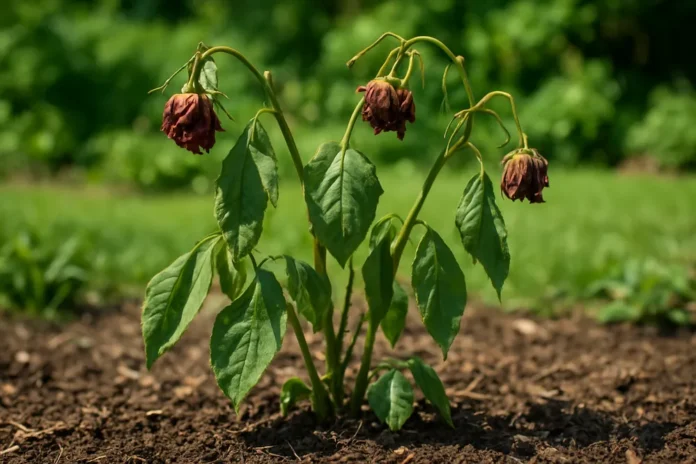
A wilting rose plant is usually struggling with water stress, root damage, heat, disease, or pests. Wilting happens when the plant cannot move enough moisture from its roots to its leaves and stems.
A rose that suddenly looks limp can worry any gardener, especially when the leaves, buds, or whole plant seem to droop overnight. Wilting is not a disease by itself. It is a symptom that the plant is under stress and cannot keep enough water moving through its tissues.
In many U.S. gardens, wilting roses are caused by simple issues like dry soil, soggy roots, extreme heat, or recent transplanting. In other cases, the problem is more serious, such as cane borers, root rot, rose rosette disease, or damage from herbicide drift. The key is to look at the full picture, including the weather, the soil, and exactly how the plant is wilting.
This guide walks through the most common reasons a rose plant wilts, how to tell them apart, and what you can do to help your rose recover. A quick diagnosis matters because some causes are easy to correct, while others need fast action to prevent permanent damage.
What Wilting Means In Roses
Wilting happens when a rose loses more water through its leaves than it can replace through its roots. The leaves may droop, curl, or feel thin and soft. Stems can bend, buds may hang downward, and the entire plant may look tired even when the leaves still appear green.
Not all wilting looks the same. A rose stressed by afternoon heat may perk back up by evening. A rose with root rot or cane damage may stay limp all day and continue declining. Some roses wilt only at the top, while others collapse from the base upward. Those differences help point to the real cause.
- Temporary wilt often appears during very hot afternoons and improves as temperatures cool.
- Persistent wilt usually signals a watering issue, root problem, stem injury, or disease.
- One-sided wilt may point to physical damage, cane problems, or localized root injury.
- Whole-plant wilt is more likely with severe drought, overwatering, root disease, or transplant shock.
Underwatering Is A Common Cause
The most common reason a rose wilts is simple lack of water. Roses need consistent moisture, especially during active growth, bloom production, and hot summer weather. In containers and raised beds, soil can dry out surprisingly fast, sometimes within a day or two.
Signs Of A Rose That Is Too Dry
- Drooping leaves that feel thin or papery
- Dry soil several inches below the surface
- Crispy leaf edges or browning tips
- Buds that fail to open or quickly shrivel
- Wilting that improves after deep watering
Newly planted roses are especially prone to underwatering because their root systems are still small. Established roses usually need less frequent but deeper watering. Shallow, frequent sprinkling encourages surface roots and can leave the deeper root zone too dry.
If dry soil is the issue, the plant often recovers quickly once the root zone is thoroughly moistened. However, repeated drought stress can weaken the rose, reduce flowering, and make it more vulnerable to pests like spider mites.
Overwatering Can Cause Wilting Too
Many gardeners assume wilt always means the plant needs more water, but overwatering can produce the same symptom. When soil stays soggy, the roots cannot get enough oxygen. Without oxygen, roots begin to decline and lose their ability to absorb water, even though the soil is wet.
Clues That Wet Soil Is The Problem
- Soil feels wet or sticky for days after watering
- Leaves wilt but do not perk up after irrigation
- Lower leaves turn yellow before dropping
- The plant looks dull, weak, or stunted
- A sour smell or dark mushy roots may be present
Overwatering is especially common in heavy clay, poorly drained beds, decorative pots without enough drainage, and spots where downspouts dump large amounts of water. If a rose sits in saturated soil, root damage can develop quickly during warm weather.
The fix is not to add more water. The plant needs better drainage, less frequent irrigation, and time for the root zone to dry to a healthy moisture level.
Heat Stress And Intense Sun Can Make Roses Droop
Roses love sun, but extreme heat can still overwhelm them. During stretches of high temperatures, low humidity, and strong afternoon sun, leaves can lose water faster than roots can replace it. This creates temporary wilting even when the plant has been watered properly.
This is especially common in hotter parts of the South, Southwest, and inland West. Dark mulch, reflective walls, gravel beds, and black nursery pots can make the root zone even hotter.
How Heat Wilt Usually Looks
- Wilting is worst in mid to late afternoon
- Plants recover by evening or early morning
- Blooms fade quickly or petals scorch
- Leaves may curl slightly without widespread yellowing
- Soil may still be moderately moist
A rose with heat stress often benefits from more even soil moisture, a layer of mulch, and some protection from the harshest late-day sun. If the wilt disappears overnight, heat is a much more likely cause than disease.
Root Problems Often Lead To Persistent Wilting
If your rose stays wilted no matter how carefully you water, the root system may be damaged. Healthy roots are what move water into the plant. When they are cut, crowded, rotted, eaten, or stressed, the top growth suffers fast.
Transplant Shock
A rose that was recently planted or moved may wilt because its roots were disturbed. Transplant shock is common after planting bare-root roses, shifting container roses into the garden, or moving an established shrub. The plant may droop for several days to a few weeks while it reestablishes root contact with the surrounding soil.
Root Rot
Fungal and water mold pathogens can attack roots in wet soil. Once root rot sets in, the plant may wilt, yellow, and decline steadily. Roots often appear dark, soft, or sparse instead of firm and pale.
Compacted Or Restricted Roots
Roses planted in compacted soil or left rootbound in containers can have trouble taking up water. In a pot, circling roots may struggle to support top growth during hot weather. In the ground, construction traffic or dense clay can create a hard zone that limits root spread.
- Recent planting or digging near the plant can damage roots
- Waterlogged soil raises the risk of root rot
- Container roses dry out faster but can also suffer from congested roots
- Persistent wilting with slow growth often points below the soil line
Stem And Cane Damage Can Cut Off Water Flow
Sometimes the roots are fine, but water cannot move through the canes properly. Roses rely on intact vascular tissue inside the stems. If a cane is cracked, girdled, bored into by insects, or killed back by winter damage, the growth above that point may wilt.
Common Sources Of Cane Injury
- Mechanical damage from pruning tools, string trimmers, pets, or stakes
- Cane borers entering fresh pruning cuts
- Winter dieback or freeze injury
- Stem canker causing dark, dead, sunken sections
- Bent or split canes after storms or heavy blooms
With cane-related wilting, only part of the plant may droop while the rest looks healthy. Follow the wilted stem downward and inspect it closely. You may find blackened tissue, a hollowed cane, or a split that interrupts water movement.
Pruning back to healthy green tissue often solves the problem when the damage is limited to a cane or two.
Pests That Cause Wilt In Roses
Most common rose pests cause spotting, chewing, or distortion rather than dramatic wilting. Still, a heavy infestation or certain hidden pests can weaken a rose enough to make it droop.
Spider Mites
Spider mites thrive in hot, dry conditions. They suck sap from leaves, causing stippling, bronzing, and stress. In severe cases, foliage may look tired and wilted, especially during heat waves.
Aphids
Aphids cluster on tender growth and buds. They rarely cause whole-plant wilting by themselves, but heavy feeding on a young or stressed rose can contribute to drooping shoots and deformed new leaves.
Cane Borers
Cane borers are a more direct cause of wilt. Larvae tunnel into rose canes, damaging the tissue that transports water. The tip beyond the injury often wilts and dies back.
When pests are involved, wilting is usually accompanied by other clues such as visible insects, webbing, stippled foliage, sticky honeydew, or damaged cane tips.
Diseases That Can Make A Rose Wilt
Several rose diseases can lead to wilting, though they do not all act in the same way. Some attack roots, some damage canes, and some weaken the entire plant over time.
Root Rot Diseases
Diseases caused by poor drainage and saturated soil are among the most common serious reasons roses wilt. If roots decay, the top cannot stay hydrated.
Stem Cankers
Cankers create dead patches on canes that block water movement. Growth above the affected area may suddenly droop, brown, and die.
Rose Rosette Disease
Rose rosette disease does not always begin with wilting, but infected plants can decline in odd ways. Look for excessive thorniness, deformed red growth that stays distorted, crowded shoots called witches' broom, and poor overall vigor. These plants typically worsen rather than recover.
Verticillium Wilt
Though less common in roses than in some other ornamentals, verticillium wilt can cause branch dieback and one-sided wilting by clogging water-conducting tissue inside the plant.
Disease-related wilt usually does not resolve just because you water more. When symptoms persist and spread, it is important to look for discoloration in stems, root decline, or unusual deformities.
Chemical Injury And Environmental Shock
Roses can also wilt after exposure to herbicides, sudden weather swings, or salt buildup in containers. These causes are easy to overlook because they may mimic drought or disease.
Herbicide Drift
Weed killers drifting from lawn treatments or nearby spraying can injure rose foliage and soft growth. Twisting, cupping, narrow leaves, and wilted shoot tips are common signs.
Late Freeze Damage
Tender new rose growth can wilt after a cold snap, even when the rest of the shrub seems fine. Damaged shoots may turn limp, darken, and fail to recover.
Salt Or Fertilizer Burn
Too much fertilizer, especially in pots, can draw water out of the roots and create a drought effect inside the plant. This may lead to wilted foliage, browning leaf margins, and root stress.
Whenever wilting appears shortly after spraying, fertilizing, or an unusual weather event, timing itself is an important clue.
How To Tell Which Cause Is Most Likely
The fastest way to narrow down the cause is to compare the wilt pattern with the plant's recent conditions. You do not need lab-level diagnosis to separate common problems from serious ones.
- If the soil is bone dry and the rose perks up after a deep soak, underwatering is the likely cause.
- If the soil is wet, leaves are yellowing, and the plant stays limp, overwatering or root rot is more likely.
- If wilting shows up only in the afternoon and improves at night, heat stress is a strong possibility.
- If only one cane or section wilts, inspect for stem damage, borers, or cankers.
- If the rose was planted recently, transplant shock may be the main factor.
- If new growth is twisted or oddly red after weed treatment nearby, think chemical injury.
- If decline is steady and strange with excessive thorns or distorted shoots, consider rose rosette disease.
Good diagnosis starts with simple observation. Look at soil moisture, weather, root drainage, stem condition, and whether the symptom affects the whole plant or just part of it.
How To Help A Wilting Rose Recover
Once you identify the likely cause, match the response to the problem. Watering more is not always the answer, and in some cases it can make things worse.
If The Rose Is Too Dry
- Water deeply so moisture reaches the full root zone
- Apply 2 to 3 inches of mulch around the base, keeping it off the canes
- Increase watering frequency during heat waves or windy periods
- For containers, water until excess drains out the bottom
If The Soil Is Too Wet
- Pause irrigation until the top few inches begin to dry
- Improve drainage if the site stays soggy
- Avoid leaving saucers full under pots
- Do not pile mulch too thickly over a wet root zone
If Heat Is The Main Issue
- Water consistently in the morning
- Mulch to keep the root area cooler
- Use temporary afternoon shade for stressed container roses
- Delay hard pruning or fertilizing during extreme heat
If Stems Or Canes Are Damaged
- Prune back to healthy green tissue with clean shears
- Remove obviously dead, blackened, or hollow canes
- Dispose of diseased prunings rather than composting them
If Pests Or Disease Are Suspected
- Treat only after you identify the likely pest or disease
- Improve airflow and avoid soaking foliage late in the day
- Remove severely diseased growth promptly
- Replace plants affected by rose rosette disease, including as much root material as practical
How To Prevent Wilting In The Future
Healthy roses are much less likely to wilt repeatedly. Prevention is mostly about strong root health, even watering, and reducing avoidable stress.
- Plant roses in well-drained soil with at least 6 hours of sun
- Water deeply and less often rather than lightly every day
- Use mulch to moderate soil temperature and moisture loss
- Space plants for good air circulation
- Inspect canes regularly for damage, dieback, or borer entry holes
- Avoid overfertilizing, especially in hot weather or containers
- Protect roses from herbicide drift when treating nearby weeds
- Monitor newly planted roses closely until roots are established
If your rose has a history of wilting in the same spot every summer, the site may be the problem. Poor drainage, reflected heat, or root competition from large trees can keep stress recurring until the growing conditions change.
FAQ
Can a Rose Wilt Even if the Soil Is Wet?
Yes. Roses can wilt in wet soil when roots are oxygen-starved or starting to rot. In that case, the plant cannot absorb water properly even though moisture is present.
Will a Wilted Rose Recover on Its Own?
Sometimes. A rose stressed by afternoon heat may recover by evening, but a rose with chronic drought, root rot, stem damage, or disease usually needs the underlying problem corrected first.
Why Is Only One Branch of My Rose Wilting?
One wilted branch often points to localized damage such as a cracked cane, stem canker, cane borer, or injury from pruning or weather. Inspect that stem from tip to base.
How Often Should I Water a Rose Plant to Prevent Wilting?
It depends on weather, soil, and whether the rose is in the ground or a container. Most garden roses do best with deep watering when the root zone begins to dry, while potted roses often need water more often in summer.
Can Too Much Fertilizer Make Roses Wilt?
Yes. Excess fertilizer can burn roots and interfere with water uptake, especially in containers or dry soil. This may lead to drooping leaves and brown edges.
Do Roses Wilt After Transplanting?
Yes. Transplant shock is common after planting or moving roses because the roots are disturbed. Mild wilting can be normal while the plant reestablishes, especially in warm weather.
Is Wilting a Sign of Rose Rosette Disease?
Not by itself. Rose rosette disease more often shows distorted red growth, excessive thorns, and abnormal clusters of shoots, though infected plants can weaken and decline over time.
Still not sure what is stressing your rose? Read our rose care and treatment guides to find the best watering tools, fungicides, and pest controls for healthier blooms.
