

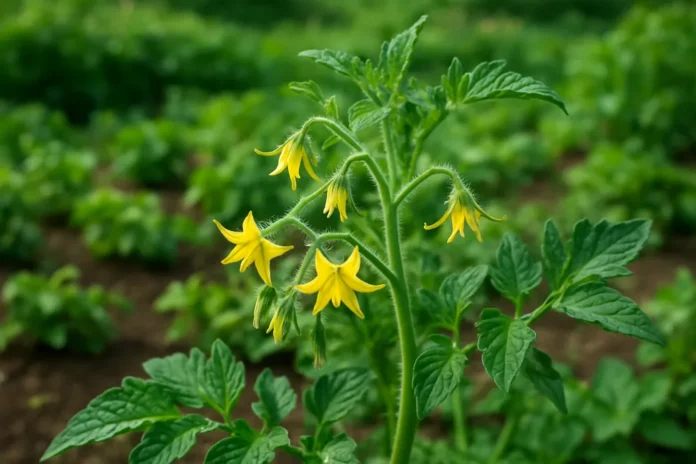
Tomato flowers usually fall off because the plant is stressed by heat, cold, uneven watering, or poor pollination. Excess nitrogen can also cause lush growth with fewer tomatoes.
Seeing tomato blossoms dry up and drop before they form fruit is frustrating, especially when the plants otherwise look vigorous. Tomato flower drop is common in home gardens, and it often happens during weather swings or periods of fast growth.
In many cases, the problem is not disease at all. Your plant may have plenty of green leaves, but the flowers can still fall off when pollination fails or the plant is under stress from temperature, moisture, or fertilizer imbalance.
The good news is that blossom drop is usually fixable once you know the trigger. A few adjustments to watering, feeding, airflow, and variety choice can make a big difference in how many flowers turn into tomatoes.
What Tomato Flower Drop Means
Tomato flowers are supposed to open, get pollinated, and then develop a tiny green fruit behind the blossom. When that process is interrupted, the flower stem yellows or dries, and the bloom drops off without forming a tomato. Gardeners often call this blossom drop or flower drop.
A few dropped flowers are normal, especially early in the season or during rough weather. If your plant is dropping many blossoms in a row, that points to a growing condition that is preventing fruit set.
- A normal flower turns into a small fruit within several days after pollination.
- A dropped flower dries up and falls away without swelling at the base.
- Heavy flower loss usually signals stress rather than permanent plant decline.
Temperature Stress Is the Most Common Cause
Hot Days and Warm Nights Can Stop Fruit Set
Tomatoes set fruit best within a fairly narrow temperature range. When daytime temperatures climb too high, especially above about 90 to 95 degrees F, pollen can become less viable. Warm nights are often even more damaging because the plant cannot recover. If nighttime temperatures stay above roughly 70 to 75 degrees F, flowers may open normally but fail to set fruit.
Cold Snaps Can Cause the Same Symptom
Cool weather can also trigger flower drop. If nighttime temperatures fall below about 55 degrees F, pollination and fertilization may not occur properly. Early spring tomatoes often bloom before conditions are stable enough for fruit set, so the first flush of flowers may fall off.
- High daytime heat can damage pollen quality.
- Warm nights often prevent flowers from setting fruit.
- Cool nights in spring can make blossoms drop before tomatoes form.
Poor Pollination Leaves Flowers with Nowhere to Go
Tomatoes are self-pollinating, but they still need the flower to be shaken by wind, vibration, or insect activity so pollen can move where it needs to go. In still, humid, or protected spaces, that does not always happen well.
Greenhouses, Patios, and Covered Beds Are Common Trouble Spots
Plants grown in greenhouses, hoop houses, screened porches, or tucked into windless corners often produce plenty of blooms but set fewer fruits. Without enough movement, pollen may cling together and fail to release properly.
High Humidity or Very Dry Air Can Interfere
Pollen works best under moderate conditions. Very humid air can make pollen sticky, while very dry conditions can reduce its viability. Either extreme can lead to flowers that look healthy but eventually drop.
- Lack of breeze or vibration can reduce pollination.
- Heavy humidity can make pollen clump and stick.
- Enclosed growing spaces often need extra airflow.
Water Stress Quickly Triggers Blossom Drop
Tomatoes are sensitive to swings in soil moisture. If the soil gets bone dry and then suddenly soaked, the plant shifts into survival mode. One of the first things it may do is shed flowers because developing fruit takes energy and water.
Underwatering Causes the Plant to Conserve Resources
When tomato roots cannot access steady moisture, the plant prioritizes its stems and leaves over fruit production. Blossoms are expendable, so they may dry up and drop before fruit forms.
Overwatering Can Stress Roots Too
Soggy soil reduces oxygen around the roots. That weakens the plant, limits nutrient uptake, and can mimic drought stress. Flowers may fall if roots stay waterlogged for long periods.
- Inconsistent watering is more damaging than a slightly dry but steady schedule.
- Containers dry faster and often need closer monitoring than in-ground plants.
- Mulch helps keep soil moisture more even during heat.
Too Much Nitrogen Can Create Big Plants with Few Tomatoes
Tomatoes need nitrogen, but too much of it pushes lush green growth instead of fruiting. A plant overloaded with nitrogen often looks dark green, vigorous, and healthy at first glance. It may keep producing stems and foliage while dropping blossoms or setting very few tomatoes.
Common Nitrogen Sources in Home Gardens
Fresh manure, high-nitrogen lawn fertilizers, frequent fish emulsion feeding, and rich compost applications can all contribute. This is especially common when tomatoes are planted near lawns or fed with an all-purpose fertilizer meant for leafy plants.
- Very dark green foliage can be a clue.
- Rapid leafy growth with poor fruit set often points to excess nitrogen.
- Tomatoes generally do better with a fertilizer designed for flowering and fruiting plants once they begin blooming.
Humidity, Wind, and Weather Swings Can All Play a Role
Even if temperatures seem mostly acceptable, sudden shifts in weather can interrupt flowering. Strong winds can physically damage blossoms or dry plants too quickly. Extended rainy periods can limit pollinator activity and raise humidity around the flowers. Sudden cold fronts can stop fruit set for a week or more.
This is why tomato flower drop often appears in waves. A plant may lose blossoms during one hot spell, pause, and then begin setting fruit again once conditions improve.
Pests and Disease Are Less Common but Still Possible
Most blossom drop is caused by environment, not infection. Still, pests and disease can weaken plants enough to reduce flowering and fruit set. If the whole plant looks unhealthy, broaden the diagnosis beyond weather and watering.
Watch for Sap-sucking Insects
Aphids, whiteflies, thrips, and spider mites can stress tomato plants by feeding on leaves and stems. Heavy infestations reduce overall vigor and can contribute to flower loss.
Disease Usually Comes with Other Symptoms
If flower drop is paired with leaf spotting, wilting, stem lesions, or distorted growth, disease may be involved. Problems like early blight, bacterial diseases, or viral infections usually show more than blossom drop alone.
- Inspect the undersides of leaves for insects.
- Look for yellowing, spots, curling, or overall stunting.
- Isolated blossom drop without other symptoms usually points back to stress rather than disease.
Container Tomatoes Often Drop Flowers for Different Reasons
Tomatoes in containers can be especially prone to blossom drop because pots heat up and dry out faster than garden soil. Root systems are also more limited, so stress shows up sooner.
- Small pots warm quickly in full sun and may overheat roots.
- Potting mix can go from wet to dry in a day during summer.
- Frequent fertilizing in containers sometimes leads to excess nitrogen or salt buildup.
- Covered patios and balconies may have poor airflow, which reduces pollination.
If your tomato is in a pot, a larger container, consistent watering, and better airflow often solve much of the problem.
How to Tell Which Cause Is Most Likely in Your Garden
The pattern of flower loss usually gives the best clue. Instead of focusing on a single dropped bloom, look at the plant's recent weather, watering habits, and growth pattern.
- Flowers dropping during a heat wave usually point to temperature stress.
- Early-season flower drop after cool nights often means conditions are still too cold.
- Big leafy plants with few fruiting clusters suggest excess nitrogen.
- Plants in dry containers or raised beds often drop flowers from inconsistent moisture.
- Healthy-looking flowers in a calm, enclosed space may simply be poorly pollinated.
Often more than one factor is involved. For example, a potted tomato on a hot patio may be dealing with high temperatures, quick drying soil, and weak airflow at the same time.
What to Do to Stop Tomato Flowers From Falling Off
Keep Moisture Even
Water deeply enough to moisten the full root zone, then water again before the soil fully dries out. The goal is even moisture, not constant saturation. In most gardens, mulch helps reduce swings by slowing evaporation and cooling the root area.
Reduce Heat Stress when Possible
During severe summer heat, light afternoon shade can protect blossoms in especially hot regions. This is most useful in the South, Southwest, and inland heat zones where fruit set may pause for part of summer.
Improve Pollination
In still areas, gently shaking the plant or tapping flower trusses can help release pollen. Better airflow through proper spacing and staking also improves pollination. Outdoors, pollinator-friendly nearby flowers may increase beneficial insect activity around the garden.
Use the Right Fertilizer Timing
After tomatoes begin flowering, switch away from high-nitrogen feeding if plants are already vigorous. Use a balanced or tomato-specific fertilizer that supports blooming and fruiting rather than excessive leaf growth.
Choose Suitable Varieties
Some tomato varieties handle heat or cool weather better than others. If blossom drop is a yearly problem, try cultivars labeled for heat set, early production, or regional reliability in your climate.
When Tomato Flower Drop Is Normal and when to Worry
Do not panic over a few lost blossoms. Tomatoes naturally produce more flowers than they can always support, especially early on. It is also normal for fruit set to slow during temperature extremes and then pick back up when the weather moderates.
You should look more closely if nearly every flower is dropping for weeks, the plant has no fruit at all, or other symptoms are showing up at the same time. Persistent flower loss alongside yellowing, curling, stunting, or obvious pest problems means the plant needs a broader diagnosis.
How Long It Takes Tomatoes to Recover
Once conditions improve, tomatoes often resume setting fruit fairly quickly. New flower clusters are usually more productive than old stressed blossoms. If heat, watering, or fertilizer issues are corrected, you may see better fruit set on the next round of flowers rather than on the blooms already struggling.
This is why patience matters. Flower drop does not always ruin the season. Many plants rebound well and produce heavily once the weather settles and care becomes more consistent.
FAQ
Will Dropped Tomato Flowers Grow Back Into Fruit?
No. Once a flower drops, that bloom will not form a tomato. The plant has to produce new flowers for future fruit set.
Can Too Much Rain Make Tomato Flowers Fall Off?
Yes. Extended rainy weather can raise humidity, reduce pollination, and keep roots too wet, all of which can contribute to blossom drop.
Should I Hand Pollinate My Tomato Flowers?
It can help in greenhouses, covered patios, or other low-wind spaces. Outdoors, many gardens get enough natural pollination unless weather or airflow is limiting it.
Why Do My Tomato Plants Have Lots of Flowers but No Fruit?
That usually means the flowers are not being pollinated well or the plant is under temperature, water, or fertilizer stress. Excess nitrogen is a common cause when plants are very leafy.
Do Cherry Tomatoes Drop Flowers Less than Larger Tomato Types?
Often yes. Many cherry tomato varieties set fruit more reliably through heat, humidity, and changing conditions than large-fruited slicers.
Can Blossom Drop Happen Even if the Plant Looks Healthy?
Yes. A tomato plant can have strong green growth and still lose flowers if nights are too warm, the soil moisture is uneven, or pollination is poor.
Is Epsom Salt a Good Fix for Tomato Flower Drop?
Usually no. Blossom drop is more often tied to temperature, watering, or nitrogen issues than magnesium deficiency. Adding Epsom salt without a proven need can create new nutrient imbalances.
Want more tomatoes and fewer setbacks? Read our guide to the best tomato fertilizers and proven tomato plant care tips to improve flowering, fruit set, and harvest size.
