

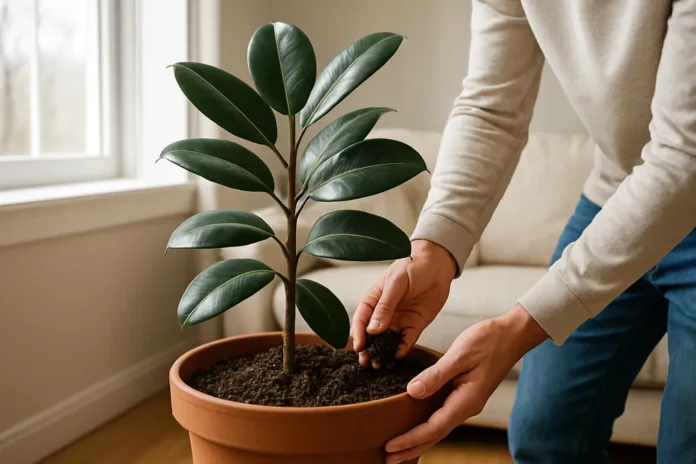
A rubber tree usually stops producing new leaves because it is not getting enough bright light, is stressed by watering problems, or has slowed down in cooler, darker conditions. It can also pause growth when rootbound, recently moved, or recovering from pest or root stress.
When a rubber tree looks healthy enough but just sits there month after month without pushing fresh growth, it can be frustrating. These plants are usually steady growers indoors when conditions are right, so a long pause often means something in the environment is holding them back rather than the plant simply being stubborn.
In my experience, a rubber tree not growing new leaves is most often tied to light levels, watering habits, or a seasonal slowdown that lasts longer than people expect. The good news is that this symptom is usually fixable once you match the plant's growth pattern with what it actually needs indoors.
What Normal Growth Looks Like on a Rubber Tree
Rubber trees do not always grow at a perfectly even pace. In spring and summer, a healthy plant often produces a new leaf from a reddish sheath at the tip of a stem, then pauses before the next one appears. Indoors, that rhythm can be much slower than people expect, especially in average household light.
If your plant has firm stems, leaves that stay glossy and upright, and no major leaf drop, it may not be in crisis. It may simply be growing slowly. A real problem is more likely when growth has stopped for an entire active season, the newest leaf never unfurls, lower leaves are dropping, or the plant looks stalled for many months while conditions are poor.
- A healthy indoor rubber tree may push growth in bursts rather than continuously.
- Small plants often establish roots before putting out obvious top growth.
- Variegated varieties usually grow more slowly than solid green forms.
- Growth often slows dramatically from late fall through winter in much of the U.S.
Low Light Is the Most Common Reason Growth Stalls
Rubber trees tolerate moderate light, but they do not grow vigorously in it. This is where many home gardeners get tripped up. A plant can survive in a dim corner for a long time and still look decent, yet never make meaningful new leaves. Without enough energy from light, the plant prioritizes maintenance over growth.
The best indoor spot is usually near a bright window with lots of indirect light, plus some gentle morning or late afternoon sun. A plant set several feet back from a small window, blocked by blinds, or placed in a dark room may remain alive but largely inactive.
When I am diagnosing a stalled rubber tree, light is the first thing I question, even if the plant owner says the room is bright. Human eyes adjust well to dim interiors. Plants do not. If the newest leaves are small, the spacing between leaves is long, or the plant leans hard toward the window, I usually treat light as the main issue.
Signs Your Rubber Tree Needs More Light
- No new leaves during spring or summer
- Long bare stem sections between leaves
- Plant leaning toward one side
- New leaves smaller than older ones
- Slow drying soil because the plant is using little water
How to Improve Light Without Shocking the Plant
Move the plant gradually closer to the brightest window in your home over a week or two. East-facing windows are gentle and reliable. South- or west-facing windows can work very well if harsh midday sun is filtered. If natural light is limited, a grow light placed above the plant for part of the day can make a noticeable difference.
Watering Stress Can Stop New Leaf Production
A rubber tree that is watered too often or not often enough may pause growth while it copes with stress. Overwatered roots struggle to take up oxygen, while severely dry roots cannot support active growth. In both cases, the plant conserves energy and stops pushing new leaves.
The tricky part is that underwatering and overwatering can both lead to the same complaint: 'It has not done anything in months.' That is why the soil and roots matter more than the calendar. Watering every Saturday is not as helpful as watering based on how dry the mix actually is.
Clues That Overwatering Is the Problem
- Soil stays wet for a long time
- Pot feels heavy most of the week
- Leaves may yellow or drop from the bottom
- Growth tip looks inactive or weak
- The pot has poor drainage or the saucer stays full
Clues That Underwatering Is the Problem
- Soil pulls away from the sides of the pot
- Leaves droop or curl slightly between waterings
- The plant dries out very fast
- New growth aborts before it opens
- The mix has become hard and repels water
A good general method is to water thoroughly once the top part of the potting mix has dried, then let excess water drain away fully. Rubber trees like consistency. They do best when they are not swinging from soggy roots to bone-dry soil over and over.
If I suspect watering stress, I do not immediately add fertilizer. I first get the moisture cycle back to normal for a few weeks, because feeding a stressed root system rarely restarts growth and can make the plant more sluggish.
Temperature, Drafts, and Seasonal Slowdown Matter More than People Think
Rubber trees are tropical plants, and they respond strongly to indoor temperature swings. Cool rooms, cold glass, heat vents, and drafty doors can all interrupt growth even when the rest of care looks fine. If the plant is parked near an air conditioner, fireplace, or winter windowpane, the tip may stay inactive for weeks.
During fall and winter, reduced daylight alone can slow or stop new leaves. That does not automatically mean something is wrong. In much of the country, a rubber tree will rest through the darker months and then resume when days get longer and brighter.
- Ideal growth usually happens in warm rooms with stable temperatures.
- Cold stress is more likely below about 60 degrees Fahrenheit.
- Sudden moves between indoor and outdoor conditions can stall the plant.
- Winter growth pauses are common, especially in northern homes.
If the timing of the slowdown matches a move into winter, the best response may simply be patience plus improved light. The goal is not to force lush growth in the darkest part of the year. It is to avoid extra stress so the plant can restart naturally when conditions improve.
Root Issues and Pot Problems Can Keep the Plant Stuck
A rubber tree that has outgrown its pot may stop producing leaves because the roots have filled the container so tightly that water, air, and nutrients move poorly. On the other hand, a plant in a pot that is far too large can sit in wet mix too long and also stall out. Either extreme can interfere with healthy growth.
Rootbound plants often dry quickly, need water constantly, and may have roots circling heavily inside the pot. Plants suffering from root rot may stay wet for too long, smell sour in the soil, or show soft declining leaves along with no new growth.
When to Repot
Repot when roots are densely packed, growing from drainage holes, or the soil mass is mostly roots with very little mix left. Move up only one pot size in most cases. Use a chunky, well-draining indoor plant mix that does not stay swampy.
When Not to Repot
Do not repot just because the plant is not growing if the real issue is low light or winter dormancy. Repotting adds stress and can delay recovery if the plant is already struggling. It is most helpful when you have clear evidence that the roots or soil structure are part of the problem.
I have seen many rubber trees called rootbound when they were really light-starved. If a plant has room in the pot but the stems are stretching and the newest growth is tiny, I fix the light first. Repotting will not solve an energy shortage.
Nutrients, Pests, and Leaf Bud Problems Can Also Block Growth
Once light and watering are reasonably good, look at the next layer of possibilities. A rubber tree can pause new growth if it has exhausted its potting mix, if pests are draining vigor, or if the growing tip was damaged. These causes are less common than low light, but they do show up often enough to check.
Nutrient Issues
A plant that has been in the same potting mix for years may run short on nutrients and grow very slowly. This does not usually cause dramatic symptoms first. More often, the plant just loses momentum. During active growth, a balanced houseplant fertilizer at a mild rate can help support new leaves. Avoid heavy feeding in winter or when the roots are stressed.
Pests
Spider mites, scale, mealybugs, and thrips can all weaken a rubber tree enough to halt growth. Check both sides of leaves, the stem joints, and the newest tissue. Sticky residue, fine webbing, tiny moving specks, or crusty bumps are all warning signs.
Damaged Growth Tip
Rubber trees usually grow from the terminal bud at the tip. If that bud was snapped, bruised, dried out, or damaged by cold, the plant may take time to activate a side bud lower down. That can make it look frozen in place even though it is slowly reorganizing its next point of growth.
How to Get Your Rubber Tree Growing Again
The fastest way to help a stalled rubber tree is to correct the most likely stress points in the right order. Do not change everything at once. If you move the plant, repot it, start fertilizer, and change watering all in the same weekend, you will not know what helped or what caused more stress.
- Place the plant in brighter indirect light or add a grow light.
- Check the potting mix and correct watering so the roots are neither soggy nor chronically dry.
- Keep the plant warm and away from cold drafts, vents, and sudden temperature swings.
- Inspect for pests, especially on the undersides of leaves and at the newest growth.
- Repot only if the roots are crowded, rotting, or the mix has badly broken down.
- Feed lightly during active growth if the plant has been in the same soil for a long time.
After you make improvements, watch for progress in new growth, not necessarily in old leaves. Old damage often stays visible. The real sign of recovery is a healthy new leaf sheath, a swelling bud, or a fresh leaf unfurling at the top or from a side node.
Be patient with the timeline. Even after conditions improve, a rubber tree may need several weeks to restart. Indoors, especially in cooler months, recovery is rarely instant.
When a Lack of New Leaves Is a Sign of a Bigger Problem
Sometimes no new leaves is only one symptom in a wider decline. If your rubber tree has mushy stems, widespread yellowing, black spots that spread, a sour-smelling root ball, severe pest infestation, or rapid leaf drop from top to bottom, you are likely dealing with more than a simple growth pause.
In those cases, focus on the underlying health issue first. Root rot, severe cold injury, or heavy mite damage can all stop growth entirely until the plant stabilizes. A healthy plant can wait to grow. A damaged plant is trying to survive.
- Soft or blackened stems suggest serious moisture or cold damage.
- A rotten smell in the pot points to root problems.
- Rapid leaf loss near the top can indicate severe stress.
- Distorted new growth often suggests pest activity or bud damage.
FAQ
How Long Can a Rubber Tree Go Without Making a New Leaf?
It can pause for several weeks, and in winter even a few months is not unusual indoors. If it has not grown at all through spring and summer, look more closely at light, watering, and roots.
Will a Rubber Tree Grow New Leaves From the Bare Lower Stem?
Sometimes, but not always. Rubber trees are more likely to produce new growth from the tip or from side buds after pruning or tip damage than to refill every old bare spot on the trunk.
Should I Fertilize My Rubber Tree if It Is Not Growing?
Only if light, watering, and root health are already in decent shape. Fertilizer helps support growth, but it rarely fixes a plant that is stalled because it is too dark, too wet, too dry, or root-damaged.
Can a Rubber Tree Stop Growing After I Move It?
Yes. A move can change light, humidity, temperature, and watering pace all at once. Many rubber trees pause briefly after being relocated, especially if the new spot is dimmer or draftier.
Does Pruning Help a Rubber Tree Make New Leaves?
Pruning can encourage branching and activate buds below the cut, but it does not fix poor growing conditions. If the plant lacks light or has root stress, pruning alone will not restart healthy growth.
Why Is the Red Sheath There but No Leaf Is Opening?
That often points to stress around watering, humidity, root health, or inconsistent conditions. Sometimes the sheath dries before the leaf expands, and sometimes the plant is simply developing very slowly because light is weak.
Do Rubber Trees Need Direct Sun to Grow New Leaves?
They do not need harsh all-day direct sun, but they usually need brighter light than people assume. A little gentle direct morning or late afternoon sun can help, while strong midday sun may need filtering indoors.
Want a faster fix for a stalled houseplant? Check our guide to the best grow lights, potting mixes, and fertilizers for rubber trees so you can give your plant the exact support it needs.
