

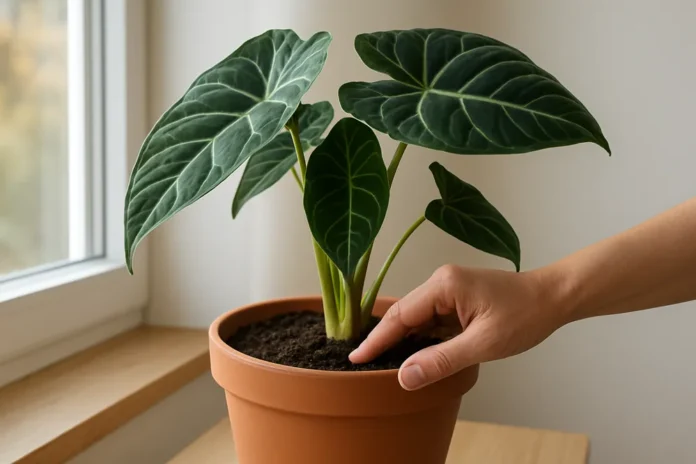
An alocasia usually stops growing new leaves because it is not getting enough warmth, light, root space, or steady moisture during active growth. Seasonal dormancy, transplant stress, and nutrient shortages can also pause leaf production.
When an alocasia is happy, it usually makes its intentions obvious. You see a fresh spear pushing up from the base, then a new leaf starts to unfurl every few weeks during the growing season. When that stops, it can feel like the plant is frozen in place, especially if the older leaves still look decent.
In my experience, a stalled new leaf growth pattern is rarely random. Alocasias are a little demanding, and they respond quickly when one key condition is off. Most of the time the slowdown comes back to light, temperature, watering habits, root problems, or a natural seasonal rest. The good news is that once you match the care routine to what the plant is actually doing, these plants often restart growth surprisingly well.
Below, I will walk through the most common reasons an alocasia stops producing leaves, how to tell which one fits your plant, and what usually helps it begin growing again.
How Alocasia Growth Normally Works
Alocasias do not grow at the same pace all year. During spring and summer, a healthy plant may push out new leaves steadily if it has bright light, warm temperatures, and enough root energy to support fresh growth. In fall and winter, growth often slows down or stops altogether, especially indoors where light levels drop and the air stays cooler.
These plants also tend to grow in bursts. You might get one new leaf, then a pause, then another when conditions improve. A pause is not always a crisis. The concern starts when the plant has been stalled for a long stretch during the active season, or when the lack of new leaves comes with yellowing, drooping, root issues, or shrinking foliage.
When I am judging whether an alocasia is truly stuck, I focus less on the calendar and more on the crown. If the center stays tight and inactive for weeks in warm bright conditions, I start looking for a root or environment problem rather than assuming the plant is just resting.
Not Enough Light Is One of the Most Common Causes
Alocasias need more light than many people expect. They often survive in medium light, but survival is different from active growth. If your plant sits across the room from a window, in a dark corner, or behind heavy curtains, it may hold onto its existing leaves without having enough energy to make new ones.
The best indoor setup is usually bright, indirect light for much of the day. An east window works well, and a few feet back from a bright south or west window can also be good if the leaves are protected from harsh midday sun. In very dim homes, a grow light often makes a major difference.
- Leaves stay small or the plant has not made a new leaf in months during spring or summer.
- Petioles stretch or lean strongly toward the window.
- Older leaves remain green, but the plant looks static rather than vigorous.
- Any new leaf that does appear is smaller than the previous one.
If low light is the issue, move the plant gradually to a brighter spot rather than jumping straight into direct afternoon sun. A sudden light increase can scorch foliage, especially if the plant has been living in dim conditions for a while.
Cool Temperatures and Drafts Can Shut Down Growth
Alocasias are tropical plants, and they do their best growing when they stay warm. If the room regularly drops below about 65 degrees Fahrenheit, or if the plant sits near an exterior door, drafty window, air conditioner vent, or heating blast, it may stop producing leaves even if everything else seems fine.
A plant that looked active in summer can stall fast once nights cool down. Even indoor plants notice shorter days and lower temperatures. In colder rooms, roots stay less active, water use slows, and the plant becomes far less interested in pushing new foliage.
- Growth stopped soon after seasonal weather changed.
- The plant is near a cold windowpane or draft source.
- Leaves droop more at night or after temperature swings.
- Soil stays wet much longer than it did in warm weather.
Try to keep alocasia in a steady, warm part of the house. Warmth alone will not force growth, but without it, even a well-watered and well-fed plant can remain stalled.
Watering Problems Often Slow New Leaf Production
Underwatering Can Put Growth on Hold
If the potting mix dries too hard or too often, the plant may stop investing in new leaves. Alocasias like consistent moisture during active growth, not bone-dry cycles. A dehydrated plant focuses on survival first, so leaf production tends to pause.
Underwatered plants may show curling edges, drooping that improves after watering, crispy tips, or a potting mix that pulls away from the sides of the pot. In severe cases, older leaves may yellow and drop before any new leaf appears.
Overwatering Can Damage Roots and Stop Growth Even Faster
Too much water is just as common, and often more serious. If roots stay in soggy, airless soil, they cannot function properly. Once roots struggle, the plant loses the ability to support new foliage. Instead of growing, it sits still or declines.
- Soil stays wet for many days after watering.
- The pot feels heavy all the time.
- Lower leaves yellow while no new growth appears.
- The crown or roots smell sour when checked.
- You see fungus gnats hovering around the pot.
I get the best results by watering when the top inch or two of mix has dried, not by following a fixed weekly schedule. Alocasias use water very differently in July than they do in January, so the plant has to set the timing.
The goal is evenly moist but not waterlogged soil during the growing season. If your mix alternates between swampy and dusty, expect leaf production to slow down.
The Potting Mix or Pot Size May Be Holding It Back
Even good watering habits can fail if the potting setup is wrong. Alocasias like a chunky, airy mix that holds some moisture but still drains well. A dense peat-heavy mix that stays compacted can starve roots of oxygen. On the other hand, a very fast-draining mix in a hot bright room may dry so quickly that the plant never gets stable moisture.
Pot size matters too. If the plant is badly rootbound, roots may circle densely and leave little room for fresh growth. But if the pot is much too large, the excess soil can stay wet too long and encourage root problems. Both extremes can stop new leaves.
- Roots are visibly circling the bottom or pushing out drainage holes.
- Water runs straight through because there is barely any soil left.
- The mix has become hard, compacted, or sour-smelling.
- The plant was moved into a much larger pot and stalled afterward.
A good alocasia mix often includes potting soil plus orchid bark, perlite, and sometimes coco coir or pumice. When repotting, go up only one pot size unless the plant is severely rootbound. That keeps moisture levels easier to manage.
Dormancy Can Make a Healthy Plant Look Stuck
Many alocasias slow down sharply or go semi-dormant indoors, especially in fall and winter. This is a normal response to lower light and cooler conditions. During dormancy, the plant may stop producing new leaves, hold steady with just a few leaves, or even drop some older foliage while the underground corm stays alive.
This catches a lot of gardeners off guard because the plant does not always look obviously dormant. It may simply stop doing anything. If the roots are sound, the crown is firm, and the timing lines up with shorter days, dormancy is a very reasonable explanation.
- Growth stopped in fall or winter rather than in peak spring or summer.
- The plant is not worsening quickly, just resting.
- Water use is much slower than before.
- The corm or crown still feels firm, not mushy.
When dormancy is the cause, patience matters more than pushing the plant with extra water or fertilizer. Growth usually resumes when warmth and light improve.
Nutrient Deficiency or Weak Feeding Can Limit Growth
Alocasias are not the heaviest feeders in the houseplant world, but they do need nutrients to make substantial leaves. If a plant has been in the same soil for a long time and has not been fertilized through the growing season, it may simply run short on the resources needed to push new growth.
The most common pattern is a plant that looks pale, small, or generally stalled rather than dramatically damaged. Nitrogen, potassium, magnesium, and micronutrients all affect leaf growth. Deficiency is more likely when the plant is actively trying to grow but cannot sustain momentum.
Use a balanced houseplant fertilizer at a diluted rate during spring and summer when the plant is actively growing. Do not overfeed a stressed or dormant alocasia. Fertilizer is helpful only when the roots are healthy enough to use it.
Root Damage and Rot Can Prevent Any New Leaves
If your alocasia has not produced a leaf in a very long time and also seems weaker overall, root damage should move high on your suspect list. Rot, compaction, cold wet soil, and repeated overwatering can all reduce the root system. Without healthy roots, the plant does not have the energy or plumbing to build fresh leaves.
A plant with root trouble may droop despite wet soil, develop yellowing leaves, shed older foliage, or feel loose in the pot. When removed from the container, healthy roots should look firm and light-colored. Rotten roots are often brown, mushy, or stringy.
When an alocasia stops growing but the soil never seems to dry, I usually suspect the roots before anything else. A plant with a reduced root system cannot drink normally, so wet soil that lingers is often part of the diagnosis, not just a separate watering issue.
If rot is present, trim away dead roots, refresh the mix, and repot into a container with drainage. Then water carefully while the plant rebuilds. Recovery can be slow, but a healthy root system is what eventually leads back to new foliage.
Pests and Stress Can Interrupt Active Growth
Sap-sucking pests like spider mites, thrips, mealybugs, and aphids can weaken an alocasia enough to slow or stop leaf production. This is especially common in dry indoor air, where spider mites can multiply quickly. A stressed plant may keep its older leaves for a while but stop investing in new ones.
- Fine webbing under leaves or at leaf joints.
- Silvery scarring, stippling, or distorted new growth.
- Sticky residue or cottony clusters.
- A generally tired plant that does not improve even when care seems correct.
Stress from repotting, moving, shipping, or sudden environmental change can do the same thing. Alocasias often pause after a big disturbance. If the plant was recently repotted, relocated, or brought home, a temporary growth stall is not unusual.
How to Tell Which Cause Fits Your Plant
The trick with alocasia is not making every correction at once. If you change light, fertilizer, watering, and potting mix all in the same weekend, you may fix the problem, but you will not know what caused it. Worse, you can add stress to a plant that only needed one adjustment.
Instead, look at the pattern around the stall. A plant in winter by a cool window points toward dormancy and temperature. A plant in a dense wet mix points toward root stress. A plant in spring that sits far from light usually points toward energy shortage. Match the symptom pattern to the most likely cause before making a correction.
- Check the season and room temperature.
- Look at the light level where the plant actually sits, not just how bright the room feels to you.
- Test the moisture in the root zone and note how long the mix stays wet.
- Inspect leaves and stems for pests.
- Consider whether the plant was recently repotted, moved, or stressed.
- If the soil seems suspect, inspect the roots.
What Usually Helps an Alocasia Start Growing Again
Once the likely cause is clear, focus on restoring active growing conditions rather than trying to force a result. Alocasias respond best when several basics line up at the same time: bright indirect light, warm temperatures, a breathable mix, consistent watering, and moderate feeding during the season.
- Move the plant to brighter indirect light or add a grow light.
- Keep it in a warm, stable room away from cold drafts and vents.
- Water when the top layer has dried slightly, but do not let the root ball go bone dry repeatedly.
- Repot if the roots are rotting, severely rootbound, or stuck in compacted mix.
- Feed lightly during active growth if the plant has not been fertilized in months.
- Treat pests promptly and isolate the plant if needed.
Then give the plant time. A stalled alocasia will not always produce a leaf right away, especially after root work or seasonal slowdown. What you want first is stability: firm petioles, reasonable water uptake, and no continuing decline. Once the plant regains strength, the next spear often follows.
When No New Leaves Are Normal and When to Worry
It is normal for an alocasia to pause between leaves, especially indoors. It is also normal for growth to stop for part of the year if light and warmth drop. If the plant is otherwise firm, clean, and stable, a pause does not automatically mean something is wrong.
I get more concerned when the pause comes with yellow leaves, mushy stems, a sour potting mix, persistent drooping, pest damage, or a complete lack of activity during prime growing conditions. Those signs suggest the plant is not simply resting. It is struggling.
The main goal is not constant growth every month. The goal is a plant with enough energy and healthy roots to resume growth when the conditions are right.
FAQ
How Long Can an Alocasia Go Without Making a New Leaf?
Indoors, an alocasia can pause for several weeks between leaves during active growth and for much longer in winter. If it has gone a few months in spring or summer without any new growth, start checking light, roots, temperature, and watering.
Will an Alocasia Grow New Leaves After Losing Old Ones?
Yes, as long as the corm, crown, and roots are still healthy. Alocasias often replace lost foliage once conditions improve, though recovery may be slower after stress or root damage.
Should I Fertilize an Alocasia That Is Not Growing?
Only if the plant is in active season, has healthy roots, and has likely been underfed. If it is dormant, root-damaged, or sitting in poor light, fertilizer usually will not restart growth and can add stress.
Does Low Humidity Stop Alocasia From Making New Leaves?
Low humidity alone does not always stop leaf production, but it can contribute to stress, crispy edges, and pest problems that slow growth. Humidity matters most when paired with strong light, warmth, and good root health.
Can an Alocasia Be Rootbound and Still Look Healthy?
Yes. A rootbound alocasia may still hold attractive leaves for a while, but growth often slows because the roots have little room and the pot dries too quickly. If new leaves stay small or stop entirely, it may be time to inspect the roots.
Why Did My Alocasia Stop Growing After Repotting?
Repotting can shock an alocasia, especially if roots were disturbed heavily or the new pot is too large. Most plants resume growth once they settle, but wet soil, root damage, or a colder environment can extend the stall.
Can Grow Lights Help an Alocasia Produce New Leaves?
Yes, especially in darker homes or through winter. A quality grow light can provide the extra energy an alocasia needs to maintain active growth when window light is not enough.
Want your alocasia back in active growth fast? Read our guide to the best grow lights, potting mixes, and fertilizers for alocasia so you can choose the right fix with confidence.
