

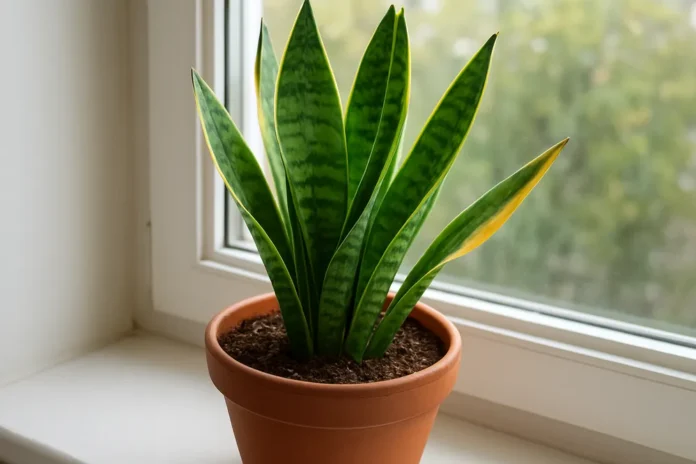
Snake plant leaf tips usually turn yellow when the plant is stressed by too much water, inconsistent watering, fertilizer salt buildup, or root damage. Tip yellowing can also come from cold exposure, harsh sun, or normal aging on older leaves.
When I see snake plant leaf tips turning yellow, I know the plant is telling me something changed in its routine. Snake plants are forgiving, but they still react when watering, soil, temperature, or fertilizer gets out of balance. Because the tip is the farthest point from the roots, it is often the first part to show stress.
The good news is that yellow tips do not always mean a serious problem. Sometimes it is a mild issue like mineral-heavy tap water or a missed watering followed by a heavy soak. Other times it points to a bigger root problem that needs attention sooner rather than later. The key is to match the yellowing pattern with the plant's recent care and growing conditions.
If your snake plant still has firm leaves and only a few yellowed ends, recovery is usually straightforward. Start by looking at moisture, drainage, fertilizer habits, and any sudden temperature or light changes. New growth will tell you whether the fix is working much more clearly than the damaged tips themselves.
What Yellow Tips Usually Mean on a Snake Plant
Yellow tips are a symptom, not a disease by themselves. In snake plants, they usually mean the leaf tissue at the end has been stressed or damaged. That stress can come from too much moisture around the roots, dry periods that went too far, fertilizer salts, hard water, cold drafts, sun scorch, or simple aging.
Look closely at the exact pattern. If only the very tip is yellow but the rest of the leaf is green and firm, the problem is often mild and related to watering inconsistency, salts, or old minor damage. If the yellow area spreads downward and the leaf softens, roots may be struggling. If tips turn yellow and then brown and crispy, dryness, salt buildup, or physical injury are more likely than rot.
When I diagnose snake plants, I always compare several leaves instead of focusing on the ugliest one. If many leaves show nearly identical tip damage, I suspect a care pattern like watering or salts. If just one or two leaves are affected, I look harder for old mechanical damage, age, or a localized root issue.
Overwatering Is the Most Common Cause
Snake plants store water in their leaves and rhizomes, so they prefer drying out well between waterings. When soil stays damp too long, roots cannot breathe normally. That stress often shows up as yellowing at the tips first, especially before the whole leaf declines.
Overwatering does not just mean watering too often. It can also mean using a heavy potting mix, keeping the plant in a pot without good drainage, or watering on a fixed schedule even when the soil is still moist. In winter, this happens even more easily because growth slows and the plant uses much less water.
- Leaves feel softer than usual instead of stiff and upright
- Yellowing starts at the tip and slowly moves farther down the leaf
- Soil stays wet for many days after watering
- The pot feels heavy long after a thorough soak
- A musty smell or blackened roots appears when you inspect the root ball
If overwatering is the issue, let the soil dry fully before watering again. If the potting mix is dense or compacted, repot into a fast-draining cactus or succulent mix with added perlite or pumice. Trim away mushy roots with clean scissors and avoid watering immediately after repotting for a few days unless the plant is extremely dry.
Underwatering and Inconsistent Watering Can Yellow the Tips Too
Even though snake plants tolerate drought, they are not immune to dehydration. When the plant stays dry for too long, the tips can lose moisture first and begin to yellow before turning tan or brown. This is especially common in smaller pots, very warm rooms, or plants growing near heat vents.
Inconsistent watering can be just as stressful. A cycle of severe dryness followed by a heavy soak can strain roots and leaf tissue. The plant may survive, but older leaves often show the history of that stress with discolored tips.
- Leaf tips look dry, thin, or slightly shriveled before they yellow
- The potting mix pulls away from the sides of the pot
- Leaves wrinkle lightly or lose some firmness
- Damage appears crisp rather than soft
- The plant is close to a radiator, sunny window, or air vent
The fix is not to keep the soil constantly moist. Instead, water deeply when the potting mix is dry through most or all of the container, then let excess water drain away. After that, wait until the soil dries again. Snake plants do best with a soak-and-dry rhythm rather than frequent small drinks.
Salt Buildup From Fertilizer or Hard Water
Yellow tips are often a quiet warning that salts are building up in the soil. This can happen from overfertilizing, using fertilizer too often, or watering with mineral-heavy tap water over a long period. The salts collect around the roots and can interfere with water uptake, which shows up first at the leaf tips.
This is especially likely if your snake plant otherwise looks healthy and the damage is limited to the ends of several leaves. You may also notice a whitish crust on the soil surface or along the rim of the pot.
- Yellow or tan tips on multiple leaves at once
- A white crust on soil or pot edges
- Recent feeding with a strong houseplant fertilizer
- Frequent fertilizing during low-light months
- Tap water that leaves heavy mineral residue on containers or fixtures
If I suspect salt buildup, I do not fertilize again right away. I flush the pot thoroughly with plain water a few times, let it drain well, and then wait to see whether the next leaves emerge clean before feeding lightly in the growing season.
To correct salt stress, flush the soil with room-temperature water until plenty drains from the bottom. If buildup is severe or the soil is old, repotting is faster and more reliable. Going forward, fertilize lightly only in spring and summer, and consider filtered, distilled, or rainwater if your tap water is very hard.
Rootbound Plants and Failing Roots
Snake plants do not mind being somewhat snug in a pot, but a severely rootbound plant can become harder to water evenly. Water may run down the sides and leave the center dry, or the roots may have so little room that the plant cannot support all of its foliage well. Either situation can contribute to yellowing leaf tips.
Root problems can also happen in the opposite situation, where roots are decaying from excess moisture. In both cases, the leaf tips may yellow because the root system is no longer moving water and nutrients steadily.
- Roots circle tightly around the pot interior
- Water runs straight through without soaking in well
- The plant dries out much faster than it used to
- Growth has stalled for a long time
- Roots look black, mushy, or smell sour instead of looking pale and firm
Repot one size up if roots are tightly packed and healthy. Use a loose, gritty mix and a container with a drainage hole. If roots are rotting, remove the damaged portions, repot in fresh dry mix, and cut back on watering frequency while the plant recovers.
Light Stress, Sun Scorch, and Temperature Swings
Snake plants handle a wide range of indoor light, but sudden exposure to intense direct sun can bleach or yellow the leaf tips and edges. This is most common when a plant is moved from a dim corner to a hot south- or west-facing window without a transition period.
Cold exposure can do similar damage. A leaf tip pressed against a cold windowpane, hit by winter drafts, or chilled during transport may yellow and later turn brown. Heat stress from vents and very dry air can also dehydrate the tips, especially if watering has been irregular.
- Yellowing is strongest on the window-facing side
- The affected tips feel dry and papery rather than soft
- Damage appeared soon after moving the plant
- Leaves show pale patches along with yellowed ends
- The plant sits near a drafty door, AC vent, heater, or cold glass
Move the plant to bright indirect light or gentler morning sun if harsh afternoon sun is the problem. Keep it away from temperatures below about 50 degrees Fahrenheit and from direct blasts of hot or cold air. Snake plants are tough, but they still prefer stable indoor conditions.
Pests, Physical Injury, and Normal Aging
Pests are not the first cause I think of with yellow tips on snake plants, but they can contribute. Mealybugs and spider mites may weaken leaf tissue and cause discoloration, especially if the plant is already stressed. Check where the leaf meets the base and along creases for sticky residue, webbing, or cottony clusters.
Physical damage is another common explanation. Bent tips, bumped leaves, rough handling during repotting, or repeated brushing against furniture can injure the end of the leaf. The tip may yellow later as that damaged tissue dries out.
And sometimes the answer is simply age. Older leaves can develop a little tip yellowing over time while the rest of the plant stays healthy. If it is one lower or older leaf and everything else looks good, normal aging is a reasonable explanation.
I get most concerned when yellow tips are paired with hidden signs of stress at the base of the leaves. If the tip is yellow but the leaf base is firm and clean, the issue is often cosmetic or environmental. If the base is soft, discolored, or loose, I shift my attention to the roots immediately.
How to Fix Yellow Snake Plant Tips Without Making the Problem Worse
The safest approach is to correct the likely cause without changing everything at once. Snake plants respond slowly, so sudden overcorrection can do more harm than the original issue. Focus on the root environment and recent care habits first.
- Check the soil moisture all the way down before watering again.
- Slide the plant out of the pot if you suspect rot or severe root crowding.
- Repot if the mix is heavy, sour-smelling, compacted, or waterlogged.
- Pause fertilizer until the plant resumes healthy growth.
- Move it away from harsh sun, cold windows, or hot and cold air blasts.
- Watch new growth instead of expecting old damage to reverse.
You can trim off dead yellow or brown tips if they bother you cosmetically. Use clean scissors and follow the natural shape of the leaf, leaving a tiny dry margin rather than cutting into healthy green tissue. The damaged area will not turn green again, so success should be measured by stable leaves and clean new growth.
If you are not sure whether the issue is overwatering or underwatering, wait until the soil condition gives you a clear answer. Guessing and watering reactively often keeps the plant in a stress cycle. Soil texture, pot weight, and root condition are much more reliable clues than a single yellow tip.
How to Prevent Yellow Tips in the Future
Prevention comes down to stable care. Snake plants thrive when they are left alone more than fussed over. A bright room, free-draining soil, and careful watering do most of the work.
- Use a pot with a drainage hole every time
- Plant in a fast-draining succulent-style mix
- Water only after the mix dries well
- Fertilize lightly and only during active growth
- Flush the soil occasionally if you use tap water
- Keep the plant away from cold drafts and intense heat vents
- Acclimate gradually when moving it into brighter light
I have found that the healthiest snake plants are usually the ones on the simplest routine. Once you find a watering rhythm that fits your home, resist the urge to tinker too much. These plants appreciate consistency far more than constant attention.
FAQ
Should I Cut Off Yellow Snake Plant Tips?
You can trim them off for appearance, but it is optional. The yellow tissue will not turn green again, so use clean scissors and cut along the leaf's natural point without removing too much healthy tissue.
Can Yellow Tips Turn Green Again on a Snake Plant?
No. Damaged tip tissue stays damaged. What you want to see after fixing care is that the yellowing stops spreading and new leaves emerge healthy.
How Often Should I Water a Snake Plant with Yellow Tips?
There is no fixed schedule that works in every home. Water only when the potting mix has dried well, then soak thoroughly and let the excess drain away.
Do Snake Plant Yellow Tips Mean Root Rot Every Time?
No. Root rot is one possibility, but yellow tips can also come from underwatering, fertilizer salts, hard water, harsh sun, cold exposure, physical damage, or aging.
Is Tap Water Bad for Snake Plants?
Not always, but very hard or heavily treated tap water can contribute to mineral buildup and tip burn over time. If you notice crusty soil or repeated tip damage, filtered, distilled, or rainwater may help.
Why Are Only the Oldest Leaves Getting Yellow Tips?
Older leaves usually show stress first because they have been exposed the longest and are lower priority for the plant. Mild aging, past watering stress, or old tip injury often appears there before younger leaves are affected.
Can Too Much Sun Make Snake Plant Tips Yellow?
Yes. Sudden strong direct sun can scorch the leaf ends and edges, especially if the plant was previously in lower light. The damage is often dry, pale, and strongest on the sun-facing side.
Still unsure whether your snake plant has a watering problem, root rot, or salt damage? Read our full snake plant care and rescue guide to choose the right fix before the yellowing spreads.
