

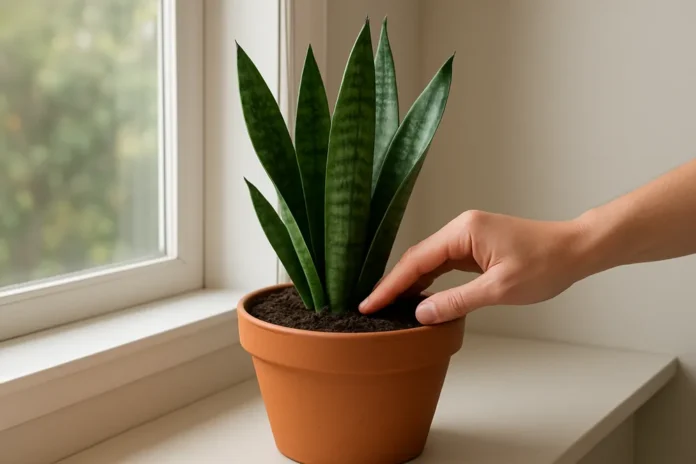
Snake plants usually stop making new leaves when they do not get enough bright light or when root and watering stress slows growth. They can also grow very slowly in winter or when they are tightly focused on staying alive instead of actively growing.
Snake plants are famous for being tough, but they are not especially fast growers. If yours looks healthy enough yet never seems to push out fresh foliage, that usually means it is stuck in slow-growth conditions rather than racing toward a major decline.
In my experience, a snake plant not growing new leaves is most often dealing with too little light, roots that are staying wet too long, a potting mix that has compacted, or simply a long seasonal pause. The good news is that snake plants tend to respond well once you correct the main bottleneck.
The trick is figuring out whether your plant is truly stalled or just growing at the pace snake plants naturally prefer. Once you know what normal growth looks like, it becomes much easier to spot the care issue holding it back.
What Counts as Normal Snake Plant Growth
Snake plants do not produce leaves on the same schedule as faster houseplants. A healthy plant may only put out a few new leaves during its active growing season, especially if it is in a modest indoor light setup. Some varieties also grow more slowly than others, and mature plants often focus on thickening existing clumps before sending up fresh spears.
New growth usually appears from the soil line as a pointed spear that gradually rises and unfolds. If your plant has not made a new leaf for several months during fall or winter, that alone is not unusual. If it has gone a full growing season with no new leaves and no visible pup formation, then I start looking harder at care conditions.
- Slow but steady growth in spring and summer is normal
- Very little or no growth in late fall and winter is common indoors
- Small plants and recently divided plants often take time before they resume active growth
- A plant can stay green for a long time even while conditions are too weak for new leaf production
Low Light Is the Most Common Reason
Snake plants tolerate low light better than many houseplants, but tolerance is not the same as active growth. In dim rooms, they often maintain their existing leaves without producing much new growth. That is why so many snake plants survive for years in dark corners yet barely change in size.
For stronger growth, snake plants do best with bright indirect light and can often handle some gentle direct sun indoors. A plant sitting several feet from a small north window may stay alive, but it may not have the energy to push out new leaves. Variegated types usually need even brighter conditions than solid green forms.
When I am judging light, I ignore the fact that a snake plant still looks green. A plant can keep acceptable color in weak light for a long time. What convinces me it needs more light is a long stretch with no new spears during spring and summer.
- Best indoor placement is usually near an east or bright south or west window with filtered light
- A few hours of soft morning sun often helps growth
- Harsh afternoon sun can scorch leaves if the plant has been kept in low light
- Rotating the pot every few weeks can keep growth more balanced
Watering Problems Can Stall Growth Even Before They Cause Obvious Damage
Overwatering Slows the Roots
Snake plants store moisture in their leaves and rhizomes, so they do not need frequent watering. If the soil stays damp for too long, roots can lose oxygen and start to decline. Before the plant develops full root rot, it may simply stop growing because stressed roots cannot support new leaf production.
A snake plant with chronically wet soil may look unchanged for a while, but growth usually stalls first. If the base feels soft, the leaves seem less firm than usual, or the pot stays heavy for many days after watering, that points toward excess moisture.
Underwatering Can Also Keep It in Survival Mode
On the other side, a severely underwatered snake plant may stay alive but refuse to grow. If the roots repeatedly dry to the point of stress, the plant focuses on preserving itself instead of investing energy in fresh leaves. Wrinkled or slightly folded foliage can be one clue, though root issues can create similar symptoms.
- Water only when the potting mix is mostly dry or fully dry, depending on your light and temperature
- Reduce watering frequency in winter
- Always let excess water drain away
- Never leave the pot sitting in a saucer full of water
If you are unsure whether your plant is too wet or too dry, check the soil deeper in the pot instead of judging only the surface. I like using a wooden skewer because it reveals hidden moisture that can keep roots sluggish.
The Potting Mix and Container May Be Holding It Back
Snake plants need a mix that drains quickly and still gives the roots some air. A dense, peat-heavy mix that stays soggy can keep the plant from growing even if you are not watering very often. Over time, old potting soil also breaks down and compacts, which reduces airflow around the roots.
The container matters too. Pots without drainage are a common source of stalled growth because moisture lingers at the bottom. An oversized pot can also cause trouble by keeping too much wet soil around a relatively small root system.
- Use a pot with at least one drainage hole
- Choose a cactus or succulent mix, or amend standard potting soil with perlite or pumice
- Avoid very large pots that stay wet too long
- Refresh old mix if it has become dense, sour-smelling, or shrinks hard from the pot sides
If your plant has been in the same soil for several years and growth has slowed, repotting into a fresh, airy mix can make a big difference. You do not need a huge size jump. Usually one pot size up is plenty unless you are dividing the clump.
Root Crowding Can Help or Hinder Growth Depending on How Far It Has Gone
Snake plants often tolerate being somewhat root-bound, and mild crowding does not automatically stop growth. In fact, many people keep them slightly snug in their pots with good results. But when rhizomes are packed so tightly that there is little fresh mix left, watering becomes uneven and new growth can slow down.
An extremely crowded plant may still look full and sturdy while producing fewer fresh leaves. In severe cases, the roots and rhizomes press against the pot walls so hard that moisture runs straight through or the pot distorts. At that point, the plant may benefit from repotting or division.
- Roots circling densely around the root ball can indicate crowding
- Bulging nursery pots suggest the plant has outgrown its container
- Water rushing through instantly may mean there is very little soil left
- A plant with many old leaves but no new spears may be due for a root check
I do not repot snake plants just because they are snug. I repot when the root mass has started to interfere with even watering or when the plant has clearly paused despite good light and otherwise solid care.
Temperature, Season, and Indoor Climate Affect Leaf Production
Snake plants grow most actively when temperatures are warm and steady. Cool rooms, cold window drafts, and winter dormancy can all slow or stop new leaves. Even in a bright spot, a plant sitting near a chilly pane or an air conditioning vent may not grow much.
Most snake plants prefer temperatures roughly in the 65 to 85 degree range. Once conditions dip much below that, growth tends to slow. Sudden changes are not ideal either. A plant moved repeatedly between warm and cold areas often focuses on coping rather than growing.
- Expect the best growth in spring and summer
- Protect plants from cold drafts and freezing windows
- Keep them away from heater blasts that dry the soil too fast
- Do not expect strong growth during short, dark winter days
Nutrient Issues Can Contribute, but They Are Not Usually the Main Cause
Snake plants are light feeders, so a lack of fertilizer is not the first thing I suspect when growth stops. Still, if a plant has been in the same mix for a long time, it may have used up much of what was available. In that case, low fertility can add to other limiting factors like dim light or tired soil.
Too much fertilizer can be just as unhelpful. Heavy feeding often leads to salt buildup in the pot, which can stress the roots and work against new growth. For snake plants, a diluted balanced houseplant fertilizer during active growth is usually enough.
- Feed lightly in spring and summer only
- Use a diluted balanced fertilizer rather than full-strength heavy doses
- Skip fertilizer if the plant is stressed, waterlogged, or sitting in very low light
- Flush the soil occasionally if you suspect fertilizer salt buildup
Pests and Hidden Damage Can Quietly Slow the Plant Down
A snake plant that is not growing may have a hidden stress issue rather than a simple care imbalance. Mealybugs, scale, and spider mites are not the most common snake plant problem, but they can sap energy over time. Root rot, damaged rhizomes, or physical injury at the base can do the same.
Look closely where leaves emerge from the soil and along the undersides of the foliage. Sticky residue, cottony patches, webbing, soft spots, or mushy tissue deserve attention. A plant does not need to be collapsing for these issues to reduce new leaf production.
- Inspect leaf bases for cottony mealybugs
- Check for scale bumps along the foliage
- Look for soft, dark, or smelly areas that suggest rot
- Separate affected plants from others if pests are present
How to Tell Which Problem Is Most Likely
When several causes are possible, the pattern of symptoms usually points you in the right direction. A healthy-looking snake plant in a dim room with no new leaves is most likely short on light. A plant in brighter conditions with limp foliage and wet soil points more toward root stress. A crowded plant that dries very unevenly may need a closer look below the soil line.
It helps to think in terms of the plant's energy budget. New leaves require enough light, functioning roots, decent warmth, and a potting environment that lets the plant use water properly. If even one of those factors is weak, growth often slows before the plant looks obviously unhappy.
- No growth plus low light usually means the plant is surviving, not thriving
- No growth plus soggy soil often points to root trouble
- No growth in winter may be normal if the plant otherwise looks firm and healthy
- No growth after years in the same pot can suggest compacted soil or crowded rhizomes
What to Do to Encourage New Leaves Again
Start with the biggest growth driver first, which is usually light. Move the plant to a brighter location, then make sure your watering habits match the faster drying conditions. If the mix is heavy or the pot lacks drainage, repot into a loose, fast-draining medium. If roots are very crowded or damaged, correct that before adding fertilizer.
Do not try to fix everything with extra water or plant food. Snake plants respond better to steady, sensible improvements than dramatic treatment. Once care is corrected, look for signs of success in new growth rather than expecting old leaves to change much.
- Move the plant into brighter indirect light or gentle morning sun
- Check that the pot has drainage and the mix dries at a reasonable pace
- Water thoroughly, then wait until the mix is mostly dry or dry before watering again
- Repot if the soil is compacted, stale, or the roots are severely crowded
- Feed lightly during active growth only after the plant is otherwise stable
- Be patient and watch for fresh spears over the next several weeks or months
I avoid making three major changes on the same day unless the plant is clearly rotting. If the plant is simply stalled, I improve light first and judge the response in new growth. That makes it much easier to tell what actually solved the problem.
How Long It Takes to See Results
Snake plants do not bounce back overnight. Even after you improve the conditions, it may take several weeks or a few months before a new spear appears. Growth is usually fastest in warm, bright conditions during spring and summer.
Patience matters here. If the leaves remain firm, upright, and free of spreading damage, the plant may already be recovering even before you see obvious new growth. The real measure of progress is whether new leaves eventually emerge stronger and more regularly than before.
FAQ
How Often Should a Snake Plant Grow New Leaves?
There is no fixed schedule. Many snake plants produce new leaves mainly in spring and summer, and indoor plants in average light may only add a few leaves each growing season.
Can a Snake Plant Be Healthy and Still Not Grow Much?
Yes. Snake plants often remain green and stable in less-than-ideal conditions, especially low light, but they may not produce much new foliage until conditions improve.
Does Being Root-bound Stop a Snake Plant From Growing?
Mild root crowding usually does not. Severe crowding can slow growth when there is very little soil left, watering becomes uneven, or the rhizomes are packed too tightly to expand comfortably.
Should I Fertilize My Snake Plant if It Is Not Making New Leaves?
Only lightly, and only if the plant is in decent light and not dealing with root or watering stress. Fertilizer will not overcome poor light or soggy soil, and too much can make things worse.
Why Is My Snake Plant Alive but Not Growing?
That usually means it is surviving in acceptable conditions rather than thriving in strong ones. Low light, cool temperatures, tired potting mix, or inconsistent watering are common reasons.
Will Damaged Old Leaves Recover Once the Plant Starts Growing Again?
Usually no. Old leaves may stay marked, bent, or scarred. The best sign of recovery is healthy new growth, not a dramatic improvement in leaves that were already damaged.
Is Winter the Reason My Snake Plant Stopped Growing?
Very often, yes. Snake plants commonly slow down or pause growth in winter because indoor light levels drop and temperatures are cooler.
Want your snake plant to grow faster and stay healthier year-round? Read our guide to the best soil mixes, pots, and grow lights for snake plants so you can fix the real bottleneck and get new leaves sooner.
