

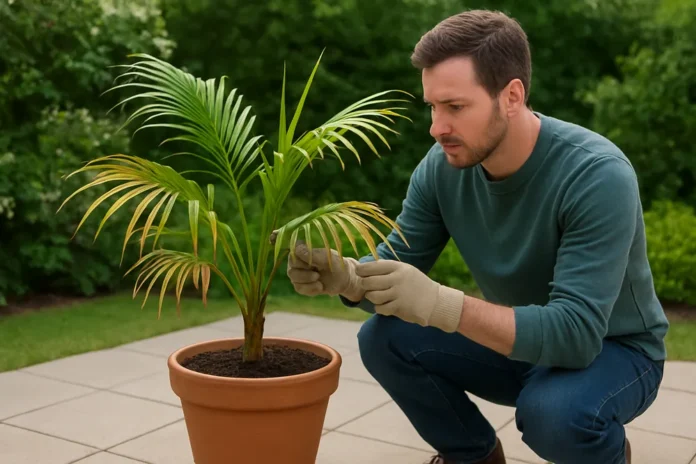
A palm tree usually stops growing because it is under stress from low light, root restriction, poor watering, nutrient deficiencies, or cold damage. Some palms also grow very slowly by nature, so a healthy plant may put out fewer new fronds than you expect.
When a palm tree just sits there month after month, it can be hard to tell whether you have a real problem or simply a slow plant. I have seen plenty of gardeners assume their palm is dying when it is actually growing at its normal pace, and I have also seen the opposite, where a palm looked green enough but had quietly stalled because one basic need was off. Palm tree slow growth is often tied to stress, not mystery.
Unlike many shrubs and houseplants, palms grow from a central growing point rather than branching all over. That means when growth slows, the plant cannot quickly compensate from multiple buds. A palm may hold onto older fronds for a long time while producing very little new top growth, which makes the issue feel more confusing than it really is.
If your palm tree not growing has you worried, start by separating normal slow growth from true stunting. Then look at the growing conditions around the roots, the amount of light, the watering pattern, and the plant's recent history. In most cases, the cause becomes much clearer once you know what signs palms tend to show.
Know What Normal Growth Looks Like for Your Palm
The first question I ask is simple: what kind of palm is it? A queen palm in a warm landscape can push growth much faster than a parlor palm in a living room. Sago palms, which are often called palms even though they are cycads, grow especially slowly. Areca, majesty, kentia, pygmy date, fan palms, and bottle palms all have different growth rates, so the same pace does not mean the same thing across species.
Palms also grow in spurts. A healthy one may seem inactive for a while, then suddenly unfurl a fresh spear and a new frond. Indoor palms usually grow much more slowly than outdoor palms because indoor light is weaker and humidity is lower. In cooler months, even healthy palms often pause or nearly stop.
- A healthy slow-growing palm still keeps a firm central spear and steady leaf color.
- A stalled palm often holds the same number of fronds for a long time with no visible new spear movement.
- If new fronds emerge smaller than older ones, stress is usually limiting growth.
- If the newest growth looks distorted, pale, scorched, or weak, think beyond natural slowness.
When I am unsure whether a palm is truly stalled, I mark the base of the newest spear with a photo or a small note on the pot date. That simple comparison after two to four weeks tells me much more than memory does, especially with palms that change slowly.
Light Problems Are One of the Most Common Causes
Too little light is a classic reason a palm refuses to grow. Many palms sold for homes are labeled as low-light tolerant, but tolerant does not mean they will actively grow well in a dim corner. A palm can survive for quite a while in poor light while putting out little or no new growth. Over time, fronds may become stretched, thinner, or smaller.
On the other hand, too much harsh direct sun can stress a palm that has been grown in shade or indoors. Sunburned fronds do not photosynthesize efficiently, and the plant may stop growing while it recovers. This often happens after a palm is moved suddenly from a protected spot to a bright patio or from a nursery greenhouse into full afternoon sun.
Signs Your Palm Needs More Light
- No new fronds for an extended period during the active growing season
- Leggy or stretched petioles reaching toward a window
- Overall fading green color without obvious burn spots
- A plant that leans strongly and needs frequent turning
Signs the Light Is Too Intense
- Bleached patches on fronds
- Dry brown tips or margins soon after moving the plant
- Crispy areas on the sun-facing side only
- Growth pause after a sudden location change
Most indoor palms do best near bright indirect light, with some morning sun for species that tolerate it. Outdoor palms need placement that matches the species and the climate. If light has been the issue for a while, expect recovery to show first as healthier new growth rather than old fronds turning perfect again.
Root Stress and Planting Problems Can Stall a Palm
A palm with unhappy roots often shows up above ground as a plant that simply will not move forward. In containers, palms can become root-bound, especially when they have been sitting in the same nursery pot too long. Roots circling tightly in the pot reduce water and nutrient uptake, and growth slows even if the fronds still look decent.
Poor drainage is another major issue. Palms generally like oxygen around their roots. If soil stays soggy for long periods, root function drops and rot can start. A rotting root system cannot support top growth, so the palm stalls. Some gardeners respond to slow growth by watering more often, which only worsens the problem if soggy soil is the real cause.
Outdoor palms may also struggle if they were planted too deeply, set into compacted clay, or installed in a spot where water stands after rain. Newly transplanted palms commonly pause while rebuilding roots. That pause can last longer than people expect, especially after large moves or rough root disturbance.
Common Root-related Growth Blockers
- Roots tightly packed against the pot wall
- Soil that stays wet for many days after watering
- A decorative cachepot that traps excess water
- Heavy garden soil used in containers
- Planting too deep and burying the trunk flare area
- Recent transplant shock or root damage
If I suspect root stress, I do not rush to a much larger pot. Palms usually do better when moved only one pot size up into a fast-draining mix, because oversized containers stay wet too long and create a second problem.
Watering Mistakes Slow Growth More Than Most Gardeners Realize
Palms need consistent moisture, but they do not all want the same level of wetness. Underwatering slows photosynthesis and causes the plant to conserve energy, which means fewer and smaller fronds. Overwatering limits root oxygen and often creates the same top-level symptom: stalled growth. That is why the watering schedule alone does not tell you much. The condition of the root zone matters more.
A dry palm may show crispy tips, folding leaflets, dusty soil pulling from the pot edge, and quick drainage where water runs straight through without soaking in. An overly wet palm may have yellowing lower fronds, a sour soil smell, fungus gnats indoors, and a heavy pot that never seems to lighten. In both cases, the palm can stop producing new growth at a normal pace.
What a Better Watering Pattern Looks Like
- Water thoroughly so the full root ball is moistened.
- Let the top portion of soil dry to the degree your palm species prefers.
- Empty saucers or cachepots so roots do not sit in standing water.
- Adjust frequency with season, light level, temperature, and pot size rather than following the same calendar year-round.
Outdoor palms need special attention during establishment. A newly planted palm may look static not because it lacks fertilizer, but because the root zone is alternating between drought stress and saturation. Deep, even watering helps much more than frequent shallow splashes.
Nutrient Deficiencies and Poor Soil Conditions Can Hold Back New Fronds
Palms are not especially forgiving when key nutrients are missing. Nitrogen, potassium, magnesium, manganese, and iron all play roles in growth and leaf development. A palm that is underfed may remain alive but produce fewer, smaller, or discolored fronds. In landscapes, palms are particularly known for deficiencies that show on older or newer leaves depending on the nutrient involved.
Container palms run into nutrient problems because potting mix gets depleted over time and frequent watering flushes minerals away. Outdoor palms can suffer when soil pH is off, when turf fertilizers create imbalance, or when roots are trapped in poor, compacted ground. Cold, waterlogged soil can also block nutrient uptake even when fertilizer is technically present.
Nutrient-related Clues to Watch For
- Uniform pale green growth can suggest low nitrogen.
- Yellow banding or edge necrosis on older fronds may point to potassium issues.
- Broad yellowing on older leaves with greener centers can fit magnesium deficiency.
- Weak, frizzled, or distorted new growth can signal manganese problems.
- New leaves that emerge chlorotic while older leaves stay greener can happen with iron uptake issues.
Feeding helps only when it matches the actual need. Too much fertilizer can burn roots and worsen the stall. For landscape palms, a palm-specific fertilizer with a proper micronutrient package is usually better than a generic high-nitrogen lawn product. For container palms, use a balanced fertilizer at an appropriate rate during active growth and back off in winter.
I pay closest attention to where discoloration shows up first. On palms, the oldest fronds and the newest fronds can tell very different stories. That pattern often narrows the diagnosis faster than the exact shade of yellow ever will.
Temperature, Humidity, and Seasonal Stress Matter More Than You Think
Palms are strongly influenced by temperature. Many stop growing when nights are cool, even if the days are pleasant. Tropical palms kept outdoors too early in spring or too late into fall may just sit still because the roots are not warm enough to stay active. Indoors, cold drafts from windows, doors, or air conditioning vents can slow growth without causing dramatic immediate damage.
Humidity also plays a role, especially for indoor species like majesty, parlor, and areca palms. Very dry air can lead to browned tips, sluggish growth, and general stress. Low humidity alone is not always the whole cause, but it often combines with low light or watering issues to create a palm that seems stuck.
Environmental Stress Signals
- Growth stops after a cold snap
- Leaf tips brown during winter heating season
- New fronds open slowly or incompletely in dry indoor air
- The palm declines near HVAC vents or drafty glass
If the palm recently moved from a greenhouse, nursery, or sheltered indoor room into a harsher environment, it may need time to adjust. Palms are not always quick to show stress, but once they do, growth can lag for weeks or months.
Pests, Disease, and Damaged Growing Points Can Stop Growth Completely
When a palm is not growing at all, inspect closely for hidden problems. Spider mites, scale, mealybugs, and aphids can weaken indoor and outdoor palms by draining sap and stressing foliage. Heavy infestations reduce vigor and eventually slow or stop new growth. Pests are especially common on indoor palms kept in dry air and low light.
Disease can also be involved, especially when wet soil or poor air flow is part of the picture. Root rots, fungal leaf problems, and bud or crown rot can all affect a palm's ability to grow. Because palms rely on a single central growing point, damage to that area is serious. If the central spear pulls out easily, smells rotten, or turns mushy, the growing point may be compromised.
Red Flags That Need Quick Attention
- Sticky residue, webbing, or bumps on stems and fronds
- Black sooty mold growing on honeydew from pests
- A loose or rotting center spear
- Foul-smelling soil combined with yellowing and collapse
- Rapid decline after frost or physical injury to the crown
Mechanical damage matters too. Tying fronds too tightly, trimming green fronds excessively, or injuring the trunk or crown during moving can stall recovery for a long time. If a palm loses too much healthy foliage, it has less energy available for new growth.
How to Help a Palm Start Growing Again
Once you identify the likely cause, resist the urge to change everything at once. Palms respond slowly, and piling on fertilizer, extra water, repotting, and a new location all together can create more stress instead of less. The best approach is to correct the biggest limiting factor first, then watch the next flush of growth.
A Sensible Recovery Plan
- Confirm whether your species is naturally slow-growing.
- Improve light gradually if the palm is in a dim location.
- Check drainage and root condition before increasing watering.
- Repot only if roots are crowded or the mix is staying wet too long.
- Feed during active growth with a suitable palm fertilizer, not a random heavy dose.
- Protect the palm from cold drafts or low outdoor temperatures.
- Inspect the crown and leaf undersides for pests or disease.
Do not expect old fronds to become lush again after conditions improve. The real sign of success is better new growth: a stronger spear, healthier fresh fronds, and steadier progress through the warm growing season. If the palm remains static despite corrected care, the root system or growing point may have suffered more serious damage.
I judge palm recovery by the next leaf, not the current one. If the next frond emerges larger, cleaner, and more upright, you are usually on the right track even if the older foliage still looks rough.
FAQ
How Long Does It Take for a Palm Tree to Start Growing Again?
It depends on the species, season, and cause of the slowdown. A lightly stressed indoor palm may resume visible growth in a few weeks during warm bright conditions, while a transplanted or root-damaged palm may need months before it pushes a stronger new frond.
Can a Palm Tree Be Healthy and Still Grow Very Slowly?
Yes. Many palms are naturally slow growers, especially indoors or in cooler climates. If the central spear is firm, leaf color is good, and new fronds appear occasionally, the palm may simply be following its normal pace.
Should I Fertilize a Palm That Is Not Growing?
Only if poor nutrition is likely and the palm is in active growing conditions. Fertilizing a cold, root-bound, overwatered, or recently stressed palm can do more harm than good. Correct the basic care issue first if one is obvious.
Why Is My Palm Green but Not Getting Bigger?
A green palm can still be stalled by low light, tight roots, cool temperatures, or a recent transplant. Green color alone does not prove active growth. Many stressed palms keep older fronds looking acceptable while producing very little new growth.
Does Repotting Help a Slow-growing Palm?
Repotting helps when the plant is root-bound or sitting in exhausted, poorly draining mix. It does not help if the main problem is low light, overwatering, cold stress, or pests. Use only a slightly larger pot and a fast-draining medium.
Will Brown Tips Stop a Palm From Growing?
Brown tips themselves do not always stop growth, but they signal stress that can slow it down. Dry air, inconsistent watering, salt buildup, or root problems often cause tip burn. If the underlying stress continues, growth usually suffers.
What if the Center of My Palm Is Not Opening?
A stuck or damaged center spear can mean dry air, cold stress, nutrient problems, or more serious crown damage. If the spear feels firm, the palm may simply be slow. If it is soft, discolored, or pulls out easily, treat it as a serious crown issue.
Need the right fertilizer, potting mix, or pest treatment for a struggling palm? Check our palm care guides and product picks to choose a fix that actually matches the way your palm is growing.
