

Note: This article contains affiliate links. If you click on these links and make a purchase, I may earn a small commission at no extra cost to you. This helps support my research and content. Read my full affiliate disclosure here.
If plantain is taking over lawn patches or edging into flower beds, choosing the right herbicide matters for control and plant safety. You need a product that targets broadleaf weeds like plantain without harming desirable turf or nearby ornamentals. This guide covers the top shortlisted herbicides for plantain and explains how each option handles application timing, treated-area safety, and follow-up maintenance. We'll also describe the evaluation criteria used so you can match a product to your site conditions and care routine. Read on to find targeted control methods and practical use tips.
Top Picks at a Glance
| Best Quality Built to a higher standard if you want something more solid | Quali-Pro 2-D Herbicide (1 Gallon) |  |
| Best Budget The cheapest option that still gets the job done reliably | VIVIPOOOL 41% Glyphosate Super Concentrate Weed & Grass Killer (1 gal) |  |
| Highest Rated A top-rated pick with lots of positive feedback | Factory Hardware Store 2,4-D Broadleaf Weed Killer Concentrate (2 × 32 fl oz) |  |
| Most Popular A crowd favorite that many people choose with confidence | Nufarm Change Up Premium Selective Herbicide, 32 oz |  |
| Best Seller A high-volume bestseller chosen again and again | Roundup Weed & Grass Killer Concentrate, 1 gal. |  |
Quali-Pro 2-D Herbicide (1 Gallon)

| Item Form | Liquid |
|---|---|
| Liquid Volume | 1 gallons |
| Active Ingredients | Triclopyr 33%, Clopyralid 12.1% |
| Coverage | 128 Fl Oz |
Quali-Pro 2-D is a one-gallon liquid herbicide combining triclopyr and clopyralid for targeted control of broadleaf weeds such as plantain, dandelion, clover, and chickweed in established turf and non-crop sites. It is typically mixed and applied with a sprayer to fairways, turf, pastures, roadsides, and other non-crop areas where selective broadleaf control is needed without disturbing grasses. The high active ingredient concentrations mean fewer applications are usually required to knock back persistent perennials. Practical benefits include strong systemic activity on deep-rooted weeds and labeled use across a range of non-crop turf settings. Important limitations are that it is for established turf and non-crop areas only and must be applied according to label restrictions to avoid damage to desirable broadleaf plants and sensitive nearby vegetation. Users should also observe re-entry and tank-mix guidance and consider protective equipment when handling this concentrated formulation.
Best for: Gardeners, groundskeepers, or turf managers who prioritize powerful, reliable control of plantain and other broadleaf weeds in established turf or non-crop areas and who follow label application practices.
Less Ideal for: Homeowners seeking an all-purpose lawn weed treatment for mixed ornamental beds or those unwilling to handle concentrated herbicides should consider gentler, ready-to-use options.
- High concentration of active ingredients for effective control of tough perennial broadleaf weeds
- Systemic formulation treats roots as well as foliage for longer-lasting control
- Labeled for a variety of non-crop turf sites including fairways, pastures, roadsides
- One-gallon container suitable for treating larger areas without frequent refills
- Not labeled for use on lawns with desirable broadleaf plants or many ornamentals
- Concentrated liquid requires careful measuring, mixing, and protective gear during application
Verdict: Choose Quali-Pro 2-D when you need a strong, systemic herbicide to reliably eliminate plantain and other broadleaf weeds in established turf and non-crop areas.
VIVIPOOOL 41% Glyphosate Super Concentrate Weed & Grass Killer (1 gal)
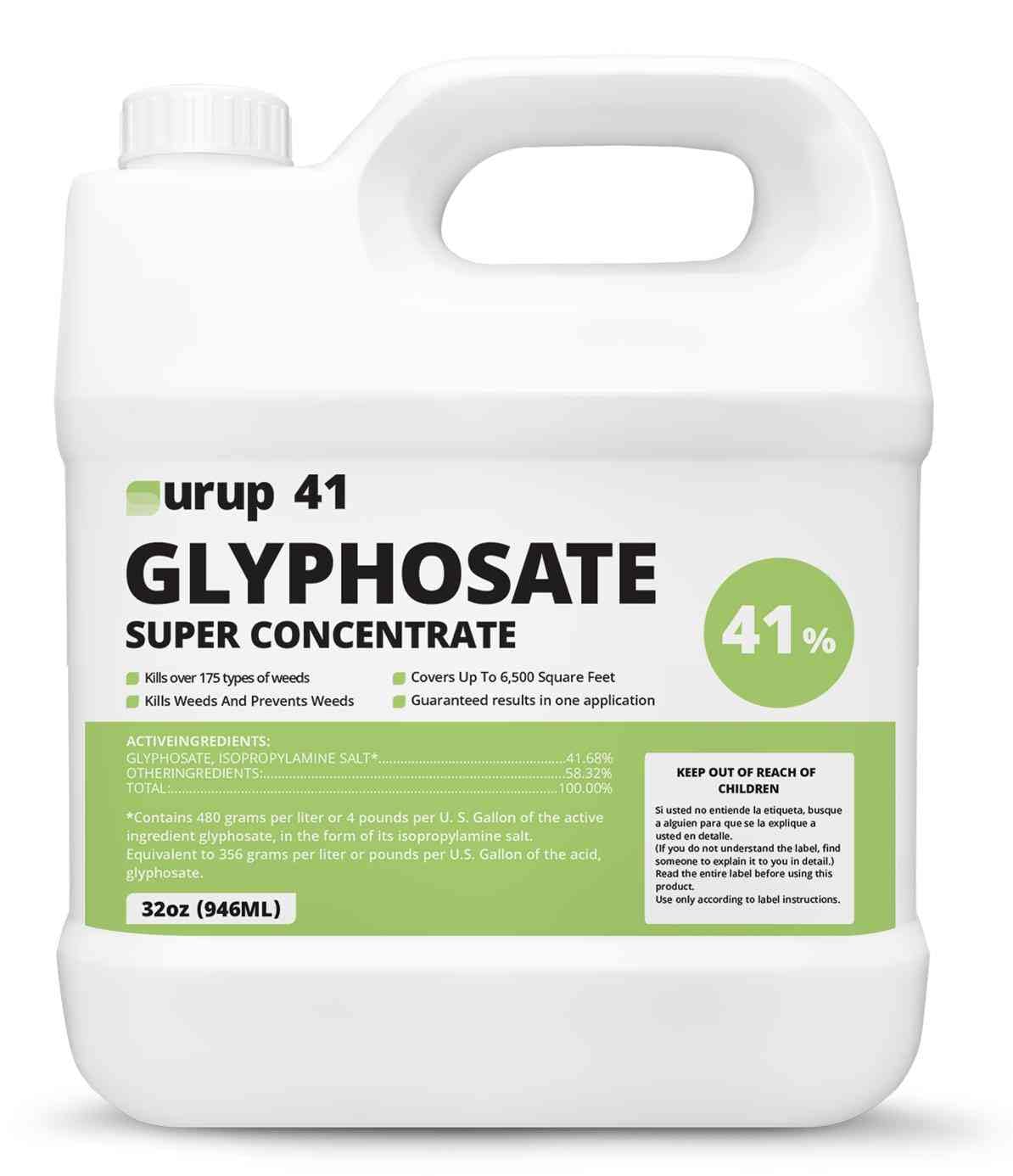
| Included Components | 41% Glyphosate |
|---|---|
| Unit Count | 128 Fluid Ounces |
| Item Form | Liquid |
| Coverage | 26000 square feet |
| Liquid Volume | 1 gallons |
This VIVIPOOOL 41% glyphosate concentrate is designed for broad-spectrum, systemic weed control and is intended to be diluted and applied where weeds grow. It targets roots so treated plantain and other broadleaf weeds begin to yellow in about a week and die within two weeks, which helps prevent quick regrowth. The 1-gallon bottle covers a large area: the label states up to 26,000 square feet when mixed per directions, making it a practical choice for treating driveways, sidewalks, fence lines, or larger turf patches. Practical advantages include a long coverage potential and a clear timeline for results, but it is a non-selective herbicide so it will damage desirable plants on contact and requires careful mixing, protective gear, and attention to application timing to avoid drift. For gardeners focused on cost-effective knockdown of persistent plantain, this concentrate reduces per-area cost versus ready-to-use sprays, though it brings the typical safety and handling responsibilities of concentrated chemical herbicides.
Best for: Gardeners who need an inexpensive, large-coverage herbicide to quickly eliminate plantain and other persistent broadleaf weeds across driveways, yards, or larger areas and who are comfortable handling concentrated chemicals.
Less Ideal for: Those who prefer selective spot treatments near desirable plants or who avoid using synthetic systemic herbicides should consider alternative targeted or non-chemical options.
- High glyphosate concentration for effective systemic control of broadleaf weeds and grasses
- Large one-gallon size with stated coverage up to 26,000 square feet when mixed
- Produces visible yellowing in 5–8 days and plant death in 9–15 days, giving a predictable result window
- Non-selective formula will harm desirable plants if contacted
- Concentrate requires proper PPE, careful mixing, and responsible disposal
Verdict: If you want the most cost-effective, large-area kill for plantain and other broadleaf weeds, this high-concentration glyphosate concentrate delivers predictable systemic results.
Factory Hardware Store 2,4-D Broadleaf Weed Killer Concentrate (2 × 32 fl oz)

| Unit Count | 32 Fluid Ounces |
|---|---|
| Number of Packs | 2 |
| Item Form | Liquid |
| Active Ingredient | Dimethylamine Salt of 2,4-Dichlorophenoxyacetic Acid |
This 2,4-D dimethylamine salt concentrate is a selective post-emergent broadleaf weed killer intended for targeted control of plantain and other common lawn broadleaves. You mix the liquid concentrate to label rates and apply it to established turfgrass or other labeled outdoor sites; the selective formula treats broadleaf weeds without killing most grasses when used as directed. The two 32-ounce bottles give extra coverage for repeat treatments or larger lawns, making scheduling follow-ups simple. Practical benefits include flexible dilution for spot treatments or larger area spraying and a formulation with a long history of effectiveness on plantain. Limitations are that it is a chemical herbicide that requires careful adherence to the label for mixing, timing, and safety precautions and it will not control grassy weeds or non-listed species. Users should also avoid application during windy or high-temperature conditions and follow reentry and mowing intervals on the label.
Best for: Homeowners who prioritize dependable, proven chemical control for plantain and other broadleaf weeds and who follow label directions for safe, targeted applications.
Less Ideal for: Gardeners seeking non-chemical, organic, or grass-weed solutions or those unwilling to follow herbicide safety and application rules should consider alternative methods.
- Selective post-emergent formula effective on broadleaf weeds including plantain
- Concentrate allows flexible mixing for spot treatments or larger coverage
- Two-bottle pack supports follow-up applications or treatment of larger lawns
- Suitable for use on established turf and other labeled outdoor areas when applied per label
- Does not control grassy weeds or non-broadleaf species
- Requires careful mixing and strict adherence to label safety and timing instructions
Verdict: Buy this concentrate if you want a reliable, selective chemical treatment specifically to control plantain and other broadleaf lawn weeds with flexible coverage options.
Nufarm Change Up Premium Selective Herbicide, 32 oz

| Unit Count | 32 Ounce |
|---|---|
| Item Form | Liquid |
| Coverage | 1000 square feet |
| Active Ingredients | MCPA, fluroxypyr, dicamba |
Nufarm Change Up is a ready-to-mix liquid selective herbicide that targets more than 200 broadleaf weeds, including plantain, dandelion, oxalis and chickweed. It combines MCPA, fluroxypyr and dicamba to deliver fast visible control in both cool- and warm-season lawns and is labeled for common turf types from Kentucky bluegrass to St. Augustine. Typical use is a spot or broadcast application at the labeled rate to cover roughly 1,000 square feet per 32-ounce bottle, making it suitable for residential and commercial lawns. The formulation is effective against stubborn species and is presented as an alternative for sites where 2,4-D use is a concern. Practical benefits include broad weed spectrum, compatibility with many turfgrasses, and a relatively quick knockdown on target weeds. Limitations are that it is a chemical control only, requires careful mixing and application per label to avoid off-target injury, and will not control grassy weeds or non-broadleaf problems.
Best for: Homeowners and lawn-care pros who prioritize reliable, documented control of broadleaf weeds in turf and want a product with demonstrated effectiveness against plantain.
Less Ideal for: People seeking a non-chemical or organic approach, or those whose main problem is grassy weeds rather than broadleaf species.
- Controls a wide range of broadleaf weeds including plantain and dandelion
- Labeled for both cool- and warm-season turfgrasses so usable across many lawns
- Covers about 1,000 square feet per 32 oz bottle for straightforward area planning
- Does not control grassy weeds or moss
- Requires precise mixing and application to avoid damage to desirable plants
- Contains multiple active ingredients so users should follow safety and reentry instructions carefully
Verdict: Choose Change Up when you need a proven selective herbicide that quickly reduces plantain and other broadleaf weeds across common lawn grasses.
Roundup Weed & Grass Killer Concentrate, 1 gal.

| Unit Count | 128 Fluid Ounces |
|---|---|
| Item Form | Liquid |
| Coverage | 300 Square_Feet |
| Active Ingredients | Triclopyr, Triethylamine Salt, Puazifop-P-Butyl, Diquat Dibromide |
This 1 gallon Roundup concentrate is designed for spot treatment or larger spray applications to remove tough weeds and grasses down to the root. You mix the concentrate per label instructions and apply with a tank or hose-end sprayer; one gallon of spray solution treats about 300 sq. ft. and the bottle can make many gallons of spray depending on dilution. It lists active ingredients effective against broadleaf weeds such as plantain, dandelion, clover and grasses, and claims visible browning within hours and rainproof performance in roughly 30 minutes. The product is practical for preparing beds for replanting or replacing lawn areas and can be used around walkways, fences and trees when applied carefully. Important limitations are standard pesticide precautions: avoid drift onto desirable plants, keep people and pets away until spray dries, and follow the maximum application rate and reapplication intervals on the label to stay within safety guidelines.
Best for: Buyers who prioritize reliable, fast-acting control of common broadleaf weeds like plantain and want a product they can use to prepare beds or replace lawns while following label safety steps.
Less Ideal for: Gardeners who need a selective product that spares surrounding ornamentals or those unwilling to follow pesticide safety and drift-avoidance practices should look for alternatives.
- Concentrated formula stretches into many gallons of spray for broad coverage
- Fast visible activity on broadleaf weeds and some grasses
- Rainproof in about 30 minutes so light rain soon after application is less likely to reduce effectiveness
- Suitable for spot treatments and larger area preparation such as lawn replacement
- Covers a defined area per gallon of spray, simplifying planning for projects
- Contains multiple strong active ingredients that require careful handling and strict adherence to label safety directions
- Not selective so it will damage desirable plants if it drifts or is misapplied
Verdict: A concentrated, fast-acting herbicide that delivers reliable broadleaf weed and grass control for gardeners prepared to follow label safety and application rules.
Choosing the Right Herbicide for Plantain: Key Factors to Consider
Active Ingredient and Mode of Action
The active ingredient determines how well a herbicide controls plantain and whether it will also affect other broadleaf weeds. Some chemistries act systemically, moving through plant tissues to kill roots and shoots, while contact agents only damage foliage and may require repeat applications. Knowing the mode of action helps you predict results, plan follow-up treatments, and rotate products to reduce resistance risk.
For practical use, check whether the label lists plantain explicitly and whether the product controls seedlings, established rosettes, or both. Systemic actives are often better on established plantain, but they may need longer to show results. Matching active ingredient behavior to the weed life stage and your desired speed of control makes treatments more effective.
Turf Safety and Selectivity
Different lawn grasses and landscape plants vary in tolerance to herbicides labeled for broadleaf weed control. A product that is safe on one turf species may damage another or harm newly seeded areas. Read label restrictions about turf type, overseeding, and precautions for ornamentals to avoid unintended injury.
Also consider application timing relative to turf stress. Applying herbicides to drought-stressed, recently fertilized, or newly sodded turf increases the chance of damage. Selecting a formulation and rate appropriate to your grass type and observing label timing windows reduces risk and preserves lawn health.
Application Timing and Environmental Conditions
When you apply matters as much as what you apply. Plantain is easiest to control when actively growing, typically in cool-season conditions or during spring and fall growth flushes. Applications made during dormancy, extreme heat, or drought often underperform.
Weather also affects efficacy and safety. Avoid spraying before rain that could wash product off leaves, and do not apply when wind conditions increase drift risk. Many labels recommend calm, mild-temperature days for best uptake and minimal off-target movement.
Formulation, Delivery, and Tank-mix Options
Herbicides come as ready-to-use sprays, hose-end mixes, or concentrated liquids for tank mixing. Ready-to-use products are convenient for small spots but can be more costly for larger areas. Concentrates give more flexibility for rate adjustment and combination with surfactants or adjuvants when the label permits.
Check label allowances for tank mixes and surfactants. Some active ingredients require an approved surfactant for good coverage, while others include nonionic surfactants in the formulation. Delivery method also affects application accuracy and waste; a good sprayer that gives uniform droplet size helps avoid over- or under-treating.
Residual Control and Re-treatment Interval
Residual activity determines how long the herbicide affects germinating weed seeds after application. Some products have little residual effect and only control emerged plantain, while others provide weeks of suppression. Residual control can reduce the frequency of follow-up work but may also restrict planting or overseeding windows.
Review re-treatment intervals and any restrictions on reseeding or planting new turf. For long-term management, plan a strategy that balances residual suppression with turf renovation needs so you do not unintentionally block desired plant establishment.
Safety, Handling, and Buffer Requirements
Herbicide use involves personal protective equipment, storage, and disposal considerations that protect you and the environment. Labels specify required gloves, eye protection, and any respirator recommendations for concentrated mixes. They also list buffer zones or no-spray distances from water, desirable ornamentals, and edible plantings.
Take label handling instructions seriously to reduce accidental exposure and prevent runoff. Proper mixing, measuring, and cleaning of sprayers prevents cross-contamination and ensures consistent performance from one application to the next.
When to Treat Plantain for Best Results
Treat plantain when the plants are actively growing and leaf tissue is healthy, usually during cooler, moist periods in spring or fall. Young rosettes are often easier to control than large, woody plants because systemic herbicides move more readily through fresh growth.
Avoid treating during extreme heat, drought, or right before heavy rain. Those conditions reduce uptake and increase the chance of both poor control and off-target movement. A calm morning or late afternoon with moderate temperatures is usually best for home applications.
- Target plants when leaves are fully expanded but not stressed
- Wait several days after heavy rain for leaf surfaces to dry
- Avoid spraying within recommended buffer distances to water and ornamentals
Spot Treatment Versus Area-Wide Control
For isolated patches of plantain, spot treatments with a targeted sprayer or applicator limit chemical use and protect surrounding desirable plants. Spot control is efficient and reduces exposure risks if you follow label rates closely.
When plantain is widespread, area treatments with broadcast applications may be appropriate but require careful calibration of spray equipment and attention to turf safety. Larger treatments also increase the importance of timing and environmental precautions to prevent drift and runoff.
- Use spot sprays for small infestations to conserve product
- Calibrate sprayers before area applications to apply labeled rates
- Consider mowing height and turf stress before treating large areas
Integrating Cultural Controls With Chemical Treatments
Chemical control is most effective when combined with cultural practices that reduce plantain re-establishment. Improve turf density through proper mowing, fertilization, and irrigation to outcompete broadleaf weeds. Overseeding thin areas in the recommended windows helps close bare spots that invite plantain.
Hand removal of large rosettes can reduce seed production and immediate weed pressure, especially before herbicide application. Removing seedheads and preventing seeds from maturing reduces the long-term seed bank and the need for frequent chemical retreatments.
- Raise mowing height slightly to favor turf over low-growing weeds
- Address compacted soils and thin ground to reduce weed colonization
- Time overseeding at label-safe intervals after herbicide use
Application Tips to Maximize Efficacy
Apply at the label rate and use the recommended spray volume for good coverage. Too little spray leaves disease or regrowth, while too much risks turf injury. Use nonionic surfactants only where allowed, and avoid additives that the label explicitly forbids.
Clean sprayers thoroughly between different chemistries to prevent cross-contamination. Mark treated areas and follow any post-application restrictions for irrigation, mowing, or entry to ensure the product has time to work.
- Measure and mix carefully according to label instructions
- Use calibrated nozzles and maintain consistent walking speed during broadcast application
- Rinse sprayers immediately after use and dispose of rinsate per local regulations
Managing Resistant or Persistent Plantain Populations
If plantain persists despite repeated applications, consider rotating products with different modes of action and incorporate nonchemical tactics. Repeated use of the same active ingredient can select for tolerant populations over time.
Monitor treated areas and document what worked and when to refine your control plan. Combining rotation, cultural improvements, and timely spot treatments reduces reliance on any single approach and helps maintain long-term control.
- Alternate herbicide classes where labels allow
- Keep records of application dates, rates, and observed results
- Use follow-up spot treatments for any re-sprouting plants
How We Chose the Best Herbicide for Plantain
We focused on products that are labeled or widely recommended for controlling plantain and other common broadleaf weeds while limiting harm to desired lawn and landscape species. Key evaluation criteria included the active ingredients and labeled weed spectrum, because different chemistries target plantain with varying effectiveness and residual behavior; application safety and buffer requirements for turf and nearby plants; labeling clarity for rate, timing, and repeat applications; and formulation and tank-mix flexibility for common homeowner sprayers. We also considered ease of use factors such as ready-to-use versus concentrate and clear coverage guidance. Products were excluded if their labels did not list plantain control, if they required specialized commercial licensing for normal homeowner application, or if they posed unusually high drift or runoff risk for typical yards. The final selections prioritize practical control, predictable results under common lawn conditions, and manageable safety precautions for home gardeners.
FAQ
Can I apply herbicide to plantain in newly seeded lawns?
It usually depends on the product label. Many herbicides restrict use on newly seeded or sodded turf for several weeks to months. Check the reseeding interval on the label and delay application until the turf is established or choose a product with explicit allowance for new seedings.
Will treating plantain harm nearby flowers or vegetables?
That depends on drift, buffer requirements, and the specific turf or plant sensitivity listed on the label. Avoid spraying on windy days, keep recommended buffer distances from ornamentals and edibles, and consider spot treating to limit exposure.
How long after treatment will plantain show decline?
Systemic herbicides can take several days to a few weeks to cause visible decline as they translocate through the plant. Contact herbicides often show quicker leaf burn but may require repeat applications to address regrowth from crowns or roots.
Can I mix herbicides together to broaden control?
Mixing is sometimes allowed but only when the label explicitly permits the tank mix partners and rates. Improper mixing can reduce efficacy, increase turf injury, or violate label instructions. Always follow label guidance and perform a small compatibility test if permitted.
Is a spot treatment safer than broadcast spraying?
Spot treatment reduces overall chemical use and limits exposure to desirable plants, making it a safer option for isolated patches. Broadcast spraying may be more efficient for widespread infestations but requires careful calibration and extra precautions to protect non-target areas.
Final Verdict
Choose a herbicide for plantain by prioritizing the active ingredient, turf safety, and appropriate application timing. Balance the need for residual control with overseeding or renovation plans and prefer targeted spot treatments when infestations are limited. Combine chemical control with cultural practices and rotate modes of action if plantain persists. With careful selection and label-compliant application, you can regain control while protecting desirable lawn and landscape plants.
