

Note: This article contains affiliate links. If you click on these links and make a purchase, I may earn a small commission at no extra cost to you. This helps support my research and content. Read my full affiliate disclosure here.
Picking the right polycarbonate greenhouse changes how and when you garden. The wrong structure can lose heat overnight, sag under snow, or glare plants with hot spots. This guide looks at seven shortlisted polycarbonate greenhouses suited for a range of garden sizes and climates. We focus on how panels handle light and heat, plus frame durability and ventilation so you can pick a shelter that matches your growing goals. Read on to compare the top options and see the practical tradeoffs gardeners need to know.
Top Picks at a Glance
| Best Overall The best all-around choice for most situations | AMERLIFE 12 x 10 x 8 ft Hybrid Polycarbonate Greenhouse |  |
| Best Quality Built to a higher standard if you want something more solid | Backyard Discovery Bellerose XL Cedar Walk-In Greenhouse with Polycarbonate Panels and Pergola |  |
| Best Value The sweet spot between price and what you get | FLY BY YAN 6×6 ft Outdoor Polycarbonate Greenhouse with Roof Vent |  |
| Best Budget The cheapest option that still gets the job done reliably | AirWire 4×6 ft Walk-in Polycarbonate Greenhouse with Roof Vent |  |
| Highest Rated A top-rated pick with lots of positive feedback | Trygoal 6×14 ft Walk-In Polycarbonate Greenhouse with Aluminum Frame |  |
| Most Popular A crowd favorite that many people choose with confidence | Outsunny 8' x 6' Polycarbonate Walk‑in Greenhouse with Roof Vent and Rain Gutter |  |
| Best Seller A high-volume bestseller chosen again and again | Sylviera 6×4 ft Outdoor Polycarbonate Greenhouse with Hygrometer | 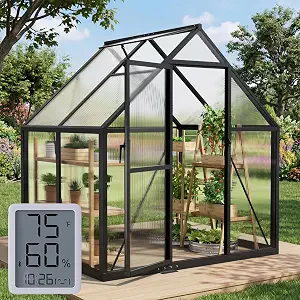 |
AMERLIFE 12 x 10 x 8 ft Hybrid Polycarbonate Greenhouse

| Cover Material | Polycarbonate (PC) |
|---|---|
| Frame Material | Aluminum |
| Number of Doors | 2 |
| Number Of Vents | 2 |
| Indoor Outdoor Usage | Outdoor |
This AMERLIFE 12 x 10 x 8 ft greenhouse is built as a performance-focused backyard growing space. The quick-connect aluminum frame and engineered support members aim to speed assembly and improve rigidity, and the manufacturer estimates assembly by three people in about six hours. Hybrid polycarbonate panels combine clear and translucent sheets to balance light transmission, impact resistance, and UV protection, which helps seedlings and larger plants alike. Two adjustable roof vents plus double doors let you manage airflow and humidity while the integrated gutters route rainwater away from the footprint. The structure is rated to resist winds up to 56 mph and snow loads to 18 psf, so it is suitable for exposed suburban lots with periodic weather stress. Practical limits include the need to anchor carefully and avoid heavy snow without additional reinforcement, and the kit is large and heavy to handle during assembly. Expect to spend time leveling the site and following anchoring instructions to get the claimed performance.
Best for: Growers who prioritize a robust, weather-resistant backyard greenhouse and want faster assembly without sacrificing structural performance.
Less Ideal for: If you need a compact, easily moved hoop house or a pop-up seasonal cover, this permanent-style, heavier kit is not the best choice.
- Quick-connect aluminum frame that reduces assembly time and increases stability
- Hybrid polycarbonate panels deliver strong light transmission with UV protection and impact resistance
- Adjustable roof vents and double doors for effective ventilation and humidity control
- Integrated gutters for rainwater management and cleaner site drainage
- Engineered to withstand winds up to 56 mph and snow loads up to 18 psf for better all-weather performance
- Large, heavy kit requires multiple people and careful handling during assembly
- Manufacturer guidance cautions about reinforcement for excessive snow or high-wind exposure
Verdict: Choose this greenhouse when you want a durable, performance-oriented backyard structure that speeds assembly and delivers strong light, ventilation, and weather resistance.
Backyard Discovery Bellerose XL Cedar Walk-In Greenhouse with Polycarbonate Panels and Pergola

| Size | 13×11 ft |
|---|---|
| Cover Material | Polycarbonate (PC) |
| Frame Material | Wood |
| Number Of Vents | 2 |
| Closure Type | Sliding Doors |
The Bellerose XL is a purpose-built backyard greenhouse that gives hobby and performance-minded gardeners a robust year-round growing space. It combines a cedar structural frame with commercial-grade 4-wall polycarbonate panels to improve heat retention and withstand heavy snow and high winds when properly anchored. Use it as a seed-starting nursery, winter protection for tender plants, or a staging area for larger projects thanks to five fixed staging shelves, eight moveable plant hooks, hose hook-ups inside and out, and a built-in workstation. The temperature-activated exhaust fan plus two easy-open windows provide both forced and natural ventilation for better climate control. The integrated PowerPort (three outlets and three USB ports) makes it simple to add lights, fans, or heaters. Practical strengths are its weather-tested durability, generous interior space, and thoughtful utility features that reduce trips for extension cords and hoses. Expect a multi-person assembly and the need for a solid foundation and anchoring; it is heavy and requires planning for installation and electrical hookup.
Best for: Gardeners who want a durable, high-capacity backyard greenhouse to extend seasons and run serious growing projects and who are prepared to plan for installation and utilities.
Less Ideal for: Casual gardeners seeking a small, portable greenhouse or anyone who needs a simple, instant setup without hiring help or preparing a permanent foundation.
- Commercial-grade 4-wall polycarbonate panels for improved heat retention and durability
- Cedar frame naturally resistant to rot and engineered to handle heavy snow loads and high winds when anchored
- Integrated PowerPort with three outlets and three USB ports for powering lights, fans, and accessories
- Built-in workstation with multiple fixed shelves, moveable hooks, and interior/exterior hose hook-ups for organized, efficient workflow
- Temperature-activated exhaust fan and two operable windows for active and passive ventilation control
- Large, heavy kit requires multiple people, a stable foundation, and time-consuming assembly
- Electrical supply and anchoring are required but not included
- Stain saturation may vary across panels which could affect appearance
Verdict: If you need a rugged, well-equipped backyard greenhouse for season extension and high-performance growing, this cedar-built Bellerose XL delivers the space, insulation, and utility features to support serious gardening.
FLY BY YAN 6×6 ft Outdoor Polycarbonate Greenhouse with Roof Vent

| Cover Material | Polycarbonate (PC) |
|---|---|
| Frame Material | Aluminum |
| Number of Doors | 1 |
| Number Of Vents | 1 |
| Indoor Outdoor Usage | Outdoor |
This 6×6 ft Fly By Yan greenhouse is a walk-in outdoor structure designed to give backyard gardeners a durable, easy-to-assemble protected growing space. It uses an aluminum frame and 4 mm UV-coated polycarbonate panels that admit light while reducing harmful UV exposure, and the slide-in panel system plus quick-install design speeds assembly. Typical use is for starting seedlings, overwintering tender plants, or extending the growing season for vegetables and ornamentals in a small yard. Notable features include a lockable door, a roof vent for airflow control, and a heavy-duty build aimed at all-season use. In practice the unit provides a stable microclimate and straightforward ventilation control, and the materials are low-maintenance compared with glass. Limitations are its compact footprint, which restricts large-scale production or tall plants, and assembly still requires two people and careful anchoring for wind resistance. For gardeners who need a robust, space-efficient greenhouse without fragile glass, this model balances durability and convenience.
Best for: Gardeners who want a durable, compact greenhouse to extend the season, start seedlings, or protect a modest collection of plants without the fragility of glass.
Less Ideal for: Growers who need large production space, tall crop clearance, or a freestanding heavy-structure for commercial use should consider larger or more industrial greenhouses.
- Aluminum frame with 4 mm UV-coated polycarbonate panels for durability and UV protection
- Quick-install slide-in panels reduce assembly time compared with traditional panel systems
- Adjustable roof vent and lockable door provide ventilation control and security
- Designed for year-round outdoor use and low maintenance compared with glass
- 6×6 ft footprint limits space for larger plants and shelving systems
- Requires at least two people and proper anchoring to assemble safely in windy conditions
Verdict: A sturdy, quick-to-assemble 6×6 ft greenhouse that gives backyard gardeners reliable year-round protection without fragile glass.
AirWire 4×6 ft Walk-in Polycarbonate Greenhouse with Roof Vent

| Size | 4×6 FT |
|---|---|
| Cover Material | Polycarbonate (PC) |
| Frame Material | Aluminum |
| Number of Doors | 1 |
| Number Of Vents | 1 |
This AirWire 4×6 ft greenhouse is a budget-friendly walk-in option for gardeners who want simple, year-round plant protection without a large footprint. It uses a reinforced aluminum frame and 4mm polycarbonate panels with a UV coating, which combine to keep seedlings, potted plants, and small beds sheltered from wind and light frost while still letting in filtered sunlight. The slide-in panel assembly and quick-install design are aimed at faster setup for two people, and the single sliding, lockable door plus an adjustable roof vent make ventilation and security straightforward. Practical benefits include a small usable interior for shelving or a couple of raised trays, decent light diffusion from the polycarbonate, and lower maintenance compared with film covers. Important limitations are the modest interior space, a single vent that gives limited passive airflow, and panels and frame suited for light to moderate weather rather than heavy snow or extreme winds. Expect this to work well as an entry-level, economical greenhouse rather than a heavy-duty, permanent structure.
Best for: Gardeners on a tight budget who need a small, easy-to-assemble walk-in greenhouse for starting seedlings, protecting potted plants, or extending the season in a backyard or patio.
Less Ideal for: Growers who need a large workspace, heavy-duty snow load protection, or advanced climate control should consider larger or more robust greenhouse models instead.
- Aluminum frame with 4mm polycarbonate panels provides durable, low-maintenance protection
- Quick slide-in panel assembly designed for faster setup
- UV-coated panels let in filtered light while protecting plants from harmful rays
- Lockable sliding door and roof vent add basic security and ventilation
- Single roof vent limits airflow control compared with multi-vent designs
- Compact 4×6 interior limits growing space for larger projects
Verdict: A cost-conscious, easy-to-assemble walk-in greenhouse that delivers reliable light diffusion and basic year-round protection for small-scale gardeners.
Trygoal 6×14 ft Walk-In Polycarbonate Greenhouse with Aluminum Frame

| Size | 6×14 FT |
|---|---|
| Cover Material | Polycarbonate (PC) |
| Frame Material | Aluminum |
| Number Of Vents | 2 |
| Number of Doors | 1 |
This Trygoal 6×14 ft walk-in greenhouse provides a stable, weather-resistant environment for serious backyard gardeners. The aluminum alloy frame and pre-cut, pre-drilled components make assembly straightforward and give the structure solid rigidity once installed. Four millimeter twin-wall polycarbonate panels transmit light while blocking most UV rays and offer impact resistance against rain and hail. Two adjustable roof vents plus integrated gutters let you manage temperature and moisture, and the lockable hinged door gives secure, convenient access. In practice this setup works well for seed starting, shelving multiple trays, growing vegetables and larger potted plants, and protecting plants through seasonal swings. It is large enough to move around inside and organize tools and benches. The main limitations are the need for careful anchoring in high winds and that some hardware alignment is required during assembly to ensure good weather sealing; insulation for winter use will depend on additional measures you add. For gardeners prioritizing a durable, long-term backyard greenhouse, this model balances strength, light transmission, and practical ventilation.
Best for: Gardeners who want a dependable, purpose-built backyard greenhouse for season‑to‑season growing and who value durable materials and straightforward assembly.
Less Ideal for: People who need a portable or temporary shelter or those who expect a fully insulated, year‑round heated greenhouse out of the box.
- Aluminum alloy frame provides strong structural stability while keeping the unit relatively lightweight
- 4mm polycarbonate panels allow high light transmission and block over 99.9% of harmful UV rays
- Adjustable roof vents and integrated gutters enable effective airflow and moisture control
- Pre-cut, pre-drilled components simplify assembly and improve fit during installation
- Requires secure anchoring and careful alignment during assembly for reliable weatherproofing
- Not inherently insulated for cold climates without added heat or insulating measures
Verdict: A sturdy, well-ventilated walk-in greenhouse built for dependable backyard growing and long-term use.
Outsunny 8' x 6' Polycarbonate Walk‑in Greenhouse with Roof Vent and Rain Gutter

| Cover Material | Polycarbonate (PC) |
|---|---|
| Frame Material | Aluminum |
| Number of Doors | 1 |
| Number Of Vents | 1 |
| Included Components | Rain Gutters, Roof Vent |
This Outsunny 8' x 6' polycarbonate walk-in greenhouse creates a protected microclimate for seedlings, vegetables, herbs, and small shrubs. It uses clear twin‑wall polycarbonate panels to let in most daylight while blocking harmful UV, and the aluminum frame and reinforced poles aim to resist corrosion for seasonal use. Typical setup places it on a level patio or compact garden bed where the hinged door provides easy access and the single adjustable roof vent helps control humidity and airflow. The included rain gutters make it simple to capture runoff for watering. In practice the structure gives a lot of usable space for potting, cold protection, and overwintering tender plants, but assembly requires attention to hardware and sharp edges and may take a few hours with two people. The single vent and basic latch closure mean airflow and pest exclusion are practical but not airtight, so expect to supplement ventilation on hot days and to anchor the unit securely in exposed sites. For gardeners who want an economical, light‑transmitting greenhouse for year‑round hobby use, this model is a solid option.
Best for: Gardeners who want a compact, year‑round protected space to start seedlings, overwinter tender plants, and store pots and tools, and who value visible social proof when choosing a reliable greenhouse.
Less Ideal for: Those needing heavy commercial use, large multi‑season crop production, or a fully weatherproof, high‑wind structure should consider larger commercial greenhouses or professionally built alternatives.
- Clear twin‑wall polycarbonate panels transmit light while reducing UV damage to plants
- Aluminum frame and reinforced poles resist corrosion for outdoor use
- Adjustable roof vent lets you manage humidity and airflow
- Integrated rain gutters allow simple rainwater collection
- Walk‑in size provides usable space for potting and overwintering plants
- Single roof vent limits passive ventilation on hot days
- Assembly can be time consuming and requires two people and careful handling of sharp edges
Verdict: If you want an affordable, light‑transmitting backyard greenhouse for year‑round hobby gardening, this outsunny 8' x 6' kit delivers usable walk‑in space with practical venting and rainwater capture.
Sylviera 6×4 ft Outdoor Polycarbonate Greenhouse with Hygrometer
| Cover Material | Polycarbonate (PC) |
|---|---|
| Frame Material | Aluminum |
| Number Of Vents | 2 |
| Indoor Outdoor Usage | Outdoor |
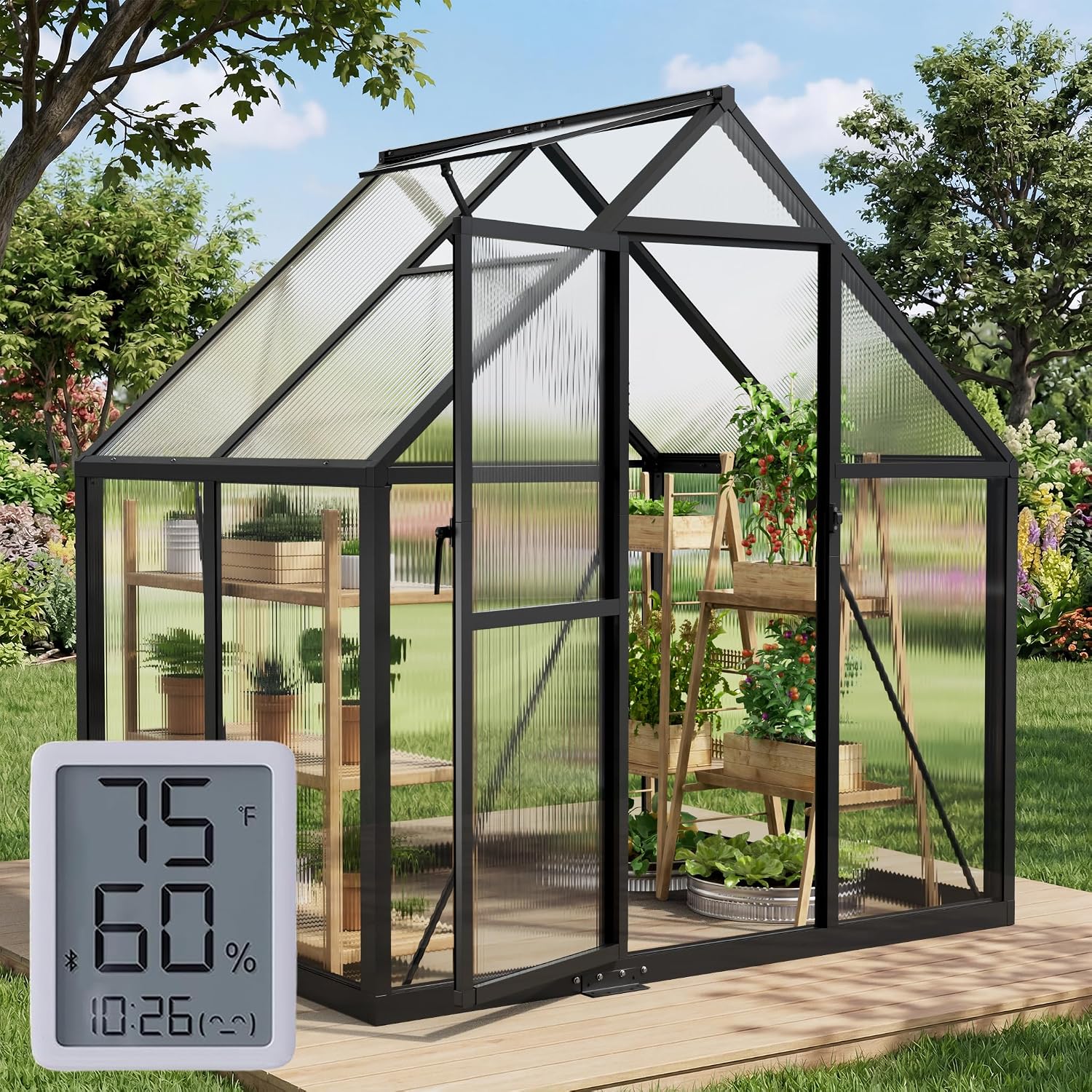
The Sylviera 6×4 ft greenhouse is a compact walk-in shelter that creates a controlled environment for vegetables, herbs, and ornamentals. It uses an aluminum frame with 4mm double-wall polycarbonate panels to let light in while blocking UV, and the kit includes roof vents, a lockable door, and a hygrometer for basic climate monitoring. Typical use is to stage potted plants and seed trays on shelving inside, open vents to prevent overheating on warm days, and close up for wind or light snow. Notable features are the impact-resistant panels that improve insulation compared with single-sheet plastic, a reinforced frame for better wind resistance, and labeled parts with tools to simplify assembly. In practice this means extended growing seasons and safer overwintering for small crops, but expect a modest usable footprint that limits large beds and taller crops. Assembly takes two people and some time to align panels and secure seams, and heavy wind or deep snow may still require additional anchoring or sealant to keep joints tight.
Best for: Gardeners who prioritize year-round performance and want a durable small greenhouse to extend seasons and protect plants from wind and light snow.
Less Ideal for: Those needing a large production space, tall plant beds, or a no-assembly, instant shelter should consider larger or prebuilt alternatives.
- Double-wall polycarbonate panels provide UV protection and better insulation than thin plastic sheeting
- Aluminum frame offers corrosion resistance and increased structural strength
- Adjustable roof vents and a lockable door help regulate temperature and airflow
- Includes a hygrometer and labeled parts for clearer assembly and basic climate monitoring
- Small interior footprint limits planting layout and vertical growing space
- Assembly requires two people and careful alignment of panels for a weather-tight fit
Verdict: Choose this compact Sylviera greenhouse when you want a durable, ventilated small walk-in that reliably extends your growing season.
Choosing the Right Polycarbonate Greenhouse: Key Factors to Consider
Panel Material and Thickness
Panel construction affects both light quality and thermal performance. Multiwall polycarbonate panels trap air between layers to provide insulation while diffusing direct sun to reduce hotspots. Thicker panels typically have better R-value and resist bowing over time, which matters in colder climates or sites with heavy midday sun.
Panel UV coatings and edge sealing determine long-term clarity and resistance to yellowing. Consider how the panel profile affects light diffusion for seedlings versus fruiting crops. Thicker, multiwall panels are heavier and may need a stronger frame and different fasteners compared with single-sheet glazing.
Frame Material and Build
The frame supports wind and snow loads and anchors the structure to the ground. Aluminum frames are corrosion-resistant and lightweight but must be engineered with sufficient cross-sections to avoid flexing. Galvanized steel frames offer strength but require good drainage and coatings to avoid localized corrosion at joints.
Pay attention to connection details, corner reinforcements, and available anchor systems. A well-designed frame makes it possible to add shelving, hanging baskets, and irrigation lines without overloading the structure. Think about the long-term maintenance of the frame material where you garden, such as coastal salt exposure or wet winters.
Ventilation and Climate Management
Good ventilation prevents overheating, reduces humidity-related disease, and supplies fresh air to growing plants. Fixed vents, automatic roof vents, and louvered windows each provide different levels of control. Automatic vent openers respond to temperature and remove the need for constant manual adjustments during hot spells.
Consider how the greenhouse will be used through the seasons. For year-round growing you may need integrated vents plus the ability to add heaters or passive thermal mass. Shade cloth compatibility is important for high-sun sites to avoid blossom drop and sunscald on young plants.
Foundation and Anchoring Options
A stable base keeps the greenhouse square and prevents uplift during storms. Options include concrete footings, perimeter timber bases, and ground screws. Each foundation type affects ease of installation, permanence, and drainage.
A solid foundation also sets the interior floor height for benches and irrigation routing. Consider frost depth and local wind patterns when choosing anchors. Removable anchoring systems are useful if you plan to relocate the structure, while permanent footings improve long-term stability.
Assembly Complexity and Parts Availability
Some polycarbonate greenhouses arrive as simple panels and bolt-together frames ready for quick assembly, while others require more advanced tools and multiple people. Assembly complexity affects cost in time and possible professional labor.
Availability of replacement panels, seals, and fasteners matters for repairs after storm damage or wear. Check whether common parts are modular and whether the manufacturer provides clear instructions and exploded diagrams to speed repairs.
Interior Layout and Access
Usable interior volume determines how many benches, grow lights, and racks you can add. Consider door width for moving larger pots and the height of ridge vents for tall crops or scaffolding. Shelving that attaches to the frame saves floor space but requires adequate frame strength.
Think about workflow: potting, seeding, and harvest pathways should be unobstructed. Also plan for water management and electrical access if you intend to run heaters, fans, or lights.
Sizing for Your Garden and Growing Goals
Choose a greenhouse size based on how many plants you want to grow at once and how you will use the space seasonally. Small greenhouses or lean-tos work well for starting seedlings and overwintering tender potted plants, while larger freestanding houses give space for full-season vegetable production and staging benches.
Allow clearance for door swing, workspace, and circulation paths. If you plan to use bench rows, measure bench widths and aisle space before selecting a footprint so equipment and wheelbarrows can move freely.
- Compact houses fit patios but limit bench depth
- Medium footprints suit hobby vegetable and perennial propagation
- Large structures support full-season production and taller crops
Positioning and Solar Orientation
Orientation affects daily light and heat gain. A long east-west ridge maximizes winter sun exposure along the length of the greenhouse, which helps keep temperatures steadier during short days. South-facing glazing increases solar gain but may require more shading in summer.
Site the greenhouse where it receives full morning sun and where wind is not funneled strongly. Avoid low spots prone to standing water and choose a location that makes water and electrical access practical.
- East-west ridge for even winter heating
- Shelter from prevailing winds without blocking sunlight
- Good drainage and nearby utilities simplify setup
Managing Light, Shade, and Seasonal Use
Polycarbonate diffuses light, which reduces harsh direct rays and helps seedlings develop evenly. In high-sun areas you may still need shade cloth or retractable screens to prevent overheating and sunscald during summer months.
For winter growing, combine thermal mass such as water barrels or stone with insulated panels or double-wall glazing to stabilize night temperatures. Removable shade systems give seasonal flexibility without altering the greenhouse shell permanently.
- Use shade cloth in summer to lower interior peaks
- Add thermal mass for overnight temperature buffering
- Consider removable insulation for extreme cold spells
Maintenance Tasks That Keep a Greenhouse Productive
Regular cleaning of panels maintains light transmission and reduces disease risk. Rinse away algae and soil splash, and inspect seals and gaskets annually for cracking or loosening. Lubricate sliding vents and check automatic openers before the warm season begins.
Monitor anchor points and frame fasteners after storms. Replace any degraded rubber seals or foam closures to maintain thermal performance and keep pests out. Good seasonal maintenance extends the effective life of the structure and protects plant investments.
- Clean glazing twice a year or as needed
- Inspect and tighten connectors after winter
- Test vents and automatic openers each spring
Accessory Upgrades to Improve Growing Efficiency
Accessories such as automatic vent openers, shelving systems, bench trays, and irrigation kits transform a bare shell into a productive workspace. Automatic vent openers that react to temperature reduce labor and minimize heat stress on plants during sudden hot days.
Install drip irrigation or misting systems to maintain consistent moisture levels for seedlings and cuttings. Consider modular shelving to maximize vertical space and allow flexible crop rotations without heavy modifications to the frame.
- Automatic vent openers reduce manual work
- Drip systems provide consistent watering with low waste
- Modular benches let you rearrange crops seasonally
How We Chose the Best Polycarbonate Greenhouse
We shortlisted polycarbonate greenhouses using criteria that matter in real outdoor gardening situations. First, panel construction and thermal performance were weighed to judge how well a greenhouse retains heat and avoids cold snaps while still transmitting useful light. Second, frame strength and anchor options were evaluated for structural reliability under wind, rain, and light snow. Third, ventilation and shading options were considered because airflow and solar control directly affect plant health and disease risk. Fourth, assembly complexity and available replacement parts were assessed since a difficult build or unavailable components can turn maintenance into a season-long problem. Finally, usable interior layout and accessory compatibility were reviewed to ensure common gardening needs like shelving, irrigation, and seed-starting benches are supported. We excluded temporary plastic hoop structures and simple film-covered frames, focusing only on rigid polycarbonate systems intended for multi-season use. Also excluded were small cold frames and mini propagators that do not provide enough volume for sustained vegetable or perennial production. The end result is a set of options that balance insulation, durability, ventilation, buildability, and practical garden use.
FAQ
How much sunlight does a polycarbonate greenhouse transmit compared with glass?
Polycarbonate panels transmit a high percentage of usable light while diffusing direct rays, which reduces hotspots. Exact transmission varies by panel type and thickness, but multiwall panels often trade a small amount of raw light for better diffusion and insulation compared with single-pane glass.
Can polycarbonate greenhouses handle snow load in cold climates?
Many rigid polycarbonate greenhouses are engineered to handle light to moderate snow loads, especially when paired with a sturdy frame and proper anchoring. In heavy-snow regions choose models with steeper roof pitches and reinforced frames, and plan to clear heavy accumulations to avoid stress on the structure.
Is ventilation necessary if the greenhouse has insulated panels?
Yes. Insulation slows heat loss but does not replace the need for airflow. Proper ventilation controls humidity, prevents fungal disease, and removes excess heat during warm days. Combine passive vents with automatic openers or fans for the most consistent results.
What foundation works best for a permanent polycarbonate greenhouse?
A continuous timber or concrete perimeter foundation provides a stable, level base and simplifies anchoring. Ground screws or concrete piers can also work depending on soil type and permanence. Consider frost depth and drainage when choosing foundation type.
How long do polycarbonate panels last before needing replacement?
With quality UV-coated panels and proper maintenance, many polycarbonate panels last several years before noticeable yellowing or loss of rigidity. Lifespan depends on local sun intensity, cleaning habits, and whether panels are scratched or mechanically stressed.
Can I attach shelving and lights to the greenhouse frame?
Yes, but attachment points should match the frame's load capacity. Use distributed shelving systems and avoid concentrating heavy loads on small brackets. If you plan to add lights or heaters, verify that the frame and anchors can bear the additional weight and that electrical runs are installed safely.
Final Verdict
Choosing the right polycarbonate greenhouse comes down to balancing insulation, frame strength, ventilation, and how you plan to use the space. Prioritize panel construction and frame anchoring for your climate, then match ventilation and interior layout to the crops you grow. Simpler builds save time, while sturdier systems offer longer-term durability. Focus on the factors that affect plant health and seasonal use and you will select a greenhouse that suits your garden and growing goals.
