

Note: This article contains affiliate links. If you click on these links and make a purchase, I may earn a small commission at no extra cost to you. This helps support my research and content. Read my full affiliate disclosure here.
Picking the right Heavy Duty loppers matters when you are managing mature trees, oversize shrubs, or storm-damaged limbs. The correct tool saves effort, reduces strain on joints, and leaves cleaner cuts that recover faster. This guide presents seven shortlisted Heavy Duty loppers chosen for gardeners who need tools that handle large-diameter branches and frequent use. We evaluated each choice on cutting capacity, blade durability, handle strength, and ergonomics to reflect real garden work. Read on to see how those criteria shaped the top picks and to get practical advice for matching a lopper to your yard and cutting style.
Top Picks at a Glance
| Best Overall The best all-around choice for most situations | Corona X Series Pro 2-1/4" Bypass Lopper |  |
| Best Quality Built to a higher standard if you want something more solid | FELCO 231 Lever-Action Anvil Lopper |  |
| Best Value The sweet spot between price and what you get | YRTSH Heavy-Duty Extendable Loppers with Compound-Action Blade |  |
| Best Budget The cheapest option that still gets the job done reliably | Corona SL 3264 ComfortGEL 30-inch Bypass Loppers |  |
| Highest Rated A top-rated pick with lots of positive feedback | Woodland Tools Co. Pro Series 32" Forged Bypass Lopper with Gear Drive |  |
| Most Popular A crowd favorite that many people choose with confidence | Fiskars PowerGear2 32" Bypass Lopper — 2" Cut Capacity |  |
| Best Seller A high-volume bestseller chosen again and again | Fiskars 28" Garden Bypass Loppers — 1.5" Cut Capacity |  |
Corona X Series Pro 2-1/4" Bypass Lopper

| Cutting Capacity | 2-1/4 Inch |
|---|---|
| Blade Type | Bypass |
| Blade Material | High Carbon Steel |
| Handle Material | Aluminum |
The Corona X Series Pro bypass lopper is a professional-grade branch cutter designed for heavy pruning tasks. It uses a precision-ground, serrated bypass blade made from high carbon steel to deliver scissor-like cuts that minimize crushing and promote healthier wound closure. With 2-1/4" cutting capacity and long aluminum handles the tool provides strong leverage for tackling thick limbs, while ambidextrous grips and ergonomic handle design help reduce hand and arm fatigue during extended sessions. The construction emphasizes durability for frequent use in large yards, orchards, or landscaping work, and the blade can be resharpened to extend service life. Expect a sturdy, no-nonsense tool that focuses on cutting performance rather than lightweight portability. The main compromise is that this is a fairly robust, purpose-built lopper that may feel heavier and less maneuverable for very fine pruning or for gardeners who prefer telescoping or ultra-light tools for repeated overhead work.
Best for: Gardeners and landscapers who need a reliable, powerful lopper for routine heavy pruning and maintaining large yards or orchards and who prioritize cutting performance and durability.
Less Ideal for: Casual gardeners who mostly do light trimming, frequent overhead pruning, or need a very lightweight or extendable tool for reaching high branches.
- 2-1/4" cutting capacity handles substantial branches without multiple passes
- High carbon steel bypass blade provides clean, resharpenable cuts that reduce plant damage
- Aluminum handles offer good leverage while keeping the tool stiffer and durable
- Ergonomic, ambidextrous grips reduce hand fatigue during longer pruning jobs
- Heavier, pro-grade construction can be less comfortable for long overhead or fine-detail pruning
- No telescoping handles so reach is limited compared with extendable loppers
Verdict: Buy this if you want a durable, pro-level bypass lopper that delivers clean, powerful cuts on thick branches.
FELCO 231 Lever-Action Anvil Lopper

| Cutting width | 1.6 inches |
|---|---|
| Blade Type | Anvil |
| Blade Material | Carbon Steel |
| Handle Material | Aluminum |
| Hand Orientation | Ambidextrous |
The FELCO 231 is built for serious pruning where power and precision matter. Its lever system and curved anvil cutting head increase mechanical advantage so you can slice through hardwood and larger green wood with less effort. Typical use is two-handed pruning of shrubs, small trees, and thick woody stems up to the stated cutting width, with the ambidextrous design making it comfortable for either hand position. Notable features include carbon steel chisel-edged blade for edge retention, lightweight aluminum handles that reduce fatigue, micrometric adjustment for easy blade alignment, and replaceable parts for long service life. In practice the tool delivers firm, clean anvil-style cuts and feels sturdier than garden-grade loppers, though anvil cutting is best for dead or hard wood rather than very green, springy branches. The weight that helps its leverage can be noticeable during extended overhead work, and users who prefer bypass-style shears for live-wood cuts may want a different head design.
Best for: Buyers who prioritize cutting performance and durability for heavy pruning tasks and want a tool that turns brute force into efficient cuts with minimal effort.
Less Ideal for: Casual gardeners who mostly trim small, soft stems or anyone who prefers bypass blades for precise live-wood pruning.
- High leverage lever-action mechanism that reduces user effort on thick branches
- Carbon steel chisel-edged blade offers strong edge retention for repeated cuts
- Lightweight aluminum handles lower fatigue compared with heavier steel loppers
- Micrometric adjustment and replaceable parts make maintenance and long-term sharpening simple
- Anvil-style cutting is less suitable for very live, fibrous green growth compared with bypass blades
- Heavier feel during prolonged or overhead pruning sessions
Verdict: Choose the FELCO 231 if you need a durable, high-leverage lopper that makes heavy cuts easier and stays serviceable over years of demanding use.
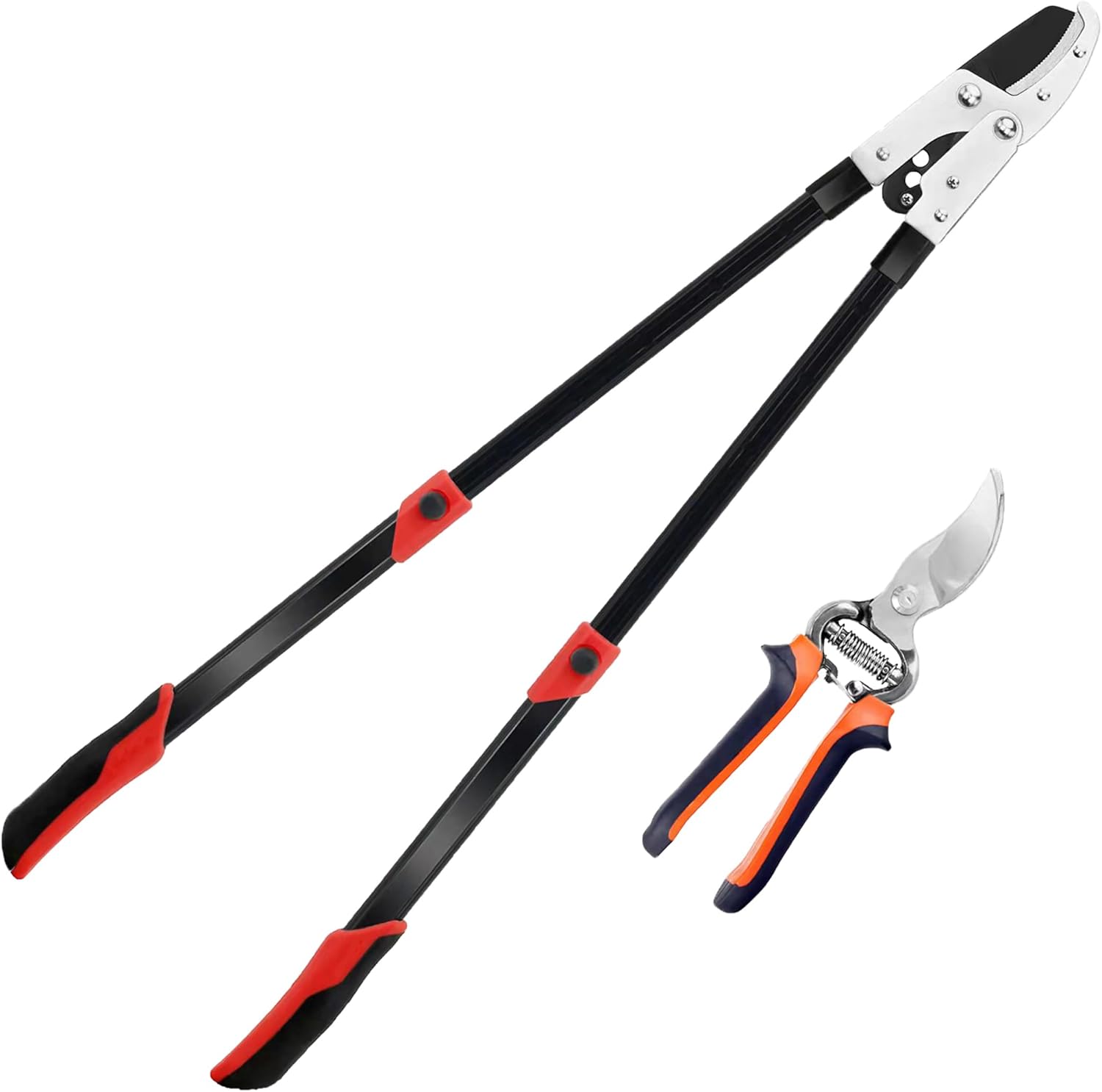
YRTSH Heavy-Duty Extendable Loppers with Compound-Action Blade
| Cutting width | 2 inches |
|---|---|
| Blade Edge | Compound Action Technology |
| Blade Type | Anvil |
| Blade Material | Alloy Steel |
| Handle Material | Aluminum |
These YRTSH loppers are built for heavy pruning tasks where reach and leverage matter. The tool combines a compound-action anvil blade made from alloy steel with a six-step telescoping aluminum handle so you can extend from about 28 to 41 inches to reach higher branches without a ladder. The compound-action mechanism multiplies hand force, which makes chopping through living and dry wood easier and reduces wrist strain during longer jobs. The blades have a low-friction Teflon-style coating to help preserve sharpness and slide through wood, and the ambidextrous design and soft, non-slip grips make the tool comfortable to use for extended sessions. Because it is an anvil-style cutter, it performs best on dead or hard wood and tougher branches; very fine, precision green pruning may feel less clean than bypass shears. The telescoping handle adds convenience but increases weight and can feel slightly less rigid at full extension. For homeowners or pros needing reach and power for medium-thick branches, these loppers are a practical, workhorse option.
Best for: Gardeners and homeowners who want a single, robust lopper for reaching and cutting medium-thick branches without using a ladder and who prioritize cutting power and convenience.
Less Ideal for: People who need very precise pruning on delicate living growth or those who prefer the lightest possible tool for frequent detailed trimming work.
- Compound-action mechanism increases cutting power and reduces effort
- Extendable 28–41 inch handle provides added reach for higher branches
- Alloy steel blade with low-friction coating helps maintain sharpness
- Soft, non-slip grips and ambidextrous design improve comfort and control
- Anvil blade style can crush live stems and gives less precise cuts than bypass loppers
- Telescoping handle can feel slightly less rigid when fully extended
Verdict: Choose these loppers when you need reach and extra cutting power for heavy-duty pruning of medium-thick branches.
Corona SL 3264 ComfortGEL 30-inch Bypass Loppers

| Cutting width | 1.5 inches |
|---|---|
| Blade Type | Bypass |
| Blade Material | Alloy Steel |
| Handle Material | Alloy Steel |
The Corona SL 3264 ComfortGEL bypass lopper is a straightforward pruning tool aimed at routine yard work. It uses alloy steel bypass blades with a serrated edge and a Dual Arc-inspired geometry to slice through branches up to 1.5 inches in diameter. The 30-inch handles provide reach and leverage while the molded ComfortGEL grips and integrated Shock-Guard bumpers reduce hand strain during repeated cuts. A nonstick blade coating helps the blade stay sharp and resist sap buildup for easier maintenance. Practical benefits include comfortable grip for longer sessions, enough cutting capacity for most small-to-medium branches, and lightweight steel handles that keep the tool manageable. Limitations are the 1.5-inch cutting limit and fixed-length handles, which mean this lopper is not intended for larger limbs or for users who need an extendable reach. The alloy-steel construction is durable for general garden use but lacks the heavier-duty materials or advanced mechanics found on premium professional models.
Best for: Budget-minded gardeners who need a comfortable, reliable lopper for routine pruning of small to medium branches and want good ergonomics without a premium price.
Less Ideal for: Those who regularly cut large-diameter limbs, professional arborists, or gardeners who require extendable handles for high or distant branches.
- ComfortGEL grips and Shock-Guard bumpers reduce hand fatigue during prolonged use
- Serrated bypass blades with nonstick coating help clean cuts and resist sap buildup
- 30-inch handles give good leverage for cutting branches up to 1.5 inches
- Lightweight steel construction keeps the tool easy to maneuver
- 1.5-inch cutting capacity limits use on larger limbs
- Fixed-length handles cannot extend for extra reach
Verdict: A comfortable, no-frills lopper that gives budget-conscious buyers reliable cutting for routine small-branch pruning.
Woodland Tools Co. Pro Series 32" Forged Bypass Lopper with Gear Drive

| Cutting width | 32 inches |
|---|---|
| Product Style | Bypass |
| Blade Material | High Carbon Steel |
| Handle Material | Aluminum |
This Pro Series lopper is built for demanding, repeat use in heavy pruning and arborist work. The impact-forged high-carbon steel Alpha blade and bypass geometry are intended to slice cleanly through up to 2-inch green wood while minimizing crush to living branches. The standout is the patent-pending forged gear drive that multiplies input force, so you can tackle dense or fibrous limbs with noticeably less physical effort than single-pivot loppers. Extruded I-beam aluminum handles keep the head rigid while reducing overall weight for extended overhead tasks. The design is serviceable with replaceable blades, reinforced thru-bolts, and parts that allow long-term upkeep instead of disposal. Expect a tool that prioritizes strength and repairability, though its commercial focus means it is heavier and larger than consumer garden loppers and may be more than needed for light ornamental pruning. The product is clearly aimed at users who value durability and maintainability for frequent heavy-duty cutting rather than casual, occasional trimming.
Best for: Gardeners, landscapers, and arborists who need a durable, repairable lopper for frequent heavy pruning and want a tool that reduces effort on dense branches.
Less Ideal for: Casual gardeners or those who only do light ornamental pruning in small yards who would prefer a lighter, simpler lopper.
- Impact-forged high-carbon steel blade for durable, clean cuts
- Gear-drive mechanism reduces user effort on dense or fibrous branches
- I-beam extruded aluminum handles balance rigidity with lower weight for prolonged use
- Serviceable design with replaceable blades and reinforced thru-bolts for long-term ownership
- Large commercial design may be heavier and bulkier than consumer loppers
- Cutting capacity limited to 2-inch green wood, not for very large hardwood trunks
Verdict: Buy this lopper if you want a commercial-grade, serviceable tool that delivers powerful, effort-saving cutting for frequent heavy-duty pruning.
Fiskars PowerGear2 32" Bypass Lopper — 2" Cut Capacity

| Cutting width | 32 inches |
|---|---|
| Cut capacity | 2 inches |
| Blade Type | Bypass |
| Blade Material | Alloy Steel |
| Handle Material | Aluminum |
The Fiskars PowerGear2 32" bypass lopper is built for pruning medium-thick branches with less wrist and hand strain. Its patented PowerGear2 leverage multiplies cutting force so a single-handed pull slices through up to 2" green wood that would otherwise need much more effort. The hardened alloy-steel blades have a low-friction coating to resist gumming and rust and the serrated edge helps hold the branch while you cut. Long aluminum handles with SoftGrip touchpoints give comfortable control and reach for higher or deeper cuts. Practical benefits include cleaner cuts on live growth, better mechanical advantage compared with basic loppers, and durable construction backed by a lifetime warranty. Limitations are that it is a fixed-length, non-telescoping tool so reach is limited to 32" and it is intended for live branches up to 2" in diameter rather than heavy deadwood or very large limbs. Users should still use pruning judgment for branch size and safety when working above shoulder height.
Best for: Buyers who want a proven, lower-effort lopper for routine pruning and shaping of trees and shrubs where social proof and reliability matter.
Less Ideal for: If you need extended reach for tall limbs or a tool for cutting very large or dead hardwood branches, choose an extendable or higher-capacity cutter instead.
- PowerGear2 gearing multiplies leverage for easier cutting of up to 2" branches
- Hardened alloy-steel blades with low-friction coating reduce gumming and resist rust
- Serrated bypass blade provides cleaner cuts on live growth
- Long aluminum handles with SoftGrip points improve comfort and control
- Fixed 32" length limits reach compared with extendable loppers
- Not designed for very large or heavily dead wood beyond the 2" cut capacity
Verdict: A reliable, easy-to-use lopper that delivers significantly more cutting power for everyday tree and shrub pruning.
Fiskars 28" Garden Bypass Loppers — 1.5" Cut Capacity

| Cutting width | 1.5 inches |
|---|---|
| Blade Material | Stainless Steel |
| Blade Edge | Serrated |
| Hand Orientation | Ambidextrous |
The Fiskars 28" bypass loppers are built for regular pruning of small to medium tree branches and heavier yard cleanup. Its fully hardened stainless-steel blades with a low-friction nonstick coating slice through live wood up to 1.5 inches across, which helps reduce sap build-up and keeps cuts clean. The long steel handles and softgrip cushions with a shock-absorbing bumper make repetitive cutting less tiring and give more control when working higher or deeper into the canopy. The blades are replaceable, and the ambidextrous bypass design favors clean cuts on living stems rather than crushing. Practical limitations: the 1.5" cut capacity limits work on larger limbs and the all-steel handle design, while durable, is heavier than some aluminum models, so prolonged overhead work may be more tiring. For gardeners who value dependable, long-lasting gear, these loppers offer predictable cutting performance and a lifetime warranty for peace of mind.
Best for: Experienced home gardeners and property owners who prioritize durability and consistent cutting performance for routine pruning and tree maintenance.
Less Ideal for: People who need to cut large limbs regularly or who require a very lightweight lopper for extended overhead work should consider larger-capacity or lighter models.
- Hardened stainless-steel blades with non-stick coating for smoother, cleaner cuts and reduced sap buildup
- Replaceable blade design extends tool life and simplifies maintenance
- Softgrip handles and shock-absorbing bumper reduce hand fatigue during extended use
- Ambidextrous bypass blades produce precise cuts on living branches
- 1.5 inch maximum cut capacity prevents use on larger limbs
- All-steel handle construction is heavier than some lightweight alloy or composite alternatives
Verdict: A rugged, reliable bypass lopper that delivers clean cuts and long-term durability for routine pruning tasks.
Choosing the Right Heavy Duty Loppers: Key Factors to Consider
Cutting Capacity and Jaw Type
Cutting capacity determines the largest branch diameter the lopper can cut in a single pass. For heavy-duty work look for tools rated for larger diameters and be aware that rated capacity is often the maximum under ideal conditions. Ratchet and compound-action jaws multiply force and let you cut thicker wood with less effort, but they may need extra maintenance.
Jaw type matters because bypass jaws give cleaner cuts suited for live wood, while anvil styles crush more and can be better for dry, dead branches. For general heavy garden use, a robust bypass lopper with a wide cutting throat usually provides the best balance between clean pruning and ability to handle larger limbs.
Blade Steel and Edge Retention
Blade steel grade and heat treatment affect how long a blade holds a sharp edge under repeated heavy cuts. Hardened steel or high-carbon blades typically retain cutting edges longer than softer steels, reducing the need for frequent sharpening. Blade coatings and finishes help resist sap buildup which dulls the edge faster.
Ease of sharpening is also important. A slightly softer blade that is easy to re-sharpen can be more useful over the long term than a very hard blade that chips or is difficult to restore. Look for blades with accessible bevels and clear guidance on maintenance.
Handle Length and Shaft Strength
Longer handles increase leverage, letting you cut thicker branches with less effort, but they add weight and can be harder to maneuver in tight spaces. Shaft material matters: forged steel and reinforced aluminum offer different tradeoffs between stiffness and weight. Telescoping shafts add reach and storage convenience but must lock securely to avoid flex under load.
For heavy-duty tasks, prioritize shafts and handles that resist bending. Reinforced joints, full-tang construction where present, and solid clamp or rivet connections reduce the risk of failure when you are applying high force to stubborn wood.
Ergonomics and Grip Comfort
Good ergonomics reduce fatigue and the risk of repetitive strain when making many cuts. Look for grips that cushion and reduce vibration transmitted to hands and forearms. Non-slip textures help maintain control when hands are sweaty or wet from sap.
Handle shape affects hand positioning and leverage. Some designs offer offset grips that keep your knuckles away from branches and improve wrist alignment. Consider how the tool balances in your hands, especially if you have smaller or larger hands than average.
Maintenance and Corrosion Resistance
Heavy garden tools take a beating from moisture, sap, and dirt. Coatings, stainless or treated hardware, and replaceable parts extend useful life. Regular cleaning of sap and debris and periodic lubrication of pivot points keeps cutting action smooth and reduces wear.
Evaluate whether the design allows disassembly or blade replacement. Tools that can be serviced prolong service life and often represent a better investment than sealed units that must be discarded when a key part fails.
Weight and Portability
Weight affects how long you can use a lopper comfortably. Heavier tools often feel more solid and can transfer force more efficiently, but they tire the user faster during extended pruning sessions. Consider how often you will carry the tool across the yard, up ladders, or while reaching with extended handles.
Portability also includes storage size. Telescoping handles collapse for compact storage, while fixed long-handled tools may require wall hooks or longer storage spaces. Balance the benefits of leverage against the practicality of moving and storing the tool in your specific garden setting.
When to Choose Heavy Duty Loppers Over Other Tools
Heavy Duty loppers are the right choice when branches are too large for hand pruners but not so large that a saw or chainsaw is required. They provide a one-handed or two-handed solution for limbs that need clean cuts without switching tools between every cut.
Use loppers for routine limb thinning, cutting back overgrown shrubs, and removing storm-damaged branches where a fast, controlled cut reduces further tearing. For very large trunks or extensive storm cleanup, pair a robust lopper with a pruning saw to avoid overtaxing the tool or risking injury.
- Ideal for branches roughly from 1 inch up to the lopper's rated capacity.
- Better for clean pruning of live wood than anvil-style cutters in many cases.
- Saves time versus repeatedly sawing small branches when rated capacity is adequate.
Using Heavy Duty Loppers Safely
Inspect the tool before each use to ensure the pivot and blades are secure and free of cracks or excessive play. Wear eye protection and gloves to guard against flying debris and slippery grips.
Stand with a stable footing and avoid overreaching. If a branch requires excessive force or the cut binds, back off and use a different approach such as a saw or a notch cut to relieve tension. Avoid cutting branches overhead when possible; use a pole saw or pruning saw designed for that task.
- Keep fingers clear of blade path and use both hands for two-handed designs.
- Make controlled, deliberate cuts rather than rapid hacking motions.
- Be mindful of branches under tension that can spring back.
Maintaining Your Loppers for Long Life
After each use, wipe blades clean of sap and debris and apply a light coat of oil to pivot points to prevent corrosion. Sharpen blades when you notice dulling or torn cuts; clean bevels and maintain the original edge angle for best results.
Check bolts and rivets periodically and tighten or replace hardware as needed. For telescoping or multi-piece shafts, confirm locking mechanisms function properly and do not slip under load.
- Clean sap with a solvent or soapy water before it hardens.
- Store in a dry place and hang if possible to avoid blade contact with other tools.
- Consider a protective sheath for the blades to reduce accidental nicks and corrosion.
Matching Lopper Features to Garden Tasks
For frequent heavy pruning, prioritize a strong shaft and high-quality blade steel that will stand up to repeated strain. If you need reach for higher branches from the ground, telescoping handles or longer fixed shafts give advantage, but choose secure locks and consider added weight.
If most of your pruning is on live, healthy shrubs, opt for bypass blades for cleaner cuts. If you mostly remove dead wood, an anvil-style cutter or a robust bypass that tolerates harder, dry wood may be acceptable. Think about the typical branch sizes and accessibility in your landscape and match features accordingly.
- Choose ratcheting mechanisms when power multiplication is needed for thick, hard wood.
- Select longer handles for leverage; choose compact options for tight hedges.
- Prefer replaceable blades or serviceable pivot hardware for long-term use.
Storage and Transport Tips
Store loppers in a dry, ventilated area to avoid rust. Hanging them keeps blades from contacting other metal objects and protects edges. For transport, secure blades with a sheath or strap to prevent accidental cuts and to protect the cutting edge.
If you carry tools in a vehicle, keep them in a covered box or trunk away from children and pets. When transporting multiple tools, separate sharp edges with cloth or plastic to prevent damage.
- Clean and oil before storage for long seasons of inactivity.
- Label or color-code handles if you have multiple similar tools for quick identification.
- Use blade guards for safe handling and to extend blade life.
How We Chose the Best Heavy Duty Loppers
We focused on the core attributes that determine how a lopper performs in heavy garden work. Key evaluation criteria included cutting capacity to understand the maximum branch diameter each lopper can handle, blade material and edge retention to predict how long a sharp cutting edge will last, handle and shaft strength to assess resistance to bending or breaking under torque, and ergonomics to gauge how comfortable tools are during repetitive cuts. We also considered overall construction quality and corrosion resistance for tools exposed to sap and wet conditions. Each candidate had to demonstrate robust build materials and clear specification of maximum cutting diameter. We excluded lightweight or decorative pruning tools that are not intended for large branches, and we did not consider small anvil-style tools meant only for occasional use. The final list emphasizes tools designed for repeated, heavy cutting jobs, with durable blades, reinforced shafts, and grips that reduce hand fatigue. Where designs varied, we favored straightforward, serviceable construction that gardeners can rely on season after season.
FAQ
What branch diameter can Heavy Duty loppers typically handle?
It often depends on the model, but heavy-duty loppers usually handle branches from about 1 inch up to 2 inches or more. For the largest or very hard wood, a pruning saw or chainsaw may still be necessary.
Are ratchet loppers better for older, hardwood branches?
Ratcheting mechanisms can make cutting thick, dense wood easier by multiplying force and breaking the cut into smaller steps. They are useful for hard or knotty wood, though they may be slower per cut than direct-action jaws.
How often should I sharpen and service lopper blades?
Sharpen blades whenever you notice them tearing rather than cutting cleanly, or after a season of heavy use. Clean sap and debris after each use and check pivot hardware periodically for tightness and lubrication.
Is a telescoping handle worth it for heavy pruning?
Telescoping handles provide reach and storage convenience, but they must lock securely to be safe under heavy load. If you need significant leverage and foresee frequent heavy cuts, a solid fixed long handle may offer greater stiffness and reliability.
Can loppers be repaired if a pivot wears out?
Many heavy-duty loppers have replaceable or serviceable pivot bolts and bushings. Replacing worn hardware or sharpening blades can extend life significantly. Some low-cost or sealed models are harder to service and may have limited repair options.
Final Verdict
When choosing Heavy Duty loppers, prioritize the attributes that match how you work in the garden: cutting capacity for the branch sizes you face, blade steel that holds an edge, and a shaft design that will not flex under load. Ergonomics and maintenance access are important tradeoffs when balancing comfort against raw power. Focus on tools that offer serviceable construction and clear specifications for cutting diameter. That approach helps you pick a lopper that reduces effort, lasts through seasons of work, and gives cleaner cuts that help plants recover quickly.
