

Note: This article contains affiliate links. If you click on these links and make a purchase, I may earn a small commission at no extra cost to you. This helps support my research and content. Read my full affiliate disclosure here.
Growing basil in a dedicated planter makes it easier to control soil, water, and light than planting directly in the ground. The right planter affects moisture retention, root development, and how portable the herb will be around a balcony, patio, or kitchen. This guide covers five shortlisted planters for basil that suit container gardeners, assessing how each handles drainage, root space, and everyday care. Read on to understand the evaluation criteria and practical tradeoffs so you can pick a planter that keeps basil productive and easy to harvest.
Top Picks at a Glance
| Best Overall The best all-around choice for most situations | LE TAUCI Ceramic Planter Set of 3 with Attached Saucers |  |
| Best Value The sweet spot between price and what you get | OurWarm Windowsill Self-Watering Herb Planter Box, Set of 3 |  |
| Best Budget The cheapest option that still gets the job done reliably | DII Ceramic Herb Planter Set of 3 with Saucer, Cream |  |
| Most Popular A crowd favorite that many people choose with confidence | Ahopegarden Indoor Hydroponic Garden Kit — 10‑Pod LED System |  |
| Best Seller A high-volume bestseller chosen again and again | Fielda 8 Inch Self-Watering Plastic Planter — 2‑Pack with Tray and Saucer |  |
LE TAUCI Ceramic Planter Set of 3 with Attached Saucers

| Material Type | Ceramic |
|---|---|
| Included Components | Mesh Pad, Saucer |
| Other Special Features of the Product | Attached Saucer, Drainage Hole |
| Mounting Type | Tabletop |
| Indoor Outdoor Usage | Indoor |
These LE TAUCI ceramic planters are a simple, reliable option for growing herbs like basil on a windowsill or kitchen counter. The set includes three graduated pots so you can separate seedlings, keep a succession of plants, or use the larger pot for a mature basil plant and the smaller ones for cuttings. Each pot is kiln-fired stoneware with a satin-glazed exterior and an unglazed interior for good moisture management, and the permanently attached saucers collect overflow so you can water without worrying about drips. Mesh pads are included to keep soil from washing out the drainage hole. Because they are solid ceramic they provide stability for taller basil stems but are heavier to move when filled. The neutral white finish fits most kitchen styles and wipes clean easily after watering. If you want lightweight or outdoor-only containers these indoor tabletop planters will be less suitable, but for a balanced indoor herb setup they cover the essentials: drainage, stability, and multiple sizes for staged planting.
Best for: Buyers who want a neat, low-maintenance indoor herb setup and value stable, attractive pots that manage drainage for windowsill or countertop basil plants.
Less Ideal for: Gardeners who need lightweight, portable containers or plan to keep herbs outdoors in freezing or exposed conditions should look at other options.
- Includes three sizes for seedling-to-mature-plant staging or multiple basil plants
- Ceramic stoneware with satin glaze is sturdy and easy to wipe clean
- Built-in drainage holes with permanently attached saucers prevent drips on surfaces
- Mesh pads included to stop soil loss through the drainage hole
- Ceramic construction makes the pots heavy when filled which can be awkward to move
Verdict: A practical, attractive indoor planter set that simplifies drainage and staging for growing basil on a windowsill.
OurWarm Windowsill Self-Watering Herb Planter Box, Set of 3

| Capacity | 4.1 liters |
|---|---|
| Material Type | Plastic |
| Mounting Type | Tabletop |
| Unit Count | 3 Count |
| Indoor Outdoor Usage | Indoor |
These OurWarm planter boxes are designed to keep small herbs and succulents healthy with minimal daily attention. Each rectangular pot uses two absorbent cotton ropes that wick water from a lower reservoir up into the soil, and a top-fill injection port and visible water-level window make refilling and monitoring simple. Typical use is on a windowsill, kitchen counter, or small balcony where you want a tidy row of herbs without daily watering. The plastic construction is lightweight and durable, and the set of three gives space for a few varieties or successive plantings. Installation is tool-free and straightforward, and the tabletop mounting style keeps soil and water contained. Limitations: the planters are relatively shallow and meant for small-rooted herbs and succulents rather than larger vegetables or long-term specimens, and plastic can look less premium than ceramic or wood. You also need to keep the reservoir below the marked line to avoid overwatering delicate plants.
Best for: Buyers who want a low-maintenance windowsill herb setup that saves time on daily watering and fits a small indoor-space gardening routine.
Less Ideal for: Gardeners who need deep-rooted or long-term container vegetables, or anyone seeking a high-end decorative planter for formal living spaces.
- Self-watering reservoir with cotton wicking reduces frequency of manual watering
- Top-fill injection port lets you add water without disturbing plants
- Visible water-level window makes it easy to know when to refill
- Lightweight durable plastic is easy to move and clean
- Three-pack gives room to grow multiple herbs or stagger plantings
- Shallow planting depth limits use to small herbs, succulents, or seedlings
- Plastic finish is utilitarian rather than decorative
Verdict: If you want an easy, low-maintenance way to grow multiple kitchen herbs on a windowsill, this self-watering three-pack is a practical pick.
DII Ceramic Herb Planter Set of 3 with Saucer, Cream

| Material Type | Ceramic |
|---|---|
| Finish Types | Glazed |
| Mounting Type | Tabletop |
| Indoor Outdoor Usage | Indoor, Outdoor |
| Included Components | Herb Pot |
This DII planter set groups three small glazed ceramic pots on one matching saucer to make a compact kitchen herb display. It is intended for windowsills, countertops, or small shelves and is sized to hold basil, parsley, mint, small succulents, or other compact houseplants. The glossy cream finish gives a clean, neutral look that fits many decor styles, and the saucer collects excess water to protect surfaces when you water. Because the pots are ceramic and glazed they look attractive and are easy to wipe clean, though the manufacturer recommends hand washing rather than using a dishwasher. Practical benefits include a ready-made grouping for growing multiple herbs in a tight space and a tidy watering solution that reduces drips. The set is best for small plants and will not replace larger individual planters for big herbs or full-season outdoor growth. If you need large root volume, integrated drainage holes, or heavy-duty outdoor durability, this lightweight decorative set may be limiting.
Best for: Buyers who want an inexpensive, attractive way to grow a few kitchen herbs in tight indoor spaces and prefer a ready-made, low-fuss grouping for a windowsill or countertop.
Less Ideal for: Gardeners planning to grow full-size herbs, plants requiring deep root space, or those who need heavy-duty outdoor planters for exposed conditions.
- Compact three-pot layout saves windowsill and counter space
- Included saucer catches excess water to protect surfaces
- Glazed ceramic offers an attractive, easy-to-clean finish
- Sized to grow common kitchen herbs and small succulents
- Pots are small and provide limited root volume for larger herbs
- Manufacturer recommends hand washing and not dishwasher safe
Verdict: A budget-friendly, attractive three-pot ceramic set that creates a tidy windowsill herb garden with a built-in saucer to protect surfaces.
Ahopegarden Indoor Hydroponic Garden Kit — 10‑Pod LED System

| Planting pods | 10 Pods |
|---|---|
| Reservoir capacity | 3 liters |
| Lighting schedule | 16 hours on, 8 hours off |
| Mounting type | Tabletop |
| Special feature | Self Watering |
This Ahopegarden 10‑pod hydroponic system provides a compact, mostly hands‑off way to grow kitchen herbs year‑round. It combines a 3 L water reservoir with a circulation system, full‑spectrum LED light that runs on a 16‑hour timer, and adjustable light height so seedlings can be moved up as they grow. The kit includes planting baskets, sponges, growth domes, basic A&B nutrients, and a water‑level window so you can check reservoir fill at a glance. Typical use is straightforward: place seeds in the sponges, set the pods in the tray, top up water and nutrients, and let the pump and light keep conditions steady. Practical benefits are faster, cleaner growth than soil for herbs and small greens, minimal daily maintenance, and an indoor tabletop footprint suitable for kitchens. Limitations: the unit is plastic and tabletop only so it is not built for large plants or outdoor use, and you will need to replace sponges and nutrient solution over time. Serious growers may want larger or more automated models, but for steady kitchen herb production this kit is a low‑risk entry product.
Best for: A practical buyer who wants a low‑effort, dependable way to grow fresh kitchen herbs indoors without soil and without complex controls.
Less Ideal for: Gardeners who expect to grow large fruiting crops or run a high‑output microfarm should choose a larger, more heavy‑duty system instead.
- Compact tabletop footprint fits a kitchen counter or windowsill
- Includes 10 planting pods and starter components (baskets, sponges, growth domes, nutrients) for immediate setup
- Adjustable LED grow light with 16‑hour timer simplifies light scheduling
- 3‑liter reservoir with visible water‑level window makes monitoring and refills easy
- Made of painted plastic so long‑term durability is limited compared with metal constructions
- Not suited for larger plants or heavy production beyond herbs and small vegetables
Verdict: An easy, compact hydroponic kit that reliably grows kitchen herbs with minimal daily attention.
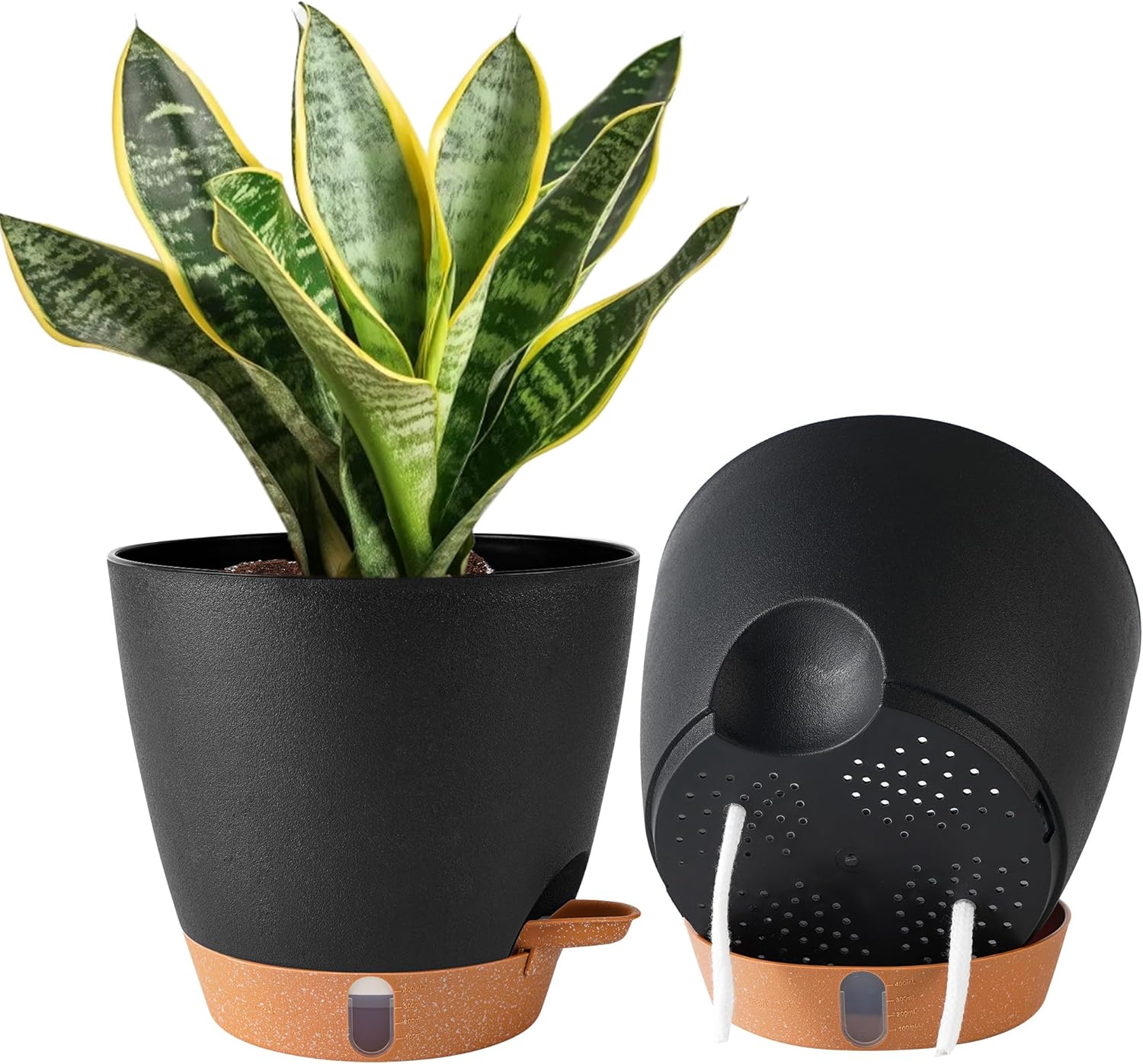
Fielda 8 Inch Self-Watering Plastic Planter — 2‑Pack with Tray and Saucer
| Capacity | 6.6 liters |
|---|---|
| Material Type | Plastic |
| Other Special Features of the Product | Breathable, Drainage Hole, Portable, Self Watering |
| Included Components | Tray, Saucer |
| Indoor Outdoor Usage | Indoor, Outdoor |
These Fielda 8-inch planters are designed to simplify everyday plant care with a built-in self-watering system and a clear water-level window that shows when the reservoir needs topping up. Typical use is potting houseplants, small patio specimens, or moving nursery pots into a slightly larger container; the included saucers make them easy to place on furniture or a balcony. Notable features are the cotton-wick feed that can sustain plants for several days, multiple drainage holes and a breathable mesh that help prevent waterlogging, and a thick, UV-resistant plastic body that withstands light outdoor exposure. In practice the clear indicator and removable tray save time and reduce guesswork about watering frequency, which is helpful for busy or cautious plant owners. Important limitations are that these are plastic planters so they retain heat in full sun and they suit small to medium plants rather than large specimens. Also the self-watering reservoir requires occasional cleaning to avoid algae buildup.
Best for: Buyers who want a low-effort, reliable planter that prevents over- and underwatering and suits everyday houseplants or small balcony containers with minimal fuss.
Less Ideal for: Gardeners seeking heavy-duty decorative pots for large outdoor plants or those who prefer porous materials like terra cotta for moisture-sensitive species should consider other options.
- Self-watering reservoir with cotton-wick feed reduces daily watering tasks
- Visible water level window makes hydration status easy to monitor
- Multiple drainage holes and breathable design help prevent root rot
- Durable thick plastic with UV resistance for indoor or light outdoor use
- Removable saucer tray simplifies mess-free placement and cleaning
- Plastic construction can heat up in strong direct sun and is less insulating than ceramic or clay
- Reservoir and wick need occasional cleaning to prevent algae or blockages
Verdict: If you want a fuss‑free, visible self‑watering system for everyday houseplants or small balcony containers, these 8‑inch Fielda planters make plant care much simpler.
Choosing the Right Planter for Basil: Key Factors to Consider
Drainage Performance
Basil dislikes standing water and is prone to root rot if the soil stays saturated. A planter with good drainage lets excess water escape while avoiding overly rapid drying. Consider the number and size of drainage holes, whether the planter allows adding a layer of coarse material, and if the design supports using a saucer or tray without trapping water.
Drainage affects how often you must water, how nutrient salts accumulate, and how resilient plants are during rainy spells. For patio growers, planters that drain well but retain enough moisture between waterings reduce stress during hot spells and lessen the chance of fungal issues.
Root Volume and Shape
Basil has a relatively shallow but spreading root system that benefits from moderate soil depth and room to branch. A planter that is too shallow will limit growth and increase the need for frequent watering and feeding. Conversely, overly deep containers waste potting mix and can hold excess moisture lower down.
Choose a planter shape that provides horizontal room for roots to spread and enough depth for anchoring stems. For multi-plant or multi-harvest uses, a slightly larger volume allows successive cuttings without stressing the plant.
Material Durability and Heat Behavior
Planter material influences how soil temperature and moisture behave. Porous materials like unglazed terracotta breathe but dry out faster and can crack in freeze-thaw cycles. Plastics retain moisture and are lightweight but may degrade under intense UV unless UV-stabilized.
Consider how exposed the planter will be to sun and temperature swings. Materials that stay cool protect roots on hot patios, while frost-resistant options are important if you plan to overwinter outdoor containers or move them to a chilly garage.
Water Retention Control
Managing water is the daily task that most determines container-grown basil success. Some planters include built-in reservoirs or double-wall systems that moderate drying, while others require you to add moisture-retentive mix components. Think about how often you want to water and whether you will be away; self-watering features reduce maintenance but must be balanced against the basil's dislike of soggy roots.
Also assess whether the planter allows easy top-dressing of compost or feeding and whether excess salt buildup can be flushed through the soil profile without damaging the container.
Ease of Handling and Placement
Basil often needs repositioning for sun, wind protection, or to bring indoors. Lightweight planters or those with integrated handles make moving easier. Conversely, heavy stone or ceramic pots are stable in wind but harder to reposition.
Think about where the planter will live during the season, whether it will be lifted frequently, and if it should fit on a narrow railing, windowsill, or a larger patio table. Accessibility for pruning, harvesting, and repotting also factors into daily convenience.
Best Sizes and Shapes for Basil
For a single basil plant, a pot between 6 and 10 inches across with 6 to 8 inches of depth is usually sufficient. This gives roots room to expand without excessive soil volume that stretches watering intervals and increases the risk of waterlogged lower soil.
For multiple plants or continual harvesting, choose wider options such as rectangular troughs or larger round planters. Shallow wide planters support bushy growth and make frequent harvesting easier.
- Single plant: compact round pots 6 to 10 inches diameter
- Multiple plants: troughs or window boxes 12 inches or wider
- Depth guidance: 6 to 8 inches for most basil varieties
Potting Mix and Soil Amendments
Choosing the right potting mix is as important as the planter itself. Use a well-draining, lightweight mix with a portion of coarse material such as perlite or coarse sand to keep the soil free-draining while retaining enough moisture for daily growth.
Incorporate a slow-release organic fertilizer or topdress periodically with compost to keep leaves flavorful. Avoid garden soil straight from the yard because it compacts and holds too much moisture in containers.
- Use light commercial potting mix, not garden soil
- Add 10 to 20 percent perlite or coarse sand for drainage
- Topdress with compost or feed every few weeks during the season
Placement, Light, and Microclimate
Basil needs full sun to produce abundant leaves, typically six hours or more of direct light. On a small patio, position planters where morning sun is strongest and midday heat is managed if your site runs hot. If light is limited, prioritize the sunniest spot rather than a larger container.
Microclimates matter. South- or west-facing walls reflect heat and can stress basil in midday. Consider temporary shading or moving the planter during heat waves. Conversely, a protected corner can extend the season by buffering cold winds.
- Aim for 6+ hours of direct sun when possible
- Avoid locations with reflected heat that can scorch leaves
- Use mobility to move plants for shade or shelter as weather changes
Maintenance Tips for Container-Grown Basil
To keep basil productive, pinch or cut stems regularly to encourage bushier growth and prevent early flowering. Remove flower buds as soon as they appear to preserve leaf flavor and vigor.
Water at the soil level and avoid wetting foliage to reduce disease risk. Check moisture by feeling the top inch of soil; water when it starts to dry but before the plant wilts. During hot spells you may need daily watering in small pots.
- Pinch tips to promote branching and delay flowering
- Water deeply but infrequently when possible; avoid constant saturation
- Rotate containers periodically for even light exposure
Overwintering and Seasonal Care
In mild climates basil can survive longer outdoors, but in cooler regions you will need to bring containers inside or discard and start fresh next spring. If moving plants indoors, acclimate them gradually to lower light conditions or provide supplemental light.
For planters you want to reuse, emptying and cleaning containers at season end reduces pest and disease carryover. Replace or refresh potting mix before replanting in spring to restore nutrients and structure.
- Bring tender plants indoors before nights consistently drop below 50°F
- Clean and store non-porous containers or drain and protect porous ones
- Refresh potting mix annually for vigorous growth
How We Chose the Best Planter for Basil
We focused on features that directly affect basil health and ease of container gardening. Key criteria included drainage performance, root volume and shape, material durability and heat behavior, ease of watering and maintenance, and portability for moving plants to meet light or weather needs. We favored planters that balance moisture retention with reliable drainage to prevent root rot while providing enough soil to support steady leaf production. Products were excluded if they were clearly designed for large shrubs or trees, lacked drainage provision, or had materials known to rapidly overheat or degrade outdoors. We also filtered out planters that make routine care difficult, such as those with inaccessible bottoms or awkward shapes that complicate repotting. The final picks reflect a mix of container sizes and materials suited to balcony, patio, and small raised-bed situations, and each was evaluated against the same practical gardener-focused dimensions listed below.
FAQ
How big should a planter be for a single basil plant?
A single basil plant does well in a pot 6 to 10 inches across with about 6 to 8 inches of depth. That size gives room for roots and reduces the need for constant watering compared with very small containers.
Does basil need drainage holes in its planter?
Yes. Drainage holes are important to prevent waterlogging and root rot. If you use a planter without holes, add a layer of coarse material and be very careful with watering, or use an internal reservoir system designed to prevent saturated soil.
Can I use a window box for multiple basil plants?
Window boxes and troughs are ideal for growing several basil plants side by side. Choose a box at least 12 inches wide and ensure it has good drainage and adequate soil depth so each plant has enough room to grow.
What potting mix is best for basil in containers?
A lightweight, well-draining potting mix with added perlite or coarse sand is best. Avoid heavy garden soil. Mixes with slow-release organic fertilizer or periodic compost topdressing will help maintain leaf production.
How often should I water basil in a planter?
Water frequency depends on container size, material, and weather, but generally water when the top inch of soil begins to dry. Small pots in hot sun may need daily checking, while larger containers retain moisture for longer.
Final Verdict
Choosing the right planter for basil comes down to balancing drainage, root space, and material behavior in your local microclimate. Prioritize containers that offer reliable drainage, adequate horizontal room for roots, and material suited to your sun exposure and mobility needs. For busy gardeners, options that moderate drying or are easy to move make daily care simpler. With the right planter and potting mix, you can keep basil productive and flavorful throughout the growing season.
