

Note: This article contains affiliate links. If you click on these links and make a purchase, I may earn a small commission at no extra cost to you. This helps support my research and content. Read my full affiliate disclosure here.
When you want greener leaves, stronger stems, and faster establishment for lawns, vegetables, or leafy ornamentals, choosing the right nitrogen-rich natural fertilizer matters. Natural sources release nitrogen at varying speeds, affect soil biology differently, and demand different handling and application patterns in real garden conditions. This guide shortlists seven top options suited to gardeners seeking organic nitrogen inputs and explains how each choice maps to common garden situations. We evaluated every option for nutrient release behavior, ease of use, and effects on soil health so you can pick a product that fits your planting schedule and maintenance routine.
Top Picks at a Glance
| Best Overall The best all-around choice for most situations | Down To Earth Cottonseed Meal Organic Fertilizer 6-21-1, 20 lb |  |
| Best Quality Built to a higher standard if you want something more solid | Espoma Organic Blood Meal Fertilizer 12-0-0, 17 lb |  |
| Best Value The sweet spot between price and what you get | Milorganite Slow-Release Organic Fertilizer, 5 lb |  |
| Best Budget The cheapest option that still gets the job done reliably | Down To Earth Blood Meal Organic Fertilizer 12-0-0, 0.5 lb |  |
| Highest Rated A top-rated pick with lots of positive feedback | Down To Earth Feather Meal Organic Fertilizer 12-0-0, 20 lb |  |
| Most Popular A crowd favorite that many people choose with confidence | Burpee Organic Blood Meal Fertilizer, 3 lb |  |
| Best Seller A high-volume bestseller chosen again and again | True Organic Blood Meal — High‑Nitrogen Organic Fertilizer, 3 lb |  |
Down To Earth Cottonseed Meal Organic Fertilizer 6-21-1, 20 lb

| Item Form | Granules |
|---|---|
| Unit Count | 400 Ounce |
| Specific Uses For Product | Organic,Potting |
| Target Species | berries, flowering shrubs and evergreen trees |
| Mixing Ratio | 100:6:2:1 |
Down To Earth Cottonseed Meal is an all‑natural granular fertilizer with a 6-21-1 analysis that supplies a steady, plant‑derived source of nitrogen for green growth. It is typically worked lightly into the soil or sprinkled around the base of shrubs, berries and trees and can be applied throughout the growing season to support leafy development. The product is OMRI‑oriented in formulation and made from feed‑grade cottonseed, which the brand highlights as low in pesticide residue and free of animal byproducts. Practical benefits include a slow‑release nitrogen boost suited to acid‑loving plants such as azaleas, rhododendrons and blueberries, and a medium coverage that is manageable for backyard beds and small orchards. Limitations to consider are that it is targeted toward acid‑preferring species and leafy growth rather than balanced NPK feeding for fruiting or flowering, and granular organic meals take time to break down so results appear over weeks rather than days.
Best for: Gardeners who want a natural, nitrogen‑rich boost for acid‑loving shrubs, berries and evergreen trees and prefer organic inputs for steady seasonal feeding.
Less Ideal for: Growers seeking a fast‑acting synthetic fertilizer or a balanced multi‑nutrient blend for heavy fruiting and bloom production should consider other products.
- High nitrogen content from plant‑based cottonseed meal supports strong leafy growth
- Suitable for acid‑loving plants like blueberries, azaleas and rhododendrons
- Made from feed‑grade cottonseed with low pesticide residue and no animal byproducts
- Granular form is easy to apply around root zones and incorporate into soil
- Focused N‑heavy formula is not a complete balanced fertilizer for flowering or fruiting needs
- Slow‑release organic meal requires time and microbial activity to become available to plants
Verdict: Choose this organic cottonseed meal when you want a reliable, plant‑based nitrogen source to improve leafy growth in acid‑loving gardens.
Espoma Organic Blood Meal Fertilizer 12-0-0, 17 lb

| Item Form | Granules |
|---|---|
| Specific Uses For Product | General Purpose Organic Nitrogen Fertilizer |
| Application Method | Sprinkle onto the soil |
| Coverage | 425-850 square feet |
| Target Species | tomatoes |
Espoma Organic Blood Meal is a 12-0-0 granular nitrogen source designed to deliver a fast, organic nitrogen boost to flowers, vegetables, trees and shrubs. You apply it by sprinkling over soil in spring or fall and watering it in; because it is pure blood meal with no fillers it provides an immediate nutrient pulse that favors leaf and stem development. The product is approved for organic gardening and is presented as a concentrated, 17 pound bag that covers roughly 425 to 850 square feet depending on application rate. Practical benefits include rapid greening and improved vigor for nitrogen-hungry crops such as tomatoes, and the convenience of a dry, easy-to-spread form that does not require mixing. Limitations are that it supplies only nitrogen so it should be paired with a balanced fertilizer program for blooms and fruiting, and it must be used carefully to avoid overapplication or attracting wildlife; timing and proper rates are important to prevent foliage burn or excessive vegetative growth at the expense of flowers.
Best for: Gardeners who prioritize fast, measurable improvements in plant vigor and green-up and who follow a planned fertility schedule to correct nitrogen deficits.
Less Ideal for: Growers seeking a complete all-in-one fertilizer for flowering or fruiting or those who prefer liquid feeds or slow-release balanced blends.
- High nitrogen analysis (12-0-0) for quick vegetative growth
- 100% natural blood meal formulation with no fillers
- Approved for organic gardening and suitable for certified organic systems
- Granular form is easy to sprinkle and water into the soil
- Covers a large area per bag (listed 425–850 sq ft)
- Provides only nitrogen and lacks phosphorus and potassium
- Can attract wildlife or pets if not incorporated and stored securely
- Requires careful timing and rate control to avoid excessive leafy growth
Verdict: Choose Espoma Blood Meal when you need a concentrated, organic nitrogen boost to quickly green up and strengthen leafy growth.
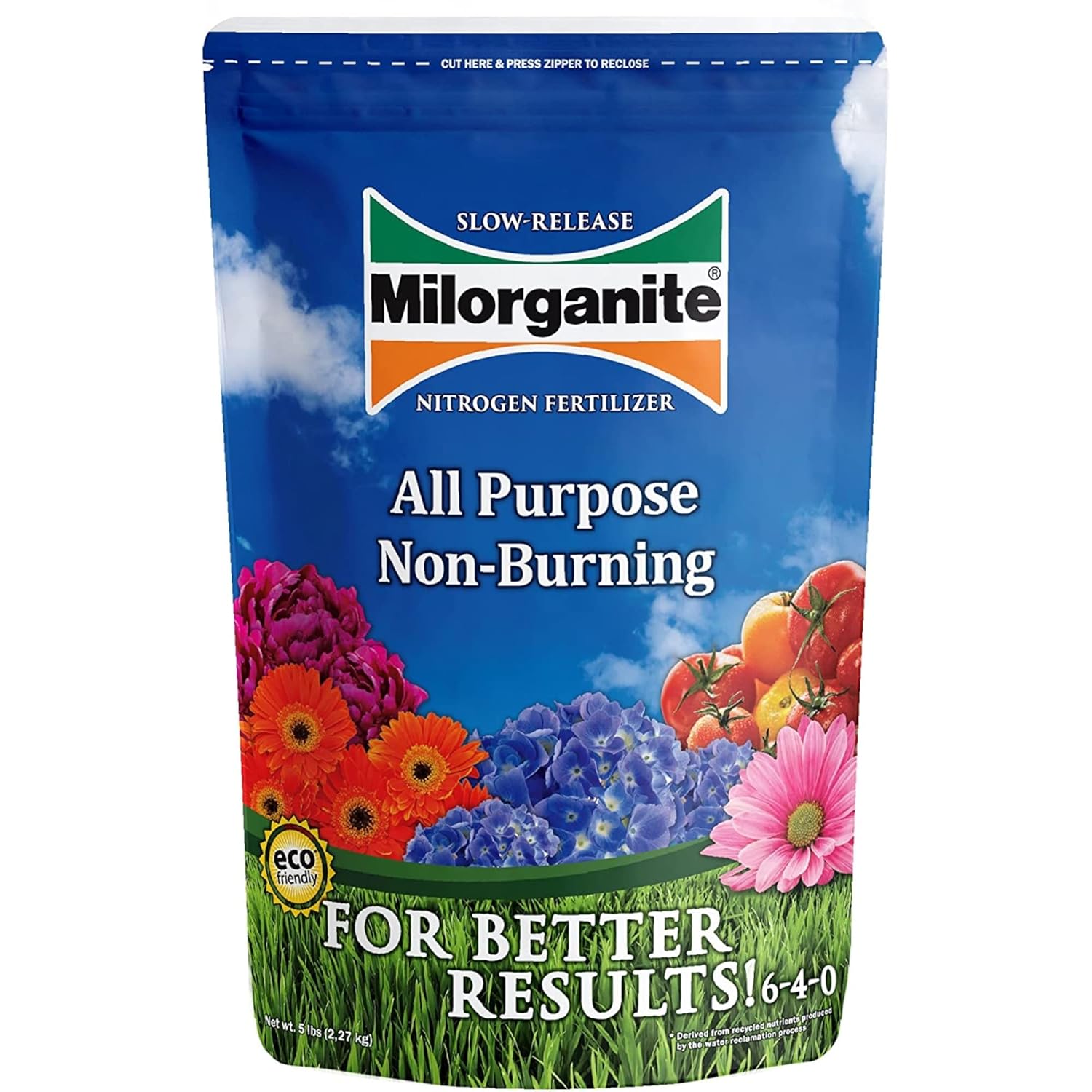
Milorganite Slow-Release Organic Fertilizer, 5 lb
| Item Form | Granules |
|---|---|
| Specific Uses For Product | Lawns, Flowers and Gardens |
| Coverage | 390 Square Feet |
| Ingredients | Nitrogen |
Milorganite is a granular, slow-release organic fertilizer formulated to feed lawns and garden plants for about 8 to 10 weeks per application. It is typically broadcast by hand or with a spreader and does not require immediate watering in, making it easy to fit into routine maintenance. Notable features include a low-salt formula that greatly reduces the risk of burning turf, organically complex iron that greens grass without staining hard surfaces, and about 85% organic matter that helps improve soil structure over time. The product covers roughly 390 square feet from a 5 pound bag and is positioned as safe for use on lawns, shrubs, flowers, trees, and edible gardens. Limitations are that nutrient release is gradual, so it is not a quick fix for severe nitrogen deficiency, and the bag has an earthy odor at first that some pets may find attractive until it dissipates or is watered in. For someone managing Empire Zoysia, use on the recommended schedule and expect steady, low-risk green-up rather than instant color change.
Best for: Gardeners who prioritize steady, low-risk nutrient delivery and soil health and who prefer a hands-off feeding schedule for fine-textured lawns like Empire Zoysia.
Less Ideal for: Homeowners wanting rapid color correction or fast-acting synthetic nitrogen boosts should choose a quick-release fertilizer instead.
- Slow-release nitrogen feeds lawns for 8–10 weeks reducing application frequency
- Low salt formulation minimizes risk of burning sensitive turf like Zoysia
- Provides organically complex iron that greens grass without staining concrete
- High organic matter improves soil structure and water retention over time
- Slow-release action means it will not correct severe yellowing immediately
- Initial earthy odor that may attract some pets until it is watered in or dissipates
Verdict: Choose Milorganite for Empire Zoysia when you want a safe, slow-release organic feed that greens turf steadily without burning or staining.
Down To Earth Blood Meal Organic Fertilizer 12-0-0, 0.5 lb

| Item Form | Powder |
|---|---|
| Specific Uses For Product | Organic,Potting, Plant Growth |
| Target Species | corn, spinach, salad greens, garlic, tomatoes, peppers, melons |
| Mixing Ratio | 3-0-0 |
This half-pound box of Down To Earth Blood Meal is a concentrated organic nitrogen source (12-0-0) meant to quickly correct nitrogen deficiencies and drive leafy growth in heavy feeders like pumpkins. It is a dried powder intended for soil application: broadcast lightly, mix into the soil or compost, and water in so microbes can convert the meal into plant-available nitrogen. Practical benefits include rapid response in young vines and foliage, suitability for targeted applications in small plots or containers, and OMRI-listed organic formulation for use in organic gardens. Because it is fast acting, use should be measured to avoid leaf burn; follow the recommended application rates and avoid applying directly against stems or roots. It is not water soluble and relies on soil biology, so results depend on active microbial activity and adequate moisture. The compact size is convenient for trialing on a few plants or supplementing a fertilizer program, but gardens needing regular or large-scale feeding will require larger quantities or complementary feeds for balanced nutrition beyond nitrogen alone.
Best for: Gardeners focused on maximizing vine and foliage growth for fruit-setting crops who want a fast, organic nitrogen boost for a few pumpkin plants or starter beds.
Less Ideal for: Those managing large acreage pumpkin plantings or seeking a balanced all-in-one fertilizer for flowering and fruit development should consider bulk or complete NPK products instead.
- High 12-0-0 nitrogen analysis delivers quick correction of nitrogen deficiency
- OMRI-listed organic ingredient (dried blood meal) suitable for organic pumpkin production
- Convenient small package for targeted applications or container-grown plants
- Powder form mixes into soil or compost and is easy to apply by hand
- Can burn foliage or roots if overapplied because of concentrated nitrogen
- Not water soluble and depends on soil microbes and moisture to release nutrients
- Small 0.5 lb size may be insufficient for larger pumpkin patches
Verdict: Use this fast-acting organic blood meal when you need a quick, high-nitrogen boost to build strong pumpkin vines and foliage before fruit set.
Down To Earth Feather Meal Organic Fertilizer 12-0-0, 20 lb

| Item Form | Granules |
|---|---|
| Specific Uses For Product | Organic,Plant Growth,Potting |
| Coverage | Medium |
| Target Species | Vegetables, containers, trees, shrubs, row crops/acreage |
| Mixing Ratio | 12-0-0 |
Down To Earth Feather Meal is a granular, poultry-feather based fertilizer formulated as 12-0-0 to deliver slow-release nitrogen over the growing season. It is typically worked into the soil before planting or applied as a side dress for heavy-feeding crops like corn, tomatoes, brassicas and other long-season vegetables. Because the nitrogen releases gradually, it supports steady leaf and shoot development without the quick flush and potential burn of soluble synthetic fertilizers. The product is OMRI-listed for organic use and presented in a 20 pound bag, which is practical for backyard plots, raised beds, and small acreage. Practical benefits include long-lasting nitrogen supply, suitability for a wide range of plants, and minimal reapplication compared with fast-release formulas. Important limitations are that uptake can be slower in cool soils so benefits appear later in the season and it offers no phosphorus or potassium so you will need separate sources for a balanced feed when flowers or fruiting are the focus.
Best for: Gardeners who prioritize reliable, long-lasting organic nitrogen for vegetable beds, heavy-feeding annuals, and small acreage where steady growth is more important than instant greening.
Less Ideal for: Growers wanting a complete N-P-K single product, immediate quick-release nitrogen, or quick corrective feeds for deficiency symptoms should consider other options.
- High nitrogen analysis (12-0-0) for strong vegetative growth in heavy feeders
- Slow-release granular form reduces risk of burn and limits frequent reapplications
- OMRI-listed and made from natural poultry feather material suitable for organic systems
- Large 20 lb bag provides season-long feeding for small gardens or multiple beds
- No phosphorus or potassium included so additional fertilizers are needed for flowering and fruiting stages
- Nitrogen mineralization is temperature dependent so results are slower in cool soils
Verdict: Choose this feather meal when you want a dependable, slow-release organic source of nitrogen to keep heavy-feeding vegetables and plants growing steadily all season.
Burpee Organic Blood Meal Fertilizer, 3 lb

| Item Form | Granules |
|---|---|
| Specific Uses For Product | Organic,Potting |
| Coverage | 450 Square Feet |
| Target Species | vegetables, flowers |
| Mixing Ratio | 3:1 (potting soil:blood meal) |
Burpee Organic Blood Meal is a granular, high-nitrogen soil amendment intended to boost leafy growth and support fruiting vegetables. You sprinkle or mix the granules into potting mix or garden soil following the package mixing ratio, or use it as a side dress for heavy feeders like corn, spinach, and broccoli. The product is OMRI-listed for organic gardening and carries a 12-0-0 formulation that provides fast-acting nitrogen to encourage greener foliage and stronger early growth. Practical benefits include supporting soil microorganisms and acting as a deterrent to some garden pests that dislike the scent. Because it is a concentrated product, it can quickly change plant vigor when applied correctly, so careful measuring is important to avoid overfeeding or leaf burn. It does not supply phosphorus or potassium, so you will need a separate balanced fertilizer if your plants require those nutrients. For gardeners who value organic, targeted nitrogen supplementation, this is a straightforward option with clear use instructions.
Best for: Gardeners who want a reliable, organic source of fast-acting nitrogen for vegetables and leafy greens and prefer products with organic certification and clear usage directions.
Less Ideal for: Growers looking for an all-in-one balanced fertilizer or those who need slow-release or multi-nutrient feeding solutions for long-term maintenance.
- High nitrogen 12-0-0 formulation provides readily available nitrogen for rapid green-up
- OMRI listed for use in organic gardens
- Granular form is easy to mix into potting soil or apply as a side dress
- Can act as a deterrent to some mammals and garden pests
- Contains only nitrogen so it does not provide phosphorus or potassium
- Concentrated fertilizer requires careful measuring to avoid overapplication
Verdict: Choose this OMRI-listed blood meal when you need a fast, organic boost of nitrogen for vegetables and heavy-feeding plants.
True Organic Blood Meal — High‑Nitrogen Organic Fertilizer, 3 lb

| Item Form | Granules |
|---|---|
| Unit Count | 48 Ounce |
| Mixing Ratio | 12-0-0 |
| Specific Uses For Product | Agriculture, Gardening |
True Organic Blood Meal is a simple, single-ingredient granular fertilizer that supplies a concentrated source of nitrogen for leafy, heavy-feeding vegetables and ornamentals. It is typically applied to soil in spring and fall or worked into potting mixes for container crops to encourage rapid green growth. The product is made from blood meal and labeled with a 12-0-0 analysis, so it delivers mostly nitrogen without added phosphorus or potassium. Practical benefits include easy application, suitability for both beds and containers, and an organic input that supports soil microbial activity rather than introducing synthetic chemicals. The 3 lb bag is sized for small to medium gardens and the stated coverage gives a clear guideline for treating around 100 sq ft. Important limitations are that it only supplies nitrogen so it should be paired with a balanced fertility plan for blooms or root development, and like all high-nitrogen amendments it can burn plants if overapplied or placed in direct contact with roots. For risk-averse gardeners, following the mixing ratio and recommended timing will help get vigorous foliage without surprises.
Best for: Gardeners who prioritize predictable, organic nitrogen boosts for leafy crops and want a straightforward product with established application timing and coverage guidance.
Less Ideal for: Growers seeking an all-in-one fertilizer for blooms, fruits, or complete feeding regimes should choose a balanced or blended product instead.
- High nitrogen content (12-0-0) that rapidly promotes leafy growth
- Single-ingredient blood meal with no synthetic additives
- Suitable for both in-ground beds and container plants
- Clear coverage guidance for planning applications
- Provides only nitrogen so additional nutrients are needed for flowering and fruiting
- Risk of root burn if overapplied or placed in direct contact with plant roots
Verdict: Use this concentrated organic blood meal when you need a reliable, high-nitrogen boost to rapidly green up heavy-feeding vegetables and leafy plants.
Choosing the Right Nitrogen Rich Natural Fertilizer: Key Factors to Consider
Nitrogen Release Rate
Different natural fertilizers release nitrogen on very different schedules. Some materials, like blood meal or fast-acting soft manures, supply readily available nitrogen within days to weeks, which is useful for quick green-up or correcting a deficiency. Other sources such as composted manures, feather meal, or certain pelletized organic fertilizers break down slowly and provide a steadier supply over months.
Knowing the release rate helps you match the fertilizer to your crop and timing. Fast-release materials are good for established lawns or leafy vegetables right before a growth flush. Slow-release materials are better for potted plants, perennial beds, or when you want to avoid repeated feeding and reduce leaching risk.
Impact on Soil Biology
Natural nitrogen sources interact with soil microbes in distinct ways. Materials rich in easily available nitrogen can temporarily accelerate microbial activity and decomposition, improving nutrient cycling but sometimes causing a short-term imbalance if carbon and micronutrients are lacking. Well-composted amendments and those with a balanced carbon-to-nitrogen ratio tend to support a diverse microbial community and long-term soil structure.
Prioritizing products that feed microbes can improve water retention and nutrient availability over seasons. If soil health is a main goal, choose amendments that supply nitrogen while adding organic matter and trace minerals rather than only a concentrated nitrogen hit.
Compatibility with Plant Type and Timing
Different plants have different nitrogen needs and sensitivity to salt or fresh manure. Fast-growing leafy crops and lawns tolerate and often benefit from repeated, higher nitrogen inputs. Fruiting vegetables and flowering ornamentals typically need a balanced approach to avoid excess foliage at the expense of blooms or fruit set.
Consider timing as well. Apply higher nitrogen sources early in the vegetative phase and taper back before flowering or fruiting. For containers and small beds, use gentler or slow-release nitrogen sources to avoid burn and frequent reapplication.
Application Practicality and Safety
How easy a fertilizer is to store, measure, and apply matters for everyday garden use. Powdered or dusty products can be messy and require masks or gloves, while pellets and granules are simpler to broadcast or topdress. Odor is also a practical concern for urban or small backyard settings; some natural nitrogen sources have strong smells that make them less suitable near patios or neighbors.
Safety considerations include potential for plant burn if overapplied, dust inhalation risk during handling, and whether the product attracts animals. Choose materials that fit your working style and the physical constraints of your garden site.
Environmental Risk and Leaching
Excess soluble nitrogen can leach from soil into groundwater or run off into waterways. Natural fertilizers vary in leaching risk depending on solubility and how quickly microbes immobilize or convert the nitrogen. Fast-release, highly soluble sources applied before heavy rains or on steep slopes create the highest runoff risk.
To protect water quality and avoid waste, select materials with slower release or apply timing and incorporation strategies that reduce exposure to rain. In sensitive locations, favor soil-building amendments that bind nutrients in organic matter and release them gradually.
Matching Fertilizer Choice to Garden Goals
Decide whether your priority is immediate green growth, long-term soil building, or a mix of both. Fast-acting nitrogen sources are useful for quick corrections and seasonal flushes, while compost and slow-release organics support structure and microbial life over time.
For small vegetable plots where you harvest leaf crops frequently, a combination approach works well: a steady base of compost plus targeted quick-release feeding when plants need a boost.
- Use fast-release nitrogen for lawns and leafy vegetables needing quick recovery.
- Use slow-release, high-organic-matter options for containers and perennial beds.
- Combine compost with targeted feeding to balance short-term and long-term needs.
Application Methods That Reduce Waste
Apply according to the material's release profile. Incorporate or lightly mix fast-release materials into the topsoil to reduce volatilization and runoff. Granulated or pelletized organics can be lightly raked in as a topdressing and watered to move nutrients into the root zone.
For container plants, mix a measured portion into potting media rather than surface-broadcasting large amounts. Foliar feeding is rarely necessary with natural fertilizers because root uptake handles most nitrogen needs when soil biology is active.
- In-ground beds: incorporate or topdress and water in.
- Containers: pre-mix with potting media or use slow-release forms.
- Lawns: apply evenly at recommended rates and avoid rain events for 24 hours.
Managing Odor, Storage, and Handling
Store natural nitrogen fertilizers in a cool, dry place in sealed containers to limit odors and pest attraction. For dusty materials, use a mask and gloves while spreading and dampen slightly to reduce dust drift. Consider packing smaller portions for seasonal use to avoid long-term storage issues.
If odor is a concern near living spaces, select low-odor options or apply during times when neighbors are less likely to be affected. Composting or aging some materials reduces smell while stabilizing nutrients.
- Keep materials dry and sealed to maintain nutrient stability.
- Use gloves and masks for dusty amendments.
- Age or compost strong-smelling materials before backyard use.
Balancing Nitrogen with Other Nutrients
Nitrogen encourages leaf and vegetative growth, but imbalance with phosphorus and potassium can limit root development and flowering. Assess your soil or use a balanced base amendment when adding concentrated nitrogen sources so you do not unintentionally create deficiencies.
A soil test helps determine whether a nitrogen-only input is appropriate or if you should choose a more balanced organic fertilizer. In many home gardens, building organic matter through compost will supply a broader nutrient mix and buffer extremes.
- Perform a soil test before repeated nitrogen applications.
- Add compost or balanced organic amendments when other nutrients are low.
- Avoid heavy nitrogen late in the season for flowering plants.
Using Natural Nitrogen in Sustainable Garden Practices
Natural nitrogen sources can support sustainable gardening when used thoughtfully. Timing applications to plant demand, integrating cover crops, and building soil organic matter reduce the need for repeated high-rate inputs and lower environmental impact.
Incorporate mulches and green manures to cycle nitrogen within the garden and minimize external inputs. These practices maintain steady fertility, boost biodiversity, and improve water management.
- Plant cover crops to fix or scavenge nitrogen between main crops.
- Use mulches to conserve moisture and slowly add organic nitrogen as they decompose.
- Rotate feeding strategies by season and crop type for balanced fertility.
How We Chose the Best Nitrogen Rich Natural Fertilizer
We focused on criteria that reflect how nitrogen-rich natural fertilizers actually behave in gardens. We prioritized proven nutrient content and release profile because the timing and availability of nitrogen determine green growth and the risk of leaching. Soil biology impact was assessed to favor fertilizers that support microbes and long-term fertility rather than those that temporarily spike nitrogen and harm beneficial organisms. Application friendliness covers ease of spreading, odor, dust control, and whether the material mixes well into potting soil or topdressings. Safety and handling considers storage stability, potential for burning young plants, and odor management for backyard use. Environmental risk evaluation looked at runoff potential and appropriateness for container, raised bed, and in-ground plantings. We excluded synthetic or chemically derived nitrogen sources and any products without clear nutrient information or that required specialized equipment to apply. Our shortlist includes only natural nitrogen amendments that are commonly available to home gardeners and usable across typical garden contexts. The scoring criteria below align with these editorial filters so readers can compare tradeoffs that matter in daily garden work.
FAQ
How soon will I see results after applying a nitrogen-rich natural fertilizer?
It depends on the source. Fast-release materials often show visible green-up in days to a couple of weeks, while slow-release and high-organic-matter amendments may take several weeks to months as microbes break them down. Expect quicker responses in warm, moist soils with active biology.
Can I overapply natural nitrogen fertilizers and harm plants?
Yes. Concentrated nitrogen sources can burn tender roots or cause excessive foliage at the expense of flowers and fruit. Follow recommended application rates and consider split applications or dilute methods to reduce burn risk, especially for seedlings and containers.
Are natural nitrogen fertilizers safe for vegetable gardens?
Most natural nitrogen sources are safe when properly composted or applied according to directions. Fresh manures can contain pathogens, so allow time before harvest or use only well-composted materials in beds for edible crops. Washing produce and following safe handling practices reduces risk.
How do I choose between a fast-release and a slow-release nitrogen source?
Choose based on crop needs and timing. Use fast-release for immediate corrections and leafy crops needing quick nutrition. Use slow-release for long-term fertility, containers, and perennials where repeated feeding is impractical or where leaching is a concern.
Will natural nitrogen fertilizers attract pests or wildlife?
Some raw organic materials can attract animals due to odor or food value. Well-composted options and pelletized forms are less likely to attract pests. Store materials securely and apply them such that they are incorporated into soil to reduce surface scents.
Final Verdict
Prioritize the release profile and soil impact when choosing a nitrogen-rich natural fertilizer. If you need quick greening, choose a fast-acting source and apply carefully; if long-term soil health matters most, select slow-release, high-organic-matter amendments that feed soil biology. Balance practical concerns like odor and handling with environmental risk. Use timing, incorporation, and complementary practices such as compost and cover crops to get the most benefit from natural nitrogen inputs and confidently match a product to your garden goals.
