

Note: This article contains affiliate links. If you click on these links and make a purchase, I may earn a small commission at no extra cost to you. This helps support my research and content. Read my full affiliate disclosure here.
If you run landscape maintenance or manage large properties, the right string trimmer line makes a real difference in daily productivity. For commercial use you need line that resists breakage, maintains a sharp edge through dense vegetation, and feeds cleanly so crews spend less time reloading and more time working. This guide covers a shortlist of top-rated commercial-grade trimmer lines selected for durability, cutting efficiency, and ease of use. Read on to understand the practical tradeoffs that matter on the job and how each option performs against core criteria like wear resistance and feed reliability.
Top Picks at a Glance
| Best Overall The best all-around choice for most situations | MaxPower .095-Inch Premium Twisted Trimmer Line — 200 ft |  |
| Best Value The sweet spot between price and what you get | KAKO .105-Inch Heavy-Duty Round Trimmer Line, 3 lb (628 ft) |  |
| Highest Rated A top-rated pick with lots of positive feedback | ECHO .095 in Black Diamond String Trimmer Line, 253 ft. |  |
| Most Popular A crowd favorite that many people choose with confidence | Oregon Magnum Gatorline .095" Heavy-Duty Trimmer Line, 685 ft |  |
| Best Seller A high-volume bestseller chosen again and again | VIABRICO .105" Square Heavy-Duty String Trimmer Line (Commercial Grade) |  |
MaxPower .095-Inch Premium Twisted Trimmer Line — 200 ft

| Cutting width | 0.1 inches |
|---|---|
| Power Source | Manual |
| Item Type Name | .095-Inch Diameter, 200-Foot Length |
| Made in | USA |
This MaxPower .095-inch twisted trimmer line is built for heavy use and long runs. It is a commercial-grade co-polymer line sold in a 200-foot length and is intended to reduce noise and vibration compared with standard round line. In practice it feeds like a conventional replacement line into most straight-spool and bump-feed heads sized for roughly 0.095 inches, and the twisted profile lowers line drag so the motor feels less strained on long cuts. Benefits you will notice are improved cutting durability on thick grass and weeds, reduced vibration during extended trimming sessions, and a long supply of line before needing to reload. Limitations: the .095-inch diameter is on the thinner side for very coarse brush, so for persistent woody stems a heavier gauge is more effective, and compatibility depends on your trimmer’s line capacity. For gardeners who prioritize quieter, efficient trimming and want a reliable commercial-grade refill, this line performs well; users needing maximum cutting power on dense brush should choose a heavier gauge.
Best for: Best for homeowners and landscapers who want an efficient, quieter replacement line for regular lawn maintenance and long trimming sessions.
Less Ideal for: Not the best choice for clearing dense brush, heavy woody stems, or professional contractors who need thicker, high-impact line for constant heavy-duty cutting.
- Commercial-grade co-polymer construction for longer wear
- Twisted profile reduces line drag and vibration during use
- 200-foot length provides a long supply between reloads
- .095-inch diameter may struggle with thick woody brush or heavy-duty clearing
Verdict: Choose this MaxPower twisted line if you want a quieter, longer-lasting commercial-grade refill that keeps trimming efficient over long sessions.
KAKO .105-Inch Heavy-Duty Round Trimmer Line, 3 lb (628 ft)
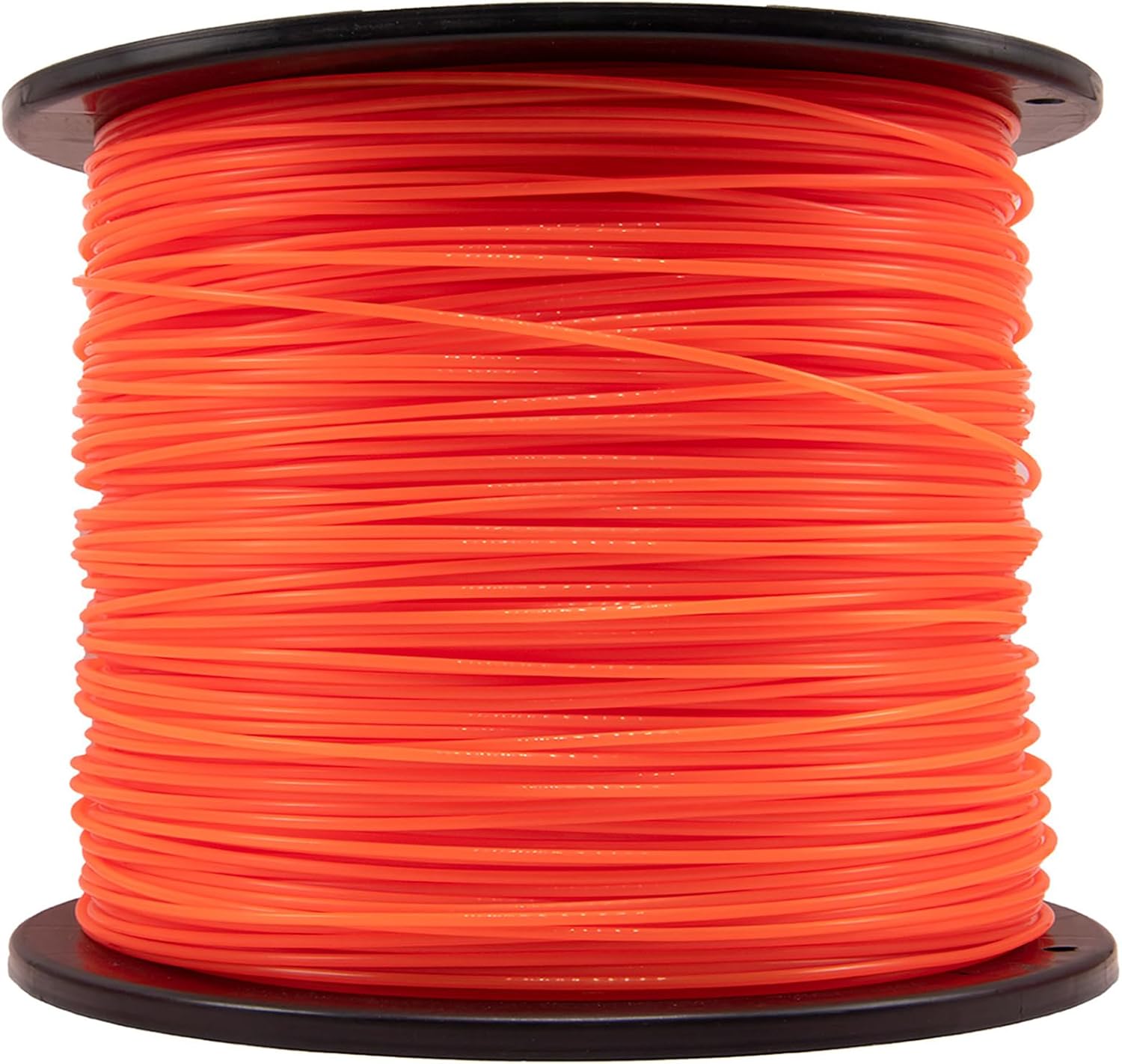
| Diameter | 0.105 Inches |
|---|---|
| Length | 628 Feet |
| Spool weight | 3 Pounds |
| Material | Plasticized Nylon Polyamide |
| Shape | Round |
This 3-pound spool of .105-inch round trimmer line is built for heavy-duty, commercial-style trimming where durability and cutting power matter. Made from a plasticized nylon polyamide compound, the line is engineered to resist breakage and abrasion so it can handle thick weeds, dense grass, and contact with rough surfaces without frequent replacement. The bright orange, round profile feeds reliably in most bump-feed and automatic heads and is intended to reduce engine drag, vibration, and noise compared with lower-grade lines, which makes longer sessions less fatiguing for operators. With 628 feet on the spool you get multiple reloads before buying more, which is useful for crews or large properties. Limitations to note are that the diameter is fixed at .105 inch so it will not be compatible with trimmers that require much thinner or much thicker line, and heavier commercial cutting that involves woody brush may still need blade tools or larger-diameter cord. For general commercial lawncare and demanding residential jobs this line delivers strong, consistent performance and good value per spool.
Best for: Best for landscapers, groundskeepers, and homeowners who prioritize long runtime, durability, and fewer spool changes when maintaining large lawns or commercial properties.
Less Ideal for: Not a good fit for users who need ultra-thin line for delicate edging, or who primarily cut woody brush and saplings where a heavier cord or cutting blade is required.
- Commercial-grade plasticized nylon formula for improved impact resistance and tensile strength
- Round profile feeds reliably in most automatic and bump-feed trimmer heads
- Large 628-foot spool (3 lb) provides multiple reloads and reduces downtime
- Designed to cut thicker grass and dense weeds with reduced engine drag and vibration
- Single diameter (.105 in) limits use to trimmers that accept that size
- Round shape is less aggressive on woody brush compared with multi-sided or serrated lines
Verdict: A heavy‑duty .105‑inch spool that keeps crews productive by delivering durable, long‑lasting cutting performance and fewer reloads.
ECHO .095 in Black Diamond String Trimmer Line, 253 ft.

| Power Source | Gas Powered |
|---|---|
| Cutting width | 15 inches |
| Size | .095 in. dia., 253 ft. |
| Style Name | Compact |
The ECHO .095 Black Diamond trimmer line is a heavy-duty replacement line meant for gas-powered string trimmers and general residential landscaping. It is typically wound as a 253-foot spool and used for cutting medium to heavy weeds, edging, and clearing overgrown patches. The twisted design and square edges are intended to reduce vibration and noise while giving a sharper cutting profile for cleaner, faster cuts. The line claims resistance to welding and high temperatures, which helps it hold up when trimming thick or abrasive vegetation. In use you can expect fewer line changes on jobs that push a trimmer hard, and compatibility with most gas trimmers makes it a straightforward swap for common models. Limitations are that the thicker 0.095 inch diameter is overkill for very light lawn maintenance and uses more line per spool than thinner options, and it is sized for .095-inch trimmer heads so it will not fit smaller-spec machines.
Best for: Gardeners and homeowners who need a robust, long-lasting line for medium to heavy-duty trimming and want fewer reloads during frequent or demanding jobs.
Less Ideal for: Those who only perform light mowing and edging on well-kept lawns or owners of electric/cordless trimmers that require thinner line should consider a lighter gauge option.
- Durable twisted design reduces vibration and noise during operation
- Square, razor-sharp edges provide efficient, clean cutting of medium to heavy weeds
- Resistant to welding and high temperatures for longer life under heavy use
- Works with most gas-powered trimmers for broad compatibility
- 0.095-inch diameter is heavier duty than needed for light lawn trimming
- Not compatible with trimmers that require smaller diameter line
Verdict: Buy this if you need a tough, low-vibration .095-inch trimmer line that delivers cleaner cuts and longer life on medium to heavy trimming tasks.
Oregon Magnum Gatorline .095" Heavy-Duty Trimmer Line, 685 ft

| Diameter | .095" |
|---|---|
| Profile | Square |
| Spool length | 685 ft |
| Unit weight | 3.1 pounds |
The Oregon Magnum Gatorline .095" is built for performance-focused users who need a durable trimmer line that cuts aggressively and lasts. Its square cross-section delivers sharp, efficient cutting for edging and slicing through thick grass, weeds, and light brush, while the high-strength inner core resists breakage so you spend less time reloading. The line is formulated with a weld-resistant outer skin and a reinforced polymer core, which reduces tangles and line bonding inside the head and helps maintain consistent feed. Supplied on a 3 lb spool (about 685 ft), it fits most curved and straight-shaft gas, electric, and battery trimmers that accept .095" line, making it practical for pro crews or homeowners who demand tougher performance. Expect louder, more aggressive cutting than round line but cleaner passes and fewer replacements during heavy work. The main limitations are that it is a heavier-duty option that may be overkill for very light ornamental trimming and that you should confirm your trimmer accepts .095" line before use.
Best for: Ideal for performance-minded users and professionals who regularly tackle medium to heavy vegetation and want a line that cuts aggressively and reduces reloads.
Less Ideal for: Not the best choice for gardeners doing only light, infrequent trimming or for users whose trimmers require smaller diameter line.
- Square profile provides aggressive, cleaner cutting for thick weeds and edging
- High-strength inner core with reinforced fibers reduces breakage and downtime
- Weld-resistant outer skin minimizes line bonding and tangles in the spool
- Large 685 ft spool supplies extended run time between reloads
- Thicker, heavy-duty line can be louder and may cause more vibration than thinner round line
- Not necessary for light maintenance or delicate ornamental trimming
Verdict: Choose this Magnum Gatorline when you need a rugged, professional-grade .095" line that cuts aggressively and stays intact under heavy use.
VIABRICO .105" Square Heavy-Duty String Trimmer Line (Commercial Grade)
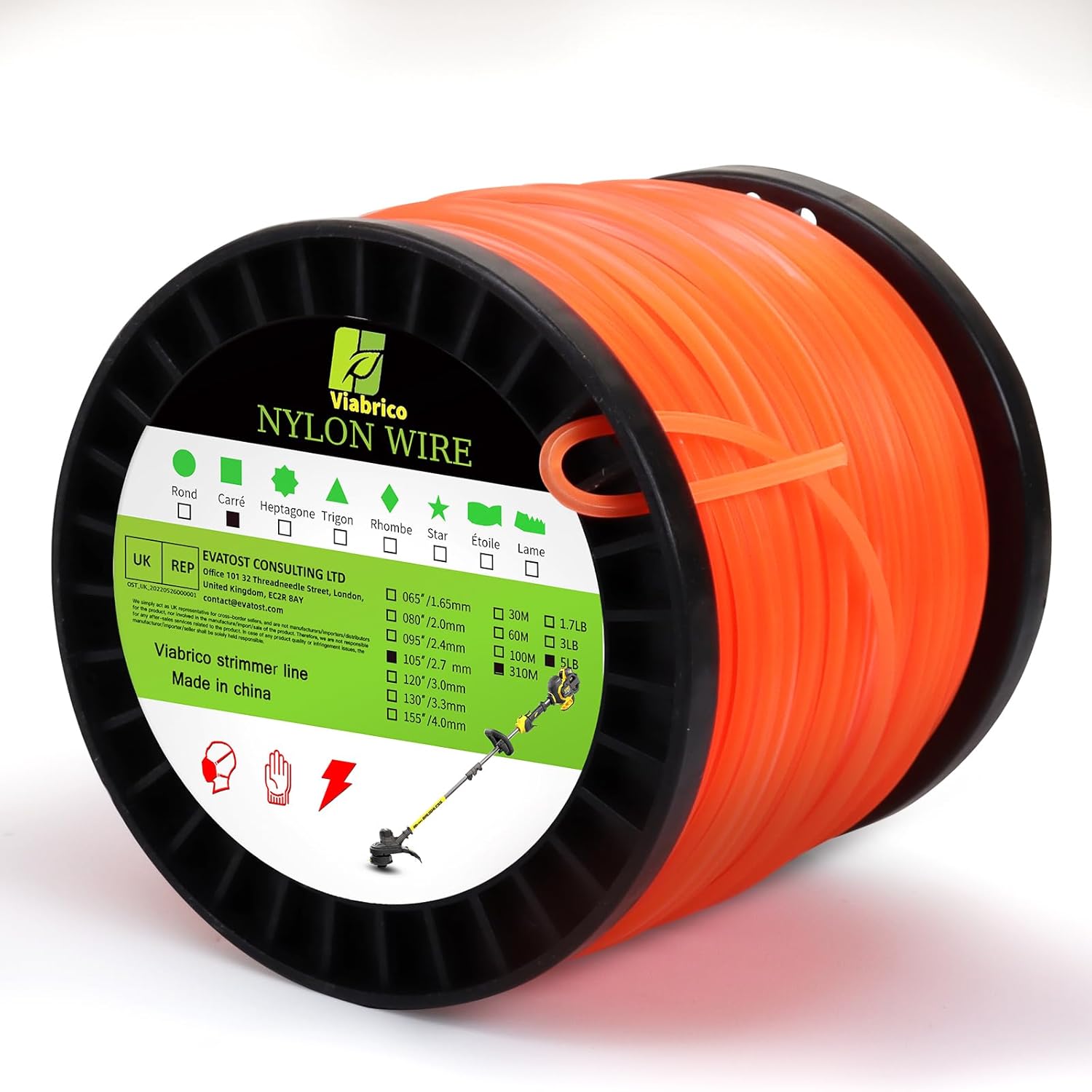
| Diameter | 0.105 inch |
|---|---|
| Material | Polyamide (nylon) |
| Tensile strength | 110 LB |
This VIABRICO .105" square trimmer line is built for heavy-duty, frequent use on commercial and demanding residential jobs. The square cross section and pentagon-style edges increase cutting surface area for cleaner cuts and faster trimming compared with standard round line. It is wound to minimize tangles and misfeeds, which helps keep multi-hour jobs moving without constant head jams. Made from a high-strength polyamide with a reported 110 lb tensile strength, the line is marketed for good abrasion and crack resistance so it stands up to gravel, rocky edges, and repeated contact with coarse weeds. Practical benefits include longer run times between replacements, a bright orange color that improves visibility during use, and broad compatibility with any trimmer that accepts 0.105" line. Limitations are inherent to thicker commercial lines: it may slightly increase vibration and use more power on weaker electric trimmers, and compatibility depends on the trimmer head accepting this diameter. For risk-averse buyers who need reliable, durable line for regular commercial tasks, this model emphasizes longevity and fewer interruptions.
Best for: Users who need a durable, low-maintenance trimmer line for frequent commercial or heavy residential use and prioritise long run times and fewer interruptions during long trimming sessions.
Less Ideal for: Casual gardeners with lightweight battery trimmers or those who rarely trim and prefer thinner line for longer battery runtimes should consider lighter options.
- Square/pentagon cut increases cutting edge area for cleaner, faster cuts
- High-strength polyamide construction with 110 lb tensile rating for durability
- Precision-wound spool reduces tangling and misfeeds during long jobs
- Abrasion and crack resistance designed to withstand rocky and gritty conditions
- Thicker .105" line can demand more power and may reduce runtime on lower-powered electric trimmers
- May not fit trimmer heads that accept only smaller diameters without converting the head
Verdict: Choose this line if you need tough, commercial-grade .105" trimmer string that reduces tangles and lasts through heavy, frequent cutting.
Choosing the Right String Trimmer Line for Commercial Use: Key Factors to Consider
Line Diameter and Job Type
Diameter determines what the line can handle and how fast it wears. Thicker diameters cut through heavier weeds and brush more effectively and last longer under commercial loads, but they require more power and may reduce runtime on smaller engines.
Match diameter to task: use heavier gauges for persistent coarse weeds and frequent commercial use, and lighter gauges where precision trimming and longer run times are priorities. Also consider head compatibility since some commercial trimmer heads limit the maximum diameter you can use.
Material Composition
Trimmer line is typically made from nylon blends, copolymers, or reinforced formulations. Copolymer and reinforced lines generally offer better abrasion resistance and toughness than basic nylon, which helps in sandy or gritty environments common on commercial sites.
Look for materials with additives that improve cut resistance or UV stability. Material choice affects flexibility as well, which influences feed reliability in various temperatures and the line's tendency to tangle on the spool.
Shape and Cross-Section Design
Round, square, twisted, and serrated profiles each trade cutting aggressiveness for noise, wear, and fuel draw. Square or multi-sided lines tend to bite harder and cut faster, which is useful in heavy growth, while round lines wear more evenly and feed more reliably.
Consider the vegetation you typically encounter: coarse, fibrous weeds benefit from angled or serrated edges, while lawns and light trimming tasks may be fine with round or twisted profiles that reduce breakage and extend life.
Abrasion and Wear Resistance
Commercial environments expose line to gravel, dirt, and frequent contact with hard surfaces. Lines formulated for abrasion resistance resist chipping and fraying, extending service intervals and saving crew time on reloads.
Assess wear resistance by looking for reinforced or copolymer construction and by factoring in the typical ground conditions you manage. Higher abrasion resistance is especially important if you trim close to driveways, curbs, or gravel beds.
Feed System Compatibility
How the line behaves in the trimmer head affects workflow. Some lines feed smoothly in bump heads, while others are better suited to fixed-spool or automatic-feed systems. Line memory and flexibility determine whether it tangles on the spool or advances cleanly during use.
For commercial crews, prioritize lines that minimize jams and simplify reloads. Check whether the line is recommended for your common head types, and consider pre-wound spools if your team needs quick swaps.
Cost Per Hour of Use
Upfront cost matters less than how long a length of line lasts under real work conditions. Calculate expected life by considering damage rates, the typical thickness you will use, and how often crew members need to reload during a shift.
Factor in downtime from reloads and the labor cost of replacing line. A more expensive line that halves reload frequency often reduces total operating cost and improves crew productivity on commercial routes.
Matching Line to Commercial Vegetation
Different job sites demand different approaches. For overgrown lots with thick, woody stems or dense tall grass, choose lines with aggressive profiles and heavier diameters that can withstand repeated impacts and still slice through stems. For weekly maintenance of corporate grounds or parks, lines that balance cutting efficiency with longer life and gentler engine load tend to work better.
Account for seasonal shifts: spring and early summer often bring softer, fast-growing grasses that respond to sharper edges, while late-season weeds and dried vegetation require tougher line that resists shredding.
- Soft, fast grass: sharper-edge or twisted profiles in medium diameter
- Coarse weeds and brambles: multi-sided or serrated profiles in heavier diameters
- Mixed sites: a reinforced copolymer in a middle diameter for versatility
Spooling and Reloading Tips for Crews
Efficient spooling practices reduce downtime. Pre-wind several spools before a shift or use pre-wound commercial spools suited to your head type. Make sure crew members follow consistent winding tension to avoid tangles and feeding problems.
Train crews on head-specific techniques: how much line to leave exposed, how to secure ends, and how to spot signs of memory or brittleness that indicate replacement time. Keep a simple reload kit with clean tools and spare caps in each vehicle.
- Keep pre-wound spools for quick swaps
- Use consistent winding tension to avoid tangles
- Inspect spools for cracks and brittleness regularly
Durability in Harsh Site Conditions
Sandy, gravelly, or construction-adjacent sites accelerate wear. In those settings prioritize abrasion-resistant formulations and consider slightly larger diameters to offset faster material loss. Lines with reinforced additives resist cutting down from contact with stones and reduce the frequency of replacements.
Also monitor how line behaves in temperature extremes. Some reinforced copolymers stay flexible in cold weather, preventing brittle breakage during early-morning shifts, while others can stiffen and kink in heat, causing feed problems.
- Gravel and sand: choose reinforced copolymer lines
- Cold climates: select lines rated to remain flexible at low temperatures
- High-contact trimming: upsized diameter reduces frequent breaks
Noise, Fuel Draw, and Operator Comfort
Aggressive line profiles increase cutting force but also raise noise and engine load. On multi-crew operations where operator fatigue and noise ordinances matter, consider a compromise that keeps noise and fuel draw reasonable while still offering solid cutting performance.
Reducing engine strain extends equipment life and lowers fuel consumption across a fleet. Where noise is a concern, test a few profile types to find the best balance between cut speed and operator comfort.
- Sharper profiles cut faster but can increase noise
- Thicker line may increase fuel consumption slightly
- Rotate line types between tasks to manage operator fatigue
Storage and Shelf Life Considerations
How you store trimmer line affects its lifecycle. Keep spools in a cool, dry place out of direct sunlight to prevent UV degradation and loss of flexibility. Do not store spools near solvents or fuels that can soften or weaken the material.
Label pre-wound spools with diameter and recommended head type so crews pick the right spool quickly. Rotate stock and use older spools first to avoid long-term storage issues like brittleness and memory.
- Store spools away from UV and heat
- Label spools with diameter and head compatibility
- Use older stock first to prevent brittleness
How We Chose the Best String Trimmer Line for Commercial Use
We focused on attributes that matter for daily commercial operation rather than homeowner convenience. Primary evaluation criteria were material durability under heavy use, cutting efficiency through tall grass and coarse weeds, feed and spool reliability for quick reloads or bump-feed operation, and compatibility with common commercial trimmer heads. We also considered abrasion resistance in gritty conditions and shape retention over prolonged cutting sessions. To assemble the shortlist we reviewed product specifications, material descriptions, and reported performance patterns from field users in professional settings. We excluded lines designed exclusively for light residential use, specialty lines meant only for decorative edging, and any products lacking clear material or diameter specs. The final selections prioritize lines that balance long life with predictable feeding and strong cutting power so commercial crews can minimize downtime and replacement frequency.
FAQ
What diameter trimmer line is best for commercial properties?
It depends on vegetation and trimmer power. Heavier diameters handle thick weeds and rough use better, while medium diameters balance cutting and run time. Check head compatibility before choosing a thicker line.
Are copolymer lines worth the extra cost for professional crews?
Often yes. Copolymer and reinforced lines usually resist abrasion and fraying better than basic nylon, which reduces reload frequency and crew downtime in gritty or heavy-use settings.
How can I reduce tangles and feeding problems on the job?
Pre-wind spools with consistent tension, use line types recommended for your head, and train crews in correct winding and feed techniques. Replace spools showing memory or brittleness before they cause jams.
Do special-profile lines increase fuel consumption?
They can. Aggressive or multi-sided lines create more cutting resistance, which may slightly increase engine load and fuel use, especially on smaller trimmers. Balance cutting needs with engine capacity.
How should commercial crews store extra line to keep it usable?
Store spools in a cool, dry, shaded area away from direct sunlight and solvents. Label spools and rotate stock to avoid long-term brittleness or deformation from poor storage.
Final Verdict
For commercial use prioritize line durability, feed reliability, and the right diameter/profile for your common vegetation. Expect tradeoffs between aggressive cutting power and fuel draw or noise. Focus on abrasion-resistant materials and compatibility with your trimmer heads to minimize reloads and downtime. Choose the line that matches the toughest regular tasks on your route rather than the occasional heavy job. That approach will keep crews productive and reduce operating costs over time.
