

Note: This article contains affiliate links. If you click on these links and make a purchase, I may earn a small commission at no extra cost to you. This helps support my research and content. Read my full affiliate disclosure here.
Choosing the right soil for growing trees changes how well saplings take root, withstand drought, and access nutrients through the seasons. Trees need a different soil behavior than annuals or container plants: good structure for root expansion, steady water availability without waterlogging, and enough organic matter for long-term fertility. This guide covers seven shortlisted soils suited for planting and establishing trees in yards, parks, and new landscapes. We evaluate each option on drainage, nutrient profile, and how they influence root development and planting ease, so you can pick the right soil for your site conditions and tree species.
Top Picks at a Glance
| Best Overall The best all-around choice for most situations | FoxFarm Happy Frog Potting Soil, Container Garden, 2 cu ft (with 2 Plant Tags) |  |
| Best Quality Built to a higher standard if you want something more solid | Premier Pro Mix BX with Mycorrhizae, 2.8 cu ft |  |
| Best Value The sweet spot between price and what you get | FoxFarm Ocean Forest Potting Soil, 12 Quart |  |
| Best Budget The cheapest option that still gets the job done reliably | Doter Citrus Tree Potting Soil Mix (1 qt) |  |
| Highest Rated A top-rated pick with lots of positive feedback | E.B. Stone Organics Citrus & Palm Mix Potting Soil, 1.5 cu ft |  |
| Most Popular A crowd favorite that many people choose with confidence | Miracle-Gro Garden Soil for Trees & Shrubs, 1.5 cu ft |  |
| Best Seller A high-volume bestseller chosen again and again | Back to the Roots Organic Expanding Coco Coir Potting Soil Brick (10 lb) |  |
FoxFarm Happy Frog Potting Soil, Container Garden, 2 cu ft (with 2 Plant Tags)

| Brand | FoxFarm |
|---|---|
| Style Name | Container Garden |
| Unit Count | 600 Ounce |
| Volume | 2 cubic feet |
FoxFarm Happy Frog Potting Soil is a premixed container blend made to nourish potted plants without additional amendments. It comes ready to use and is formulated with beneficial microbes and mycorrhizal fungi alongside organic inputs such as earthworm castings, bat guano, and aged forest humus to support root development and nutrient uptake. For growing hot peppers in containers this mix offers a nutrient-rich, well-amended medium that encourages strong vegetative growth and flowering when paired with proper watering and feeding. The included plant tags make keeping track of varieties and planting dates convenient. Practical limits to note are that this is a potting soil designed for containers rather than field beds, so peppers in ground or very large planters may still need different soil or additional bulk amendments. Also, while the mix is nutrient-dense at planting, active growers should plan a feeding schedule because high-demand fruiting crops benefit from supplemental fertilizer over the season.
Best for: Growers who want a dependable, ready-made potting medium for container-grown hot peppers and prefer a product that supports root health out of the bag.
Less Ideal for: Gardeners planting directly in raised beds or open ground who need large volumes of soil or want to custom-blend base soil at scale.
- Pre-amended with earthworm castings, bat guano, and aged forest products for immediate nutrient availability
- Contains beneficial microbes and mycorrhizal fungi to improve root health and nutrient uptake
- Ready to use straight from the bag for quick potting and repotting
- Includes plant tags to track varieties and planting dates
- Formulated specifically for containers so may not be ideal for in-ground garden beds
- Nutrient levels diminish over time for heavy-feeding crops and require supplemental fertilization
Verdict: A reliable, microbe-rich potting mix that simplifies container pepper growing by delivering immediate nutrients and strong root support.
Premier Pro Mix BX with Mycorrhizae, 2.8 cu ft

| Brand Name | Premier Horticulture |
|---|---|
| Included Components | Pro Mix Loose with Mycorrhizae, 2.8 Cubic Feet |
| Volume | 2.8 cubic feet |
This Premier Pro Mix BX is a peat-based professional growing medium formulated for greenhouse use and transplanting, and it arrives pre-inoculated with the mycorrhizal fungus Glomus intraradices. In practice it is used like a standard potting mix for container-grown plants and transplants; the mycorrhizae colonize roots and help plants access water and nutrients more efficiently, which can translate to stronger early growth and better establishment. The loose texture and peat base make it easy to fill pots and root balls, and it is suitable for a wide variety of horticultural species including bulbs and ornamentals. The primary benefit for performance-minded growers is improved nutrient and water acquisition without the need to apply a separate inoculant. Limitations are that it is peat-based so it will slowly compress and may require periodic reworking or refreshing for long-term containers, and it does not list added fertilizer content so growers should plan a feeding schedule for sustained bloom and development.
Best for: Gardeners focused on maximizing establishment and early growth of potted lilies and other ornamentals who want a ready-made mix that includes beneficial mycorrhizae.
Less Ideal for: Growers seeking a long-term container substrate with built-in slow-release fertilizer or those who avoid peat for environmental reasons should consider alternatives.
- Pre-inoculated with Glomus intraradices mycorrhizae to improve root nutrient and water uptake
- Loose, workable peat-based texture that is easy to fill pots and transplant with
- Formulated for greenhouse and transplanting applications suitable for many horticultural plants
- Generous 2.8 cubic feet volume suitable for multiple containers or larger bulbs
- Peat-based mix can compress over time and may need refreshing in long-term containers
- No fertilizer analysis listed so additional feeding is required for bloom-phase nutrition
Verdict: Choose this mix when you want a performance-focused, pre-inoculated growing media that helps lilies and other ornamentals establish and uptake nutrients faster.
FoxFarm Ocean Forest Potting Soil, 12 Quart

| Item Form | Granules |
|---|---|
| Specific Uses For Product | Dry Fertilizer |
| Coverage | 4.8 sq ft |
| Mixing Ratio | 1:1 |
FoxFarm Ocean Forest is a pre-mixed potting soil that combines aged forest products, sandy loam and sphagnum peat moss with organic amendments like fish meal, crab meal and earthworm castings. It is sold ready to use straight from the bag for planting in containers, seed starting or top dressing; the manufacturer recommends no additional nitrogen fertilizer for the first 30 days. The mix has a light, aerated texture that promotes drainage while still retaining moisture, and the built-in micronutrients make it practical for growers who want strong early growth without immediate feeding. Practical benefits include easy pot filling, good root zone aeration for roses in containers, and built-in organic fertility to support blooms. Limitations to consider are that the bag is best for containers or small beds only and heavier feeders may need supplemental feeding after the initial month; users should also follow handling precautions to avoid skin or eye irritation.
Best for: Gardeners who want a high-quality, nutrient-rich potting medium to get container roses or plant starts off to a strong, flowering start and prefer a ready-made organic blend.
Less Ideal for: Large in-ground rose beds or landscapers needing bulk soil amendments should look for bulk garden soil or custom rose mixes instead.
- Ready-to-use out of the bag so you can pot immediately
- Organic amendments (fish meal, crab meal, earthworm castings) supply early nutrients
- Light, aerated texture that supports drainage and root development
- pH adjusted for optimal nutrient uptake per product description
- Pack size (12 qt) covers a small area and may require multiple bags for several roses
- No long-term feeding provided after the first 30 days so additional fertilizer is needed for sustained heavy bloom
Verdict: Choose this soil if you want a ready-made, organically amended potting mix that jump-starts container roses and seedlings with good drainage and early fertility.
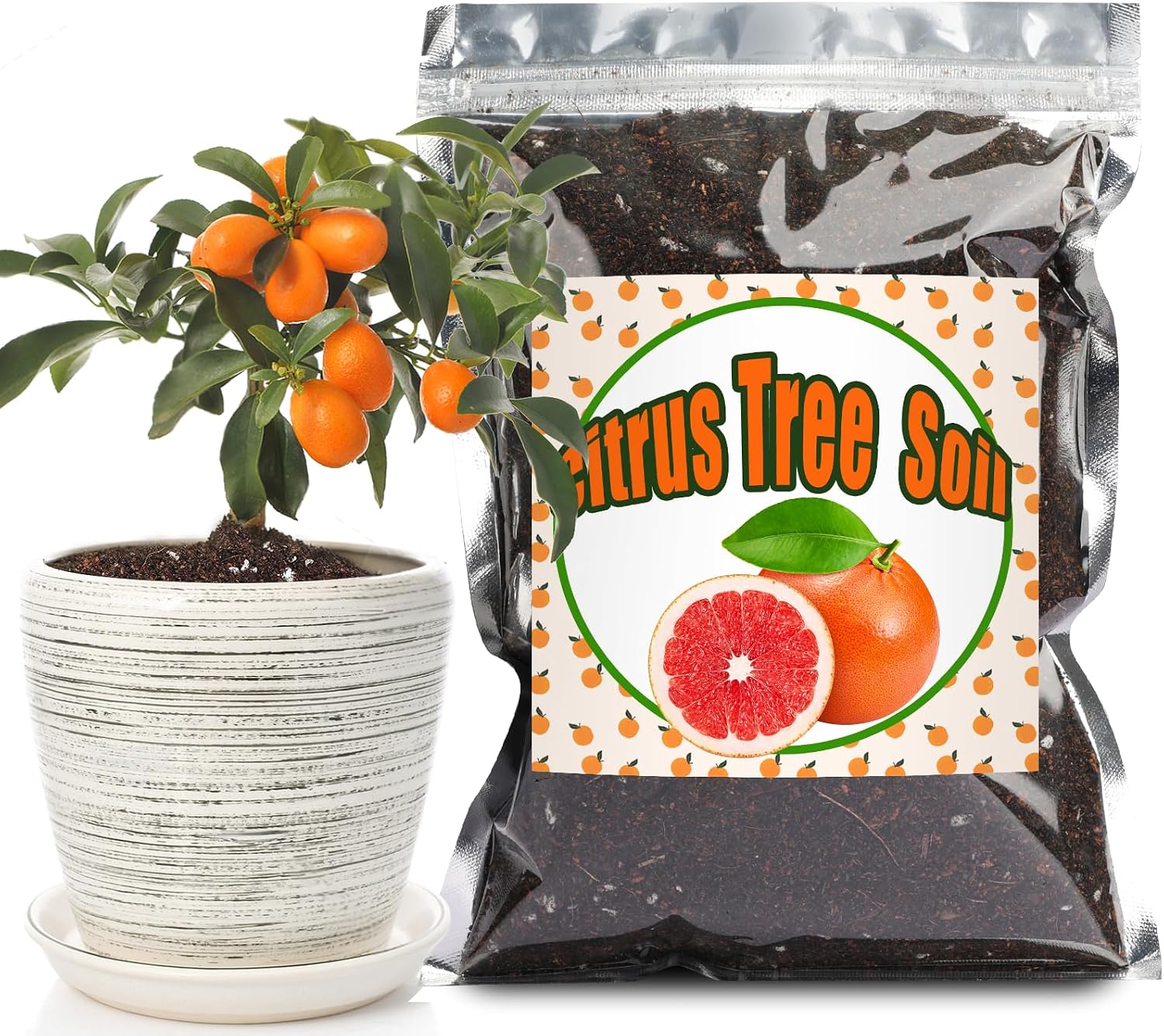
Doter Citrus Tree Potting Soil Mix (1 qt)
| Brand Name | Doter |
|---|---|
| Item Type Name | Garden soil |
| Volume | 1 quarts |
| Item Weight | 224 g |
This Doter citrus potting mix is a small, 1-quart, ready-to-use soil blend designed for container-grown lemon, lime, orange and other citrus trees. It mixes organic and mineral components to deliver a balanced nutrient profile and claims an ideal pH between 6.0 and 7.1, which helps citrus roots access nutrients. The formulation emphasizes drainage and aeration so pots do not stay waterlogged, and the bagged format makes it convenient for repotting seedlings or refreshing the top layer in containers. For budget-conscious gardeners the single-quart size is useful for small projects, trial runs, or blending into larger mixes, but you will likely need multiple bags for a single mature container tree. The product works best as a component or short-term potting medium rather than a sole long-term planting substrate for large trees. Expect good seedling establishment and faster drainage compared with generic garden soil, but plan to supplement with larger volumes or slow-release fertilizer for sustained feeding on mature citrus.
Best for: Gardeners looking for an inexpensive, small-batch citrus-specific soil to repot seedlings, top-dress containers, or trial a citrus blend before committing to larger quantities.
Less Ideal for: Growers with mature potted citrus or those who need large volumes for in-ground planting should choose bulk soils or custom mixes instead.
- Formulated pH between 6.0 and 7.1, suitable for citrus nutrient uptake
- Designed for improved drainage and aeration to reduce root rot risk
- Nutrient-rich blend of organic and mineral components to support growth
- Ready-to-use bag convenient for repotting seedlings and small containers
- Small 1-quart volume means multiple bags are required for larger pots or trees
- Not marketed as a long-term complete potting substrate for mature trees
Verdict: A convenient, budget-friendly small bag of citrus-specific potting mix ideal for repotting seedlings and topping up container citrus plants.
E.B. Stone Organics Citrus & Palm Mix Potting Soil, 1.5 cu ft

| Brand Name | E.B. Stone Organics |
|---|---|
| Unit Count | 1536 Ounce |
| Volume | 1.5 cubic feet |
| Style Name | Potting Soil |
E.B. Stone Organics Citrus & Palm Mix is a ready-to-use organic soil blend designed for container and in-ground planting of citrus, palms, avocados and tropical foliage. The mix pairs aged fir bark and pumice to keep the root zone well aerated and fast-draining so plants that dislike soggy feet avoid root rot, while added mycorrhizae improve nutrient and water uptake. It is intended to be used straight from the bag for potting or worked into beds when planting, which simplifies planting and repotting tasks. For gardeners seeking reliability, this blend delivers consistent structure and moisture retention without heavy amendments, and the organic base supports longer-term soil biology. Limitations are the single bag volume of 1.5 cubic feet, which means larger projects will require multiple bags and mixing on site, and it does not list N-P-K numbers or slow-release fertilizer content so supplemental feeding may be needed for heavy-feeding specimens.
Best for: Gardeners who prioritize reliable, low-maintenance potting media for citrus and tropical plants and want a ready-made organic blend that supports healthy roots.
Less Ideal for: People who need large volumes for landscaping projects or who prefer a potting mix with specified fertilizer content and tailored nutrient ratios.
- Formulated specifically for citrus, palms and tropicals to match their root needs.
- Aged fir bark and pumice provide good drainage and aeration to reduce risk of root rot.
- Contains beneficial mycorrhizae to enhance root nutrient and water uptake.
- Ready-to-use bag simplifies repotting or planting without on-site blending.
- Single bag is only 1.5 cubic feet so multiple bags are required for larger trees or beds.
- No detailed fertilizer analysis provided so additional feeding may be necessary for heavy feeders.
Verdict: Choose this mix when you want a consistent, ready-to-use organic soil that promotes healthy, well-aerated roots for citrus and tropical plants.
Miracle-Gro Garden Soil for Trees & Shrubs, 1.5 cu ft

| Volume | 1.5 cubic feet |
|---|---|
| Feeds | Up to 3 months |
| Style Name | Tree & Shrub |
Miracle-Gro Garden Soil for Trees & Shrubs is a ready-to-use planting mix intended to improve root development and establishment for newly planted trees and shrubs. It is typically used by mixing about half native soil with half garden soil when backfilling a planting hole, then watering and optionally mulching. Notable features include continuous-release plant food that feeds for up to three months, added phosphorus and iron to support strong root growth and reduce yellowing, and Moisture Control technology to help moderate wet and dry conditions. In practice this product simplifies planting by combining nutrients and moisture-holding components so homeowners get faster establishment without measuring multiple amendments. Limitations are that it is formulated for in-ground use only and the feeding period is limited to about three months, so follow-up fertilizing or long-term soil management will still be necessary for larger or established trees.
Best for: Home gardeners planting new trees or shrubs who want a convenient, all-in-one soil mix to speed establishment and reduce guesswork during the first months of growth.
Less Ideal for: Gardeners who need a long-term soil renovation for large established trees or those looking for a potting mix for containers should consider alternatives.
- Includes continuous-release plant food that feeds for up to three months
- Fortified with phosphorus and iron to promote root development and reduce leaf yellowing
- Moisture Control formula helps buffer against overwatering and drought stress
- Pre-mixed and easy to use for in-ground tree and shrub plantings
- Intended only for in-ground planting, not suitable for container use
- Nutrient boost is temporary so additional fertilization is needed after the initial months
Verdict: A convenient, nutrient-fortified garden soil that simplifies in-ground tree and shrub planting and speeds early root establishment.
Back to the Roots Organic Expanding Coco Coir Potting Soil Brick (10 lb)

| Item Highlight | 10 lb compressed coco coir brick; peat-free; OMRI Listed |
|---|---|
| Item Type Name | Coconut Coir |
| Volume | 2 cubic feet |
| Ingredients | Coconut Coir |
| Style Name | Expanding Potting Soil |
This compressed coco coir brick provides a lightweight, peat-free potting medium that expands when you add water to create loose, airy substrate for containers and seed flats. It is typically used by hydrating the 10 lb block to about 2 cubic feet of coir and then using it alone for potted plants, mixing it into garden soil to improve drainage and aeration, or blending with compost for starting seeds. Notable features include OMRI listing for organic use, a balanced pH suited to a wide range of plants, and compact storage before expansion which saves space. Practical benefits are improved root aeration and water retention compared with heavy garden loam, easier handling than bulky bags, and versatility across vegetables, herbs, and ornamentals. Important limitations are that coco coir is a soilless substrate and does not supply significant nutrients on its own so you will need to add fertilizer or compost for long-term potted herbs like rosemary, and the product requires time and a water source to expand before use.
Best for: Buyers who prioritize low-risk, easy-to-handle, organic potting media and want a versatile base for container herbs and seed starting without dealing with heavy bags.
Less Ideal for: Gardeners who want a ready-to-plant, nutrient-rich potting mix out of the box or those who prefer soil with built-in slow-release fertilizer.
- Peat-free OMRI listed organic coco coir suitable for organic growing
- Expands from a compact brick to about 2 cubic feet for easy storage and transport
- pH balanced and airy texture that improves drainage and root aeration
- Versatile use: can be used alone, for seed starting, or mixed into existing soil
- Provides little inherent fertility so supplemental feeding or compost is needed for nutrient-hungry plants
Verdict: A compact, peat-free coco coir brick that expands into an airy, pH-balanced base ideal for low-risk organic container gardening and seed starting when paired with fertilizer or compost.
Choosing the Right Soil for Growing Trees: Key Factors to Consider
Drainage and Porosity
Drainage controls how long moisture stays near tree roots after irrigation or rain. Soils with good porosity allow excess water to move away while holding enough moisture for the roots between wetting events. Poor drainage leads to oxygen-poor roots and root rot, while excessively fast-draining mixes can leave young trees drought stressed.
When choosing soil for trees, assess whether the site is heavy clay, loam, or sandy. Amendments and mixes that increase macropores and aggregate stability help balance water retention and drainage so roots can grow in aerobic conditions.
Nutrient Balance and Organic Matter
Young and newly planted trees need a steady supply of nutrients rather than a single flush. Soils blended for trees often include stable organic matter that releases nutrients slowly and improves cation exchange capacity, which is important for holding essential elements like nitrogen, phosphorus, and potassium.
Organic matter also supports soil life, which in turn helps nutrient cycling. Avoid mixes with excessive high-salt amendments or unclear fertilizer loading because they can harm delicate roots. Look for soils that list compost or well-decomposed organics and that do not rely solely on quick-release chemical fertilizers.
Structure Stability and Compaction Resistance
As soil settles after planting, loose fills can compact and create a dense layer that resists root penetration. Soil for trees should maintain a stable structure so roots can expand freely over time. Materials that bind into stable aggregates, such as composted organics and mineral particles in balanced proportions, reduce the risk of a dense barrier forming around the root ball.
Consider how the soil will be tamped at planting and whether the tree will be in a high-traffic area or subject to regular foot compaction. Mixes designed to resist compaction keep pore space open and preserve oxygen flow to roots.
pH and Mineral Availability
Soil pH directly affects which nutrients are available to trees. Most common landscape and fruit trees prefer slightly acidic to neutral pH, but particular species have specific preferences. Choosing soil with an appropriate pH helps avoid nutrient lock-up and reduces the need for corrective inputs later.
Soils that measure and state pH, or that include buffering organic material, give gardeners a predictable starting point. If your native soil is very alkaline or very acidic, select mixes that move root zones toward the species' preferred range or plan for pH amendments.
Biological Activity and Microbial Support
Healthy soil biology-beneficial bacteria, fungi, and mycorrhizal fungi-helps tree roots access water and nutrients and can improve stress tolerance. Soils that include composted organic matter and minimal pesticide residues encourage a living ecosystem that aids establishment.
Some tree-focused soils include inoculants or list compatibility with mycorrhizae, but even without additives, a balanced organic mix supports microbial life. Avoid sterilized mixes when establishing trees, as they miss the beneficial interactions that boost root growth.
Workability and Planting Practicalities
A soil that is difficult to shovel, overly dusty, or very heavy when wet creates extra labor and can lead to poor planting technique. Workability covers how the mix handles during digging, placing around root balls, and initial tamping without crushing pores.
Choose soils that are manageable by the tools and crews you have. Some mixes compact if over-tamped; others are too light and may shift when watered. Consider bagged versus bulk delivery options relative to the size of the tree project and whether you need to blend soil with native material on site.
Matching Soil Choice to Tree Age and Type
Nursery liners, bare-root saplings, and established balled-and-burlapped trees have different rooting behavior and planting needs. Young saplings benefit most from mixes that encourage rapid root expansion and hold moisture without waterlogging. Larger B&B trees need backfill that supports weight and resists settling around the root collar.
- Saplings: lighter, well-draining mixes with stable organic matter
- Balled trees: soil with structure stability to prevent settling and root girdling
- Fruit trees and ornamentals: consider slightly different nutrient balances and pH preferences
How Native Soil Affects Your Choice
You should always test or inspect your existing soil before adding purchased mixes. Amending heavy clays requires materials that increase macroporosity and reduce bulk density. Sandy sites need organic matter that increases water-holding capacity. Often the best approach is a blend that adjusts the native profile rather than completely replacing it.
- Clay: add coarse sand or structured compost to improve drainage
- Sandy: prioritize compost and materials that hold moisture
- Loam: minimal adjustment, focus on matching pH and nutrient needs
Timing Planting and Soil Work
Soil temperature and moisture conditions during planting affect compaction and root growth. Avoid working very wet soil, which compacts easily and reduces pore space. Planting in early spring or fall when soils are workable and temperatures moderate gives roots time to establish before stress seasons.
- Avoid heavy machinery around root zones until soils have settled
- Loosen native soil at the planting hole sides to encourage root escape
- Keep backfill slightly looser than the surrounding ground to promote root travel
Adding Amendments and Biologicals
Not every planting needs high rates of amendment. Targeted additions such as well-rotted compost, rock dust for micronutrients, or a mycorrhizal inoculant can improve outcomes when matched to species needs. Avoid over-amending with fresh uncomposted materials that can draw nitrogen from the soil as they decompose.
- Use composted organics for stable nutrient release
- Reserve fertilizers for when growth shows nutrient deficiency
- Consider inoculants for disturbed or sterile soils to help root colonization
Long-Term Soil Management Around Trees
Mulching, irrigation practices, and avoiding repeated disturbance are part of maintaining soil that supports mature trees. Mulch moderates temperature, retains moisture, and builds organic content as it breaks down. Water deeply but infrequently for established trees to encourage deep root systems rather than shallow feeder roots.
- Keep mulch away from direct contact with trunks to prevent rot
- Monitor soil moisture seasonally rather than on a fixed schedule
- Topdress with compost every few years rather than deep tilling
How We Chose the Best Soil for Growing Trees
Our shortlist focused on soils that help trees establish strong, long-lived root systems and perform well across common planting situations. We prioritized formulas and mixes that support large-root development, resist settling, and manage moisture around the root zone. Key evaluation points were drainage and porosity, nutrient balance and slow-release organic matter, structure stability to prevent compaction, and whether the mix supports biological activity such as beneficial microbes and mycorrhizae. We also considered ease of use for standard planting methods, compatibility with backfill and existing native soils, and how readily a soil can be worked in different seasons. Exclusions included mixes formulated only for potted ornamentals, highly specialized substrates for bonsai or alpine plants, and products lacking clear composition information. The final picks are soils that perform for tree planting at establishment and set up a better long-term rooting environment.
FAQ
How deep should I fill the planting hole for a tree?
Dig a hole no deeper than the root ball but wider on the sides. A wider planting hole allows roots to move into native soil with less impedance while keeping the root collar at or slightly above final grade.
Should I mix purchased soil with my native soil or replace it entirely?
In most landscapes blend rather than replace. Replace only if the native soil is extremely poor or contaminated. Blending lets roots access both improved structure and native subsoil resources.
Can I use potting soil for planting trees in the ground?
Potting mixes are usually formulated to drain quickly and may not provide the stable structure or long-term nutrient release trees need. Use products designed for landscape planting or amend potting mix heavily if used as a component.
When is the best season to plant trees for best root establishment?
Spring and fall are usually best because moderate temperatures and available soil moisture let roots expand before summer heat or winter freeze. Avoid planting in extreme drought or when soil is saturated and easily compacted.
How much compost should I add when planting a tree?
Moderate amounts are best. Incorporate compost into the backfill at a ratio that improves texture without dominating the hole-usually a small fraction of the total volume. Excessive compost can create a distinct pocket that alters moisture and nutrient dynamics.
Final Verdict
Prioritize soil choices that create a stable, well-aerated root zone with steady nutrient release and the right water balance. Tradeoffs are common: mixes that hold more moisture may drain more slowly, and highly friable soils can settle if not structured properly. Focus on matching soil behavior to your site conditions and the tree species' needs. With the right soil characteristics you improve establishment, reduce long-term maintenance, and set trees up for deeper roots and greater resilience. Use the factors earlier in this guide to pick the soil that best supports your planting goals.
