

Note: This article contains affiliate links. If you click on these links and make a purchase, I may earn a small commission at no extra cost to you. This helps support my research and content. Read my full affiliate disclosure here.
If you want to garden without constant bending or kneeling, an elevated raised bed planter can transform routine chores into comfortable tasks. These raised units sit at standing or waist height so you can plant, weed, and harvest with less strain while still giving roots the loose, well-drained soil they need. Choosing the right elevated raised bed matters because height, footprint, and drainage directly affect what you can grow and how easy maintenance will be. This guide shortlists five top-rated elevated raised bed planters that fit common garden situations and mobility needs. We evaluate each on construction and stability, water management, planting depth, and practical setup and maintenance. Read on for the criteria we used and the practical tradeoffs to consider before you buy.
Top Picks at a Glance
| Best Overall The best all-around choice for most situations | Best Choice Products 48 x 24 x 32 in Mobile Raised Garden Bed (Fir Wood) |  |
| Best Quality Built to a higher standard if you want something more solid | Vego Garden Elevated Raised Garden Bed 2' x 4' with Legs and Storage Rack |  |
| Best Value The sweet spot between price and what you get | LEETOLLA 31.6" Elevated Raised Garden Bed with Wheels and Storage Shelf |  |
| Best Budget The cheapest option that still gets the job done reliably | Kendane 32" Elevated Raised Garden Bed |  |
| Best Seller A high-volume bestseller chosen again and again | EFU Raised Garden Bed with Wheels and Lower Storage Shelf |  |
Best Choice Products 48 x 24 x 32 in Mobile Raised Garden Bed (Fir Wood)

| Capacity | 135 quarts |
|---|---|
| Material Type | Fir Wood |
| Plant or Animal Product Type | Vegetable |
| Other Special Features of the Product | Drainage Hole |
| Mounting Type | Floor Standing |
This raised garden bed is designed for small outdoor vegetable plots where mobility and comfort matter. The bed stands 32 inches tall so you can tend plants without bending, and the included locking casters let you reposition the planter to follow sun or shade. Constructed from unfinished fir wood with a removable liner, it keeps soil off the wood to reduce rot while the liner also helps block weeds. A built-in lower shelf gives a handy spot for potting tools and small bags of soil and the four drainage holes prevent waterlogging for healthier roots. Assembly is required and the unfinished wood will need sealing or staining for long-term weather resistance. The 100 lb weight capacity limits very heavy soil mixes or large potted specimens, and fir is less rot-resistant than cedar, so expect to treat or replace it sooner if exposed to constant moisture. For gardeners who want an ergonomic, movable elevated planter with storage, this is a practical, space-efficient option.
Best for: Gardeners who want an easy-to-access, movable raised bed for growing vegetables in small yards, patios, or balconies and who prioritize comfort and practical storage while gardening.
Less Ideal for: People seeking a maintenance-free or long-lasting hardwood planter or those who need to use very heavy professional soil mixes or large planters that exceed the stated load capacity.
- Ergonomic 32 inch height reduces bending and back strain for planting and maintenance
- Locking wheels provide easy mobility to move the bed for optimal light or protection
- Removable garden bed liner separates soil from wood to slow rot and block weeds
- Built-in lower shelf offers convenient storage for tools and supplies
- Multiple drainage holes help prevent oversaturation and root problems
- Unfinished fir wood will require sealing or staining to resist weathering and decay
- 100 lb weight capacity limits use with very heavy soil mixes or large container loads
Verdict: A practical, movable elevated planter that makes vegetable gardening easier by combining ergonomic height, drainage, and on-board storage.
Vego Garden Elevated Raised Garden Bed 2' x 4' with Legs and Storage Rack

| Capacity | 700 pounds |
|---|---|
| Plant or Animal Product Type | Vegetable |
| Material Type | Metal |
| Finish Types | Powder Coated |
This Vego Garden 2' x 4' elevated raised bed is a heavy-duty metal planter built for vegetable production and repeated seasonal use. It arrives as a kit that bolts together without special skills and uses powder-coated VZ 2.0 metal to resist rust and rot. The 32-inch overall height reduces bending while the 12-inch planting depth gives roots room for most vegetables, and a stated 700-pound capacity means it will hold ample soil and mature plants. Practical touches include one-piece welded corners and a center support that improve rigidity and a rubber edging that covers sharp panels during assembly. Because it is metal, the bed warms up and drains faster than wood or plastic, which can speed early-season growth but may require more frequent watering in hot weather. The kit needs assembly and fastener tightening, so expect an hour or two to set up. If you want a durable, high-capacity raised bed that eases back strain and stands up to multi-year vegetable gardening, this model delivers strong, performance-focused value.
Best for: Gardeners who prioritize long-term performance and structural strength for vegetable production and want an elevated bed that reduces bending and holds a lot of soil.
Less Ideal for: People who want a no-assembly, lightweight seasonal planter or those who prefer the moisture retention and look of natural wood in ornamental beds.
- Robust VZ 2.0 powder-coated metal construction offers long-term rust and rot resistance
- High load capacity (700 lb) supports deep soil and heavy plantings
- 32-inch total height reduces bending and improves ergonomics for planting and harvest
- One-piece welded corners, center support, and storage rack add rigidity and utility
- Metal walls warm and dry soil faster than wood, increasing watering frequency in heat
- Requires assembly with fasteners which takes time and basic hand tools
Verdict: A durable, high-capacity elevated metal bed built for serious vegetable gardeners who want less bending and long-lasting performance.
LEETOLLA 31.6" Elevated Raised Garden Bed with Wheels and Storage Shelf

| Capacity | 2.5 cubic feet |
|---|---|
| Number of Levels | 2 |
| Material Type | Iron |
| Indoor Outdoor Usage | Indoor, Outdoor |
| Other Special Features of the Product | 2 universal wheels + 2 stabilizing feet, 5 drainage holes + 2 cross-lines, Handle Bar, Storage Shelf |
This LEETOLLA elevated raised bed lifts container gardening to waist height so you can plant, water, and harvest without kneeling. It is built from painted iron with a powder-coat finish, includes two all-terrain wheels and an ergonomic handle for moving the filled bed, and has a lower shelf for tools or extra pots. The planting area holds about 2.5 cubic feet of soil and features five drainage holes plus cross-channels to help prevent waterlogging. Assembly is straightforward with the included hardware and takes roughly 30 to 45 minutes with two people. Practical benefits include reduced back strain, mobility to follow sun patterns or shelter plants from storms, and tidy storage on the attached shelf. Limitations are the metal construction, which will require touch-up care over time to avoid surface rust in very wet or coastal conditions, and the relatively narrow planting depth compared with deep beds, so very large root crops may be less suitable. The unit fits small balconies and patios but is best for mixed vegetables, herbs, and compact varieties rather than large, heavy crops.
Best for: Buyers who want comfortable, low-effort vegetable or herb gardening on a balcony, patio, or small yard and prioritize mobility and ease of use over maximal soil depth.
Less Ideal for: Gardeners seeking very deep beds for large root vegetables or those who prefer untreated wood or plastic planters that do not require metal maintenance.
- Elevated height reduces bending and kneeling for easier planting and harvesting
- Two large wheels and a handle let you reposition the bed to follow sun or avoid bad weather
- Built-in drainage holes and cross-channels reduce risk of overwatering
- Lower storage shelf keeps small tools and supplies handy
- Powder-coated iron construction for sturdier, decorative outdoor use
- Metal finish can require periodic touch-up to prevent corrosion in very wet or salty environments
- Planting depth is modest so very deep-rooted crops may be limited
Verdict: A mobile, waist-height metal raised bed that makes growing herbs and compact vegetables easier by cutting bending and letting you move plants to the best light.
Kendane 32" Elevated Raised Garden Bed

| Capacity | 2.1 cubic feet |
|---|---|
| Material Type | Cast Iron |
| Finish Types | Powder Coated |
| Other Special Features of the Product | Drainage Hole |
| Mounting Type | Floor Standing |
This Kendane 32" elevated raised garden bed is a small, metal planter designed to lift vegetables and herbs to a comfortable working height. It is intended for patios, balconies, or small yards where bending is a concern. The powder-coated cast iron construction gives the bed a sturdy feel and helps resist weathering while the predrilled drainage hole prevents waterlogging for healthier roots. Assembly is straightforward with the included instructions and basic hardware, so you can set it up quickly without special tools. The planter holds a modest volume of soil suitable for a few tomato seedlings, lettuces, herbs, or companion flowers, and the elevated frame helps keep plants away from ground pests. Trade-offs are its limited planting capacity compared with larger raised beds and the heavier metal construction which reduces portability. Also, cast iron can get hot in full sun which may stress roots unless shaded or watered more frequently.
Best for: Buyers who want an inexpensive, low-maintenance elevated planter for a small-space vegetable or herb garden and prioritize ease of use over maximum growing area.
Less Ideal for: Gardeners who need large continuous planting beds, want lightweight portable planters, or plan to grow many large, deep-rooted vegetables.
- Sturdy powder-coated cast iron construction for long-term outdoor durability
- Elevated 32" height reduces bending and protects back and knees
- Built-in drainage hole helps prevent overwatering
- Compact footprint works well on balconies, patios, and small outdoor spaces
- Limited soil capacity restricts number and size of plants you can grow
- Heavier metal design makes it less convenient to move once filled
Verdict: A sturdy, no-frills elevated metal planter that lets budget-minded small-space gardeners grow vegetables and herbs without bending.
EFU Raised Garden Bed with Wheels and Lower Storage Shelf
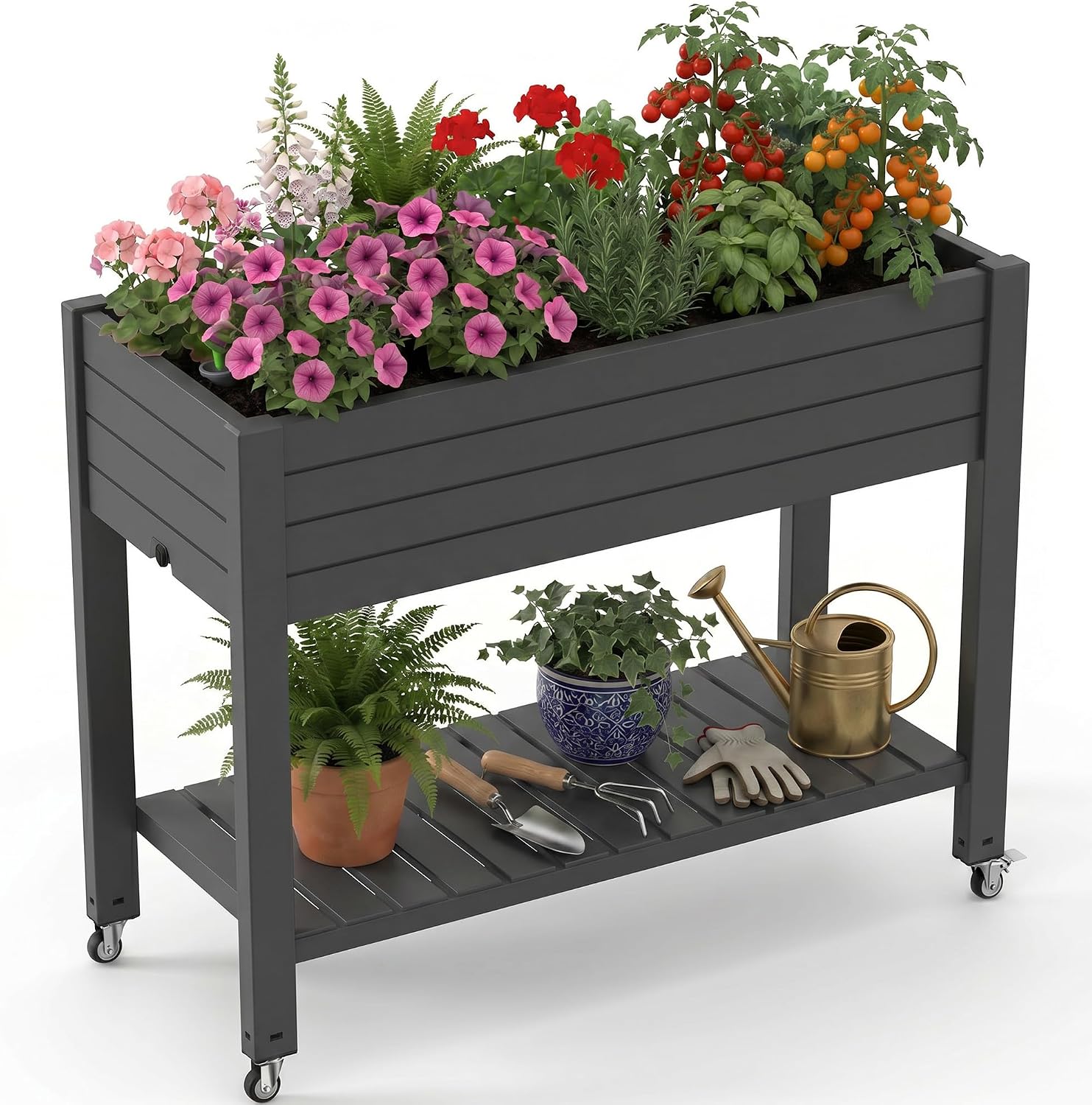
| Capacity | 21 gallons |
|---|---|
| Number of Levels | 4 |
| Other Special Features of the Product | Drainage Hole |
| Mounting Type | Floor Standing |
This EFU elevated raised bed is a practical option for home gardeners who want a compact, waist-high planting station that moves. It provides four separate planting zones and about 21 gallons of soil capacity, so you can keep herbs, lettuces, or small tomato varieties organized without spreading into the ground. The high-density resin construction and four reinforced support rods resist cracking and fading outdoors, while the built-in drainage holes and water-level monitor help prevent overwatering and root problems. Lockable casters make it easy to reposition the planter to follow sun or protect plants from bad weather, and the lower shelf stores small tools and pots to keep work tidy. Assembly is straightforward and should take about 20 to 25 minutes with the included manual. Limitations to note are the modest soil volume compared with full-size raised beds and the plastic construction, which may feel less substantial than metal or wood options to some buyers.
Best for: Buyers who want a low-effort, elevated planter for balconies, patios, or small yards and prefer a movable, easy-to-manage setup that reduces bending and soil mess.
Less Ideal for: Gardeners needing large soil volumes for deep-rooted vegetables or those who prefer traditional wood or metal raised beds for a heavier, permanent installation.
- Four separate planting zones for organized small-space gardening
- Lockable casters for easy mobility and placement adjustment
- Built-in drainage holes and water-level monitor to reduce overwatering risk
- Durable high-density resin construction with reinforced support rods
- Lower storage shelf keeps tools and pots close at hand
- 21-gallon capacity limits how large root crops or large tomato plants can grow
- Resin construction may not feel as heavy-duty as metal or thick cedar for long-term aesthetics
Verdict: This elevated, wheeled resin planter is the best pick for risk-averse gardeners who want a sturdy, low-maintenance, movable raised bed for compact vegetable and herb growing.
Choosing the Right Elevated Raised Bed Planter: Key Factors to Consider
Height and Ergonomics
Height determines how much bending or kneeling you avoid and how comfortable long tasks will be. Taller units let you garden from a standing position, which is kinder on knees and backs, but they can also be heavier and less stable in strong wind. Consider who will use the bed most often and whether a mid-height option with knee clearance or a waist-high model is the best fit.
Height interacts with plant choice. Shallower beds at standing height are fine for herbs and leafy greens, while deeper, taller beds work better for root crops and small shrubs. Account for ease of access to the center of the bed; very wide elevated beds can require a step stool or bench to tend plants in the middle.
Material and Weather Resistance
Materials dictate long-term maintenance and whether the bed holds up to rain, sun, and temperature swings. Common choices include rot-resistant wood, powder-coated metal, and recycled plastic composites. Each material behaves differently: untreated wood may warp or rot over a few seasons, metal can corrode unless properly finished, and composites resist rot but can retain heat.
Think about the local climate and whether you need UV resistance, rust protection, or a finish that can be refreshed. Also check for materials that are safe for growing edibles and that will not leach unwanted substances into the soil over time.
Drainage and Soil Management
Proper drainage prevents waterlogging and root rot and affects how often you need to water. Elevated beds should allow excess water to escape or provide a removable bottom for use on patios. Some designs include built-in drainage panels, mesh bottoms, or spigot access for flushing salts. Poor drainage forces shallow-rooted plants to suffer and makes soil compaction more likely.
Additionally, consider how easy it is to top up or replace soil. Beds that allow staged layering-coarse material below, then compost and topsoil-help with moisture retention and fertility. If you plan to rotate crops or refresh soil annually, a design with easy access and removable liners speeds the job.
Planting Depth and Root Space
Available soil depth limits what you can grow. Many herbs and lettuces thrive in shallower profiles, while carrots, beets, and many perennials need more depth. Evaluate the internal depth after any bottom panels or liners are installed, not just the external height of the frame.
If you intend to grow a mix of shallow and deeper-rooting crops, choose a bed that provides at least 12 inches of usable soil. For heavy-feeding vegetables or small shrubs, aim for 18 inches or more. Remember that soil settles over time, so initial depth should exceed the minimum required.
Stability and Site Compatibility
Stability affects safety and plant health. Taller or narrower beds can tip if not properly weighted or anchored, especially on uneven ground or exposed sites. Look for legs with wide footprints, cross-bracing, or options to stake or bolt the unit down. If you plan to place the bed on a deck or patio, check whether the design supports a sturdy base or can be fitted with adjustable feet.
Site compatibility also includes sun exposure, access to water, and how the bed integrates with pathways or raised garden layouts. Ensure the footprint fits available space while leaving room to reach plants from at least one side without overreaching.
Assembly, Maintenance, and Access
Time and skill required to assemble the bed matter for gardeners who prefer quick setup. Some kits use simple hardware with clear instructions, while others need power tools and precise adjustments. Consider whether replacement parts are available and how easy it is to repair a damaged panel or leg.
Maintenance includes cleaning, checking fasteners, and refreshing soil. Designs that allow easy removal of boards or liners for winter storage or pest control will reduce long-term upkeep. Also think about access logistics if you will add compost, soil, or plants frequently.
Best Sites for Elevated Beds
Elevated beds work well on lawns, patios, and balconies because they lift soil off the ground and create a controlled planting environment. For lawns and garden beds, set the unit level and clear grass to prevent weeds from invading the soil. On hard surfaces like concrete, choose a bed with a removable bottom or a mesh panel to allow drainage.
Place beds where they receive the right amount of sun for your crops and near a water source to simplify irrigation. Consider access from multiple sides if you plan intensive planting or succession crops.
- Sunny vegetables: south- or west-facing locations
- Herbs and shade-tolerant plants: eastern exposure or partial shade
- Avoid full wind corridors that can dry soil and stress plants
Soil Mixes That Work Best
A light, fertile mix gives elevated beds better drainage and faster root growth than heavy garden soil. Aim for a mix of compost, quality topsoil, and a drainage component such as coarse sand or horticultural grit. For a ready strategy, layer coarse material at the bottom, then a compost-rich middle layer, and a lighter top layer tailored to the crops you plant.
Avoid using only heavy clay or pure garden soil, which compacts more quickly and reduces root oxygen. Add organic matter annually to maintain soil structure and fertility.
- Standard mix: 40% topsoil, 40% compost, 20% drainage amendments
- Add worm castings or slow-release organic fertilizer for heavy feeders
- Monitor soil moisture and adjust mix with extra organic matter if it dries too fast
Irrigation and Watering Tips
Elevated beds can dry faster than in-ground beds because they warm earlier and sit in the air. Use drip irrigation or soaker hoses under the surface mulch to provide consistent moisture and reduce evaporation. Watering early in the morning helps plants use moisture efficiently and reduces fungal risk.
Mulch the surface to conserve moisture and lower maintenance. If your bed is on a hard surface, ensure runoff has a safe direction or use contained trays to prevent staining.
- Install drip tubing before planting to tuck it under the root zone
- Use moisture meters or a finger test to avoid overwatering
- Top-dress with compost mid-season to replenish nutrients
Seasonal Care and Overwintering
In colder climates, elevated beds cool faster and may freeze at the root zone earlier than in-ground plots. To protect overwintering crops, add insulating mulch or removable skirt panels to reduce wind chill. For beds on balconies or decks, consider moving potted elements inside or wrapping sides with breathable insulation.
Empty beds at the end of heavy-growing seasons if pests or diseases were present and replace or refresh soil. Storing small parts or detachable legs indoors can prolong the life of the unit.
- Remove spent plants and add compost in fall
- Cover beds with row cover or frost cloth for late-season protection
- Drain and clean beds before prolonged storage to prevent mildew
Companion Planting and Crop Rotation in Elevated Beds
Elevated beds are ideal for intensive planting and companion strategies because the confined soil is easier to amend and rotate. Plan beds so root depths and nutrient needs complement each other, for example pairing shallow herbs with deeper-rooted vegetables in adjacent beds. Rotate plant families between beds each season to break pest and disease cycles.
Because soil volume is finite, replenish nutrients regularly with compost and targeted amendments rather than relying on extensive in-ground fertility.
- Group plants by water needs to simplify irrigation
- Use succession planting to maximize yield from a single bed
- Rotate nightshades, brassicas, and legumes among beds annually
How We Chose the Best Elevated Raised Bed Planter
We shortlisted elevated raised bed planters based on attributes that matter for real garden use rather than marketing claims. First, build durability: we prioritized materials and joinery that resist rot, corrosion, and warping because long service life reduces maintenance in outdoor conditions. Second, drainage and soil management: adequate bottom drainage and the ability to add soil layers or liners determine plant health and watering frequency. Third, planting depth and usable volume: beds must provide enough soil for roots of intended crops, with deeper profiles favored for vegetables and small shrubs. Fourth, stability and siting flexibility: we considered how well units sit on uneven ground, whether they can be anchored, and if they can be used on patios or over hard surfaces. Fifth, ease of assembly and maintenance: simpler builds with replaceable parts and accessible interiors make seasonal care easier. We excluded options that require permanent in-ground installation or extensive on-site carpentry because they do not meet the elevated, ready-to-use scope of this roundup. We also filtered out units that lack basic drainage or offer impractical planting depth for common edibles. The final picks reflect those usable-for-most-gardeners tradeoffs and the scoring criteria above.
FAQ
How deep should an elevated raised bed planter be for vegetables?
Depth depends on the crops. Leafy greens and herbs do well in 8 to 12 inches of soil, while most root vegetables and tomatoes prefer 12 to 18 inches. Allow extra depth for soil settling and root expansion.
Can I use an elevated bed on a balcony or patio?
Yes, provided the bed allows drainage and the surface can support the weight when filled with soil. Use a removable bottom or drainage tray and verify load limits for balconies.
What is the best way to prevent waterlogging in an elevated planter?
Ensure the bed has adequate bottom drainage, use a well-draining soil mix, and avoid compacting the soil. Installing a layer of coarse material or a mesh drain panel helps excess water escape.
Do elevated beds need special soil mixes compared with in-ground beds?
Elevated beds benefit from lighter, richer mixes that improve drainage and root growth. Mixing compost with topsoil and a drainage amendment gives better results than heavy garden soil alone.
How often should I refresh the soil in an elevated raised bed planter?
Top up with compost or amendments each season and replace or deeply refresh soil every two to four years depending on crops and how intensively the bed is used. Frequent heavy feeders may require more regular replenishment.
Final Verdict
Elevated raised bed planters make gardening more accessible and can improve drainage and soil control, but choosing the right height, material, and planting depth is key. Prioritize build durability and usable soil volume for the crops you intend to grow, and plan for drainage and maintenance needs. With the right tradeoffs-stable legs for windy sites, deeper profiles for root crops, or lightweight materials for balconies-you can pick an elevated bed that reduces strain while supporting productive, low-maintenance growing.
