

Note: This article contains affiliate links. If you click on these links and make a purchase, I may earn a small commission at no extra cost to you. This helps support my research and content. Read my full affiliate disclosure here.
Wisteria is a dramatic, long-lived climber that needs a trellis built to handle thick woody stems and heavy seasonal blooms. The right Wisteria trellis gives vines solid anchorage, protects nearby structures from invasive suckering, and presents fragrant flowers where you want them. In this guide we shortlisted five top trellis designs suited to heavy wisteria growth and common garden situations. Each pick was evaluated for structural strength, resistance to the elements, and ease of installing and training large stems. Read on to see how different trellis styles will perform in sun, wind, and over time so you can pick the support that matches your site and pruning plan.
Top Picks at a Glance
| Best Overall The best all-around choice for most situations | Outvita 7 ft Metal Garden Arch Arbor Trellis |  |
| Best Quality Built to a higher standard if you want something more solid | Adorox Heavy-Duty Metal Garden Arch Trellis (7.3 ft) |  |
| Highest Rated A top-rated pick with lots of positive feedback | H Potter Garden Trellis 77" Tall Freestanding Iron Screen |  |
| Most Popular A crowd favorite that many people choose with confidence | Adorox Metal Garden Arch Trellis, Powder-Coated Black |  |
| Best Seller A high-volume bestseller chosen again and again | RUBFAC 7.8 ft Metal Garden Arch Trellis |  |
Outvita 7 ft Metal Garden Arch Arbor Trellis

| Material Type | Iron |
|---|---|
| Finish Type | Powder Coated |
| Item Type Name | Garden Arch |
| Item Highlight | Heavy Duty Metal Arbour With 7 inch Ground Stakes |
This Outvita 7 ft metal garden arch is a sturdy powder-coated iron arbor intended to support climbing plants and serve as a decorative entrance or event backdrop. It assembles from pre-drilled sections with included hardware and reinforced nuts, so two people can put it together quickly and stake it into the ground. The arch’s double-layer frame and eight ground stakes that insert deep into soil give it extra stability for vines and heavy-flowering climbers. Its smooth, vintage-style lines make it attractive even before plants fill it in, and the powder coat helps resist weathering. Practical benefits include strong structural support for wisteria or roses, an instant focal point for a path or garden gate, and suitability for wedding or party decoration. Important limitations are that it must be securely staked in place and installed on firm ground to resist tipping in high winds, and like any metal structure it will need occasional touch-up if the finish is scratched over time.
Best for: Gardeners who want a durable, decorative trellis to support heavy climbers and create a planted entry or event backdrop and who prioritize stability and longevity over a lightweight, portable frame.
Less Ideal for: People who need a temporary, easily moved trellis or who plan to install supports on hard surfaces without the ability to stake deeply into the soil.
- Powder-coated iron frame provides durable weather resistance
- Double-layer design with eight ground stakes for increased stability
- Pre-drilled parts and included hardware speed assembly
- Attractive arch shape creates an instant garden focal point suitable for events
- Requires firm ground and secure staking to avoid tipping in strong winds
- May need occasional repainting or touch-up if the finish is scratched
Verdict: Choose this arch if you want a robust, weather-resistant trellis that gives strong, long-term support for heavy climbers like wisteria while doubling as an attractive garden entrance.
Adorox Heavy-Duty Metal Garden Arch Trellis (7.3 ft)

| Material Type | Metal |
|---|---|
| Finish Type | Powder Coated |
| Load Tested | Up to 25 lbs |
| Shape | Single Arch |
This Adorox garden arch is a heavy-duty metal trellis built for real garden use rather than light decorative jobs. Its 16 mm steel tubes with thicker 0.5 mm walls and powder-coated finish give a rigid framework that holds climbing plants and small loads reliably. Typical use is as a walk-through entrance or focal point on a path where roses, clematis, wisteria or grapevines can be trained across the open lattice. It is load-tested to carry up to 25 pounds of evenly distributed weight, so it will support mature vines and a few hanging decorations without sagging. Assembly is straightforward and the open design lets plants weave through the frame for good air circulation and sun exposure. The arch is practical for garden structures and event backdrops, but it is not a heavy infrastructure piece for large trained trees or very heavy fruiting vines without additional anchors or bracing. For growers who need a durable, performance-oriented trellis for ornamental climbers, this arch delivers strong support in a compact footprint.
Best for: Gardeners who prioritize durable, performance-minded supports for ornamental climbers and want a ready-made arch to train wisteria, roses, clematis or similar vines into an entrance or focal point.
Less Ideal for: Growers needing a permanent heavy-structure trellis for large fruiting vines or trees should choose commercial-grade supports or reinforced custom installations.
- Robust 16 mm steel tubing with 0.5 mm wall thickness for improved rigidity
- Powder-coated finish resists weathering and reduces corrosion
- Open trellis frame supports training of roses, clematis, wisteria and other climbers
- Load tested to support up to 25 lbs of evenly distributed weight
- Not intended to bear very heavy fruit loads or support large trained trees without extra reinforcement
- May require anchoring in windy sites for reliable long-term stability
Verdict: A stiff, weather-resistant arch built to reliably support wisteria and other ornamental climbers for garden entrances and focal points.
H Potter Garden Trellis 77" Tall Freestanding Iron Screen

| Material Type | Cast Iron, Iron |
|---|---|
| Finish Type | Powder Coated |
| Item Highlight | Heavy-Duty 35 lbs – Solid Iron Privacy Screen – Metal Support for Climbing Plants |
| Integrated Ground Spikes | Two 8-inch spikes per panel |
This H Potter trellis is a robust freestanding screen built from cast iron and powder-coated steel, intended to give immediate vertical support for vigorous climbers such as wisteria. The hinged V-shape design lets you set it straight, in a corner, or as a self-supporting V panel to create a backdrop or privacy divider without additional framing. Each panel has two 8-inch integrated ground spikes for secure anchoring in garden beds, and the solid 35 lb construction and round center post reduce sway when supporting heavy vines. Assembly is straightforward and the powder-coat finish plus decorative finial give it a finished look in the landscape. Expect excellent long-term stability for heavy-flowering climbers, but because it is a metal panel rather than a lattice of thin slats, you may need to train young wisteria stems to weave through the openings or add ties during the first seasons. Also it is a single-panel unit best used as a series or paired pieces for a continuous support run.
Best for: Gardeners who prioritize a long-lasting, stable support for heavy-flowering climbers and want a freestanding, decorative screen that requires minimal additional bracing.
Less Ideal for: Those seeking a lightweight, temporary trellis or a fine-mesh lattice for delicate vines or espalier training should consider other, lighter designs.
- Solid cast iron and iron construction for strong, long-lasting support
- Hinged V-shape lets you position the panel straight, angled, or in a corner for flexibility
- Integrated 8-inch ground spikes provide deep anchoring without extra hardware
- Powder-coated finish resists weathering and presents a decorative appearance
- Single panel design may require multiple units for longer runs or large wisteria specimens
- Heavier weight makes moving or repositioning the panel by one person more difficult
Verdict: Choose this trellis when you need a heavy, weather-resistant freestanding support that will reliably hold mature wisteria and other vigorous climbers.
Adorox Metal Garden Arch Trellis, Powder-Coated Black
| Material Type | Metal |
|---|---|
| Finish Type | Powder Coated |
| Shape | Single Arch |
| Size | Standard |
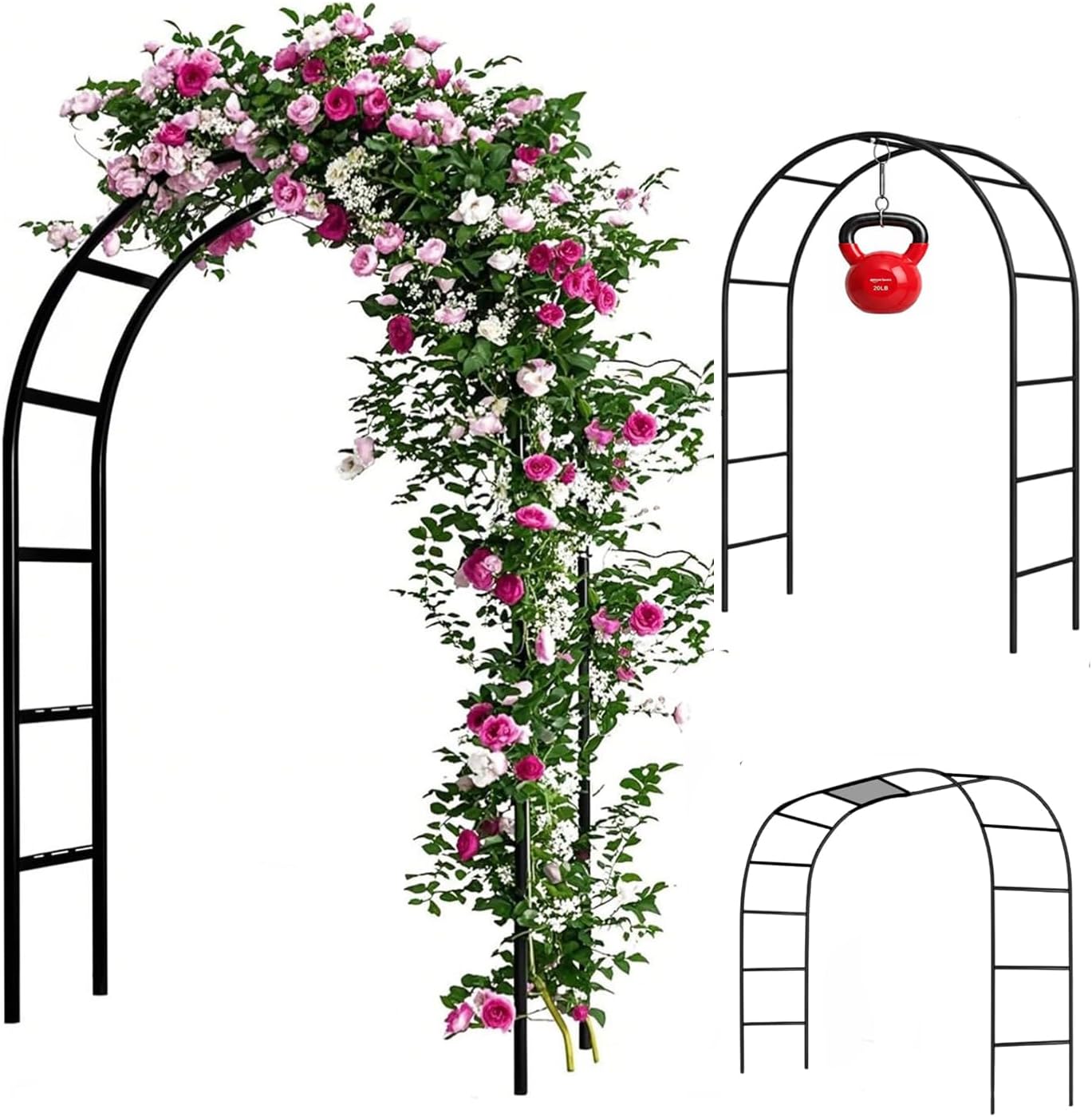
This Adorox garden arch is a straightforward metal arbor that gives climbing roses, clematis, vines, or seasonal decorations a neat vertical framework. It arrives as sectional metal pieces with a powder-coated finish and assembles in simple steps to create a single arched entrance or focal point for a walkway, garden bed, or event backdrop. The open-frame design lets plants weave through the bars and provides height without blocking sightlines, while the powder coating helps resist rust in typical outdoor conditions. Because it is relatively lightweight and sectional, it is easy for two people to position and plant around, and it is also simple to dress with string lights or fabric for celebrations. Expect to secure it into the ground or use anchors before loading with heavy mature vines, since the slim metal sections will perform best when planted with lighter to moderate climbers rather than very heavy, established growth. Assembly is convenient but may require basic tools and a second person to steady the arch while tightening connections.
Best for: Buyers who want an attractive, easy-to-install arch to add vertical interest and support for climbing plants or seasonal decor, and who prefer a straightforward product with visible user feedback to inform the choice.
Less Ideal for: Gardeners seeking a heavy-duty permanent arbor to bear large mature vines or climbing shrubs should look for a sturdier, commercial-grade structure with integrated anchoring.
- Simple sectional design that is easy to assemble and position
- Powder-coated metal finish improves resistance to outdoor corrosion
- Open-arch framework allows vines and flowers to weave naturally and creates visual height
- Lightweight enough for two people to handle and decorative enough for events or pathways
- Relatively lightweight construction needs anchoring before supporting heavy, mature vines
- No built-in ground stakes or heavy bases included for long-term high-wind stability
Verdict: A lightweight, powder-coated metal arch that quickly creates a decorative entry or plant support for garden paths and small to moderate climbers.
RUBFAC 7.8 ft Metal Garden Arch Trellis

| Material Type | Metal |
|---|---|
| Shape | Semicircular |
| Finish Type | Unfinished |
| Size | 7.8ft |
This RUBFAC metal garden arch is a lightweight semicircular trellis that works as a decorative entrance, event backdrop, or support for climbing plants. It ships as a multi-piece frame that snaps or screws together for relatively quick assembly and can be decorated with flowers, lights, tulle, or balloons for weddings and parties. As a plant support it gives vines and lighter climbers something to cling to and creates an attractive vertical focal point in a garden or along a walkway. The arch is intended for general outdoor use but the manufacturer notes it is not for areas with high wind or heavy rain and has some sharp metal edges to watch for during assembly. Because it is slim and inexpensive it is best for training lighter climbers rather than heavy woody vines and will need secure anchoring to avoid tipping in bad weather.
Best for: Buyers who want an easy-to-assemble decorative arch that can also support lightweight climbing plants and be dressed for weddings or garden entrances.
Less Ideal for: Gardeners who need a heavy-duty, permanent trellis for large woody climbers or anyone who cannot secure structures against wind should consider sturdier alternatives.
- Simple, quick assembly makes setup easy for events or seasonal displays
- Semicircular trellis shape creates an attractive entryway or focal point
- Works as both decorative arch and light plant support for vines and flowering climbers
- Lightweight pieces are easy to move and redecorate for different occasions
- Not rated for high winds or heavy rain so needs secure anchoring outdoors
- Lightweight construction is not suited to supporting heavy woody vines
- Metal pieces have sharp edges that require careful handling during assembly
Verdict: A lightweight, easy-to-decorate metal arch that provides a quick decorative trellis solution for lightweight climbers and event backdrops.
Choosing the Right Wisteria Trellis: Key Factors to Consider
Material and Corrosion Resistance
The construction material determines how a trellis ages under sun and rain. Steel or wrought-iron frames are strong but need powder coating or galvanizing to resist rust. Pressure-treated or rot-resistant hardwoods offer a traditional look but require proper sealing and periodic maintenance to avoid splitting where thick stems rub. Composite and PVC options resist rot but can flex more under heavy loads, so check cross-section thickness and connection details.
Choosing a material that matches your climate reduces long-term upkeep and the chance of structural failure. Coastal gardens and humid regions demand higher corrosion resistance than dry inland sites. Consider whether protective finishes can be refreshed easily and whether replacement parts such as bolts or anchor plates are standard sizes.
Load Capacity and Design Geometry
Wisteria develops thick, woody canes that can become very heavy when flower-laden. A trellis should be sized and braced to handle both static loads from mature stems and dynamic loads from wind and snow. Look for designs with reinforced cross members, diagonal bracing, or heavier-gauge framing where vines attach.
Geometry matters for training: wide, flat panels offer good support for espaliered or fan-trained forms while arbors and arches distribute weight across multiple posts. For free-standing structures, post depth and footings determine how well the support resists tipping under the combined pull of the vine and wind.
Anchoring and Installation Requirements
How a trellis is anchored affects long-term performance. Surface-mounted panels on masonry should use through-bolts with appropriate anchors. Ground-mounted posts need deep footings or ground anchors to resist levering forces from heavy vines. Temporary or shallow stakes may be fine for young plants but will fail as wisteria matures.
Consider the skills and tools required for installation. Some heavy-duty supports require concrete footings or masonry anchors. If you prefer a simpler install, look for kits with clear instructions and hardware designed for common soil types and wall materials.
Access for Pruning and Training
Wisteria benefits from annual pruning and occasional major cane management. A trellis that allows easy access to stems and flowers will save time and prevent botched cuts. Open lattice with generous gaps makes it easier to reach interior canes without forcing tools in tight spaces, while arbors and pergolas should provide routes to climb a ladder safely for crown work.
Also consider how the trellis presents blooms. Some designs let flowers hang freely for showier displays, while others crowd clusters or restrict airflow, which can affect flowering and disease risk.
Size, Proportion, and Site Fit
Match trellis height and width to the plant and planting location. A trellis that is too small will quickly be overwhelmed; one that is too large may overpower the garden or cast unwanted shade. Account for the mature spread and expected cane thickness when planning post spacing and panel size.
Think about proximity to buildings, fences, and walkways. Wisteria can send suckers and heavy stems into adjacent structures, so choose a trellis that keeps the main framework at a safe distance or provides controlled direction for growth.
Maintenance and Repairability
Even the sturdiest trellis will need periodic attention. Fasteners can loosen, coatings can fail, and wood can split where ropes and ties rub. Prefer designs with replaceable components such as bolts, cross slats, or attachable panels. Simple maintenance tasks like tightening anchors, reapplying sealant, or swapping out a slat are less daunting when parts are modular.
Also consider how easy it is to remove and reposition ties and training wires. Materials that snag or abrade stems accelerate wear on both canes and the support. Choose finishes and profiles that minimize friction and make routine pruning and retieing straightforward.
Trellis Styles Suited to Wisteria
Different trellis styles perform differently with heavy woody vines. Flat wall-mounted panels and lattice are common for espalier or trained stems against a building, while freestanding arbors and pergolas create overhead displays and provide multiple anchor points.
Arbors and pergolas spread weight across several posts and are a good choice when you want an entryway or shaded walk beneath bloom-laden branches. Wall-mounted supports save space and let you use a house wall as a heat-reflective backdrop to encourage flowering.
- Wall-Mounted Panels: Good for space-saving and using building heat.
- Freestanding Arbors: Best for heavy, long-term displays and multiple anchor points.
- Lattice Panels: Simple to access for pruning and training.
- Arches and Frames: Create feature points but need strong footings.
Preparing the Site and Footings
Proper footings make the difference between a trellis that lasts decades and one that leans or collapses. For ground-mounted posts, dig to frost depth where winters are cold and set posts in concrete where soil is loose or the vine load is high. Compact soils with good drainage reduce rot risk for wood posts.
For wall-mounted supports, evaluate the wall substrate and use anchors rated for the expected lateral forces. Keep the trellis a few inches from the wall to allow air circulation and inspection access.
- Check soil type before choosing footing depth.
- Allow air gap between trellis and masonry to prevent moisture trapping.
- Use through-bolts for heavy loads on solid walls.
Training Techniques for Long-Term Support
Start training young plants onto the trellis with soft ties and regular positioning so canes follow the desired paths. Secure main scaffolding canes first and remove competing shoots to direct energy into the framework you want to keep.
As stems thicken, move from soft ties to adjustable wire or woven ties to avoid girdling. Prune annually after flowering to maintain structure and reduce weight; heavy pruning cycles may be needed to prevent overloading the support.
- Tie canes loosely and check ties each season.
- Establish primary scaffold canes early for best load distribution.
- Prune after bloom to control vigor and reduce wind load.
Finishing and Protective Treatments
Treat wooden trellises with appropriate sealants or preservatives to slow rot at the ground interface. For metal supports, inspect coatings yearly and address any chips or corrosion spots promptly to prevent spread.
Consider finish colors that blend with the garden or reflect light to boost bloom visibility. A finish that hides dirt and water stains reduces the need for frequent cleaning.
- Use compatible sealants for pressure-treated wood.
- Touch up metal coatings to prevent rust progression.
- Choose finishes that balance appearance and durability.
Dealing with Very Large or Old Wisteria
Mature wisteria can require major structural thinking. If you inherit an old plant with thick, woody trunks, retrofit the support by adding independent posts and transferring weight gradually rather than forcing the vine onto a flimsy existing frame. Splitting stems and sudden removal of structural canes can destabilize both plant and support.
Sometimes it is practical to divide growth between multiple supports or install a continuous pergola that spreads load across many posts. When in doubt, stage heavy pruning over multiple seasons to avoid shocking the vine and creating unbalanced weight distributions.
- Add independent posts rather than relying on a weak existing frame.
- Shift heavy canes slowly to a new support over seasons.
- Consider professional advice for very large or historic specimens.
How We Chose the Best Wisteria Trellis
We focused on criteria that matter when supporting vigorous woody vines such as wisteria. Strength and load capacity were primary filters since mature wisteria can put heavy bending and shear forces on a support. We tested specification data and construction details to judge how each trellis resists sagging, splitting, and anchor failure. Weather resistance and material longevity were weighed next, favoring corrosion-resistant metal, pressure-treated wood, or rot-resistant finishes that stand up to repeated wet-dry cycles and freeze-thaw conditions. Ease of installation and anchoring was assessed to reflect real garden setups, including options for soil anchors, wall mounts, and free-standing bases. Training and maintenance features were considered, such as slat spacing, trellis geometry, and access for pruning and tying large canes. We excluded anything intended only for lightweight annual vines or decorative uses that cannot reliably carry heavy woody stems. The final list highlights supports that meet season-after-season strength, weathering, and access requirements for established wisteria plants.
FAQ
How high should a trellis be for wisteria?
Height depends on the display you want, but many gardeners use supports 6 to 10 feet tall for main scaffold canes and higher arbors for overhead blooms. Taller posts require deeper footings and stronger anchoring to handle leverage from heavy stems.
Can a wall support wisteria without damaging it or the structure?
A properly installed wall-mounted trellis keeps growing stems off the masonry, reducing direct attachment and damage. Use a freestanding or spaced panel with anchors sized for lateral loads and allow an air gap to prevent moisture buildup against the wall.
What maintenance do trellises need for long-term use with wisteria?
Regular inspections for loose fasteners, rot, or corrosion are essential. Tighten anchors, refresh protective finishes as needed, and replace worn ties. Annual pruning of the vine reduces excessive weight and prolongs the life of the support.
Is metal or wood better for supporting heavy wisteria?
Both materials can work if correctly specified. Metal offers higher tensile strength and thinner profiles but needs good corrosion protection. Wood gives a classic look and good compressive strength but must be treated and installed with robust footings to avoid rot at ground level.
How do I prevent wisteria from breaking a trellis in wind or storms?
Choose a design with diagonal bracing and secure anchoring, and maintain pruning to reduce sail area. For particularly exposed sites, distribute the vine across multiple supports or use heavier-gauge materials to resist dynamic wind loads.
Final Verdict
Pick a trellis that matches the long-term demands of wisteria: strong materials, solid anchoring, and a geometry that spreads weight and allows easy pruning. Prioritize structural strength and weather resistance if you expect large, flower-laden canes or an exposed site. If installation complexity is a concern, choose supports that offer clear footing requirements and replaceable components so adjustments are manageable over time. With the right support and regular training, you will protect nearby structures and enjoy fuller flowering displays season after season.
