

Note: This article contains affiliate links. If you click on these links and make a purchase, I may earn a small commission at no extra cost to you. This helps support my research and content. Read my full affiliate disclosure here.
If you manage a medium to large landscape, the right 12 zone irrigation controller makes the difference between consistent plant health and wasted water. A properly configured controller coordinates multiple valve zones, adapts to seasonal changes, and reduces manual trips outside so your irrigation runs when it should and shuts off when it should. This guide shortlists six top options currently appropriate for the Best 12 Zone Irrigation Controller scope. We focus on programmable features, practical weather-sensing behavior, and installation realities so you can pick a controller that fits your wiring, irrigation layout, and maintenance comfort. Read on for the decision factors that mattered in our selection and what to check before you buy.
Top Picks at a Glance
| Best Overall The best all-around choice for most situations | Hunter PRO-HC PHC-1200 12-Station Wi‑Fi Irrigation Controller with Hydrawise |  |
| Best Quality Built to a higher standard if you want something more solid | Rain Bird ESP-TM2 12-Station Indoor/Outdoor Irrigation Controller |  |
| Best Value The sweet spot between price and what you get | ImoLaza ET Master 12-Zone Wi‑Fi Smart Sprinkler Controller |  |
| Best Budget The cheapest option that still gets the job done reliably | Orbit Easy Set Logic 12-Station Indoor/Outdoor Sprinkler Timer (Model 57900) |  |
| Highest Rated A top-rated pick with lots of positive feedback | ImoLaza Ultra 12-Zone Wi‑Fi Smart Sprinkler Controller |  |
| Most Popular A crowd favorite that many people choose with confidence | Orbit B-hyve Smart Indoor/Outdoor 12-Zone Sprinkler Controller |  |
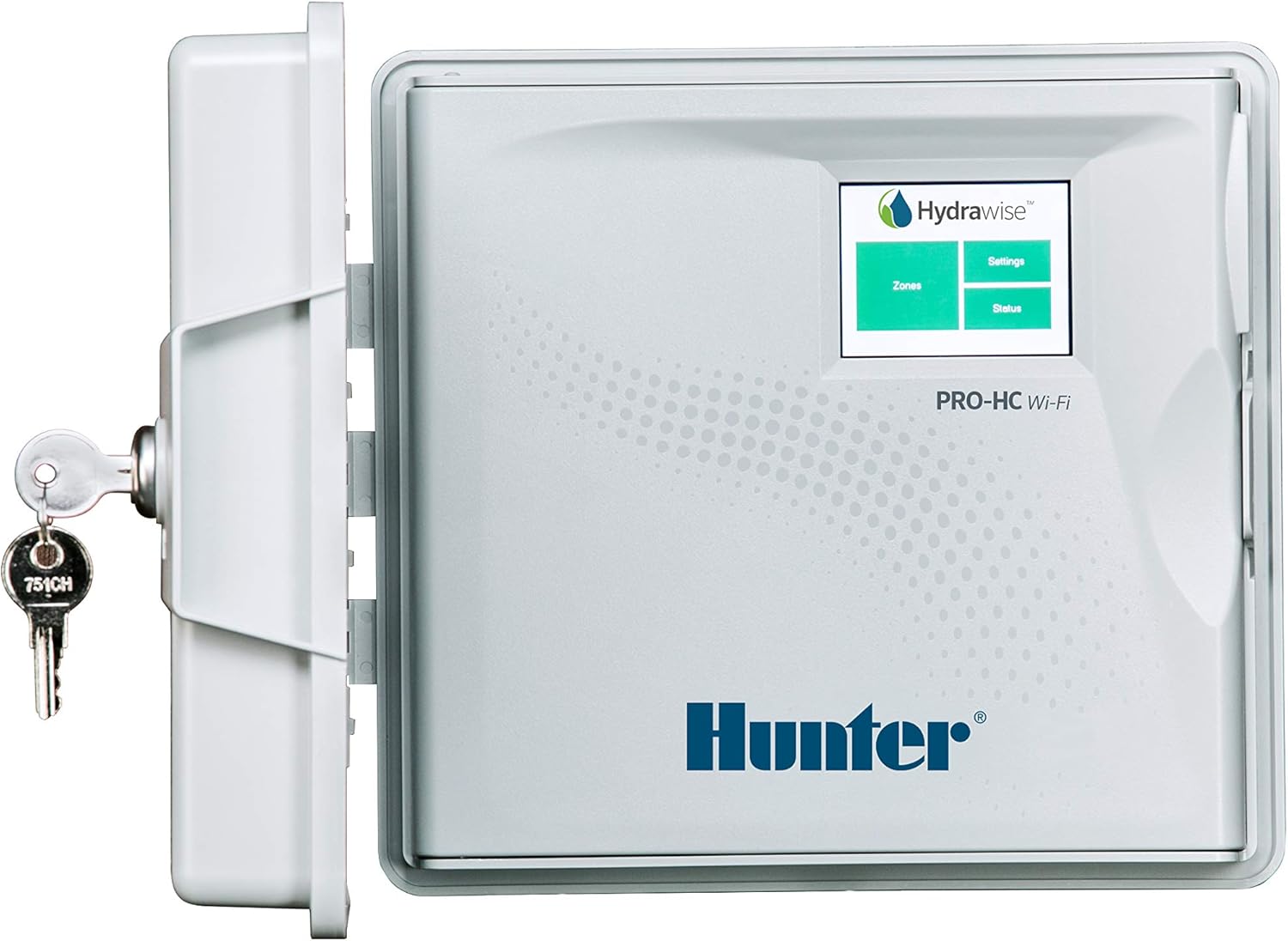
Hunter PRO-HC PHC-1200 12-Station Wi‑Fi Irrigation Controller with Hydrawise
| Unit Count | 12 Count |
|---|---|
| Voltage | 120 volts |
| Display Type | LCD or LED |
| Material Type | Plastic |
The Hunter PRO-HC PHC-1200 is a professional-grade 12-station Wi‑Fi irrigation controller designed for reliable residential use. It connects to Hunter's Hydrawise web-based platform so you can create and adjust schedules remotely, monitor run times, and receive system warnings. The unit installs in place of a standard controller and provides an LCD display for local programming plus automatic seasonal adjustments when linked to weather data. Build quality is typical of Hunter equipment with a plastic enclosure and standard 120V power. Practical benefits include centralized control of multiple zones, reduced manual visits to the timer, and the ability to fine-tune watering based on weather forecasts. Limitations are that this model is focused on automated scheduling rather than advanced on-site diagnostics and it requires a stable Wi‑Fi connection and account setup to access the cloud features. It is best for users who prioritize dependable, remote-managed irrigation rather than ultra-simple analog timers.
Best for: Homeowners who need a dependable multi-zone controller and want to manage watering remotely using weather-based schedules and a web interface.
Less Ideal for: People who want a completely offline or ultra-simple mechanical timer or those without stable home Wi‑Fi who cannot use cloud features.
- Controls up to 12 irrigation stations for multi-zone yards
- Wi‑Fi connectivity with Hydrawise web software for remote scheduling and seasonal adjustments
- LCD display for clear local programming and status
- Standard 120V power compatibility for residential electrical systems
- Requires a reliable Wi‑Fi connection and Hydrawise account to access full remote features
- Plastic enclosure offers less ruggedness than metal weatherproof housings
Verdict: Buy this if you want a reliable 12‑station Wi‑Fi controller that puts remote, weather‑aware scheduling and centralized zone control at the center of your irrigation system.
Rain Bird ESP-TM2 12-Station Indoor/Outdoor Irrigation Controller

| Unit Count | 12 Count |
|---|---|
| Voltage | 120 volts |
| Display Type | LCD |
| Operating Temperature | 32 °C |
The Rain Bird ESP-TM2 is a straightforward 12-station irrigation controller designed for basic residential and light commercial irrigation systems. It provides three independent programs with up to four start times per program and an LCD display for easy setup and adjustments. Typical use is wall-mounted indoors or in a sheltered outdoor location to manage multiple valve stations and schedule repeat watering cycles. Notable features include the Extra Simple Programming interface for quick programming, durable plastic construction, and the ability to add Rain Bird’s LNK WiFi Module later if you want remote control without replacing the controller. Practical benefits are reliable zone control for performance-focused watering schedules and flexibility to tailor repeated starts across zones. Limitations are that WiFi capability is not built in and requires purchasing the separate module, and the unit lacks advanced onboard smart-sensor integrations or cloud features found on newer WiFi-native controllers.
Best for: Buyers who prioritize dependable, no-nonsense zone control and straightforward programming for a 12-zone landscape and who may add remote control later through an upgrade module.
Less Ideal for: Users who want integrated cloud or smart-sensor features out of the box or those who need built-in WiFi and app-based management immediately.
- Controls up to 12 independent stations for multi-zone watering
- Simple, familiar programming with 3 programs and 4 start times each
- Durable indoor/outdoor plastic enclosure suitable for typical installations
- Upgradeable to WiFi control via optional LNK module without replacing the unit
- WiFi requires a separately sold module rather than being built in
- No native smart-sensor or cloud-based scheduling features
Verdict: A solid, performance-focused 12-station controller that delivers reliable multi-zone scheduling now with an easy upgrade path to WiFi later.
ImoLaza ET Master 12-Zone Wi‑Fi Smart Sprinkler Controller

| Zones | 12 Count |
|---|---|
| Voltage | 120 volts |
| Display Type | LCD or LED |
| Operating Temperature | 140 °F |
The ImoLaza ET Master is a feature-rich 12-zone Wi‑Fi sprinkler controller built to replace a traditional timer and automate watering with minimal fuss. It installs as a DIY upgrade in roughly 15–30 minutes using the included screws, screwdriver and pre-labeled wire terminals, then connects to your home 2.4 GHz network and the ImoLaza app for remote control. The controller’s real-time ET algorithm and built-in weather intelligence automatically adjusts run times daily and will skip cycles for rain, high wind, freeze or saturated soil so you only water when needed. The app supports flexible scheduling including many start times per zone and voice control through Alexa or Google Assistant. Practical benefits include reduced water use, fewer manual schedule changes and alerts for abnormal system conditions. Limitations to note are the need for a 2.4 GHz Wi‑Fi network and basic comfort with wiring a controller replacement; advanced users expecting integrated soil or rain sensors can still add them but they are not required. This unit is well suited to homeowners who want large-zone smart watering and frequent automatic adjustments to save water and time.
Best for: Homeowners managing a larger yard who want to cut water use and hands-on schedule tweaking by letting an automated, weather-driven system handle daily adjustments.
Less Ideal for: People without reliable 2.4 GHz Wi‑Fi at the controller location or those who prefer a plug-and-play device that requires no wiring or setup.
- Real-time ET algorithm and hyperlocal weather intelligence automatically adjust watering and skip unnecessary cycles
- Built-in 2.4 GHz Wi‑Fi and free app provide remote scheduling and voice control without subscription
- Supports 12 independent zones for larger yards or complex landscapes
- Fast DIY installation with pre-labeled wires and included mounting hardware
- Requires a 2.4 GHz Wi‑Fi connection so remote features may be limited where Wi‑Fi is weak
- Basic electrical wiring and controller replacement skills are needed for installation
Verdict: If you need a 12-zone controller that intelligently reduces water use and largely automates scheduling, the ImoLaza ET Master delivers practical, weather-driven irrigation control without a subscription.
Orbit Easy Set Logic 12-Station Indoor/Outdoor Sprinkler Timer (Model 57900)

| Stations | 12 |
|---|---|
| Voltage | 24 volts |
| Programs | 3 programs, 4 start times per program |
| Run time | 1–240 minutes per zone |
The Orbit Easy Set Logic 12‑station timer provides a simple, dependable way to automate a medium to large residential irrigation system. It mounts indoors or outdoors in a locking weatherproof cabinet and uses a swing panel with push‑wire terminals to make wiring and zone setup quick for a DIY installer or contractor. Programming follows Orbit’s Easy‑Set logic with three independent programs, four start times per program, and per‑zone run times from 1 to 240 minutes, which supports cycle‑and‑soak scheduling and stacking of runtimes to avoid simultaneous valve draws. The unit includes battery backup to preserve programming, a rain delay and sensor relay, and a pump/main valve relay for systems that need a pump start. Practical benefits are straightforward: dependable basic automation, easy installation, and features that conserve water like rain delay and multiple start times. Limitations are that it is not a smart/wifi model so you cannot control or monitor it remotely, and it lacks auto‑weather adjustment found on modern smart controllers. For buyers prioritizing simplicity and low cost, it covers core needs without extra connectivity complexity.
Best for: Homeowners or installers who want an affordable, reliable 12‑zone controller that handles full manual scheduling and basic water‑saving features without the complexity of smart systems.
Less Ideal for: Users who want app control, cloud-based scheduling, or automatic weather‑based adjustments should choose a modern smart controller instead.
- Supports up to 12 independent stations with three programs and four start times per program for flexible scheduling
- Weatherproof locking cabinet with two keys allows indoor or outdoor mounting and tamper protection
- Easy wiring via swing panel and push‑wire terminals speeds installation and maintenance
- Battery backup preserves programming during power outages and surge protection helps protect the transformer
- Includes rain delay and relay for freeze/rain sensor plus pump/main valve start capability
- No Wi‑Fi or smart features for remote control or automatic weather adjustments
- Basic LCD interface and programming require manual changes for seasonal adjustments
Verdict: A budget‑friendly, no‑frills 12‑station controller that delivers reliable, easy‑to‑install irrigation scheduling for homeowners who do not need smart features.
ImoLaza Ultra 12-Zone Wi‑Fi Smart Sprinkler Controller

| Zones | 12 |
|---|---|
| Voltage | 120 volts |
| Display Type | LED |
| Operating Temperature | 140 °F |
| Material Type | Acrylonitrile Butadiene Styrene (ABS) |
The ImoLaza Ultra is a full‑featured smart sprinkler controller built for reliable, automated watering across up to 12 zones. It connects to Wi‑Fi and the ImoLaza app to create and run customized schedules, or it can continue operating from its internal real‑time clock if the network or power goes down. Key features include weather‑based and evapotranspiration adjustments, saturation skip per zone, smart cycle‑and‑soak, pump start delay, surge protection, and fault detection with app alerts. Those features translate to less manual scheduling, reduced runoff, and quick notices if a short or leak is detected. The unit supports flow and rain sensors and offers shared access and water‑use reports for monitoring. Trade‑offs to consider are that advanced setup (plant/nozzle/soil parameters and multiple program modes) takes time to configure and that full benefit depends on using the app and network features even though basic operation continues offline. For large residential yards or light commercial sites that need dependable, automated irrigation and protection from electrical faults, the Ultra delivers robust performance.
Best for: Buyers who prioritize a dependable, hands‑off irrigation system for a larger yard or light commercial site and want automated, weather‑adjusting control with system safeguards.
Less Ideal for: People who want a very simple, no‑app controller for a tiny yard or who prefer only mechanical timers without smart features.
- Weather‑aware scheduling with ET and smart weather skip reduces unnecessary watering.
- Per‑zone saturation skip and cycle‑and‑soak improve absorption and cut runoff.
- Built‑in fault detection, surge protection, and RTC keep the system running and alert you to problems.
- Supports sensors and pump start delay for compatibility with wells and commercial setups.
- Shared access, voice control, and water‑use reports simplify monitoring and multi‑user management.
- Advanced customization requires time in the app to input plant, soil, and nozzle parameters.
- Relies on the app for the easiest experience so users who avoid apps lose some convenience.
Verdict: If you need a robust, weather‑smart controller that continues running during outages and actively alerts you to faults, the ImoLaza Ultra is a reliable choice for larger residential or light commercial irrigation.
Orbit B-hyve Smart Indoor/Outdoor 12-Zone Sprinkler Controller

| Stations | 12 |
|---|---|
| Voltage | 110 volts |
| Display Type | LCD or LED |
| Operating Temperature | 70 °C |
The Orbit B-hyve 12-zone controller brings smart scheduling and remote control to a full-sized residential irrigation system. Install it on an indoor wall or mount it outdoors inside its weatherproof enclosure, wire up valves for up to twelve zones, then use the free mobile app to create custom programs, start or stop zones, and make on-the-fly adjustments from anywhere. The key feature is WeatherSense, which pulls local weather data to automatically reduce or increase watering so you do not overwater after rain or undersupply in dry spells. The LCD console provides a second way to program the controller on site. For practical homeowners this unit streamlines irrigation management across lawns, flower beds, vegetable patches, and drip lines and can be integrated with voice assistants. Limitations to note are that advanced commercial features are absent and setup requires basic wiring familiarity or a pro for complex systems. The plastic enclosure and typical interface keep installation and daily use straightforward while cutting water waste through automated, weather-aware scheduling.
Best for: Homeowners who want to optimize water use across a multi-zone yard with minimal daily intervention and who value remote control and weather-based automation.
Less Ideal for: Large commercial sites or installers needing enterprise features and advanced telemetry should consider controllers designed for professional irrigation systems.
- Supports up to 12 independent watering zones for flexible landscape layouts
- Wi-Fi and app control enable remote scheduling and manual operation from anywhere
- WeatherSense adjusts watering automatically using local weather data to save water
- Weatherproof indoor/outdoor enclosure allows outdoor mounting without extra housing
- Requires basic valve wiring and setup which can be challenging for beginners
- Controls and enclosure are plastic rather than heavy-duty materials preferred for harsh environments
Verdict: This controller is the practical choice for homeowners who want reliable multi-zone automation and water-saving weather intelligence with easy remote control.
Choosing the Right 12 Zone Irrigation Controller: Key Factors to Consider
Programming Flexibility and Zone Independence
How many independent programs and start times the controller supports matters because larger landscapes often need different watering cycles for lawns, beds, and containers. A controller that allows multiple start times per program and separate run durations per zone reduces the need for manual intervention. Seasonal adjustment options or percent-based seasonality let you quickly scale runtime across all zones without reprogramming each valve.
Look for controllers that let you group zones or run them individually so drip, spray, and rotor stations get the runtimes they need. Ease of setting up these programs is also important; complicated nested menus increase the chance of configuration errors that lead to under- or over-watering.
Weather Response and Sensor Compatibility
Real weather awareness prevents unnecessary irrigation and saves water. Controllers that integrate with local forecast services, accept wired or wireless rain sensors, or tie into soil moisture probes will suspend or modify schedules when precipitation or high soil moisture is detected. This avoids repeated soakings after heavy rain and reduces disease risk from overly wet soil.
Consider whether a controller uses simple rain-delay logic, a dedicated sensor input, or full smart algorithms that adjust runtimes based on evapotranspiration estimates. Compatibility with commonly used sensors matters if you plan to expand the system later.
Wiring Layout and Installation Practicalities
A 12 zone controller must handle the transformer capacity and terminal count for twelve stations plus master valve and pump start if needed. Clear, labeled terminals and sufficient space for common wire gauges make installation smoother. Indoor- and outdoor-rated enclosures change where you can mount the controller; outdoor-rated boxes protect against moisture but can be heavier to install.
Check for mounting hole patterns that match standard backboards, included wire labels or terminal strips, and whether the unit supports a separate 24VAC transformer or includes one. Consider whether the controller requires a neutral or specific circuit; simpler electrical requirements reduce installation headaches.
Interface and Remote Access Options
User interface affects daily management. A readable LCD and tactile buttons make on-site adjustments quick, while an intuitive mobile app or web access lets you manage schedules remotely. Remote access is especially useful for seasonal changes or when you travel.
However, cloud-dependent systems can introduce subscription costs or reliance on vendor services. Evaluate whether the controller offers local control independent of internet access and whether app features like zone-level run histories, push alerts, or firmware updates are straightforward and reliable.
Durability, Weatherproofing, and Serviceability
Controllers installed outdoors need robust enclosures and corrosion-resistant terminals to survive humidity, temperature swings, and pests. IP ratings or mention of UV-stable plastics indicate better outdoor longevity. For indoor installations, look for components that are easy to access for maintenance, such as replaceable fuses, accessible transformers, and clear wiring diagrams.
Serviceability also covers replacement parts and whether firmware or software updates are user-executable. A controller that is easy to repair or update reduces long-term ownership headaches.
Matching Controller Features to Typical Zones
Different zone types have distinct watering needs. Spray zones often need shorter run times and higher frequency, rotors require longer soak periods, and drip lines need low, steady runtimes. Map your 12 zones by plant type and irrigation hardware, then prioritize controllers that let you assign zone-specific durations and schedules so each station gets appropriate water without manual juggling.
- List your zone types and typical runtimes before shopping
- Prefer controllers that allow both percent-based seasonal adjustments and per-zone overrides
- Reserve a few spare terminals or plan for grouped zones if you anticipate future expansion
Using Sensors and Local Weather Data Effectively
Decide what level of weather integration you want. A simple wired rain sensor can stop irrigation during a shower, while smart controllers that use forecast or evapotranspiration data can fine-tune run times across the entire system. Place rain or soil sensors where they represent average site conditions, not under tree canopies or right next to downspouts.
- Install rain sensors with clear sky exposure
- Calibrate soil sensors to the rooting depth of your primary plantings
- Test sensor fail-safe behavior to ensure irrigation resumes properly after dry periods
Practical Wiring Tips for 12 Zones
Organize zone wiring by labeling both ends before connecting to the controller. Use common color codes and leave slack in conduit runs for future repairs. If you plan to use a pump start or master valve, verify the controller provides the extra relay and that transformer capacity supports the added load.
- Label wires with zone numbers at both the valve and controller ends
- Measure transformer VA requirements before adding a pump relay
- Group wiring in conduit or wireways to simplify troubleshooting
Planning for Seasonal Adjustments and Water Restrictions
Know local watering restrictions and plan schedules that can be easily reduced during drought. Controllers with simple percentage-based seasonal adjustments let you quickly scale back without reprogramming. For more precision, choose systems that allow weekday-only schedules, skip days, or cycle-and-soak to prevent runoff on slopes.
- Pre-save a reduced season profile for drought periods
- Use cycle-and-soak to minimize runoff on steep zones
- Automate weekday or odd-even schedules if required by local ordinances
Maintenance and Troubleshooting Checklist
Regular maintenance keeps a 12 zone system reliable. Inspect valve boxes for debris, check solenoid connections, and test each zone at least once per season. Keep a wiring diagram and notes about any manual overrides handy so you can diagnose issues quickly when a single zone behaves differently from the rest.
- Run a manual system check after winterization and before peak season
- Record any wiring changes in a simple diagram stored with the controller
- Replace corroded terminal screws and keep a spare solenoid or fuse on hand
How We Chose the Best 12 Zone Irrigation Controller
Our selection focused on real-world reliability and ease of use for 12 zone irrigation systems. We prioritized programmable flexibility so gardeners can set multiple start times, independent run durations, and seasonal adjustments across a dozen zones. Weather responsiveness was a second core filter, including native support for local forecast data, compatibility with external rain or soil moisture sensors, and simple freeze- or rain-delay logic. Installation and wiring practicality were evaluated to ensure controllers fit common backboards, handle 12-station transformer loads, and offer clear terminal layouts. Durability under outdoor conditions and protection levels for common garage or exterior mounting were considered. We also assessed user interface clarity, ranging from straightforward local controls to mobile app convenience for remote adjustments. Excluded items included multi-zone smart hubs that require bulky third-party subscriptions or obscure wiring adapters. Specialty controllers designed exclusively for commercial irrigation with unsupported voltages were not considered. In short, we selected controllers that balance dependable 12-zone operation, sensible weather integration, clear installation, and user-friendly programming.
FAQ
Do I need a 12 zone controller if I have fewer than 12 valves?
Not necessarily. A 12 zone controller gives room to expand without changing hardware, but if you are certain you will never add more than six to eight zones, a smaller controller can be simpler and cheaper to wire. Consider future landscape plans before deciding.
Can a 12 zone controller run a master valve or pump start?
Many 12 zone controllers include a relay for a master valve or pump start, but not all do. Check the controller specifications for auxiliary relay outputs and ensure the transformer and relay ratings match your pump or master valve requirements.
Is Wi-Fi or cloud connectivity necessary for good irrigation control?
Wi-Fi and cloud features add convenience for remote adjustments and some automated weather corrections, but they are not essential. Local control with onboard seasonal adjustments and sensor inputs can provide reliable performance without internet dependency.
How do I size the transformer for a 12 zone controller?
Transformer sizing depends on the number of active solenoids that may be energized simultaneously and the VA draw of each solenoid. Use the controller documentation to calculate total VA needs, and include extra capacity if you plan to run additional relays or large master valves.
Where should I mount a 12 zone controller?
Mount controllers where wiring runs are shortest and the unit is protected from direct weather if it is not outdoor rated. Garages or utility rooms are common options for indoor-rated controllers; outdoor-rated enclosures can be wall-mounted near the supply manifold for convenience.
Will a smart controller save water in all landscapes?
Smart controllers can reduce unnecessary irrigation by using weather data and sensors, but savings depend on proper setup. If zones are incorrectly programmed or sensors are poorly placed, a smart controller will not automatically save water without correct configuration.
Final Verdict
Choose a 12 zone irrigation controller that matches how you water different parts of your landscape and how comfortable you are with wiring and tech features. Prioritize controllers that make it straightforward to assign zone-specific run times, accept sensor inputs, and offer clear seasonal adjustments. If you prefer hands-off management, favor reliable weather integration and remote access, but if simplicity and local control matter more, pick a unit with robust manual programming and sensor compatibility. Think through installation logistics, transformer capacity, and maintenance needs before committing. With the right balance of programming flexibility, sensor support, and installation practicality, a 12 zone controller will keep your garden evenly watered while reducing waste and routine chores.
