

Note: This article contains affiliate links. If you click on these links and make a purchase, I may earn a small commission at no extra cost to you. This helps support my research and content. Read my full affiliate disclosure here.
If you grow indoors or in a controlled greenhouse, picking the right 630W CMH grow light changes how plants develop from vegetative growth through flowering. These fixtures are chosen when you want a high-output lamp that leans toward a fuller, sunlight-like spectrum for truer color rendition and consistent canopy penetration. In this guide we shortlisted the top 5 630W CMH grow lights suitable for hobbyists and small commercial setups, then evaluated them by the factors that matter to growers. Expect evaluations covering light spectrum and PAR distribution, electrical efficiency and heat behavior, build and mounting convenience, and practical safety considerations. Read on to see which options best match your space and workflow.
Top Picks at a Glance
| Best Overall The best all-around choice for most situations | Sunshine Station 630W CMH Double-Bulb Grow Light Kit |  |
| Best Quality Built to a higher standard if you want something more solid | Plantmax EnergyStation 630W CMH Grow Light System (Reflector + Ballast) |  |
| Highest Rated A top-rated pick with lots of positive feedback | Luxx 630 CMH Full-Spectrum Grow Light |  |
| Most Popular A crowd favorite that many people choose with confidence | HIGHNOON CMH 630W Dual-Lamp CMH Grow Light Ballast (120V) |  |
| Best Seller A high-volume bestseller chosen again and again | HIGHNOON CMH 630W Dual-Lamp CMH Grow Light Ballast (240V) |  |
Sunshine Station 630W CMH Double-Bulb Grow Light Kit

| Light Source | Metal Halide |
|---|---|
| Wattage | 630 watts |
| Color Temperature | 3100 Kelvin |
| Light Output Maximum | 120000 lumens |
| Number of Light Sources | 2 |
This Sunshine Station 630W CMH Grow Lighting Kit is a full system aimed at indoor growers who want a sunlike spectrum from vegetative stage through bloom. The kit ships with two 315W 3100K CMH bulbs, a dimmable ballast (150/315/480/630W outputs), an aluminum reflector, hanger rope, power cord with adapter, and a network cable for control. In practice the high CRI 3100K output gives warm, broad-spectrum light that encourages compact, robust growth and reliable flowering. The reflector’s high reflectivity helps concentrate light into an approximate 6 to 9 sq ft coverage depending on power setting. The included dimmable ballast and app/push-button control let you scale output for cloning, veg, and full bloom while keeping input voltage flexible across 120 to 240V. Limitations are the warm 3100K color that some growers prefer to pair with higher Kelvin supplemental lighting, and the unit’s high power means proper ventilation and mounting are required. Bulb life and ballast warranty differ by component so plan for occasional replacement parts over multi-year use.
Best for: Growers who want a single, ready-to-install CMH system that covers cloning through bloom and value spectrum quality and adjustable output.
Less Ideal for: People with very small spaces, limited electrical capacity, or those who need a strictly cool-blue spectrum setup for early veg-only applications.
- Sunlike full spectrum from CMH bulbs suited for both vegetative and flowering phases
- Dimmable ballast with multiple output settings for flexible coverage and energy tuning
- Comprehensive kit includes reflector, bulbs, ballast, hanger and cords so it is ready to install
- High-reflectivity aluminum reflector concentrates light for effective canopy penetration
- 3100K color temperature is warm and may need supplemental cool-spectrum light for some crops
- High wattage requires adequate ventilation and electrical planning
Verdict: Buy this kit if you want a turnkey, adjustable 630W CMH system that delivers a sunlike spectrum for both veg and bloom.
Plantmax EnergyStation 630W CMH Grow Light System (Reflector + Ballast)

| Light Type | Metal Halide |
|---|---|
| Wattage | 630 watts |
| Indoor Outdoor Usage | Indoor |
| Control Method | App |
| Specification Met | UL |
The Plantmax EnergyStation is a 630W CMH (ceramic metal halide) grow lighting system that combines a premium MIRO hammertone reflector and integrated ballast in one unit. It is set up for indoor use on 120/240V and accepts PGZX18-base CMH lamps (bulb sold separately). The reflector claims about 95 percent reflectivity, which helps concentrate and evenly distribute CMH light over a canopy, while the included power cord and UL listing simplify installation. Control is handled with push-button controls and an app interface for basic operation. For growers focused on maximizing yield and light quality, this system delivers the spectral benefits of CMH with a robust reflector and built-in ballast, reducing the need to match separate components. The main limitations are that bulbs are not included and CMH systems run hot and consume significant power compared with LEDs, so growers should plan for ventilation and higher electricity usage. The unit is best where a proven, high-quality CMH spectrum and strong reflector performance are priorities.
Best for: Growers seeking high-quality CMH spectrum and strong reflector performance to maximize canopy light for serious indoor cultivation.
Less Ideal for: Casual hobbyists wanting low-maintenance, energy-efficient lighting or those who prefer plug-and-play LED fixtures with lower heat and power demands.
- All-in-one design with integrated ballast and reflector simplifies setup
- Premium MIRO hammertone reflector with high reflectivity for efficient light distribution
- UL listed and includes a 120/240V power cord for straightforward installation
- CMH spectrum favored by performance growers for broad, plant-friendly light quality
- Lamp/bulb is sold separately so additional purchase is required
- High power draw and heat output compared with modern LED alternatives
Verdict: Choose this EnergyStation if you want a high-performance 630W CMH system with a premium reflector and integrated ballast for serious indoor yields.
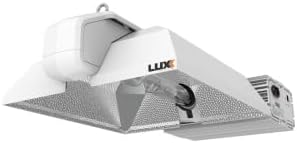
Luxx 630 CMH Full-Spectrum Grow Light
| Light Source | CMH Bulb |
|---|---|
| Wattage | 315 watts per lamp |
| Color Temperature | 4200 Kelvin |
| Number of Light Sources | 2 |
| Mounting Type | Ceiling Mount |
The Luxx 630 CMH is a robust ceiling-mounted grow fixture built around two 315W ceramic metal halide lamps that deliver a 4200K full-spectrum output intended for vegetative and flowering stages. It is typically installed in grow rooms or tents where a durable, high-output light source is needed; the unit runs cool enough for low-clearance setups and can be used singly or at scale in multi-light rooms. Notable features include dual 315W lamps with high CRI for natural color rendering, an over 95% reflective aluminum reflector to maximize usable light, and app control compatibility alongside push-button controls. Practical benefits are strong, even canopy penetration, reduced transplant and flower-transition shock thanks to CMH spectrum, and a metal housing with anti-rust finish for longer service life. Important limitations are the non-water-resistant design which requires careful placement away from humidity and drip, and the fixture is fixed-ceiling mount with non-removable components so it is less flexible for mobile or modular setups.
Best for: Growers who prioritize a dependable, high-output CMH fixture for stable, long-term indoor rooms or tents and want a durable unit that performs reliably across veg and flower cycles.
Less Ideal for: People who need a portable, modular lighting solution or who run very humid racks or open-water systems should consider alternatives designed for mobility and water resistance.
- Dual 315W CMH lamps (630W total) provide strong, full-spectrum output for veg and flower
- High CRI 4200K bulbs support accurate color rendering and healthy plant structure
- Over 95% reflective aluminum reflector increases light efficiency and uniformity
- Built from aluminum with anti-rust finish for improved durability in indoor grow rooms
- Not water resistant so it cannot be used in humid or wet locations without protection
- Fixture is ceiling-mounted and non-removable, limiting portability and reconfiguration
Verdict: Choose the Luxx 630 CMH when you need a durable, high-output CMH fixture that delivers reliable full-spectrum light for serious indoor veg and flower rooms.
HIGHNOON CMH 630W Dual-Lamp CMH Grow Light Ballast (120V)

| Wattage | 630 watts |
|---|---|
| Light Source Wattage | 315 watts |
| Color Temperature | 4000 Kelvin |
| Power Source | AC |
This HIGHNOON CMH 630W dual-lamp ballast is built for growers who need a high-output CMH system without a bulky fixture. It powers one or two 315W CMH bulbs and is rated for 630 watts total, while claiming about 60% lower energy draw than a 1000W HPS setup, which translates to lower electrical load and heat. The slim, wall-mountable profile makes it easy to install in tight spaces and lets you run multiple ballasts on a single 20A 240V circuit for larger tents or rooms. Controls are simple push-button type with app-listed control method noted, and it accepts standard AC power. Practical benefits include reduced wiring complexity when scaling and compatibility with 4000K CMH bulbs that give broad-spectrum light for flowering and vegetative stages. Limitations are that the listing emphasizes HPS in some fields and the control details are sparse, so buyers should verify bulb compatibility and control integration before sizing a full grow room. There is also a one-year manufacturer warranty which is modest for long-term commercial use.
Best for: Growers who want a high-output CMH ballast that is space-efficient and energy-conscious, and who value peer-tested gear that scales across multiple fixtures.
Less Ideal for: Buyers seeking a fully integrated fixture with detailed smart controls or an extended commercial warranty should look at purpose-built LED fixtures or ballasts with clearer control specifications.
- Dual-lamp design runs one or two 315W CMH bulbs for flexible light output
- Compact, slim housing that is easy to wall-mount or fit in tight spaces
- Lower energy draw compared with a 1000W HPS setup, reducing circuit load and heat
- Supports running multiple units on a single 20A 240V circuit to simplify wiring when scaling
- Control details and app integration are not fully specified in the listing
- Manufacturer warranty is only one year, which may be short for heavy commercial use
Verdict: Choose this compact 630W dual-lamp CMH ballast if you need scalable, higher-output ceramic metal halide lighting that saves energy and fits into tight grow spaces.
HIGHNOON CMH 630W Dual-Lamp CMH Grow Light Ballast (240V)

| Wattage | 630 watts |
|---|---|
| Indoor Outdoor Usage | Outdoor |
| Power Source | AC |
| Controller Type | Push Button |
This HIGHNOON CMH 630W dual-lamp ballast is a compact wall-mountable unit intended to power ceramic metal halide grow bulbs for greenhouse or outdoor plant lighting. It supports one or two CMH lamps from a single ballast, so you can run a single bulb or add a second without swapping equipment. The unit is rated for 630 watts and is designed to be energy efficient compared with traditional 1000W HPS setups, letting you reduce circuit load and run more fixtures on the same 240V supply. Its thin profile and wall-mount form make installation in tight spaces straightforward, and the push-button control simplifies on/off operation. Important limitations are that the ballast is a fixed non-removable fixture intended for AC hardwired or corded 240V use, so it requires proper electrical setup and is geared to outdoor or greenhouse environments rather than casual indoor hobbyists. The model also lists a one-year manufacturer warranty, so buyers who prioritize long-term coverage should plan accordingly.
Best for: Buyers who want a reliable, lower-energy alternative to 1000W HPS lighting for greenhouse or outdoor grow setups and prefer a straightforward wall-mounted ballast that can power one or two CMH bulbs.
Less Ideal for: Casual indoor growers with no access to 240V circuits or anyone who needs a portable, plug-and-play grow lamp rather than a fixed hardwired fixture.
- Dual-lamp design lets one ballast run one or two CMH bulbs for flexibility
- Energy efficient compared with a 1000W HPS setup, reducing circuit load
- Compact, thin profile made for wall mounting and tight installations
- Requires 240V AC wiring or compatible corded supply and professional installation if not experienced with high-voltage fixtures
- Fixture is non-removable which limits modular replacement or upgrades
Verdict: Choose this ballast if you need a compact, energy-efficient 630W CMH solution that can run one or two bulbs from a single wall-mounted unit.
Choosing the Right 630W Cmh Grow Light: Key Factors to Consider
Spectral Quality and Full-Spectrum Balance
Spectrum controls how plants partition energy between leaf growth, stem elongation, and flowering. CMH lamps are valued for a fuller spectrum that includes more visible and near-UV content than many HPS or plain LED fixtures. Look for lamps and fixtures that deliver a balanced spectrum across blue, green, red, and near-UV wavelengths because that balance promotes compact vegetative growth, accurate color rendering for inspection, and reliable flower development.
Spectrum also affects plant morphology. Too much red without adequate blue can encourage stretching, while added blue helps compact canopy structure. Near-UV components can stimulate secondary metabolite production in some crops. When comparing options, consider reported spectral power distribution and any third-party PAR or spectral charts to understand real-world output rather than marketing color claims.
PAR Output and Uniformity
Photosynthetically active radiation, or PAR, is the energy plants actually use for photosynthesis. A 630W CMH fixture should deliver strong PAR numbers across the intended canopy area rather than in a tight hotspot. Uniformity matters because uneven light forces growers to move plants or trim aggressively to avoid shaded zones and sunburned hotspots.
Consider both peak PPFD (photosynthetic photon flux density) values and average PPFD across the target footprint. Fixtures with wide, even spread and suitable reflectors or optics reduce the need for extra fixtures and simplify canopy management. If available, use manufacturer PAR maps or independent measurements to estimate how many fixtures you need for your square footage and target crop intensity.
Electrical Efficiency and Ballast Compatibility
Electrical efficiency determines how much electricity you need for a given light output, which directly affects operating cost. CMH systems include a lamp and a ballast, and compatibility between fixture, lamp type, and ballast is critical to avoid flicker, premature lamp failure, or reduced output.
Check whether the fixture uses an integrated ballast, an external compatible ballast, or requires a specific lamp base. Also verify voltage and frequency compatibility with your grow space electrical supply. Efficient ballasts with low stray heat and stable current produce more reliable lumen and PAR maintenance over the lamp life.
Thermal Behavior and Heat Management
High-wattage CMH fixtures produce heat that affects canopy temperature and room HVAC load. Good thermal design prevents hot spots on plants, reduces stress, and limits the need for aggressive ventilation. Fixtures that dissipate heat through heat sinks, thermal channels, or spaced lamp placement lower the local temperature around the canopy.
Consider how close you will mount the fixture to plants and whether your grow tent or room ventilation can handle the heat load. Also think about how heat affects lamp lifespan; consistent high operating temperatures shorten lamp life. Practical heat management can save energy that would otherwise go toward additional cooling.
Build Quality, Mounting, and Serviceability
A durable fixture that mounts securely and allows easy lamp changes reduces downtime and frustration. Inspect mounting options, hanger points, and whether the fixture includes handles or service access. Corrosion-resistant finishes and robust electrical connections matter in humid greenhouse or tent environments.
Serviceability also covers how easy it is to replace ballasts, sockets, or reflectors if they wear out. Fixtures designed with standard parts and straightforward access will be cheaper to maintain and keep running reliably across multiple lamp cycles and crop rotations.
Practical Safety and Compliance
Safety is crucial when working with high-wattage lighting. Look for fixtures with grounded metal bodies, proper insulation, and adequate strain relief on power connections. Overcurrent protection and compatibility with GFCI circuits are important in humid environments. Build certification or test reports for electrical safety indicate better design.
Additionally, secure mounting and heat shields reduce fire risk and protect plants from accidental contact with hot surfaces. Consider whether a fixture includes built-in safety features or whether you must add external safeties such as protective cages or rated conduits.
Sizing Your Grow Space for 630W CMH Fixtures
Match fixture count to crop intensity and canopy footprint. A single 630W CMH will produce a concentrated output best used over a medium footprint for high-light crops. For leafy greens or low-light ornamentals, you may be able to space fixtures farther apart; for dense flowering crops, plan for closer spacing or multiple fixtures to maintain target PPFD.
Think about mounting height and how it affects light spread. Raising the fixture increases uniformity but lowers peak PPFD. Use manufacturer PAR maps or measured PPFD readings at canopy height to plan fixture spacing and avoid over- or under-lighting sections of the canopy.
- Measure your grow area in square feet or meters before planning fixture number
- Account for walkways and racks when estimating coverage
- Plan mounting heights that allow adjustment as plants grow
Managing Heat in Enclosed Grow Tents
Enclosed tents trap heat, so pair 630W fixtures with appropriate ventilation and active cooling. Exhaust fans, intake provision, and ducting placement control ambient temperature and remove lamp waste heat before it stresses plants.
Also consider directing heat away from sensitive canopies using reflectors or by suspending fixtures with ventilation gaps. Monitoring temperature at canopy level is more informative than room temperature alone because plants experience microclimate conditions that affect transpiration and growth.
- Use thermostatic fan controls to stabilize canopy temperature
- Place temperature sensors at canopy level, not ceiling level
- Allow service access when installing ducting to avoid later disruption
Routine Lamp Maintenance and Replacement Planning
CMH lamps shift spectrum and lose output with age, so plan replacements based on run hours and observed PPFD decline rather than calendar months alone. Track lamp hours and compare them with manufacturer lumen maintenance curves when available.
Keep replacement lamps and basic spare parts on hand if you run continuous crop cycles. Clean reflectors and lenses regularly because dust and film reduce usable light and can create hotspots that degrade plant tissue.
- Log lamp hours and measure PPFD periodically
- Replace lamps before end-of-life to maintain consistent canopy light
- Clean optical surfaces every few weeks in dusty environments
Light Spectrum Tuning and Supplementary Lighting
While CMH gives a broad, balanced spectrum, some growers supplement with narrow-band LEDs to push desired traits. Adding targeted blue during veg or extra red in flower can fine-tune morphology and flowering signals without replacing primary fixtures.
When combining sources, check color mixing at the canopy and watch for hotspots or conflicting photoperiod control. Keep control systems simple and label circuits so you can switch or dim spectra according to crop stage.
- Use supplemental LEDs in short bursts or scheduled blocks rather than constant overlap
- Verify dimming compatibility between ballasts and LED drivers
- Maintain consistent photoperiod timing across all light sources
Installation Tips and Electrical Safety
Hire or consult a qualified electrician if you are unsure about wiring, circuit capacity, or ballast installation. Ensure circuits are rated for the total wattage of all fixtures plus other loads on the same breaker.
Use proper-rated hanging hardware and avoid running power cords across walkways. If you need to daisy-chain ballasts or fixtures, follow manufacturer guidance and respect maximum run lengths to avoid voltage drop and potential overheating.
- Check circuit breaker loads before adding fixtures
- Use heavy-gauge extension cords or hardwired connections as required
- Label switches and keep a circuit map in your grow area
How We Chose the Best 630W Cmh Grow Light
We focused on metrics that directly affect plant growth, energy use, and day-to-day handling in an indoor garden. Primary evaluation criteria included spectral quality and PAR output because the spectrum determines photosynthetic effectiveness and flowering response, while PAR output indicates usable light reaching the canopy. Electrical efficiency and ballast compatibility were assessed to estimate operating cost and to ensure fixtures work with common electrical setups. Heat output and thermal management were evaluated since excessive heat alters canopy temperature and may force extra ventilation. Build quality, mounting options, and serviceability were considered to gauge installation ease and long-term reliability. We excluded low-wattage or non-CMH lamp types and fixtures that require proprietary or uncommon power infrastructure. The final list reflects products that balance usable spectrum, stable electrical performance, manageable heat, and solid construction.
FAQ
How close should I hang a 630W CMH grow light to my canopy?
It depends on crop sensitivity and ventilation. Start higher to avoid heat stress, then lower the fixture while monitoring leaf temperature and PPFD. Many growers begin around 24 to 36 inches and adjust down if plants show no heat or light burn, but exact safe distance depends on fixture thermal design.
Do CMH lamps need special ballasts or will any ballast work?
CMH lamps require compatible ballasts designed for ceramic metal halide technology. Using the wrong ballast can reduce lamp life or cause flicker. Check whether your fixture uses an integrated ballast or specifies compatible external units and match voltage and lamp type precisely.
How often should I replace CMH lamps in a continuous grow cycle?
Replace based on measured output decline or manufacturer life ratings. Many growers track lamp hours and swap lamps after noticeable PAR drops or when makers' maintenance curves indicate significant lumen loss. Replacing before severe spectral shift helps maintain consistent crop development.
Can I mix CMH fixtures with LED panels in the same room?
Yes, but do so carefully. Mixing sources can complement spectral gaps, but you must manage total PPFD, heat, and photoperiod control. Ensure dimming and timing systems are compatible and monitor for uneven light spots where different sources overlap.
Will a 630W CMH work in a small grow tent?
It can, provided you control heat and mount height. Small tents trap heat, so adequate exhaust and intake are essential. If ventilation and canopy distance are limited, consider lower wattage options or additional cooling to keep canopy temperatures in the ideal range.
Final Verdict
For indoor gardeners choosing a 630W CMH grow light, prioritize spectral quality and usable PAR over headline wattage. Balance those lighting characteristics with practical concerns such as heat management, ballast compatibility, and mounting convenience to ensure consistent plant development across cycles. Home growers should plan fixture placement, ventilation, and lamp maintenance ahead of installation to avoid mid-season surprises. Focus on the criteria that match your canopy size and crop intensity to pick a fixture that delivers reliable, stable lighting for the long term.
