

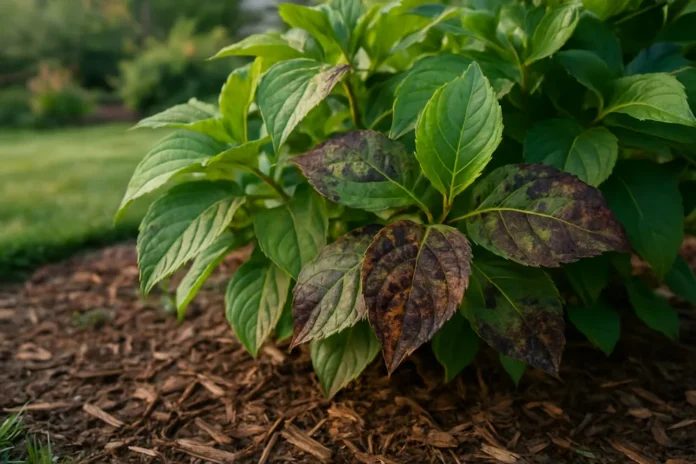
Hydrangea leaves usually turn black from leaf diseases, cold damage, heat stress, excess moisture, or chemical burn. The exact cause depends on whether the blackening starts at the edges, appears as spots, or affects the whole leaf at once.
When hydrangea leaves turn black, the plant is usually reacting to stress rather than failing all at once. In my garden, the cause is most often visible in the pattern: black spots point one way, black crispy edges point another, and limp dark leaves after a cold night tell a completely different story.
Hydrangeas are generous shrubs, but their large soft leaves show damage quickly. Too much moisture, poor airflow, sudden frost, harsh afternoon sun, and even a strong fertilizer splash can all leave blackened foliage behind. The good news is that most cases are manageable once you match the symptoms to the right problem.
If your hydrangea leaves turning black are also dropping, curling, or developing spots, pay attention to where the damage started and how fast it spread. That clue is often more useful than the color alone.
What Black Hydrangea Leaves Usually Mean
Black leaves on hydrangeas do not always mean the same thing. Sometimes the leaf tissue is actually rotting from disease. Sometimes it has been killed by cold, burned by heat, or damaged by something sprayed on the foliage. The difference matters because one problem calls for pruning and drying things out, while another calls for shade, watering changes, or simply waiting for new growth.
Start by looking closely at the pattern. If you see small dark spots that enlarge and merge, a fungal or bacterial issue is likely. If the edges look black, crisp, and dry, scorch or drought stress is more likely. If the entire leaf turned dark and limp after one chilly night, frost damage jumps to the top of the list. When blackening appears suddenly after feeding or spraying, chemical burn is often the culprit.
When I diagnose hydrangeas, I compare both old and new leaves before I do anything else. If only the most exposed leaves are blackening, I think weather or spray damage first. If the inner canopy is spotting too, I look much harder at disease and airflow.
Leaf Spot Diseases Are a Common Cause
How Disease Damage Looks
Fungal leaf spots are one of the most common reasons hydrangea leaves develop black or dark purple blotches. The damage often begins as smaller spots, usually brown, purple, or nearly black, then expands as the tissue dies. In humid weather, multiple spots can merge until large sections of the leaf look blackened.
Cercospora leaf spot is especially common on hydrangeas in warm, damp conditions. It often starts on lower or inner leaves where air circulation is poor and moisture lingers longer. The plant usually survives, but heavy spotting can weaken it, lead to leaf drop, and make the shrub look rough by midsummer.
Why It Happens
- Leaves stay wet for long periods after rain or overhead watering.
- The plant is crowded by nearby shrubs, fencing, or dense mulch piled too high around the base.
- Old infected leaves were left under the plant and spores splashed back up in spring.
- High humidity and warm temperatures create ideal conditions for fungal spread.
What to Do
Remove the worst affected leaves if the plant is not too heavily damaged, and always clean up fallen foliage from around the base. Water at soil level rather than wetting the leaves. If the shrub is crowded, prune lightly to improve airflow, but avoid aggressive pruning that removes flower buds on varieties that bloom on old wood.
If disease returns year after year and becomes severe, a labeled fungicide for ornamental shrubs may help when used early in the season. Fungicides protect clean leaves better than they cure badly damaged ones, so timing matters.
Bacterial Blight Can Blacken Leaves Fast
Bacterial blight is less common than simple fungal spotting, but it can make hydrangea foliage look dramatically worse in a short time. Instead of neat round spots, you may see irregular dark, water-soaked patches that quickly turn black. Young shoots, buds, or blossoms can also be affected.
This problem tends to show up when cool, wet conditions combine with frequent leaf wetness. Water splashing from one leaf to another helps spread it. Damaged tissue often looks soft at first, then darkens and collapses.
- Prune out badly affected leaves and stems with sanitized pruners.
- Avoid overhead irrigation, especially late in the day.
- Do not handle wet plants more than necessary.
- Dispose of infected material rather than composting it if the disease was severe.
Bacterial issues can be stubborn, so the main goal is reducing spread and helping the plant push healthy replacement growth. If a hydrangea repeatedly develops black water-soaked lesions every spring, site conditions may be keeping it too damp.
Frost Damage Often Turns Leaves Dark Overnight
If your hydrangea looked fine one day and blackened suddenly after a cold snap, frost is a very likely cause. Tender new leaves are full of moisture, and freezing temperatures rupture the cells. Once the tissue thaws, it often turns dark brown or black and hangs limp from the stem.
This is especially common in spring when hydrangeas leaf out early during a warm stretch and then get hit by a late freeze. The newest growth usually takes the worst of it, while older wood may remain alive.
Signs That Point to Frost
- Damage appeared all at once after a cold night.
- The softest, newest leaves are affected more than older ones.
- Leaf tissue looks dark, limp, and water-soaked before drying out.
- Neighboring tender plants may show similar injury.
Do not rush to prune immediately after frost unless tissue is clearly mushy and collapsing. Sometimes stems that look rough at first still recover. Give the plant a little time, then remove only tissue that is fully dead once new growth begins to show.
After frost, I wait for the shrub to reveal what is truly alive before making big cuts. Hydrangeas often surprise me by pushing fresh buds lower on the stem, and early pruning can remove wood that still had recovery potential.
Sun Scorch and Heat Stress Can Blacken Leaf Edges
Hydrangeas like moisture and many varieties prefer morning sun with afternoon protection, especially in hotter parts of the U.S. When they sit in intense sun, hot reflected heat, or drying wind, the leaf edges may first brown and then look almost black. The tissue usually feels dry and crispy rather than soft.
This kind of damage is common on plants near bright walls, concrete, or driveways that reflect extra heat. It also shows up during heat waves when roots cannot keep up with how quickly the big leaves lose water.
How Scorch Differs From Disease
- Damage is strongest on the sunniest side of the plant.
- Leaf margins and tips darken first.
- The blackened areas are dry, thin, and brittle.
- Spots do not usually begin as tiny circular lesions.
Improve watering consistency during hot weather and make sure the soil is moist several inches down, not just damp at the surface. A two to three inch mulch layer helps roots stay cooler, but keep mulch pulled back from direct contact with the stems. If the site is simply too harsh, transplanting to a spot with gentler afternoon conditions may solve the problem better than repeated rescue watering.
Overwatering and Poor Drainage Can Lead to Blackened Foliage
Hydrangeas like even moisture, but they do not want to sit in soggy soil. When roots stay waterlogged, they struggle to take up oxygen and nutrients. That stress can show up as wilting, yellowing, browning, and eventually blackened patches on leaves, especially if root rot begins.
This kind of problem is easy to miss because the plant may wilt even though the soil is wet. Gardeners sometimes respond by watering more, which makes the root stress worse. Heavy clay, a low spot in the yard, or a pot with poor drainage can all set the stage.
Clues That Excess Moisture Is Involved
- The soil stays wet for days after rain or irrigation.
- Leaves may yellow before they blacken.
- The plant wilts despite moist soil.
- Growth is generally weak, and stems may feel softer than usual.
Cut back on watering frequency and let the top inch or two of soil begin to dry before watering again, while still avoiding drought stress. Improve drainage with organic matter if the plant is in the ground, or repot into a better draining mix if it is container grown. If root rot is advanced, some roots may already be damaged beyond recovery, so improvement can be gradual rather than immediate.
Chemical Burn From Fertilizer or Sprays Is Another Possibility
Hydrangea leaves can turn black after exposure to products that were too strong, applied in hot weather, or splashed directly on foliage. Liquid fertilizer, herbicide drift, horticultural oils, insecticidal soaps, and some homemade treatments can all injure tender leaves.
Chemical damage often appears quickly and may look blotchy, scorched, or unusually uniform across exposed leaves. If the blackening followed a recent application, especially on a sunny afternoon, that timing matters.
- Blackening appeared shortly after feeding or spraying.
- Only the leaves hit by the product were damaged.
- Spots or burns follow a splash pattern rather than a disease pattern.
- Nearby broadleaf plants may show similar injury if herbicide drift was involved.
Always follow label rates and avoid applying foliar products during heat, drought, or full sun unless the label explicitly allows it. If you suspect drift from a lawn weed killer, protect the hydrangea from future exposure and expect damaged leaves to remain marked even after the plant recovers.
How to Tell Which Cause You Are Dealing With
A simple symptom check can usually narrow things down. Think about speed, placement, and texture. Black leaves from frost or chemical injury tend to show up suddenly. Disease often builds over time. Scorch usually targets edges and exposed surfaces. Excess moisture often comes with general decline, not just isolated spotting.
- Notice whether the damage began as spots, edges, or whole-leaf collapse.
- Check whether the worst leaves are on the outer sunny side, the lower inner canopy, or the newest growth.
- Think back to weather changes, especially frost, heavy rain, or heat waves.
- Consider anything recently sprayed, fertilized, or applied nearby.
- Feel the soil several inches down to judge whether roots are too dry, evenly moist, or staying soggy.
I trust the plant’s recent history almost as much as the symptom itself. If blackening started right after three rainy days, I lean toward moisture-related disease. If it followed one brutally hot afternoon, I am much less likely to blame a pathogen.
What to Do Right Now for a Hydrangea with Black Leaves
Start with the least risky cleanup. Remove badly blackened leaves that are clearly dead, but do not strip the plant bare unless disease is severe. Healthy remaining foliage still helps the shrub recover. Sanitize pruners if you suspect disease, especially bacterial problems.
Next, correct the growing conditions that keep damage going. Water deeply but not constantly, and direct water to the soil rather than the leaves. Thin surrounding vegetation if airflow is poor. Add mulch to stabilize soil moisture, but do not create a soggy ring around the crown.
- Remove fallen infected leaves from the ground.
- Shift to morning watering if irrigation is needed.
- Pause fertilizer if the plant is stressed or recently burned.
- Hold off on heavy pruning until you know how much live wood remains.
- Watch new growth, because recovery is judged by fresh healthy leaves more than old damaged ones.
If the shrub keeps declining despite better care, inspect stems and roots more closely or consider getting a local extension office or nursery professional to look at a sample. Persistent blackening with stem dieback can point to a more serious underlying issue than simple leaf damage.
How to Prevent Black Leaves in the Future
The best prevention is matching your hydrangea to the right site and keeping moisture consistent. Most hydrangeas do best in rich, well-drained soil with regular water and protection from the harshest afternoon sun. A healthy plant can tolerate minor stress much better than one already weakened by poor placement.
- Give the shrub enough spacing for airflow.
- Water at the base instead of overhead whenever possible.
- Clean up dropped leaves at the end of the season.
- Avoid overfertilizing, especially with quick-release products.
- Protect tender spring growth if late frost is forecast.
- Keep lawn herbicides and strong foliar products well away from the plant.
If you regularly fight blackened leaves on the same plant every year, the site may simply not suit that variety. In that case, moving the shrub or replacing it with a more heat-tolerant or disease-resistant hydrangea can save a lot of frustration.
FAQ
Should I Cut Off Black Hydrangea Leaves?
Yes, if the leaves are mostly dead, diseased, or mushy. Leave any leaf that still has a good amount of healthy green tissue unless the plant has a clear disease problem that requires cleanup.
Can Black Hydrangea Leaves Turn Green Again?
No, blackened leaf tissue does not recover. Focus on whether new growth comes in healthy, because that is the best sign the plant is improving.
Do Black Spots on Hydrangea Leaves Mean the Plant Is Dying?
Usually not. Many leaf spot problems are more cosmetic than fatal, though repeated heavy infection can weaken the plant over time if growing conditions stay poor.
Can Too Much Sun Make Hydrangea Leaves Turn Black?
Yes. Strong afternoon sun, reflected heat, and hot dry wind can scorch hydrangea leaves, especially at the edges and tips, until they look dark brown or black.
Why Did My Hydrangea Leaves Turn Black After a Cold Night?
That pattern strongly suggests frost damage. Tender new leaves can darken quickly after freezing temperatures because the leaf cells were injured by the cold.
Is Overhead Watering Bad for Hydrangeas?
It is not ideal, especially if done late in the day. Wet foliage encourages fungal and bacterial problems, so watering at the soil line is usually the better choice.
Can Fertilizer Burn Hydrangea Leaves Black?
Yes, especially if fertilizer was too strong or splashed onto the leaves. Chemical burn can also come from some sprays, soaps, oils, or herbicide drift.
How Do I Know if Black Leaves Are From Disease or Drought?
Disease usually causes spots or blotches that spread over time, often in humid weather. Drought and scorch usually blacken the edges or tips first, and the damaged tissue feels dry and crisp.
Need help choosing the right treatment fast? Read our guide to the best fungicides, pruners, and watering tools for hydrangea problems so you can protect new growth and prevent repeat damage.
