

Note: This article contains affiliate links. If you click on these links and make a purchase, I may earn a small commission at no extra cost to you. This helps support my research and content. Read my full affiliate disclosure here.
Picking the right soil mix changes how easily your aloe vera thrives. These succulents need a blend that sheds excess water, offers enough aeration for shallow roots, and keeps nutrients available between infrequent feedings. Too much moisture or heavy, compacted soil invites root rot; too light and the plant can become nutrient-starved. This guide covers seven carefully shortlisted aloe vera plant soil mixes that suit potted plants, windowsill gardens, and patio containers. We evaluated drainage, texture, nutrient profile, and ease of use so you can match a mix to your watering habits and container type. Read on to understand the practical tradeoffs and which soil traits matter most for healthy aloe growth.
Top Picks at a Glance
| Best Overall The best all-around choice for most situations | Miracle-Gro Indoor Potting Mix for Cactus & Succulent, 8 qt. (2-Pack) |  |
| Best Quality Built to a higher standard if you want something more solid | Rosy Soil Cactus & Succulent Potting Mix, 4 Quart |  |
| Best Value The sweet spot between price and what you get | NOVA-TERRA Aloe Vera Potting Soil Mix for Succulents, 2.4 Quarts |  |
| Best Budget The cheapest option that still gets the job done reliably | Doter Aloe Vera Potting Soil Mix, 1 qt |  |
| Highest Rated A top-rated pick with lots of positive feedback | rePotme Aloe Vera Succulent Potting Soil Mix (2 qt) |  |
| Most Popular A crowd favorite that many people choose with confidence | Miracle-Gro Succulent Potting Mix, 4 qt. |  |
| Best Seller A high-volume bestseller chosen again and again | Back to the Roots Organic Succulent & Cacti Mix, 6 Quart |  |
Miracle-Gro Indoor Potting Mix for Cactus & Succulent, 8 qt. (2-Pack)

| Item Highlight | Fast-Draining Cactus and Succulent Potting Mix with Plant Food |
|---|---|
| Number of Packs | 2 |
| Included Components | 2 bags |
| Item Type Name | Soil |
| Ingredients | Sphagnum Peat Moss, Sand, Perlite |
This two-pack of Miracle-Gro Indoor Potting Mix is designed to give desert-type houseplants an easy, nutrient-enriched growing medium. The blend of sphagnum peat moss, sand, perlite and forest products creates a light, airy mix that drains quickly, which helps prevent overwatering problems common with succulents and cacti. Each bag is labeled to fill several small pots and the included plant food means newly repotted succulents get a nutrient boost without extra amendments. Use it straight from the bag to repot aloe, echeveria, haworthia and other drought-tolerant species into containers with drainage holes; water thoroughly after potting and let excess drain. Limitations to note are that the formulation is aimed at fast drainage rather than moisture retention, so very small or moisture-loving succulents may need more frequent watering or added organic matter. Also the packaged volume is modest per bag, so larger pots or multiple plants will require more than the two bags provide. For typical indoor aloe repotting this mix is convenient and plant-ready.
Best for: Buyers who want a hassle-free, pre-mixed soil that emphasizes drainage and quick repotting for common indoor succulents like aloe and echeveria.
Less Ideal for: Growers who prefer to custom-blend soils for specific moisture retention or those managing many large containers should consider larger-volume or DIY mixes.
- Formulated for succulents and cacti with fast-draining ingredients to reduce root rot risk
- Includes plant food to feed plants after repotting without immediate fertilizer purchase
- Ready-to-use straight from the bag so no mixing or amendments are required for most desert plants
- Not designed for moisture-loving or very young seedlings that need higher water retention
- Each 8 qt. bag is relatively small so multiple repottings or larger pots need additional product
Verdict: A convenient, ready-to-use fast-draining potting mix that makes repotting aloe and other succulents quick and worry-free.
Rosy Soil Cactus & Succulent Potting Mix, 4 Quart

| Unit Count | 64 Ounce |
|---|---|
| Item Type Name | Soil |
| Item Highlight | Organic Succulent Potting Soil, Chunky Fast Draining, Peat-Free, Root Boosting Mix |
| Ingredients | Biochar, Pumice, Mycorrhizae, Sand, Pine Bark Fines, Compost |
This 4 quart Rosy Soil cactus and succulent mix is aimed at growers who need a fast-draining, low-compaction substrate for drought-tolerant houseplants like aloe vera. The blend combines chunky components such as pumice, sand, pine bark fines and biochar so water moves through quickly and the mix stays airy instead of compacting around roots. It also includes organic inputs—worm castings and mycorrhizae—that introduce beneficial microbes to support root growth without synthetic fertilizers. The bag is peat-free and resealable, which helps keep the mix usable between plantings and aligns with a more sustainable approach. Because the bag is relatively small it is best for repotting or topping off a few plants rather than large-scale projects, and the warning on skin and inhalation risks means you should handle it with a mask or gloves when filling pots. For aloe vera and similar succulents this mix gives a gritty, quick-draining medium that reduces overwatering problems while providing a microbially active base for root development.
Best for: Buyers who prioritize plant health and drainage performance for individual aloe vera and other small to medium succulents and who prefer a ready-made, microbially active, peat-free mix.
Less Ideal for: Gardeners repotting many plants at once or filling large containers should choose larger-volume soil or bulk mixes aimed at scale.
- Chunky, fast-draining formula reduces risk of soggy roots for succulents and aloe vera
- Contains biochar, pumice, and sand for long-term structure and aeration
- Includes worm castings and mycorrhizae to support microbial activity and root health
- Peat-free, resealable 4 quart bag that keeps mix fresh between uses
- Small 4 quart volume is insufficient for large repotting jobs or multiple plants
Verdict: Choose this mix when you want a peat-free, gritty, microbially active soil that reliably keeps aloe vera and other succulents dry and well-aerated.
NOVA-TERRA Aloe Vera Potting Soil Mix for Succulents, 2.4 Quarts

| Brand Name | NOVA-TERRA |
|---|---|
| Item Highlight | Premixed blend for aloe vera, succulents and cactus with fast drainage |
| Unit Count | 76.8 Fluid Ounces |
| Volume | 2.4 quarts |
This ready-to-use soil blend is designed specifically for aloe vera, cacti, and succulent potting or repotting. It combines coarse sand, Canadian peat, and pine bark to create a fast-draining medium that reduces the risk of root rot while still holding enough moisture for steady growth. The mix is convenient for quick potting jobs and small collections since it comes premixed in a resealable 2.4-quart bag so you do not need to measure and combine components. Practical benefits include improved aeration from the sand and organic structure from peat and bark, which help young roots establish and older plants recover after repotting. The bag size is appropriate for individual pots or topping up containers but will require multiple bags for larger collections or outdoor beds. Also, the peat content means it is not the most sustainable option for growers prioritizing peat-free media. For indoor succulent care this mix simplifies the process and delivers the drainage profile most aloe owners need.
Best for: Gardeners who want a practical, ready-made soil that simplifies potting and repotting aloe vera and small succulent collections without mixing components themselves.
Less Ideal for: Growers managing large collections, outdoor beds, or those insisting on peat-free or fully organic custom mixes should consider bulk or specialty alternatives.
- Premixed formula saves time and removes the need to blend individual components
- Fast-draining composition suitable for aloe vera and other succulents to reduce overwatering risk
- Contains coarse sand and pine bark to improve aeration and root development
- Resealable 2.4-quart bag is convenient for storage and small repotting tasks
- Small 2.4-quart volume means multiple bags are required for several plants or larger pots
- Contains Canadian peat which may concern gardeners seeking peat-free mixes
Verdict: Buy this if you want a no-mix, fast-draining potting mix that makes potting and repotting aloe vera and small succulents quick and reliable.
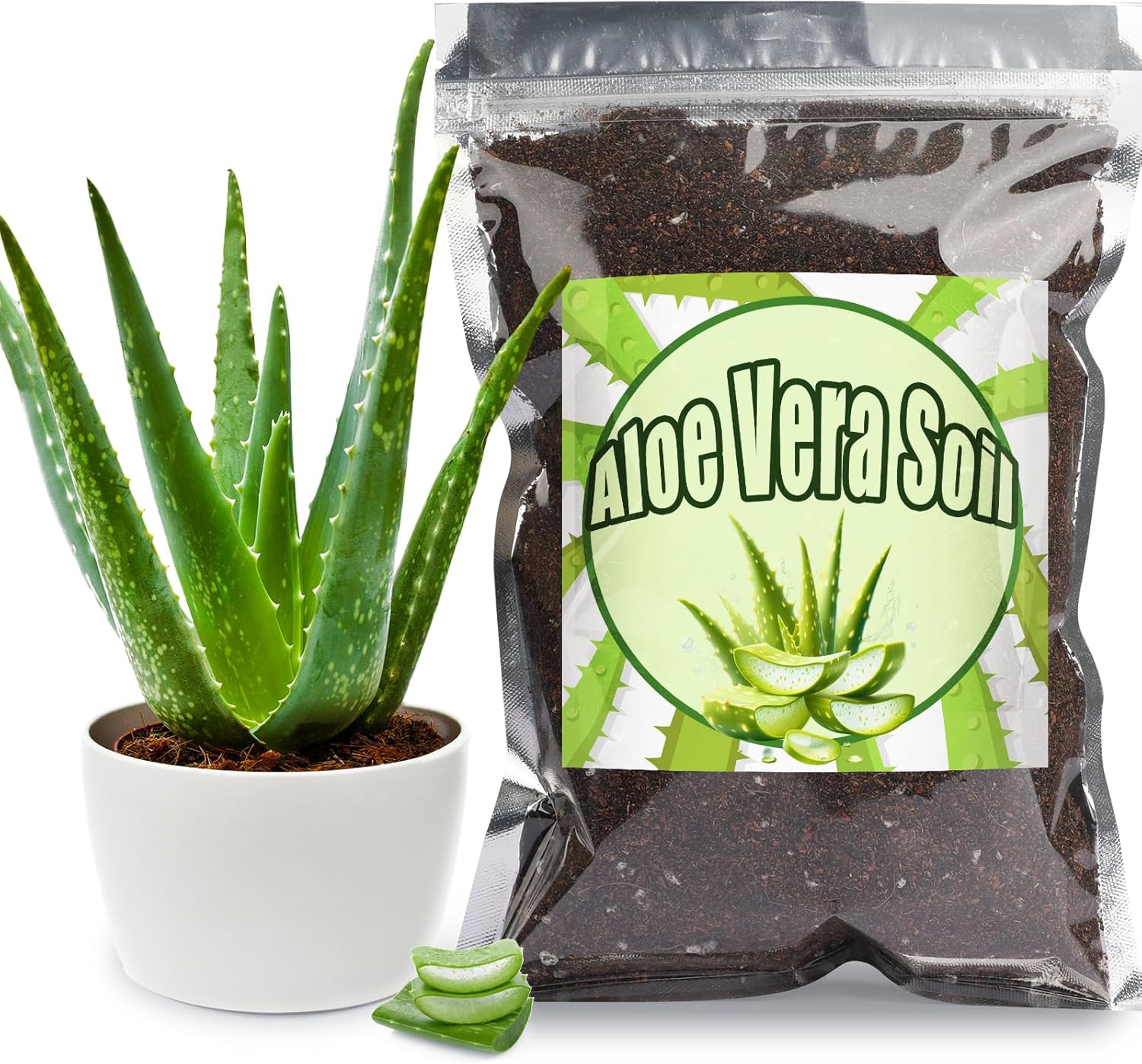
Doter Aloe Vera Potting Soil Mix, 1 qt
| Brand Name | Doter |
|---|---|
| Item Type Name | Garden soil |
| Manufacturer | Doter |
| Volume | 1 quarts |
This 1-quart Doter Aloe Vera Potting Soil is a small, ready-to-use mix designed specifically for succulent culture. The blend emphasizes excellent drainage and aeration, so it helps prevent waterlogged roots and the root rot that commonly plagues aloe plants. It also includes nutrients and a balanced pH to support steady foliage and root development without immediate need for fertilizer. Use it to repot small or young aloe vera specimens, start seedlings, or top-dress containers where you want faster drying between waterings. The compact size makes it convenient for trialing different pots or for people with only a few plants, but you will need multiple bags for larger pots or several plants. The mix is practical for indoor and sheltered outdoor use where good drainage and light feeding are priorities. If you want a premixed, plant-specific substrate in a small package, this delivers; if you need bulk soil or a custom soil-to-amend ratio, a larger or component-based option will be more economical.
Best for: Buyers looking for a convenient, plant-specific potting mix to repot small aloe vera plants or start seedlings without mixing amendments themselves.
Less Ideal for: People who need large quantities for multiple or large pots or who prefer to custom-blend their own soil components.
- Formulated for aloe vera with balanced pH to aid nutrient uptake
- Well-draining and aerated to reduce risk of root rot
- Ready to use straight from the bag for quick repotting or seed starting
- Small 1-quart volume requires buying multiple bags for several or larger plants
Verdict: A convenient, plant-focused small-bag potting mix that makes repotting or starting aloe vera easy and low-effort.
rePotme Aloe Vera Succulent Potting Soil Mix (2 qt)

| Brand Name | rePotme |
|---|---|
| Volume | 2 quarts |
| Style Name | Modern |
This rePotme mix is a small-batch, hand-blended soil designed for succulents and aloe vera plants that need fast-draining media. It arrives in a resealable 2 quart bag and is ready to use without amendment, so you can pot succulents, jade, Christmas cactus, or aloe directly after unpacking. The formula emphasizes free drainage and air around roots, which lowers the risk of overwatering and root rot when paired with pots that have drainage holes. Because the mix is produced in small batches in the USA, you get consistently fresh material rather than long-stored soil. Limitations are mainly capacity and scope: the 2 quart mini bag is best for repotting small plants or topping up pots rather than large repots, and no nutrient analysis or NPK is provided so you should plan routine feeding for long-term growth. Also follow basic safety guidance to avoid inhaling fine particles when handling the dry mix.
Best for: Buyers who prioritize consistency and low-risk repotting for small succulents or aloe plants and prefer a ready-to-use, fresh mix from a specialty brand.
Less Ideal for: Large-scale growers or anyone needing bulk soil for many or large repots should look for larger bag sizes or commercial potting mixes.
- Hand-blended in small batches for freshness
- Free-draining, pre-mixed formula ready to use
- Resealable bag keeps unused mix fresh
- Formulated specifically for succulents and aloe-like plants
- Small 2 quart size limits use to small pots and occasional top-ups
- No listed fertilizer or nutrient content included
Verdict: Choose this fresh, hand-blended succulent mix when you want a reliable, ready-to-use soil that reduces overwatering risk for small aloe and succulent pots.
Miracle-Gro Succulent Potting Mix, 4 qt.

| Unit Count | 128 Ounce |
|---|---|
| Item Type Name | Indoor Cactus Plants, Aloe Vera and More |
| Ingredients | Sphagnum Peat Moss, Processed Forest Products, Fertilizer, Wetting Agent |
| Volume | 4 quarts |
Miracle-Gro Succulent Potting Mix is a small 4-quart bag of ready-to-use growing media designed for indoor succulents such as aloe vera and small cacti. The mix combines sphagnum peat moss, processed forest products, a wetting agent, and built-in Miracle-Gro plant food to give young or repotted succulents an easy-to-use, moisture-balanced medium. Typical use is repotting small house succulents into containers with drainage holes, filling the pot about one third, setting the plant, topping up with mix, and watering to let it drain. The lightweight bag is sized to fill an 8-inch container, which makes it convenient for single-plant projects or for gardeners testing a new potting medium. Practical benefits include a fast-draining feel compared with all-purpose soils and the convenience of incorporated fertilizer so plants get a nutritional boost after potting. Limitations are the small volume, which means multiple bags are required for several plants, and the proprietary ingredient list provides limited detail on particle size or exact drainage characteristics compared with specialized gritty mixes.
Best for: A buyer who wants a trusted, ready-made succulent mix for repotting individual indoor succulents and values social proof and low risk when trying a new soil product.
Less Ideal for: People repotting many plants at once or building custom gritty mixes for expert growers should look for larger bags or specialized abrasive blends.
- Formulated specifically for indoor succulents and cacti
- Includes Miracle-Gro plant food to provide initial nutrition
- Fast-draining blend compared with standard potting soil
- Convenient 4 qt size is easy to handle for single repotting jobs
- Small 4 quart volume is insufficient for multiple or large pots
Verdict: A convenient, fertilizer‑boosted potting mix that makes repotting a single indoor aloe or succulent quick and low risk.
Back to the Roots Organic Succulent & Cacti Mix, 6 Quart

| Volume | 6 quarts |
|---|---|
| Peat-free | Yes |
| Made in | USA |
| Ingredients | Dolomitic limestone, perlite, horticultural sand, aged bark, plant food |
This 6-quart Succulent & Cacti Mix is a ready-to-use soil designed to give aloe, jade, and other desert plants a well-draining, nutrient-rich medium. It blends aged bark, perlite, and horticultural sand for improved aeration and rapid drainage so roots avoid waterlogging, and includes dolomitic limestone and plant food to supply baseline nutrients. Typical use is repotting or top-dressing succulents and cacti in containers or small indoor planters where fast runoff and root aeration are priorities. The peat-free formula and added mycorrhizae-friendly ingredients make it a straightforward choice for growers who prefer organic inputs. Important limitations are the small bag volume for owners with multiple plants and the suggestion to supplement with more fertilizer about a month after transplanting for continued growth; this mix provides a strong starting medium but not long-term complete feeding. For homeowners who want a low-risk, specialty soil that reduces overwatering problems, this is a practical option.
Best for: Buyers who want a low-risk, plug-and-play soil for aloe and other succulents that minimizes overwatering problems and simplifies repotting decisions.
Less Ideal for: Large-scale growers or those seeking an all-in-one long-term potting mix for frequent fertilizing-free use should consider bulk or amended alternatives.
- Formulated for succulents and cacti with perlite and horticultural sand for fast drainage
- Peat-free, made in the USA with aged bark to improve soil structure and root aeration
- Includes baseline plant food and mineral (dolomitic limestone) to support initial growth
- Beginner-friendly ready mix that reduces guesswork when repotting
- Small 6-quart volume may require multiple bags for several plants
- Not a complete long-term fertilizer solution so periodic feeding is recommended
Verdict: A compact, peat-free succulent mix that reliably improves drainage and makes repotting aloe easy and low risk.
Choosing the Right Aloe Vera Plant Soil Mix: Key Factors to Consider
Drainage and Porosity
Aloe vera roots sit near the soil surface and are highly sensitive to standing water. A soil mix with high porosity and visible coarse particles-such as pumice, coarse sand, or grit-lets excess water escape quickly and supplies oxygen to roots.
Poor drainage is the single biggest cause of rot in container-grown aloe. Choose mixes that keep particles from compacting over time and that maintain air pockets after repeated watering. Consider whether the mix will be used in a small saucered pot or a larger outdoor container, because drainage needs scale with container size.
Particle Size and Texture
Coarse particle size and a gritty texture support steady airflow and prevent the fine-fraction clogging that peat-heavy mixes experience. Larger mineral pieces give structure, while a modest amount of fine organic matter helps the soil hold enough moisture between waterings.
Texture also affects rooting: very fine, uniform mixes can compact and suffocate roots, while mixes with a mix of particle sizes encourage roots to anchor and explore. For repotting, think about how readily the mix crumbles off roots without sticking, which makes inspection and maintenance easier.
Water Retention Balance
Aloe needs soil that dries out between thorough waterings but does not become bone-dry forever. Water retention balance is the mix of components that holds a little moisture in the root zone without creating soggy pockets.
Evaluate blends that combine moisture-retaining organic fragments like coir or aged compost with fast-draining mineral components. The ideal mix retains enough water to sustain the plant during normal household intervals while releasing excess quickly after watering.
Nutrient Content and Release
Aloe vera is not a heavy feeder, but it benefits from a modest, steady supply of nutrients. Soil mixes that incorporate slow-release organic matter or an appropriate proportion of compost provide an ongoing nutrient baseline without overwhelming the plant.
Avoid mixes with a high concentration of fresh, nitrogen-rich amendments that can burn shallow roots. Look for balanced nutrient profiles and clearly described ingredient lists so you can adjust feeding frequency rather than rely on heavy initial fertility.
pH and Salt Level Control
Aloe plants prefer slightly acidic to neutral conditions and can be sensitive to accumulated salts, especially in indoor containers where flushing is infrequent. Mixes with neutral pH ranges and low soluble salt content help prevent tip-burn and root stress.
If your water is hard or you fertilize regularly, choose a mix with good buffering capacity and low initial salt load. Periodic flushing and occasional repotting keep salts in check, but starting with the right mix reduces stress on the plant.
Best Mix Types for Different Containers
Match the mix texture to the pot size and material. Small terracotta pots benefit from coarser, faster-draining mixes because they wick moisture out quickly. Plastic pots retain more moisture, so you can use a blend with slightly more organic content without increasing rot risk. For wide, shallow planters consider a layered approach: a coarse base to speed drainage and a gritty, aerated top layer where most of the roots will grow.
- Small indoor pots: very gritty mix with pumice or coarse sand
- Plastic or glazed pots: slightly richer mix with a bit more organic matter
- Wide planters: coarse base layer plus aerated top mix
Amendments That Improve Performance
If you need to adjust a standard potting mix, pick amendments that change one variable at a time. Pumice, perlite, or coarse builder's sand increase drainage and porosity. Coir or very well-aged compost raises moisture-holding capacity without compacting like fresh peat. Add volcanic rock or grit to improve structural stability in mixes that trend too fine.
- Add pumice or perlite to increase porosity
- Use coarse sand sparingly to avoid silt accumulation
- Incorporate coir for gentle moisture buffering
Repotting Tips for Aloe Using These Mixes
Repot during active growth in late spring to early summer and allow the plant a few weeks to settle before resuming regular watering. Gently shake off loose old soil and trim any soft or blackened roots. Place a thin layer of the chosen mix in the bottom of the new pot, position the plant so the crown sits slightly above the rim of the root ball, then backfill and firm lightly to remove large air pockets. Avoid burying the crown, and wait a week to water so roots recover. The right mix will compact minimally, making future inspections and repotting faster and less stressful for the plant.
- Repot in active season and let roots rest before watering
- Keep crown slightly elevated above soil line
- Trim damaged roots and remove compacted old soil
Watering Rhythm and Soil Choice
Let the soil signal the watering schedule. In a fast-draining mix water thoroughly and then let the top few inches dry out before the next thorough soak. In cooler months reduce frequency, because evaporation slows and soil stays moist longer. The chosen soil should make it obvious when it is time to water: very slow-draining mixes hide moisture and lead to overwatering mistakes. Consider pot size, ambient humidity, and microclimate. A gritty mix paired with regular checks of the root zone prevents both underwatering and chronic wetness.
- Water deeply then dry to the touch before repeating
- Reduce frequency in winter when growth slows
- Use a moisture probe or finger test in ambiguous situations
How We Chose the Best Aloe Vera Plant Soil Mix
We focused on characteristics that directly affect aloe vera health in real-world container and indoor situations. Selection began with blends designed specifically for succulents and cacti, then filtered for mixes that show clear attention to drainage media and organic content. Key evaluation criteria included particle size and porosity, water retention balance, nutrient composition and slow-release capability, pH and salt levels suitable for succulents, and ease of use for repotting and top-dressing. We excluded generic potting soils that lack coarse components or that rely solely on peat without added mineral grit. We also considered the practicality of using mixes in typical home settings: whether they require additional amendments, how well they perform in small pots versus larger planters, and resilience to overwatering mistakes. Lab-level claims were not the focus; instead, we prioritized mixes with ingredient transparency and predictable behavior for gardeners. Final shortlist items met thresholds on drainage, texture, and nutrient balance aligned with the scoring metrics below.
FAQ
How often should I water aloe in a well-draining soil mix?
Often depends on pot size and conditions, but generally water thoroughly and then allow the top 1-2 inches to dry before watering again. In bright, warm conditions this could be every 2-3 weeks; in cool or low-light months intervals will be longer.
Can I make my own aloe soil mix at home?
Yes. A reliable DIY mix combines coarse mineral amendments such as pumice or coarse sand with a small proportion of organic matter like coir or aged compost. Aim for a gritty feel that resists compaction while holding a little moisture.
Is perlite or pumice better for aloe soil?
Both improve aeration and drainage. Pumice is heavier and holds a bit more moisture and minerals; perlite is lighter and increases porosity quickly. Use either according to availability and the final texture you want.
Should I add fertilizer to a succulent mix for aloe?
Aloe benefits from light feeding during the active growing season. Use a diluted, balanced fertilizer sparingly. Rely primarily on a modest nutrient content in the soil mix and supplement lightly rather than applying strong doses.
How do I check if my soil mix is causing root rot?
Signs include soft, dark roots and mushy crowns. Gently lift the plant from the pot to inspect roots; healthy roots are firm and pale. If rot is present, trim affected roots, let the plant dry, and repot into a very well-draining mix.
Can I reuse potting mix for aloe vera?
You can reuse mix for a limited number of cycles if it remains loose and free of salts or disease. Refresh with mineral amendments and some fresh organic material, and consider replacing the mix entirely if it has compacted or smells sour.
Final Verdict
When choosing an aloe vera plant soil mix, prioritize drainage and a gritty texture while keeping a modest amount of organic matter for steady nutrients. Match the mix to your pot type and watering habits: coarser blends suit fast-drying conditions and small terracotta pots, while mixes with slightly more organic content work in moisture-retentive containers. Tradeoffs are inevitable: more drainage reduces rot risk but may require slightly more frequent feeding or watering. Focus on particle size, porosity, and low salt content when making your choice, and you will set up aloe plants for durable, low-maintenance growth.
