

Note: This article contains affiliate links. If you click on these links and make a purchase, I may earn a small commission at no extra cost to you. This helps support my research and content. Read my full affiliate disclosure here.
Small black ants in kitchens, pantries, and near foundations are a common nuisance that requires a targeted approach. Picking the right ant bait matters because these ants respond to different bait types and sweetness or protein preferences can change by season. The right bait will attract workers, allow them to carry poison back to the colony, and reduce visible trails without scattering insects into other areas. This guide covers seven carefully shortlisted ant baits for small black ants and explains the practical criteria used to evaluate them, including attractiveness to foragers and safe placement options. Read on to learn which characteristics matter most for indoor and near-foundation control and how to deploy bait effectively.
Top Picks at a Glance
| Best Overall The best all-around choice for most situations | TERRO Outdoor Liquid Ant Bait Stakes, 12-Pack |  |
| Best Quality Built to a higher standard if you want something more solid | Syngenta Advion Ant Gel Bait, 30 g |  |
| Best Value The sweet spot between price and what you get | Combat Max Ant Killing Gel, 27 g Syringe |  |
| Best Budget The cheapest option that still gets the job done reliably | Combat Max Ant Killing Bait Stations, 6 Count |  |
| Highest Rated A top-rated pick with lots of positive feedback | ROUTADE Slow-Acting Ant Gel Bait Stations, 48-Pack |  |
| Most Popular A crowd favorite that many people choose with confidence | TERRO Liquid Ant Bait Stations, 12-Pack |  |
| Best Seller A high-volume bestseller chosen again and again | TERRO Multi-Surface Liquid Ant Baits, 8-Count |  |
TERRO Outdoor Liquid Ant Bait Stakes, 12-Pack

| Unit Count | 12 Count |
|---|---|
| Material Type | Plastic |
| Target Species | Ant |
| Power Source | manual |
These TERRO Outdoor Liquid Ant Bait Stakes are designed to intercept ant colonies outside before they move indoors. Each stake contains a sweet liquid bait that attracts worker ants, which then transport the borax-based poison back to the nest to kill the colony. Use is simple: cut the tab, insert the stake where you see trails or nests, and monitor the see-through reservoir to track consumption. Because the active ingredient acts slowly, you may initially see more ants at the station but should notice a marked reduction in activity within days and stronger control over 2 to 4 weeks. The stakes are weatherproof and intended for repeated placement around foundations, patios, and gardens; replace them approximately every three months for ongoing protection. They handle a range of common small black and household ant species, but they are bait-based so results depend on ants accepting the sweet formula and on leaving stations undisturbed while foraging continues.
Best for: Homeowners who want a low-effort, preventive approach to control small black and other common outdoor ants around foundations, patios, and garden beds. Best for people willing to set stations and let foraging ants carry bait back to the colony rather than relying on instant-contact sprays.
Less Ideal for: Those needing immediate knockdown of visible ants or people who cannot place baits where pets and children might access them should consider alternative control methods or professional help.
- Ready-to-use stakes that require no mixing or setup
- See-through bait chamber allows easy monitoring of consumption
- Weatherproof design suitable for outdoor placement near entry points
- Targets colony-level control by having foragers carry bait back to the nest
- Slow-acting borax requires several days to weeks for full colony elimination
- Effectiveness depends on ants preferring a sweet bait so some species or conditions may reduce uptake
Verdict: A convenient, ready-to-use bait stake pack that provides colony-level control of small black and other common outdoor ants when left in place and monitored.
Syngenta Advion Ant Gel Bait, 30 g
| Item Form | Gel |
|---|---|
| Target Species | Insects |
| Active Ingredients | Indoxacarb |
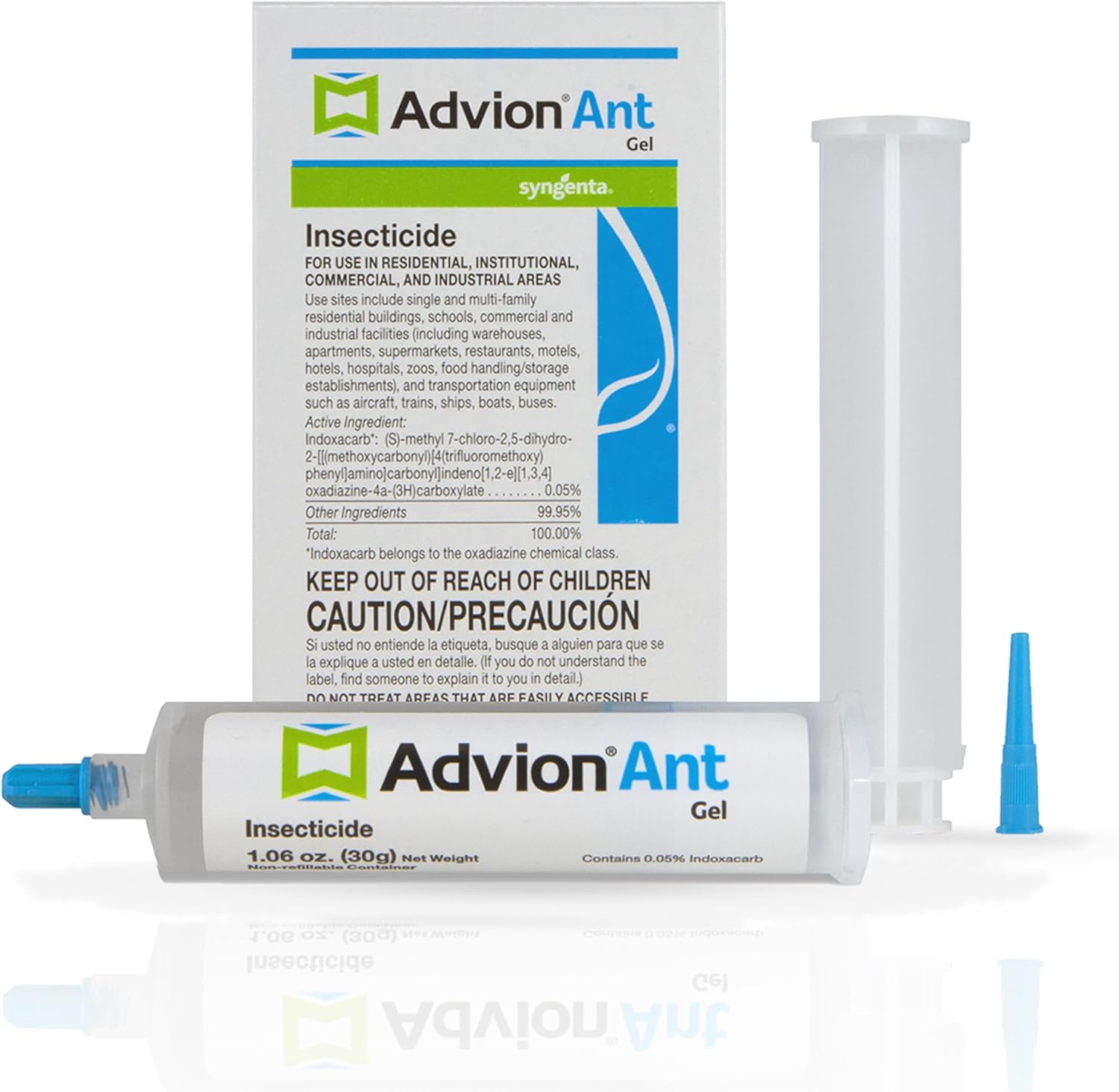
Advion Ant Gel is a concentrated, professional-style ant bait formulated around indoxacarb and a highly palatable gel matrix to lure foraging ants and carry toxicant back to the colony. You apply small dabs of the translucent, nonstaining gel in ant trails, near nesting sites, or in voids where ants forage; workers feed on the gel and transfer it through trophallaxis, which helps suppress entire colonies rather than just worker ants. The formulation is touted for lasting integrity with low odor and high attractiveness to sweet-feeding species, so you do not need frequent reapplication in protected spots. Because it is a targeted bait rather than a broadcast insecticide, it is practical for spot treatments in kitchens, pantries, and around baseboards as well as sheltered outdoor locations. Important limits are that it is a bait product requiring worker-mediated distribution so results are not instant and indoor use requires keeping it away from children and pets.
Best for: Buyers who prioritize effective colony-level control and want a concentrated, professional-style bait for spot treatments inside homes or in sheltered outdoor locations.
Less Ideal for: People needing immediate knockdown of visible ants or those who require a product for widespread outdoor perimeter treatments should consider different control methods.
- Contains indoxacarb, a potent active ingredient with a unique mode of action
- Highly palatable, translucent gel that attracts sweet-feeding ants
- Maintains formulation integrity for extended periods in sheltered application sites
- Suitable for indoor and sheltered outdoor spot treatments
- Relies on worker feeding and transfer so colony elimination can take several days to weeks
- Not intended for broad outdoor broadcast use or exposed wet areas
Verdict: Choose Advion Ant Gel when you want a high-performance, worker-transferred bait that targets colonies rather than just knocking down visible ants.
Combat Max Ant Killing Gel, 27 g Syringe

| Active ingredient | Fipronil 0.001% |
|---|---|
| Net weight | 27 gram (0.95 oz) |
| Application | Indoor and outdoor use |
| Form | Ready-to-use gel in syringe |
Combat Max Ant Killing Gel is a syringe-applied bait that targets foraging ants and carries a fipronil-based formulation back to the nest to eliminate the queen, larvae, and workers. It is used by placing small dots of gel where ants travel or enter structures—along trails, in cracks, and near suspected nests—so foragers feed and transfer the bait to the colony. Notable features include a precise syringe applicator for tight spaces, an odorless, vapor-free gel suitable for kitchens and living areas, and a high water-content formula that encourages quick feeding and colony impact within three to five days. The product is effective on a range of common species including little black ants and odorous house ants. Important limitations are the small 27 gram syringe size, which may require reapplication or multiple tubes for larger infestations, and the need to avoid placement on areas that are routinely washed or where food contact can occur. Follow label directions to prevent contamination and do not use on electrical equipment.
Best for: Buyers who want a targeted, low-odor solution to control small black ants and other common household species by placing bait directly on trails and entry points and who prefer precise, spot treatments over broad sprays.
Less Ideal for: People facing large outdoor mound infestations or who need long-lasting perimeter protection should consider larger-capacity baits or complementary control methods.
- Syringe applicator allows precise placement in cracks, crevices, and other hard-to-reach ant pathways
- Fipronil-based formula begins working within hours and is designed to eliminate entire colonies via forager transfer
- Odorless and vapor-free gel suitable for use in kitchens, bedrooms, and living areas
- High water content encourages faster feeding by ants, speeding colony control
- Small 27 gram (0.95 oz) syringe may be insufficient for large or widespread infestations
- Must avoid areas that are routinely washed or where food is prepared, limiting placement options
Verdict: A precise, low-odor gel bait that quickly attracts and kills foraging small black ants and their colonies when applied directly to trails and entry points.
Combat Max Ant Killing Bait Stations, 6 Count

| Active ingredient | Fipronil 0.01% |
|---|---|
| Count | 6 bait stations |
| Use | Indoor and outdoor |
| Duration per station | Up to 3 months |
Combat Max Ant Killing Bait Stations are compact, child-resistant plastic stations prefilled with fipronil bait that foraging ants carry back to their nest to kill the queen and collapse the colony. Each pack contains six ready-to-use stations designed to be placed along ant trails, under sinks, behind appliances, or outdoors near entry points. The formula begins working within hours and is labeled to control several common household species including little black ants, pavement ants, and others; each station is intended to last up to three months. Practical benefits include an odorless, mess-free setup that requires no mixing or activation and a discrete housing that fits in tight spaces. Limitations are that the product targets ants specifically and will not address other pests, and success depends on ants finding and accepting the bait so placement matters. Also, it contains an active insecticide so stations should be kept out of reach of children and pets despite the child-resistant design.
Best for: Buyers looking for a low-effort, economical solution for small black ant trails who want a discreet, ready-to-use product they can place around the home and entry points.
Less Ideal for: People who need a multi-pest solution or who prefer non-chemical methods should consider alternatives.
- Ready-to-use stations require no mixing or setup
- Child-resistant, low-profile housing fits in tight indoor and outdoor spots
- Fipronil ingredient works quickly and is designed to eliminate the colony rather than just visible workers
- Only controls ants and effectiveness depends on proper placement and bait acceptance
- Contains an insecticide so requires cautious placement away from children and pets
Verdict: A budget-friendly, no-mess ant bait that quickly targets small household ant colonies with easy placement and long-lasting stations.
ROUTADE Slow-Acting Ant Gel Bait Stations, 48-Pack
| Unit Count | 48 Count |
|---|---|
| Included Components | Ant gel bait |
| Item Form | Gel |
| Target Species | Ants |
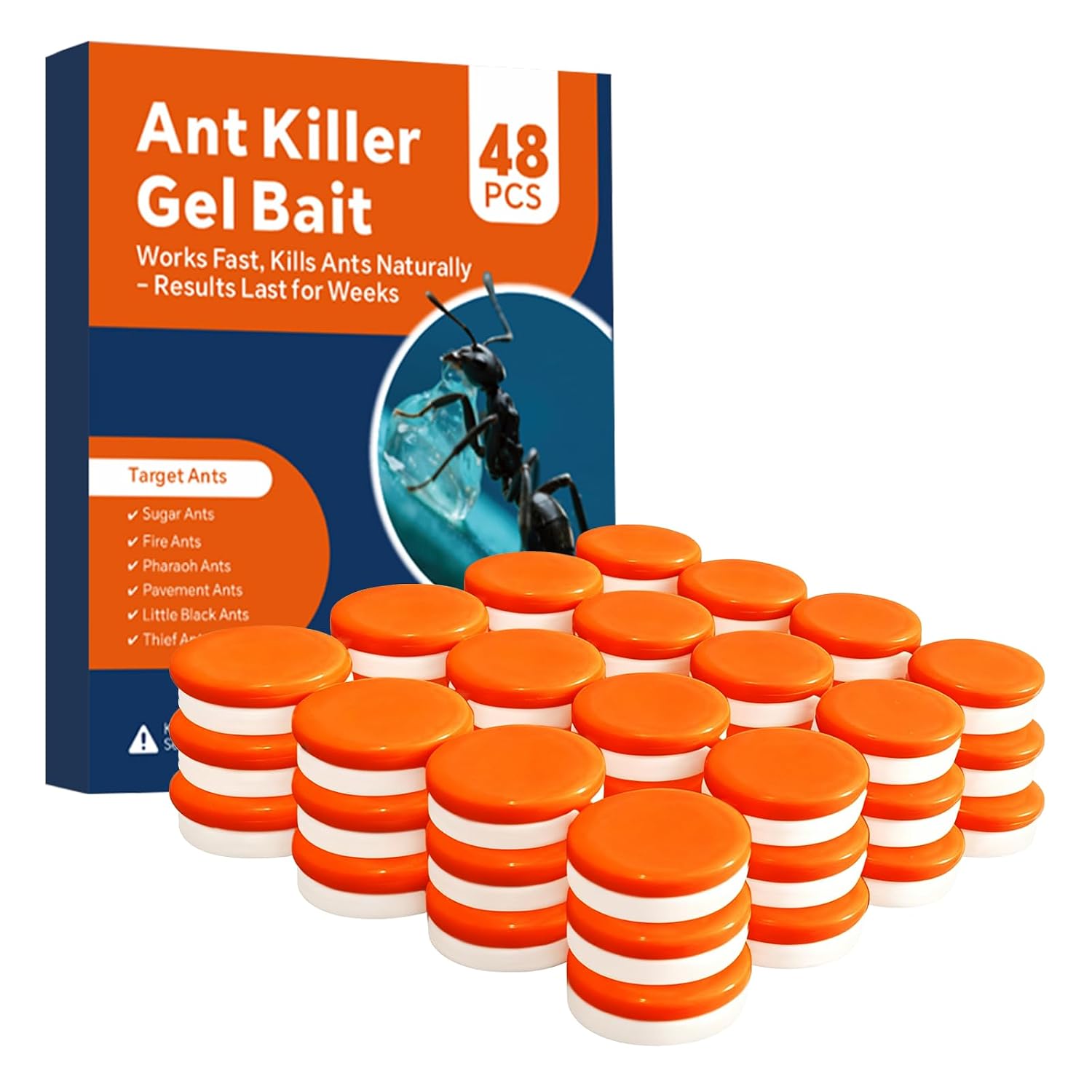
The ROUTADE 48-pack of slow-acting ant gel bait stations is a bulk-ready solution for tackling ant colonies rather than just surface workers. Each station contains a gel bait formulated for worker ants to take back to the nest, which helps reach the queen and hidden brood. Placement is simple: open the station, stick it to floors, walls, or baseboards with the included double-sided tape, and leave it in kitchens, bathrooms, basements, or on porches where ants forage. The product is labeled for common household and carpenter ants and is described as usable both indoors and outdoors, which makes it versatile for whole-house coverage. The main practical benefits are the slow-acting mode that promotes colony elimination, the no-mess sealed stations that resist tipping, and the large 48-count that lets you deploy bait widely and replace stations over time. Limitations are that species-specific efficacy can vary with bait preference and environmental conditions, and as with all ant baits it may take days to weeks to see full colony control.
Best for: Buyers who prioritize dependable, colony-level control and want to place multiple discreet bait points throughout a home and surrounding areas to reduce recurring ant problems.
Less Ideal for: People who need an instant visible kill or who prefer non-chemical control methods should consider fast-acting sprays or physical exclusion strategies instead.
- Slow-acting gel design encourages worker ants to carry bait back to the nest for more complete colony control
- Ready-to-use sealed stations reduce mess and are less likely to be knocked over
- Large 48-count lets you place multiple stations to cover high-traffic areas and replace exhausted baits
- Labeled for indoor and outdoor use so you can protect entry points and nearby nests
- Effectiveness depends on ant species and local bait preferences which may require trial and repositioning
- Not an immediate knockdown so results can take several days to weeks
Verdict: Choose this 48-pack when you want a ready-to-deploy, slow-acting gel system that focuses on eliminating entire ant colonies rather than just visible workers.
TERRO Liquid Ant Bait Stations, 12-Pack

| Unit Count | 12 Count |
|---|---|
| Item Form | Liquid |
| Target Species | Insects |
| Active Ingredients | Sodium Tetraborate Decahydrate (Borax), 5.40% |
TERRO Liquid Ant Bait Stations are prefilled, ready-to-use stations designed to control sugar-loving household ants by letting worker ants feed on a borax-based liquid and transport it back to the nest. You place the compact stations along baseboards, in corners, or near entry points where you see trails. The liquid formula is attractive to common small black ants and is intended to work slowly so workers spread the bait through the colony, often reducing visible activity within days and aiming for colony elimination over 2 to 4 weeks. Notable features include the prefilled 12-count supply for multiple rooms, EPA specification compliance, and a proven borax active ingredient. Benefits are ease of placement, hands-off operation after setup, and broad compatibility with several household ant species. Limitations are that control can take weeks for full elimination and effectiveness depends on positioning and removing competing food sources; stations are for indoor use and will not instantly stop foraging ants at treated spots.
Best for: Buyers who want a low-effort, evidence-backed approach to eliminate common small black and sugar-seeking household ants and prefer products with widespread user adoption and proven active ingredients.
Less Ideal for: People needing immediate visible elimination of ants within hours or those who require outdoor or mound-focused treatments should consider different products or complementary methods.
- Ready-to-use stations require no mixing or setup
- Targets colony-level control by having workers carry bait back to the nest
- Twelve stations provide coverage for multiple rooms or hotspots
- EPA-specified formula with borax active ingredient
- Compact design fits along baseboards and in corners for discreet placement
- Not an instant knockdown; full colony elimination can take 2 to 4 weeks
- Indoor-use product only and not intended for outdoor mound treatment
Verdict: A convenient 12-pack of proven borax liquid bait stations that quietly eliminates small sugar-loving household ants by targeting the colony rather than just the visible workers.
TERRO Multi-Surface Liquid Ant Baits, 8-Count

| Unit Count | 8 Count |
|---|---|
| Target Species | Insects |
| Recommended Uses For Product | Indoor |
| Material Type | Plastic |
These ready-to-use TERRO Multi-Surface Liquid Ant Baits are designed to control household ants by luring workers with a sweet liquid that contains borax, which they carry back to the nest. The stations can be laid flat or adhered to walls and under cabinets using the included foam strips, so you can place them discreetly along ant trails and near likely entry points. Because the active ingredient works slowly, you may see an initial increase in visible ants as foragers feed and share the bait, but that activity typically drops substantially within days and can lead to full colony control in two to four weeks. The product is easy to deploy with no mixing required and the clear, low-profile stations blend into indoor spaces. Limitations are that they are strictly for indoor use and contain a chemical attractant and toxin, so careful placement away from children and pets is required and stations must be replaced when depleted.
Best for: Homeowners looking for a low-effort, proven indoor bait to stop small black ants before they establish large colonies and who prefer straightforward, ready-to-use products.
Less Ideal for: People who need an outdoor perimeter treatment, have pets or children in areas where baits cannot be secured, or who require immediate knockdown of large infestations.
- Ready-to-use prefilled stations require no setup or mixing
- Multi-surface design with adhesive strips allows placement on walls, under cabinets, or laid flat
- Slow-acting borax formulation is carried back to the nest for colony-level control
- Low-profile, discreet appearance that blends into indoor rooms
- For indoor use only and not suitable for outdoor or heavy-infestation perimeter control
- Contains a pesticide so stations must be kept away from children and pets
Verdict: A simple, ready-to-use indoor bait that quietly attracts foragers and delivers borax back to the colony for reliable control of small black ants.
Choosing the Right Ant Bait for Small Black Ants: Key Factors to Consider
Bait Formulation and Ant Preference
Different small black ant species shift food preferences by season and colony needs. In warm months, workers often prefer sugary carbohydrates while during brood-rearing they may seek protein sources. Choosing a bait formulation that matches the ants' current preference increases the chance that foragers will take the bait and carry it back to the nest.
Bait can be sugar-based gel, syrup, or solid; or protein-based or oil-based matrices. If a single bait type fails after several days, switching between a sweet and a protein formulation often yields better results. Observing what the ants are already trailing to in the home-crumbs, pet food, grease-helps predict which bait will be most effective.
Delivery Method and Tamper Resistance
Ant baits come in stations, gel syringes, liquid vials, and granular packets. For indoor use in kitchens and pantries, tamper-resistant stations reduce accidental contact by children and pets and keep bait accessible only to ants. Gels and syringes give more placement flexibility for cracks and behind appliances but require careful placement to avoid smearing.
Choose a delivery form that fits your site. For visible trails on countertops, small bait stations or gel spots tucked near baseboards work well. For access along foundations or outside entry points, weather-resistant stations or liquid vials can maintain attractiveness longer in damp conditions.
Active Ingredient and Transfer Potential
Not all active ingredients result in the same level of colony transfer. Slow-acting ingredients that allow workers to return to the nest before dying improve the chance of queen and brood exposure. Rapid knockdown options can eliminate surface workers quickly but may not reach the colony, resulting in reinfestation.
Understand that transfer potential depends both on the chemistry and on how readily workers carry bait back. Look for formulations designed for horizontal transfer within social insect colonies rather than immediate contact kills when the objective is colony control.
Placement Strategy and Accessibility
Where you put bait affects uptake. Place bait along established ant trails, near entry points, and close to suspected nests when known. Avoid placing baits directly on food-preparation surfaces; instead tuck stations behind appliances, along baseboards, or inside cabinets where ants run.
Ensure the area remains undisturbed until activity declines. Human or pet disturbance will divert ants from the bait source and reduce effectiveness. For outdoor placement near foundations, choose sheltered positions that stay relatively dry and are easy to check.
Safety for People and Pets
Ant baits vary in toxicity and formulation. Tamper-resistant stations reduce exposure risk, but gels or loose liquids can be accessible if placed carelessly. Consider household composition when choosing a bait type and plan placements away from children and pets.
Readability of labels and clear instructions matter because safe use depends on following placement and disposal guidance. When safety is a top priority, pick options with enclosed stations and lower-toxicity active ingredients while still matching the ants' feeding preference.
Longevity and Environmental Conditions
Bait longevity matters for long treatments. Some baits dry out, crystallize, or lose attractiveness when exposed to heat or moisture. Indoor environments are generally stable, but areas near sinks, dishwashers, or outside doors may be wetter and reduce bait life.
Choose products rated for the conditions where you will place them. For humid or rainy outdoor spots near foundations, weatherproof stations or sealed liquid vials can maintain attractiveness longer than exposed gels or solids.
Preparing the Site Before Baiting
Start by cleaning visible food residues and narrowing where ants are active. Wiping trails with a mild cleaner removes pheromone paths and helps you confirm fresh activity. Reducing competing food sources increases the chance ants will accept bait quickly.
Next, map entry points and trail lines. Place small temporary markers where ants repeatedly cross door thresholds or baseboards. That map helps you concentrate bait placements in high-uptake zones rather than spreading bait thinly across many areas.
- Clear crumbs, sticky spills, and open food containers.
- Dry wet areas that might attract ants away from bait.
- Note times of day when activity peaks to time placements.
Placement Tips for Kitchens and Pantries
In food-preparation areas, prioritize enclosed bait stations to keep bait off counters and out of reach. Tuck stations along baseboards, inside cabinets, and under sinks where ants run but household contact is limited. Avoid placing bait on surfaces where food is directly prepared.
For gel baits, place small dots behind appliances and in cracks where ants feed. Check daily for uptake and replace or refresh when the bait is depleted or dried out.
- Use stations rather than smear gels on countertops.
- Keep bait away from pet feeding areas and easily accessed shelves.
- Monitor placements for several days before relocating.
Managing Outdoor and Foundation Infestations
When ants enter from outside, placing bait near the foundation, under eaves, and along exterior trails helps intercept foragers before they find indoor food. Use weather-resistant stations and avoid exposed gels that wash away in rain.
Trim vegetation away from walls and seal obvious entry gaps after bait uptake drops. Reducing outside harborage minimizes reinvasion and makes indoor baiting more effective.
- Place stations in sheltered spots that stay relatively dry.
- Check baits after heavy rain to ensure they remain attractive.
- Combine habitat modification like sealing cracks with baiting for long-term control.
When Baiting Does Not Work Quickly
If you see no uptake after several days, change the bait formulation. Ants may be ignoring a sweet bait if their colony is seeking protein, or vice versa. Rotate between sweet and protein baits while keeping placements consistent along trails.
Also reconsider placement. High traffic areas or sheltered cracks often outperform exposed spots. Finally, reduce competing food sources and avoid spraying insecticide near bait placements, as that can repel foragers and prevent transfer back to the nest.
- Try a different bait type rather than increasing bait quantity.
- Avoid disrupting trails while monitoring bait activity.
- Give slow-acting transfer baits at least a week before judging failure.
Monitoring, Maintenance, and Cleanup
Check bait stations daily for several days and then weekly as activity declines. Remove and replace spent bait according to manufacturer guidance or when the matrix is dried or contaminated. Proper disposal of used bait stations keeps pets and children safe.
After visible trails stop, maintain a short monitoring schedule to catch reappearance early. Keep routine sanitation to minimize reinfestation pressure from outdoor sources and stored food.
- Record locations and dates of placements to track effectiveness.
- Clean any spilled bait promptly with soapy water.
- Store unused bait securely and dispose of empty containers safely.
How We Chose the Best Ant Bait for Small Black Ants
We focused on products that are practical for indoor and near-foundation ant control and that match common small black ant behaviors. Selection prioritized bait formulations that appeal to the carbohydrate and protein preferences small black ants commonly show across seasons, so we looked for a mix of sweet and protein-based baits. We also evaluated how easily baits can be placed in kitchens, pantries, and along ant trails without introducing hazards to people or pets. Other concrete criteria included residual pickup rate by foraging workers, container design and tamper resistance for safe placement, and visible reduction timelines reported in field use. We excluded broad-spectrum outdoor granular insecticides, foggers, and non-bait contact sprays because those do not rely on colony-level transfer and often produce different risk profiles. The shortlist reflects products that balance attractiveness, safe delivery, and practical deployment for typical household ant infestations.
FAQ
How long until I see results after placing bait?
Often you can see reduced surface activity within a few days, but colony-level control may take one to two weeks. Slow-acting baits that allow worker transfer typically need several days to affect brood and queens.
Can I use bait if I have pets or small children?
Yes, but choose tamper-resistant stations and place them out of reach. Avoid loose gels or liquids in accessible spots. Always follow label safety guidance and supervise pets in treated areas until baits are secured.
Should I seal cracks and spray insecticide while baiting?
Sealing cracks is beneficial and can reduce future entry, but avoid spraying contact insecticides near active bait placements. Sprays can repel foragers and reduce bait uptake, undermining colony transfer.
What if the ants ignore the bait entirely?
If there is no uptake after several days, try a different bait type or move the placement closer to fresh trails. Also reduce other food sources because competing foods can draw ants away from bait.
Can baiting outdoors help indoor infestations?
Yes, intercepting foragers near foundation entry points with outdoor stations often reduces indoor pressure. Use weather-resistant stations placed in sheltered locations so bait remains attractive.
Is it better to use sweet or protein bait for small black ants?
It depends on colony needs and season. Small black ants often switch between sweet and protein preferences, so try a sweet bait first in many cases and switch to protein if uptake is low.
Final Verdict
Prioritize a bait that matches the ants' current food preference, is delivered in a tamper-resistant form, and is placed along active trails. Expect a few days to weeks for colony-level effects and be prepared to switch formulations or adjust placements if uptake is poor. Combine baiting with sanitation and minor habitat changes for longer-term control.
