

Note: This article contains affiliate links. If you click on these links and make a purchase, I may earn a small commission at no extra cost to you. This helps support my research and content. Read my full affiliate disclosure here.
If you drive felling wedges, the right axe makes the job safer and far more efficient. An axe meant for wedge work needs a striking surface that withstands repeated blows, a head geometry that concentrates force into the wedge, and a handle that absorbs shock while keeping control. In this guide we shortlisted five top options for driving felling wedges and evaluated each by striking durability, balance, and user handling. Read on to understand which attributes matter most for different wood types and working rhythms before you look at specific models.
Top Picks at a Glance
| Best Overall The best all-around choice for most situations | 1844 Helko Werk Hessen Woodworker German Felling Axe |  |
| Best Quality Built to a higher standard if you want something more solid | 1844 Helko Werk Forester Full-Size Felling Axe (Made in Germany) |  |
| Best Value The sweet spot between price and what you get | Kings County Tools 31" Forest Felling Axe (German-made Maul, Ash Handle) |  |
| Best Budget The cheapest option that still gets the job done reliably | Truper 30526 Jersey Axe with Hickory Handle, 3.5 lb Head, 35 in |  |
| Most Popular A crowd favorite that many people choose with confidence | Fiskars 28" A-Series Chopping Axe |  |
1844 Helko Werk Hessen Woodworker German Felling Axe

| Head Material | C50 high carbon steel |
|---|---|
| Head Weight | 2 3/4 lb |
| Handle Material | Grade A American hickory |
| Handle Finish | Boiled linseed oil |
The Helko Werk Hessen Woodworker is a traditional, hand-forged German felling axe built for precise cutting and regular outdoor use. It pairs a 2 3/4 lb C50 high-carbon steel Rheinland-pattern head with a 28-inch grade A American hickory handle finished in boiled linseed oil. Typical use is felling small to medium trees, driving wedges, and splitting smaller rounds for firewood where a controlled, swinging cut is required. The slim, wide-bit convex blade slices cleanly and holds an edge well thanks to a 53-56 HRC temper, while the drop-forged construction and included leather sheath and maintenance oil make it straightforward to care for. Practical benefits include good cutting performance for its weight, a comfortable traditional handle shape, and attention to materials and finish that reduce shock and help durability. Important limitations are that it is not a heavy-duty splitting maul and users should follow maintenance guidance to avoid rust and preserve the handle; sharpening or reprofiling requires care to avoid overheating the temper. For balanced, regular felling and wedge-driving work this axe offers dependable, long-lived performance.
Best for: Gardeners or woodland owners who want a well-balanced, high-quality felling axe for regular cutting, driving wedges, and light splitting without over-specializing in heavy mauling.
Less Ideal for: People who need a dedicated, high-mass splitting tool for large logs or those who want a no-maintenance, disposable option.
- Hand-forged C50 high-carbon steel head with 53-56 HRC for strong edge retention
- Slim Rheinland-pattern wide-bit blade that excels at cutting through timber
- Grade A American hickory handle finished with boiled linseed oil for comfort and shock dampening
- Includes full-grain leather sheath and Axe Guard oil for protection and maintenance
- Not intended as a heavy splitting maul so less efficient on large, stubborn rounds
- Requires regular maintenance to prevent rust and preserve handle condition
Verdict: A finely made, midweight felling axe that combines a sharp, hand-forged head and comfortable hickory handle for effective wedge driving and tree cutting.
1844 Helko Werk Forester Full-Size Felling Axe (Made in Germany)

| Head Material | C50 high carbon steel |
|---|---|
| Head Type | Felling |
| Head Weight | 3.5 lb |
| Handle Material | American hickory |
| Handle Length | 31 in |
The Helko Werk Forester is a purpose-built full-size felling axe that brings a hand-forged C50 high carbon steel head and a carefully selected American hickory handle to demanding tree work. With a roughly 3.5 lb head and a 31 inch handle it delivers the mass and reach needed to fell medium and large trees while remaining manageable for a single user. The polished finish on the head reduces cutting friction and helps resist surface rust, and the handle is sanded and treated with boiled linseed oil for a comfortable grip. Included leather sheath and a small bottle of protective Axe Guard oil make basic care and transport straightforward. Because it is a premium handmade tool, the Forester emphasizes edge retention and balance over low cost and requires routine sharpening and proper storage to protect the wooden handle and carbon steel. It is not lightweight for casual pruning but shines when you need a reliable, well-balanced axe that holds an edge for sustained chopping tasks.
Best for: A buyer who prioritizes chopping performance and durability for regular tree-felling or heavy-duty yard work and wants a precision-forged tool that holds an edge and feels balanced under swing.
Less Ideal for: Not a good fit for casual gardeners, light pruning, or ultralight backpacking where a smaller hatchet or lightweight saw would be easier to handle.
- Hand-forged C50 high carbon steel head for strong edge retention and durability
- Balanced full-size design (3.5 lb head, 31 in handle) suited to felling medium and large trees
- Premium grade A American hickory handle finished with boiled linseed oil for comfort and shock absorption
- Polished head finish reduces cutting friction and helps resist surface rust
- Includes leather sheath and Axe Guard oil for protection and basic maintenance
- Requires regular sharpening and oiling to maintain the carbon steel head and prevent rust
- Heavier and longer than compact axes, so it is less suitable for tight spaces or extended backpacking carries
Verdict: Buy this axe if you want a high-performance, hand-forged felling axe that combines weight, balance, and premium materials for reliable tree-chopping results.
Kings County Tools 31" Forest Felling Axe (German-made Maul, Ash Handle)
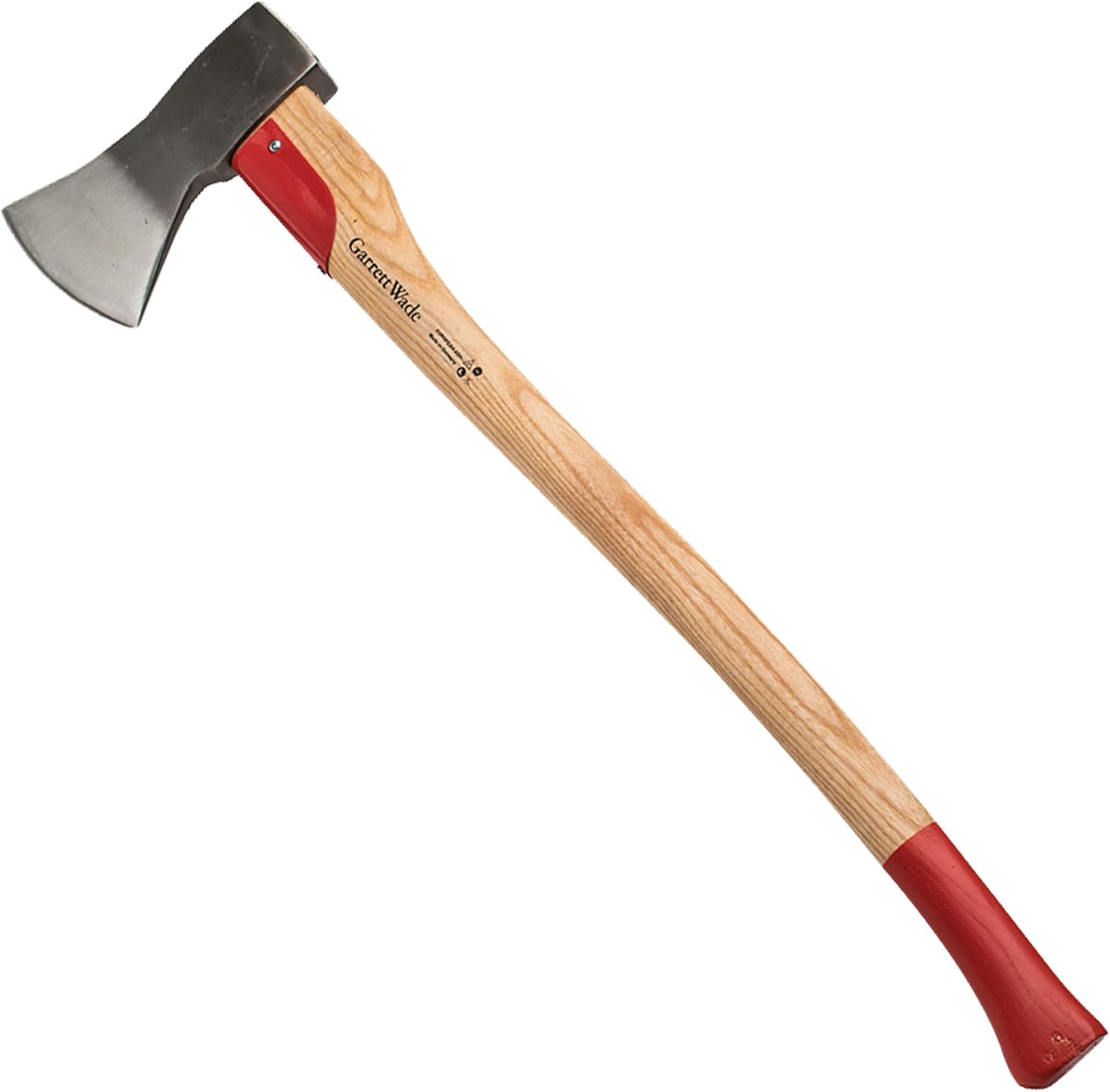
| Head Weight | 4.3 pounds |
|---|---|
| Handle Material | Wood |
| Blade Material | Alloy Steel |
| Head Type | Splitting Maul |
The Kings County Tools 31" Forest Felling Axe is built for heavy outdoor work: a long, 8.6-inch maul-style head with a 5.5-inch blade provides significant momentum for one-strike splits, while the European ash handle and red steel collar aim to absorb shock during repeated swings. Typical uses include felling small to medium trees, splitting rounds for firewood, and clearing limbs during yard cleanup. The broad shoulders that taper to the edge help reduce jamming when splitting, and the alloy steel head made in Germany suggests durable edge retention. Because it is a full-size tool with a substantial head weight, it performs best when you have room to swing and some experience with two-handed axes. Limitations are inherent to its size: it is heavier and less maneuverable than hatchets or short-handled axes, and requires safe swinging clearance and proper maintenance to keep the edge and the wooden handle in good condition.
Best for: Buyers who prioritize a dependable, traditional felling and splitting tool for regular yard work or firewood preparation and who prefer a proven, no-frills construction over ultralight alternatives.
Less Ideal for: Not a good fit for users who need a compact, lightweight axe for backpacking, confined work sites, or those who prefer maintenance-free synthetic handles.
- Heavy maul-style head delivers strong splitting force for one-strike splits
- European ash handle with steel collar designed to reduce shock and improve durability
- Long head length and tapered shoulders help prevent jamming when splitting logs
- Full-size weight and length make it less maneuverable for tight spaces or fine chopping
- Wood handle requires periodic care and is more susceptible to weathering than synthetic handles
Verdict: Buy this axe if you want a traditional, heavy-duty maul-style felling and splitting tool with a large head and shock-mitigating ash handle for dependable one-strike splits.
Truper 30526 Jersey Axe with Hickory Handle, 3.5 lb Head, 35 in

| Head Weight | 5 pounds |
|---|---|
| Handle Material | Hickory, Steel, Wood |
| Blade Material | Alloy Steel |
| Head Type | Jersey |
The Truper 30526 is a straightforward Jersey axe built for general chopping around the yard, farm, or garden. It pairs a heat-treated alloy steel head with a classic hickory handle and a wood and steel wedge assembly, giving a familiar balance and impact feel for cutting small to medium trees, limbing, and splitting light wood. The 3.5-pound head provides enough mass to drive cuts without being overly fatiguing for one-person use, and the full-length hickory handle offers a comfortable two-handed grip for controlled swings. Practical features include a hardened blade for edge retention and a recommendable maintenance routine of cleaning and light lubricant to prevent rust. Limitations for this use case are the modest head weight and conventional Jersey head shape, which make it less efficient on very large trunks or prolonged professional felling compared with heavier felling axes or mauls. For buyers prioritizing a reliable, no-frills tool for occasional chopping, this axe delivers dependable performance; heavy-duty or frequent commercial tree felling would call for a heavier specialist axe.
Best for: Buyers who need an affordable, reliable axe for occasional tree chopping, limbing, and general yard work and who prefer a traditional hickory-handled tool that is easy to swing and maintain.
Less Ideal for: Do not choose this if you routinely fell large trees, work commercially, or need a heavy maul for large-scale splitting.
- Heat-treated alloy steel head for better edge retention
- Durable hickory handle that absorbs shock and offers comfortable grip
- Balanced 3.5-pound head suitable for one-person chopping and limbing
- Simple, serviceable wood and steel wedge assembly for secure head fit
- Head weight and Jersey profile limit efficiency on large-diameter trees
- Not optimized for extended professional felling or heavy-duty splitting
Verdict: A practical, budget-friendly hickory-handled Jersey axe that reliably covers occasional tree chopping and yard work without specialist weight or features.
Fiskars 28" A-Series Chopping Axe

| Head Type | Felling |
|---|---|
| Blade Edge | Hardened, non-stick |
| Handle Material | Steel,Wood |
| Blade Material | Alloy Steel |
The Fiskars 28" A-Series Chopping Axe is built for heavy backyard chopping and light tree felling. It pairs a low-friction, hardened alloy-steel blade with a precision-balanced head that helps the blade bite deeper on each swing, so you get cleaner cuts and fewer stuck strikes when felling small trees or splitting logs. The handle combines steel and wood construction with a shock-absorbing FiberComp-style design to reduce vibration and make repeated swings less fatiguing. Practical benefits include an ultra-sharp edge that stays effective through routine use and a balanced feel that multiplies swing power for faster work. Limitations are that this is a midweight, 28-inch tool intended for small to medium trunks rather than heavy timber, and its mixed-material handle may require occasional care compared with full-composite or all-wood traditional designs. For routine firewood prep, campsite work, and clearing small trees, it offers a reliable, user-friendly chopping performance.
Best for: Buyers who want a dependable, easy-to-swing axe for routine tree felling, firewood prep, and yard cleanup and who value tools with solid real-world performance evidence.
Less Ideal for: Professional arborists or anyone who regularly needs to fell very large trunks should choose a heavier, longer-handled felling axe or specialized chainsaw instead.
- Balanced head design increases swing power and cutting efficiency
- Hardened alloy-steel blade with low-friction coating reduces sticking
- Shock-absorbing handle reduces vibration during repeated swings
- Sharp edge and blade geometry suitable for clean felling and log splitting
- 28-inch length and midweight construction are not ideal for very large or old-growth trees
- Handle uses mixed materials that may need occasional maintenance
Verdict: A well-balanced, sharp 28-inch axe that delivers efficient, low-sticking cuts for felling small trees and prepping firewood.
Choosing the Right Axe for Driving Felling Wedges: Key Factors to Consider
Striking Face Hardness and Reinforcement
The striking face must tolerate repeated impacts against steel wedges without mushrooming or chipping. Hardened steel faces or reinforced striking collars extend service life and reduce the risk of metal fragmentation.
If the face is too soft it will deform quickly, creating sharp burrs that can shatter or send shards. If it is overly brittle, cold striking can crack the head. Prioritize axes with visible reinforcement or specification of a hardened striking zone so you do not need to rework the head after a few uses.
Head Mass and Geometry
Driving wedges requires concentrated force; a head with sufficient mass transfers momentum into the wedge rather than dissipating it. Look for heads that offer a balance between weight and swing speed appropriate to your strength and technique.
The geometry matters too. A flatter poll or a slightly convex butt concentrates strike force into the wedge. Heads shaped for splitting with a wide bit are less efficient for wedge driving because they spread force instead of focusing it, so choose geometry suited to striking rather than cleaving.
Handle Material and Vibration Damping
Repeated wedge strikes produce significant shock that travels into your hands and arms. Handles made of shock-absorbing materials or designs with built-in dampening reduce fatigue and risk of injury over extended sessions.
Hickory remains a durable, repairable option with natural flex. Fiberglass or composite handles can offer superior vibration control and weather resistance, but assess how they transmit feedback. Consider how the handle end and grip shape affect control when swinging at odd angles or while kneeling.
Grip Shape and Length
Grip geometry affects leverage and control during the full swing and during shorter, controlled strikes. Longer handles generate more force but need more room to swing and greater skill to control reliably.
A flared or textured butt prevents slippage on heavy impacts, while a comfortable mid-handle profile helps with one-handed guidance for initial placement. Make sure the handle length matches your working posture and the tightness of your work area.
Balance and Point of Percussion
Balance determines how the tool feels during the swing and how consistently it hits the wedge. A well-balanced axe will have a predictable point of percussion so your strikes land where expected, reducing glancing blows and improving safety.
Too head-heavy and the axe becomes tiring and hard to control. Too light and you waste energy trying to create effective momentum. Choose an axe whose balance matches the strike style you will use most often for wedge driving.
Safety Features and Handle Retention
Safety features for wedge driving include reinforced striking faces, secure head-to-handle retention methods, and handles designed to resist splitting or loosening. A slipped head or shattered handle during a heavy strike can cause severe injury.
Inspect how the head is attached and whether the handle material is rated for heavy striking. Look for axes with protective coatings or collars on the poll to reduce wear and for handles with reliable end stops or wedges that keep the head seated under heavy use.
Why a Dedicated Wedge-Driving Axe Matters
An axe built for driving wedges is not the same as a chopping or splitting axe. The difference shows up where the head meets the wedge. Dedicated wedge-driving axes feature reinforced striking zones, head geometry that directs force into the wedge, and handles designed to withstand repeated blunt impacts.
Using the right tool reduces risk of damage to the axe and to the wedge, and it lowers the chance of glancing blows that can injure the user. When you are working on large felling cuts, reliable strikes speed the process and reduce wear on wedges and saw chains.
- Improves strike consistency and reduces tool damage
- Reduces user fatigue through better shock control
- Increases safety by minimizing unpredictable head movement
Techniques for Safer, More Effective Wedge Driving
Start with the wedge seated properly and use controlled, measured strikes. Let the tool weight do the work rather than forcing extra speed. Keep your stance stable and always align the swing path so the strike lands squarely on the wedge head.
Rotate or reposition the wedge periodically to avoid hammering one side until it deforms. Use a short series of firm strikes rather than a single over-committed blow; this yields better control and less shock to the handle.
- Use the butt of the axe head for striking rather than the bit
- Wear eye protection and ensure bystanders are clear
- Check wedge seating after every few strikes
Maintaining Your Axe After Wedge Work
Inspect the striking face after sessions and dress any burrs or mushrooming before they grow. Small deformations can be removed with a file or grinder, but large damage to a striking face usually indicates the head needs professional attention or replacement.
Keep handles clean and check for cracks or looseness. Wooden handles may need oiling to prevent drying; composite handles should be inspected for stress fractures. Tighten or re-wedge loose heads promptly to avoid hazardous failures.
- File out burrs and smooth the striking face regularly
- Check head-to-handle fit before every work session
- Store the axe protected from moisture and UV where possible
Matching Axe Weight to Wood Species and Wedge Size
Hardwoods and larger wedges demand more momentum, which favors heavier heads or longer handles. Softer wood and small wedges need less mass and often benefit from a quicker, more controllable axe.
If you frequently switch between tasks, consider a mid-weight option that balances impact energy and control. For prolonged wedge-driving jobs choose a setup that minimizes user fatigue while still delivering the force needed to seat and drive wedges efficiently.
- Heavier heads for large wedges and dense hardwoods
- Mid-weight for mixed tasks and moderate-sized wedges
- Shorter, lighter axes for confined spaces and small wedges
How We Chose the Best Axe for Driving Felling Wedges
We focused on tools built for repeated wedge strikes rather than general chopping. The primary evaluation criteria were striking durability, head geometry and mass, handle shock absorption and ergonomics, balance and control during swing, and safety features such as reinforced striking zones or collar designs. We tested these dimensions conceptually against common wedge-driving tasks: seating and driving hardwood wedges, clearing wedge cores, and light hammering of steel wedges. Excluded items included light splitting axes, decorative or collectible axes, and inexpensive hatchets with thin striking faces that will deform under repeated wedge blows. We also filtered out axes whose handle materials do not offer adequate shock dampening or that lack a secure head-to-handle fit. The result is a list of durable, purpose-oriented axes that suit homeowners and professional sawyers who need confidence when driving felling wedges.
FAQ
Can I use a regular splitting axe to drive felling wedges?
Often people do, but splitting axes are usually shaped to split wood and may have wider bits or softer poll faces that deform when striking metal wedges. A dedicated wedge-driving axe has reinforcement and geometry better suited to repeated strikes.
How do I protect my axe head when hitting steel wedges?
Choose an axe with a hardened or reinforced striking zone, and use measured strikes. Regularly inspect and file any mushrooming. Using an intermediate hammer designed for steel wedges can also reduce direct wear on the axe head.
What handle length is best for driving wedges?
Handle length depends on your stance, workspace, and the size of the wedges. Longer handles generate more force but need clear swing space. Shorter handles give better control in tight areas. Match length to your typical working conditions.
How often should I inspect the axe after wedge work?
Inspect the head and handle before and after each heavy session. Look for burring, cracks, loosening, or unusual wear. Address small defects immediately to prevent escalation into dangerous failures.
Is a fiberglass handle better than hickory for wedge driving?
Fiberglass handles often offer superior weather resistance and vibration damping, while hickory provides natural flex and is easier to repair in the field. The best choice depends on your priorities for feel, durability, and serviceability.
Final Verdict
When selecting an axe for driving felling wedges, prioritize striking durability, appropriate head mass and geometry, and a handle that manages shock and offers secure control. Tradeoffs between weight and control determine how quickly you fatigue and how effectively strikes drive wedges into different wood species. Choose a tool that matches the size of wedges you use and the environment you work in. Focusing on reinforced striking zones, solid head retention, and a comfortable grip will keep wedge-driving tasks safer and more productive.
