

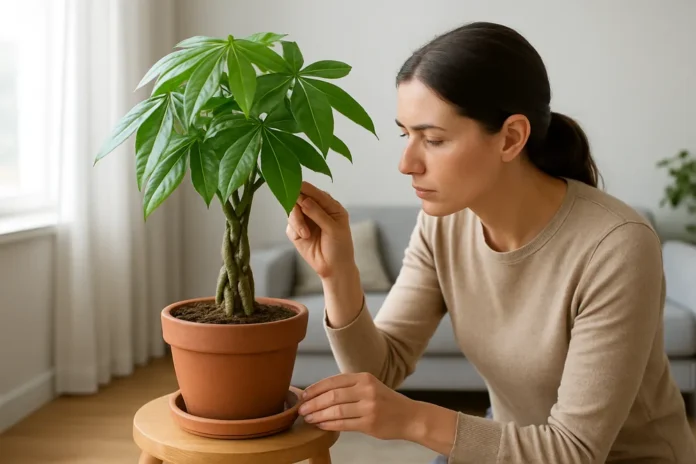
A money tree usually stops growing because it is not getting enough bright light, its roots are stressed, or it is being overwatered. Slow growth can also be normal in winter or after a recent move, repotting, or temperature change.
A money tree that looks alive but never seems to put out fresh leaves can be frustrating. In most homes, slow or stalled growth comes down to a few common issues: not enough light, watering problems, cramped roots, poor drainage, or plain old stress from environmental changes.
I have found that a money tree not growing is often less about one dramatic mistake and more about a plant that has been tolerating conditions instead of thriving in them. The good news is that Pachira aquatica usually responds well once you correct the main bottleneck and give it a little time.
If your plant still has green stems and reasonably healthy leaves, there is a strong chance it can resume active growth. The key is figuring out whether the slowdown is normal, seasonal, or a sign that the roots and foliage are under stress.
When Slow Growth Is Actually Normal
Money trees are not especially fast growers indoors. In a bright room during spring and summer, you may see periodic flushes of new leaves and a bit of height gain. In fall and winter, though, growth often slows to a crawl or stops for a while. Shorter days, cooler indoor temperatures, and lower light levels can all reduce growth without meaning anything is wrong.
A recently purchased or recently moved money tree may also pause before growing again. Plants commonly need a few weeks to adjust after being brought home from a greenhouse, shifted to a new room, repotted, or exposed to air conditioning or heating vents.
- Growth slows naturally in winter, especially in northern U.S. homes
- Newly purchased plants often need time to adjust to lower indoor light
- Repotting can temporarily delay top growth while the plant re-establishes roots
- A healthy plant may focus on root growth before pushing new leaves
When I am deciding whether a money tree is truly stalled, I look at the newest buds and leaf nodes before I look at the overall size. A plant can seem unchanged for weeks, but if the buds are swelling or tiny leaflets are forming, it is still actively trying to grow.
Low Light Is One of the Most Common Causes
Money trees tolerate medium light, but they grow best in bright, indirect light. If yours is tucked in a dim corner, several feet away from a window, or in a room that stays gloomy most of the day, it may stay alive while barely growing. This is one of the most common reasons indoor money trees stall.
Without enough light, the plant cannot produce the energy it needs to make new stems and leaves. You may also notice smaller new leaves, longer gaps between leaf sets, or a general loss of vigor. In very low light, the plant may eventually begin dropping older leaves instead of producing fresh ones.
Signs Light Is the Issue
- Little to no new growth during spring and summer
- Pale, undersized, or stretched new leaves
- Plant leaning strongly toward a light source
- Healthy-looking stems with no real growth progress
- Leaf drop from lower or inner parts of the plant
The best placement is usually near an east-facing window or a few feet back from a bright south- or west-facing window with filtered light. If natural light is weak, a grow light can make a real difference. Just avoid harsh midday sun directly on the leaves, especially if the plant has been growing in a darker spot.
Overwatering Can Stall Roots and Stop Top Growth
People often expect overwatering to show up only as yellow leaves, but it can also show up as no growth. Money trees need moisture, yet they do not like sitting in soggy soil. When the potting mix stays wet too long, roots struggle to get oxygen. Once roots are stressed, the plant often stops pushing new growth.
If overwatering continues, root rot can follow. At that stage, the plant may look stalled, droopy, or increasingly unhealthy even though the soil never seems dry. Growth stops because the root system can no longer support the foliage well.
Clues Your Money Tree Is Too Wet
- Soil stays damp for many days after watering
- Leaves yellow and drop, especially lower ones
- Stems feel soft near the base
- The pot feels heavy most of the time
- A sour or musty smell comes from the soil
I water money trees by feel, not by the calendar. If the top couple of inches are still moist, I wait, because repeated small waterings are one of the easiest ways to keep the root zone too wet.
Water thoroughly, then let excess drain completely. Empty saucers or cachepots so the roots are not left standing in runoff. If the soil is dense and waterlogged, the plant may need fresh potting mix rather than just a new watering routine.
Underwatering Can Also Cause Stalled Growth
While overwatering is more common, underwatering can slow a money tree too. A plant that repeatedly gets too dry has to shift energy toward survival instead of making new growth. The leaves may curl, crisp at the edges, or droop between waterings.
This often happens when the root ball becomes very dry and starts repelling water, or when a plant is in a warm bright spot and the potting mix dries faster than expected. Small nursery pots are especially prone to drying out quickly.
- Leaves feel limp and thin before watering
- Dry, crispy tips or margins appear
- Soil pulls away from the inside edge of the pot
- Water runs straight through without soaking in well
- New growth aborts or stays tiny
If the root ball has become hydrophobic, water slowly and thoroughly until the whole soil mass is evenly moist again. In some cases, bottom watering for a short period helps rehydrate the mix, but do not leave the pot sitting in water for too long.
Root Problems Often Hide Below the Soil Line
If your money tree has not grown for a long time despite decent light and careful watering, check the roots. Root-bound plants can stall because they have little room left to expand. On the flip side, damaged or rotting roots cannot support growth even if the top of the plant still looks passable for a while.
Many money trees are sold in tight nursery pots or decorative containers with poor drainage. Some also come with trunks tightly braided and occasionally secured in ways that create stress lower down. If growth has been poor since purchase, the root zone deserves a close look.
What to Look For
- Roots circling densely around the root ball
- Very little soil left because roots fill the pot
- Brown, mushy, or foul-smelling roots
- Compacted soil that stays soggy or turns bone dry quickly
- Drainage holes clogged with roots
If the plant is root-bound but otherwise healthy, move it up only one pot size. A container that is too large can hold excess moisture and create new watering problems. If you find rot, trim damaged roots with clean pruners and repot into a fresh, airy mix.
Poor Soil and Drainage Can Keep the Plant Stuck
Even if your watering habits are reasonable, heavy soil can keep a money tree from thriving. A mix that packs down tightly around the roots limits airflow and holds water too long. Old potting mix can also break down over time, becoming dense, sour, and less effective at supporting healthy roots.
Money trees do best in a loose, well-draining indoor potting mix. A standard houseplant mix improved with materials like perlite, pine bark, or coarse coco chips usually works better than a dense moisture-retentive blend by itself.
Better Soil Conditions for Active Growth
- A pot with at least one open drainage hole
- A loose mix that drains well but still holds some moisture
- Fresh potting soil every couple of years if the mix has broken down
- No decorative rocks blocking evaporation at the soil surface
If your plant is in a glued-in arrangement, a pot with no drain hole, or very peaty compacted soil, expect slower growth until those conditions improve. Healthy roots need both moisture and air.
Nutrient Issues Can Limit Growth, but They Are Not Always the First Problem
A money tree that has been in the same pot for a long time may simply have used up much of what the soil once offered. Low fertility can show up as weak growth, smaller leaves, or a plant that stays green but never really gets going. Still, fertilizer is often blamed too early when the real issue is light or root health.
If the plant is actively growing in spring or summer, a balanced liquid houseplant fertilizer at a mild rate can help. Feeding a plant that is sitting in very low light or soggy soil will not fix the underlying problem, and overfertilizing can damage roots and further stall growth.
- Feed only during active growth periods
- Use a diluted, balanced fertilizer rather than a heavy dose
- Avoid fertilizing a stressed, root-damaged, or recently repotted plant right away
- Flush the soil occasionally if salts may have built up from fertilizer or hard water
When a money tree is not growing, I treat fertilizer as the last adjustment, not the first. If the plant is not getting enough light, extra feeding usually gives you more risk than reward.
Temperature, Humidity, and Drafts Can Slow a Money Tree Down
Money trees prefer stable indoor conditions. Cold drafts, sudden heat, dry furnace air, and blasts from air conditioners can all reduce growth. The plant may not collapse outright, but it often pauses because it is dealing with stress rather than using energy to produce foliage.
These plants generally prefer temperatures around 65 to 80 degrees Fahrenheit. Brief dips may be tolerated, but repeated exposure to chilly windows, cold floors, or drafty doors can slow them noticeably. Very dry air can also contribute to leaf edge browning and reduced vigor.
- Keep the plant away from heating and cooling vents
- Avoid placing it against icy winter glass
- Do not let nighttime temperatures swing too low
- Aim for moderate household humidity rather than extremely dry air
Pruning, Pests, and Trunk Issues Can Interfere with Growth
If you have recently pruned your money tree, remember that it may need a little time to redirect growth. Pruning is not harmful when done correctly, but it can temporarily pause visible progress. Usually the plant responds by branching from nodes below the cut.
Pests are another possibility, especially spider mites, mealybugs, and scale. A mild infestation may not be obvious at first, but sap-feeding insects can weaken the plant enough to stop new growth. Check both upper and lower leaf surfaces, stem joints, and the braided trunk area.
With braided money trees, also inspect the lower trunk carefully. Sometimes ties, bands, or tight braiding can restrict normal expansion over time. If stems are girdled or damaged, growth above that point may be reduced.
- Fine webbing or speckled leaves may suggest spider mites
- Cottony white clusters point to mealybugs
- Sticky residue can signal sap-feeding pests
- Indented or constricted trunk sections may indicate physical restriction
How to Get Your Money Tree Growing Again
Once you know the likely cause, the fix is usually straightforward. The biggest mistake I see is changing five things at once and then not knowing what helped. Money trees recover best when you correct the main issue, then give the plant several weeks of steady care.
A Practical Recovery Plan
- Move the plant into bright, indirect light if it has been sitting in a dim area.
- Check the soil moisture with your finger before watering instead of following a rigid schedule.
- Make sure the pot drains fully and never leaves the roots sitting in water.
- Inspect the roots if the plant has been stalled for months or the soil behaves poorly.
- Repot into a loose, well-draining mix if the roots are crowded, rotting, or stuck in degraded soil.
- Feed lightly only after the plant is settled and actively growing in the warmer months.
- Keep temperatures stable and avoid drafts, vents, and abrupt changes.
Do not expect instant results. A money tree usually shows improvement through healthier new growth rather than by magically fixing old leaves. Watch for fresh buds, slightly larger new leaves, and stronger upright posture over the next month or two.
Judge recovery by the next set of leaves, not the damaged ones already on the plant. Old yellowed or scarred leaves often stay imperfect, but clean new growth tells you the roots and environment are finally back on track.
FAQ
How Long Does It Take a Money Tree to Start Growing Again?
If conditions improve during spring or summer, many money trees show signs of new growth within a few weeks, though full recovery can take longer. In winter, even a healthier plant may wait until days get longer before it grows much.
Should I Repot My Money Tree if It Is Not Growing?
Repot only if there is a good reason, such as root crowding, poor drainage, compacted soil, or signs of root rot. Repotting a plant that is already stressed for no clear reason can delay growth even more.
Can a Money Tree Survive in Low Light?
Yes, it can survive in low light for a while, but it usually will not grow much there. For stronger growth, give it bright, indirect light.
Why Does My Money Tree Look Healthy but Never Gets Bigger?
That usually means the plant is maintaining itself rather than thriving. Common reasons include medium-to-low light, a pot that is too cramped, depleted soil, or seasonal slowdown.
Will Fertilizer Make My Money Tree Grow Faster?
Fertilizer can help only if light, watering, and root health are already in good shape. If those basics are off, fertilizer often does little and can sometimes make the problem worse.
Do Braided Money Trees Grow More Slowly?
They can, especially if the stems are tightly braided or constrained near the base. Braided plants are often grown more for appearance than fast, vigorous growth.
Can I Put My Money Tree Outside to Encourage Growth?
In warm weather, a money tree can benefit from a protected outdoor spot with bright shade or filtered light. Just avoid direct harsh sun, cold nights, and sudden transitions from indoor conditions.
Need help dialing in your plant care routine? Read our guide to the best indoor plant grow lights and moisture meters so you can fix slow money tree growth with confidence.
