

Note: This article contains affiliate links. If you click on these links and make a purchase, I may earn a small commission at no extra cost to you. This helps support my research and content. Read my full affiliate disclosure here.
Picking the right budget soil matters because inexpensive mixes can make or break the health of containers, raised beds, or a small vegetable patch. You want a mix that holds moisture without turning waterlogged, offers enough nutrients to get seedlings established, and stays light enough for easy planting and root growth. This guide covers the top shortlisted Budget Soils across common garden uses and explains the practical tradeoffs you should expect. Below we summarize how each budget soil performed for drainage, nutrient content, and handling so you can quickly find the right mix for containers, beds, or potting up transplants.
Top Picks at a Glance
| Best Overall The best all-around choice for most situations | Espoma Organic Potting Soil Mix, 16-Quart |  |
| Best Value The sweet spot between price and what you get | Miracle-Gro Moisture Control Potting Mix, 8 qt. (2-Pack) |  |
| Best Budget The cheapest option that still gets the job done reliably | Miracle-Gro Organic Outdoor Potting Mix (16 qt) |  |
| Most Popular A crowd favorite that many people choose with confidence | Miracle-Gro Indoor Potting Mix for All Plants, 6 qt., 2-Pack |  |
| Best Seller A high-volume bestseller chosen again and again | Back to the Roots Premium Organic Potting Mix, 6 Quart |  |
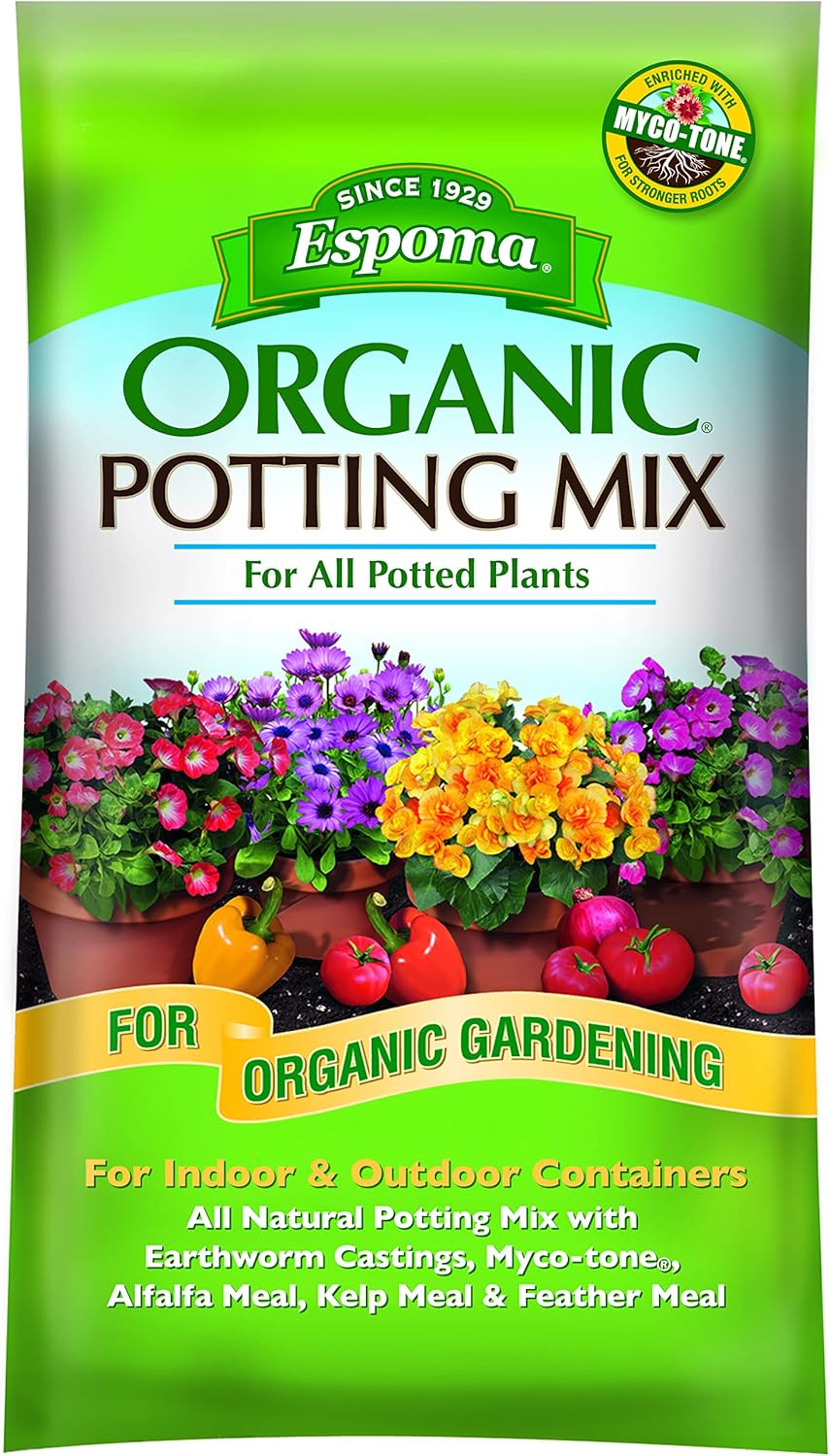
Espoma Organic Potting Soil Mix, 16-Quart
| Brand Name | Espoma |
|---|---|
| Volume | 16 quarts |
| Style Name | Mix |
| Item Weight | 16 ounces |
Espoma Organic Potting Soil Mix is a ready-to-use, all-natural mix designed for container gardening. It combines sphagnum peat moss, humus and perlite with organic amendments such as earthworm castings, alfalfa, kelp and feather meal to provide a light, well-draining medium that supplies slow-release nutrients. The formula includes a mycorrhizal inoculant to help root establishment and improve nutrient uptake when transplanting or repotting. Typical uses are filling new pots, refreshing container media at repotting time, or starting vegetables and herbs in planters. Practical benefits include improved drainage and aeration compared with garden soil, a nutrient boost from organic meals and castings, and reduced need for immediate fertilization. Limitations are that peat-based mixes can compact over time and may require periodic replacement or top-dressing, and the product is intended for containers rather than in-ground beds. For budget-focused gardeners, the 16-quart bag gives a convenient amount for small projects but heavy users will need multiple bags.
Best for: Gardeners who want an affordable, organic-ready potting mix for container vegetables, herbs and houseplants and who value a balanced, easy-to-use product for repotting and starting plants.
Less Ideal for: Large-scale growers or landscaping projects that need bulk soil for in-ground use should look for bulk composts or topsoil alternatives instead.
- Formulated for containers and vegetables with organic amendments for slow nutrient release
- Includes perlite and humus for good drainage and aeration
- Contains mycorrhizae to support root establishment and transplant success
- Ready-to-use mix that reduces need for immediate fertilizers
- Peat-based composition can compact and lose structure over time
- 16-quart bag is modest volume for larger projects requiring multiple bags
Verdict: A convenient, budget-friendly organic potting mix that delivers good drainage and starter nutrients for container vegetables and herbs.
Miracle-Gro Moisture Control Potting Mix, 8 qt. (2-Pack)

| Number of Packs | 2 |
|---|---|
| Unit Count | 512 Ounce |
| Item Type Name | Potting Mix |
| Feeds Plants | Up to 6 months |
| Volume | 8 quarts |
This two-pack of Miracle-Gro Moisture Control Potting Mix is designed for outdoor container gardening and makes repotting or starting new pots straightforward. The mix uses an AquaCoir formula with coir, sphagnum peat moss, and a wetting agent to hold more water than standard potting soils while still draining well for healthy roots. It is intended for use in flower pots, hanging baskets, and vegetable containers; application is simple—use a pot with drainage holes, fill, set the plant, and water through. Notable benefits include built-in nutrition that feeds plants for up to six months and the product claim of absorbing about 33% more water than basic mixes, which reduces how often you must water. Practical limitations are its container-focused formulation, so it is not a replacement for in-ground garden soil and annual repotting may be needed to avoid compaction and replenish nutrients. Also the bagged format and volume mean you may need multiple bags for larger container projects.
Best for: Buyers who want a low-effort, dependable potting mix that cuts down on frequent watering and provides months of feed for outdoor container plants.
Less Ideal for: Gardeners looking to amend in-ground beds or do large-scale landscape projects should choose a product formulated for soil amendment rather than a container potting mix.
- Formulated to retain more moisture than basic potting soils which reduces watering frequency
- Feeds plants for up to six months so you do not need to fertilize immediately
- AquaCoir blend promotes aeration so roots can breathe and establish
- Made for container use across flowers, vegetables, annuals, perennials and shrubs
- Intended for containers only and is not a substitute for in-ground garden soil
- Small 8 qt. bags mean larger projects require multiple purchases
Verdict: A practical, low-maintenance potting mix that reduces watering needs and feeds container plants for months, making it an efficient choice for budget-conscious container gardeners.
Miracle-Gro Organic Outdoor Potting Mix (16 qt)

| Volume | 1 cubic feet |
|---|---|
| Item Highlight | Plant Soil For Outdoor Container Plants, Contains Quick-Release Natural Fertilizer, OMRI Listed |
| Brand Name | Miracle-Gro |
| Manufacturer | Scotts Miracle Gro |
This 16 qt bag of Miracle-Gro Organic Outdoor Potting Mix is designed for planting in outdoor containers like 12-inch pots, and it combines responsibly sourced peat with upcycled green waste and a quick-release natural fertilizer that feeds for up to two months. Typical use is straightforward: partially fill a pot, loosen the plant's root ball, add more mix around the roots, press lightly and water. The OMRI listing and locally crafted sourcing make it suitable for gardeners who want an organic option without mixing their own amendments. The mix is aimed at container vegetables, herbs, flowers, annuals and perennials and helps retain moisture while supplying short-term nutrients. Limitations to note are the modest nutrient duration — feeding lasts about two months — and that container soils will compact over time so bi-annual repotting is recommended. For small-scale or budget-focused gardeners this bag covers a single medium pot, so plan quantities accordingly for larger projects.
Best for: Home gardeners on a tight budget who want an affordable, ready-made organic potting mix for outdoor containers and prefer a simple plug-and-play product.
Less Ideal for: Gardeners who need long‑term feeding in large beds or who want bulk soil for in-ground planting should consider larger-volume or specialist mixes instead.
- OMRI listed for organic container gardening
- Includes quick-release natural fertilizer that feeds up to two months
- Made with responsibly sourced peat and upcycled green waste
- Easy to use straight from the bag for potting and repotting
- Single 16 qt bag only fills roughly one 12-inch pot so multiple bags needed for larger plantings
- Nutrients are short-term so additional fertilizing is necessary after about two months
Verdict: A compact, OMRI-listed organic potting mix that gives budget-minded container gardeners a convenient, ready-to-use soil with short-term feeding.
Miracle-Gro Indoor Potting Mix for All Plants, 6 qt., 2-Pack

| Number of Packs | 2 |
|---|---|
| Item Highlight | Feeds for up to 6 Months |
| Ingredients | Sphagnum Peat Moss, Coir, Perlite, Fertilizer, Wetting Agent |
| Volume | 6 quarts |
This two-pack of Miracle-Gro Indoor Potting Mix is a convenient, ready-to-use soil blend for a wide range of houseplants. The mix combines sphagnum peat moss, coconut coir, and perlite to hold and release moisture, making repotting and filling containers straightforward without additional amendments. Because it is bark- and compost-free the formula reduces hiding places for fungus gnats, which is helpful in indoor settings. Each 6 qt. bag is sized to fill several small pots, and the included fertilizer means plants get nutrients for up to six months. Typical use is simple: fill a pot with drainage, add the plant, backfill and water. Limitations are that the bags are small compared with bulk soils, so you will need multiple bags for larger collections, and the pre-fertilized mix means you should delay adding other feeds until directed to avoid overfeeding. For buyers who want a reliable, low-effort potting soil for everyday indoor plants, this delivers consistent, predictable results.
Best for: Buyers who want a low-effort, proven indoor potting mix that performs reliably for common houseplants and makes repotting quick and predictable.
Less Ideal for: Gardeners who need soil in bulk for many large containers or those who prefer to custom-blend their potting media and fertilization schedule.
- Ready-to-use blend of peat moss, coir, and perlite for good water retention and aeration
- Feeds plants for up to six months so newly potted plants get immediate nutrition
- Bark- and compost-free formula reduces habitat for fungus gnats
- Small 6 qt. bags are easy to handle and convenient for repotting small to medium pots
- 6 qt. bag size means buying several bags for larger collections or big pots
- Pre-fertilized mix may require adjusting feeding schedule to avoid over-fertilizing
Verdict: A dependable, ready-to-use indoor potting mix that makes repotting easy and gives houseplants months of starter nutrition.
Back to the Roots Premium Organic Potting Mix, 6 Quart

| Unit Count | 192 Fluid Ounces |
|---|---|
| Item Highlight | Peat-free potting soil for outdoor plants, indoor plants, vegetables, herbs and flowers |
| Item Type Name | 100% Organic Potting Mix | Premium Blend |
| Manufacturer | Back to the Roots |
Back to the Roots Premium Organic Potting Mix is a versatile, peat-free potting soil designed for herbs, vegetables, flowers and houseplants. The 6-quart bag mixes organic plant food, yucca extract for improved moisture distribution, and dolomitic limestone to help stabilize pH, so it performs well in containers, raised beds and small garden projects. Because it is made from upcycled plant matter and wood fines and manufactured in the USA, it is a good choice for gardeners who want an eco-friendlier option without sacrificing convenience. In practice the mix is light and easy to work with, promotes even watering and reduces the risk of soggy roots compared with heavy compost alone. The main limitation is volume: one 6-quart bag is suitable for potting a few small containers but not large beds, so plan to buy multiple bags for bigger projects. For conservative gardeners looking to avoid chemical inputs, this product provides a straightforward, low-risk way to pot and refresh plants on a modest budget.
Best for: Buyers who want a low-risk, eco-conscious potting soil for potted herbs, vegetables and houseplants and prefer a ready-to-use, all-purpose mix that reduces chemical inputs.
Less Ideal for: Gardeners who need soil for large raised beds or landscaping projects where bulk volume and lower cost per cubic foot are the primary priorities.
- Peat-free organic blend made from upcycled plant matter for lower environmental impact
- Includes yucca extract to improve moisture control in containers
- Dolomitic limestone added to help balance soil pH
- Light, easy-to-work-with texture suitable for potting and container use
- Small 6-quart volume means multiple bags are needed for larger projects
Verdict: A compact, peat-free organic potting mix that gives risk-averse gardeners an easy, eco-friendlier way to pot and refresh small containers.
Choosing the Right Budget Soil: Key Factors to Consider
Moisture Retention Versus Drainage Balance
A budget soil must strike a balance between holding enough moisture for plant roots and shedding excess water quickly. If a mix holds too much water it can suffocate roots and invite root rot. If it drains too fast it will require frequent watering and fertilizer leaching can become a problem.
Consider the plants you grow and your watering routine. Vegetable transplants and most perennials prefer consistent moisture with good aeration around roots. Succulents and Mediterranean herbs need a mix that dries faster. In practice, mixes that include a modest amount of organic matter plus coarse components like perlite or coarse sand provide a useful middle ground in budget soils.
Nutrient Content and Starter Fertility
Cheap mixes often skimp on organic matter and starter nutrients, which affects how soon you need to add fertilizer. A reasonable baseline of composted material or slow-release organic feed helps seedlings establish without immediate feeding. Without it, you will have to plan for earlier fertilization.
Think about whether you will pot up seedlings or grow directly in raised beds. For quick-turn crops, a light boost of nutrients in the mix speeds early growth. For long-season plantings you can start with a leaner mix and rely on topdressing and regular feeding, but that requires more ongoing maintenance.
Texture, Bulk Density, and Ease of Handling
Texture affects how easy the soil is to work with and how healthy root systems develop. A light, crumbly texture makes transplanting and blending amendments simple. Heavy, compacted mixes are harder to handle and can create waterlogging even when drainage components are present.
Bulk density also matters for container use. Heavier mixes increase pot weight and strain supports or hanging hardware. For raised beds, very light mixes can settle quickly and require topping up. Aim for a texture that suits the planting method and physical handling you prefer.
Stability and Decomposition Rate
Budget soils sometimes include high percentages of undecomposed materials that break down rapidly, causing the mix to compact over a single season. Fast decomposition decreases porosity and impairs drainage, forcing more frequent amendment.
Look for mixes described as composted or stabilized organic matter. If a mix contains a lot of raw fiber or wood chips, expect to refresh or amend it more often. Stability affects how often you must add fresh soil or compost to maintain structure and fertility.
Cleanliness and Contamination Risk
Soil cleanliness covers issues like weed seeds, pests, and chemical residues. Budget products vary in how well raw materials were screened and processed. A contaminated mix can introduce weeds or pathogens that cost time and plant losses down the road.
Buying a screened, processed mix reduces these risks. For high-value seedlings or small indoor projects, consider sterilized or pasteurized options, even on a budget, or plan to disinfect containers and practice good sanitation.
Watering Frequency and Labor
How often you are willing to water influences the best budget soil choice. Fast-draining mixes reduce overwatering risk but increase watering frequency. Denser, moisture-retentive mixes need less frequent watering but require close attention to drainage and root aeration.
Factor in seasonality as well. Hot, sunny patios will dry mixes faster than shaded areas. If you travel often or prefer low-maintenance beds, choose a mix with better water-holding capacity or plan for water-conserving topdressing like mulch.
Best Uses for Budget Soil in Containers and Raised Beds
Budget soils are often formulated as general-purpose mixes that perform adequately in containers and raised beds. For containers, prioritize mixes with good aeration and lighter weight to avoid overburdening pots and supports. For raised beds, a slightly heavier, nutrient-holding mix is acceptable because weight is less of a concern.
When using budget soil in a mixed-planting bed, consider blending in a small amount of compost or slow-release organic fertilizer to boost fertility without dramatically increasing cost. For heavy feeders, plan to topdress midseason.
- Containers: favor light texture and drainage components
- Raised beds: aim for better moisture retention and nutrient baseline
- Seed starting: use cleaner, finer mixes or amend budget soil with extra organic matter
How to Amend Budget Soil to Improve Performance
Small, inexpensive adjustments can materially improve a cheap mix. Adding coarse perlite or grit increases aeration and drainage without raising cost much. A modest portion of well-aged compost or worm castings raises nutrient content and water-holding capacity while keeping mix weight manageable.
For long-term beds, mix in a bulky organic amendment and topdress annually. For containers, refresh the top few inches and replace a portion of the potting mix each season rather than repotting entirely.
- Add 10 to 20 percent coarse amendment for better drainage
- Topdress containers with compost or slow-release fertilizer during the growing season
- Refresh or replace portions yearly for long-lived plantings
Watering and Nutrition Routines with Budget Soil
Expect to tweak your watering schedule after switching to a new budget soil. Monitor how quickly the surface dries and how much water runs through a pot. Use weight and touch tests to decide watering intervals rather than a fixed calendar.
Plan a simple feeding routine because many budget soils do not contain long-lasting fertility. A light liquid feed every two to four weeks or a single application of slow-release organic fertilizer at planting keeps most annuals and vegetables productive.
- Check moisture by finger test and pot weight
- Adjust feeding frequency to plant type and observed growth
- Use mulch on top of beds to conserve moisture and reduce watering
Storage and Handling Tips to Preserve Quality
Store unopened bags in a dry place to prevent premature wetting or molding. Once opened, keep the remaining mix protected from rain and pests. If a bag becomes damp and clumpy, spread it thinly to air out before use.
When moving large quantities, avoid compacting the mix in wheelbarrows or containers. Break up clumps and fluff the soil before filling pots to preserve porosity and ease planting.
- Keep bags dry and sealed after opening
- Fluff and screen clumpy material before use
- Avoid compressing soil during transport
When to Replace or Rebuild Soil in Beds
Budget soil in raised beds will gradually lose structure and fertility. If beds settle, become hard to work, or vegetable yields decline despite feeding, it is time to add fresh organic matter or replace a portion of the mix. A maintenance approach is to add a thin layer of compost each year and stir it in to restore porosity.
For containers, replacing the top third to half of the mix each one to two years keeps the root zone healthy without full repotting. Faster decomposition rates mean more frequent refreshes.
- Topdress beds annually with compost
- Replace portion of container soil every 1 to 2 years
- Monitor plant vigor as an indicator of soil decline
How We Chose the Best Budget Soil
We prioritized attributes that directly affect plant health and daily garden handling when evaluating budget soils. Key criteria included moisture retention and drainage behavior to ensure mixes suit both thirsty vegetables and drought-tolerant ornamentals, and nutrient baseline measured as available organic matter and starter fertility for seedlings and transplants. Texture and bulk density were evaluated to judge ease of planting, root penetration, and weight for containers. Stability and decomposition rate were checked to estimate how long a mix will last before it compresses or needs amendment. Particle cleanliness and absence of contaminants mattered for pest and disease risk. We also considered ease of use, such as dust levels and how easily the mix wets. We excluded specialty mixes formulated only for orchids, carnivorous plants, or hydroponics because those are not representative of general-purpose budget soils. Also excluded were mixes that rely chiefly on heavy inorganic fillers that drastically change water behavior. Our shortlist includes only general-purpose budget soils suitable for containers, raised beds, and general garden use that meet the practical criteria above.
FAQ
Can I use budget soil for seed starting?
Often it depends on the mix. Some budget soils are too coarse or contain larger particles and lower nutrient levels than seed-starting mixes. For best results, use a cleaner, finer seed-starting medium or amend a small portion of budget soil with finer compost and screen out large particles.
How much compost should I add to improve a budget mix?
Usually adding 10 to 25 percent well-aged compost is a good starting point. That range improves nutrient content and moisture retention without making the mix too heavy or prone to compaction.
Will budget soil cause more watering work?
It depends on the mix composition. Fast-draining budget mixes will require more frequent watering, while mixes with more organic matter hold water longer. Adjust watering based on plant type, container size, and local climate.
Is it safe to use budget soil indoors for houseplants?
Often it is safe, but check for dust, pests, or strong odors. For indoor use, screen the mix and consider pasteurizing or using a small proportion with a cleaner indoor potting medium to reduce risk.
How do I tell if a budget soil is compacting?
Compaction shows as poor drainage, water pooling on the surface, slow root growth, and harder soil texture. If you can, dig a small sample and check porosity; compacted mix will feel firm and hold shape when squeezed.
Final Verdict
When choosing Budget Soil, prioritize the balance between drainage and moisture retention that matches your plants and watering habits. Expect to add modest amendments such as compost or grit to improve fertility and aeration rather than relying on the mix alone. Consider how often you are willing to water and refresh soils; that will determine whether a lighter, fast-draining mix or a more nutrient-rich mix is the better practical choice. Focus on texture, cleanliness, and stability more than marketing claims. With small, intentional amendments and regular maintenance, a budget soil can deliver reliable results across containers and raised beds without large ongoing costs.
