

Note: This article contains affiliate links. If you click on these links and make a purchase, I may earn a small commission at no extra cost to you. This helps support my research and content. Read my full affiliate disclosure here.
Choosing the right seed starter soil makes the difference between leggy, slow seedlings and vigorous transplants ready for the garden. For small flats, windowsill trays, or greenhouse racks, the correct mix controls moisture, air, and gentle feeding so young roots develop quickly and consistently. This guide covers our seven shortlisted seed starter soils chosen for common planting situations and evaluates them on drainage, texture, and nutrient profile. Use the evaluation notes to pick a mix that suits your sowing schedule and growing space.
Top Picks at a Glance
| Best Overall The best all-around choice for most situations | Old Potters Germination Mix — Fine Peat Moss with Perlite & Vermiculite (24 Quarts) |  |
| Best Quality Built to a higher standard if you want something more solid | Espoma Organic Seed Starter Premium Potting Mix, 16 qt |  |
| Best Value The sweet spot between price and what you get | Midwest Hearth Seed Starter Potting Soil, Ready-to-Use, 4 Dry Quarts |  |
| Best Budget The cheapest option that still gets the job done reliably | Back to the Roots 3-in-1 Seed Starting Mix, 6 Quart Organic |  |
| Highest Rated A top-rated pick with lots of positive feedback | Gardenera Premium Organic Seed Starter Soil, 3 Quart |  |
| Most Popular A crowd favorite that many people choose with confidence | Miracle-Gro Indoor Potting Mix for Seed Starting (8 qt., 2-Pack) |  |
| Best Seller A high-volume bestseller chosen again and again | Back to the Roots Organic Seed Starting Mix, Expanding 12-Quart Block |  |
Old Potters Germination Mix — Fine Peat Moss with Perlite & Vermiculite (24 Quarts)

| Volume | 24 quarts |
|---|---|
| Unit Count | 768 Fluid Ounces |
| pH Range | 5.4 – 6.3 |
| Electrical Conductivity | 1.0 – 1.5 mmhos/cm |
This germination mix is designed to give seeds and cuttings a reliable, uniform medium for early root development. It combines 80–90% finely milled Canadian sphagnum peat moss with fine perlite and vermiculite to improve aeration while retaining consistent moisture. The manufacturer adds calcitic and dolomitic limestone to set the pH in the 5.4–6.3 range and a wetting agent to prevent dry pockets, which helps with even germination whether you use bottom watering or overhead misting. A light starter charge provides some nutrients for the first weeks of growth. In practice the fine texture makes filling trays and forming plugs easy and encourages quick, straight roots, but the peat-heavy blend will dry out faster than heavier potting mixes so you need to monitor moisture more closely for very small seedings. The mix is suitable for indoor seed trays and small-scale propagation work and is straightforward for both hobbyists and more experienced growers who want consistent, predictable results from their seed starting media.
Best for: Growers who want a predictable, fine-textured seed-starting medium for trays, plugs, and cuttings and who monitor moisture regularly to get even germination.
Less Ideal for: Gardeners seeking a ready-to-go all-purpose potting soil for long-term containers or those who prefer peat-free mixes should look elsewhere.
- High peat content provides excellent moisture holding and a uniform fine texture for seed contact
- Added fine perlite and vermiculite improve aeration and aid root penetration
- pH adjusted with calcitic and dolomitic limestone for optimal nutrient availability
- Wetting agent reduces dry spots for more even germination
- Includes a starter nutrient charge to support early growth
- Peat-heavy composition can dry faster between waterings compared with heavier potting soils
- Not formulated for long-term container growth without mixing with a richer potting medium
Verdict: Choose this mix when you want a fine, reliable seed-starting medium that promotes even germination and strong early root development.
Espoma Organic Seed Starter Premium Potting Mix, 16 qt

| Brand Name | Espoma |
|---|---|
| Volume | 16 quarts |
| Unit Count | 598.4 Ounce |
| Model Number | SS16 |
Espoma Organic Seed Starter is a peat-based, lightweight potting mix designed specifically for germinating seeds and rooting cuttings. The blend of sphagnum peat moss and perlite gives good aeration and drainage while the formula includes yucca extract to improve wetting and lime to balance pH. It also contains Myco-tone mycorrhizae to help early root establishment and improve nutrient access during the seedling stage. Typical use is filling trays, cells, or small pots for seeds and softwood cuttings; its fine texture and moisture retention reduce damping-off risk when used with proper sanitation and watering. Because it contains no synthetic fertilizers, it is appropriate for organic growing but you will need to begin light feeding once true leaves form or when transplanting. The bag size covers routine home-seed-starting needs, and the product is straightforward to handle and mix for small-scale propagation projects.
Best for: Gardeners focused on reliable seed germination and strong early root development who want an organic, ready-to-use mix for trays and small pots.
Less Ideal for: Growers wanting a peat-free or pre-fertilized seed mix or those starting very large volumes commercially should consider alternatives tailored to those needs.
- Formulated for seedlings with peat and perlite for balanced aeration and moisture retention
- Includes Myco-tone mycorrhizae to support early root development
- Organic ingredients with no synthetic fertilizers, suitable for organic growing
- Contains yucca extract to improve wetting and lime to help stabilize pH
- No starter nutrients included so plants need feeding after true leaves appear
- Peat-based mix is not the most sustainable choice for gardeners preferring peat-free media
Verdict: Choose this organic seed starter when you want a ready-to-use mix that promotes rapid root development and reliable germination for home seedlings and cuttings.
Midwest Hearth Seed Starter Potting Soil, Ready-to-Use, 4 Dry Quarts

| Brand Name | Midwest Hearth |
|---|---|
| Item Type Name | Potting Soil |
| Unit Count | 128 Ounce |
| Item Highlight | Peat Moss, Perlite & Vermiculite, pH-Balanced |
This Midwest Hearth seed starter is a straightforward, ready-to-use potting mix designed for germinating seeds and raising young seedlings. The blend of organic peat moss with perlite and vermiculite gives a light, well-aerated medium that drains but also holds moisture where roots need it, and the pH-balanced formula suits a wide range of plants from vegetables to succulents. Use it straight from the bag in trays, small pots, or cell packs; the mix's color change as it dries helps with watering decisions. Notable features include horticultural-grade perlite and vermiculite for aeration and water retention and an organic base that supports early nutrition. Practical benefits are consistent germination, reduced compaction compared with garden soil, and minimal prep time since no amendment is required. Limitations are typical for seed mixes: it is formulated for starting and early growth rather than long-term potting or heavy-feeding plants, so transplanting into a richer potting soil or adding fertilizer will be necessary as seedlings mature.
Best for: Buyers who want a no-fuss seed starting medium that delivers reliable germination and easy watering cues for trays, cell packs, and small pots.
Less Ideal for: Gardeners looking for an all-in-one long-term potting soil or a heavily fertilized mix for mature, nutrient-hungry plants should choose a different product.
- Ready-to-use formula requires no mixing or amendments before sowing
- Peat moss with perlite and vermiculite provides good aeration and moisture control
- pH-balanced for compatibility with a wide variety of plants
- Lightweight, low-compaction texture helps strong root development
- Designed for seed starting and early growth, not as a finished potting medium for mature plants
Verdict: A simple, ready-to-use seed starter that reliably promotes germination and early root development for practical gardeners.
Back to the Roots 3-in-1 Seed Starting Mix, 6 Quart Organic

| Unit Count | 192 Fluid Ounces |
|---|---|
| Style Name | 3-in-1 Seed Starting Mix |
| Brand Name | Back to the Roots |
This 3-in-1 Seed Starting Mix is a small, ready-to-use bag of organic, peat-free planting medium designed for starting seeds and potting young transplants. It combines coconut coir, mycorrhizae, nutrient-rich amendments and yucca extract to encourage root development and improve water and nutrient uptake. The texture is light and well aerated, so it drains faster than typical garden soil and reduces the risk of seed rot or overwatering in small trays, pots, and indoor setups. For budget-minded gardeners this 6-quart size is convenient for starting small batches of herbs, vegetables, or flowers without extra amendment. Because the bag is modest in volume, heavier-use gardeners will need multiple bags for larger seedling runs. Also, the product is marketed peat-free and organic which appeals to eco-conscious growers but the pack size and price per volume mean it is best for hobby seed starting rather than large-scale propagation.
Best for: Gardeners who want an easy, eco-conscious seed starting mix for small batches of herbs, vegetables, or flowers and prefer a ready-made organic solution over DIY blends.
Less Ideal for: People who need to start large numbers of seedlings or refill many pots frequently should choose larger bulk mixes or bag sizes to lower cost per volume.
- Peat-free organic formula with mycorrhizae and nutrient amendments to support early root growth
- Light, well-aerated texture that improves drainage and reduces damping-off risk
- Ready-to-use mix saves time compared with blending your own seed mix
- Small 6-quart volume makes it less economical for large seed-starting projects
Verdict: A convenient, peat-free organic seed starting mix that delivers good drainage and root support for small-scale, budget-conscious seed starting.
Gardenera Premium Organic Seed Starter Soil, 3 Quart

| Brand Name | Gardenera |
|---|---|
| Item Type Name | #2 SEED STARTER MIX |
| Volume | 3 quarts |
| Unit Count | 1 Count |
This Gardenera seed starter soil is a small-batch, 3-quart mix formulated for starting seeds and young transplants. It combines coco coir, peat moss, perlite, and worm castings to create a light, airy medium that holds moisture without becoming waterlogged, so seedlings can develop strong root systems. Typical use is filling seed trays, peat pots, or small containers for vegetables and herbs; the extra perlite improves drainage while the low-salt coir and organic amendments support nutrient retention. The bagged mix is made in the USA and marketed as 100% organic, which is useful if you want to avoid synthetic additives. Because it is a pre-mixed, ready-to-use product, it saves time versus custom mixing and reduces variability between batches. Limitations to consider are the small 3-quart volume, which is fine for hobby seed starting but means you will need multiple bags for larger batches or repeated sowings, and the presence of peat moss if you prefer peat-free mixes. Handle with care to avoid dust and follow basic hygiene when potting.
Best for: Gardeners who prioritize a predictable, ready-made organic seed mix for reliably producing healthy seedlings in small to medium batches.
Less Ideal for: Commercial growers or gardeners who need bulk volumes or prefer peat-free custom mixes for larger-scale seed starting.
- Formulated with coco coir, perlite, peat moss, and worm castings for balanced moisture retention and drainage
- Designed specifically to promote rapid root development in seedlings
- Made in the USA and marketed as 100% organic with no synthetic additives
- Ready-to-use pre-mixed bag reduces time and variability compared with custom blends
- Small 3-quart bag is insufficient for larger seed-starting projects without buying multiple bags
- Contains peat moss, which some gardeners avoid for environmental reasons
Verdict: A compact, professionally blended organic seed starter that reliably promotes fast root development for home gardeners starting small batches of seedlings.
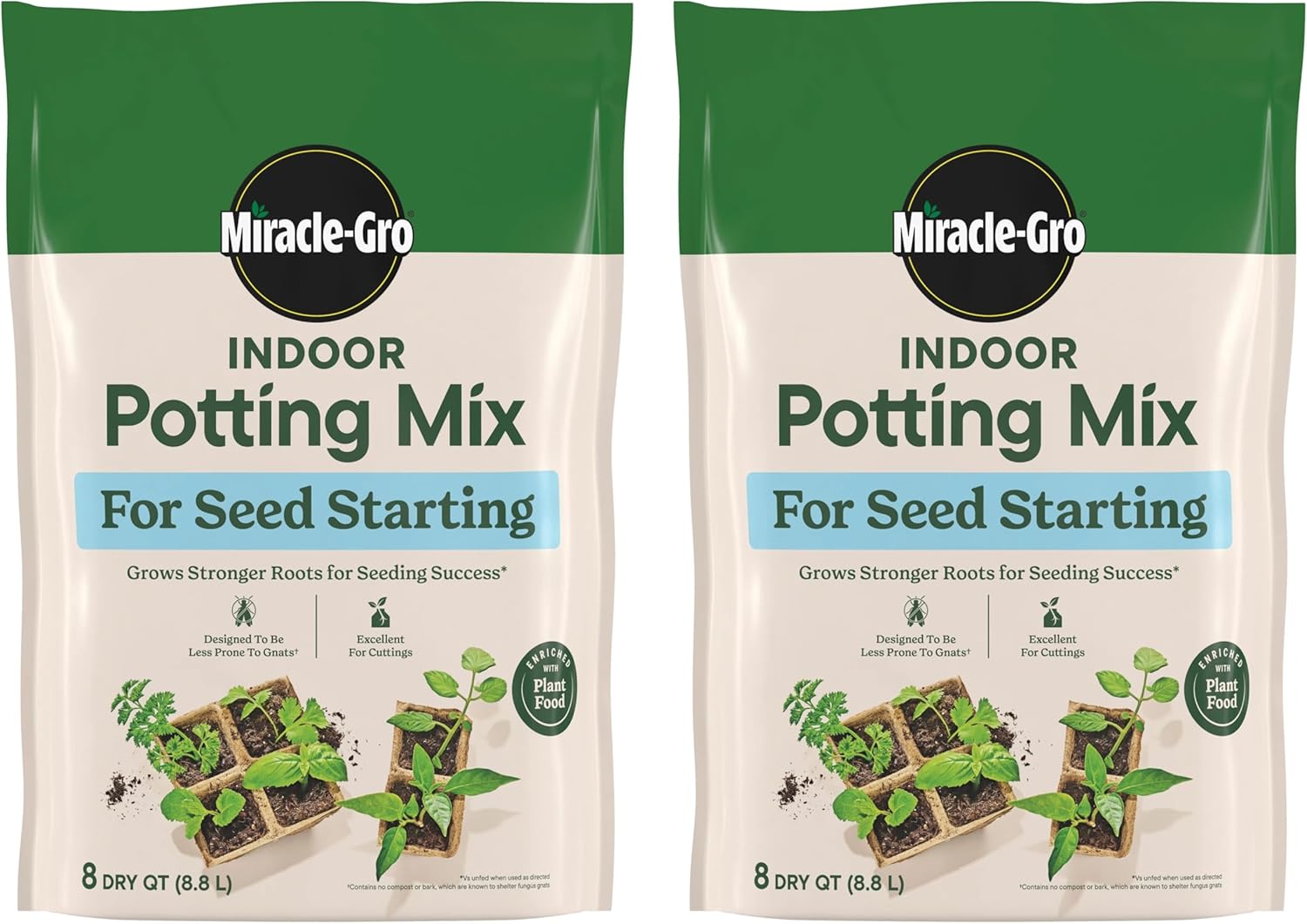
Miracle-Gro Indoor Potting Mix for Seed Starting (8 qt., 2-Pack)
| Number of Packs | 2 |
|---|---|
| Unit Count | 512 Ounce |
| Item Type Name | Potting Mix |
| Manufacturer | The Scotts Company LLC |
| Item Highlight | For Starting Vegetable, Flower, and Herb Seeds Indoors |
This indoor potting mix is made specifically for starting seeds and rooting cuttings. It is a lightweight, ready-to-use blend that you fill into trays or small containers, keep moist and sheltered from direct sun, and use to germinate vegetables, herbs, and flowers. The formula is enriched with plant food to promote stronger root development compared with unfed media, and it deliberately omits compost and bark to reduce habitat for fungus gnats. Practically, one 8 qt. bag is enough for several 72-cell trays, and the two-pack provides enough material to start multiple batches in a season. The product is easy to use straight from the bag and works well in indoor propagation setups and seed trays. Limitations to note are the included fertilizer, which requires careful handling and dosing for sensitive seedlings and raises minor inhalation or irritation risks during handling, and the fact that it is a seed-starting mix rather than an all-purpose potting soil for mature plants.
Best for: Buyers who want a simple, reliable seed-starting medium that speeds early root development and reduces pest-prone ingredients for indoor propagation.
Less Ideal for: Gardeners looking for an all-purpose potting soil for established container plants or those who prefer fully organic, compost-based mixes should consider alternatives.
- Formulated for seed starting and cuttings to encourage stronger root growth
- Lightweight, ready-to-use texture that fills seed trays easily
- Contains plant food to feed seedlings during early growth
- No compost or bark, which helps reduce fungus gnat habitat
- Two 8 qt. bags provide enough volume for multiple trayfuls
- Contains fertilizer that can irritate or pose inhalation risk if mishandled
Verdict: A convenient, seed-focused potting mix that makes indoor germination and cuttings easier while minimizing fungus gnat risk.
Back to the Roots Organic Seed Starting Mix, Expanding 12-Quart Block

| Unit Count | 384 Fluid Ounces |
|---|---|
| Item Type Name | Seed Starting Mix |
| Volume | 12 quarts |
| OMRI Listed | Yes |
This compressed organic seed starting mix is sold as a compact coir/soil block that expands to 12 quarts when water is added, making it convenient to store and use for indoor seed trays, small pots, or as an amendment for container plants. The formula is OMRI-listed and peat-free, with a neutral pH and low electrical conductivity, which helps young seedlings access nutrients and avoid salt stress. For routine use you hydrate the block, fluff the mix, fill trays or small pots, sow seeds, and keep moist; the mix holds water while remaining airy enough for root development. Practical benefits include easy storage, predictable seed-starting performance, and organic certification for chemical-free starts. Limitations are that the product is a single compressed block so you must hydrate and measure out portions for larger projects, and there is no built-in fertilizer so heavier-feeding transplants will need nutrient amendments after the first true leaves appear.
Best for: Buyers who want a low-fuss, organic seed-starting medium that is easy to store and produces consistent results for home vegetable, herb, and flower seedlings.
Less Ideal for: Gardeners needing ready-to-use large volumes of potting mix or a pre-fertilized seed mix for immediate heavy-feeding transplants should consider bulk bagged potting soil or mixes with added fertilizer.
- Expands to 12 quarts from a compact block for easy storage and transport
- OMRI-listed organic and peat-free formulation suitable for organic gardening
- Neutral pH and low electrical conductivity support gentle, predictable seedling growth
- Lightweight, fluffy texture improves aeration and water retention for roots
- No built-in nutrients so additional feedings are needed as seedlings grow
- Single block format requires preparation and portioning for larger volumes
Verdict: A compact, organic, peat-free seed-starting mix that reliably expands to 12 quarts and delivers gentle, beginner-friendly starts for herbs, veggies, and flowers.
Choosing the Right Seed Starter Soil: Key Factors to Consider
Water Retention Versus Drainage
Seedlings need steady moisture but also access to oxygen at the root zone. A mix that retains a little water around the seed while allowing excess to drain prevents both drying out and root suffocation. Overly fine or compacted media hold too much water and increase damping-off risk, while extremely fast-draining blends can dry out quickly and stress tiny roots.
When choosing a seed-starting soil, consider your watering routine and container type. If you use shallow trays with limited volume, prioritize a mix that holds moisture without becoming soggy. If you bottom-water or use capillary mats, a slightly coarser, more aerated mix will perform better.
Particle Size and Texture
Fine, uniform particles give consistent seed-to-soil contact and make small seeds easier to sow and cover. A mix with a balanced range of particle sizes supports root penetration as the seedling develops. Avoid mixes with large chunks of bark or undecomposed wood that interfere with tiny roots and make leveling the tray difficult.
Texture also affects how the mix compacts over time. Choose a blend that stays loose after watering to maintain air pockets around emerging roots. Gardeners who reuse trays should favor textures that do not cling to container walls or cake into hard clumps when dry.
Nutrient Content and Starter Feed
Most seedlings require little to no fertilizer until their first true leaves appear. A seed starter soil with a low, balanced nutrient level or a mild starter charge helps new plants get going without burning tender roots. Too much soluble fertilizer in a seed mix can cause leaf burn or abnormal growth that weakens transplants.
Check whether the mix includes long-release nutrients or a light soluble feed. If you plan to move seedlings into richer potting soil later, a lean starter mix is preferable. Conversely, for gardeners who want to delay transplant fertilizing, a lightly fortified mix can reduce early care steps.
Sterility and Disease Control
Seed-starting environments can amplify pathogens because multiple seedlings are grown close together in warm, humid conditions. Sterile or pasteurized mixes reduce the chance of fungal and bacterial problems early on. Ingredients that are pre-processed to remove weed seeds and soil-borne pests lower the risk of damping-off and other common seedling diseases.
If you start seeds indoors frequently or reuse trays, prioritize mixes specifically labeled or designed for seed starting. Even with sterile media, good sanitation, proper spacing, and adequate airflow are essential to limit disease spread.
pH and Mineral Content
Seedlings are sensitive to extremes in pH and excessive soluble salts. A neutral to slightly acidic pH helps many common vegetables and annuals access nutrients as roots develop. Elevated mineral content from unwashed amendments can stress young roots and stunt growth.
Consider whether you are starting acid-loving species or plants that prefer neutral conditions. For most home gardeners, a general-purpose seed starter with moderated mineral content and pH near neutral provides the most reliable results.
Packaging and Practicality
Small-scale seed starting benefits from packaging that lets you open and reseal portions without exposing the entire bag to moisture or pests. Lightweight bags that tear easily or large bulk bales are inconvenient for hobby gardeners who sow a few flats at a time. Practical features like resealable tops, tear notches, and clear volume markings save time and reduce waste.
Also think about storage. If you do not use starter soil year-round, choose packaging that protects the mix from damp basements and rodent access. Ease of handling matters especially when filling many small cells or when working in confined indoor spaces.
When to Use Seed Starter Soil Instead of Potting Mix
Seed starter soil is formulated for the germination phase and early root development. It is finer, often sterile, and lower in nutrients than standard potting mixes designed for established container plants.
Use a seed starter mix when sowing very small seeds, starting large numbers of transplants indoors, or when you need consistent, disease-minimizing media for fragile seedlings. After the first true leaves form, most seedlings benefit from transplanting into a richer potting mix to support faster vegetative growth.
- Ideal for tiny seeds that require close contact with the soil
- Reduces disease risk compared with raw garden soil
- Eases transplanting because roots develop in loose, fine media
Adjusting Watering and Light for Different Mix Textures
Finer mixes hold moisture longer and respond slower to top watering; they need gentler irrigation to avoid surface crusting. Coarser mixes dry faster and may require more frequent, lighter waterings or bottom-watering techniques.
Match light intensity and duration to seed type and the mix. Stronger light reduces stretching even in mixes that retain more moisture. Use a consistent watering schedule and check moisture by feeling the mix rather than relying solely on a schedule.
- Test moisture with your finger or a moisture meter
- Use bottom-watering to encourage downward root growth in fast-draining mixes
- Mist very fine mixes to avoid displacing tiny seeds
Customizing Your Own Seed-Starting Blend
Gardeners who prefer DIY mixes can combine fine compost or well-aged peat substitute with perlite and a small amount of screened compost to control fertility. Aim for a light, crumbly texture with good water-holding capacity but noticeable aeration.
When making your own blend, sieve materials to remove large particles and consider pasteurizing homemade mixes to reduce disease risk. Keep nutrient inputs low until seedlings have several true leaves.
- Common DIY recipe: fine aged compost, coconut coir or peat substitute, and perlite in balanced proportions
- Avoid fresh manure or high-salt amendments in seed mixes
- Sterilize small batches by warming them in a controlled oven method if necessary
Transplanting From Seed Starter Soil
When seedlings have a pair of true leaves and a healthy root system, move them into larger pots or garden beds. Handle roots gently; seed starter mixes are loose so roots separate easily with minimal disturbance.
If the seed mix is lean, complement the transplant with a richer potting medium or a light feed after a few days. Harden off seedlings gradually to outdoor conditions over a week before planting into garden soil.
- Water seedlings before transplanting to reduce root stress
- Keep a small ball of starter soil around the roots when moving to larger containers
- Delay heavy fertilization until after seedlings recover from transplant shock
Sustainability and Ingredient Choices
Look for mixes that use sustainable components like coconut coir instead of peat, and responsibly sourced mineral additives. Coconut coir provides similar water retention to peat without peat's environmental concerns.
Consider mixes with minimal non-renewable additives and those that avoid excessive plastic in packaging. Sustainable choices can still meet the functional needs of starting seeds while reducing ecological impact.
- Coconut coir is a low-impact peat alternative
- Perlite and vermiculite have different drainage effects; choose based on your water routine
- Smaller packaged sizes reduce waste for hobby growers
How We Chose the Best Seed Starter Soil
We focused on the features that matter for reliable seed germination and healthy early growth. Primary evaluation criteria were drainage and aeration characteristics, because fine balance of water retention and oxygen at the seed zone prevents damping-off and supports root growth. Nutrient profile and starter feed were assessed to ensure mixes provide low, controlled fertility suitable for seedlings without burning delicate roots. Texture and consistency received attention to guarantee uniform seed contact and ease of sowing, avoiding clumpy or overly fibrous mixes that interfere with delicate seeds. Sterility and pathogen control were considered to minimize disease risk in indoor or greenhouse starts. Finally, ease of use and package practicality were noted for gardeners who sow frequently or in small quantities. We excluded heavy garden soils, potting mixes formulated for established plants, and blends that rely on high initial fertilizer levels. Products had to be explicitly designed or commonly used for starting seeds to be eligible. The criteria above are the dimensions that guided selection and that align with the scoring metrics shown on each product card.
FAQ
Can I use garden soil to start seeds indoors?
Garden soil is usually too heavy and often contains weed seeds or pathogens that harm seedlings. Seed starter soils are finer and often sterile, making them a safer, more consistent choice for indoor germination.
How soon should I fertilize seedlings started in seed starter soil?
Most seedlings do not need fertilizer until they have their first true leaves. At that point, a diluted, balanced feed or transplanting into a richer potting mix provides nutrients without risking root burn.
Is peat-free seed starter soil as effective as peat-based mixes?
Peat-free mixes using coconut coir or similar substitutes can perform as well as peat-based blends for water retention and aeration. Check that the substitute is well-processed and that the mix still provides the right texture for small seeds.
How fine should the mix be for very small seeds?
Very small seeds need a fine, uniform texture to ensure good seed-to-soil contact. Choose a screened or finely milled starter mix and avoid chunky materials that prevent even sowing and moisture absorption.
Can I reuse seed starter soil from a previous season?
Reusing starter soil is possible but not recommended without sterilization. Previously used mixes can harbor pathogens and weed seeds. If you reuse media, refresh it with clean amendments and consider pasteurizing to lower disease risk.
Final Verdict
Pick a seed starter soil that balances moisture retention and drainage, offers a fine, stable texture, and keeps nutrient levels low until seedlings establish. Prioritize sterility and ease of handling if you start many trays indoors, and consider sustainable ingredient choices if peat avoidance matters to you. Weigh the tradeoffs between ready-to-use convenience and DIY customization, then match the mix to your watering method and seed types. That approach will give you consistent germination and stronger transplants for the garden.
