

Note: This article contains affiliate links. If you click on these links and make a purchase, I may earn a small commission at no extra cost to you. This helps support my research and content. Read my full affiliate disclosure here.
Cluster flies gather in groups inside attics, wall voids, and eaves where they can become a persistent nuisance. Picking the right cluster fly trap matters because placement, capture method, and durability determine how quickly you reduce populations and how much ongoing maintenance you will face. This guide covers the seven top-rated cluster fly traps shortlisted for homes, outbuildings, and sheltered outdoor areas. We evaluate traps on capture efficiency, ease of use, durability in indoor and semi-outdoor conditions, and cleanup. Read on for practical guidance on where and how to deploy each option and which features matter most for different situations.
Top Picks at a Glance
| Best Overall The best all-around choice for most situations | LFSYS Window Fly Traps — 50 Disposable Clear Sticky Strips |  |
| Best Quality Built to a higher standard if you want something more solid | Catchmaster Vector 30 Commercial UV Fly Light Trap (30W) |  |
| Best Value The sweet spot between price and what you get | LFSYS Window Fly Traps, 100-Pack Disposable Sticky Strips |  |
| Best Budget The cheapest option that still gets the job done reliably | TERRO Fly Magnet Sticky Fly Paper Trap, 8-Count |  |
| Highest Rated A top-rated pick with lots of positive feedback | Catchmaster Window Fly Traps, 96-Count Clear Adhesive Strips |  |
| Most Popular A crowd favorite that many people choose with confidence | ZEVO Flying Insect Trap Starter Kit (Plug-In Base + Refill) |  |
| Best Seller A high-volume bestseller chosen again and again | ZEVO Compact Flying Insect Trap with 3 Refill Cartridges |  |
LFSYS Window Fly Traps — 50 Disposable Clear Sticky Strips
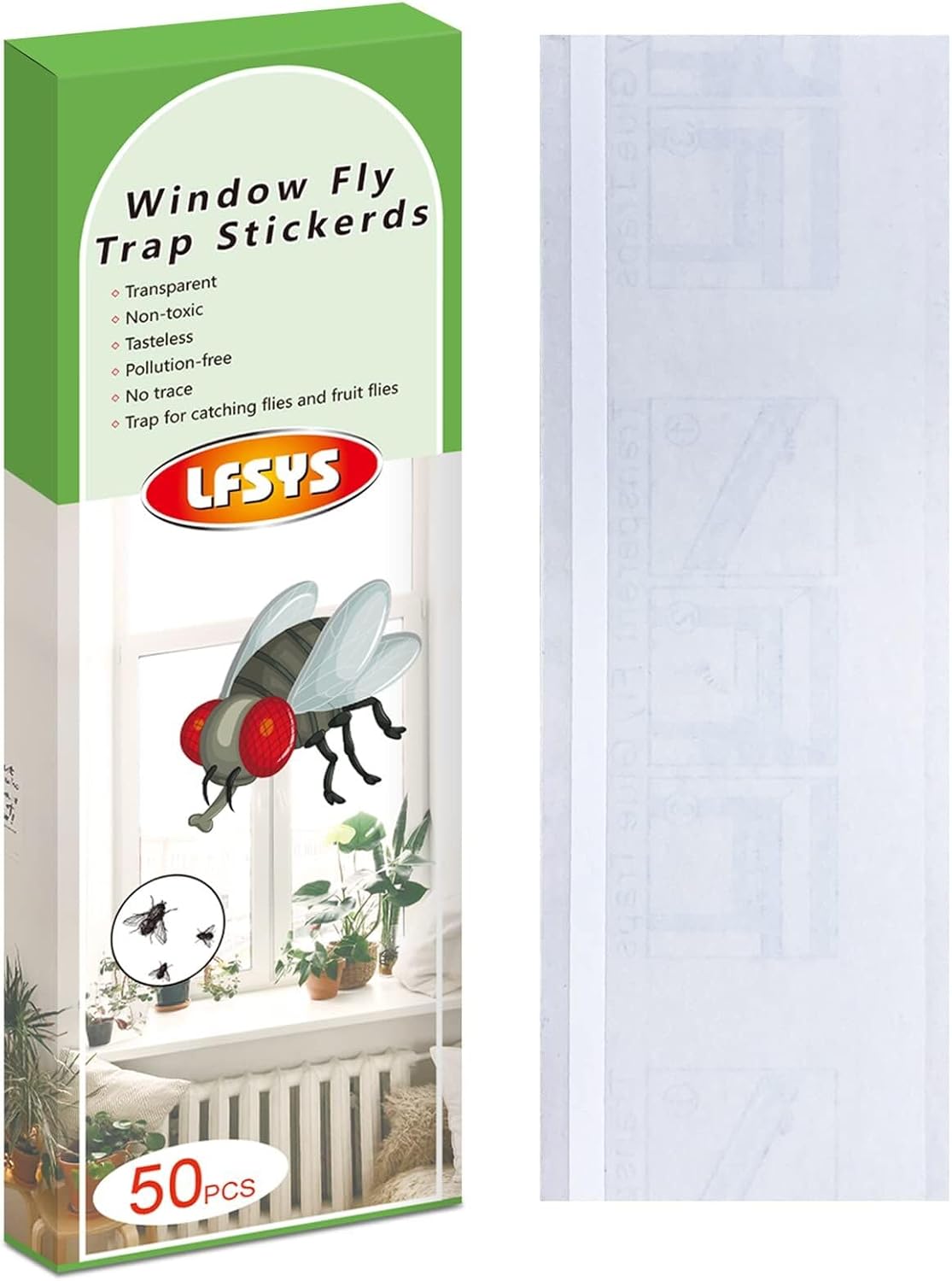
| Unit Count | 50 Count |
|---|---|
| Target Species | Fly |
| Power Source | manual |
| Material Type | Paper |
These LFSYS window fly traps are clear adhesive paper strips meant to stick to windows and other smooth surfaces to capture flies, gnats, and other small flying insects. You peel the backing and press the strip to a clean window or glass door where light and air movement attract flying pests; insects land on the transparent surface and become trapped in the glue. The kit includes 50 individual strips, which makes it easy to place traps in multiple rooms or replace them frequently during heavy infestations. The material is thin paper with a transparent finish so they are less visible on glass, and the manufacturer says the adhesive removes cleanly without leaving residue. There are no chemicals or power required, so the traps are safe around children and pets but rely entirely on contact to work. That means they are best for low to moderate indoor problems and require regular replacement when coated in insects or dust. For someone who wants a simple, low-maintenance, non-toxic option to reduce indoor flies, these deliver consistent, predictable results; for severe infestations a powered or baited trap will be faster and require less placement effort.
Best for: Buyers who prioritize a reliable, low-risk indoor solution that can be deployed widely and replaced often to keep fly activity down without chemicals.
Less Ideal for: People dealing with large, persistent infestations or who need an outdoor or powered trapping solution should consider alternatives.
- Large 50-count pack for coverage across multiple rooms or frequent replacement
- Transparent paper design is less noticeable on windows and preserves light
- Non-toxic, manual design is safe to use around children and pets
- Adhesive is formulated to trap small flying insects effectively and is reported to remove cleanly
- No attractant or bait included so effectiveness depends on insect traffic and placement
- Paper strips can become dirty or lose tack in humid or dusty environments
- Not suitable as a standalone solution for heavy infestations or outdoor use
Verdict: A simple, non-toxic pack of 50 clear sticky window strips that reliably reduces small indoor fly problems when placed where insects land.
Catchmaster Vector 30 Commercial UV Fly Light Trap (30W)

| Target Species | Fly |
|---|---|
| Power Source | Electric |
| Material Type | Aluminum |
| Coverage | ~1,500 sq. ft. |
The Catchmaster Vector 30 is a heavy-duty indoor UV fly trap designed for continuous use in spaces that need reliable, low-noise insect control. It uses two 15W actinic UV bulbs to lure flies and gnats into the housing where they become stuck on replaceable Catchmaster glue boards. The aluminum casing and shatterproof bulbs make it resilient for demanding environments and the unit ships with a glue board and bulbs installed so it is ready to operate. Typical placement is mounted about 6 feet off the ground and away from competing light sources; in a garage it will quietly reduce flying insect activity without zapping or chemical sprays. Maintenance is straightforward: monthly glue board changes under normal pressure and bulb replacement every 6 to 12 months. Limitations are that it requires mains power and periodic consumables, and its performance drops if placed near open doors or bright lights that compete with the UV attractant. For a garage where discreet, continuous, and non-toxic fly control is the priority, the Vector 30 is a robust choice.
Best for: Buyers who need a durable, low-noise fly control solution for a garage or workshop and prioritize continuous, chemical-free performance over one-off treatments. Ideal for someone who wants a professionally oriented device they will service regularly for consistent results.
Less Ideal for: People who need a completely portable or battery-powered trap or who want a one-time disposable solution rather than a permanently mounted, serviced unit.
- Commercial-grade aluminum housing and shatterproof bulbs for durability in heavy-use areas
- Dual 15W actinic UV bulbs provide a wide attractant range for up to about 1,500 sq ft
- Silent, non-zapping glue-board capture keeps trapped insects out of view
- Simple maintenance with replaceable glue boards and commonly available bulbs
- Designed for indoor, continuous operation in food-service and high-traffic spaces
- Requires mains power and cannot be used where outlets are unavailable
- Ongoing cost for replacement glue boards and periodic bulb changes
- Attractant effectiveness is reduced near competing light sources or open doors
Verdict: For garages that need continuous, professional-grade, non-zapping fly control, the Vector 30 delivers durable, quiet performance with replaceable glue boards.
LFSYS Window Fly Traps, 100-Pack Disposable Sticky Strips

| Material Type | Paper |
|---|---|
| Target Species | Fly |
| Power Source | manual |
| Number of Pieces | 100 |
These LFSYS window fly traps are clear adhesive strips intended to stick to windows and passively catch flying insects indoors. You peel and apply the paper strips to a windowpane where they sit nearly invisible to keep light and view unobstructed while the glue captures flies that land or crawl across them. The pack contains 100 disposable pieces, so they are convenient for recurring, low-effort pest control in kitchens, pantries, or utility rooms. Notable features include a non-toxic adhesive safe for homes with children and pets and a clear design that reduces visual clutter. The traps require no power or attractants, so they are silent and maintenance is limited to periodic replacement and careful disposal. Limitations are that they are single-use paper strips so they generate waste and may need frequent changes in heavy-infestation scenarios, and they rely on flies making contact rather than actively luring insects from a distance.
Best for: Buyers who want a low-cost, low-effort indoor solution to reduce fly presence and prefer simple disposable products that are safe around family and pets.
Less Ideal for: People seeking an active attractant-based or long-term reusable trap system for heavy infestations should consider electronic or baited alternatives.
- Large 100-piece count for extended use or multiple rooms
- Clear, low-visibility design that preserves window light and view
- Non-toxic adhesive safe to use around children and pets
- Manual, power-free operation that is silent and simple to maintain
- Single-use paper strips create ongoing waste and require regular replacement
- Passive design does not actively attract flies from a distance so effectiveness depends on insect traffic near windows
Verdict: If you need a straightforward, child- and pet-safe disposable option to quietly reduce indoor fly numbers, this 100-pack of clear window sticky traps is an economical choice.
TERRO Fly Magnet Sticky Fly Paper Trap, 8-Count

| Unit Count | 8 Count |
|---|---|
| Item Type Name | Fly Magnet Sticky Fly Paper Fly Trap |
| Manufacturer | Woodstream |
| Material Type | Plastic |
| Recommended Uses For Product | House |
The TERRO Fly Magnet is a simple, low-cost sticky ribbon trap sold in an eight-pack for indoor use. Each unit comes in a cardboard tube; pull and twist to expose the adhesive ribbon, then hang it with the included thumbtack or loop the ribbon around a nail in a corner or other fly-prone spot. It requires no bait or chemicals and leaves no odor, which makes it safe to use around family areas when placed out of reach of children and pets. The traps are lightweight and disposable, so maintenance is just removing and throwing away the used ribbon. Limitations are obvious: it is a passive, visible sticky strip that needs periodic replacement and is best for moderate fly problems rather than heavy infestations, and it must be kept away from windy areas to avoid tangling. For someone who wants a straightforward, inexpensive way to cut down on house flies without sprays or complicated traps, these are effective and easy to deploy.
Best for: Buyers looking for an inexpensive, no-fuss indoor solution to reduce house flies in kitchens, porches, or other small spaces who prioritize simplicity and low ongoing cost.
Less Ideal for: People needing an invisible or high-capacity solution for large or heavily infested areas should consider powered or baited traps instead.
- No bait or chemical needed so it can be used around living spaces
- Easy to activate and hang from the included ribbon and tack
- Disposable cardboard tube keeps the sticky surface protected before use
- Sold in an 8-count pack for extended, low-cost coverage
- Visible sticky ribbon that may be unsightly in living areas
- Not designed for heavy infestations or outdoor windy locations
Verdict: A very affordable, chemical-free disposable fly trap that delivers quick, easy indoor fly control for budget-minded buyers.
Catchmaster Window Fly Traps, 96-Count Clear Adhesive Strips

| Unit Count | 96 Count |
|---|---|
| Target Species | Bug, Fly |
| Material Type | Paper |
These Catchmaster window fly traps are disposable clear adhesive strips intended for indoor placement on windows, patio doors, or garage openings to intercept flies, gnats, and similar pests. Each strip is waterproof and ready to use by peeling the backing and sticking the trap to glass or other smooth surfaces. In practice they are quiet, discreet and require no bait or electricity, making them useful in kitchens, living areas, offices, and storage spaces where rodenticides or sprays are inappropriate. The pack of 96 supports long-term, wide-area coverage for homeowners or facilities that need reliable, repeatable control without ongoing maintenance. Because they are simple glue boards, effectiveness depends on positioning and replacement frequency and they will need disposal once full. They do not kill large insects or provide active repellency, so expect to rotate strips in high-traffic areas for consistent results.
Best for: Buyers who prioritize consistent, low-effort pest management and need reliable, disposable traps for multiple windows or rooms in a home or small facility.
Less Ideal for: Those seeking a reusable electronic or bait-based solution or users who need control of larger flying insects or outdoor-only infestations.
- Large 96-count pack for extended or multi-room coverage
- Clear, low-visibility design that blends on windows
- Peel-and-stick application is fast and mess-minimizing
- Pesticide-free and waterproof so suitable for sensitive indoor areas
- Single-use adhesive strips require frequent replacement in heavy-infestation areas
- Effectiveness depends on correct placement and will not deter new insects from entering
Verdict: A dependable, pesticide-free bulk pack of clear peel-and-stick fly traps for straightforward indoor monitoring and continuous coverage.
ZEVO Flying Insect Trap Starter Kit (Plug-In Base + Refill)

| Target Species | Fly, Fruit Fly, Gnat |
|---|---|
| Power Source | Electric |
| Unit Count | 2 Count |
| Material Type | Plastic |
The ZEVO Flying Insect Trap is a compact plug-in unit designed for continuous indoor use to reduce small flying pests around kitchens, bathrooms, and indoor plants. It uses blue and UV light to lure flies and gnats into a disposable adhesive cartridge so insects are captured quietly and out of sight on the wall-facing glue pad. Setup is simple — plug the base in, slide in a cartridge, and position the device near likely insect sources such as fruit bowls, trash, or potted plants. Notable features include a no-mess removal tab, a blinking reminder to check the cartridge about every six weeks, and a chemical-free, odor-free design that is safe for occupied rooms when used as directed. Practical benefits are low ongoing noise, no zapping or sprays, and discreet continuous protection. Limitations are that it targets small flying insects rather than larger pests, requires regular cartridge replacement, and is intended for indoor coverage so multiple units may be needed for larger rooms.
Best for: Buyers who want a low-risk, everyday indoor solution to reduce fruit flies, gnats, and house flies without chemicals or loud zappers and who prefer a discreet, continuous trap in kitchens and living areas.
Less Ideal for: People needing fast knockdown of larger flies, mosquitoes, or broad multi-room coverage from a single device should consider more powerful or different-style solutions.
- Chemical-free, odor-free capture using blue and UV light
- No-mess disposable adhesive cartridge with removal tab
- Quiet continuous operation suitable for occupied rooms
- Easy plug-in setup and a blinking reminder for cartridge checks
- Designed for small flying insects only and not effective on larger pests
- Requires periodic purchase and replacement of adhesive cartridges
Verdict: A convenient, low-risk plug-in trap that provides quiet, chemical-free day-and-night control of small indoor flying pests.
ZEVO Compact Flying Insect Trap with 3 Refill Cartridges

| Target Species | Fly, Fruit Fly, Gnat |
|---|---|
| Power Source | Electric |
| Unit Count | 4 Count |
| Material Type | Plastic |
The ZEVO Compact Flying Insect Trap is a plug-in indoor unit that attracts fruit flies, gnats, and house flies with blue and UV light and holds them on disposable adhesive cartridges so you can remove and replace refills without touching the insects. Typical use is to place the unit near problem areas such as fruit bowls, trash cans, or houseplants and leave it powered continuously for around-the-clock catch. Notable features include a no-mess adhesive cartridge with a tab for easy disposal, a compact profile for tight spaces, and a quiet, spray-free operation that avoids chemical odors and zapping sounds. In practice it provides consistent passive control for small flying pests and is family-friendly when used as directed. Limitations are that it is designed for indoor spot control of small flies rather than large infestations, and effectiveness depends on correct placement and periodic cartridge replacement roughly every six weeks. The unit requires an outlet and ongoing refill purchases to maintain performance.
Best for: Buyers who want a discreet, low-maintenance indoor solution for everyday small flying pests and prefer nonchemical, quiet options with easy cleanup.
Less Ideal for: People needing fast knockdown for heavy infestations or outdoor/large-area pest control should consider more powerful or whole-home treatments.
- Chemical-free, quiet operation suitable for homes with children or pets
- No-mess disposable adhesive cartridges with tab for easy removal
- Compact plug-in design fits tight indoor spaces near problem sources
- Blue and UV light provides continuous attraction day and night
- Not intended for large infestations or outdoor use
- Requires regular purchase and replacement of proprietary refills
Verdict: Choose this compact plug-in trap if you want a discreet, chemical-free way to reduce fruit flies and gnats in indoor problem spots with minimal fuss.
Choosing the Right Cluster Fly Trap: Key Factors to Consider
Placement and Targeted Coverage
Cluster flies concentrate in warm, sheltered cavities such as attics, soffits, and behind shutters. A trap that performs well in open rooms may fail inside voids, so consider whether the unit can be mounted or positioned where flies naturally congregate. Proper placement often matters more than raw trap power; a moderately effective trap placed at the fly cluster will catch more insects than a high-capacity unit placed in the wrong spot.
Also think about coverage area. Some traps are designed for single small spaces while others can handle a larger attic or multiple entry points when used in combination. Plan where flies are spending daylight hours and choose a trap that covers those points without blocking airflow or access for maintenance.
Capture Method and Non‑Toxic Operation
Cluster fly traps use different capture methods: sticky surfaces, mechanical entry-and-trap designs, or light-attractant systems. Sticky traps are simple and effective for stationary clusters but require careful handling during replacement. Mechanical entry traps can be less messy and capture live insects for disposal. Light-based traps may be useful in darker attic spaces but are less effective where flies rest in deep voids.
If you prefer non-toxic control in living areas, select traps that do not require chemical baits or sprays. For households with children, pets, or sensitive occupants, non-toxic mechanical or adhesive options reduce exposure risks and simplify placement inside attics or near entryways.
Installation and Mounting Options
Attics and eaves present installation challenges because access is often limited and surfaces are irregular. Look for traps that include hooks, hangers, or magnetic mounts so you can position them on rafters, near soffit vents, or along attic joists. Freestanding trays or lightweight adhesive panels are easier to place through narrow openings.
Consider whether the trap can be installed without tools or with minimal disturbance to insulation and wiring. Products that require permanent fasteners are less flexible and harder to relocate as fly pressure shifts. Removable mounting makes it practical to reposition traps seasonally or move them to new hotspots.
Durability, Dust Resistance, and Weather Tolerance
Attics and semi-outdoor spaces accumulate dust, insulation fibers, humidity swings, and occasional temperature extremes. Materials that resist sagging, moisture, and dust buildup will perform more consistently over a season. Adhesive surfaces can lose tack if they collect too much dust, and plastic housings may craze or discolor with long sun exposure in eaves.
If you plan to use traps near vents or semi-exposed porches, choose weather-resistant housings or sheltered placement to prevent water damage and premature failure. For long-term control, durability reduces the frequency of replacement and keeps maintenance predictable.
Ease of Cleaning and Disposal
Cluster fly removal can be unpleasant, so consider how the trap handles full loads. Traps designed with replaceable adhesive strips or disposable collection chambers simplify cleanup and reduce contact with dead insects. Sticky boards that require brushing or scraping are messier and risk exposing you to dust and allergens from attic debris.
Also check for clear instructions on safe disposal. Units that can be sealed or wrapped before discarding limit airborne debris and make routine maintenance quicker. Ease of cleaning influences how often you will check traps and how practical long-term use will be.
Noise and Electrical Requirements
If you intend to use a light-attractant or electrically powered trap in an attic or near living spaces, consider noise and power access. Some electrically powered units produce a low hum or fan noise that can transmit through joists into rooms below. Battery-powered or passive traps avoid wiring needs but may have reduced continuous run time.
Assess the availability of power where flies congregate and whether you can run cords safely without creating trip hazards or interfering with insulation. Quiet operation is important if traps are placed near bedrooms or living areas.
Where Cluster Flies Hide and How That Affects Trap Choice
Cluster flies seek warm, sheltered daylight resting sites, often gathering in cracks, behind siding, inside attics, and near upper window frames. Because they do not feed actively while clustered, traps must intercept them as they move in and out of hiding spots rather than rely on bait that attracts feeding insects. Choosing a trap designed for the specific microhabitat will significantly improve results.
- Inspect attics and eaves during daylight to spot resting clusters before choosing placement.
- Prioritize traps that can be mounted near vents, rafters, or attic light gaps where flies travel.
- Avoid relying solely on window traps when flies are concentrated in deep voids.
Seasonal Timing and Integrated Measures
Cluster fly pressures change through the year. They are most noticeable in spring and autumn when adults move into or out of buildings. Traps are most effective when placed before large numbers become active or immediately after you notice the first clusters. Seasonal timing also helps you minimize the number of traps needed and reduces repeated installation work.
- Use traps during the transition periods when cluster flies are moving; spring placement reduces emergence-related nuisance.
- Combine trapping with exclusion work such as sealing obvious entry points to prolong trap effectiveness.
- Monitor traps weekly during peak activity and reduce checks when populations decline.
Combining Traps with Exclusion and Sanitation
Traps reduce adult numbers, but long-term control often requires addressing entry points and reducing sheltered resting areas. Seal gaps around soffits, chimney chase, and window frames to limit new adults entering or recolonizing sheltered spaces. Removing easy-to-access resting materials like loose insulation or excessive loft clutter makes trap placement more effective and decreases hiding spots.
- Inspect and seal obvious gaps before relying solely on traps.
- Keep attic storage minimal so traps are accessible and airflow is not impeded.
- Use traps as part of an integrated approach rather than the only control tactic.
Safe Handling and Placement Around Pets and Children
Place traps where curious hands and paws cannot reach them. Adhesive panels and mechanical traps can be mounted high in attics or inside soffits where exposure risk is low. If using a trap with light or a small electrical component, place it behind grilles or in inaccessible areas to prevent accidental contact.
- Avoid placing sticky traps at low elevations where pets or children might touch them.
- Consider enclosed mechanical traps in areas where accidental contact is possible.
- Follow manufacturer instructions for mounting height and power cord routing.
How We Chose the Best Cluster Fly Trap
We prioritized devices and supplies that are effective at intercepting cluster flies in the typical places they overwinter and nest. The editorial selection focused on products that rely on proven capture mechanisms, are straightforward to install in attics, wall cavities, eaves, and porches, and can be used with minimal ongoing maintenance. Criteria used to create the shortlist included capture efficiency in confined spaces, installation versatility for attics and entryways, material durability against dust and insulation exposure, user safety and non-toxic operation, and ease of cleanup and disposal. We excluded snap traps and open liquid baits that are unsuitable for clustered, indoor resting populations or that present higher safety risks in living spaces. Also excluded were single-use consumer novelties that lack durable installation options. Final picks balance how quickly they remove clustered adults, how simple they are to set up in common building voids, and how much routine attention they require during a season when cluster flies are active.
FAQ
Will a sticky trap catch cluster flies inside wall voids?
Sticky traps are effective when you can expose the adhesive surface to the flies' flight path. Inside closed wall voids it may be impractical to position adhesive where flies pass, so look for traps designed to attach near openings, vents, or soffit gaps where movement occurs.
How many traps do I need for a typical attic?
The number depends on attic size and where flies cluster. Small attics often need one or two traps placed near eaves or light gaps, while larger or multi-entry attics benefit from several traps positioned at likely flight paths. Start with a few well-placed units and add more if clusters persist.
Are light-based traps effective in attics?
Light-based traps can work in dark attic spaces where flies are active at dusk or attracted to a light source. However, cluster flies that rest in deep voids may not be drawn to a lamp. Light traps are best used where you can place the lamp close to known resting areas or air flow paths.
Can I use traps with insecticide baits safely indoors?
Insecticide baits increase risk of exposure inside living spaces and are generally not recommended for attics or near living areas. For indoor use, mechanical and adhesive traps provide effective, non-toxic control with lower exposure risk.
How often should I check and replace traps?
Check traps weekly during peak activity. Replace adhesive panels when they are covered with insects or dust that reduces tack. Disposable collection units should be swapped according to the product's guidance, usually every few weeks during heavy activity.
Will traps prevent future cluster fly infestations permanently?
Traps reduce adult numbers but do not prevent future infestations by themselves. Combining trapping with exclusion work such as sealing gaps and maintaining building envelope integrity is necessary for long-term reduction.
Final Verdict
When choosing a cluster fly trap, prioritize placement capability and capture method before focusing on capacity. A trap that fits attic rafters or soffit gaps and uses a non-toxic capture mechanism will often outperform a larger unit that cannot be mounted near fly clusters. Balance ease of maintenance and durability with the installation flexibility you need for your structure. Final verdict: select traps based on where flies rest and move in your building, choose non-toxic capture methods for indoor use, and plan to pair trapping with exclusion work for lasting control.
