

Note: This article contains affiliate links. If you click on these links and make a purchase, I may earn a small commission at no extra cost to you. This helps support my research and content. Read my full affiliate disclosure here.
When you manage a busy outdoor venue, farm, or commercial kitchen, flies are more than a nuisance. They threaten sanitation, upset customers, and can spread disease. Choosing the right commercial fly trap changes how effectively you reduce fly pressure at peak activity times. This guide covers six shortlisted commercial options that perform well in heavy-use settings. We evaluated traps for capture effectiveness, durability in outdoor conditions, safety around staff and customers, and practical maintenance needs. Read on to see the key tradeoffs and which features matter for your site.
Top Picks at a Glance
| Best Overall The best all-around choice for most situations | Catchmaster Vector Plasma One Commercial UV Fly Light Trap |  |
| Best Quality Built to a higher standard if you want something more solid | Gardner GT-180 Slimline Wall-Mount Fly Light Trap |  |
| Best Value The sweet spot between price and what you get | Catchmaster Vector Optima Black Wall-Mounted UV Fly Light Trap |  |
| Best Budget The cheapest option that still gets the job done reliably | Flowtron FC 4900 Commercial Fly Light Trap, 30W UV, Glue Board |  |
| Highest Rated A top-rated pick with lots of positive feedback | Catchmaster Vector Plasma Grilled Commercial UV Fly Light Trap |  |
| Most Popular A crowd favorite that many people choose with confidence | Catchmaster Vector 30 Commercial UV Fly Light Trap (30W) |  |
Catchmaster Vector Plasma One Commercial UV Fly Light Trap

| Target Species | Fly |
|---|---|
| Style Name | Plasma One – 1,416 sq ft |
| Material Type | Light Trap |
| Unit Count | 1 Count |
The Catchmaster Vector Plasma One is a commercial UV fly light designed to attract flies, gnats, fruit flies and moths and capture them on adhesive glue boards rather than zapping them. It mounts vertically or horizontally and is intended to be hung 3 to 6 feet up near entryways, trash or food-storage areas to provide continuous, low-profile protection in dining rooms, kitchens, retail fronts and similar indoor spaces. Notable features include a shatterproof 36 W UV bulb in an airplane-grade aluminum housing, easy monthly glue-board replacement and a coverage claim suitable for large rooms. Using glue boards keeps the trap silent and hides the catch so it is more discreet than insect zappers, but you will need to replace glue boards regularly and change bulbs on a 6 to 12 month schedule under normal use. The unit is built for commercial environments and is simple to service, making it a practical choice for businesses that need quiet, always-on fly control without visible dead insects or electric zapping.
Best for: Businesses and facilities that need discreet, continuous indoor fly control—restaurants, food-service areas, retail fronts and medical or institutional spaces that prioritize low noise and a tidy appearance.
Less Ideal for: Outdoor use or locations that need instantaneous insect kill by electric zapper; also not the best choice for buyers who want a completely maintenance-free solution.
- Silent operation with glue boards prevents zapping noise and visible carcasses
- Shatterproof 36 W UV bulb and aluminum housing built for commercial durability
- Mounts vertically or horizontally for flexible placement in tight front-of-house locations
- Easy monthly servicing with replaceable glue boards and accessible bulb replacement
- Requires recurring purchases of glue boards and periodic bulb replacement
- Coverage and performance can vary with room layout and heavy fly pressure
Verdict: Choose this quiet, serviceable UV glue-board trap when you want discreet, commercial-strength indoor fly control that hides the catch and fits front-of-house spaces.
Gardner GT-180 Slimline Wall-Mount Fly Light Trap

| Target Species | Fly |
|---|---|
| Power Source | Electric |
| Material Type | Carbon Steel |
| Attraction Range | 1500 sq. ft. |
The GT-180 is a commercial-focused, wall-mounted UV fly light that runs 24/7 to reduce flying insects in confined indoor spaces. It uses a slim 3-inch profile to fit in tight hallways and kitchens while providing an advertised attraction range of about 1500 square feet. The unit accepts two adhesive panels and a replaceable UV lamp behind a hinged access door for straightforward maintenance and quick consumable swaps. Its carbon steel construction and concealed capture area make it suitable for visible food-prep or customer-facing areas where a discreet look matters. For operators focused on performance, the dual-panel design and continuous UV attractant increase catch rate compared with single-panel units. Limitations to note are that it requires routine replacement of glueboards and bulbs to maintain effectiveness and it must be mounted near an outlet and positioned away from competing light sources to perform as intended.
Best for: Facilities and kitchen managers who prioritize continuous, high-capture performance in indoor commercial spaces and need a discreet wall-mounted solution that is easy to service.
Less Ideal for: Homeowners looking for a portable or plug-and-play occasional-use device or anyone who wants a chemical-free, maintenance-free fly control method.
- Slim 3-inch depth fits into tight commercial spaces and hallways
- Hinged access door for quick replacement of UV lamp and adhesive panels
- Dual adhesive panels increase capture surface and catch efficiency
- Carbon steel construction and concealed trap area offer a discreet, durable installation
- Advertised attraction range covers roughly 1500 square feet for larger indoor areas
- Requires regular replacement of glueboards and UV bulbs to sustain performance
- Must be hard-mounted near a power outlet and away from bright lights to work optimally
Verdict: Choose the GT-180 when you need a durable, discreet wall-mounted UV trap that delivers continuous, higher-capacity capture for commercial indoor spaces.
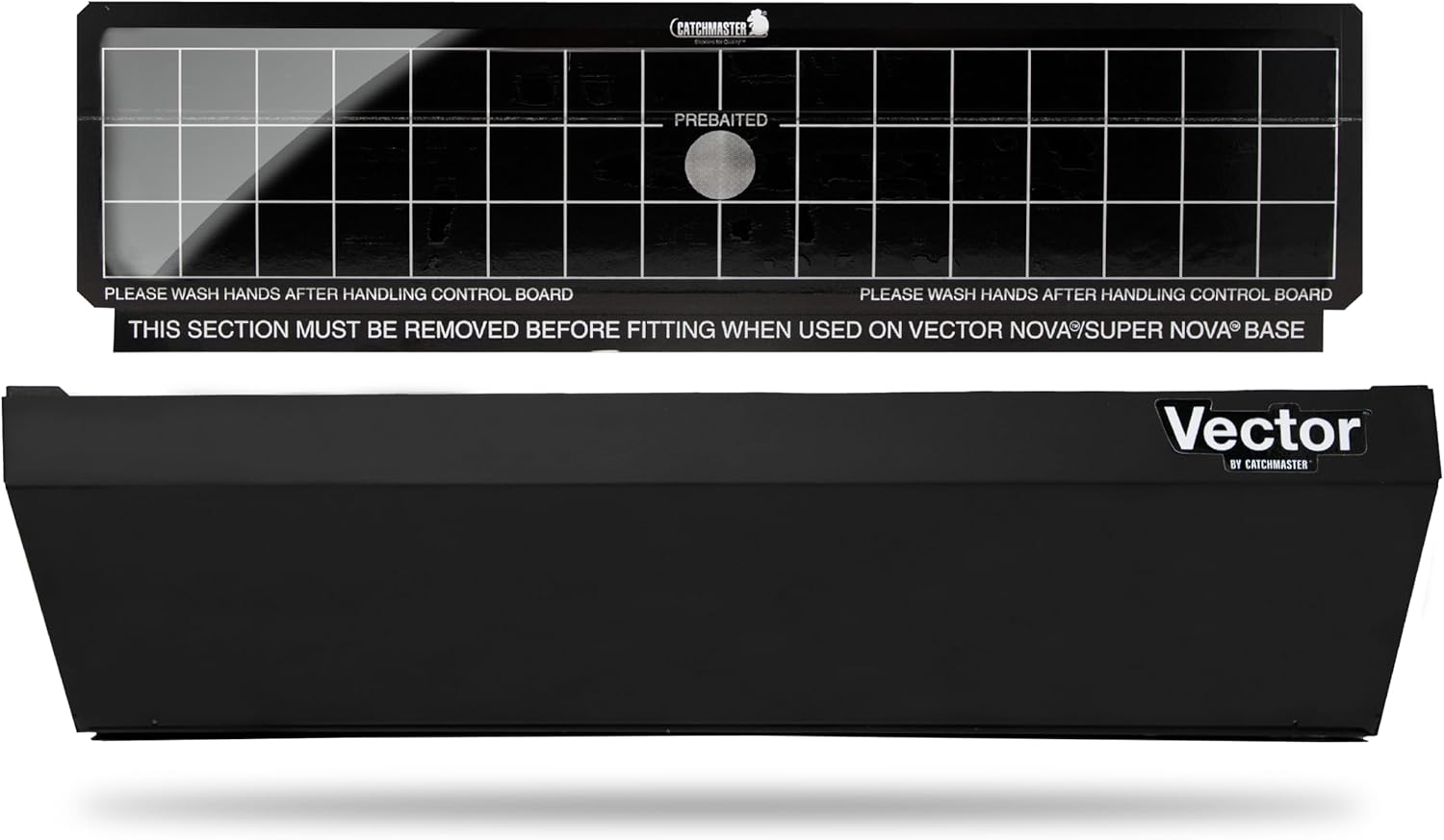
Catchmaster Vector Optima Black Wall-Mounted UV Fly Light Trap
| Target Species | Fly |
|---|---|
| Material Type | Aluminum |
| Unit Count | 1 Count |
| Number of Pieces | 1 |
The Catchmaster Vector Optima is a purpose-built indoor UV light trap that draws flies and other flying insects to a shatterproof actinic bulb and holds them on replaceable glue boards. Designed for commercial locations such as kitchens, dining areas, and food-prep spaces, it mounts on a wall about six feet high and silently traps insects out of sight behind a covered catch area. The aluminum casing and industrial construction make it durable for frequent use, and the included glue board and 15-watt bulb are straightforward to replace. It covers a wide area, is non-zapping and silent, and avoids visible carcasses by keeping the catch zone hidden. Limitations are that it requires periodic consumables — glue boards and annual bulb replacement — and it must be kept dry and away from direct outdoor exposure, so it is not suited for uncovered outdoor areas. For operations that need discreet, low-noise insect control indoors, the Vector Optima provides a robust, low-maintenance option.
Best for: Operators and facilities managers who need a discreet, low-noise indoor solution for controlling flying insects in commercial or heavy-use residential spaces and who prioritize durability and easy maintenance.
Less Ideal for: People seeking an outdoor or waterproof insect control device or a one-time no-maintenance solution should look at outdoor-rated traps or passive options instead.
- Industrial-grade aluminum housing for durability in commercial settings
- Silent, non-electrocution capture using UV light and adhesive glue boards
- Concealed catch area keeps trapped insects out of view for dining or food-prep spaces
- Wide coverage suitable for large rooms (manufacturer lists up to 590 sq ft)
- Uses standard replaceable bulbs and glue boards for easy maintenance
- Ongoing cost and maintenance for glue boards and annual bulb replacement
- Not rated for wet or outdoor use and must be installed away from moisture sources
Verdict: Choose the Vector Optima when you need a durable, discreet indoor UV trap that quietly captures flies with adhesive boards for commercial-grade, low-maintenance control.
Flowtron FC 4900 Commercial Fly Light Trap, 30W UV, Glue Board

| Target Species | Fly |
|---|---|
| Power Source | electric |
| Unit Count | 1 Count |
The Flowtron FC 4900 is a no-zap commercial fly light designed for kitchens and foodservice areas where silent, chemical-free control matters. It runs on electricity and combines two 15W UV bulbs with a pheromone attractant to lure flies, gnats and other flying pests onto a hidden adhesive board so insects are contained and out of sight. The unit can be mounted on a wall or set on a shelf and is sized to cover roughly 500 square feet, making it suitable for small restaurants, cafes and back-of-house workspaces. Replacement sticky boards slide in quickly and bulbs are user-replaceable, which keeps maintenance simple and fast between shifts. Because it uses glue boards instead of an electrified grid there is no zap noise or insect debris scatter, but you will need to budget for periodic replacement boards and bulbs. The plastic and steel housing is utilitarian and focused on function rather than aesthetics, which fits commercial settings but may be obvious if used in front-of-house dining areas.
Best for: Small commercial kitchens, food-prep businesses, and budget-minded operators who need a reliable, quiet, chemical-free trap that is easy to maintain between shifts.
Less Ideal for: Households or venues that prioritize decorative, discreet fixtures or need outdoor pest control should consider alternatives better matched to those needs.
- Two 15W UV bulbs plus pheromone lure increase attraction to flies and small flying pests
- Glue board design contains insects quietly and prevents scattered insect fragments
- Mountable or freestanding for flexible placement in kitchens or back-of-house areas
- Quick, tool-free sticky board replacement and user-replaceable bulbs simplify maintenance
- Requires ongoing purchases of adhesive boards and replacement bulbs
- Industrial look is less suitable for visible dining areas seeking discreet design
Verdict: A practical, low-noise commercial fly trap that contains insects with replaceable glue boards and simple upkeep, making it a cost-effective choice for foodservice back-of-house use.
Catchmaster Vector Plasma Grilled Commercial UV Fly Light Trap

| Brand Name | Catchmaster |
|---|---|
| Material Type | Light Trap |
| Target Species | Fly |
| Unit Count | 1 Count |
The Catchmaster Vector Plasma Grilled is a commercial-grade UV fly light designed to attract and capture flying insects using two shatterproof UV-A bulbs and dual adhesive glue boards instead of electrocution. It is typically mounted 3 to 6 feet high near doors, trash rooms, loading docks, or storage areas where flies congregate and left running continuously to provide ongoing control over a large area. The open grill maximizes light output for broader coverage and the removable grilled cover makes inspecting and swapping glue boards quick for staff or pest pros. Construction from airplane-grade aluminum and shatterproof bulbs gives it a durable, serviceable feel for busy kitchens and processing areas. Limitations are that it must be kept away from wet locations, glue boards need monthly replacement under normal pressure, and bulbs require periodic replacement to maintain attraction strength, so there is ongoing consumable maintenance and placement rules to avoid locating it above open food.
Best for: Facilities and businesses that prioritize dependable, continuous fly control in high-traffic or food-adjacent areas and want a rugged, serviceable trap that professionals can maintain quickly.
Less Ideal for: Homeowners wanting a low-maintenance, plug-and-forget decorative unit for small rooms should consider smaller residential traps instead.
- High coverage with two UV-A bulbs and dual glue boards for up to about 3,100 sq ft
- Durable airplane-grade aluminum housing and shatterproof bulbs suitable for commercial environments
- Silent, non-zapping capture reduces contamination risk compared with electric zappers
- Removable grilled cover allows fast inspection and quick glue board replacement
- Requires regular consumables and bulb replacement to remain effective
- Not safe for wet locations and must be positioned away from open food prep areas
Verdict: Choose this unit when you need a robust, service-friendly commercial fly light that delivers silent, wide-area control enforced by glue boards and durable construction.
Catchmaster Vector 30 Commercial UV Fly Light Trap (30W)

| Target Species | Fly |
|---|---|
| Power Source | Electric |
| Material Type | Aluminum |
| Coverage | ~1,500 sq. ft. |
The Catchmaster Vector 30 is a heavy-duty indoor UV fly trap designed for continuous use in spaces that need reliable, low-noise insect control. It uses two 15W actinic UV bulbs to lure flies and gnats into the housing where they become stuck on replaceable Catchmaster glue boards. The aluminum casing and shatterproof bulbs make it resilient for demanding environments and the unit ships with a glue board and bulbs installed so it is ready to operate. Typical placement is mounted about 6 feet off the ground and away from competing light sources; in a garage it will quietly reduce flying insect activity without zapping or chemical sprays. Maintenance is straightforward: monthly glue board changes under normal pressure and bulb replacement every 6 to 12 months. Limitations are that it requires mains power and periodic consumables, and its performance drops if placed near open doors or bright lights that compete with the UV attractant. For a garage where discreet, continuous, and non-toxic fly control is the priority, the Vector 30 is a robust choice.
Best for: Buyers who need a durable, low-noise fly control solution for a garage or workshop and prioritize continuous, chemical-free performance over one-off treatments. Ideal for someone who wants a professionally oriented device they will service regularly for consistent results.
Less Ideal for: People who need a completely portable or battery-powered trap or who want a one-time disposable solution rather than a permanently mounted, serviced unit.
- Commercial-grade aluminum housing and shatterproof bulbs for durability in heavy-use areas
- Dual 15W actinic UV bulbs provide a wide attractant range for up to about 1,500 sq ft
- Silent, non-zapping glue-board capture keeps trapped insects out of view
- Simple maintenance with replaceable glue boards and commonly available bulbs
- Designed for indoor, continuous operation in food-service and high-traffic spaces
- Requires mains power and cannot be used where outlets are unavailable
- Ongoing cost for replacement glue boards and periodic bulb changes
- Attractant effectiveness is reduced near competing light sources or open doors
Verdict: For garages that need continuous, professional-grade, non-zapping fly control, the Vector 30 delivers durable, quiet performance with replaceable glue boards.
Choosing the Right Commercial Fly Trap: Key Factors to Consider
Capture Efficiency and Range
How many flies the trap can capture per day and how far its attraction reaches matters because commercial sites often face sustained pressure. A trap with higher capture efficiency reduces the overall fly population faster and lowers the need for frequent human intervention.
Consider whether the trap uses visual lures, bait, chemical attractants, or a combination. The effective attraction radius determines spacing between units. For high-traffic or high-infestation areas, pick traps rated for higher daily capture to avoid overflow and diminished performance.
Material Durability and Construction
Commercial environments expose equipment to sunlight, moisture, heat, and frequent handling. Durable construction using rust-resistant metals, thick UV-stable plastics, or reinforced composites extends service life and reduces replacement frequency.
Look for corrosion-resistant finishes on metal parts and impact-resistant housings that stand up to knocks and drops. Sealed seams and sturdy fastenings prevent moisture ingress, which is important where traps sit near dishwashing areas or outdoors.
Serviceability and Maintenance Frequency
Maintenance time is a real cost for busy operations. Traps that are easy to empty, clean, and reload reduce labor and downtime. Consider how often the trap needs servicing under peak conditions and whether consumables are simple to replace.
Features that speed servicing include removable collection trays, clear access panels, tool-free latches, and visible fill indicators. Also check whether the design minimizes splatter or mess during servicing, which preserves hygiene and reduces staff training needs.
Containment, Safety, and Hygiene
In commercial settings you must protect staff and customers from contact with captured insects and any attractant materials. Good containment prevents accidental spills and reduces the risk of cross-contamination in food preparation areas.
Assess whether the trap seals securely, keeps insects isolated after capture, and prevents access by children or pets. Non-toxic attractant options or enclosed bait systems are often preferred where food safety rules apply.
Weather Resistance and Placement Flexibility
Outdoor and semi-outdoor sites expose traps to rain, wind, and sun. Weather-resistant designs maintain function and attractant effectiveness while minimizing the need to bring gear indoors during bad weather.
Check for waterproof housings, UV-resistant components that do not craze or brittle with sun exposure, and mounting options that allow secure placement on posts, walls, or stands. A stable base or mounting kit reduces the likelihood of wind-related tipping or displacement.
Power and Consumable Logistics
Consider how the trap is powered and what ongoing supplies it needs. Some commercial traps run on mains power, solar, or batteries, while others are passive and rely on baits. Each has operational implications for reliability and running costs.
Factor in the availability and shelf life of attractants, the ease of sourcing replacement parts, and whether power requirements suit your site layout. Passive systems minimize electrical concerns but may need more frequent bait replacement in heavy infestations.
Best Placement Strategies for Commercial Sites
Placement makes the biggest practical difference in performance. Position traps downwind of work and seating areas so flies move toward the device rather than into customer spaces. For outdoor events, place units near waste stations and away from food prep zones to draw insects away from people.
Spacing depends on capture range. Heavily infested areas will need more units at closer intervals. Evaluate sightlines and secure mounting points early so traps sit at recommended heights without obstructing staff movements.
- Place units 10 to 20 feet from food service and seating when possible
- Mount traps 5 to 8 feet above ground for optimal attraction
- Avoid placing traps directly over drains or open food displays
Maintenance Best Practices
Create a simple service schedule based on observed fly pressure rather than fixed dates. Daily checks may be necessary at peak times, while lower-traffic seasons allow longer intervals.
When servicing, use gloves and follow hygiene protocols to avoid contamination. Empty collection trays into sealed waste bags and clean surfaces with an appropriate disinfectant to reduce residual odors that could attract more insects.
- Keep a log of fill rates to refine servicing frequency
- Store replacement baits in a cool, dry place to preserve potency
- Train multiple staff on safe servicing to avoid single-person bottlenecks
Integrating Traps with Broader Pest Management
A trap is one tool in an integrated approach. Reduce attractants by securing waste, using tight lids on bins, and maintaining good drainage. Eliminating breeding sites often yields the biggest long-term reductions in fly numbers.
Pair traps with physical barriers like screens and timely cleaning of food prep areas. Regular inspection of potential breeding sites, such as compost piles or organic debris near drains, complements trap deployment and reduces reliance on any single method.
- Coordinate trap placement with sanitation schedules
- Address breeding sources to reduce pressure on traps
- Use traps to monitor fly activity and trigger targeted responses
Safety Considerations Around Food Areas
When traps are used near kitchens or service counters, choose models that prevent insect contact with surfaces and food. Enclosed capture systems or units designed for wall mounting above service lines can reduce contamination risks.
Ensure staff understand placement rules and do not hang traps directly over open food. Regularly inspect traps for leaks or failures that could compromise hygiene.
- Avoid overhead placement directly above food preparation surfaces
- Use enclosed or wall-mounted units near food operations
- Include trap inspection on routine sanitation checklists
Long-Term Durability and Lifecycle Planning
Plan for the lifecycle of traps by knowing expected service life and spare part availability. Investing in more durable construction can lower total operational disruption and replacement burden over time.
Keep a small stock of common consumables and wear parts so you can swap items quickly during busy periods. Regular inspections will reveal components likely to fail so you can schedule proactive maintenance.
- Inspect fasteners and seals seasonally for corrosion
- Track warranty coverage and replacement-part lead times
- Budget for periodic replacement of UV-exposed components
How We Chose the Best Commercial Fly Trap
We selected products that are designed for consistent fly control in commercial settings and that meet measurable, garden- and site-relevant performance markers. Our filters prioritized capture capacity under heavy insect pressure, construction materials suited to outdoor exposure, and safe placement options for food-service and high-traffic areas. We also favored designs that allow straightforward servicing and bait replacement without special tools. Evaluation criteria included capture efficiency under sustained fly pressure, weather and UV resistance of materials, ease and frequency of maintenance, and safety or containment features that reduce accidental contact. We excluded hobby or small-scale residential traps that lack commercial-rated construction or documented capture capacity. We also excluded devices that rely solely on consumer-level power supplies when an industrial model is more appropriate. The final list reflects equipment suited to repeat use, simple servicing, and reliable performance in demanding outdoor or back-of-house commercial environments.
FAQ
How many commercial traps do I need for an outdoor dining area?
It depends on the size and fly pressure. For moderate activity, spacing units every 20 to 30 feet can be effective; higher-infestation sites will need closer spacing and additional units. Monitor activity and adjust placement accordingly.
Can commercial fly traps be used near food prep areas safely?
Yes, when you choose traps with enclosed capture systems and mount them away from direct food handling zones. Proper placement and routine inspection prevent contamination risks while keeping flies away from sensitive areas.
How often do traps need to be serviced in busy commercial settings?
Service intervals depend on capture rate and seasonality. During peak months daily or every-other-day checks are common, while off-peak periods may only need weekly attention. Use observed fill rates to set a regular schedule.
What maintenance should staff perform to keep traps working well?
Staff should empty collection trays, clean surfaces with appropriate disinfectant, replace baits or attractants as directed, and check seals and fasteners. Keeping a log of maintenance actions helps identify when parts need replacement.
Are passive bait traps as effective as powered commercial units?
Passive bait traps can work well in certain situations but often require more frequent replenishment and may have a smaller attraction radius. Powered units or higher-capacity designs typically handle heavy fly pressure more reliably.
Can weather shorten the lifespan of a commercial fly trap?
Yes. Prolonged sun, rain, and freeze cycles can degrade plastics and corrode metal parts. Choosing weather-resistant materials and performing seasonal inspections helps maintain performance and extend service life.
Final Verdict
Choose a Commercial Fly Trap by balancing capture capacity with durability and practical servicing needs. In heavy-use sites prioritize units that offer high capture efficiency, secure containment, and easy maintenance to minimize labor and hygiene risks. Accept tradeoffs between passive simplicity and powered reliability based on your site layout and staffing. With thoughtful placement and a maintenance routine, a well-chosen commercial trap will reduce fly pressure and support sanitation goals across busy outdoor or back-of-house operations.
