

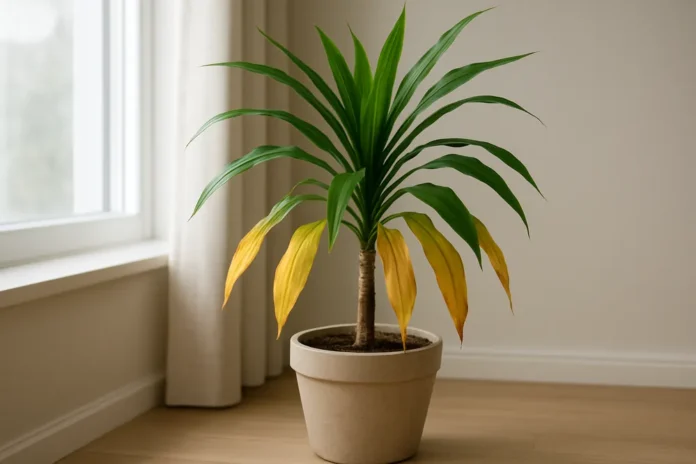
Dracaena leaves usually turn yellow from overwatering, inconsistent moisture, low light, mineral-heavy tap water, or normal aging of older leaves. Sudden stress from temperature changes, fertilizer salts, or pests can also trigger yellowing.
A dracaena with yellowing leaves can look alarming fast, especially when a plant that was easygoing suddenly starts dropping color. In my experience, dracaena leaves turning yellow usually trace back to a short list of issues: too much water, poor drainage, weak light, salt buildup, or plain old leaf aging.
The good news is that dracaena often gives clues if you know where to look. A few lower leaves turning yellow over time is very different from a whole plant fading at once, and yellow leaves with brown tips suggest a different problem than soft, limp yellow leaves. Once you match the pattern to the cause, the fix is usually straightforward.
Below, I will walk through the most common reasons dracaena leaves yellow, how to tell them apart, and what to do next so the new growth comes in healthy again.
What Yellow Leaves Usually Mean on Dracaena
Yellowing is a stress signal, but it is not always an emergency. Dracaena naturally sheds older leaves as it grows, especially near the base of the cane. If only one or two bottom leaves turn yellow every so often while the top stays firm and green, that is often normal.
Trouble is more likely when yellowing spreads quickly, affects many leaves at once, climbs toward the top of the plant, or comes with other symptoms like mushy stems, brown tips, curling, drooping, or spotted foliage. The combination matters more than the yellow color alone.
- A few oldest bottom leaves yellowing slowly: often normal aging
- Many leaves turning pale yellow together: watering, light, or root stress
- Yellow leaves that feel soft or limp: overwatering is a top suspect
- Yellow leaves with crispy brown edges or tips: dry conditions, fluoride, or salt buildup
- Yellow mottling with stippling or webbing: pests may be involved
When I diagnose dracaena, I look at which leaves changed first. If the oldest lower leaves are fading one by one, I worry less. If newer leaves are yellowing too, I start thinking about roots, water quality, or a sudden environmental shift.
Overwatering Is the Most Common Cause
If I had to guess one reason most houseplant dracaenas turn yellow, it would be overwatering. Dracaena likes to dry somewhat between waterings. When the potting mix stays wet too long, roots struggle to get oxygen, and yellow leaves often follow.
This happens not only from watering too often, but also from heavy soil, pots without drainage, decorative cachepots that trap runoff, or cold indoor conditions that slow drying. Even a careful watering schedule can become too much if the plant sits in lower light during winter.
Signs Your Dracaena Is Staying Too Wet
- Several leaves yellowing at once
- Soft, limp, or drooping foliage
- Potting mix staying damp for many days
- A sour or swampy smell from the soil
- Brown, mushy stem bases or blackened roots
If you suspect overwatering, let the soil dry more deeply before watering again. Empty any saucer or outer pot after watering. If the mix is dense and slow-draining, repot into a chunky indoor plant mix with added perlite or bark. Trim off rotted roots if you find them, and remove fully yellow leaves since they will not turn green again.
I do not water dracaena by the calendar. I push a finger a couple of inches into the mix or use a wooden skewer. If it still feels cool and moist below the surface, I wait.
Underwatering and Inconsistent Moisture Can Also Yellow Leaves
Dracaena is more forgiving of dryness than soggy soil, but it still reacts when the root ball gets too dry for too long. Repeated drought stress can cause yellowing, especially when leaves also develop dry brown edges, curling, or a papery feel.
This issue often shows up in homes where the plant gets watered only after severe wilting, or where water runs down the sides of a dry root ball without soaking in. In that case, the top may look wet while the center of the root mass stays dry.
How to Tell Dry Stress Is the Problem
- Leaves feel dry rather than soft
- Brown tips and margins appear before or alongside yellowing
- The pot feels very light between waterings
- Soil pulls away from the sides of the pot
- Lower leaves yellow and drop after repeated dry spells
To fix it, water thoroughly until excess drains out, then wait until the upper part of the mix dries before watering again. If the soil has become hydrophobic, soak the pot briefly or water in stages so the root ball can rehydrate evenly.
Poor Drainage and Root Problems Make Yellowing Worse
Sometimes the real issue is not how often you water, but what happens after. Dracaena in compacted soil, a pot with no drainage hole, or a rootbound container that no longer wets evenly can show the same yellow-leaf symptoms as watering mistakes.
Root rot and root stress both interfere with the plant's ability to move water and nutrients. That is why yellow leaves can happen in wet soil and in rootbound dry soil. The roots are impaired either way.
When Repotting Helps
Repot if roots circle heavily around the pot, the mix dries unevenly, or water sits on the surface instead of soaking in. Choose a pot only one size larger, with drainage holes, and use a loose mix designed for indoor foliage plants. Oversized pots can stay wet too long, so bigger is not always better.
Light Problems Can Fade Leaves to Yellow
Dracaena tolerates lower light better than many houseplants, but tolerance is not the same thing as thriving. In very dim conditions, growth slows, the plant uses less water, and older leaves may yellow more readily. A stretched or leaning plant with sparse growth often points to insufficient light.
Too much direct sun can also cause trouble. Harsh afternoon sun may bleach leaves to a pale yellow or tan, especially on variegated types or plants moved suddenly from a darker corner into bright window light.
The Right Light for Most Dracaena
Bright, indirect light is the sweet spot. Near an east window or a few feet back from a bright south or west window usually works well. If your plant is in a very dark room, moving it gradually into brighter filtered light often improves color and growth.
I often see yellow leaves blamed on watering when the deeper issue is low light. A dracaena sitting in a dim corner dries slowly, so even normal watering becomes excessive for the conditions.
Tap Water Minerals and Fluoride Sensitivity Are Common Dracaena Issues
Dracaena is one of those houseplants that can be fussy about water quality. Fluoride, chlorine, and dissolved salts in tap water can contribute to yellowing, but they more often show up first as brown tips, scorched margins, or patchy discoloration. Over time, salt buildup in the pot can stress roots enough to trigger yellowing too.
This is especially likely if you fertilize regularly, rarely flush the soil, or have hard water. White crust on the soil surface or pot rim is a useful clue.
How to Reduce Mineral Stress
- Use filtered, distilled, or rainwater if possible
- Flush the pot thoroughly every month or two to wash out salts
- Cut back on fertilizer if tips are browning
- Replace old potting mix if buildup is severe
If your dracaena has yellowing plus brown tips and you know your tap water is hard, changing water sources can make a noticeable difference over the next several weeks.
Fertilizer Mistakes Can Cause Yellow Leaves
Dracaena does not need heavy feeding. Too much fertilizer can burn roots and lead to yellow leaves, brown tips, or a tired washed-out appearance. This often happens when liquid fertilizer is applied too often or at full strength year-round.
Nutrient deficiency is possible, but in container-grown dracaena, excess fertilizer and salt buildup are more common than a true shortage. If the plant has been in the same pot for years without fresh mix, a mild deficiency can contribute to pale leaves and slow growth.
A Safer Feeding Approach
Feed lightly in spring and summer when the plant is actively growing, and skip fertilizer in winter unless the plant is under strong supplemental light. A diluted balanced houseplant fertilizer works well. If you suspect overfeeding, flush the soil and pause fertilizer for a month or two.
Temperature Swings and Low Humidity Can Trigger Stress
Dracaena prefers stable indoor temperatures. Cold drafts, blasts from heating vents, or sudden moves between environments can stress the foliage and contribute to yellowing. While it does not need tropical greenhouse humidity, very dry indoor air can worsen brown tips and make stressed leaves decline faster.
- Keep plants away from drafty windows in winter
- Avoid placing them right beside heating or AC vents
- Aim for typical indoor temperatures above 60 degrees Fahrenheit
- Use a pebble tray or humidifier if the air is extremely dry
Humidity alone is rarely the sole reason a dracaena turns broadly yellow, but it often combines with watering and water-quality stress to make symptoms more obvious.
Pests and Disease Can Be Part of the Problem
Spider mites, mealybugs, and scale insects can all weaken dracaena and lead to yellowing. Spider mites are especially common in dry indoor air and may cause fine stippling, a dull cast to the leaves, and faint webbing near the leaf bases or undersides.
Fungal disease is less common indoors than simple root problems, but chronically wet soil can invite rot. If the cane feels soft or blackened near the base, disease may already be advanced.
What to Look for During Inspection
- Sticky residue on leaves or nearby surfaces
- Cottony clusters in leaf axils from mealybugs
- Brown shell-like bumps from scale
- Fine speckling and webbing from spider mites
- Soft stem tissue and foul-smelling soil from rot
Treat pests early with insecticidal soap, neem, or repeated wiping depending on the pest. If rot is involved, pruning damaged tissue and repotting into fresh mix may be necessary.
When Yellow Leaves Are Just Normal Aging
Every dracaena sheds old leaves as it matures. On cane types, the plant naturally drops lower foliage and forms a bare trunk over time. That process can look dramatic if you have not seen it before, but it is perfectly normal when the rest of the plant looks healthy.
Normal aging usually follows a pattern: older bottom leaves yellow slowly, then dry and release easily. New growth at the top stays green and firm. If that describes your plant, simply remove the spent leaves or let them fall on their own.
How to Figure Out the Real Cause on Your Plant
If you are unsure what is going on, work through the clues in order. Dracaena problems become much easier to solve when you avoid changing five things at once.
- Check which leaves are yellowing. Older lower leaves alone suggest aging, while widespread yellowing points to stress.
- Feel the soil several inches down. Wet soil supports an overwatering diagnosis, while bone-dry soil suggests drought stress.
- Inspect the roots if the plant is declining quickly. Healthy roots are firm and pale, while rotted roots are dark and mushy.
- Look at the light. Very dim placement or recent direct-sun exposure can both affect leaf color.
- Review your water source and fertilizer routine. Hard water and extra feeding often show up as tip burn plus yellowing.
- Examine leaves closely for pests, especially under the foliage and around leaf joints.
I try to judge recovery by the new leaves, not by damaged ones already on the plant. Yellow leaves rarely turn green again. What you want to see is that the next flush of growth comes in clean and stays that way.
How to Help Your Dracaena Recover
Once you identify the likely cause, give the plant a little time. Dracaena usually rebounds well if the roots are still healthy and the growing point is intact. Remove fully yellow leaves, correct the underlying stress, and avoid the temptation to overcompensate.
- Water only when the upper portion of the mix has dried
- Make sure excess water drains completely
- Move the plant into bright, indirect light
- Use lower-mineral water if tips keep burning
- Feed lightly only during active growth
- Keep the plant away from cold drafts and heating vents
- Monitor weekly for pests until growth looks normal
Expect improvement to be gradual. Existing yellow leaves will not recover, but the plant should stop producing new yellow leaves once conditions improve. If yellowing continues despite corrections, it is worth checking the root system directly.
FAQ
Should I Cut Off Yellow Dracaena Leaves?
Yes, if a leaf is fully yellow, you can remove it. It will not turn green again. If it is only partly damaged, I usually leave it until the plant has enough healthy foliage to support recovery.
Can Yellow Dracaena Leaves Turn Green Again?
Usually no. Once a leaf has turned yellow, that tissue does not recover. Focus on correcting the cause and watching for healthy new growth.
How Often Should I Water a Dracaena?
There is no fixed schedule that works in every home. Water when the upper part of the potting mix has dried, then soak thoroughly and let excess drain away.
Does Dracaena Prefer Sun or Shade?
Dracaena does best in bright, indirect light. It tolerates lower light, but very dark spots can weaken the plant and increase the risk of yellow leaves.
Is Tap Water Bad for Dracaena?
It can be. Dracaena is sensitive to fluoride and mineral buildup, so hard tap water may contribute to brown tips and sometimes yellowing over time.
Why Are Only the Bottom Leaves of My Dracaena Turning Yellow?
If only the oldest lower leaves are yellowing and the top growth looks healthy, that is often normal aging. Dracaena naturally sheds lower leaves as it forms a cane.
Can Overwatering Kill a Dracaena?
Yes. Prolonged wet soil can lead to root rot and stem rot. The sooner you let the soil dry appropriately and improve drainage, the better the chances of recovery.
Need the right fix fast? Read our dracaena care guide and recommended watering tools to stop yellow leaves and get healthier growth with fewer guesswork mistakes.
