

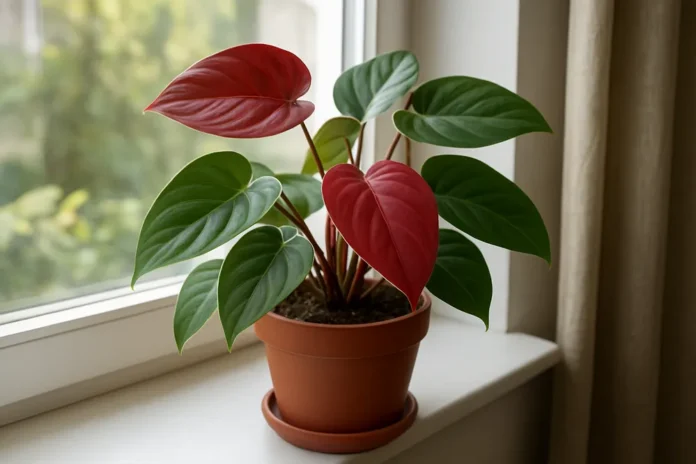
A philodendron often turns red because of natural pigments in new growth or because it is getting stronger light than it prefers. Cold stress, nutrient imbalance, and root stress can also trigger red or reddish-purple color.
Seeing philodendron leaves turning red can be surprising, especially if you bought the plant for its deep green foliage. In many cases, a red tint is not a crisis at all. Some philodendrons naturally push out red, copper, or burgundy new growth, and some varieties keep reddish stems or undersides as part of their normal look.
That said, a philodendron that suddenly changes color can also be reacting to stress. Bright direct sun, cold drafts, inconsistent watering, root trouble, and even nutrient imbalance can all bring out red or reddish-purple tones. The key is to look at where the color appears, how fast it showed up, and whether the plant is still putting out healthy new growth.
When I troubleshoot this symptom, I do not focus on color alone. I look at the whole pattern: older leaves or newer ones, just the edges or the entire leaf, red stems only or leaf blades too, and whether the texture still looks firm. That context usually separates a normal color shift from a plant asking for help.
When Red Color Is Completely Normal
Not every red philodendron is in trouble. Many philodendrons naturally show red, bronze, copper, or pinkish tones in new leaves, cataphylls, stems, or leaf undersides. This is especially common in varieties with darker foliage, climbing hybrids, and self-heading types bred for colorful emerging leaves.
Young leaves often emerge with extra anthocyanin pigments, which can make them look redder before they harden off to green. If the leaf shape is normal, the tissue feels healthy, and the plant continues to grow well, this is usually just part of the plant's normal cycle.
- New leaves open red or copper, then gradually turn green over days or weeks
- Only the stems, cataphylls, or undersides are red while the plant otherwise looks healthy
- The color is even and attractive rather than patchy, scorched, or collapsed
- Growth is steady and new leaves are emerging at normal size
If a philodendron is truly stressed, I usually see more than color. New leaves may get smaller, edges may crisp, or the plant may stall. When the only symptom is a temporary red flush on fresh growth, I tend to treat it as normal until the plant proves otherwise.
Too Much Light Can Bring Out Red or Reddish-purple Tones
One of the most common reasons a green philodendron starts looking red is increased light exposure. Bright light can intensify anthocyanin pigments, especially if the plant was moved closer to a sunny window or placed outdoors for summer. A light-stressed philodendron may develop reddish, bronze, or purplish leaves as a protective response.
Philodendrons generally like bright, indirect light. A little gentle morning sun is often fine, but strong afternoon sun can push the plant past color enhancement and into actual leaf damage. If the red color is followed by bleaching, tan patches, crispy edges, or a faded washed-out look, sunlight is likely too intense.
Signs the Problem Is Light Stress
- Leaves facing the window are redder than shaded leaves
- Color change happened soon after moving the plant to a brighter spot
- Leaf surfaces look slightly dull, bronzed, or sun-flushed
- Some leaves later develop scorch marks, pale spots, or dry edges
If this sounds familiar, move the plant a little farther from direct sun or filter the light with a sheer curtain. You do not need to send it to a dark corner. In my experience, philodendrons recover best when they stay in bright but softened light.
Cold Temperatures and Drafts Can Trigger Red Coloration
Philodendrons are tropical plants, and cool conditions can bring out red or purple stress tones. This often happens in winter when a plant sits near a cold window, exterior door, drafty hallway, or air conditioning vent. Even if the room feels comfortable to you, repeated temperature dips can stress the foliage.
Cold stress does not always show up as dramatic drooping right away. Sometimes the first sign is a reddish cast, especially on exposed leaves. If the chill continues, growth may slow, leaves may stay smaller, and the plant can become more vulnerable to watering problems.
- Red or purple tint appears during colder months
- Leaves closest to the window or draft source change first
- Growth slows noticeably even though light and watering stayed similar
- The plant looks firm but less vigorous overall
I like to check night conditions, not just daytime temperatures. A philodendron that looks fine at noon may still be spending every night in a cold pocket near glass, and that repeated chill is often enough to change leaf color.
Nutrient Imbalance Can Cause Red or Purplish Leaves
Nutrient issues are a less common cause of red philodendron leaves indoors, but they do happen. A phosphorus deficiency is the classic explanation for reddish or purplish foliage in many plants. With philodendrons, though, true phosphorus deficiency is not usually the first thing I suspect unless the plant has been in exhausted potting mix for a long time, has not been fertilized at all during active growth, or has root stress that prevents uptake.
A plant can also show nutrient stress if the soil pH is off, if fertilizer salts have built up, or if roots have been damaged by overwatering. In other words, the issue is sometimes less about missing fertilizer and more about the plant being unable to use what is already there.
Clues That Nutrients May Be Involved
- The plant has been in the same mix for a year or more with no feeding
- Growth is slow and new leaves are smaller than usual
- Older leaves may also look dull, pale, or less robust
- Color change is widespread rather than limited to one sun-exposed side
During spring and summer, a balanced houseplant fertilizer used at a modest rate can help if the plant is otherwise healthy. If the roots are struggling, though, fertilizer alone will not solve the problem and may make it worse.
Watering and Root Stress Often Sit Behind the Color Change
When a philodendron turns red and also seems off in its overall growth, I pay close attention to the root zone. Both overwatering and severe underwatering can stress the plant enough to alter leaf color. If roots are staying soggy, they lose access to oxygen and cannot absorb water or nutrients normally. If the plant is repeatedly drying too hard, it can also respond with pigment changes and slowed development.
Because philodendrons are often sold in dense nursery mix, root stress can sneak up on gardeners. The top inch may look dry while the center of the pot stays wet for too long. That mismatch is a common reason a plant gets stressed even when the owner thinks the watering routine is reasonable.
Signs Watering or Roots Are the Real Issue
- Leaves turn red while the plant also droops, yellows, or stalls
- The potting mix stays wet for many days after watering
- The root ball shrinks away from the pot and dries out too fast
- There is a sour smell, fungus gnats, or signs of compacted soil
- New growth is smaller, distorted, or slow to unfurl
I have seen many philodendrons blamed on low nutrients when the actual problem was a suffocated root ball. If the plant is red, sluggish, and sitting in heavy mix, I assume root stress is more likely than a simple fertilizer shortage.
Healthy philodendrons prefer an airy mix that holds some moisture but drains well. Water when the upper portion of the mix has dried, then water thoroughly and let excess drain away. Avoid tiny sips on a rigid schedule, since that often creates uneven moisture in the pot.
Pests, Disease, and Physical Damage Are Less Common but Possible
Red coloration is usually tied to light, temperature, or root-related stress, but pests and disease can sometimes create reddish spotting or damaged tissue that looks similar from a distance. Spider mites, thrips, and sap-sucking pests can leave foliage looking bronzed, stippled, or dull red-brown rather than richly red.
Bacterial or fungal leaf spots usually look patchy, water-soaked, or haloed instead of evenly flushed. Mechanical damage can also dry down into rusty red or reddish-brown marks, especially if a leaf was bent while unfurling.
Look Closer if the Red Color Seems Irregular
- Tiny speckles, silvery scars, or webbing suggest pests
- Soft dark spots with yellow halos point more toward disease
- Damage concentrated on one torn or creased leaf may be physical injury
- A uniform red wash is usually different from spotty red-brown lesions
If you find pests, treat them promptly before the plant weakens further. If disease is involved, remove badly affected foliage, keep leaves dry, and improve air circulation around the plant.
How to Tell Which Cause Fits Your Philodendron
The fastest way to diagnose a red philodendron is to match the color pattern with the plant's recent conditions. A healthy new leaf that opens red and later greens up is very different from an older leaf that suddenly reddens after a move to a sunnier window.
Questions That Narrow It Down
- Is the red color only on new growth, or on mature leaves too?
- Did the plant recently move to brighter light or closer to a window?
- Has the room been cooler at night, especially near glass or vents?
- Is the plant actively growing, or has it slowed down noticeably?
- Does the soil stay wet too long or dry out too abruptly?
- Are there any other symptoms such as yellowing, drooping, spots, or pests?
If the answer points to one environmental shift, that is usually your best clue. Philodendrons often respond within days or weeks to changes in light, temperature, and watering, so a recent move or routine change matters more than a far older one.
What to Do Next Without Making the Problem Worse
Once you have a likely cause, make small corrections instead of changing everything at once. That keeps you from piling stress on top of stress and makes it easier to tell whether your fix worked.
- Move the plant out of harsh direct sun but keep it in bright, indirect light
- Protect it from cold windows, doors, and air vents
- Check the potting mix deeper in the pot before watering again
- Repot into a chunky, well-draining mix if the soil is compacted or roots are stressed
- Feed lightly during active growth if the plant has been unfed for a long time and the roots are healthy
- Inspect leaf undersides and new growth for pests if the color looks bronzed or speckled
Do not expect existing red leaves to turn perfectly green again. The best sign of recovery is improved new growth. If fresh leaves emerge at normal size and with healthier color over the next few weeks, your adjustments are working.
I try to judge progress by the next leaf, not the current one. Philodendrons often keep the old stress marks, so chasing a cosmetic reversal can lead gardeners to overcorrect and create a new problem.
FAQ
Are Red Philodendron Leaves Always a Bad Sign?
No. Many philodendrons naturally produce red or bronze new leaves, red cataphylls, or reddish stems. It becomes more concerning when the color appears suddenly on mature leaves or comes with drooping, scorching, stunted growth, or root problems.
Can Too Much Sun Make a Philodendron Turn Red?
Yes. Stronger light can intensify red or reddish-purple pigments, especially if the plant was moved from a shadier spot. If the leaves also bleach, crisp, or develop tan patches, the light is likely too intense.
Why Are My Philodendron Stems Red but the Leaves Look Healthy?
Red stems can be completely normal, especially in certain philodendron varieties and hybrids. If the leaves are firm, shaped normally, and the plant is growing well, red stems alone usually are not a problem.
Does a Phosphorus Deficiency Cause Red Philodendron Leaves?
It can, but it is not the most common indoor cause. A true phosphorus shortage is less likely than light stress, cold exposure, or root trouble. Plants in old exhausted mix or with damaged roots are more likely to show nutrient-related stress.
Will Red Philodendron Leaves Turn Green Again?
Sometimes new leaves that emerge red naturally mature to green. Stress-related red leaves may stay discolored even after conditions improve. The better sign is that future leaves grow in with healthier color and normal size.
Can Cold Weather Make Philodendron Leaves Red?
Yes. Cool temperatures and drafts can trigger red or purple stress tones, especially near windows in winter. If the plant also slows down or sits in a chilly spot at night, cold stress is a strong possibility.
Should I Fertilize a Philodendron That Is Turning Red?
Only if nutrient shortage seems likely and the roots are healthy. If the plant is stressed from soggy soil, compacted mix, or cold conditions, fertilizer will not fix the main problem. In some cases it can add more stress.
Want the right setup for stronger, greener growth? Check our philodendron care guide and best indoor plant soil picks to fix stress fast and prevent future color problems.
